We remain fully operational. Our teams are working around the clock to ensure your deliveries continue safely.

DOWNLOAD THE APP


Customer Services
Copyright © 2025 Desertcart Holdings Limited
DOWNLOAD THE APP
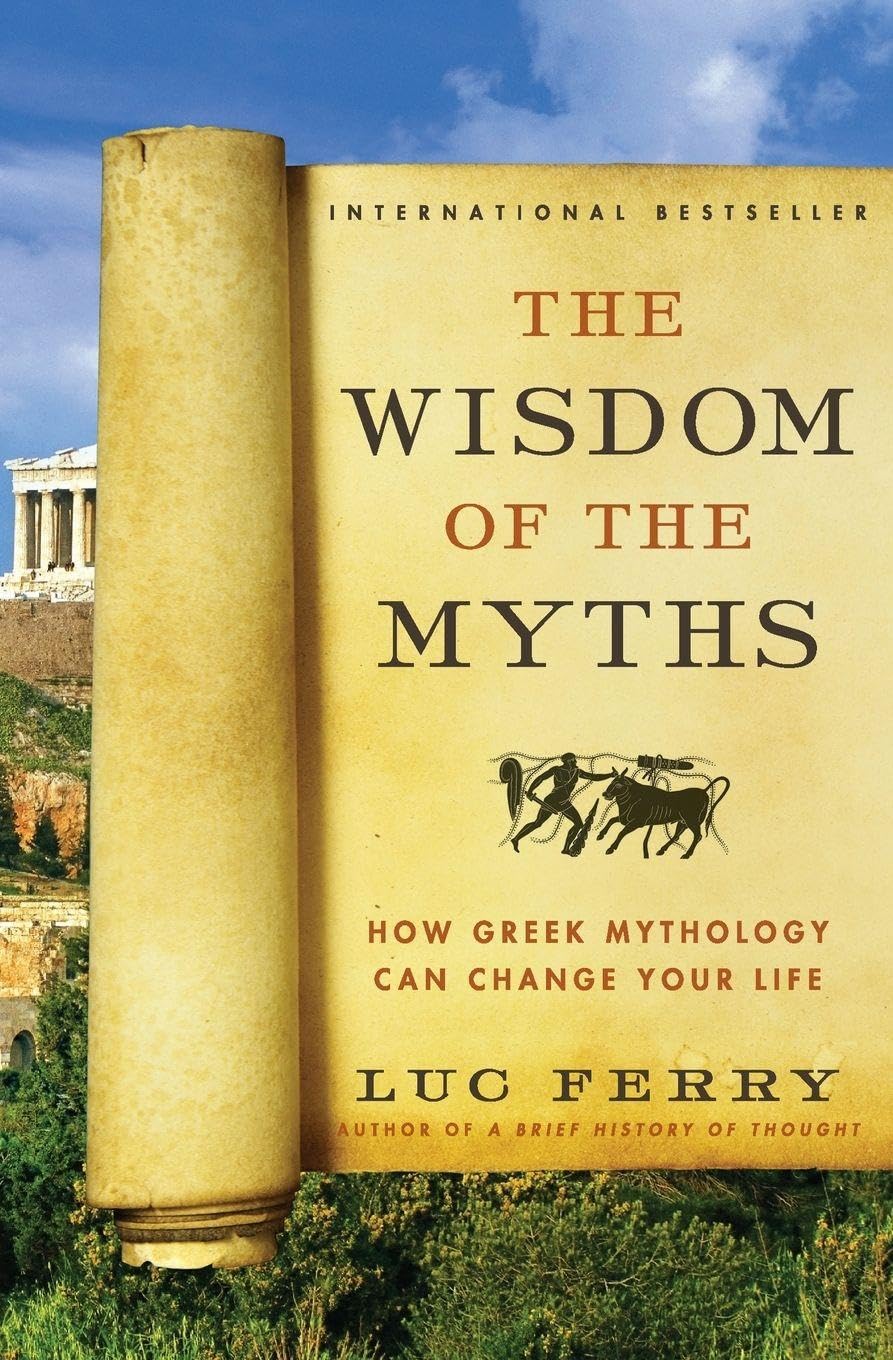
The Wisdom of the Myths: How Greek Mythology Can Change Your Life – Philosophical Lessons from Ancient Heroes, Gods, and Mortals (Learning to Live) [Ferry, Luc] on desertcart.com. *FREE* shipping on qualifying offers. The Wisdom of the Myths: How Greek Mythology Can Change Your Life – Philosophical Lessons from Ancient Heroes, Gods, and Mortals (Learning to Live) Review: Review of the Wisdom of the Myths - In his book, 'The Wisdom of the Myths: How Greek Mythology Can Change your Life,' Luc Ferry re-interprets some of the classic stories of western civilization from a secular humanist perspective. The interpretive lens he uses does not take away from the value of this book. Readers will still find his insights to be compelling. He begins with a justification for the study of the classics; illustrating that like contemporary science, mythology helped the ancient Greeks make sense of the world around them, distinguishing mythological thinking from contemporary philosophy by emphasizing that ancient people did not perceive the universe as an object of knowledge but as a lived reality. Another theme he elaborated on was the ways in which metaphors derived from ancient myths continue to influence us today, and how modern philosophy evolved from the mythology of the Greeks. Students previously exposed to Greek mythology will find Luc Ferry's analysis refreshing for it revolves around five essential themes established in his introduction. These themes include 1) the origins of the world and the establishment of order out of chaos, 2) humans situating themselves in a meaningful relationship to the cosmos, 3) the role of hubris and its madness which consists of 'a proud and chaotic revolt against the human condition as simple mortals,' 4) the heroes who struggled against the regrouping forces of chaos to maintain order, and 5) the existential question of how could a cosmos that is good and harmonious allow misfortune to strike? In each of his following chapters Mr. Ferry elaborates on these themes. I immediately became engaged in his insights on the Greek theme of origins. For the Greeks Chaos was the first entity to enter the cosmic drama. Gaia, or the earth mother sprang out of Chaos, however, this necessitated a third divinity; Eros or love. Eros was not an individual god but a creative life force from which other lives sprang into being. To me, this notion of Eros sounds strikingly similar to the 'elan vital force' proposed by Henri Bergson in his classic 'Creative Evolution.' Here, Mr. Ferry also points out that in Greek mythology there is a progressive humanizing of the gods and also a progressive divinizing of men. Quoting, 'the first gods are utterly impersonal.. abstract.. faceless.. they simply represent cosmic forces that evolve progressively without any will, toward consciousness.' Mr. Ferry goes on to establish the geneology of the Greek gods illustrating the descent of Zeus from Uranus through Kronos. After the cosmos is established the gods animate it with both creatures and man. However, man poses a particular problem to the cosmic order of things because his place is difficult to establish. According to Mr. Ferry the Greek answer to this question was that man must seek to live in harmony with the cosmos. Quoting, he states that 'a life lived in harmony with the cosmos - this is true wisdom, the authentic road to salvation, in the sense of saving us from our fears and making us thereby happier and more open to others..' and 'We must live in a state of lucidity, accepting death, accepting what we are and what is beyond us, in step with our people and the universe....' In contrast to Contemporary Science and Christianity, this emphasis on harmony was given even more importance than quests for immortality. Again, quoting Mr. Ferry, 'the ultimate end of human existence is not, as the Christians would come to believe, to secure eternal salvation by all available means, including the most morally submissive and tedious, to attain immortality. On the contrary, a mortal life lived well is worth far more than a wasted immortality......' His interpretation sounds similar to ecological perspectives, leaving me wondering how the current worldview and its quest for immortality became established, since it is based on the foundation of Greek myth. Many stories of Greek myth dealt with those that challenged the order of things, rebelling instead of seeking to maintain harmonious relationships. The King Midas myth, and the myth of Sysiphus are examples of characters that revolted against their place as mortals. In each myth the characters are dealt with in a particular way. King Midas finds out that gold may not be as precious as he first thought. Sysiphus is compelled to roll a boulder for eternity as punishment for his hubris and trickery. Even though order and harmony was established out of chaos, in the Greek worldview there was continuous synergy between the forces of order and those of chaos. Some amount of chaos was needed in order to maintain the flow of time. However, given the disruptive nature of chaotic forces, chaos had to be contained. Many heroes of Greek myth assisted in keeping the forces of chaos from disrupting order. The stories of Heracles and Theseus were two examples that Mr. Ferry focused on to emphasize this theme. The myth of Oedipus was utilized to answer the existential question of why there is misfortune if the universe is essentially good and harmonious. Oedipus unknowingly and unwillingly fulfilled his fate. His story is full of tragedy in which his only sin was a brief moment of pride. Otherwise, Oedipus had essentially been a decent character. Thus, why did he meet so much misfortune? The Greek answer was that a curse had been placed on his lineage due to the sins of an ancestor. Another answer buried within this myth is of course the tragedy that is innate to the human condition, our awareness of our impending mortality; to which the Greeks response was to live their lives mythologically. In his conclusion Mr. Ferry illustrates how the Dyonesian cult, with its emphasis on ecstasy, offered a counterbalance to Greek ideals of order. This cult became a safety outlet, like Halloween is for Americans, providing a celebratory view of life. It allowed for the expression of disruptive tendencies in a regulated manner, synthesizing the elements of order and discord. Dyonesius incarnated the festive and carnivalistic elements of Greek culture. Therefore Dyonesius rounded out the Greek worldview, offering a functional outlet to some forms of hubris. In his survey of Greek myth, Mr. Ferry sheds light on the Greek worldview, making me contemplate differences between ancient Greek culture and our own. Yet, mythology is rich in metaphor, allowing for diverse interpretations. Critics may challenge some elements of Mr. Ferry's interpretations, and of course every reader finds something different in each text turning even the analysis of meaning into a subjective encounter. Nevertheless, critiques will not subtract from the value of this book. If nothing else, Mr. Ferry challenges us to question the stories that we have become familiarized with since we were children urging us on a quest to find hidden gems in that which we have taken for granted. This is why I find his perspective insightful. Review: The Origins of Philosophy - Entertaining and informative retelling and interpretation of the Greek myths. Ferry emphasizes,throughout this book, the underlying philosophical theme of the Greek myths: “the ultimate end of human existence is not, as the Christians (further down the line) would come to believe, to secure eternal salvation by all available means, including the most morally submissive and tedious, to attain immortality. On the contrary, a mortal life well lived is worth far more than a wasted immortality! In other words, the conviction of Odysseus is that the “diasporic” or displaced life—the life lived far from home, and therefore without structure, outside of ones’s natural orbit, in the wrong part of the cosmos—is quite simply worse than death itself.” This book also provides an excellent introduction to Ferry’s other book, A Brief History of Thought (see my review of that book). These myths previewed the themes of philosophy and preceded the formal expositions of the Greek philosophers by several centuries: “A life lived in harmony with the cosmos—this is true wisdom, the authentic road to salvation, in the sense of saving us from our fears and making us thereby happier and more open to others. It was this powerful conviction above all others that Greek mythology was to express, in its mythic and poetic fashion, before philosophy stepped forward to reformulate it in conceptual and discursive terms.” This subsequent reformulation of this powerful conviction by philosophy is also entertainingly elaborated in Ferry’s A Brief History of Thought. Nonetheless, The Wisdom of the Myths, stands on its own expounding this Wisdom, as the ancients learned it, before instructions from the philosophers. Highly recommended.
| Best Sellers Rank | #392,395 in Books ( See Top 100 in Books ) #211 in Humanist Philosophy #371 in Ancient Greek & Roman Philosophy #1,238 in Philosophy of Ethics & Morality |
| Customer Reviews | 4.3 4.3 out of 5 stars (136) |
| Dimensions | 5.31 x 0.94 x 8 inches |
| Edition | First Edition |
| ISBN-10 | 0062215450 |
| ISBN-13 | 978-0062215451 |
| Item Weight | 2.31 pounds |
| Language | English |
| Part of series | Learning to Live |
| Print length | 416 pages |
| Publication date | January 7, 2014 |
| Publisher | Harper Perennial |
T**L
Review of the Wisdom of the Myths
In his book, 'The Wisdom of the Myths: How Greek Mythology Can Change your Life,' Luc Ferry re-interprets some of the classic stories of western civilization from a secular humanist perspective. The interpretive lens he uses does not take away from the value of this book. Readers will still find his insights to be compelling. He begins with a justification for the study of the classics; illustrating that like contemporary science, mythology helped the ancient Greeks make sense of the world around them, distinguishing mythological thinking from contemporary philosophy by emphasizing that ancient people did not perceive the universe as an object of knowledge but as a lived reality. Another theme he elaborated on was the ways in which metaphors derived from ancient myths continue to influence us today, and how modern philosophy evolved from the mythology of the Greeks. Students previously exposed to Greek mythology will find Luc Ferry's analysis refreshing for it revolves around five essential themes established in his introduction. These themes include 1) the origins of the world and the establishment of order out of chaos, 2) humans situating themselves in a meaningful relationship to the cosmos, 3) the role of hubris and its madness which consists of 'a proud and chaotic revolt against the human condition as simple mortals,' 4) the heroes who struggled against the regrouping forces of chaos to maintain order, and 5) the existential question of how could a cosmos that is good and harmonious allow misfortune to strike? In each of his following chapters Mr. Ferry elaborates on these themes. I immediately became engaged in his insights on the Greek theme of origins. For the Greeks Chaos was the first entity to enter the cosmic drama. Gaia, or the earth mother sprang out of Chaos, however, this necessitated a third divinity; Eros or love. Eros was not an individual god but a creative life force from which other lives sprang into being. To me, this notion of Eros sounds strikingly similar to the 'elan vital force' proposed by Henri Bergson in his classic 'Creative Evolution.' Here, Mr. Ferry also points out that in Greek mythology there is a progressive humanizing of the gods and also a progressive divinizing of men. Quoting, 'the first gods are utterly impersonal.. abstract.. faceless.. they simply represent cosmic forces that evolve progressively without any will, toward consciousness.' Mr. Ferry goes on to establish the geneology of the Greek gods illustrating the descent of Zeus from Uranus through Kronos. After the cosmos is established the gods animate it with both creatures and man. However, man poses a particular problem to the cosmic order of things because his place is difficult to establish. According to Mr. Ferry the Greek answer to this question was that man must seek to live in harmony with the cosmos. Quoting, he states that 'a life lived in harmony with the cosmos - this is true wisdom, the authentic road to salvation, in the sense of saving us from our fears and making us thereby happier and more open to others..' and 'We must live in a state of lucidity, accepting death, accepting what we are and what is beyond us, in step with our people and the universe....' In contrast to Contemporary Science and Christianity, this emphasis on harmony was given even more importance than quests for immortality. Again, quoting Mr. Ferry, 'the ultimate end of human existence is not, as the Christians would come to believe, to secure eternal salvation by all available means, including the most morally submissive and tedious, to attain immortality. On the contrary, a mortal life lived well is worth far more than a wasted immortality......' His interpretation sounds similar to ecological perspectives, leaving me wondering how the current worldview and its quest for immortality became established, since it is based on the foundation of Greek myth. Many stories of Greek myth dealt with those that challenged the order of things, rebelling instead of seeking to maintain harmonious relationships. The King Midas myth, and the myth of Sysiphus are examples of characters that revolted against their place as mortals. In each myth the characters are dealt with in a particular way. King Midas finds out that gold may not be as precious as he first thought. Sysiphus is compelled to roll a boulder for eternity as punishment for his hubris and trickery. Even though order and harmony was established out of chaos, in the Greek worldview there was continuous synergy between the forces of order and those of chaos. Some amount of chaos was needed in order to maintain the flow of time. However, given the disruptive nature of chaotic forces, chaos had to be contained. Many heroes of Greek myth assisted in keeping the forces of chaos from disrupting order. The stories of Heracles and Theseus were two examples that Mr. Ferry focused on to emphasize this theme. The myth of Oedipus was utilized to answer the existential question of why there is misfortune if the universe is essentially good and harmonious. Oedipus unknowingly and unwillingly fulfilled his fate. His story is full of tragedy in which his only sin was a brief moment of pride. Otherwise, Oedipus had essentially been a decent character. Thus, why did he meet so much misfortune? The Greek answer was that a curse had been placed on his lineage due to the sins of an ancestor. Another answer buried within this myth is of course the tragedy that is innate to the human condition, our awareness of our impending mortality; to which the Greeks response was to live their lives mythologically. In his conclusion Mr. Ferry illustrates how the Dyonesian cult, with its emphasis on ecstasy, offered a counterbalance to Greek ideals of order. This cult became a safety outlet, like Halloween is for Americans, providing a celebratory view of life. It allowed for the expression of disruptive tendencies in a regulated manner, synthesizing the elements of order and discord. Dyonesius incarnated the festive and carnivalistic elements of Greek culture. Therefore Dyonesius rounded out the Greek worldview, offering a functional outlet to some forms of hubris. In his survey of Greek myth, Mr. Ferry sheds light on the Greek worldview, making me contemplate differences between ancient Greek culture and our own. Yet, mythology is rich in metaphor, allowing for diverse interpretations. Critics may challenge some elements of Mr. Ferry's interpretations, and of course every reader finds something different in each text turning even the analysis of meaning into a subjective encounter. Nevertheless, critiques will not subtract from the value of this book. If nothing else, Mr. Ferry challenges us to question the stories that we have become familiarized with since we were children urging us on a quest to find hidden gems in that which we have taken for granted. This is why I find his perspective insightful.
P**N
The Origins of Philosophy
Entertaining and informative retelling and interpretation of the Greek myths. Ferry emphasizes,throughout this book, the underlying philosophical theme of the Greek myths: “the ultimate end of human existence is not, as the Christians (further down the line) would come to believe, to secure eternal salvation by all available means, including the most morally submissive and tedious, to attain immortality. On the contrary, a mortal life well lived is worth far more than a wasted immortality! In other words, the conviction of Odysseus is that the “diasporic” or displaced life—the life lived far from home, and therefore without structure, outside of ones’s natural orbit, in the wrong part of the cosmos—is quite simply worse than death itself.” This book also provides an excellent introduction to Ferry’s other book, A Brief History of Thought (see my review of that book). These myths previewed the themes of philosophy and preceded the formal expositions of the Greek philosophers by several centuries: “A life lived in harmony with the cosmos—this is true wisdom, the authentic road to salvation, in the sense of saving us from our fears and making us thereby happier and more open to others. It was this powerful conviction above all others that Greek mythology was to express, in its mythic and poetic fashion, before philosophy stepped forward to reformulate it in conceptual and discursive terms.” This subsequent reformulation of this powerful conviction by philosophy is also entertainingly elaborated in Ferry’s A Brief History of Thought. Nonetheless, The Wisdom of the Myths, stands on its own expounding this Wisdom, as the ancients learned it, before instructions from the philosophers. Highly recommended.
L**N
Good book but not life changing.
Author Luc Ferry is an award winning scholar and former French minister of national education. He knows his mythology, and goes back to the oldest sources he can find for his reading; in many cases, sources more than 2000 years old. He’s very thorough, and roots out the basic meaning of the oldest Greek myths: the creation, King Midas, the Odyssey, Oedipus and others. A lot of it all boils down to the opposing forces of chaos and order; order (as personified by Zeus et al) must continually beat chaos (as personified by the pre-Olympian gods, Gaia (earth) and Chronos who is time itself). Everyone and everything has a place in the universe, and those who try to go against this natural place have hubris, and will end up punished by the universe. No one can defeat death. Accept this, and get on with living the best life you can- in other words, be an expression of order. Even people who have never read the Greek myths know something about them; references to them abound in our vernacular (Oedipus complex, Midas touch, Pandora’s box, Achilles heel etc) so it pays to know where these references come from. The book is interesting; the author treats the myths, as philosophy, with respect rather than as childish tales. He shows how many of these myths connect with each other, and tells us why the things that happen to people happen. Sadly, making the connections means some repetition, but it’s not huge problem. Did reading this book allow me to change my life? No. I’m not even sure how understanding the myths can change my life; perhaps that means I still don’t understand them.
D**.
I'm not sure I agree with everything the author believes ...
I'm not sure I agree with everything the author believes, but the book got interesting once he got past belaboring his main point and started presenting the myths.
C**E
fresh original insights into a crucially important topic
so much wisdom there. I will reread periodically. Not a book I will pass on.
A**C
Amazing Read
I happened upon this book, and was expecting some interesting ideas or angles but was completely blown away by how RELEVANT this was to my life currently. I’ve been studying cosmos and chaos for a few years now but his insight and elegant explanations have leveled up my own thinking. Highly recommended
V**S
I was greatly impressed by the philosophy and wealth of knowledge that this book contains. For me it is actually life changing. I never expected to find so much wisdom and insight in a book of myths. It is all here. This book is relevant to the times we live in now, providing insight to human behavior that is eye opening. I have purchased many copies for close friends, and they feel the same. Superb work, a book lovers dream.
J**G
A long overdue and sadly neglected subject for children and adults alike - ancient Greek Mythology translated into wisdom for the present mortal life. The book promotes the importance of the good life well lived as opposed to the promise of eternal afterlife. The author expounds through an analogy of the travails of Odysseus who resists the terrible temptations of the Islands of Scylla and Cheribdis and the offer of eternal life in order to live the mortal life of this world in harmony with the gods of nature at home in the place and among those with whom he properly belongs. In a word, if one is in tune with his place in the universe, then fears of death are diminished. and promises of eternal life are not needed - a desirable antidote to Christian literalism for the modern age.
D**R
So often, the Ancient Greek myths are re-told to give a timeless spin to some modern event or other. The beauty of Ferry's book is that it presents the myths as a metaphysical unity - the struggle of maintaining the cosmos against the ever-present threat of chaos and the tendency of man to be an agent of that chaos. As such, the myths take on new life and meaning because their context is restored. What used to be (for me) a lot of picturesque individual stories now have the cohesive power of a philosophy of life. Ferry has caused me to re-think many of my assumptions - particularly around the meaning of Apollo's exhortation to 'Know Thyself' and 'Nothing to Excess' - and to see hubris as the enemy of the 'good life'. The adventures of Odysseus could serve as a metaphor for our individual life journey, if only we are awake enough to realise it. Not sure if the Greek Myths have changed my life yet - that may be an overblown claim - but for sure Ferry's book gives plenty of food for thought about how I might go about it.
7**8
The book is fascinating but could not finish it as from page 282 I have printed issues
M**W
If you are knowledgeable about mythology, there is going to be nothing new here. Those with only a little knowledge may find it an interesting introduction into how mythology works. It's not just fairy tales for the ignorant but worked as an imaginative world created by those who wished to make sense of their world without any scientific knowledge to explain it.
Trustpilot
4 days ago
1 day ago