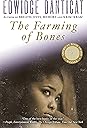

desertcart.com: The Farming of Bones: 9781616953492: Danticat, Edwidge: Books Review: Wonderful and heartbreaking - I think that Edwidge Danticat is a great writer, if not one of the best! I have been going to Haiti on medical missions for 17 years. The people and the stories will always be on my heart, along with Edwige's books. She captures the heart and soul of Haiti. Review: Breaking Bones..... - Sad, but stunningly beautiful, FARMING OF THE BONES is a powerfully written evocative account of the horror of the genocide committed in 1937 against poor Haitian cane workers and others by the Dominican General Rafael Trujillo. Through the voice of a young orphaned Haitian woman, Amabelle Desir, we follow the lives of desperate Haitian exiles working the Dominican cane fields in deplorable conditions with paltry wages and sparse living conditions. Danticat is a master storyteller and her prose lifts and carries, even as the atrocities of what she is telling unfold on the page. She travels a very painful path with humbling grace. She allows the reader to witness grave injustices while keeping them safely wrapped in her beautiful and poignant prose. . Dreaming... remembering...and family are strong elements which serve to enrich the story and draw the reader in as the reality of the despair becomes readily apparent. Trujillo wants to 'whiten' his populace and thus begins the recounting of an unimaginable and shocking ethnic cleansing. Towards the end of the novel, a man says "Famous men never truly die... It is only those nameless and faceless who vanish like smoke in the early morning air." ...on the island which Haiti and The Dominican Republic share. Through the eyes of the narrator, Amabelle working as a maid in the Dominican Republic, we see scores of Haitians cruely massacred. None of those killed is anyone famous, nearly all the slaughtered are poor Haitians working as cheap labor in the neighboring country, but Amabelle's story serves to refute those words spoken about the nameless and faceless of the earth. In this book, they are remembered, and in her story they do have names and faces.
| Best Sellers Rank | #47,455 in Books ( See Top 100 in Books ) #82 in Black & African American Historical Fiction (Books) #123 in Cultural Heritage Fiction #2,191 in Literary Fiction (Books) |
| Customer Reviews | 4.5 out of 5 stars 767 Reviews |
L**H
Wonderful and heartbreaking
I think that Edwidge Danticat is a great writer, if not one of the best! I have been going to Haiti on medical missions for 17 years. The people and the stories will always be on my heart, along with Edwige's books. She captures the heart and soul of Haiti.
S**Z
Breaking Bones.....
Sad, but stunningly beautiful, FARMING OF THE BONES is a powerfully written evocative account of the horror of the genocide committed in 1937 against poor Haitian cane workers and others by the Dominican General Rafael Trujillo. Through the voice of a young orphaned Haitian woman, Amabelle Desir, we follow the lives of desperate Haitian exiles working the Dominican cane fields in deplorable conditions with paltry wages and sparse living conditions. Danticat is a master storyteller and her prose lifts and carries, even as the atrocities of what she is telling unfold on the page. She travels a very painful path with humbling grace. She allows the reader to witness grave injustices while keeping them safely wrapped in her beautiful and poignant prose. . Dreaming... remembering...and family are strong elements which serve to enrich the story and draw the reader in as the reality of the despair becomes readily apparent. Trujillo wants to 'whiten' his populace and thus begins the recounting of an unimaginable and shocking ethnic cleansing. Towards the end of the novel, a man says "Famous men never truly die... It is only those nameless and faceless who vanish like smoke in the early morning air." ...on the island which Haiti and The Dominican Republic share. Through the eyes of the narrator, Amabelle working as a maid in the Dominican Republic, we see scores of Haitians cruely massacred. None of those killed is anyone famous, nearly all the slaughtered are poor Haitians working as cheap labor in the neighboring country, but Amabelle's story serves to refute those words spoken about the nameless and faceless of the earth. In this book, they are remembered, and in her story they do have names and faces.
M**L
Sad read
I like Edwidge Danticat's style of writing. The topic of this book is real while the characters are not. Still made it a very sad read. It also made me read me on the topic.
A**Z
Buena historia. Lo recomiendo para los niños
Soy dominicana y es una buena historia, lo compré para mi clase de grado 10 en Estados Unidos y fue una linda historia, la cual aprender de los tiempos de Trujillo y cosas que llegaron a vivir la comunidad haitiana. Aunque también sé que no solamente los haitianos, también los dominicanos, sufrimos con la dictadura de Trujillo. pero es bueno verlo de los dos modos de cómo lo veían la comunidad haitiana y como lo veían la comunidad dominicana, no se enfoca tanto en la vida dominicana, sí, se enfoca más en la vida de los haitianos, pero es una buena historia
T**.
Insightful!
As someone who grew up with a Haitian father, he has told me of the tension between Haitians and Dominicans under President Trujillo. This book gave me a better insight into how cruel relations really were at the time and I hope that relations between the two countries eventually improve.
R**R
Haiti's long history of misery
I wanted a book on Haiti to learn more about the country, an interest stimulated by the recent earthquake. And I'd never heard of the 1937 Parsley Massacre, where Dominican dictator Rafael Trujillo ordered the execution of Haitians in the Dominican marches. Machetes were primarily used so the government could later plausibly deny that it was involved, claiming instead that Dominican peasants used machetes to defend themselves against rampaging Haitians. In an eerie echo of Judges 12:6, where the word "shibboleth" distinguished Gileadites from Ephraimites and the slaughter of 42,000 of the latter is celebrated, dark-skinned captives were ordered to say "perejil" ("parsley" in Spanish). Neither Haitian Creole nor French uses a trilled "r." If they couldn't correctly roll the "r", they were killed. However, while I enjoyed the book, the evoked emotions and sensations were muted; I think there was too much emphasis on symbolism and foreshadowing and not enough on conveying the foreboding and sheer terror of these events. (Although the scene where a Dominican officer rejects his newborn daughter because of her dark skin was exquisitely rendered.) And the ending is anticlimactic - a long way of saying you can't go home again.
P**L
Painfully beautiful historical fiction
The range of Haitian literature is considerably limited, and primarily consists of books by "outsiders" (those not of Haitian blood who have not lived there for any considerable length of time), and books by Haitian immigrants, with a smattering of poetry and transcribed stories and memoires preserved from Haiti proper. Danticat writes one of the most lovely portrayals of the dynamics between Haiti and the Dominican Republic, which share an island and have engaged in conflict since before the independence of Haiti. The author is able to paint a picture that does not seem to me to take sides, but simply states the reality of what happened through the fictional lives of the characters. I am interested in the way that the relationships between the Haitians and Dominicans are not always strained, and sometimes are extremely close, but those relationships are challenged in the middle of the political strains. I highly recommend this book for those who appreciate good historical fiction, and those who are interested in Haiti and relations in the Caribbean, as well as those interested in literary contributions from the minority and immigrant populations of the U.S.
A**B
Good read
Artistic style of story telling paints a grim picture, but leaves one with hope through remembrance of the lost souls.
Trustpilot
3 weeks ago
2 days ago