We remain fully operational. Our teams are working around the clock to ensure your deliveries continue safely.

DOWNLOAD THE APP


Customer Services
Copyright © 2025 Desertcart Holdings Limited
DOWNLOAD THE APP

🤖 Unlock AI’s creative genius before everyone else does!
Generative Deep Learning (May 2023, paperback) is a highly rated, top-ranked guide that demystifies AI models powering machine creativity in art, writing, music, and more—essential reading for professionals driving innovation in digital content.

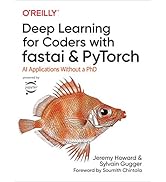
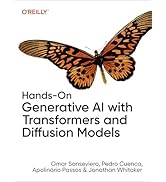
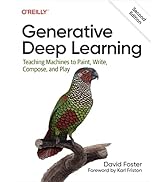

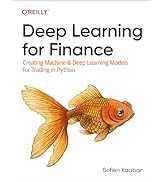


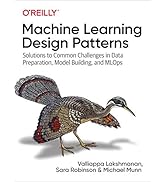
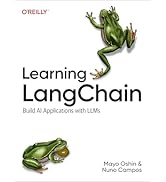
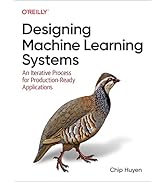
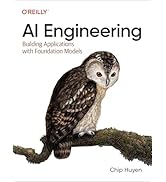



| Best Sellers Rank | #81,777 in Books ( See Top 100 in Books ) #116 in Databases & Big Data #156 in Computer Software #480 in Computer Science |
| Customer reviews | 4.5 4.5 out of 5 stars (144) |
| Dimensions | 17.78 x 1.91 x 23.5 cm |
| Edition | 2nd |
| ISBN-10 | 1098134184 |
| ISBN-13 | 978-1098134181 |
| Item weight | 726 g |
| Language | English |
| Print length | 453 pages |
| Publication date | 12 May 2023 |
| Publisher | O'Reilly Media |
R**N
Although the book covers many key techniques in generative AI, a key question needs to be answered, how do we know if it's generating a good quality image other than by eyeballing it? There should be a section that talks about the joint use of the discriminative model and generative model, for example, if we were using the generative model to augment the dataset for the downstream discriminative task (image classification), how do we evaluate the generated data has been helpful, some may say just look at the performance difference of downstream task, but I bet there is more insight than that, author need to consider this problem in future edition.
S**A
In 2019 I bought, read and thoroughly loved the first edition of this book. One reason I loved that edition was the author’s excellent way of explaining generative adversarial networks (GAN), with humorous and relevant examples. At that point I was a lot more naive about the various deep learning models (ANN, RNN, CNN etc) and for a while I was unable to see where GANs fit in in the grand scheme or evolution of deep learning models. With the explosion in interest in generative AI after the release of ChatGPT-3, I read “Natural Language Processing with Transformers” by Turnstall etc. to get an understanding of the Transformer model. Along the way I read other sources of information on language models such as a paper “Survey of Large Language Models” by Socher etc. That later paper gave an excellent overview of the evolution of language models (statistical language models --> neural language models --> pretrained language models —> large language models). I also saw where language models fit in in the context of ANNs, RNN, CNN etc. When I saw that the author released a second edition of “Generative Deep Learning”, I noticed that the content had changed (ie increased) from the first edition, and I immediately decided to buy the second edition. This second edition has an excellent overview of the evolution of generative models, in fact 6 of them (variational auto encoders (VAE) —> generative adversarial networks (GAN) —> autoregressive models —> normalizing flow models —> energy based models —> diffusion models). I had never heard of some of these models. According to this author the Transformer is an application of generative deep learning models. The author goes on to describe other applications such as music generation and multimodal models. While this book requires one to know Python programming and offers code on GitHub, I was able to skip running the code and still learn a lot about generative deep learning. (I tried to run the code examples but couldn’t get around to it. I wish the author provided easier Jupyter notebooks for running the code). Another aspect of the book that I loved was the author’s description of key concepts like “probabilistic” versus “deterministic”, “discriminative” versus “generative” etc. I highly recommend this book as a great resource for a historical overview of generative deep learning. One should read it before one reads anything on just the transformer or language models.
A**O
O autor é muito bom e o conteúdo também. Dá um overview geral da área e implementações em Tensorflow
C**T
This book was incredible! I followed along and in the course of about a week was able to make my own versions of each of the models described. From GAN to GPT like models! It was general enough that I was able to adapt it to my own specific problems Without having to rely on the examples given in the book. An excellent value for someone who wants to get up and running on their own generative models quickly. Warning: you will need some good GPU time for lots of the examples, I recommend Google Colab!
V**M
Well written book with examples
Trustpilot
2 months ago
2 months ago