
DOWNLOAD THE APP


Customer Services
Copyright © 2025 Desertcart Holdings Limited
DOWNLOAD THE APP
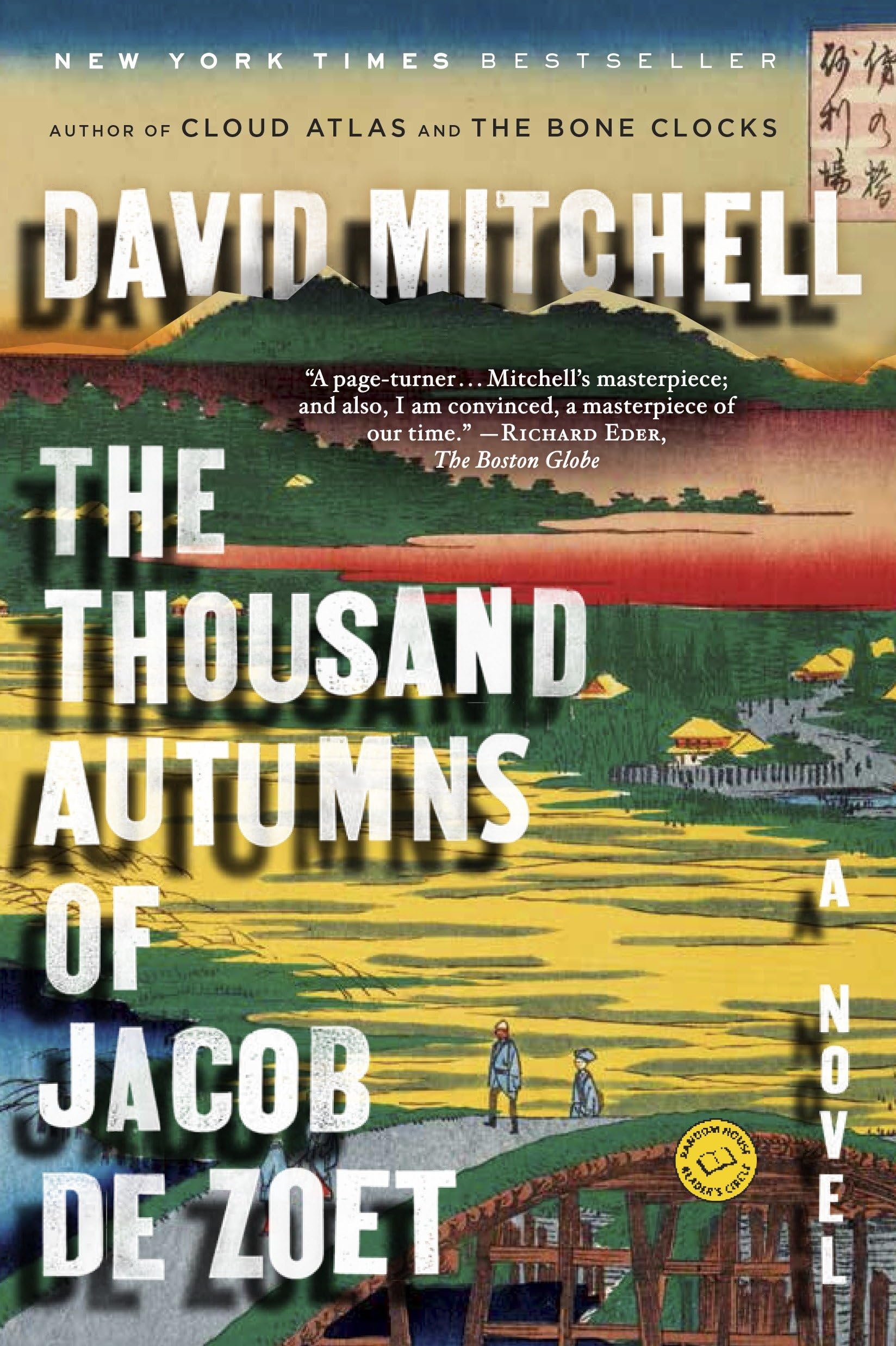
The Thousand Autumns of Jacob de Zoet: A Novel [Mitchell, David] on desertcart.com. *FREE* shipping on qualifying offers. The Thousand Autumns of Jacob de Zoet: A Novel Review: Astonishing, moving historical fiction and rich characterization make this a masterpiece - Given that the only book by David Mitchell that I had read before was Cloud Atlas, I wasn't quite sure what to expect from The Thousand Autumns of Jacob de Zoet - I knew it was widely regarded, but little more than that, not even the setting. (And, from what I've read, it's not quite as genre-bending as some of Mitchell's other works, so it may not have been a representative choice from his works.) What I got, in many ways, couldn't be more different from Cloud Atlas, but it's no less beautiful, powerful, and astonishingly well-written, and by the time I finished it, I knew I had read another masterpiece from Mitchell. A historical fiction, Thousand Autumns details the lives of officers in the Dutch East Indies company stationed near Nagasaki right around the dawn of the 19th century. That's a wholly, utterly foreign world to most Western readers, and much of the book's first section finds Mitchell exploring the culture and society through his characters, letting the world come to life as he subtly sows seeds for the plot threads to come. And then, before you know it, you're lost in Mitchell's rich world, entranced by his complicated, utterly human characters, and caught up in his dense plotting, which involves everything from the British empire to a sect of Japanese monks with horrific beliefs. And just when you think Mitchell has lost track of everything, he pulls it together in two astonishing final chapters that left me stunned, moved, and on the verge of tears at his powerful ending. But the plotting is never really the focus of Thousand Autumns; what fascinates Mitchell, and by extension, the reader, are the characters that populate the world, and the way they're governed by their pasts, their cultures, their senses of honor and betrayal, and a desire to make the most of their lives as best as they can. What Mitchell ends up doing here is telling a story that could be told at no other time in history, but making it beautifully, wonderfully contemporary in the emotions and feelings it deals with. More than that, he succeeds in immersing you in a world that you could never experience, and makes it come to life in such a vivid way that you not only picture it, but can feel yourself getting lost in it. And that, along with Mitchell's astonishing, beautiful prose, makes Thousand Autumns a masterpiece worth savoring. Review: Slightly flawed, but innovative and affecting - Shoving readers with frightful immediacy into a place and era that hasn't exactly been extensively portrayed in contemporary Western fiction, David Mitchell's "The Thousand Autumns of Jacob de Zoet" is easily the finest novel set in turn-of-the-18th-century Japan I've ever read, and should manage to equally impress both literary buffs who like the occasionally history lesson and history nerds who want to inject some fiction into their reading. Setting its human drama and occasional bawdy comedy against the backdrop of a society in flux, it takes readers back to a time before airplanes, cell phones, and the Travel Channel, when trips abroad were long and perilous and information was scarce and closely guarded. In lesser hands the novel could be a dry historical, but Mitchell shows an admirable willingness to get his hands dirty as he enlivens his tale of culture clash and forbidden love with plenty of violence, colorful language and anatomically explicit descriptions. Readers will likely be torn on the effectiveness of the various literary tricks that Mitchell employs (splicing lines of description together with lines of dialogue, especially, could strike readers as either brilliant or maddening), but there's little denying the emotional depth and attention to detail that he brings to the story. As the book's title suggests, its action is centered around the experiences of Jacob de Zoet, a young, devoutly Christian clerk who's joined a Dutch trade mission to Japan in an effort to earn his fortune and secure his bride of choice back home. Upon his arrival at the trading outpost of Dejima just outside Nagasaki, Jacob quickly finds himself plunged into a world dominated by intrigue, greed, and hidden agendas, where the Dutch and their Japanese hosts seemingly compete to see which side can be more duplicitous and arrogant. A romantic element is also introduced in the form of De Zoet's forbidden infatuation with a deformed Japanese midwife, but those expecting a standard-issue historical love story will be getting something else entirely. In spite of the tenuous moral center provided by De Zoet and a few like-minded characters, The Thousand Autumns is in many ways a deeply cynical novel, with depictions of altruism and fidelity greatly outnumbered by those of deceit, self-seeking and worse. Even De Zoet, who's so upstanding in relation to most of the other characters that he practically squeaks when he walks, harbors plenty of outsized ambitions and personal conflicts beneath the piety and rectitude on his surface. The book is at its best in its opening chapters, as it shoves together the combustible elements of a cranky, homesick Dutch trade mission reeling from years of graft and corruption and a shady Japanese contingent trying to wring every bit of money possible out of their guests. The narrative moves along at a pretty breakneck pace in these early chapters, although Mitchell does occasionally slow down to allow his characters to relate wrenching tales of brutality, deprivation, and levels of racial prejudice and hostility that would appall the average Klansman. The story bogs down a little bit in its middle section as Mitchell decides to focus on other, somewhat less interesting characters, but comes roaring back to life in its final act, shifting the focus back to De Zoet and introducing a potentially hostile British crew for a rousing final clash between would-be imperial powers. The final confrontation, along with the intrigues leading up to it, makes for a worthy ending for a book that manages to bring together a frequently bleak worldview and unflinching descriptiveness with bursts of poetic language and sentimentality that can bring a smile to even the most cynical of readers. Throughout the novel Mitchell portrays an existence that's significantly more nasty, brutish and short than in these relatively comfortable times, but he does manage to inject just enough decency and humor to keep the proceedings from getting truly depressing.


| Best Sellers Rank | #64,247 in Books ( See Top 100 in Books ) #204 in Historical British & Irish Literature #1,671 in Historical Fiction (Books) #2,295 in Literary Fiction (Books) |
| Customer Reviews | 4.4 out of 5 stars 5,195 Reviews |
J**E
Astonishing, moving historical fiction and rich characterization make this a masterpiece
Given that the only book by David Mitchell that I had read before was Cloud Atlas, I wasn't quite sure what to expect from The Thousand Autumns of Jacob de Zoet - I knew it was widely regarded, but little more than that, not even the setting. (And, from what I've read, it's not quite as genre-bending as some of Mitchell's other works, so it may not have been a representative choice from his works.) What I got, in many ways, couldn't be more different from Cloud Atlas, but it's no less beautiful, powerful, and astonishingly well-written, and by the time I finished it, I knew I had read another masterpiece from Mitchell. A historical fiction, Thousand Autumns details the lives of officers in the Dutch East Indies company stationed near Nagasaki right around the dawn of the 19th century. That's a wholly, utterly foreign world to most Western readers, and much of the book's first section finds Mitchell exploring the culture and society through his characters, letting the world come to life as he subtly sows seeds for the plot threads to come. And then, before you know it, you're lost in Mitchell's rich world, entranced by his complicated, utterly human characters, and caught up in his dense plotting, which involves everything from the British empire to a sect of Japanese monks with horrific beliefs. And just when you think Mitchell has lost track of everything, he pulls it together in two astonishing final chapters that left me stunned, moved, and on the verge of tears at his powerful ending. But the plotting is never really the focus of Thousand Autumns; what fascinates Mitchell, and by extension, the reader, are the characters that populate the world, and the way they're governed by their pasts, their cultures, their senses of honor and betrayal, and a desire to make the most of their lives as best as they can. What Mitchell ends up doing here is telling a story that could be told at no other time in history, but making it beautifully, wonderfully contemporary in the emotions and feelings it deals with. More than that, he succeeds in immersing you in a world that you could never experience, and makes it come to life in such a vivid way that you not only picture it, but can feel yourself getting lost in it. And that, along with Mitchell's astonishing, beautiful prose, makes Thousand Autumns a masterpiece worth savoring.
W**N
Slightly flawed, but innovative and affecting
Shoving readers with frightful immediacy into a place and era that hasn't exactly been extensively portrayed in contemporary Western fiction, David Mitchell's "The Thousand Autumns of Jacob de Zoet" is easily the finest novel set in turn-of-the-18th-century Japan I've ever read, and should manage to equally impress both literary buffs who like the occasionally history lesson and history nerds who want to inject some fiction into their reading. Setting its human drama and occasional bawdy comedy against the backdrop of a society in flux, it takes readers back to a time before airplanes, cell phones, and the Travel Channel, when trips abroad were long and perilous and information was scarce and closely guarded. In lesser hands the novel could be a dry historical, but Mitchell shows an admirable willingness to get his hands dirty as he enlivens his tale of culture clash and forbidden love with plenty of violence, colorful language and anatomically explicit descriptions. Readers will likely be torn on the effectiveness of the various literary tricks that Mitchell employs (splicing lines of description together with lines of dialogue, especially, could strike readers as either brilliant or maddening), but there's little denying the emotional depth and attention to detail that he brings to the story. As the book's title suggests, its action is centered around the experiences of Jacob de Zoet, a young, devoutly Christian clerk who's joined a Dutch trade mission to Japan in an effort to earn his fortune and secure his bride of choice back home. Upon his arrival at the trading outpost of Dejima just outside Nagasaki, Jacob quickly finds himself plunged into a world dominated by intrigue, greed, and hidden agendas, where the Dutch and their Japanese hosts seemingly compete to see which side can be more duplicitous and arrogant. A romantic element is also introduced in the form of De Zoet's forbidden infatuation with a deformed Japanese midwife, but those expecting a standard-issue historical love story will be getting something else entirely. In spite of the tenuous moral center provided by De Zoet and a few like-minded characters, The Thousand Autumns is in many ways a deeply cynical novel, with depictions of altruism and fidelity greatly outnumbered by those of deceit, self-seeking and worse. Even De Zoet, who's so upstanding in relation to most of the other characters that he practically squeaks when he walks, harbors plenty of outsized ambitions and personal conflicts beneath the piety and rectitude on his surface. The book is at its best in its opening chapters, as it shoves together the combustible elements of a cranky, homesick Dutch trade mission reeling from years of graft and corruption and a shady Japanese contingent trying to wring every bit of money possible out of their guests. The narrative moves along at a pretty breakneck pace in these early chapters, although Mitchell does occasionally slow down to allow his characters to relate wrenching tales of brutality, deprivation, and levels of racial prejudice and hostility that would appall the average Klansman. The story bogs down a little bit in its middle section as Mitchell decides to focus on other, somewhat less interesting characters, but comes roaring back to life in its final act, shifting the focus back to De Zoet and introducing a potentially hostile British crew for a rousing final clash between would-be imperial powers. The final confrontation, along with the intrigues leading up to it, makes for a worthy ending for a book that manages to bring together a frequently bleak worldview and unflinching descriptiveness with bursts of poetic language and sentimentality that can bring a smile to even the most cynical of readers. Throughout the novel Mitchell portrays an existence that's significantly more nasty, brutish and short than in these relatively comfortable times, but he does manage to inject just enough decency and humor to keep the proceedings from getting truly depressing.
B**S
Brilliant. Beautifully written. Well researched. A rare gem of an historical novel. 10 stars!
Fascinating story. Brilliantly written. The "some sexual content" is written in obscure, sometime poetic, sometimes bored, no big deal language that is, in fact, not at all explicit. But you can figure it out, so I cannot say there is no sexual content. Plus one thread of the story follows a corrupt and sinister sexual cult run out of a shrine whose patron is the most powerful and dangerous Japanese official in the area. However, I would have given this book to my clever voraciously reading son, had it been around when he was 12 years old. I could hardly put this novel down. I wanted the pleasure of reading it never to stop. I kept backtracking, rereading passages and whole chapters just for the delight of the language. I laughed out loud, and I cried. It is a very complicated story, populated by assorted con artists, ugly Dutch trading company exploiters of whatever they can find to exploit, whose racial attitudes are those of the 1700s. And the Japanese are no better, except that is it their country they are trying to protect from being overtaken by outsiders. Japanese society was extremely rigid, with horrible tortures and punishments for all kinds of apparently slight infractions. But then the Dutch at that time were brutal in their quest to grab chunks of "empire" away from England and Spain. Japan was one of the few places where the people being exploited for trade managed to contain the foreign invaders, and made the trading company follow their rules. (While in the same time period, England and Spain were imposing their systems of law, religion, and culture on their subjugated colonies, with not much care for what the locals thought or wanted.) So in this time and place a young Dutch clerk, nephew of a protestant minister, has signed on with the Dutch Trading Company V.O.C. to make his fortune with a five year contract and return to Holland with enough money to win the heart of his future father-in-law, and be married to the girl he adores. We meet all the characters he has to live, work, and get along with, Dutch and Japanese, some earnest and fair, some merely greedy bastards, and some pure evil. He has to learn the language, keep his balance on the Company's tightrope while juggling the spoken and unspoken rules of both the the Company's and the Japanese officials' games. This group of outsiders is contained on a small trading island of warehouses, offices, and rooming houses for the officials of the Company, with only the Company men and their slaves and servants (and local bar girls) for social interaction. They are restricted from entering Japan proper. Their interactions with the Japanese are limited to formal business, translations, accounts, stock inventories, negotiating contracts for sales of various commodities, and trials and punishments for those caught breaking the many strict and arbitrary Japanese laws. This is no kind of a "junket," nor is it a particularly posh posting. Exotic yes, but most of young Jacob's co-workers lack the imagination to appreciate their environment as anything other than something to be endured, with the dream of wealth at the end of their term. Jacob does appreciate his surroundings, applies himself to learning Japanese, treats people fairly and with respect, but he gets in trouble because he is honest, and refuses to wink at his superior's fraudulent schemes to enrich themselves. The ending is not at all what I expected. I do not want to give anything away. It is both happier and sadder than I thought it might be. But it is a realistic and very satisfying end to a remarkable story. I have some Dutch ancestors, who in the 17th century went west, and ultimately ended up in one of England's colonies in North America. This book helps me imagine what their lives might have been, had they decided to sign on to a Dutch East Asia Company contract instead.
J**S
A Must-Read
What books qualify for must-reads? I prefer books with a compelling story and excellent writing. Sometimes I'll read books that lack one of these two qualities, but to make it to my must-read list, I require both. David Mitchell's The Thousand Autumns of Jacob de Zoet is a definite must-read. What a title! Upon reading it, you might turn away and select something else, but if you do, you've missed a wonderfully written story. Mitchell begins the book in 1799 on a small island outside of Japan, Dijima. This island is the only place where the then extremely isolated Japanese allowed trading with the outside world (the Dutch in particular). Our main character, Jacob de Zoet, arrived from a small town in Holland to make his fortune and a name for himself so he could marry his sweetheart. Many things conspire against our hero. First, he takes a huge risk when he decides to smuggle in a Psalter (a Christian book). The Japanese forbade any Christian relics, particularly books, crucifixes, rituals, etc. They were not interested in being overrun by missionaries or other outsiders trying to upturn their own beliefs. If Jacob were found with this offending item, he could have been tossed in the brink. Jacob kept the book because it belonged to his great grandfather. It was something he didn't think he could live without. At this stage of the book, we've learned two things about our character: risk-taker and strong beliefs. Fortunately for him, he made friends with the chief translator who ignored the book in exchange for lessons on the Dutch language. Mitchell develops the story around fascinating characters, including an interesting young Japanese woman who excelled as a midwife. The story reveals much about the Japanese culture during this early part of the 19th Century. It also reveals much about the Dutch merchants. If you want to read a compelling story with characters whom you'll warm to and with a bit of history about a part of the world most people have never heard of, this book is a must-read. Furthermore, Mitchell writes with the skill of a master. The language in the dialogue is superb and matches the language of the time. He juggles three languages--Japanese or Dutch or English--without imposing uncomfortable dialects. The plot moves fast and just when you think everything will work out, boom, something else happens. My only complaint was with the ending. Not in the form of an epilogue, it was written as such. Yes, we readers want to know what happened to everyone. Instead of carrying us through the saga Mitchell tells as might a news reporter. My guess is he grew tired of the story. As a reader, I wasn't tired and would have loved to have "seen" more. Nonetheless, you'll finish The Thousand Autumns of Jacob de Zoet wishing for more and sorry to turn the last page of a wonderful book. . .
Z**S
not Mitchell's best
I'm left with mixed feelings. I devoured it eagerly, mostly enjoyed it as I was reading it, but was ultimately left with a sour taste in my mouth, as with a cream puff that, although very pretty to look at, had passed its pull-date. The novel is structured around two real events: the collapse of the Dutch East India company in 1800, and the "Nagasaki Harbor Incident" of 1808, in which the HMS Phaeton, an English frigate, intruded into the harbor with the intention of plundering the Dutch ships they expected to find there. Mitchell has both events happen the same year, and lightly disguises the HMS Phaeton as the HMS Phoebus, but in general hews reasonably close to the events that transpired, providing a realistic framework for the novel. And what does this "realistic framework" contain? In a typically Mitchell-esque fashion, it frames a deliberately unrealistic Gothic melodrama about evil Japanese monks who keep deformed women as brood mares, and a brave but inexperienced samurai who attempts to rescue the woman he loves from them. Readers of Cloud Atlas: A Novel and Ghostwritten won't be surprised by this abrupt shift of genre from realism to romanticism (and back again, through several iterations) but what served Cloud Atlas so well here feels contrived, muddled -- too realistic for "magical realism" -- there is a very careful attention to period detail throughout -- but too fantastical and haphazard for "historical fiction." Beyond this, there were a number of plot and character elements of the novel that were distracting. Many of the minor characters have been given elaborate back-stories, which tend to be revealed in ways that awkwardly interrupt the flow of the narrative. For instance, Van Cleef chooses a post-coital morning stretch on the roof of a brothel to tell the novel's hero, Jacob de Zoet, his entire life story. In a similar vein both Jacob and the novel's heroine, Aibagawa Orito, are noble, brave and self-sacrificing well beyond the point of implausibility. (I found the climactic scene between Jacob and Penhaligon unintentionally ridiculous.) Mitchell eschews the most obvious kinds of sentimentality -- the ending of the novel resonates powerfully in its emotional honesty -- but indulges in smaller instances throughout that jar. Would a samurai really feel any remorse about the loss of a life? Would an uptight, religious Dutch clerk really fall head over heels in love with a scarred women he'd hardly spoken to? Too, for the first time, Mitchell's stylistic quirks began to get on my nerves. As always, I found a great deal to admire in his style -- he brings 18th-century Nagasaki very vividly to life -- but certain Mitchellisms began to seem too predictable, mannered: his use of nouns as verbs; his choppy back-and-forthing between interior monologue and public utterance (as during the sermon on the frigate); his non-sequiturs for poetic effect (e.g. "This Nagasaki," notes Wren, "is an anchorage the equal of Port Mahon.." In clear water, a shoal of silver fish changes direction. "...a few modern placements would make it impregnable"). What seemed effortless panache in Cloud Atlas and Black Swan Green: A Novel here comes across as effortful. Enough griping. As I said at the outset, I enjoyed the novel despite its flaws, but I hope next time out Mitchell delivers a more consistent effort.
L**E
For the Love of Dr. Marinus
I loved and adored The Thousand Autumns of Jacob De Zoet. This was another audiobook I rented from my local library. Despite how much I gushed my way through my first David Mitchell novel, I'm at a loss as to how to go about writing a review. There is so much that goes on and it's all inner-related. Unlike most of my reads, I actually took a fair amount of notes and I even highlighted quotes (will explain below). You would think that this would make for a rather good start. Well, I've been sitting with these notes for ages. Nothing's coming. So, I've decided I would just transpose my thoughts into a post of sorts: The Dutch, be they characters or references are everywhere! I am in heaven. My favorite Dutch-specific quote comes from Jacob De Zoet: Mercenaries are risky allies, as we Dutch know well. Now I think I'm going to adopt the catch phrase "As we Dutch know well" for myself. It could literally go anywhere, but I've yet had the opportunity to use it. I cannot wait for it. If I could give an Oscar for Best Supporting Character in a Book, it would go to Dr. Marinus. He is hilarious, a stand-up friend, and much more open-minded than he first appears. The first time he was introduced, I never in my life would have imagined the role he'd play in Miss Ibagowa's life. He has made me laugh out loud more than any other character. My favorite quote from Dr. Marinus came after Fischer, an Eastern European who does whatever he can to diminish De Zoet, tells the story of his war experience. It made me laugh Diet Coke out of my nose: "The passage where you ate the maggots," remarks Marinus, "rather over-egged the brûlée." There is one scene (which I will not divulge as it would be a spoiler) in which he made me so home sick for my best friends. It's good to know that I have Dr. Marinus' in my life. I just wish they weren't so far away. These villains are villainous! I can't say that I love to hate them, because there is nothing lovable about them. What I loved was the way it all played out in the end. Jonathan Aris is making listening to this audiobook that much more fun. The way he reads the asides and provides tone for the characters is outstanding. The English is very British and quite formal, but that doesn't bother me. Others on Twitter have abandoned the audiobook in favor of reading it in print though. David Mitchell's writing is genius! I loved it so much that I purchased the Kindle edition so I could reread sections again as I went along. There is so much going on in this book. I'll definitely need to reread it in the future. Jacob De Zoet you will forever have a place in my heart. It's interesting to see a glimpse the end of two eras - the Japanese and the Dutch. The Japanese have tried their best to keep Europeans from impacting their culture. That's nearly impossible to do. The Dutch empire is also waning. Jacob De Zoet's time in Japan, where he was marooned in Japan for maintaining his integrity is symbolic of the end of Dutch imperialism. Love, love, love how the story revealed the meaning of the novel's title. Perhaps most people already knew that, but I didn't. I don't want to spoil it here for those who are like me. It was a moment I'll never forget in the narrative. I suppose that pretty much captures my thoughts and feelings about this wonderful novel. I hope you take the opportunity to explore it for yourself.
J**N
Amazing, but flawed...
An imagined life in late 18th early 19th century Dejima is evoked with great skill; ample references to literature from the time available to Dutch and Japanese create a culturally rich background and add a depth of realism to the story and characters. Actual events are skilfully woven into a suspense story that is highly readable and hard to put down. A truly entertaining read that stimulated this reader to read around the subject. It is easy to do this because Mitchell has thoughtfully provided a bibliography of the ample original sources he himself used, including Kaempfer's Japan and Tokugawa Culture Observed, Hendrick Doeff's Recollections of Japan and contemporary scholarship by Timon Screech. The illustrations are extremely useful and beautifully executed in a style which complements the period of the novel. The ghastly vampire-like cult of Enomoto seems reminiscent of the culture-gone-mad surrounding Somni 451 in Cloud Atlas. However, Somni 451's world, set in the future and an extrapolation of our current challenges with genetic research, seemed much more believable by comparison. It was disappointing that Mitchell, with his great skills, should have to depart so far from historical reality to evoke the sort of fear and dread that may have been abundant in feudal Japan in any case. This is a mere detail in a novel that works so well in all its other aspect, however. In all, the great plot, the wonderfully precise knowledge of the state of art at that time, related through Dr. Marinus's medical knowledge and Jacob de Zoet's accounting and religious knowledge, together with a well-researched historical setting in Edo period Nagasaki and an understanding of the workings of Japanese society, make this a quite extraordinary work. Undoubtedly, Mitchell's past achievement in Cloud Atlas pitch one's expectations too high.
J**R
A Novel of Which I Have No interest...
... yet, this novel grabbed me by the first chapter and demanded my attention until I couldn't let it go. Upon hearing the subject matter and context, 18th century Japan, Dutch merchants, trading posts, none of these things are in my field of expertise. After hearing a review by Maureen Corrigan on NPR's "Fresh Air", I clicked my iPhone Amazon app, and ordered it on the stop. Two days later, and I was in an 18th century Dutch trading post outside Nagasaki, Japan. And I didn't want to leave. The writing style, the prose of one David Mitchell paints such vivid, wonderful portraits with his words that I was immediately felt saturated and surrounded by this completely unknown place. It helps that Deijima is a small island with three streets, with a few characters to get to know. One stylistic choice Mitchell makes, and that I really appreciated, was often listing characters names and their occupations, to avoid confusion (or was it true to the place to do so?). Jacob de Zoet is an upstanding, almost morally too straight clerk brought into this island post, and awashes in the culture and times of Japan. Populated by interesting characters (one of them being the post's doctor, a surly character whom I grew to love), one grabs his attention the most: Orito, a midwife with seemingly magical powers, who is disfigured yet filled with beauty. And she's very much a product of her culture. How does the young de Zeot manage to even express interest to this woman that enchants him without breaking cultural rules or offending the cultural codes? All through this story, through the many layers, one thing kept coming back to haunt me. This takes place in Nagasaki, and perhaps because it's the anniversary of the bombing, but I just felt, in occasional scenes, the haunting of that act that would be 140 years in the future, although its never referenced or noted. I couldn't help but do it, and it adds a layer of ... of... sadness to the novel, unintentional or not. There is so much more to this well-crafted tale; including earthquakes, and typhoons, and political intrigue. Suffice it to say that by the time you turn the last page of this book, your heart will be hurting, and hoping, and loving the time you spent with dear Jacob, and sorry that this 400+ page novel is over.
Trustpilot
3 days ago
2 weeks ago