We remain fully operational. Our teams are working around the clock to ensure your deliveries continue safely.

DOWNLOAD THE APP


Customer Services
Copyright © 2025 Desertcart Holdings Limited
DOWNLOAD THE APP
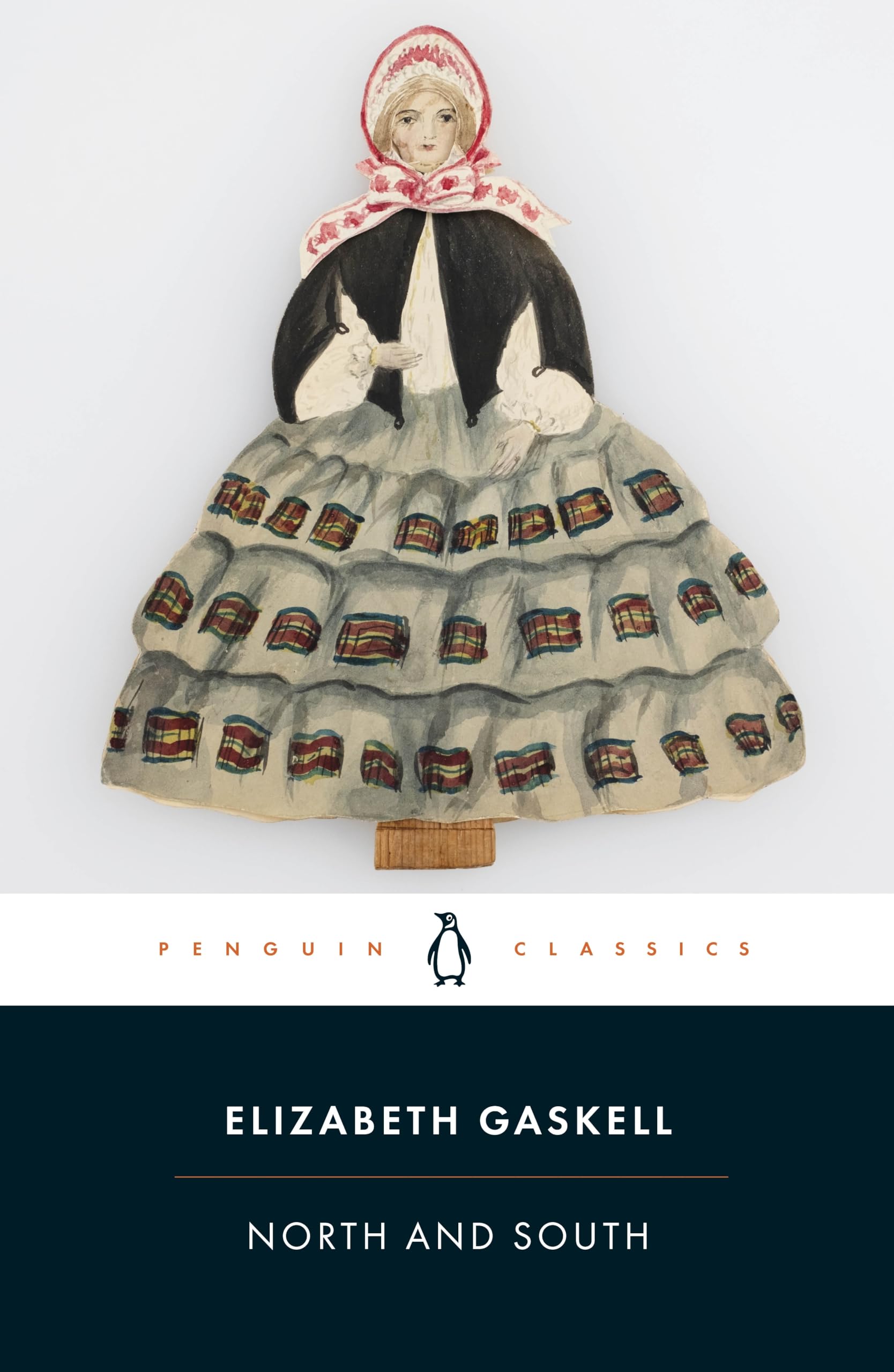
North and South (Penguin Classics) [Gaskell, Elizabeth, Ingham, Patricia, Ingham, Patricia] on desertcart.com. *FREE* shipping on qualifying offers. North and South (Penguin Classics) Review: Loved it! - I read this book after watching the mini-tv series with Richard Armitage. I loved the series and was blown away at his performance as a romantic character (as opposed to the characters Thorin and Guy of Gisbourne). I found the main plot of the book to be similar to Pride and Prejudice, but it also covered characters from the working class and provides insight on how the Industrial Revolution changed relationships between masters and workers. The book was written just after the Industrial Revolution, and though the story-line is fictional, Gaskell's knowledge of industrial towns and of the working class were real. She goes into detail about the sociology behind the interdependent relationship of workers and masters by using Mr Thornton (master), Nicholas Higgins (worker) and Margaret Hale (the outsider) as conduits to discuss the philosophical essays of John Locke and Henry Stuart Mill. The social status of the characters is also interesting with Mr. Thornton as part of the nouveau rich, Higgins part of the working class and Margaret as part the upper class (by blood if not by money). I imagine if Gaskell had been born in our time, she would have been a successful anthropologist or sociologist. The romantic stuff made me giggle like a little girl and I was always looking forward to the next encounter between Margaret and Mr. Thornton. I wish there could have been a chapter which took place a couple years after the end of the book to show how the characters are getting on. It ended too soon! The book is a 19th century romantic classic and it reads like one too. If you're unfamiliar with that style of writing, the Industrial Revolution or the famous philosophers who contributed to discussion on the working class, you might want to touch up on some history a bit before reading this. You only need the basics, but it really helps to understand the context. It's well worth it though, and I think this had become one of my favorite books! Review: Class awareness emerging - Formulaic love story, with class issues and subtle hints of subversive thinking. For me, much richer and full of substance than others I've read in that genre. Unlike Austen's characters, protagonist Margaret is less interested in manipulating through her social world, but through circumstances and her strong commitment to her family, Margaret is more interested, first by repulsion and then by attraction, in the lives of the owners and workers she encounters when moving from agrarian south to newly industrialized market/merchant town in the north. It is a newly emerging market society, repulsive to the aristocracy for its blatant quest for money. Beginning of looking at the symbiotic relationship between the "masters" (factory owners) and the workers who, in response to extreme exploitation for their labor, fall into organizing and resulting dominance from labor unions. Rogue strikers not following carefully engineered plans cause chaos, disrupting a well organized strike. Owners resort to importing Irish workers resulting in lost contracts from substandard products made by this new unskilled labor. Characters find awakening awareness to a need for the masters and laborers to actually hear one other. Also, the instability of markets and the vulnerability not only of workers, but owners, becomes apparent. Other themes: the love story; the lives of the aristocracy, masters, agrarian poor; family relationships and mothers; health and environmental awareness; operation of a biased legal system in face of brother's mutiny; racial issues in relation to attitudes towards Irish; attitudes towards the Catholic country of Spain; slice of history at start of industrialization; crisis of religious conscience by Margaret's father in Anglican church, which moves the plot. Margaret is from the aristocracy of her mother, lives on the fringes of aristocracy through her father's modest career as a country preacher. Margaret is a strong woman thinking for herself and not angling for a good marriage. Mr. Thornton, the Mr. Darcy of this story, is a self-made man, an emerging captain of industry with more cares of the world and business than Darcy. Men's emotions are more fleshed out here than Austen. In that smokey northern town there is an excitement and energy that attracts, a repulsive market awakening of a flat and static aristocratic society dependent on agrarian roots. Need to adjust to the English, written for its time. Great local dialogue by Higgens, key worker and union member. Some humor and lovely sense evoking descriptions. Loved Margaret.






| Best Sellers Rank | #54,638 in Books ( See Top 100 in Books ) #534 in Classic Literature & Fiction #859 in Family Saga Fiction #1,658 in Literary Fiction (Books) |
| Customer Reviews | 4.5 4.5 out of 5 stars (9,720) |
| Dimensions | 5.12 x 0.83 x 7.8 inches |
| Edition | Revised ed. |
| ISBN-10 | 0140434240 |
| ISBN-13 | 978-0140434248 |
| Item Weight | 12 ounces |
| Language | English |
| Print length | 496 pages |
| Publication date | June 1, 1996 |
| Publisher | Penguin Classics |
A**1
Loved it!
I read this book after watching the mini-tv series with Richard Armitage. I loved the series and was blown away at his performance as a romantic character (as opposed to the characters Thorin and Guy of Gisbourne). I found the main plot of the book to be similar to Pride and Prejudice, but it also covered characters from the working class and provides insight on how the Industrial Revolution changed relationships between masters and workers. The book was written just after the Industrial Revolution, and though the story-line is fictional, Gaskell's knowledge of industrial towns and of the working class were real. She goes into detail about the sociology behind the interdependent relationship of workers and masters by using Mr Thornton (master), Nicholas Higgins (worker) and Margaret Hale (the outsider) as conduits to discuss the philosophical essays of John Locke and Henry Stuart Mill. The social status of the characters is also interesting with Mr. Thornton as part of the nouveau rich, Higgins part of the working class and Margaret as part the upper class (by blood if not by money). I imagine if Gaskell had been born in our time, she would have been a successful anthropologist or sociologist. The romantic stuff made me giggle like a little girl and I was always looking forward to the next encounter between Margaret and Mr. Thornton. I wish there could have been a chapter which took place a couple years after the end of the book to show how the characters are getting on. It ended too soon! The book is a 19th century romantic classic and it reads like one too. If you're unfamiliar with that style of writing, the Industrial Revolution or the famous philosophers who contributed to discussion on the working class, you might want to touch up on some history a bit before reading this. You only need the basics, but it really helps to understand the context. It's well worth it though, and I think this had become one of my favorite books!
D**N
Class awareness emerging
Formulaic love story, with class issues and subtle hints of subversive thinking. For me, much richer and full of substance than others I've read in that genre. Unlike Austen's characters, protagonist Margaret is less interested in manipulating through her social world, but through circumstances and her strong commitment to her family, Margaret is more interested, first by repulsion and then by attraction, in the lives of the owners and workers she encounters when moving from agrarian south to newly industrialized market/merchant town in the north. It is a newly emerging market society, repulsive to the aristocracy for its blatant quest for money. Beginning of looking at the symbiotic relationship between the "masters" (factory owners) and the workers who, in response to extreme exploitation for their labor, fall into organizing and resulting dominance from labor unions. Rogue strikers not following carefully engineered plans cause chaos, disrupting a well organized strike. Owners resort to importing Irish workers resulting in lost contracts from substandard products made by this new unskilled labor. Characters find awakening awareness to a need for the masters and laborers to actually hear one other. Also, the instability of markets and the vulnerability not only of workers, but owners, becomes apparent. Other themes: the love story; the lives of the aristocracy, masters, agrarian poor; family relationships and mothers; health and environmental awareness; operation of a biased legal system in face of brother's mutiny; racial issues in relation to attitudes towards Irish; attitudes towards the Catholic country of Spain; slice of history at start of industrialization; crisis of religious conscience by Margaret's father in Anglican church, which moves the plot. Margaret is from the aristocracy of her mother, lives on the fringes of aristocracy through her father's modest career as a country preacher. Margaret is a strong woman thinking for herself and not angling for a good marriage. Mr. Thornton, the Mr. Darcy of this story, is a self-made man, an emerging captain of industry with more cares of the world and business than Darcy. Men's emotions are more fleshed out here than Austen. In that smokey northern town there is an excitement and energy that attracts, a repulsive market awakening of a flat and static aristocratic society dependent on agrarian roots. Need to adjust to the English, written for its time. Great local dialogue by Higgens, key worker and union member. Some humor and lovely sense evoking descriptions. Loved Margaret.
E**Y
A Thoughtful, Moving Tale of Love and Class
North and South is my favorite classical novel! I really loved Margaret Hale—she’s strong, smart, and so relatable—and watching her navigate the harsh realities of industrial England felt so real. John Thornton is stubborn but also surprisingly human, and their slow-burn relationship kept me hooked. I also really appreciated how Gaskell doesn’t shy away from showing the struggles of workers and the gap between classes—it makes the story feel meaningful even today. Thoughtful, emotional, and totally engaging, this book stayed with me long after I finished it.
J**O
Sweet Romance
If you like Pride and Prejudice, you’ll like this book. Elizabeth Gaskell writes similarly but easier to read. I enjoyed it.
G**M
Wie soviele andere bin auch ich durch die BBC-Verfilmung auf das Buch aufmerksam geworden. Aufgrund der sehr 'englischen' Geschichte habe ich mich daran gewagt, es auf Englisch zu lesen (und habe erst später völlig verblüfft gelesen, dass es gar keine deutsche Übersetzung gibt, was bei einem Buch dieser Qualität unverständlich ist). Das Buch dreht sich um die Figur der Margarete Hale, die Tochter eines englischen Pfarrers um 1850. Der Vater beendet aus inneren Konflikten heraus seinen Pfarrersdienst und die Familie (Vater, Mutter, Margarete) ziehen aus dem idyllischen, ländlichen Helstone im Süden Englands in das nördliche, industriell geprägte Milton. Dort begegnen sie der Welt der Baumwollspinnereien, der Fabrikante, der Händler, der Arbeiter, einer eher grauen, steinernen, stinkenden Umwelt, die im Gegensatz zu ihrem grünen, farbenfrohen, ländlichen Idyll Südenglands steht. Margaret begegnet im speziellen dem Fabrikanten Mr. Thornton, der eine der Baumwollfabriken führt und zusammen mit seiner bestimmenden Mutter lebt, zu der er eine innige Beziehung hat. Margarete verkörpert den Typ der Frau um 1850, die in ihrer grundlegenden Haltung der Tradition verpflichtet ist (in Moral und Anstand, Denken in geschellschaftlichen Schichten und Pflichtgefühl gegenüber der Familie), in vielen Denk- und Verhaltensweisen aber die aufkommende Moderne aufnimmt (in Sensibilität für die Ungerechtigkeit gegenüber armen sozialen Schichten, in Freiheit des Denkens, in teilweise selbstbewussten Auftreten gegenüber Männern). Thornton ist der Fabrikant, der zwar die Rolle des Fabrikanten als 'Master' über seine Arbeiter konsequent vertritt, dabei aber mehr als andere auch Verantwortung und Pflicht gegenüber seinen Arbeitern empfindet. Das Buch erzählt nun im Sinne eines Entwicklungsromans Geschichten rund um Familie von Margarete (Krankheit und Tod der Eltern, die Geschichte um einen Bruder, der wegen Teilnahme an einer Meuterei als Offizier aus England verbannt ist) und um die sozialen Zustände in Milton (v.a. exemplarisch am Kontakt Margaretes zu einer Arbeiterfamilie und einem stattfindenden Streik). Darin hineingewebt ist die Geschichte um die Beziehung von Margarete mit Thornton. Sie beginnt mit verbalen Streitgesprächen, wird dann emotionaler, um nach einem krisenhaften Auseinanderbrechen, sich dann wieder emotional aufzuladen. Diese Liebesgeschichte erinnert nun an Jane Austens Paare. Sie ist aber definitiv nur ein Teil des Ganzen. Weite Teile erinnern in ihrer Betonung sozialer Misstände eher an Dickens oder in ihrer Verquickung von Familiengeschichte mit Schilderung gesellschaftlicher Entwicklungen an den frühen Thomas Mann. Das Buch ist eine ausgewogene Mischung aus Liebe-, Familien- und Gesellschaftsroman. Die verschiedenen Teile werden dabei mit ausgewogener Länge bedacht, wenngleich dem ganzen Buch (wie vielen Romanen) im ganzen 50 Seiten weniger gut getan hätten. Die psychologische Charakterisierung der Figuren ist intelligent, tiefgründig und hochwertig. Die Schilderung sozialer Missstände gelingt nicht ganz so packend, hinterlässt aber an vielen Stellen trotzdem Eindruck. Gut gelingt die ambivalente, facettenreiche Schilderung der Wahrnehmung von Süden (der nicht simpel verklärt wird) und Norden (der nicht einhellig verdammt wird). Sprachlich ist es hochwertig und weitestgehend sehr angenehm zu lesen. Eine Sprache, die poetisch, anregend und bezaubernd ist, aber nicht zu abgehoben oder intellektuell degoutant (hat mich an die 'Buddenbrooks' erinnert, wenn auch nicht ganz auf dem Niveau). An der ein oder anderen Stelle ist das Englisch dadurch mal nicht ganz einfach, v.a. im Fall von längeren Sätzen (man sieht hier mal, wie es Engländern mit der deutschen Sprache mit ihren vielen langen Sätzen gehen muss). Richtig schwierig sind z.T. die Dialoge mit Personen aus der Arbeiterklasse, weil hier deren Dialekt nachgeahmt wird (wobei ich so doof war, erst nach der letzten Seite zu merken, dass sich auf den letzten zwei Seiten ein Glossar mit Übersetzung der am übelsten Dialektausdrücke in echtes Englisch befindet). Im ganzen für Liebhaber von Literatur aus dem 19.Jahrhundert eine absolute Empfehlung.
S**B
Margaret Hale, the beautiful young daughter of a clergyman, is uprooted from her father's Hampshire rectory in the south of England when he decides he is unable to make a fresh declaration of conformity to the Liturgy and, in consequence, makes the decision to leave the church. Mr Hale resigns his position and takes his daughter and his delicate wife (who is totally shocked and distressed by her husband's decision) and moves them to Milton, an industrial town in the north of England. At Milton, Mr Hale takes on a tutoring role, which brings him into contact with factory owner John Thornton, a self-made man and an individual (and all that he stands for) whom Margaret takes exception to at their first meeting. In comparison with the south of England, Margaret and her mother find the northern town of Milton dirty and smoky and find the local people brash and uncultured; Margaret is also dismayed at the poverty in which the factory workers and their families are forced to live. However, she soon realizes it is up to her to make the best of the situation she finds herself in and she begins to take an interest in the local workers, which leads her into befriending a young woman and her father, Nicholas Higgins, a factory worker, who is involved with the unions and ready to take the workforce out on strike. Margaret's involvement with the Higgins family and her concerns about the living conditions of the working-class in Milton, brings her into further conflict with mill-owner John Thornton - who, by now, finds himself deeply attracted to Margaret, despite her attitude towards him. As time passes and Margaret and her family find themselves in some very difficult circumstances, Margaret's view of John Thornton gradually begins to change and she starts to see him in a new light, but then a situation arises, the consequences of which threaten to ruin their growing understanding of one another and spoil their chances of any sort of meaningful relationship. Published in 1855, Elizabeth Gaskell's 'North and South' with its themes of power and authority, and of gender and social inequality, has been compared with Charlotte Bronte's 'Shirley' for its depiction of the struggles of the workers against the mill owners, and Jane Austen's 'Pride and Prejudice' for its portrayal of the combination of antagonism and attraction experienced between the two main characters, and I can understand why this novel has been thus compared - however, Miss Gaskell has her own story to tell, she tells it in her own way and she tells it particularly well. I first read this novel many years ago when I was a teenager and feel I have derived much more from it by this second visit, finding it an involving and very interesting read. At 500 or so pages, this is certainly not the longest of the classics, but if you feel you might not have the time to devote to it, do consider downloading the Audible audio version: 'North and South' , which is very ably narrated by Juliet Stevenson and which you can enjoy listening to 'on the go' or whilst getting on with something else. 5 Stars.
L**P
I love this book. Margaret becomes aware of the poverty and suffering of the local mill workers and develops a passionate sense of social justice. This is intensified by her tempestuous relationship with the mill-owner and self-made man, John Thornton, as their fierce opposition over his treatment of his employees masks a deeper attraction. For me John Thornton is very underated. He loses nothing for Mr. Darcy. Margareth drives me crazy sometimes, she is very frustrating because she doenst know much about life outside her buble and her actions contradict her feelings because she doenst know herself very well and is very naive at the begginning. John and Margaret are two of the most original characters of Victorian literature. I also love Higgins and his friendship with John.
R**A
Set in the times of the Industrial revolution in England, North and South is undoubtedly one the best classics I have ever read. We all know Jane Austen, yes she's great, agreed. But I feel that Gaskell never actually got the recognition she deserved for penning this masterpiece, even well after a hundred years since it's publication, owing partly to a few bad reviews from a few sexist critics, who were obviously not amused by Margaret's (our Heroine) rigorous exercise of her free will and "haughty", talk-back-to-men-attitude, and partly because it was a Woman writer, writing a book about a female heroine. Do the maths. Needless to say, she's a bit of a badass. The Novel itself is set in a fictional town of Northern England, Milton, to where Margaret Hale grudgingly relocates, relinquishing her most beloved home in the rural south, hence the name, North and South. Margaret's general disdain for the Industrialised North and her tendency to sympathise with the poor and to encourage them to lead a better life, clashes with the indifferent attitude of John Thornton, a wealthy manufacturer, who rules his cotton mill with an iron fist, and whose contemptuous attitude towards his workers, leads Margaret to despise him even more. It's in Milton that Margaret witnesses the first workers strike and it's repercussions. For the facts mentioned before, I hardly consider this novel a love story. This book manages to present us with many dimension of human emotions and their complexities. How Margaret and John learn to accept differences in opinions and in return gain something entirely unexpected. And since love obviously triumphs all differences, this is ultimately a love story, and a good one at that. We need to have more characters like them in Modern literature today, as opposed to the Twilight Trash. A happy or sad ending? It's actually quite a surprise and I totally love the ending. I love this book so much that even though I have a hardbound copy of it, I ordered one on Kindle as well, because I would like to carry it with me on my travels. Lovers of Jane Austen and the Bronte sisters are sure to love this one! I love the writing and the dialogue and the awkward exchanges between the characters, especially between our two leads. They are quite adorable to be honest. And I love how Gaskell shows us multiple point of views, not just of Margaret, and that's what makes this book so great. After reading the book I highly recommend the TV series as well. Cheers, Have fun reading!!
S**A
Ho iniziato il libro subito dopo averne visto l'adattamento per la tv. Seppur trovando lo stile di E.C Gaskell un po' ostico all'inzio e faticando nella comprensione dei dialoghi nel dialetto del Darkshire (l'immaginaria contea del Nord d'Inghilterra dove gran parte del romanzo si svolge), mi sono ritrovata totalmente risucchiata dal romanzo e dalle vicende che narra. La storia d'amore tra Mr. Thornton e Margaret Hale si snoda avendo per sfondo gli importanti mutamenti sociali della rivoluzione industriale inglese, che l'autrice narra con quasi pari zelo. Un po' deludente il finale, che dopo le battaglie interiori dei due personaggi avrebbe forse meritato un tono più vivido, anche se - certamente - Gaskell ha optato per la chiusura più intonata al carattere dei due protagonisti.
Trustpilot
1 week ago
3 days ago