Some deliveries may take a little longer than usual due to regional shipping conditions.

DOWNLOAD THE APP


Customer Services
Copyright © 2025 Desertcart Holdings Limited
DOWNLOAD THE APP

⚡ Power up your home network—fast, secure, and effortlessly connected!
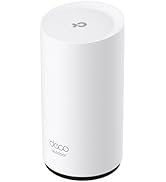
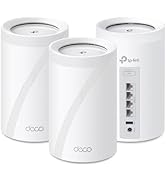
The TP-Link TL-WPA7617 Powerline WiFi Extender leverages your home's electrical wiring to extend wired and wireless internet coverage up to 750 feet. Featuring AV1000 powerline speeds, dual-band AC1200 WiFi (867 Mbps on 5GHz + 300 Mbps on 2.4GHz), and a gigabit Ethernet port with passthrough power socket, it ensures seamless HD streaming, gaming, and smart device connectivity. Easy plug-and-play setup with OneMesh compatibility and advanced security makes it ideal for multi-story homes and challenging WiFi environments.











| ASIN | B09VJGSTYK |
| Best Sellers Rank | #18 in Powerline Network Adapters |
| Customer Reviews | 4.0 4.0 out of 5 stars (926) |
| Date First Available | April 8, 2022 |
| Item Weight | 7 ounces |
| Item model number | TL-WPA7617 |
| Manufacturer | TP-Link |
| Product Dimensions | 2.74 x 1.38 x 4.89 inches |
A**R
Incredibly easy WiFi! Super easy to set up!
We moved into an 1880 stone house. Everyone said, including our internet installer, that we would have issues getting WiFi inside the house. My I.T. manager at work recommended this. It works beautifully! It provides a signal through the electrical system of our house AND each plug in module also provides it wirelessly for laptops, etc. We are EXTREMELY pleased with how easy this was to set up and how amazingly it works! No fuss No muss
A**R
Easy install
Worked really great,put it in my shop witch is 70 feet away from my house and got really good Internet connection and easy to install.
R**G
Works well, but needs better instructions.
Tried everything to get it to improve our WiFi signal. Utilized the same circuit breaker, tpPLC app, internet searches, etc. but failed to improve our WiFi until . . . . . What they could let you know is that you need to connect to its SSID (WiFi name) which is not apparent, even in the app. After looking at the list of WiFi network SSID’s to connect to, I noticed a TP-Link connection. I tried it and it worked. So your device has to connect to another network name. After all, it’s not an extender of your current WiGi, but a powerline network adapter. Using an online internet speed check, it’s not faster than my original home WiFi, but the signal is stronger, which is what was needed.
D**N
Speed and Installation
This was easy to install and it increased the speed and range of my wifi. Great value for money. Great quality and the cable length was perfect but could be a bit longer
J**A
Didn't Work in our House
Our cable internet provider says our signal should be at least 500 Mbps down, and currently a wired connection measures in the low 600’s. Wi-Fi on the other side of the house drops to about 330 Mbps. Powerline Wi-Fi extenders have been recommended by folks who should know on online forums to which we belong, so we hoped this extender would provide a good signal throughout the house, including some places where we don’t have one. However, with the adapter plugged into a port on the router, the extender barely produced 30 Mbps when plugged into an outlet on the same electrical circuit. This is good enough to stream 4K video, but no useable signal was present when we plugged into an outlet where we needed it, so we returned the device for a refund. My husband fiddled with it for a week or so, but it just didn’t work in our house. Perhaps the poor performance is due to the way our house is wired. It was built in 1989 when houses were wired room by room, with outlets and lighting fixtures on the same circuit. Or maybe there is some other reason. As a sidebar I can report that powerline Wi-Fi is compatible with X-10 home automation, as all our X-10 devices continued to work. X-10 is an older home automation protocol which wouldn’t be installed today, but since our system works just fine there is no need to replace it. Or maybe the reason there was no interference between the two systems is because the Wi-Fi signal was so weak. Strange that our house wiring supports an old automation protocol but not a new Wi-Fi system.
B**E
MUCH slower than advertised, and Amazon shipped me a used one
I wanted Internet access in my workshop - it's two floors below my WiFi access point and between the flooring, ductwork and so forth, I've had little luck getting a reliable signal there. I don't need massive speed, so my first thought was powerline networking. I've had good luck with TP-Link powerline products in the past, so I figured I'd try it. The biggest problem I had was that the product I received was obviously returned by a previous owner. I can say this definitively because instead of using the default SSID and password on the label, it was configured to the SSID "DavesGarage" with an unknown password...clearly, someone had deployed this product and returned it to Amazon, but nothing in the product description told me I was paying for a used product. I was also surprised at the performance limitations of this device. I have an older TP-Link powerline adapter that works well, but lacks WiFi (it's just two wired gigabit ethernet ports). I get about 700 megabits to this device and that's more than enough for my needs. I was expecting this newer WPA7617 to be as fast or faster, but that's not the case. On the wired ports of the WPA7617, I'm getting about 100 megabits - maybe 10% of the advertised speed. Connected to WiFi, I get about 30 megabits on the 2.4 GHz band, and about 50 megabits on the 5.0 GHz band. I thought perhaps the issue was the location where I have the device, so I moved the WPA6717 to the same location where I have my other powerline adapter and unplugged the older one. No change - still roughly 10% of the promised throughput. I also tried moving my older TP-Link receiver to my workshop, and it did fine there - about 700 megabits. Thinking it might be a problem to have two separate powerline networks going, I also tried pairing the receiver in the WPA7617 kit with my existing powerline network...again, no chancg in performance. I was impressed that this configuration worked (that is, one sender connecting to two receivers), but it didn't seem to make a difference from a performance perspective. Other negatives I'll mention are that the device runs a bit hot, it's big enough to block both outlets in a normal junction box, and it doesn't support any of the recent WiFi standards. There's no 802.11AC, AX, etc...the latest you get is 802.11n - a 15-year old standard that emerged in 2008. On the positive side, it is fairly inexpensive and once I understood how to reset the device back to factory defaults to clear the configuration that the previous owner had set, the setup process went smoothly. I had it up and running in just a few minutes, and the connection seemed to be solid (albeit slow). In summary, I suppose the fact that I was shipped a used product masquerading as new isn't TP-Link's fault...I'll blame Amazon for that one. But dramatically slower performance than advertised is troubling, and even though that's not necessarily a show-stopper for me,I just can't recommend this product. I'd definitely recommend trying other brands instead.
G**L
Extended my TP-Link OneMesh Wifi to my detached garage, and it works great.
I have an Archer AX11000 router. I previously had added a OneMesh node using a TP-Link range extender (has to be One of their OneMesh compatible RE Models). I wanted to add another node to my detached garage in order to add some home automation out there. I was concerned that a OneMesh range extended would not work well because of the distance and the structure. This Powerline Wifi extender was the answer. My garage uses the same power circuit as my house, so I was able to set up the base next to my router and put the receiver/wifi in my garage. I got a strong signal and the Wifi setup was simple. Once it was set up and working normally I wanted to turn it into a OneMesh node. All I had to do was open my main router in the Tether app, go to Tools > OneMesh. The new Powerline adapter appeared in the list of OneMesh devices on the network. I clicked it, turned on the OneMesh slider, and 30 seconds later I had a OneMesh node in my garage.
C**E
Não funcionou
C**.
Me gusta que solo conectas ese cuadrito en una parte centrica en tu casa y listo. En mi cuarto gamer tengo el model y lo conecto con cable ethernet y ya tengo internet disponible en todo mi departamento con muy buena señal y tengo ya 2 años con el articuli y me encanta
T**T
This extender worked great and was easy to install. We had a couple of dead zones in our home and now we are able to get great wifi all over the house
C**.
Not suitable for sale in the UK. Has an American style plug and is incompatible with UK electrical wiring. Scan computers sell the UK version of this item.
G**F
Verdaderamente da gusto encontrar equipos que funcionen de una forma tan sencilla como este: Se conecta acá, se conecta allá, ¡y ya está! Exagero un poquito tal vez: Quise verme "fino" y extender de forma transparente la red de casa tal como la tengo configurada, y el botón de WPS no funcionó (a pesar de que tanto mi modem/ruteador y el extensor lo tienen). Sin embargo, me bastó entrar a la configuración provista por éste sobre su red local, y no tuve ningún problema. Ahora estoy esperando por uno adicional, pues compré otro equipo para instalar en casa de mis suegros 🙂
Trustpilot
2 weeks ago
1 month ago