We remain fully operational. Our teams are working around the clock to ensure your deliveries continue safely.

DOWNLOAD THE APP


Customer Services
Copyright © 2025 Desertcart Holdings Limited
DOWNLOAD THE APP
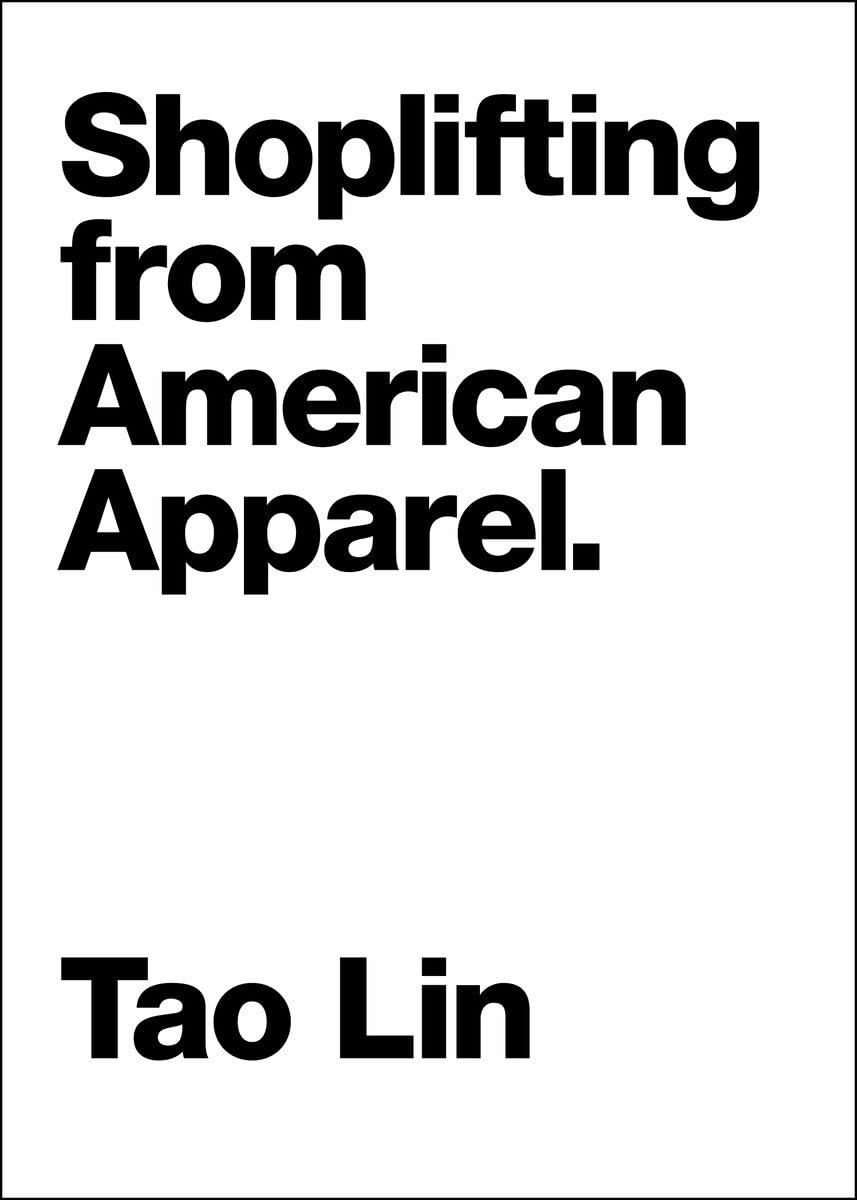
Shoplifting from American Apparel (The Contemporary Art of the Novella) [Lin, Tao] on desertcart.com. *FREE* shipping on qualifying offers. Shoplifting from American Apparel (The Contemporary Art of the Novella) Review: Great novella - Within 2 hours of getting this book in my hands I had finished it. It was an engrossing read throughout and I was totally committed to getting through it. The book flows much better, in my opinion, than that of Eeee Eee Eeeee, but there are certainly similarities. I really enjoy the format, the banter between characters and the way that Lin is able to capture the feeling of loneliness and confusion that goes along with being alone in the world, in this modern day where we feel so connected through the internet, but really have a hard time connecting ourselves to the real world, and an even more difficult time caring at all. Definitely a book worth reading a few times. Review: Tao Lin: Part 2 - Tao Lin writes in a sort of generation idiom, a casual narcissism/self-concern, where concerns about others are invariably caught up in the whole thing about how one's self is perceived. Is this brutally naked emotional honesty? Does it derive from the author's role as a public artist? I don't really know and I waver between caring and not caring about it. Some days I barely have the energy to crawl out of bed, let alone Plato's cave, right? Shoplifting from American Apparel follows the protagonist, a lightly fictionalized or not-fictionalized-at-all version of Lin, through some stuff, where he thinks about--and to a much lesser extent, assumes some agency in regard to--girls and life and veganism and, yes, shoplifts from American Apparel. (For background on that particular aspect of the work, please consult this critical behemoth: [...]) Rarely has so little plot been so polarizing among the people I've spoken to. I read the majority of this novel in the back patio of 4th Avenue Pub in Brooklyn. At some point, I was joined by a number of people from BAM and their various artistically-inclined associates. I assumed that they fit the basic target demographic for his work, but no one in the crowd registered awareness of Tao Lin until certain details about the author and his writing were mentioned, at which point the mood turned sour. Comments were made to the effect of disapproval of his public persona and "provocative" behavior e.g. the title of this novel. It was hard to make the case in favor of Lin. I don't know if that's intentional on his part. Much noise is made about his unlikableness but when its coming from Gawker and the like I'd chalk that up to the narcissism of small differences more than anything else. His aggressive social media campaign also sends mixed signals about his desire to be liked or disliked by a mass audience, if that's even relevant to the discussion. (Full disclosure: This series of Tao Lin reviews was prompted by an email exchange with the author. These conversations were too brief for me to provide any first-hand accounts on this subject, though he seems like a nice enough guy.) The best reason I can give you to read Shoplifting from American Apparel might not exactly inspire you but I hope you understand where I'm coming from on this. I adhere to the theory, which I first saw articulated in Although Of Course You End Up Becoming Yourself, that reading a good book is like having a great conversation with a friend. I'm sitting here eating vegan chicken salad and drinking iced coffee as I write this. I alternate between a vague detachment to everything or a paralyzing emotional connection. I want to write and feel enormous dread about my abilities as a writer, my prospects for making any sort of living at it. I feel like when Lin writes about himself, in the way intimacy among friends often goes, he also reveals things I didn't really recognize about myself and provides a safe space to come to grips with them.
| ASIN | 1933633786 |
| Best Sellers Rank | #768,848 in Books ( See Top 100 in Books ) #2,432 in Fiction Urban Life #4,951 in Coming of Age Fiction (Books) #24,434 in Literary Fiction (Books) |
| Customer Reviews | 3.6 3.6 out of 5 stars (134) |
| Dimensions | 5 x 0.26 x 7 inches |
| ISBN-10 | 9781933633787 |
| ISBN-13 | 978-1933633787 |
| Item Weight | 3.53 ounces |
| Language | English |
| Part of series | The Contemporary Art of the Novella |
| Print length | 112 pages |
| Publication date | September 15, 2009 |
| Publisher | Melville House |
A**Y
Great novella
Within 2 hours of getting this book in my hands I had finished it. It was an engrossing read throughout and I was totally committed to getting through it. The book flows much better, in my opinion, than that of Eeee Eee Eeeee, but there are certainly similarities. I really enjoy the format, the banter between characters and the way that Lin is able to capture the feeling of loneliness and confusion that goes along with being alone in the world, in this modern day where we feel so connected through the internet, but really have a hard time connecting ourselves to the real world, and an even more difficult time caring at all. Definitely a book worth reading a few times.
K**R
Tao Lin: Part 2
Tao Lin writes in a sort of generation idiom, a casual narcissism/self-concern, where concerns about others are invariably caught up in the whole thing about how one's self is perceived. Is this brutally naked emotional honesty? Does it derive from the author's role as a public artist? I don't really know and I waver between caring and not caring about it. Some days I barely have the energy to crawl out of bed, let alone Plato's cave, right? Shoplifting from American Apparel follows the protagonist, a lightly fictionalized or not-fictionalized-at-all version of Lin, through some stuff, where he thinks about--and to a much lesser extent, assumes some agency in regard to--girls and life and veganism and, yes, shoplifts from American Apparel. (For background on that particular aspect of the work, please consult this critical behemoth: [...]) Rarely has so little plot been so polarizing among the people I've spoken to. I read the majority of this novel in the back patio of 4th Avenue Pub in Brooklyn. At some point, I was joined by a number of people from BAM and their various artistically-inclined associates. I assumed that they fit the basic target demographic for his work, but no one in the crowd registered awareness of Tao Lin until certain details about the author and his writing were mentioned, at which point the mood turned sour. Comments were made to the effect of disapproval of his public persona and "provocative" behavior e.g. the title of this novel. It was hard to make the case in favor of Lin. I don't know if that's intentional on his part. Much noise is made about his unlikableness but when its coming from Gawker and the like I'd chalk that up to the narcissism of small differences more than anything else. His aggressive social media campaign also sends mixed signals about his desire to be liked or disliked by a mass audience, if that's even relevant to the discussion. (Full disclosure: This series of Tao Lin reviews was prompted by an email exchange with the author. These conversations were too brief for me to provide any first-hand accounts on this subject, though he seems like a nice enough guy.) The best reason I can give you to read Shoplifting from American Apparel might not exactly inspire you but I hope you understand where I'm coming from on this. I adhere to the theory, which I first saw articulated in Although Of Course You End Up Becoming Yourself, that reading a good book is like having a great conversation with a friend. I'm sitting here eating vegan chicken salad and drinking iced coffee as I write this. I alternate between a vague detachment to everything or a paralyzing emotional connection. I want to write and feel enormous dread about my abilities as a writer, my prospects for making any sort of living at it. I feel like when Lin writes about himself, in the way intimacy among friends often goes, he also reveals things I didn't really recognize about myself and provides a safe space to come to grips with them.
R**I
review by ramzi shalabi
unlike many of the other reviews ive seen of tao's books, i acknowledge what the book is without thinking of those characteristics as faults. that being said though, this book kinda just slid by for me. thats probably what he wanted to make as a book though, so thats cool. im glad this book exists because sometimes people who havent read in a while (cuz they cant find books they like) need a book like this. its simple and easy to read and (for me and others of my generation b. 1987) it depicts life in a similar way to how i experience it. and that serves an important function. discovering tao and the other alt lit stuff is for writers like what discovering punk rock is for musicians: it shows you that to do what comes naturally is ok, that what other people think of as good is actually irrelevant and that you should just do what you want. its liberating. its liberating because you read it and see that the writing is simple and autobiographical and that hey "i can do this too!" the reason i give it 3 stars is because thats what i think it deserves, but i dont mean it as an insult or anything. the world needs 3 stared books. they serve a purpose, and serving purposes is something tao is great at and its something that is missing from most people who do things in the world
R**S
Don't lend it out, it's THAT good!
I recently went to New Orleans for a wedding. I took along Tao's new book, "Shoplifting from American Apparel" for the plane ride. One thing led to another and I didn't end up reading it. On my way back, I ran into Brad Barrish in the New Orleans airport. He had just finishing reading the 33 1/3rd book about the Beastie Boys' "Paul's Boutique" album, which he offered to lend to me. "Just mail it back to me," he said. I felt so moved by the gesture that I lent him my Tao Lin book with the same understanding. I mailed the Beastie Boys book back to him about 3 weeks later. I still haven't gotten my book back, probably because Brad is re-reading it for the 14th time because it's so hilarious and weird. I guess I'll just read Tao's other book, "Eeeee Eee Eeee" until he finally sends it. Or maybe I'll just buy another one!!
K**A
i liked this more than taipei but now i think i should reread taipei to be sure. published 2009. tao lin really likes iced coffee and rilo kiley.
C**D
I love this slim coolly designed book. Melville house are fast becoming the biggest of the go-to presses for contemporary fiction. Some books are inflected with the rhythm of walking; some books seem more 'driving' in style, some are contemplative, or very writerly, or very readerly, or talkative or 'stalking' books. The prose of 'Shoplifting From American Apparel' is inflected by the rhythms of gmail chatting, and by standing around at parties, and by breaking up, and by shoplifting. I guess that seems obvious because these are the events of the novel's plot, but it's not always the case that a novel has the rhythms of the act it describes. Tao Lin's prose is extremely minimal. But when something is minimal, I always want to ask what's left out. Here it's description of emotions, descriptions of feelings, authorial comment on any of these. I'm sure it's of no relevance and risks grossing the more imaginative among you out but I read this book in one sitting, in the bath, as the water cooled and cooled and cooled. I think it probably gave a special focus to the dynamic in the novel between urgency and aimlessness. Between matter-of-fact-ness and wackiness too. Being in the bath while reading also meant I couldn't stop thinking about surface and depth and I also couldn't help feeling kind of bare and exposed and uncomfortable. Especially after the bubbles melted. The white walls and bowls and tiles and ultra-cool water complemented Tao Lin's Minimalist prose quite well too. I wish I could have written this review in the bath but I'm too precious about my laptop to risk submerging it. SFAA is very funny and very sad and I guess a little boring and aimless but also somehow affirmative. It affirmed that I ought to get out of the bath. I realize now that I read other Tao Lin publications in similar situations. His novel 'Eeeee Eee Eeee', I read on an airplane, in considerable discomfort. His two books of poetry were read in one sitting too, at home this time, but I don't have that comfortable a home. Thinking about those books it's striking to see how much Tao lin has actually changed- more stripped down, more achingly realist and minimalist and hard. I am very very excited to see where Tao Lin goes next.
C**E
And would be shoplifters. Echoes of Douglas Coupland & Richard Brautigan, dialogue centric, pacy and with filmic scene editing - if you are new to the work of Tao Lin this is a great place to start.
D**B
Not my bag, is just a short extract of one teenagers life - it has been compared to BEE, but I don't see the similarities here.
T**1
It's fitting that this book references Brett Easton Ellis, since the style of the prose is a total copy of Less Than Zero. It's a massive downgrade, of course, just like almost all of the other young authors who have emulated him in writing minimalist stories about vapid people. Less Than Zero had a natural, fresh feel to it, and the cultural references don't feel forced, unlike here, but maybe that's just the benefit of hindsight. Just because a book isn't as good as something by Brett Easton Ellis doesn't make it bad, but this work has problems beyond that. The characters are so bland; other than the protagonist who you recognize because his name crops up the most, there is nothing to distinguish these people from each other, and you quickly lose track of who is who. There is no reason to care about any of them, or even to be fascinated by them. They are simply uninteresting. The plot is also nonexistent. The dude gets arrested a couple of times, is confused about his feelings towards various women and that's about it. A novella can get away with a slightly nondescript plot if the characters are original and the writing is compelling, neither of which are the case here. It gets a couple of stars because it's a competent work, with a few neat observations and an attempt to describe the time we're in. Plus the jacket is stylish, and it looks sleek on your glass coffee table. Otherwise, it's a waste of the few hours it'll take to read it, dull and derivative.
Trustpilot
5 days ago
2 weeks ago