Desertcart purchases this item on your behalf and handles shipping, customs, and support to Kyrgyzstan.
⚡ Power Your Home Like a Pro — No Dead Zones, Just Pure Speed!
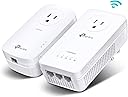
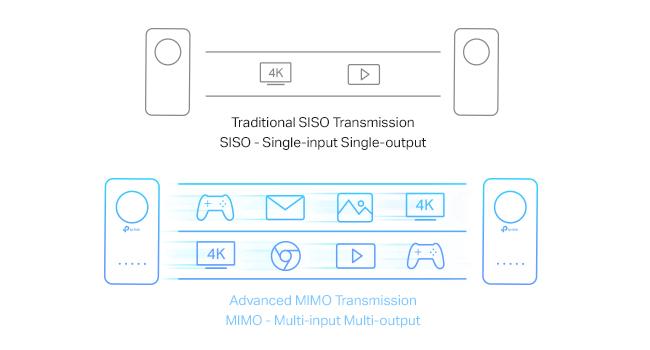
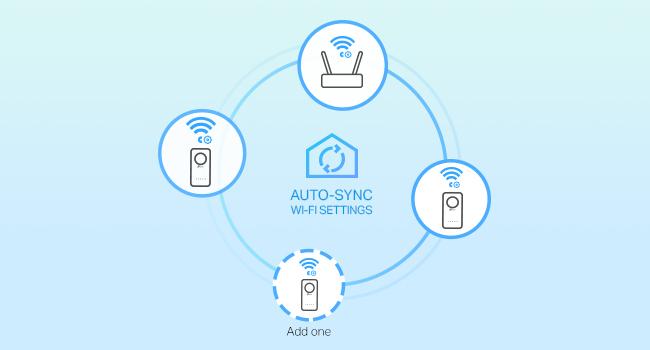
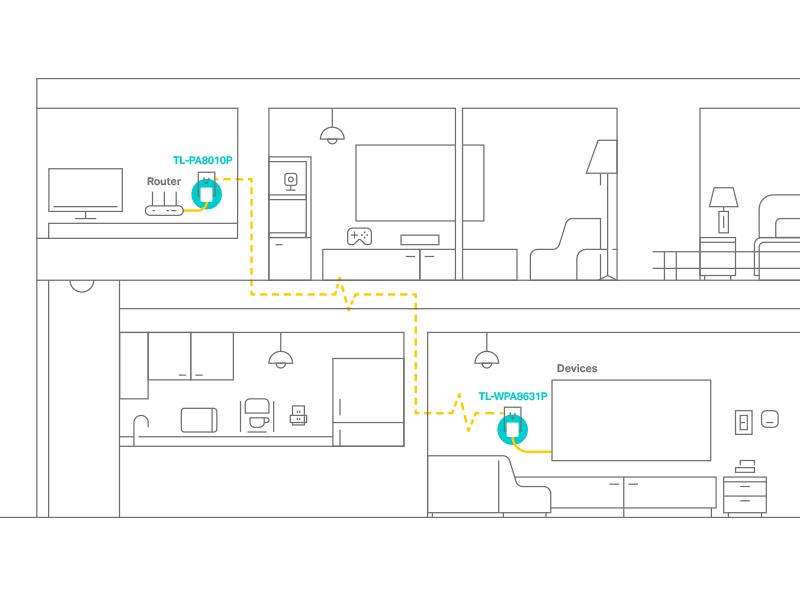
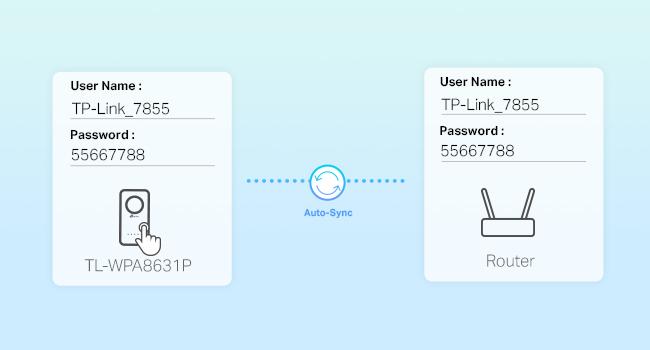
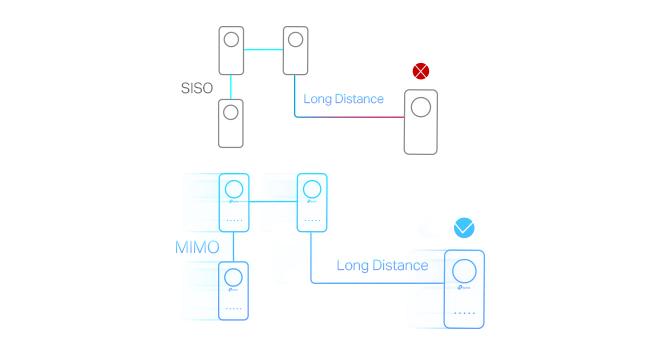
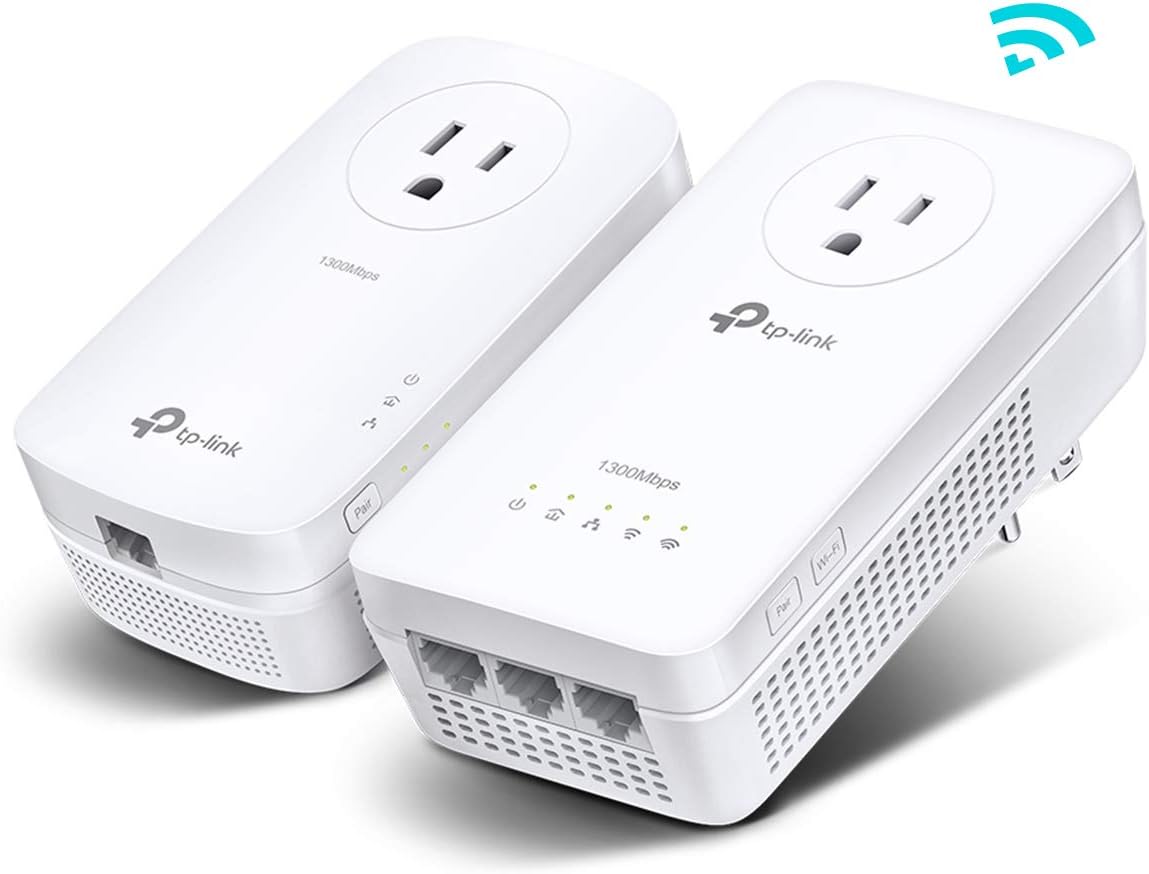
The TP-Link AV1300 Powerline Ethernet Adapter WiFi Extender KIT delivers up to 1300 Mbps over your home’s electrical wiring, extending wired and dual-band WiFi 5 coverage up to 750 feet. Featuring 3 gigabit Ethernet ports and a passthrough power socket, it ensures seamless HD streaming, gaming, and large file transfers in hard-to-reach areas. Easy plug-and-play setup with one-click WiFi cloning and compatibility with EasyMesh routers makes it a reliable, secure, and future-proof solution for modern multi-story homes.


| ASIN | B08RHZBHTM |
| Best Sellers Rank | #16 in Powerline Network Adapters |
| Brand | TP-Link |
| Built-In Media | 1× Quick Installation Guide, 1× TL-WPA8631P, 1× TL-PA8010P, 2× Ethernet Cables |
| Color | White |
| Compatible Devices | Desktop, Laptop, Smart TV, Printer, Game Console, Projector, Internet Protocol Camera, Headphone, Speaker, Webcam, Tablet, Smartphone, Keyboard, Mouse Compatible Devices Desktop, Laptop, Smart TV, Printer, Game Console, Projector, Internet Protocol Camera, Headphone, Speaker, Webcam, Tablet, Smartphone, Keyboard, Mouse See more |
| Compatible Operating System Family | Android, Windows |
| Customer Reviews | 3.9 out of 5 stars 1,499 Reviews |
| Data Link Protocol | Gigabit Ethernet |
| Data Transfer Rate | 1300 megabits_per_second |
| External Testing Certification | Não aplicável |
| Global Trade Identification Number | 00845973099770 |
| Hardware Interface | Ethernet |
| Item Dimensions L x W x H | 9.1"L x 7.6"W x 4"H |
| Item Highlight | AV1300 Powerline Adapter and AC1200 Dual Band Extender, 2x2 MIMO,3 Gigabit Ports, Plug & Play, TL-WPA8631P KIT |
| Item Weight | 1.9 pounds |
| Manufacturer | TP-Link |
| Mfr Part Number | TL-WPA8631P KIT |
| Model Number | TL-WPA8631P KIT |
| Number of Items | 1 |
| Number of Packs | 2 |
| Product Dimensions | 9.1"L x 7.6"W x 4"H |
| UPC | 845973099770 840460604765 |
| Unit Count | 2 Count |
| Warranty Description | 2 year manufacturer |
G**E
Great Device That Will Boost Your Speed In Areas Where Wifi Doesn't Reach
Wifi doesn't reach our bonus room, and runs very very slowly with a wifi extender if at all. I tried moving the extender to multiple locations with no changes. Enter the solution of a Powerline. Setup: Setup took less than 5 minutes. I plugged one powerline into a plug next to our modem and plugged the ethernet cord from this same device into the back of our router. I then took the second powerline upstairs to the bonus room, plugged it into the wall, and followed the instructions of pressing a button to pair the device. I ran an ethernet cable from this powerline into my macbook (connected with the Startech usb to ethernet adapter), and voila...fast internet! Results: No more struggling to get a reliable or fast internet connection in the bonus room. As a photographer who uses a cloud based backup system and uploads 24+ gbs of data every 2 days, this fast connection is invaluable for uploads, in addition to the now functioning internet upstairs in the bonus room (aka: my beloved she-cave). While using a laptop, I don't find I mind the wired connection at all. It's no different than plugging into a power cord, and if you place the powerline directly behind the couch like I did, you don't notice the cord as much as you would anticipate. Without the powerline, I was getting 17.8 mbps down and 7.10 mbps up in the bonus room. With the powerline, I get 53.78 mbps down and 10.53 mbps up. We pay for 150 mbps down and 10 mbps up, which can only be achieved if you're directly wired to the modem and 2 feet away from it. *shrug* What's in the box: 2 powerlines 2 CAT5 ethernet cords An instruction manual A quick start guide Recommendations: + The plug does block the upper outlet. I'm not sure if there was no other way to provide an in-powerline plug extra without doing this, but if they can lower the plug, I highly suggest the company does so in their next model. The plug on the front of the powerline is a must if you want to use the outlet for anything other than just your powerline. I have it setup with an extension cord coming from the powerline where I then plugged in the lamp and power cord for my laptop. + I had a 38 mbps down speed increase by using the powerline rather than wifi. If this is the type of speed increase you're looking for, the powerline is for you. If it isn't enough, a directly wired connection is going to be your answer. Upload speed only increased by 3 1/2 mbps, however, it placed my upload speed at 1/2 a mbps faster than what I pay for, and if my speeds weren't capped at 10, it may have gone above that.
A**R
Another awesome TP-Link powerline adapter - read my review answering other reviewer's complaints
First - powerline networking isn't for every deployment. These are no exceptions to those tricky areas (old house, noisy appliances or devices, poor wiring, etc. - so just know that going in. But for most people in recent, modern, up to code residential dwellings (especially the large homes where range extenders connected to these will really be up to twice as fast as the all wireless range extenders which have to share time - no way around it) - powerline networking can be the best thing that ever came your way. Second, anyone who knocks these because they don't get 1200 Mbps data transfer rate should be ignored. It's a number - a theoretical maximum rate for the chipset used, like your "AC1900" wireless router, where you also don't get 1900 Mbps. Every manufacturer labels devices this way, so live with it. Also, speed isn't the only consideration. Wireless networks drops packets like crazy or sometimes just have gaps in communication - there is only so much RF you can squeeze in the same band. Especially given the transient nature of the devices (fire up your phone next to your tablet while using your notebook while streaming to your Chromecast or using your Roku (with its $%&#* WiFi remote!!!!) and run a good network sniffer and see how many packets you lose or delays you see. My ASUS RT-AC66U and my ThinkPad with it's Intel 7260AC card has faster speeds than these adapters, but is not even close in terms of consistent packets with low latency. Your web surfing via wireless - not a problem, most likely - but your DVRs and streaming devices really appreciate steady, low latency throughput. So, enough whining about people's unrealistic expectations. I added these to my existing TP-Link AV500's (and wifi range extender) and just like those, these were plug and play. I've never had a glitch or rebooted the range extender for 2 years on the old units, I expect these will be similar. (and after 3 weeks have seen no issues). I used two ThinkPads, Ixia QCheck and Totusoft LANSpeed to measure all sorts of combinations, trying these in a dozen different outlets, with and without a cheap power strip and saw consistent results. My exact speeds don't matter (although they were over twice as fast as my AV500 units) - you use these sorts of tests only for baselining and your own reference to find the best outlets. *** One hint *** for those who complain about these partially blocking the other socket in your outlet - plugging these into a surge protector (or UPS, which I tried for fun) is a no-no, performance blows - that's a given. But go to Walmart and buy the $3 power strip with the short cord (it doesn't say surge protector - that one is $2 more and is not what you want) and you can plug into those without a drop in speed. That will solve your blocked plug problem, and in some cases make for an easier installation (it all depends). DO NOT let those complaints scare you away. I also tested these with my $1.50 6 inch 3 prong male-female extenders that I use for those annoying AC adaptors that suck up too much space and also saw zero change in performance. These are fast - the fastest AV1200 units right now according to smallnetbuilder's tests, and inonically the most inexpensive AV1200 units on the market. Drop dead simple to use, reliable, and...why haven't you bought these already?
R**A
Best speed 64 megabit, save your money and buy the cheaper one.
Background: Software Developer. I was a network engineer for several years some time ago. Desired Objective: Greater than 500 megabits transfer rate, approaching as close to manufacturers 1200 megabit maximum specification as possible. This would be completed in a regular residential home between two outlets not on the same circuit. Test setup: Both connectors were placed directly into a wall outlet per the manufacturers instruction, no filtering device between the wall and the device. The device attached to the main network was directly connected to a aggregate switch capable of providing greater than 1000 megabit access to an attached NAS. All tests were performed with a Lenovo laptop with a gigabit ethernet adapter (1000 megabit). As a baseline, I attached my laptop directly to the same cable the device attaching to the network would use. I connected to the NAS and started a large file transfer while directly on the network (not using the device yet) and was able to transfer 120 megaBYTES (960 megabit) per second sustained. I then attached the device to the network on the same cable and port on a gigabit switch and performed the same test with my laptop attached directly to the second device (which was plugged in on another circuit). Results Achieved: Before clearing both circuits of possible devices creating noise, my first test resulted in a transfer rate of 3 megaBYTES per second, that is 24 megaBIT. That is about 2% of the manufacturers claimed maximum speed. On a second test, after clearing the circuits of other devices I was able to achieve transfer rates 8 megaBYTES or 64 megaBIT or about 6% of the claimed maximum. (Sorry for the emphasis but a lot of reviews seem to use MBps and Mbps interchangeably and there is a factor of 8 difference between the two.) For a final comparison, I connected my laptop to my Apple Airport Extreme over wifi. I was a medium distance connection through several devices that cause interference and on a wifi network with 6 wifi cameras and several other devices sharing the bandwidth. Performing the same file transfer I was able to transfer 24 megaBYTES per second (192 megabits per second). Therefore, my far less than idea wifi connection achieved 3 times better performance than the best performance from this device. Conclusion: I am returning this device because it cannot achieve even 10% of what the manufacturer claimed of its maximum. Gigabit ethernet claims up to 1000 megabits per second, as you can see from my test I was able to achieve 960 megabis per second or 96%. My wifi claims 300 megabits per second and I achieved 192 megabits in less than ideal circumstances. I achieved the best results by removing all other electronic devices from both circuits (not really reasonable for most people). This means in regular circumstances, in my home, this device delivers only about 2% of what it claims as a maximum. If you are using this device to make up for an interior wifi device, or some other situation, and your desired objective is to easily see the same speed on Speedtest from this device as you see wired to your router you will probably be pleased with this. A 64 megabit unshared connection to the internet for browsing or streaming is perfectly acceptable. As another reviewer pointed out though, you can just purchase a cheaper model because this one doesn't seem to gain you anything over the similar model that costs half the price. That said, there are very few situations in life were someone says up to 1200 and then delivers 64 as a maximum consistantly. If my internet provider said they provided up to 50 megabits and I was perpetually only able to get 3 megabit, I would be pretty mad. I think it is reasonable to take this device to task for the same reason here. This device cannot achieve anywhere near the manufacturers claim in residential use. The device is ridiculously easy to set up. Depending on your purpose for it, it is perfectly understandable why most people would be satisfied with it. This review is for people like myself that hoped or expected that some speed greater than 500 megabit would be achieved (why sell a 1200 megabit device if it is not better than the 500 megabit one?). This is the review I wish I had read before I purchased this, as I would have simple moved the mouse away from Add to Cart and returned to Shopping. tldr - This device is great if you are completely clueless and/or have the most basic of network bandwidth needs. However, if you are some geek that expect the claims of 1200 mbps might be true, promptly return to planning your cat 6a wiring for your home, because this device won't outperform your wifi connection. PRO - * Easy to set up, so easy - like plugging in a lamp easy. * Just works * If trying to solve an access problem where wifi is poor, this might be just the ticket CON - * Works poorly, I feel greatly mislead by the manufacturer * Apparently the device performs no better than the manufacturers much less expensive 400/500 mbps versions * The maximum theoretical rate cannot be achieved outside of a lab situation - in fact it is not possible to get anywhere near the maximum claim in the average residental home
H**O
Fast and reliable. Top of casing blocks the outlet above for any 3-prong power cords.
I moved to a new house that did not have any network wiring but had devices in various parts of the house that needed a wired network connection. In some cases, a wifi connection could be made but a wired connection would be faster or more stable. For example, I have a Tivo Roamio, which can use either a wired or wifi connection. The wifi connection works well enough for lower-bandwidth things like pulling programming guide updates from the internet. But I also have a Tivo mini, which is an extender box that lets you view live or recorded TV streamed over your local network from the main Tivo box. The Tivo mini just pulls the stream as-is from the Tivo without doing any compression to make it smaller so it’s pretty hard on the network. The mini requires a wired ethernet connection, but the main Tivo can be connected to the network via wifi. In this configuration, the mini’s stream would barely work due to congestion or weak bandwidth over wifi. Another reason I needed wired connections was for a Synology network storage server that I wanted to put in a different room from the main router. I’ll probably eventually run wired ethernet cables everywhere, but was looking for a quicker solution to get things up and running. I’d tried power line networking devices before, back when the technology first came out and it worked, but slowly. The newest generation of powerline networking standards promised more stability and higher speeds so I decided to give it a shot. Research showed that TP-Link offered really good pricing for AV1200 level powerline adapters so I bought a pair to try out. The quality of the plastic casing is very good and very attractive with smooth edges, slightly rounded design and white finish. I wish it wasn’t so large, though. Other power line adapters don’t seem to be as big. These are about 6 inches tall, 3 inches wide, and 2 inches thick. In some cases, the outlet isn’t behind furniture so this biggish white box is right out there on the wall. There are three small green LED indicators on the right side of the unit and the ethernet port is on the bottom. A primary reason for choosing this model of adapter was the power outlet pass through. I didn’t want to reduce the outlets available at each site just by using a power line adapter because the spots where I want to use them are usually places where there is a bunch of other electronic equipment that also needs to be plugged in. This turned out to be a mixed blessing: yes, the pass-through outlet is there and it works fine, but the design of the casing is such that the curve of the top just barely interferes with the outlet above the unit, such that you can’t really plug in anything with 3 prongs above the adapter. A lot of electronic gear uses three prong power cords, so this is a serious inconvenience, because it effectively turns a 2-outlet plate into a 1 outlet plate (the pass-through). It really seems close enough that TP-Link could have made a flat top or even notched out part of the top to allow a 3 prong plug to fit into the outlet above. I suspect that the reason for this is because they use the same or similar casing worldwide for various other types of electrical plug standards. I saw a picture of the same type of powerline adapter from TP link intended for sale in Asia, which uses a much larger, high rounded power plug, so the casing has to be made to fit the largest types of plugs, with the consequence that it unnecessarily blocks the upper outlet on US standard duplex plates. This is annoyingly ironic, because I bought that unit with the outlet pass-through so that I would retain usage of both sockets, but that very feature causes it to block the other outlet while providing the pass-through. Frustrating. Basic set up of the units was fairly easy. I put them into two adjacent outlets on the same wall and clicked the synchronization buttons. They seemed to find each other pretty quickly as indicated by the lights on the side of the unit. I plugged the router into one of them and a computer into the other one and got network connectivity quickly. I then moved one of the units to the family room and attached the TiVo to it and initiated an update from the Internet, which worked quickly and smoothly, much better than it did on Wi-Fi. I then attached the TiVo mini via ethernet to the router and tried playing some shows. Playback started much quicker and navigating the stream like skipping commercials went much faster then it did compared to when the TiVo main unit was connecting via Wi-Fi. With this initial success, I proceeded to order another pair of the units so I could connect the NAS. Once I was trying to configure three units, I did have some problems getting all of the units talking to each other. At this point, I needed to use a computer to sort things out. I am primarily a Mac user, but the TP link configuration utility is only available for windows so I had to use a secondary machine to do this. The utility works when the Windows computer is attached via Internet cable to one of the Power line networking units. It will display what other Power line units it sees on the home power grid, and the connection speed to the other units. You can use this to rename each unit so it gets less confusing. I named each unit for the room that it was in. You can also change to the encryption password for the units. There are some additional advanced options related to QOS prioritization and VLAN that I have not delved into yet. It would be nice if these could use the VLAN to set up two independent networks over the same home power grid, but I'll have to explore more to figure this out. I don't want to get into a lot of specifics with speeds and benchmarking because I know that this is highly dependent on the specific placement, wiring and layout of each house. I am using these in a home built in 1998 and the speed is more than adequate and more consistent then wireless. The connectivity has been reliable as well. Since I got things configured, I haven't had to mess with things too much and I don't expect to until I need to configure the fourth unit somewhere else. [UPDATE: a couple of times the units have lost connection with each other and I had to use the utility to reconnect them. I'm not sure what causes this, but it doesn't happen that often.] Overall, I am happy with the functionality and performance of these units. They have proved to be fast and reliable so far. My major gripe is with the way the shape of the plastic casing blocks the outlet above. This totally defeats the point of having a pass-through unit and I hope that TP Link can address this in future units.
A**.
Cables, installation and performance
Ok, this is not a totally comprehensive review as I think other people have done a good job doing that before me. However I do feel that I have either to vouch for or contradict some statements. First thing important to know is that there are two ethernet cables of considerable length included in the box (I guess about 5 feet long) -- more than enough for my needs. Because of Amazon suggestions I bought a pack with cables which turned out to be unnecessary. Having more cables around is always good, but don't be fooled into thinking you need to buy separate ethernet cables unless your needs demand significant extra cabling for devices away from the outlet. Setting up was as quick as pressing a button. There is no specific order related to which one to plug as the transmitter/receiver and all you have to do after plugging them is press the "Pair" button. A little LED will flash and blink and it means you're all set. Contrary to what people are saying, no, it does not block your power outlet completely. What it does do is to partially block it, and by that I mean that you can't have TWO three-pronged power cables plugged together. You can get only ONE three-pronged cable plugged, which is going to be your TP-Link adapter and then you still have room to plug to the wall outlet ONE standard two-pronged cable. However this was no problem for me at all because I always use a surge protector anyway. So I plugged the TP-Link Powerline adapter to the wall and my surge protector to the adapter. I left the wall socket for a little lamp that I have (that uses a two-pronged power cable) and because of that I still have 5+ three-pronged power outlets available in my surge protector. Win-win. Now, I haven't tested maximum LAN speeds but I do get solid 60 Mbps Internet speeds with latency of 15-24 ms, depending on the server I choose at speedtest. net For me that is all I need since I am building a desktop with no wi-fi on the second floor and the router stays in the basement and 60 Mbps is enough for any average Joe as myself. I will monitor the behavior of the devices in the following months, since I have seen reports of them either dying after 2-4 months or presenting performance dips for some people.
J**N
Boo!!! Not the data rate advertised.
I purchased this and the TP-LNK 5-port desktop switch. I have what I believe to be an almost perfect use for these running on the same circuits in my basement and thought these would be better than fishing cable through finished ceilings. Ultimately my two TL-PA8010P devcies are roughly 25 feet apart. Many of the tests images I have seen posted in reviews are actually to speedtest websites that test your internet bandwidth. Seeing the bandwidth people were able to achieve I had hopes that these devices were actually carrying data on the LAN at a much higher rate. This can be bottlenecked more by your ISP than the actual devices. I chose a program called iPerf to test between two PCs on my local network. After that testing, I can reliably tell you that I am only getting about 180 Mbps. My first tests were through the TP-LNK 5-port Switch. I saw that it was only reaching the ~180 Mbps range so I tried to remove all bottlenecks except the TL-PA8010 itself. I'm not going to bog this review down with every step I too, but below are the iPerf results that I received for the two tests that I believe show the end result. The first set shows a connection made between two ports of the 5-port switch. I was getting speeds of close to the Gigabit NIC line rate. The second set shows a connection going through the TL-PA8010P. I was only able to reach 209 MBytes. Connecting to host <serverIP>, port 5201 [ 4] local <localIP> port 62809 connected to <serverIP> port 5201 [ ID] Interval Transfer Bandwidth [ 4] 0.00-1.00 sec 101 MBytes 849 Mbits/sec [ 4] 1.00-2.00 sec 112 MBytes 940 Mbits/sec [ 4] 2.00-3.00 sec 112 MBytes 940 Mbits/sec [ 4] 3.00-4.00 sec 112 MBytes 938 Mbits/sec [ 4] 4.00-5.00 sec 112 MBytes 939 Mbits/sec [ 4] 5.00-6.00 sec 112 MBytes 939 Mbits/sec [ 4] 6.00-7.00 sec 112 MBytes 940 Mbits/sec [ 4] 7.00-8.00 sec 112 MBytes 940 Mbits/sec [ 4] 8.00-9.00 sec 112 MBytes 940 Mbits/sec [ 4] 9.00-10.00 sec 112 MBytes 940 Mbits/sec - - - - - - - - - - - - - - - - - - - - - - - - - [ ID] Interval Transfer Bandwidth [ 4] 0.00-10.00 sec 1.08 GBytes 931 Mbits/sec sender [ 4] 0.00-10.00 sec 1.08 GBytes 930 Mbits/sec receiver iperf Done. FirstPC:iperf-2.0.8 userA$ iperf3 -c <serverIP> -p 5201 Connecting to host <serverIP>, port 5201 [ 4] local <localIP> port 62850 connected to <serverIP> port 5201 [ ID] Interval Transfer Bandwidth [ 4] 0.00-1.00 sec 19.1 MBytes 160 Mbits/sec [ 4] 1.00-2.00 sec 21.7 MBytes 182 Mbits/sec [ 4] 2.00-3.00 sec 20.9 MBytes 175 Mbits/sec [ 4] 3.00-4.00 sec 21.2 MBytes 178 Mbits/sec [ 4] 4.00-5.00 sec 20.8 MBytes 174 Mbits/sec [ 4] 5.00-6.00 sec 20.3 MBytes 171 Mbits/sec [ 4] 6.00-7.00 sec 21.2 MBytes 177 Mbits/sec [ 4] 7.00-8.00 sec 21.3 MBytes 179 Mbits/sec [ 4] 8.00-9.00 sec 21.3 MBytes 179 Mbits/sec [ 4] 9.00-10.00 sec 21.2 MBytes 177 Mbits/sec - - - - - - - - - - - - - - - - - - - - - - - - - [ ID] Interval Transfer Bandwidth [ 4] 0.00-10.00 sec 209 MBytes 175 Mbits/sec sender [ 4] 0.00-10.00 sec 209 MBytes 175 Mbits/sec receiver I'm going to sleep on my results and decide later if I'm keeping the kit or returning them. I'm really not looking forward to running new cables. Also of note is that while these allow you to plug a device into them they also block the second outlet so you'll need to plan you power needs accordingly. TL;DR These aren't going to get the full 1200 rate advertised. The question becomes do you want to run Cat5/6 or not? They may still be worth the money to avoid the hassle.
A**R
Easy set up but takes a minute
This is a great product for what I needed. I had a room in the house where the WiFi signal was weak and this fixed the problem. It does take a minute to set up all of the security but a must when you live in range of others.
J**S
Satisfactory Product, expensive and has a slew of issues
After some time, fuss and a minimal set up manual, the product works, but not as expected. 1. The size of the unit covers up both outlets in a typical American household that has a double socket outlet. It doesn't matter if you put it in the top or the bottom, the unit will cover both outlets because it's huge. It was designed for outlets around the world and TP Link didn't do their research on this tidbit. 2. Set up took some time in my case. Since the unit covers both outlets and I need the other socket to plug in the power strip and router that will feed this thing the network data, there was a bit of fuss. The directions are sparse, they pretty much tell you to plug them in and viola, they work. Not so in my case. I had to plug in the first unit, then plug in my power strip that fed my router into the external socket and wait for the router to boot and get on the network. Once that happened, it was time to plug in the network cable from the router to the first unit and wait for the network connectivity light on the first unit to turn green. Afterward, I could plug in the second unit and wait for it to connect to the master unit and give a green light. Once that happened, I plugged in the network cable to the second unit and data was coming out the other end. It took three tries before these things connected and I'm crossing my fingers they don't give me more trouble in the next 30 days. If so, back to Amazon they go. 3. The speed I am getting is only 200 Mb/s, which isn't anywhere near the 1,200 Mb/s that's advertised on the box. Seems all manufacturer's are making that claim and I'll settle as long as the ports don't slow down the rest of my network. 4. The manual states the units try to clean the power if the external socket is used, but data may be corrupted from unclean power anyway. Since this takes one outlet and covers the other one, they gave me the bird here. The workaround is a small extension cord to move the unit away from the outlet and free up the top socket, so I'll try that in the future if an unclean power problem rears it's head. After all of the problems I've discussed, I wouldn't buy these again for the stated retail price. Half retail price? Maybe. This is the seventh power line network kit I've bought over the years, the second most expensive and definitely the one that has given me the most trouble. I'm keeping it simply because of the time I put into getting it to work and now I know it's nuances, I can settle on using it simply because it works and the network speed meets my requirements. Unfortunately, I wouldn't recommend to anyone unless they can live with all of the limitations or get it on sale.
N**F
HIGHLY RECOMMENDED PRODUCT. Answer to my internet problems!
This is the answer to all my internet connectivity issues. I live in a townhouse with 3 floors, and the house is supposed to have a "home run" in that the modem/router should work on any DSL in the house, but it apparently only works on one phone jack, located on the first floor. This led to connectivity issues in my room on the third floor, where it became unbearably slow, even disconnected multiple times. There was an instance where my internet disconnected 4 times within roughly 20 minutes. I tried different methods: changing the wifi channel, buying and installing a range extender, but these didn't help at all. I was really frustrated with it all: the constantly buffering video, the choppy Skype calls, etc. When I first heard about this product, I was quite skeptic, given my experience. I did a lot of research on Powerline Adapters, comparing the speeds with range extenders, if it really works, and so forth. I gave it a shot, and I'm really really glad that I made that decision. Its a simple plug and play, plug one to the modem/router, plug the other to the device you want. Its so simple and straightforward. I did speedtest comparisons with all my connections: the modem directly to my laptop via LAN, laptop wifi via Range Extender, laptop via modem wifi, and laptop via Powerline Adapter. The direct connection would obviously be one of the top speeds; and the Powerline Adapter matched the modem speed, and to my surprise, sometimes even surpassed it. I can't recommend this product enough. If you're worried about the distance between modem and device, don't worry; I was worried about that too. It worked perfectly for me. Now I'm sure that everyone's situation and wiring in their house varies, but in my case it worked out quite well. I do suggest to plug these adapters in on an outlet, and not on a power bar or extension cord just in case. That way there won't be too much interference. Other than that, I highly recommend!!! :)
R**C
Instalación inmediata, altamente recomendable
Excelente opción para ampliar la señal a el 2o nivel de la casa. La compañía de cable proporciona un módem inalambrico el cual deje en el primer nivel con este equipo conecte un router en el 2o nivel tan simple como plug & play y la velocidad se mantuvo a 28 de 30 mb contratados
R**.
muy buen producto - estoy muy satisfecho con él
Esta es una reseña del modelo TL-WPA8631P Kit. Compre este modelo en Nov. 2021 asi que llevo casi dos años usandolo del diario. Es un excelente producto y lo recomiendo a todos mis amigos. La instalacion es super facil; en menos de 15 minutos ya estaba listo. El apareamiento (pairing) funciono muy bien. En mi colonia hay apagones frecuentes, casi uno por mes, y el tp-link responde muy bien; apenas llega la luz y se sincroniza y empieza a funcionar como si nada hubiera pasado. El extensor tiene tres puertos de ethernet, lo cual es muy generoso. Uso un puerto para mi TV, otro puerto para otra computadora, y el tercer puerto es muy util para hacer pruebas o conectar otro aparato si es necesario. La velocidad de transmision por la red electrica no es tan rapida (TX = 700 Mbps y RX = 560 Mbps); esto es probablemente porque mi instalacion de la red electrica en casa ya es muy vieja (mas de 30 años). Pero no noto ninguna lentitud en mis conexiones. Una prueba con Internet Speedtest de Ookla me da justo lo que mi proveedor de internet me da. La interfase web para configurar las unidades es muy buena. Es muy configurable y facil de usar (version para MacBook Pro). Incluso puedes configurar una direccion de IP statica con un solo click y muchas otras funciones mas. La aplicacion tpPLC para iPad tambien es muy buena. Yo casi no uso las redes de Wi-Fi, pero mis pruebas resultaron que la señal es muy buena (144 Mbps en la banda de 2.4 GHz y 243 Mbps en la banda de 5 GHz, estando a 5 metros de la unidad emisora). En mi parecer, la banda de 2.4 GHz es mejor porque la señal parece ser mas estable y atraviesa mejor las paredes. Pero si estas cerca de la unidad emisora, las dos bandas funcionan muy bien. Y la seguridad de la red es muy buena, de WPA2/WPA3 - Personal. Que mas les puedo decir? Que estoy muy satisfecho con este producto y lo volveria a comprar si lo necesitara. La calidad del servicio tecnico es buena tambien, pues han contestado a todas mis preguntas con amabilidad, prontitud y exactitud. Nota: uso este producto para darme conexion de internet via cable de ethernet entre mi cuarto donde tengo el router hasta mi estudio donde tengo mi TV y una computadora. No sabria decirles la distancia exacta, pero creo que es de mas o menos 12 metros.
A**O
Llego a tiempo
Es importante que verifique que sea una sola línea eléctrica y no haya otra red eléctrica suministrada o esté separada de piso en piso ya que se comunican usando el cable eléctrico de un enchufe a otro para que funcionen correctamente
T**R
Bailed me out when I needed a more reliable connection.
I was in a living environment at the time circa Summer 2016 to Fall 2017 where my setup was in a 'dead zone' for WiFi, meaning that I couldn't get a very stable connection and would deal with occasional internet drops. I had considered a USB WiFi adapter, but wasn't 100% if that would've helped with the issues I was having at the time, so I ultimately decided on going for this TP-Link powerline adapter. One adapter was plugged into the wall where the router was located on the top floor, and the other adapter was plugged into the wall where my setup was located on the bottom floor. This setup gave me the stable internet I needed, I never had any serious drop outs/technical mishaps during the year it was largely in use, and although I was unable to get the full speeds that our ISP at the time provided, it was still more than sufficient and quick enough that I was satisfied. Whilst this has since been replaced by newer powerline offerings from TP-Link, this was an ol' reliable when I needed it the most. TP-Link has served me well, and though I no longer need a powerline adapter with my current setup, I would happily use one again if absolutely necessary.
Trustpilot
2 weeks ago
2 weeks ago