Some deliveries may take a little longer than usual due to regional shipping conditions.

DOWNLOAD THE APP


Customer Services
Copyright © 2025 Desertcart Holdings Limited
DOWNLOAD THE APP
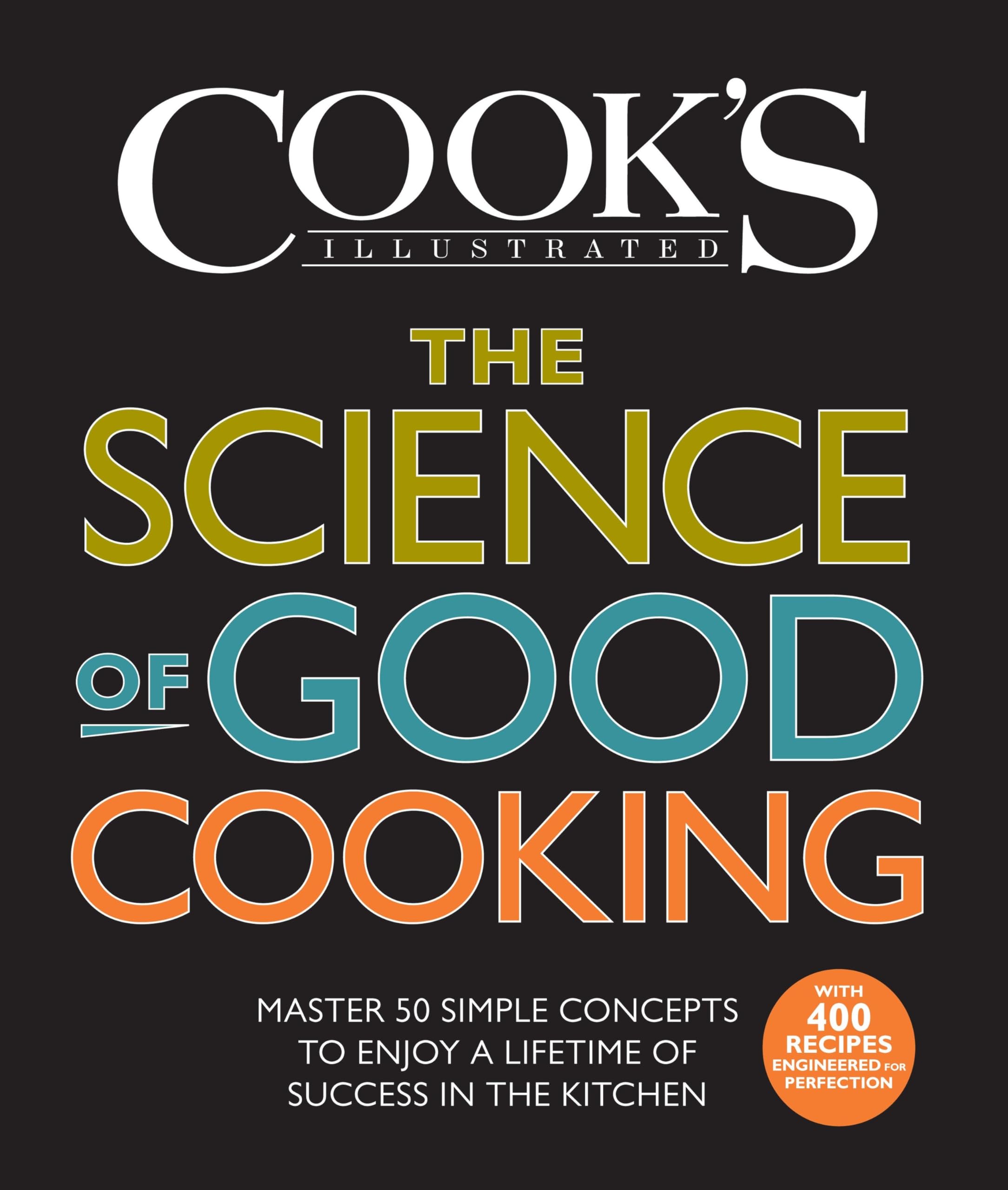
The Science of Good Cooking: Master 50 Simple Concepts to Enjoy a Lifetime of Success in the Kitchen [The Editors of America's Test Kitchen and Guy Crosby Ph.D] on desertcart.com. *FREE* shipping on qualifying offers. The Science of Good Cooking: Master 50 Simple Concepts to Enjoy a Lifetime of Success in the Kitchen Review: A must-read to improve the results of your food! - Having relied on Cooks Illustrated recommendations for many of my favourite kitchen tools, buying this book was a no brainer. Needless to say I had high expectations going in, and this book did not disappoint. I'm an avid cook, and while I've had great success with certain types of food, I've been frustrated by inconsistent results in others. (I can't seem to get a consistently moist pot-roast -- reason: my cooking temperature was probably too high; wrong cut of meat + oven braising is better than stovetop since it heats more evenly in more directions) The Science of Good Cooking breaks down why food cooks a certain way, and which techniques are best for what purpose. The book is organized into 50 concepts with recipes reinforcing each concept. There's a section called "why this works" following each recipe, which breaks down the science behind each step -- for instance why use a certain type of marinade, cooking technique, take extra steps, etc to achieve a desired outcome. It's nice that it's not just a list of recipes. Experiments back each concept. Meats were weighed, measured, smashed to determine tenderness, and moisture loss. They came up with a range of ideal resting times for various meats based on actually measuring the amount of juices lost at various times, and they sent food to the science lab to analyze their structure. They even stuck bones on mashed potatoes to test out whether keeping bones on makes food taste better. This book debunked some assumptions I had (acid does not actually make food more tender), and helped me understand other ones better - why salt directly applied on skin makes it more crispy, but if you brined the skin you'd get a different outcome. I also learned that the direction you cut your onion affects its taste - obvious in retrospect, but I never thought about that! I was disappointed I couldn't see a table of contents before purchase, so here are the 50 concepts you will find within the book - 1. Gentle Heat Prevents Overcooking 2. High Heat Develops Flavor 3. Resting Meat Maximizes Juiciness 4. Hot Food Keeps Cooking 5. Some Proteins Are Best Cooked Twice 6. Slow Heating Makes Meat Tender 7. Cook Tough Cuts Beyond Well Done 8. Tough Cuts Like a Covered Pot 9. A Covered Pot Doesn't Need Liquid 10. Bones Add Flavor, Fat, and Juiciness 11. Brining Maximizes Juiciness in Lean Meats 12. Salt Makes Meat Juicy and Skin Crisp 13. Salty Marinades work best 14. Grind Meat at Home for Tender Burgers 15. A Panade Keeps Ground Meat Tender 16. Create Layers for a Breading That Sticks 17. Good Frying is All About Oil Temperature 18. Fat Makes Eggs Tender 19. Gentle Heat Guarantees Smooth Custards 20. Starch Keeps Eggs from Curdling 21. Whipped Egg Whites Need Stabilizers 22. Starch Helps Cheese Melt Nicely 23. Salting Vegetables Removes Liquid 24. Green Vegetables Like it Hot -- Then Cold 25. All Potatoes Are Not Created Equal 26. Potato Starches Can Be Controlled 27. Precooking Makes Vegetables Firmer 28. Don't Soak Beans -- Brine 'Em 29. Baking Soda Makes Beans and Grains Soft 30. Rinsing (Not Soaking) Makes Rice Fluffy 31. Slicing Changes Garlic and Onion Flavor 32. Chile Heat Resides in Pith and Seeds 33. Bloom Spices to Boost Their Flavor 34. Not All Herbs Are for Cooking 35. Glutamates, Nucleotides Add Meaty Flavor 36. Emulsifiers Make Smooth Sauces 37. Speed Evaporation When Cooking Wine 38. More Water Makes Chewier Bread 39. Rest Dough to Trim Kneading Time 40. Time Builds Flavor in Bread 41. Gentle Folding Stops Tough Quick Breads 42. Two Leaveners Are Often Better Than One 43. Layers of Butter Makes Flaky Pastry 44. Vodka Makes Pie Dough Easy 45. Less Protein Makes Tender Cakes, Cookies 46. Creaming Butter Helps Cakes Rise 47. Reverse Cream for Delicate Cakes 48. Sugar Changes Texture (and Sweetness) 49. Sugar and Time Makes Fruit Juicer 50. Cocoa Powder Delivers Big Flavor The only thing I would have loved was a trouble shooting / Q&A section - e.g. How do you keep meat from cooling too much when you rest it? Overall a great book if you want to improve your cooking technique, and also if you just want to learn more about why things behave the way they do! Update: Looks like "Look inside" is now available for this book so there's finally a table of contents! :) Since I've been cooking with the new concepts in mind, I'm happy with how my meat dishes (especially the stews) are turning out. I also tried using vodka instead of water to make pie crust (with the tip of putting a heated pan under the pie pan) and the pie crust turned out flaky and delicious as promised. Review: A great research text for a new/experianced cook. - Trying to learn how to cook in the era of the internet can be extremely overwhelming - everyone seems to have an opinion about the 'right way' to do something, and often these opinions are contradictory. When I first attempted to learn my way around the kitchen, I had many nights filled with frustrating failures and inedible dinners that left me reaching for takeout menus. Then I stumbled across Americas Test Kitchen, and subsequently signed up for a Cooks Illustrated membership online. The website is great for searching for a specific dish and each recipe provides a little bit of information as to why the cooks opted for the method used in the recipe but this book is even better. As other reviewers have stated, the Science of Good Cooking breaks the fundamental principles of cooking down into 50 topical chapters. When you read each chapter thoroughly, you come away with a much better understanding of how things work that can be applied while you are cooking. I recently read the chapter on eggs - it was so helpful in understanding how to make a fluffy omelet or fluffy scrambled eggs and I can apply it in a dozen different ways. The chapters also feature little practical tips - the one I most recently employed taught me how to extend the shelf life of chilies purchased at the grocery store. I tried the trick and it works! Lastly, there are some recipes, which can also be found at Cooks Illustrated online and I am sure in their other cook books - but that is not where the value in this text lies. The recipes utilize the principles in their corresponding chapter, but the principles are the meat of this book and the most valuable part. I would have had to reduce a star if they gave me a lot of information about eggs and then failed to provide me with any recipes that use the techniques they just explained, so I am glad they are featured in the book. I would not suggest this as a Kindle purchase, having the book on hand would probably prove to be much more useful. I also find myself looking through it when I am bored or have a free moment in the kitchen.

| Best Sellers Rank | #135,429 in Books ( See Top 100 in Books ) #138 in Cooking Encyclopedias #203 in Cooking, Food & Wine Reference (Books) #533 in Baking (Books) |
| Customer Reviews | 4.8 4.8 out of 5 stars (1,806) |
| Dimensions | 9.06 x 1.29 x 10.63 inches |
| Edition | First Edition |
| ISBN-10 | 1933615982 |
| ISBN-13 | 978-1933615981 |
| Item Weight | 4.05 pounds |
| Language | English |
| Part of series | Cook's Illustrated |
| Print length | 504 pages |
| Publication date | October 1, 2012 |
| Publisher | Cook's Illustrated |
P**N
A must-read to improve the results of your food!
Having relied on Cooks Illustrated recommendations for many of my favourite kitchen tools, buying this book was a no brainer. Needless to say I had high expectations going in, and this book did not disappoint. I'm an avid cook, and while I've had great success with certain types of food, I've been frustrated by inconsistent results in others. (I can't seem to get a consistently moist pot-roast -- reason: my cooking temperature was probably too high; wrong cut of meat + oven braising is better than stovetop since it heats more evenly in more directions) The Science of Good Cooking breaks down why food cooks a certain way, and which techniques are best for what purpose. The book is organized into 50 concepts with recipes reinforcing each concept. There's a section called "why this works" following each recipe, which breaks down the science behind each step -- for instance why use a certain type of marinade, cooking technique, take extra steps, etc to achieve a desired outcome. It's nice that it's not just a list of recipes. Experiments back each concept. Meats were weighed, measured, smashed to determine tenderness, and moisture loss. They came up with a range of ideal resting times for various meats based on actually measuring the amount of juices lost at various times, and they sent food to the science lab to analyze their structure. They even stuck bones on mashed potatoes to test out whether keeping bones on makes food taste better. This book debunked some assumptions I had (acid does not actually make food more tender), and helped me understand other ones better - why salt directly applied on skin makes it more crispy, but if you brined the skin you'd get a different outcome. I also learned that the direction you cut your onion affects its taste - obvious in retrospect, but I never thought about that! I was disappointed I couldn't see a table of contents before purchase, so here are the 50 concepts you will find within the book - 1. Gentle Heat Prevents Overcooking 2. High Heat Develops Flavor 3. Resting Meat Maximizes Juiciness 4. Hot Food Keeps Cooking 5. Some Proteins Are Best Cooked Twice 6. Slow Heating Makes Meat Tender 7. Cook Tough Cuts Beyond Well Done 8. Tough Cuts Like a Covered Pot 9. A Covered Pot Doesn't Need Liquid 10. Bones Add Flavor, Fat, and Juiciness 11. Brining Maximizes Juiciness in Lean Meats 12. Salt Makes Meat Juicy and Skin Crisp 13. Salty Marinades work best 14. Grind Meat at Home for Tender Burgers 15. A Panade Keeps Ground Meat Tender 16. Create Layers for a Breading That Sticks 17. Good Frying is All About Oil Temperature 18. Fat Makes Eggs Tender 19. Gentle Heat Guarantees Smooth Custards 20. Starch Keeps Eggs from Curdling 21. Whipped Egg Whites Need Stabilizers 22. Starch Helps Cheese Melt Nicely 23. Salting Vegetables Removes Liquid 24. Green Vegetables Like it Hot -- Then Cold 25. All Potatoes Are Not Created Equal 26. Potato Starches Can Be Controlled 27. Precooking Makes Vegetables Firmer 28. Don't Soak Beans -- Brine 'Em 29. Baking Soda Makes Beans and Grains Soft 30. Rinsing (Not Soaking) Makes Rice Fluffy 31. Slicing Changes Garlic and Onion Flavor 32. Chile Heat Resides in Pith and Seeds 33. Bloom Spices to Boost Their Flavor 34. Not All Herbs Are for Cooking 35. Glutamates, Nucleotides Add Meaty Flavor 36. Emulsifiers Make Smooth Sauces 37. Speed Evaporation When Cooking Wine 38. More Water Makes Chewier Bread 39. Rest Dough to Trim Kneading Time 40. Time Builds Flavor in Bread 41. Gentle Folding Stops Tough Quick Breads 42. Two Leaveners Are Often Better Than One 43. Layers of Butter Makes Flaky Pastry 44. Vodka Makes Pie Dough Easy 45. Less Protein Makes Tender Cakes, Cookies 46. Creaming Butter Helps Cakes Rise 47. Reverse Cream for Delicate Cakes 48. Sugar Changes Texture (and Sweetness) 49. Sugar and Time Makes Fruit Juicer 50. Cocoa Powder Delivers Big Flavor The only thing I would have loved was a trouble shooting / Q&A section - e.g. How do you keep meat from cooling too much when you rest it? Overall a great book if you want to improve your cooking technique, and also if you just want to learn more about why things behave the way they do! Update: Looks like "Look inside" is now available for this book so there's finally a table of contents! :) Since I've been cooking with the new concepts in mind, I'm happy with how my meat dishes (especially the stews) are turning out. I also tried using vodka instead of water to make pie crust (with the tip of putting a heated pan under the pie pan) and the pie crust turned out flaky and delicious as promised.
A**A
A great research text for a new/experianced cook.
Trying to learn how to cook in the era of the internet can be extremely overwhelming - everyone seems to have an opinion about the 'right way' to do something, and often these opinions are contradictory. When I first attempted to learn my way around the kitchen, I had many nights filled with frustrating failures and inedible dinners that left me reaching for takeout menus. Then I stumbled across Americas Test Kitchen, and subsequently signed up for a Cooks Illustrated membership online. The website is great for searching for a specific dish and each recipe provides a little bit of information as to why the cooks opted for the method used in the recipe but this book is even better. As other reviewers have stated, the Science of Good Cooking breaks the fundamental principles of cooking down into 50 topical chapters. When you read each chapter thoroughly, you come away with a much better understanding of how things work that can be applied while you are cooking. I recently read the chapter on eggs - it was so helpful in understanding how to make a fluffy omelet or fluffy scrambled eggs and I can apply it in a dozen different ways. The chapters also feature little practical tips - the one I most recently employed taught me how to extend the shelf life of chilies purchased at the grocery store. I tried the trick and it works! Lastly, there are some recipes, which can also be found at Cooks Illustrated online and I am sure in their other cook books - but that is not where the value in this text lies. The recipes utilize the principles in their corresponding chapter, but the principles are the meat of this book and the most valuable part. I would have had to reduce a star if they gave me a lot of information about eggs and then failed to provide me with any recipes that use the techniques they just explained, so I am glad they are featured in the book. I would not suggest this as a Kindle purchase, having the book on hand would probably prove to be much more useful. I also find myself looking through it when I am bored or have a free moment in the kitchen.
N**Y
Want to know "WHY" things "WORK" in cooking? This book is for you!
This book was used for my son's Culinary Arts class and I've found that I really like the book myself. It's the science as to WHY things happen in the kitchen with over 40+ concepts. It's broken down into the concept, all the science behind it, testing out the theory, what worked and what didn't in the testing of the concept, then recipes that support it or further emphasize that particular concept. I love a good America's Test Kitchen cook book and since Cook's Illustrated and ATK are one in the same, I was happy to buy it. It was interesting enough that I sat down and have read much of the book myself and I'm not even in the class! I learned a lot of neat cooking stuff that I had never heard of such as: the acidity of the water in a pot of dried beans you are cooking makes all the difference in the time it takes to cook them and the finished product, all about how brining a piece of meat really works, the ratios you need to make it work, how long to brine the meat, etc. There are so many different and varied scientific cooking concepts that any cook will benefit from this book. The bonus is the ton of recipes in the book and the tried and true ATK method of telling you how they arrived at the best recipe for xyz, what worked, what didn't and how they figured out their best of the best recipe for this particular dish. Why reinvent the wheel when these people have done the work for you. I like the book so much that I'm going to give one to my Dad for Xmas since he loves to cook and I just know he'll find all the interesting science/cooking concepts to be very interesting and inspirational. This book and some great spice mixes from SAVORYSPICESHOP.COM ..... Xmas for him is done!!
H**E
My son also loves cooking and between us we have learnt a lot more about the actual science of cooking. You can have some fun experiments in the kitchen with this book!
L**S
Excelente libro. Excelente organización del material. Increíble cantidad de tips, técnicas y recetas para mejorar y reemplazar técnicas obsoletas. Explicacionea clarísimas de cada técnica y receta. Perfecto para principiantes y aún más para los avanzados que desean profundizar y mejorar su técnica en la cocina.
A**U
It's really good book. I love this book . Every information is given in a detail . Value for money
J**T
No es un libro para aprender a cocinar. Y aunque tiene recetas, no es un recetario. Es el libro indicado cuando ya sabes desenvolverte en una cocina, ya eres capaz de preparar una comida o cena sin quemarla, pero deseas avanzar un poco en la ciencia que hay detrás del cocinar. Explica 50 técnicas, comenzando por un consejo, siguiendo por un experimento (y sus resultados), que confirman el consejo, y luego explicando el por qué funciona dicho consejo intercalándolo con recetas varias. El libro ideal para pulir algunos defectos o "malentendidos" que tenemos en la cocina, cosas que no hacemos del todo bien, o para pulir el resultado de nuestros platos de un mero "no te ha quedado mal" a un "está para chuparse los dedos".
ペ**レ
Many of the techniques are really helpful. Just one problem, the book suits kitchen environment in the western world better. Many requires oven, which might be difficult for eastern country families.
Trustpilot
2 days ago
2 weeks ago