
✨ Unlock the adventure that started it all — your next legendary read awaits! 📖
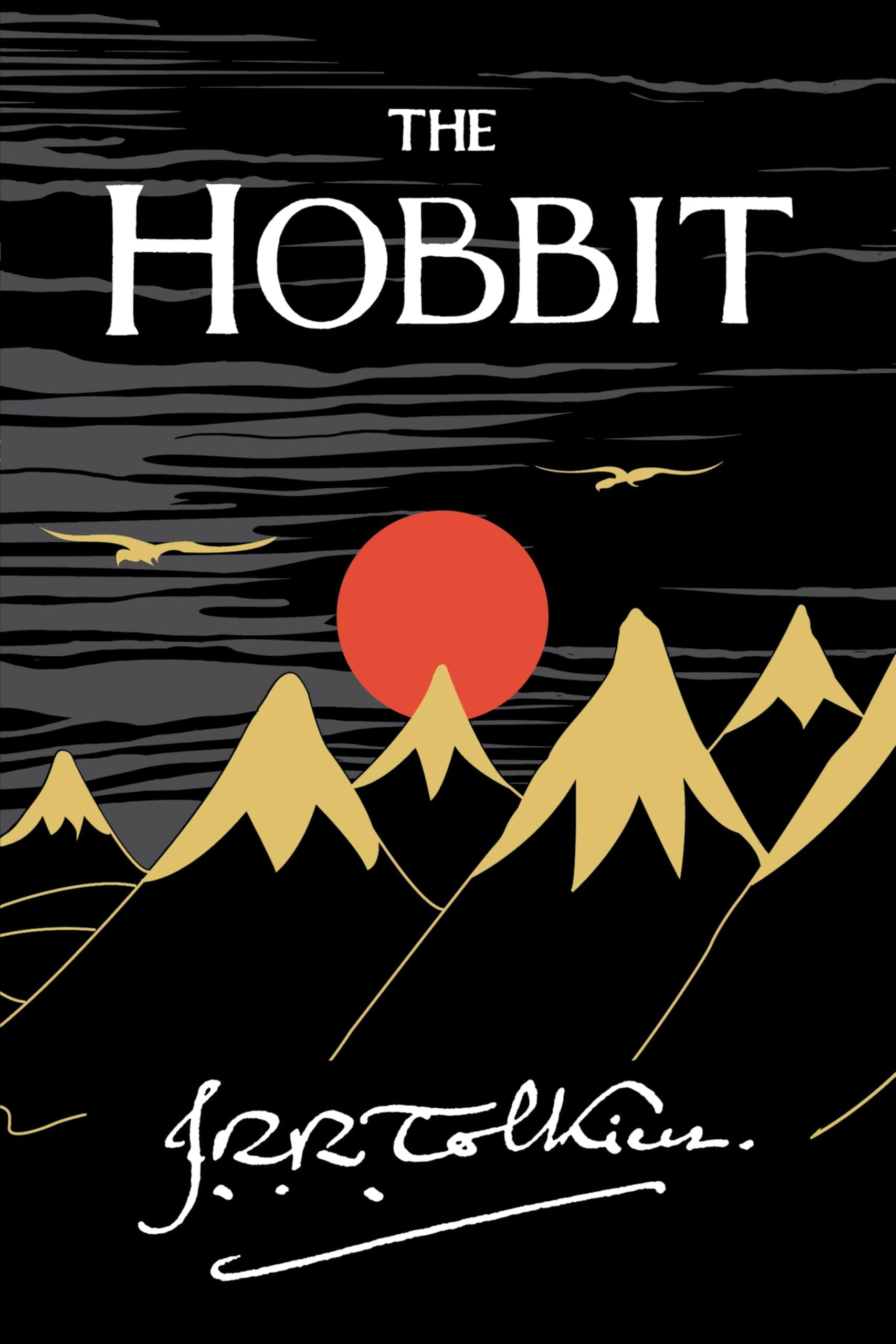
The Hobbit, authored by J.R.R. Tolkien and published by Houghton Mifflin Harcourt in 2012, is a 300-page paperback edition of the classic fantasy novel that serves as the prelude to The Lord of the Rings. Celebrated for its timeless storytelling and rich world-building, it ranks among the top 20 in Classic Literature & Fiction and boasts over 78,000 glowing reviews with a 4.7-star average, making it a must-have for any serious fantasy enthusiast or professional seeking a literary escape.


| Best Sellers Rank | #783 in Books ( See Top 100 in Books ) #20 in Classic Literature & Fiction #43 in Paranormal Fantasy Books #49 in Action & Adventure Fantasy (Books) |
| Customer Reviews | 4.7 out of 5 stars 78,221 Reviews |
P**.
A review from an 8-year-old girl (with some help from her father)
Through The Eyes Of A Child No one is really going to read a review from some random dude about a story beloved for so long by so many. If I said I loved it, I’m just one voice in a chorus of others. If I said I hated it, I would be chided for a lack in taste or understanding. If I said there were parts I liked and others I didn’t – I’d be lost in the middle ground of it all and attacked by both fans and detractors of the story. However, one thing I can offer is the review of at the time of this writing a newly-crested 7-year-old girl in the year of our Lord 2023 as we read the story together and offer up her perspective as someone coming brand new to a work that really kicked off the fantasy genre. While the review may lack detail and wordiness, I can tell you there was no push by her father to like or not like any part of it and the review is an accurate take prompted only by the questions asked by a loving father. (Although this father might interject observation from time to time in parentheses) This was actually a “take two” reading as dad had only read the story and forgot that voices and inflections are what drives children to get invested in the story. We did not make it very far even for a kid who is pretty patient with a learning-as-he-goes-parent and enjoys a world of fairytales and princesses. So this second attempt was assisted by a narrator with a British accent who could sing the songs and change inflections for the characters. Characters – Indeed! The Hobbit definitely has a lack of female characters but this didn’t phase our reader too much – although adding one girl would have been okay with our reader. She enjoyed both Bilbo and Gandalf the most. She loved that Bilbo went on his journey even though he didn’t really want to and in the midst of all his trials in the story – he wanted to do the right thing. (A note here – it’s interesting that “doing the right thing” here is seen instead of “continuing the adventure” or “getting out of the situation”. It seems that the reader got Tolkien’s desire and Bilbo’s role immediately.). With Gandalf, one might think the fact that he was a wizard and did wizardly things at times would be the draw for our reader. In fact, she enjoyed that Gandalf was with the troop of heroes for half of the story and returns just when it seemed like the group needed his help at the end. She enjoyed that Gandalf followed Bilbo back from the great mountain back to the Shire and completed Bilbo’s journey with him. The Journey Action isn’t devoid in the enjoyment of the reader. The battle of Smaug and the ending of the menace was her favorite part. She liked that the bad guy was defeated and peace would reign. Although, the end of the story doesn’t happen here as she thought it was interesting that the selfishness of King Thorin ruined the peace and what could have been a good time. (Just like a good child asking “are we there yet?” this was mirrored with “when are they going to get to Smaug?” but it seems the building in anticipation was worth it in the end). Tolkien is known for building his world and if a tree needs a history, by Joe, that tree will get a full backstory. Our reader agreed that there was too much detail at times and the desire to get on with the adventure was forefront. However, she also agreed that it allowed her to imagine the world of our characters to a better extent. (It’s interesting to think about how many fantasy stories she’s exposed to and how figuring out the world and the rules of the types of magic encounters occurs. This probably gets lost of us big kids who know these stories or story types and forget we need to sometimes start fresh with our assumptions to get more out of the story). The details in the action parts were fun and added to lengthening of that enjoyment. Even with the times of travel and rest, our reader liked the characters talking with each other and interacting. So even the “boring parts” were good for our reader. Themes & Takeaways Our house is not unexposed to British humor although sometimes the subtlety of a joke is lost due to our reader’s age or life experience. Yet, the humor and Brish turns-of-phrases in Tolkien’s story were not lost on her. While many readers, I believe, tend to overlook the songs; our reader found these to be the funniest parts. One reason is that we don’t make up songs for the stuff we do in our day-to-day travels like it seemed our characters did. (This is probably a sad telling of our current state of culture and one that Tolkien probably bristles at). When questioned on what was not enjoyed about the story, our reader thought for several minutes before coming away that there was nothing that she didn’t like. When asked about Golem being a mystery, she was okay with not knowing more about him. She liked that we would see him again in the next books after it was revealed he would show up again. Before that time, she was imagining more of what he looked like and what he was. Even if there was no next book, she was ok with not knowing more about Golem. When asked if she thought the Ring was important, she says that she believes it’s important but can’t even think of why. Our reader’s enjoyment of adventure stories stems from an enjoyment of mysteries and their unfolding and being solved and guessed at. In this adventure story, there was the big adventure but there were also a number of mini-adventures in their travels. Each one was an interesting mystery to see how our heroes would get out of the situation or overcome it. She’s of the belief that Bilbo would continue to go on adventures and do so with other people. (It’s clear that she sees the change in Bilbo from the beginning of the book to the end. And a child’s mind would see the fun had in this adventure and want to continue it. Only the adult mind, roots us at home). Only The Start Of The Journey Clearly, the story was enjoyed by our reader. When asked if she would read it again she stated that she would re-read it a million times even when she knew what would happen. Her father was informed that we would have to continue onto the next book. But as for this book, our reader gave a Final Grade – A+ Final Grade A+
M**N
An Enduring Epic and Heroic Fantasy That Is Often Unfairly Dismissed As "Just For Kids"
*The Hobbit* is one of the most beloved books of all time. Though actually originally written as a children's story, it almost immediately transcended such a classification, and through the years many adults have read the delightful story of a small, but tough Hobbit named Bilbo Baggins. Most folks know the basic premise of the story. If not from reading it, then certainly they know part of it from the prologue to *The Lord of the Rings: The Fellowship of the Ring* movie, and likely went out to learn the rest of the tale. A wizard, Gandalf the Grey, goes and visits the son of an old Hobbit friend, and after spending time with him, surreptitiously marks Bilbo's door with a sign that is an advertisement of services for a professional burglar. The dwarves that Gandalf was helping look for a burglar promptly knock on poor Bilbo's door, and up he finds himself enlisted in an adventure to slay a dragon and find lost gold. Initially the dwarves belittle Bilbo, and this just makes him all the more determined to prove them wrong about him, which attitude he does, to put it mildly, regret more than once on their quest. Eventually he finds the Ring and the adventures are many, but that is too much of a spoiler for this review. Suffice it to say, it is one grand adventure after another. It is said that the Hobbit was published on the recommendation of the publisher's son, who heartily endorsed the tale. It also was published on the strong recommendation of Tolkien's friends, including C. S. Lewis. Tolkien was a man of a very exacting nature. The debt owed to Tolkien's close circle of family, friends, and a few close academic peers is incalculable. For their insistence that Tolkien merely "publish it already" ensured the book kept the whimsical tone it may otherwise have lost. *The Hobbit* is often criticized, to be sure, for not having the extremely "serious" tone and "complex" plot lines of its sequel, *The Lord of the Rings*. While this criticism is perfectly fair, it also greatly misses the point. Yes, Tolkien included fantasy elements in the story derived from the epic fictional history of Britain that he was writing. But that was all that these were, small derivatives. There was not a concerted effort when he wrote the *children's* story, to include all of these. Indeed, while Tolkien had to go back and rewrite the section "Riddles in the Dark" to make the story of the Ring and Gollum coincide with the overall story of *The Lord of the Rings*, that is as far that he was able to go. He realized that to make the tone and story of *The Hobbit* match that of it's sequel would effectively make it no longer the fun story that everyone loved. So the question is, what is *The Hobbit*? What kind of story is it? It is lighter, but with a sense of foreboding. It is the story of a fat, happy, contented age coming to a close in a devastating war that will change the face of the earth. It is the origin of a story that is an attempt to explain how a variety of myths can be true. To this, many may object that *The Silmarillion* is the beginning of the story, but this is untrue. *The Silmarillion* is the beginning of *all* stories, and only concerns the events of the later periods of Middle-Earth very faintly, and near the end of that epic narrative. It is the Creation myth, one that connects with the Christian faith of the author surprisingly well. In fact, the light-hearted tone of *The Hobbit* is the pefect bridge for the reader. It is the most "modern" in perspective, and introduces the reader to the peoples, geography, and events that they will find are connected from the First and Second Ages in *The Silmarillion* and the Third Age in *The Lord of the Rings*. J. R. R. Tolkien didn't like allegory, as he himself attested, but he did try to do "applicability", which is really just a way of saying that he didn't directly do "x = x" in the story, but allowed his Christian worldview to mesh with ancient epics in an effort to reconcile the two differing myths, or as he later convinced Lewis, to separate the "one, True Myth" to which the other myths copy and pay homage. Perhaps the most important link, however, to *The Lord of the Rings*, however, (besides the Ring itself, of course) is the importance of characters and the emphasis on certain truths and values. Among these are loyalty, the Providence of God, and the simultaneous righteousness and brutality of warfare. Before entering the military after the outbreak of World War I, Tolkien and his closest friends, who made up the core of a club that was likely the inspiration for the later Inklings and other clubs Tolkien loved to found at the various colleges at which he taught, had this notion of the glory of war, and how they would find renown for their deeds. This is shown in the perspective of Bilbo and the other heroes at the end of the story. While they were happy to have won the battle against evil, they also felt the horrors of war quite keenly. For the careful and patient reader, this book contains so many nuggets of truth for a "children's" book. It is most definitely *not* only a simple story. It is WELL worth your time. Highly Recommended.
S**E
Funny, cute, and all-round wonderful
Wow, this was amazing! I liked The Hobbit more than Lord of the Rings, because The Hobbit had a much more reasonable amount of setting description, imo. The setting descriptions were still fantastic and impressive in The Hobbit. I especially enjoyed the word paintings of the Misty Mountains goblin tunnels and the scary Mirkwood. The character development of Bilbo was pretty good. He really grows as a person, and from reading his internal monologues, I find it easier to connect with and understand him, which I couldn’t do as well in the movies, since we don’t get a direct look into Bilbo’s mind on the silver screen. Thorin Oakenshield seems different in the book; he was overall politer and more considerate than the Thorin in the movies. Yes, I already know that Tauriel and Legolas are not in the book, and that Tauriel is purely a movie character. But the addition of Tauriel is one of the rare instances where I appreciate the director/ scriptwriter’s artistic liberty. There was also not a single named female character in the book! It was a delight to see Gollum. He was so creepy yet portrayed so vividly. Tolkien is very good at conveying characters in an evocative way, with dialogue and descriptions of their behaviors. Furthermore, I enjoyed the humor throughout the book. It was so cute and humorous! The lightheartedness of these funny moments, stood in stark contrast with the darker parts of the story. I’ve heard some people complain that the Lord of the Rings/ The Hobbit characters tend to be too flat and black-and-white, either all good or all bad. Well, that is in itself a black-and-white statement. I already mentioned the character development of Bilbo. Not only does he change and grow, he also shows both noble and less glamorous sides. Thorin is more complex than he may seem too, but I won’t spoil the plot here. In fact, I would argue that even Gandalf and the Elven king are not single-faceted characters; they have more than one side to them. I actually got Beorn and Bard mixed up, due to the similarity in their names. Bard was more developed as a character in the movie than in the book, though. Radagast was only mentioned once in passing in the book, so I was glad that he made some significant appearances in the movie! It was in addition nice to see the less noble sides of the elven race. Even elves can be petty, impulsive, rude, etc. I doubt that we would ever meet a benevolent troll, goblin, or orc, though. One notable quote in this book, was where Tolkien said that there was one flaw in Bilbo’s plan, and you might have seen it and laughed at him for it. But if you were in his desperate situation, you might not have done half as well yourself. Wow, I loved Tolkien’s quote here, because it underscores what many folks who like to pick at “plot holes” miss. If you’re cool, collected, have no personal involvement in the situation, and have all the time in the world to think, of course you can think of some ingenious strategies that may render the entire journey, quest, or story unnecessary. But do you believe that a person deep inside that situation can think so clearly and come up with such a smart plan in such a short time (often just a few seconds)? People who poke fun at “plot holes” can sometimes be unrealistic too. I’ve heard of many people say that Frodo and co should have ridden on the great eagles to go to Mount Doom. But in The Hobbit, you see that the eagles were not even willing to fly to Lake Town, lest the men shoot at them. If these great eagles can’t even bear to fly that distance, do you think they would be inclined to go all the way to Mount Doom? And would the eagles be willing to risk being attacked by Saruman or Sauron? Plus, great eagles though they are, Rivendell to Mount Doom is a pretty long distance. Would the eagles want to expend so much time and energy for them? It’s one thing to be in favor of a noble cause (like saving the world). But it’s quite another to offer to spend tons of time, energy, and resources to help people, especially if there’s a chance they can be killed by a dark wizard. Furthermore, I think the point of having a fellowship of the ring, was not merely to dunk the ring into the fire at Mount Doom. It was also about building character for the adventurers, and having them learn to get along with people of other species. (Most notably, Legolas the elf and Gimli the dwarf become good friends.) All in all, this was a wonderful, enjoyable book. I hope to read some of Tolkien’s other works, and especially want to learn more about Radagast.
A**4
A Hobbit’s Heartfelt Adventure
The Hobbit by J.R.R. Tolkien is a rollicking journey that hooked me with its sweeping adventure and left me smiling at its heart. With a 4-star rating, it’s a solid win for anyone craving a tale that’s equal parts thrilling and soulful. The story’s scope is massive, carrying Bilbo Baggins from his cozy hobbit-hole through perilous mountains and dragon-guarded hoards, delivering the epic stakes I love. The world of Middle-earth—brimming with misty forests, glittering caves, and bustling towns—feels alive, every step packed with wonder and danger. What stood out most was the adventure itself: a grand quest that blends humor, heart, and high stakes. Gandalf’s unwavering belief in Bilbo, nudging him from comfort to courage, was a highlight, making their bond a quiet anchor in the chaos. Bilbo himself, with his reluctant bravery, and Gollum, hissing over his “precious,” are characters that stick with you—vivid, flawed, and unforgettable, even if they don’t quite hit the deepest emotional chords I crave. The audiobook brought the story to life, especially the dwarves’ lively songs, which added a playful spark to the journey. That said, the book’s childish tone and slow pace, clearly aimed at younger readers, sometimes dragged, making parts feel like a slog despite the narrator’s charm. A tighter pace or less whimsy might’ve elevated it further, but it never lost its grip on me. Tolkien’s prose, while not always lyrical, paints vivid scenes and carries a warmth that suits the story’s spirit. The darker moments—battles and betrayals—carry weight but always serve the story’s hope, never sinking into pointless gloom. Overall, The Hobbit left me satisfied and charmed, a testament to why it and The Lord of the Rings sparked the fantasy genre. It’s a fun, meaningful ride that had me cheering for Bilbo’s growth. The line, “There is more in you of good than you know, child of the kindly West. Some courage and some wisdom, blended in measure,” captures its core: a belief that even the smallest heart can rise to greatness. For fans of epic adventures and characters who find strength in unexpected places, this is a journey worth taking.
P**E
A *FILM* review of Peter Jackson's *The Hobbit -- Part I*
Peter Jackson's *The Hobbit* (Part I -- "Into the Wilderness"): TITLE: *Martin's Freeman's Bilbo Baggins is inspired!* [***** 5 stars. Until *The Hobbit, Part I* becomes available on DVD, I'm posting the film review here.] WARNING: Spoilers ahead! While Gandalf the Wizard [Ian McKellan] remains timeless, it was obvious from the start that the Bilbo Baggins of three *The Lord of the Rings* films fame [Ian Holm, now pushing 80 years old] would have to bow out for the making of *The Hobbit*. Director Peter Jackson had surely asked himself, "Who could portray a young Ian Holm?", (but not necessarily a younger Bilbo Baggins since we now perceive Bilbo to look like the actor.) Answer: Martin Freeman. And he was right - Freeman effortlessly coalesced into the lead role. In the first of the two *The Hobbit* entries [sub-titled: *Into The Wilderness*], a more youthful Bilbo Baggins is craftily crow-barred by Gandalf into embarking upon a great adventure (Hobbits *despise* adventures!) and by serving as a burglar for a grumbly troupe of thirteen dwarves, all of whom are determined to reclaim their lost family treasure from the Evil dragon, Smaug; however, the actual battle with Smaug at the Lonely Mountain will have to wait until Part II [to be entitled: *Into the Fire*] is released. Part I largely focuses upon the history of the dwarves and the initial hazards that they encounter during their single-minded quest, chiefly battling orcs in the Misty Mountains and finishing with their tribulations with the giant spiders of the vast and ominous Mirkwood forest. It's worth noting right off that the screenwriters very shrewdly rehabilitated the puerile songs of the dwarves [found throughout the book], transforming them into a range of vivid action scenes. This strategy achieved a pair of worthy ends: 1. I've heard audio versions of this story and to include the dwarf renderings of these archaic and lengthy songs would have been in profound conflict with an effective film conveyance. 2. These newly-fashioned scenes provide additional fodder for the artful expansion of the general lack of book material, thereby reinforcing audience interest. Honestly, a movie version of Tolkien's *The Hobbit* could feasibly have been corralled within a single feature-length film [just think of all the ground that was covered in Avatar (Original Theatrical Edition) ] -- but the financial anticipations of the producers [greed], which tended to tenon seamlessly with Peter Jackson's lust for detail, had dictated long ago that viewers would have to hang on for a "final" conclusion. Part I features an ending of a sort but perhaps it would be more forthright to regard it as a dramatic finale. One looming uncertainty which has kept Tolkien fans off-balance was whether the screenwriters would go dark with *The Hobbit* in an effort to effectively link it up with The Lord of the Rings - The Motion Picture Trilogy (Platinum Series Special Extended Edition) series, particularly since Tolkien originally penned the earlier work as a sort of kids' fairy tale. In retrospect the answer to the question was probably evident to Peter Jackson from his earliest conception of a film version, noting additionally that his time-honored philosophy is that first-class films cannot simply mirror the books from which they are taken. A good screenplay massages a book for all it's worth but the visual and audio aspects must be fully accommodated too. Particular figures such as Gandalf, Elrond [Hugo Weaving], Galadriel [Cate Blanchett] and, Gollum [Andy Serkis] have already been firmly established in terms of image and it would be less than prudent at this juncture to radically manipulate the personalities of these prominent returning characters. And speaking of Galadriel, she was never a personage to be found in *The Hobbit* but Peter Jackson mined her from Tolkien's trilogy, casting her very strategically in his film version (along with Legolas, played by Orlando Bloom who also did not appear in *The Hobbit*) to further expand the script. Blanchett's presence additionally helped to overcome the gender gap of the book version. Still, these two actors are not in any way just add-ons -- their respective roles and performances have imparted considerable gravity to the story. It is impossible to separate this film's noir-ish ambiance from Howard Shore's magnificent soundtrack. He's done it again! Upbeat and even a bit frivolous at the outset, the filmscore soon slips furtively into darker realms as the story advances, a few heroic themes being reserved for the appropriate dramatic moments. One is acutely taken with the leitmotif which Shore appended to Beorn, a Prokofiev-ish ponderousness integrated with a more serious Beethoven-like dignity... the perfect musical emulsion for the venerated skin-changer. Once initial New Zealand and Australian actors' guild stumbling blocks were surmounted, the Kiwi locations again became a reality, a twin-island geography wholly adequate for the production when supplemented by studio settings, all of which have lead to the presentation of an astonishingly exceptional end-product. It would certainly have proven problematic to reproduce The Shire's Hobbiton in Eastern Europe, a location which was suggested during the early union-troubled days. Martin Freeman's dazzling performance has eclipsed even that of Elijah Wood's stellar lead role in *The Lord of the Rings* films. The former's ebullient energy ironically seems to have retrospectively amplified Ian Holm's earlier portrayal of Bilbo in the New Line Cinema trilogy of films. The remaining cast members have also set the viewers at complete ease as they creatively played out their respective roles. Peter Jackson undoubtedly learned early in his career that, given spot-on casting, at least half the battle is won. And it's hardly surprising that a particular limelight shines on Fili [Robert Kazinski] and Kili [Aidan Turner] since this caveat, for those of us who already know the story, will markedly impact most of us when we get to view the second film. The director is clearly looking ahead. In the larger view *The Hobbit* story lacks the bulwark of heroic figures which we encountered throughout *The Lord of the Rings* series, Aragorn, Boromir, Theoden, Faromir, and so on. Still, imposing characters such as Elrond, Beorn, and Bard the Bowman provide us with a subliminally more-than-adequate melodramatic security blanket. The bottom line is that this superb movie is not simply the detritus of *The Lord of the Rings* films. It's gratifying that Peter Jackson was shrewd enough to not endeavor upon such a futile follow-up attempt -- he created this film from scratch. Embracing that same notion, the screenwriters saw to it that the storyline endured sufficient jumbling so that the tale is not precisely as linear as the one we encounter in the book. This film stands on its own. With better than a baker's dozen of little folks in starring roles the temptation to over-incorporate moments of comic relief [vignettes of Gimli] must have rivaled the gnawing urge which only The One Ring could normally generate. While some tasteful levity fell well within the bounds of a palatable script, I did actually breathe a sigh of relief once I realized that few such incidents were forthcoming. The computer generated images aspect of the movie, while perfectly executed and integral to the overall work, are nicely supplemented by scale doubles, forced perspective images, miniatures, and other Jackson-ish tricks of the trade. No fear -- these facets of the film are all first-class and delightfully palatable. Gollum is better than ever. Additionally, due accolades can hardly be suitably imparted to all the folks who helped to polish this film to excellence by means of effective make-up, articulate stunt work, unequaled cinematography, precise production design, and all the other crew activities which only ever seem to rate a fleeting line of scrolled credit. One is pleased to observe that the new role of Warner Brothers and MGM [Hollywood-based companies which recently acquired New Line Cinema] did not perceptibly obstruct Peter Jackson's proclivity for artistic detail. The casual but essential impedimenta present at every place where the Dwarfish Crusaders land aids us all to subconsciously believe in the reality of Middle Earth along with its numerous and varied inhabitants. Probably much credit for the focused attention upon the near-infinite number of magical nuances should go largely to Alan Lee, a man with an unbounded imagination coupled with a vast artistic talent. I present only a singular critique of this film and it has nothing to do with the body of the movie itself: I feel compelled to comment that the decision to incorporate the endless scroll of Tolkien Fan Club members' names within the end credits is ill-advised and indirectly demeaning to the actual cast and crew. What do these people actually contribute to the film's production? Loyalty and moral support? The folks who have indeed delivered something more tangible are appropriately noted elsewhere within the credits. But most of the listed individuals have played no real part whatever, regardless of the syrupy patronization conducted by the film-makers toward this particular faction of Tolkien enthusiasts. Including these names in the film credits, which also takes in the so-called self-appointed "guardians" of Tolkien's work [a trivial minority of Tolkien Fan Club members], amounts to little more than a shallow ego-bribe. It's presumptuous as the devil to assert that Tolkien's books *need* guarding by anyone -- the affiliation here is more akin to pretentious posthumous tail-gating on the venerable Old Master. The credits perquisite imparted by the film producers, appears in my view to ostensibly head off any whining outrage raised on the internet by those Tolkien radicals who are wholly unyielding in regard to the slightest manipulation of Tolkien's texts. This posture is pure nonsense. In the end, if one's name is included in the film credits then how can s/he ever issue an untainted appraisal of the film? In truth, such an individual could never ethically issue a fruitful critical review, (nor would they likely be *inclined* to criticize, which leads me to question the motives and ethics of the producers on this front.) But here I ramble witlessly upon a topic which only faintly deserves to be dignified by my attentions to it. In truth, my mini-rant is not even a legitimate film criticism - it's really just a pet peeve. In summary, *The Hobbit* contains enough MacGuffins and other surprise moments to make it seem like a new story while still paying a more than adequate tribute to Tolkien's original manuscript. Martin Freeman was surely a brilliant choice to play Bilbo. I can hardly wait to see Part II!
D**P
ONE OF MY ALL TIME FAVORITE READS AND THE FIRST BOOK ON MY NEW READING PROJECT.
Last year NPR published a list of books which were chosen by their listeners and a special committee that are considered the best 100 Science Fiction and Fantasy books ever written. I am not sure if I agree with the selections made here but nevertheless one of my current reading projects is to read through the list. There are many old friends of this list; books that have become a part of my life over the years and have gone through multiple readings by myself indeed, but this reading project I am now on requires me to give them all a reread...I cannot wait! Anyway, the first on the list, as printed, is Lord of the Rings. The Hobbit is not on this list. It is my personal feelings that LOTR cannot be appreciated or fully understood without having first read The Hobbit - ergo I have taken it upon myself to start with The Hobbit and proceed from there. First though let me do some house keeping. Amazon, in all of its wisdom, had thrown the reviews of ever edition of The Hobbit all into one bag. There have been quite a number of editions of this book since the first which was in 1937 with the first American edition being in 1938. I note from reading the reviews here that there is mass confusion, and indeed a lot of disappointment over ordering this book. The only thing I can tell you is to do your research and MAKE SURE you order the edition you want. Many of the sellers here do not know one from the other. This review is on the book, not on the edition. I first read this work in 1961 from a very ragged old paperback I found in a junk shop in Istanbul, Turkey. I think it was the Puffin edition, but cannot be sure. Since that time I have collected quite a number of these books - all different, but with very minor "errors" all the same story. (We silly Americans changed "Dwarves" to Dwarfs" because we felt Tolkien had made an error in spelling...Tolkien was NOT happy!) If a person is interested in such things, I personally would suggest an edition which includes Tolkien's original illustrations. That is of course just my personal preference. Anyway..... Before Lord of the Rings there was the Hobbit. I am most certainly not going into a plot summary here as all that has been well covered in the 2,000 plus reviews already posted. There are some important points I feel that need to be pointed out. First is the fact that to consider The Hobbit as a simple children's story would be a big mistake. Yes, older children will, do and can enjoy it, but like LOTRs, The Hobbit is still and all an adult book despite what others might tell you. This book needs to be read very carefully and savored. Second, the reader should note that when Tolkien transitions to LOTRs his style does change somewhat and the overall tone of the story darkens. It is noted that the story of how the "Ring" came into the hands of the Hobbits (Bilbo), is told. It should also be noted that the caste of characters changes from The Hobbit to LOTRs. Gandalf the Grey is present as is Bilbo and Elrod along with a couple of the Dwarves. For the most part though, the old characters found in The Hobbit are left there as the story moves on with the next three volumes. Third, the reading level is lower in The Hobbit than in LOTRs. This is important. I have found, over the years, than many young people an handle The Hobbit quite well, but when they then go to LOTRs, they find themselves in a bit over their heads and loose interest quite quickly...not all kids, mind you, but enough to be significant. Forth, Tolkien has used more of a fairy-tale mode in writing The Hobbit than he did in LOTRs. This throws some folks off when they transition from the first to the later. I have thoroughly enjoyed this read over the years. I as sorry to find that NPR had not included it on their "official" list along with LOTRs...but then I suppose that everyone that will conceivably read the list will have some disagreement...that seems to be the nature of lists. Don Blankenship The Ozarks
M**E
Classic Young Adult Fantasy - BOOK FIRST - MOVIE SECOND
This is a Young Adult (YA) Fantasy. It is a fun fantasy adventure story which can be enjoyed by younger adults and older adults equally. Current Amazon Product Page recommendation is for "ages 12 and up" and "grades 7 *and up*" and this seems appropriate. Please do not be intimidated by the aura of JRR Tolkien and the stature of his 2 main works (The Hobbit and The Lord of the Rings: One Volume ). The Hobbit has not stood the test of time due to praise from critics or from analysis by scholars. It has stood the test of time because it is loved by fantasy readers of all ages. Please do not let the upcoming movie delay your enjoyment of the book. Peter Jackson has done a wonderful job creating cinematic versions of the Lord of the Rings and I fully expect him to do so with the Hobbit as well; However, I strongly recommend to READ THE HOBBIT NOW which will allow for greater enjoyment and understanding of the movie later. The Hobbit has long been a favorite story of mine; an old friend who might not always be at hand but is never forgotten. Fortunately, it is now available as an e-book so it is easier to keep track of. This is the story of a hobbit, Bilbo Baggins, who is living a comfortable and predictable life in the Shire until Gandalf, a wizard, decides that Bilbo is needed to assist 13 dwarves on their quest. Bilbo will join the quest as a burglar based solely on Gandalf's recommendation and no prior experience. Bilbo is dumbfounded to find that he is expected to travel through goblin and troll infested lands to confront a dragon that has stolen the dwarves' rightful treasure. It is great fun to follow Bilbo's transformation from a homebody to a dauntless adventurer while never losing track of his roots. The enhanced version contains additional drawings which are interesting but probably mainly of interest to longtime fans. The enhanced version also contains some audio content (Tolkien reading passages or reciting poetry or songs) which I could not access through my Kindle (only compatible with Ipad and Iphone). This is a must read story for those who are fans of the YA Fantasy Genre. The Hobbit (Enhanced Edition) is 4,956 Kindle locations long excluding sample of The Lord of The Rings. Standard length novels seem to run in the 4,500 to 7,000 plus Kindle location range. Longer novels, such as those in Robert Jordan's Wheel of Time series, can range from 15,000 to 20,000 plus Kindle locations. Update December 2012: I was not able to access the bonus audio content with my Kindle Fire HD. This content is only compatible with IPad and IPhone.
G**Y
The Hobbit: An Unexpected Musical
I read a version of this years ago when I was young, and have seen the classic cartoon as well as the more recent trilogy, which is freshest in my mind. A reasonable amount of time has been spent in fantasy worlds otherwise, enough that this passage from the Author's Note stunned me: "This is a story of long ago. At that time the languages and letters were quite different from ours of today. English is used to represent the languages. But two points may be noted. (1) In English the only correct plural of dwarf is dwarfs, and the adjective is dwarfish. In this story dwarves and dwarvish are used*, but only when speaking of the ancient people to whom Thorin Oakenshield and his companions belonged. (2) Orc is not an English word. It occurs in one or two places but is usually translated goblin (or hobgoblin for the larger kinds). Orc is the hobbits’ form of the name given at that time to these creatures, and it is not connected at all with our orc, ork, applied to sea-animals of dolphin-kind." Wait wait... Wait. Orcs and goblins the same? Does. Not. Compute. That cognitive disconnect aside, this is an enjoyable, rollicking classic read ripe with descriptive, fun language, and characters often bursting into song. Like, a lot. Bilbo's peacefully at home when Gandalf chooses him for a mission. A load of dwarves, many interchangeable, arrive to eat his food, sing, and leave... Thus the quest begins. There's the grandson of the king, the old one, the fat one (not shaming, he's oft referred to as such), and the two young ones, plus multiple leftover dwarves. Many of the characters they meet on their journey are individually more distinctive, like Gollum, Elrond, and Beorn. It's a fun read if you're in the mood for an old fashioned tale; I won't wait so long before reading it again.
Trustpilot
3 weeks ago
3 weeks ago