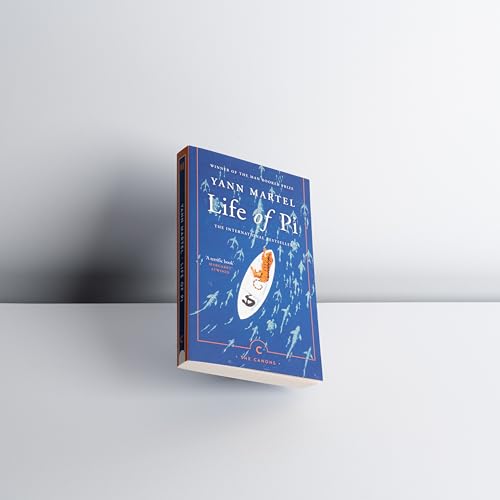
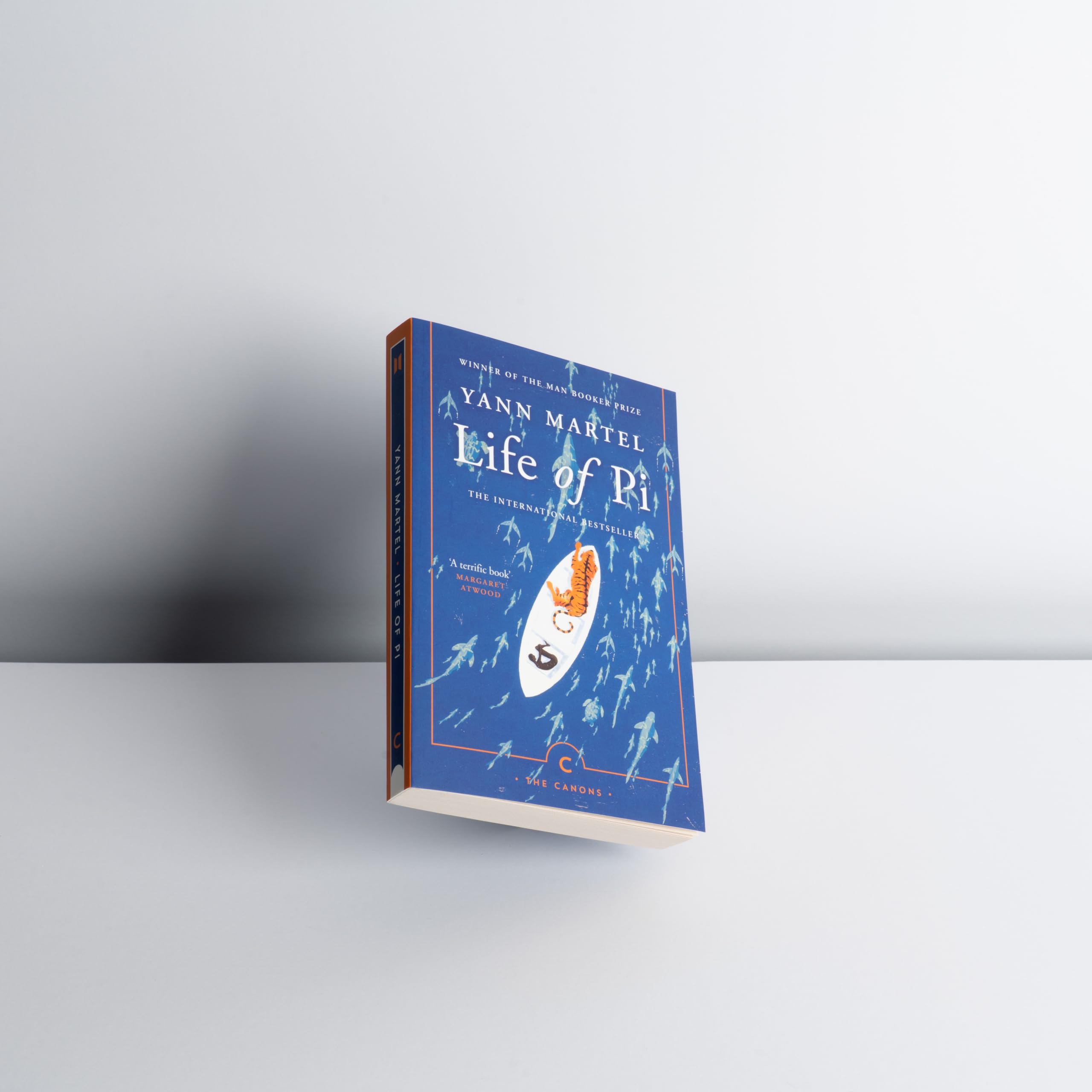
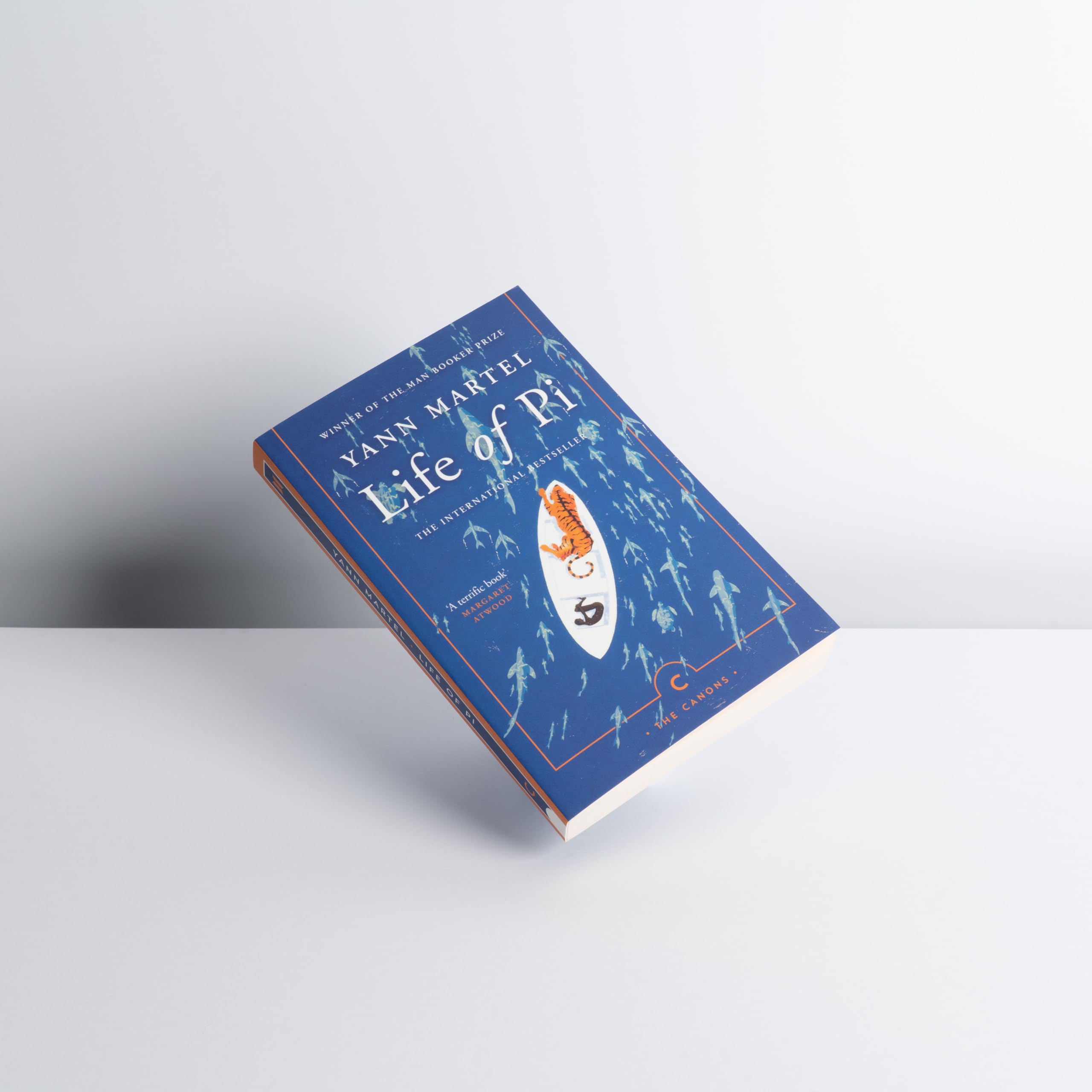
![Life Of Pi (Canons) [Paperback] [Jul 05, 2018] MARTEL YANN](https://m.media-amazon.com/images/I/419fDIikdRL.jpg)


desertcart.com: Life Of Pi (Canons) [Paperback] [Jul 05, 2018] MARTEL YANN: 9781786891686: MARTEL YANN: Books Review: A Triumph On The Surface And Much Deeper - The novel `Life of Pi' was only on my distant radar, until I saw the stunning scenes of this mega-3d movie made by Ang-lee, my brother by another mother. Of course, I wanted to go `book first, movie second', since the other way around just doesn't work as well, so I jumped into the novel to free myself to see the movie. The Life of PI is the story of a young man, a religious studies and zoology major in college, who sees truths and beauty in 3 major religions so chooses to follow all of them. This spiritual world gets hammered and tested when a shipwreck leaves him lost at sea on a lifeboat along with some of the animals his father was transporting to sell to other zoos. The novel was simply tremendous. The writing was both easily digestible and yet filled with deeper implications. Piscine's, or "Pi's" thought patterns were intriguing, including his initial inquisitiveness and near naivety before the shipwreck, to his brain's struggle for survival and the delirium that follows, to his post-rescue riddling of the insurance representatives investigating the cause of the crash. (This is not a spoiler, since the reader knows right up front that Pi survives.) This novel can be read simply for an action, intrigue, and the survival story which rivals any other, but my guess is there are tons of English professors who would love to see their students turn in papers with the following as subjects: ~Symbolism of the Hyena, the Orangutan, the Frenchman, and especially, Richard Parker The Tiger. Fear, nature, the Id or duality of man, childhood demons conquered (you're going to be a goat fed to the tiger, his brother tells him) ~Compare the Tiger in Life of Pi to the volleyball `Wilson' in Castaway. Okay, you may just get some laughs and nothing higher than a B+ if you write this paper. ~Compare and contrast life before and after the boat, compare and contrast life on the boat to life on the island. ~Role of carnivores versus omnivores in the novel. ~Nature of storytelling itself. Both in Pi's early desire to compare and contrast the mythology of major religion, to his story of how he survived the shipwreck, stories are presented as providing meaning and creating larger than life myths which lead to spiritual faith. (Pi laments the lack of more grandiose stories in Christianity). Does belief in a story make it more or less true? When you are trying to tell the truth, is it best to do so in Fiction? Ah, to be in school again and spend hours writing such a paper into the wee hours of the night. Good for me, I can just enjoy and think as deep or shallow as I'd like. Among many others, one thing that has stuck with me is the things Pi had to do to get by. Eating animals as part of survival is described as both barbaric and instinctual, and the degree of Pi's desperate hunger leads to desperate measures. While reading, I made some out loud gasps at some of the ways Pi survived, causing others in the room with me to turn their heads and wonder what was on my kindle. But upon completing the novel and still savoring its taste, I found myself noticing all the food I waste and imagining what I would eat `if I really had to'. Like Upton Sinclair's "The Jungle," Life of Pi maybe aimed for the heart but accidently hit the stomach as well. The odd thing is, many readers will discuss back and forth what was real and what wasn't real in the novel, but I like to believe, as I think the author and Pi himself believe, that it doesn't matter and it misses the point. Truth exists in the eye of the storyteller and the observer, and in the mind of the reader, so if you read about it, saw it in your minds eye, then it happened. This novel fired on all cylinders, and I'm going to be waving it under the noses of readers everywhere. And just like Tom Hanks who missed Wilson, and Pi who misses his tiger, I miss reading this novel each night. At least I still have the movie. Mark Matthews, Author of Stray and The Jade Rabbit Review: Using stories to find meaning * Possible Spoilers * - Warning: This review may contain some spoilers Why do we choose to tell the stories that we tell in the way that we tell them? Is it to portray unembellished reality or do we chose our narrative in service to a deeper purpose? In the novel Life of Pi, Yann Martel suggests that stories are how we find meaning in the universe; they are a path to God. Martel's characters tell stories that provide comfort, explain hardship, and provide inspiration without being literally factual. The author takes pains to remind the reader that the book itself is a work of fiction and that the literal representation of the truth is not his priority. In fact, Martel seems to say that sometimes we must abandon literal truth if we want to find meaning in the universe. If we fail to look beyond the literal truth in search of something deeper, we will "lack imagination and miss the better story"--we may fail to find God (Martel, 2007, p. 64). Piscine Molitor Patel, known as Pi, is the titular character of the novel. The book's central conflict is Pi's struggle to survive while adrift at sea in a lifeboat after his ship sinks. He must endure against elemental forces, lack of food and fresh water, and stave off despair. However, on top of these very serious challenges, he must also deal with the fact that he is not alone in the life boat. For most of his ordeal, his only companion is a Bengal tiger named Richard Parker: a wild and untamed creature that could easily kill him at any time. However, this is not a simple survival story where the tension comes from wondering if the main character will manage to triumph over adversity. Even before we know a single detail of his ordeal, Martel assures us that Pi is alive and well, living an almost ordinary life. At the same time, he assures us that this is "a story to make you believe in God" (Martel, 2007, Author's Note). Much of the tension of the book comes in discovering what the author means by this. On the surface, this is a survival story. However, this is not really a book about Pi's ordeal at sea; it is about the telling of the story of Pi's ordeal at sea. In the course of the narrative, there are at least five different times that one character tells the story to another. We are only privy to the details of two of these exchanges; the others occur "off stage." However, after each one, Martel shows us the impact hearing the tale has on the listeners. We get the sense that nobody is truly the same after hearing it. This is true even though the two versions of the story we see are mutually contradictory. By this, Martel demonstrates that it is not necessarily the literal truth of a tale that makes it meaningful. There is some other aspect of the story that makes it meaningful. In the Author's Note, Martel calls fiction "the selective transforming of reality" and says that writers create it "for the sake of greater truth" (Martel, 2007, Author's Note). This note is where the narrative actually starts; it is part of the fiction Martel has created, not something that lives apart from the rest of the book. The character of the author appears throughout the book in a series of interludes within Pi's narrative. Martel uses these recollections to describe the man Pi has become and how the events of the story have changed him. The author also uses them to heighten the mystery about what exactly transpired in the lifeboat. He makes numerous references to events that have not yet been shared with the reader, foreshadowing the action to come. Martel devotes most of the book to telling Pi's preferred account of his ordeal. This is a story that focuses on both the practical day-to-day details of his survival and his internal struggle to retain his faith in a higher power. The account is striking in both its realism and its utter implausibility. Even if we ignore the improbability of being able to survive on a lifeboat with an untamed Bengal tiger for 277 days, there are many other aspects of Pi's story that are hard to believe. We know this because Martel takes pains to have other characters, such as the shipping agents who hear the tale, point out the implausibility of these aspects. Details such as encountering another lifeboat at random in the Pacific midway through the journey, finding an almost magical floating island, and just the act of being able to survive in a lifeboat for 277 days are all highlighted as being hard to believe. However, this is not the only account of the events that Pi offers. He tells an alternative version of the events that is just as brutal and unforgiving as the other, but far more plausible. In this story, many more things make sense. Pi's actions are selfish, even if excusable. His thoughts are about survival, revenge, and satisfying his hunger, not his relationship with God. This version has only ugliness; it offers no meaning. Pi tells the shipping agents both of these stories and offers them a choice; the author does the same for the reader. Pi seems to prefer the version of the story where he finds meaning because that is something he craves. Earlier in his narrative, he describes how his search for meaning caused him to become a Christian, a Muslim, and a Hindu, all at the same time. Each of these religions tells stories that explain the universe; they provide meaning and comfort. Pi embraces all of them. He feels no need or obligation to choose between these mutually exclusive stories. Why should he choose? The author told us in the Author's Note that stories are selective transformations of reality for the sake of greater truth. Pi craves this truth; he wants to know God and not restrict himself to "dry, yeastless factuality" (Martel, 2007, p. 64). For the most part, both versions of Pi's narrative have the same elements; each of the fanciful aspects of the first narrative has a corresponding aspect in the second narrative that is tragically believable. However, there is a key part of the first narrative that does not appear in the second one: the floating island. This is the least plausible portion of Pi's first narrative. The island is an idyllic place (at least at first) with almost magical properties. It is wholly absent from the second narrative. This is a mystery within a mystery; the shipping company representatives he tells the story to give up trying to understand it. We are left to wonder if it points to a gap in Pi's second story, a piece that explains how a man could survive that long at sea. On the other hand, maybe it does not appear in the second story because it was literally true and needed no amendment. We are left to wonder. Martel is careful to leave the door open for both interpretations of the story. For instance, one of the shipping representatives calls the island a botanical impossibility (Martel, 2007, p. 294). However, the representatives had also just assured Pi that the floating island of bananas that appeared earlier in the story was similarly impossible, an assertion that Martel shows proven wrong (Martel, 2007, p. 293). In this way, Martel hints that if the representatives were mistaken about one floating island, they might be mistaken about another. If one thing that is hard to believe is possible, perhaps another incredible thing also can be so. Even when we are convinced we know what happened, Martel reminds us that we should have doubt. The author tells us how he has read the diary that Pi kept during his ordeal. In it, we are shown Pi questioning his relationship with God. This is the Pi of the first story, not the survival obsessed pragmatist of the second one. There is always reason to doubt. Why does Martel tell this story in the way that he does? Why is this not a simple linear narrative of a boy trapped on a lifeboat with a tiger? Martel tells the tale this way because he wants the reader to face the same choices that his characters face. He uses a complex structure of narratives within narratives in order to create ambiguity. The reader is left to decide what really happened. Do we choose the version of events with meaning, or the one with plausibility? Which one do we prefer? Is the "more plausible story" truly plausible? Martel refuses to give us definitive answers to these questions. Martel uses the plot and structure of the book to show that it does not matter if either is true. It does not matter if the author invented this story or if, as he says, it was told to him. What matters is the meaning we choose to give the story as readers. Work Cited Martel, Yann (2007). Life of Pi (Kindle Edition). New York: Houghton Mifflin Harcourt. (Original work published 2001)
| ASIN | 1786891689 |
| Best Sellers Rank | #1,951,755 in Books ( See Top 100 in Books ) |
| Customer Reviews | 4.4 4.4 out of 5 stars (22,807) |
| Dimensions | 5.08 x 0.79 x 7.8 inches |
| ISBN-10 | 9781786891686 |
| ISBN-13 | 978-1786891686 |
| Item Weight | 8 ounces |
| Language | English |
| Print length | 336 pages |
| Publication date | July 5, 2018 |
| Publisher | Canongate |
M**S
A Triumph On The Surface And Much Deeper
The novel `Life of Pi' was only on my distant radar, until I saw the stunning scenes of this mega-3d movie made by Ang-lee, my brother by another mother. Of course, I wanted to go `book first, movie second', since the other way around just doesn't work as well, so I jumped into the novel to free myself to see the movie. The Life of PI is the story of a young man, a religious studies and zoology major in college, who sees truths and beauty in 3 major religions so chooses to follow all of them. This spiritual world gets hammered and tested when a shipwreck leaves him lost at sea on a lifeboat along with some of the animals his father was transporting to sell to other zoos. The novel was simply tremendous. The writing was both easily digestible and yet filled with deeper implications. Piscine's, or "Pi's" thought patterns were intriguing, including his initial inquisitiveness and near naivety before the shipwreck, to his brain's struggle for survival and the delirium that follows, to his post-rescue riddling of the insurance representatives investigating the cause of the crash. (This is not a spoiler, since the reader knows right up front that Pi survives.) This novel can be read simply for an action, intrigue, and the survival story which rivals any other, but my guess is there are tons of English professors who would love to see their students turn in papers with the following as subjects: ~Symbolism of the Hyena, the Orangutan, the Frenchman, and especially, Richard Parker The Tiger. Fear, nature, the Id or duality of man, childhood demons conquered (you're going to be a goat fed to the tiger, his brother tells him) ~Compare the Tiger in Life of Pi to the volleyball `Wilson' in Castaway. Okay, you may just get some laughs and nothing higher than a B+ if you write this paper. ~Compare and contrast life before and after the boat, compare and contrast life on the boat to life on the island. ~Role of carnivores versus omnivores in the novel. ~Nature of storytelling itself. Both in Pi's early desire to compare and contrast the mythology of major religion, to his story of how he survived the shipwreck, stories are presented as providing meaning and creating larger than life myths which lead to spiritual faith. (Pi laments the lack of more grandiose stories in Christianity). Does belief in a story make it more or less true? When you are trying to tell the truth, is it best to do so in Fiction? Ah, to be in school again and spend hours writing such a paper into the wee hours of the night. Good for me, I can just enjoy and think as deep or shallow as I'd like. Among many others, one thing that has stuck with me is the things Pi had to do to get by. Eating animals as part of survival is described as both barbaric and instinctual, and the degree of Pi's desperate hunger leads to desperate measures. While reading, I made some out loud gasps at some of the ways Pi survived, causing others in the room with me to turn their heads and wonder what was on my kindle. But upon completing the novel and still savoring its taste, I found myself noticing all the food I waste and imagining what I would eat `if I really had to'. Like Upton Sinclair's "The Jungle," Life of Pi maybe aimed for the heart but accidently hit the stomach as well. The odd thing is, many readers will discuss back and forth what was real and what wasn't real in the novel, but I like to believe, as I think the author and Pi himself believe, that it doesn't matter and it misses the point. Truth exists in the eye of the storyteller and the observer, and in the mind of the reader, so if you read about it, saw it in your minds eye, then it happened. This novel fired on all cylinders, and I'm going to be waving it under the noses of readers everywhere. And just like Tom Hanks who missed Wilson, and Pi who misses his tiger, I miss reading this novel each night. At least I still have the movie. Mark Matthews, Author of Stray and The Jade Rabbit
K**S
Using stories to find meaning * Possible Spoilers *
Warning: This review may contain some spoilers Why do we choose to tell the stories that we tell in the way that we tell them? Is it to portray unembellished reality or do we chose our narrative in service to a deeper purpose? In the novel Life of Pi, Yann Martel suggests that stories are how we find meaning in the universe; they are a path to God. Martel's characters tell stories that provide comfort, explain hardship, and provide inspiration without being literally factual. The author takes pains to remind the reader that the book itself is a work of fiction and that the literal representation of the truth is not his priority. In fact, Martel seems to say that sometimes we must abandon literal truth if we want to find meaning in the universe. If we fail to look beyond the literal truth in search of something deeper, we will "lack imagination and miss the better story"--we may fail to find God (Martel, 2007, p. 64). Piscine Molitor Patel, known as Pi, is the titular character of the novel. The book's central conflict is Pi's struggle to survive while adrift at sea in a lifeboat after his ship sinks. He must endure against elemental forces, lack of food and fresh water, and stave off despair. However, on top of these very serious challenges, he must also deal with the fact that he is not alone in the life boat. For most of his ordeal, his only companion is a Bengal tiger named Richard Parker: a wild and untamed creature that could easily kill him at any time. However, this is not a simple survival story where the tension comes from wondering if the main character will manage to triumph over adversity. Even before we know a single detail of his ordeal, Martel assures us that Pi is alive and well, living an almost ordinary life. At the same time, he assures us that this is "a story to make you believe in God" (Martel, 2007, Author's Note). Much of the tension of the book comes in discovering what the author means by this. On the surface, this is a survival story. However, this is not really a book about Pi's ordeal at sea; it is about the telling of the story of Pi's ordeal at sea. In the course of the narrative, there are at least five different times that one character tells the story to another. We are only privy to the details of two of these exchanges; the others occur "off stage." However, after each one, Martel shows us the impact hearing the tale has on the listeners. We get the sense that nobody is truly the same after hearing it. This is true even though the two versions of the story we see are mutually contradictory. By this, Martel demonstrates that it is not necessarily the literal truth of a tale that makes it meaningful. There is some other aspect of the story that makes it meaningful. In the Author's Note, Martel calls fiction "the selective transforming of reality" and says that writers create it "for the sake of greater truth" (Martel, 2007, Author's Note). This note is where the narrative actually starts; it is part of the fiction Martel has created, not something that lives apart from the rest of the book. The character of the author appears throughout the book in a series of interludes within Pi's narrative. Martel uses these recollections to describe the man Pi has become and how the events of the story have changed him. The author also uses them to heighten the mystery about what exactly transpired in the lifeboat. He makes numerous references to events that have not yet been shared with the reader, foreshadowing the action to come. Martel devotes most of the book to telling Pi's preferred account of his ordeal. This is a story that focuses on both the practical day-to-day details of his survival and his internal struggle to retain his faith in a higher power. The account is striking in both its realism and its utter implausibility. Even if we ignore the improbability of being able to survive on a lifeboat with an untamed Bengal tiger for 277 days, there are many other aspects of Pi's story that are hard to believe. We know this because Martel takes pains to have other characters, such as the shipping agents who hear the tale, point out the implausibility of these aspects. Details such as encountering another lifeboat at random in the Pacific midway through the journey, finding an almost magical floating island, and just the act of being able to survive in a lifeboat for 277 days are all highlighted as being hard to believe. However, this is not the only account of the events that Pi offers. He tells an alternative version of the events that is just as brutal and unforgiving as the other, but far more plausible. In this story, many more things make sense. Pi's actions are selfish, even if excusable. His thoughts are about survival, revenge, and satisfying his hunger, not his relationship with God. This version has only ugliness; it offers no meaning. Pi tells the shipping agents both of these stories and offers them a choice; the author does the same for the reader. Pi seems to prefer the version of the story where he finds meaning because that is something he craves. Earlier in his narrative, he describes how his search for meaning caused him to become a Christian, a Muslim, and a Hindu, all at the same time. Each of these religions tells stories that explain the universe; they provide meaning and comfort. Pi embraces all of them. He feels no need or obligation to choose between these mutually exclusive stories. Why should he choose? The author told us in the Author's Note that stories are selective transformations of reality for the sake of greater truth. Pi craves this truth; he wants to know God and not restrict himself to "dry, yeastless factuality" (Martel, 2007, p. 64). For the most part, both versions of Pi's narrative have the same elements; each of the fanciful aspects of the first narrative has a corresponding aspect in the second narrative that is tragically believable. However, there is a key part of the first narrative that does not appear in the second one: the floating island. This is the least plausible portion of Pi's first narrative. The island is an idyllic place (at least at first) with almost magical properties. It is wholly absent from the second narrative. This is a mystery within a mystery; the shipping company representatives he tells the story to give up trying to understand it. We are left to wonder if it points to a gap in Pi's second story, a piece that explains how a man could survive that long at sea. On the other hand, maybe it does not appear in the second story because it was literally true and needed no amendment. We are left to wonder. Martel is careful to leave the door open for both interpretations of the story. For instance, one of the shipping representatives calls the island a botanical impossibility (Martel, 2007, p. 294). However, the representatives had also just assured Pi that the floating island of bananas that appeared earlier in the story was similarly impossible, an assertion that Martel shows proven wrong (Martel, 2007, p. 293). In this way, Martel hints that if the representatives were mistaken about one floating island, they might be mistaken about another. If one thing that is hard to believe is possible, perhaps another incredible thing also can be so. Even when we are convinced we know what happened, Martel reminds us that we should have doubt. The author tells us how he has read the diary that Pi kept during his ordeal. In it, we are shown Pi questioning his relationship with God. This is the Pi of the first story, not the survival obsessed pragmatist of the second one. There is always reason to doubt. Why does Martel tell this story in the way that he does? Why is this not a simple linear narrative of a boy trapped on a lifeboat with a tiger? Martel tells the tale this way because he wants the reader to face the same choices that his characters face. He uses a complex structure of narratives within narratives in order to create ambiguity. The reader is left to decide what really happened. Do we choose the version of events with meaning, or the one with plausibility? Which one do we prefer? Is the "more plausible story" truly plausible? Martel refuses to give us definitive answers to these questions. Martel uses the plot and structure of the book to show that it does not matter if either is true. It does not matter if the author invented this story or if, as he says, it was told to him. What matters is the meaning we choose to give the story as readers. Work Cited Martel, Yann (2007). Life of Pi (Kindle Edition). New York: Houghton Mifflin Harcourt. (Original work published 2001)
X**X
This book is one of my favourite stories. Martel blends reality and fantasy so well that I had to keep examining the book jacket to see if it said "based on a true story" anywhere.
C**Y
When I finished reading, I was stunned and lost for words. Lots of wonders and lots of thoughts. This book reminds me of "Lord of Flies." Deeply hidden human weakness and strength surface when small numbers of people (and/or animals) are trapped in a small space in pressing life-threatening conditions. How do we react from our fears, hopelessness, and desperation when we face the power of wild animals and wild nature? It is when our human strength, power, and wisdom as well as vulnerability come out. Some readers may react because we don't want to face our potential weakness or evil that may exist within ourselves. But I personally think it's good to face and realize, so that we can minimize risks that come from human weaknesses. This book is full of implications, symbolisms, and philosophical, religious, and moral questions. What makes humans being humans? What makes animals being animals? What is a crime? How far is self-defence justified? Facing death, what kind of actions are crimes and what kind are not? Where can we draw a line in moral code? We can find a few dozens extremely challenging questions to ponder in this book. Some readers may simply enjoy the breath-taking, fast-moving adventure aspect of this book. Some readers who are interested in zoology and animals may find the detailed information interesting; while some who are not interested find boring at the beginning. This book is intellectually stimulating and emotional moving from time to time. My favorite quotes: "You must fight hard to shine the light of words upon it. Because if you don't, if you fear becomes a wordless darkness that you avoid, perhaps even manage to forget, you open yourself to further attacks of fear because you never truly fought the opponent who defeated you." I'm hoping that people don't simply label or judge this book because the topics are quite taboo matters. They are not light-hearted, simple, and easy matters. I applause the courage of the author who challenged these profound topics together with his great writing skills.
M**G
Tertemiz ve elime hızlı ulaştı teşekkürler
R**4
Life of Pi is one of those books I always thought about reading but somehow never did. When the film came out it got everyone talking about it again and all I heard anyone say was how great the book was. So I decided rather than watch the film first and then be annoyed at myself, I'd better read the book. From the moment I picked up Life of Pi, I couldn't put it down. The story begins after Pi Patel's adventure/ordeal, explaining to some extent what he did afterwards and how his life turned out in Toronto. He went to university to study religious studies and zoology: the two subjects of his childhood, and also possibly the two subjects that allowed him to survive in the Pacific Ocean. The next chapter goes back to Pi's early childhood, where he narrates his experiences growing up in Pondicherry, India. Son of a zoo keeper, Pi knows a lot about animals, and the stories told are fascinating. I learnt a lot about the psychology of animals. I also really liked Pi's open mindedness and commitment to various religions. There was a particularly funny part where a Catholic Priest, a Muslim Imam and a Hindu Pandit are arguing over which religion Pi belongs to and insulting each others faiths along the way. Pi has taken an interest in all three and fails to see why this is a problem. It's hard to talk about the main part of this book without spoiling the story, so apologies if you haven't read/seen it yet! But even the book cover kind of gives it away, so I don't think I'm doing too much of a terrible thing. The story of how Pi survives living on the lifeboat is exciting and compelling from start to finish. Amazing really, considering the minimal amount of dialogue. The reader is engaged by the great detail in the descriptions of what Pi does, of the relationship with Richard Parker, and of his intense thought processes and emotions. At the end of the book I wanted to read more about what happened to him after finding dry land. But actually if you revisit the first chapter then you get just that. And so the story is a whole, a never ending circle that can be enjoyed over and over. I have now seen the film too. I enjoyed it for the cinematic spectacle that it is, but I found it veered severely from some of the main parts and points of the book. They are too very different things, so I would say that even if you have seen the film already you should still read the book.
S**P
delivered as promised
Trustpilot
2 weeks ago
1 week ago