We remain fully operational. Our teams are working around the clock to ensure your deliveries continue safely.

DOWNLOAD THE APP


Customer Services
Copyright © 2025 Desertcart Holdings Limited
DOWNLOAD THE APP
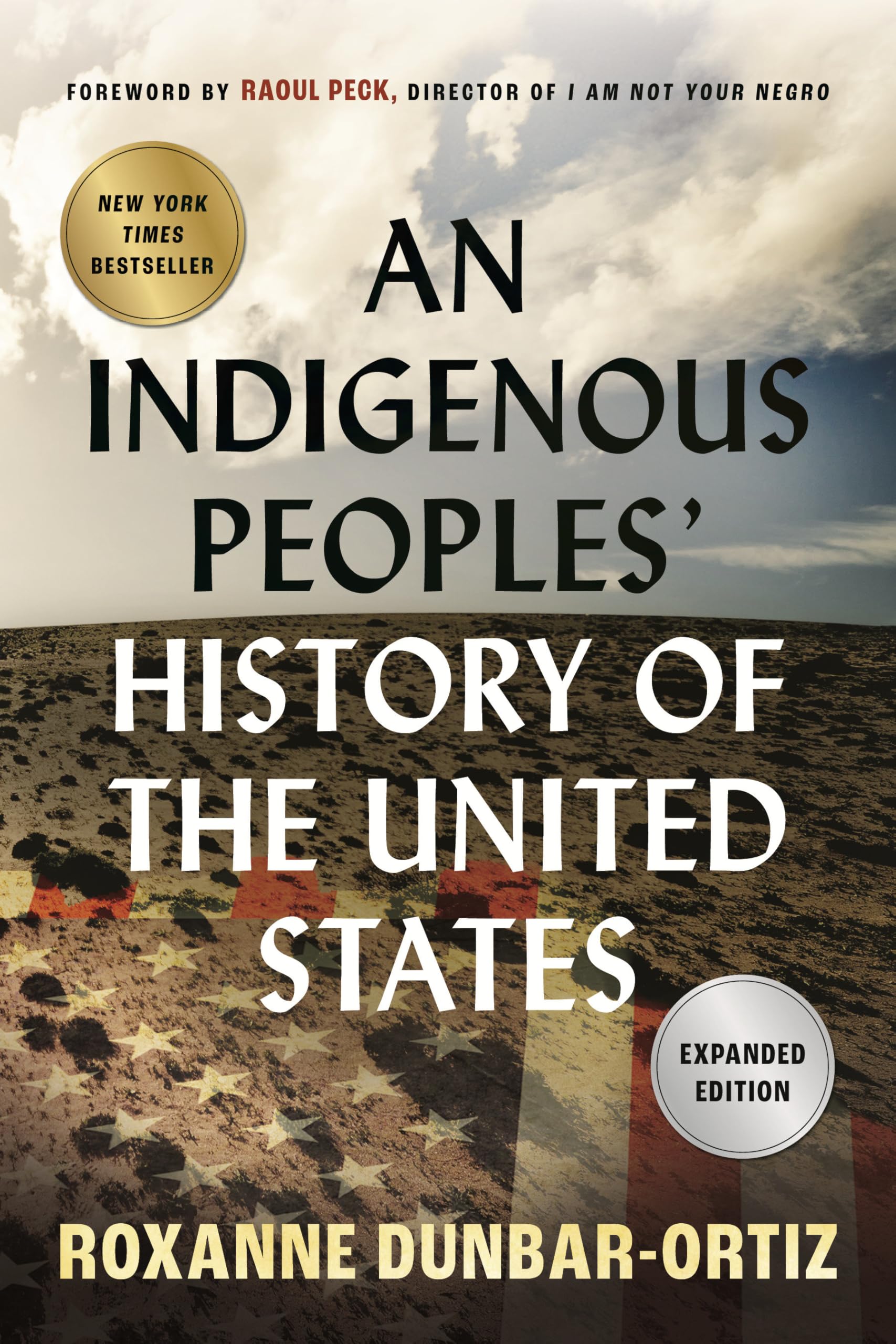
An Indigenous Peoples' History of the United States (ReVisioning History) [Dunbar-Ortiz, Roxanne] on desertcart.com. *FREE* shipping on qualifying offers. An Indigenous Peoples' History of the United States (ReVisioning History) Review: Settler Colonialism - This book turns the world of grade school and high school American History on its head. It is a history written by an indigenous historian who clearly has a command of her material. The work could be considered a socio-historical or anthropo-historical presentation of the multiple tribes that were wiped out by the British colonists who settled the Americas. In fact, the author emphasizes the notion of settler colonialism, whose goal, she argues, is genocide. The author has written a very readable book that is packed with information about the real historical founding of the United States. Review: Good book - Interesting and well-written. The book itself is of good quality, too. I consider it to be worth what I paid for it.
| Best Sellers Rank | #3,561 in Books ( See Top 100 in Books ) #2 in Native American Demographic Studies #5 in Native American History (Books) #5 in Indigenous History |
| Customer Reviews | 4.7 out of 5 stars 5,286 Reviews |
R**D
Settler Colonialism
This book turns the world of grade school and high school American History on its head. It is a history written by an indigenous historian who clearly has a command of her material. The work could be considered a socio-historical or anthropo-historical presentation of the multiple tribes that were wiped out by the British colonists who settled the Americas. In fact, the author emphasizes the notion of settler colonialism, whose goal, she argues, is genocide. The author has written a very readable book that is packed with information about the real historical founding of the United States.
S**Z
Good book
Interesting and well-written. The book itself is of good quality, too. I consider it to be worth what I paid for it.
�**�
🪶⭐️The Essential, Unflinching Corrective to American History!⭐️🪶
🪶'An Indigenous Peoples' History of the United States' by Roxanne Dunbar-Ortiz is not simply an alternative history book; it is a foundational, necessary, and utterly transformative piece of scholarship that deserves to be read by every single person who wants to understand the true nature of the American experiment. This book is a gut-punch of clarity, earning a rare 5 out of 5 stars for its profound historical contribution, meticulous research, and powerful narrative voice! ⭐️The Definitive Reframing of US History! What makes this book essential is the author's relentless and rigorous focus on the Indigenous perspective. Dunbar-Ortiz completely dismantles the pervasive "founding myth" of the United States as a glorious, divinely ordained nation built on empty land. She replaces this narrative with the undeniable truth that the U.S. was founded as a settler-colonial state, and its expansion was a centuries-long, systematic program of genocide and land dispossession. 🪶Settler-Colonialism: The book clearly and unequivocally establishes that U.S. policy towards Indigenous nations was not a series of unfortunate accidents or regrettable frontier skirmishes. It was a deliberate, ideological, and often brutal effort to eliminate the original inhabitants in order to seize their territory. ⭐️Challenging the Canon: By revealing the truth of this "way of war" from the colonial era through the 20th century, Dunbar-Ortiz forces the reader to confront the reality that many of the celebrated figures and events in U.S. history are directly tied to these extermination policies. 🪶Unflinching Scholarship and Emotional Impact: Upon research I discovered that Dunbar-Ortiz, is a renowned historian and activist, synthesizes vast amounts of scholarship plenty capable of creating a chronological and coherent history! ⭐️Meticulous Documentation: The writing is supported by extensive research, drawing heavily on Indigenous voices, treaties, government documents, and the words of the colonizers themselves. This makes the argument unassailable; the facts speak for themselves. 🪶A Painful but Necessary Read: Be forewarned!! This book is intensely difficult to read at times due to the sheer volume of injustice and calculated violence described. However, it descends into melodrama. Her tone is one of fierce, unwavering truth-telling that is vital for achieving an honest understanding of the past. ⭐️Connecting Past to Present: Crucially, the book doesn't end in the 19th century. It draws a clear, straight line from the policies of settler-colonialism to modern issues of militarism, resource exploitation, and the continued struggle for Indigenous sovereignty and self-determination. 🪶The Value of the Book: This is not a book for someone looking for comfort; it’s a book for someone looking for truth. It should be a book of MANDITORY reading for all high schools and colleges across the country. It is a work of intellectual integrity that provides the necessary context for understanding the cultural, political, and social landscape of the United States today. If you are serious about understanding history beyond the myths, about reckoning with America's origins, and about honoring the resistance and perseverance of the Indigenous peoples, you must read this book. It's a permanent fixture in my library! ⭐️⭐️⭐️⭐️⭐️
B**N
A Crucial Change of Perspective
At the outset let me explain that this is my approach and may well not fit anyone else's POV. History is literally the written record of past events. So my feeling is that good history is a marshalling of the facts as they occurred. Not what someone today thinks they thought, but what they did. Of course, what people have written is from their POV, nobody else's. So a history depends for its value on how well documented or recorded it is. The historian can certainly draw conclusions, but those should be clearly labelled as such; the writer's opinion of what facts they have obtained. The facts themselves gain value only so far as they are properly documented. So why did I start with this statement? This book presents the native american experience from a POV that is clearly at odds with the average American's knowledge and experience. OK so that can be a very good thing. (I remember many decades ago reading "Bury My Heart at Wounded Knee" and experiencing a serious reorientation of my attitude about US history. ) This book tries to go farther, but there are a lot of statements such as "settlers killed xx indian women and children" etc. that are not referenced. They may be absolutely factual, but how am I to judge, since no referencing is necessarily (the book actually has a lot more footnoting than many other history books I have read, to be sure) included, I recently read "The Pelopennisian War" and I appreciated that the author was at pains to indicate the different interpretations or spin that people have on some incidents and then made a case as to what is most probable. This approach lets me use my judgement on things. A book like the present example clearly has taken a side on just about everything; if you are going to do that you have to work harder to establish the facts. I prefer if people don't take this approach, rather, let the history inform the reader. There is another aspect that can be quite troublesome. I prefer that a historian, or someone who is clearly claiming to reflect history accurately, should cite "facts" and then provide whatever documentation one can. As opposed to stating a position or opinion and relentlessly repeating it as though that makes it more credible. The early part of this book contains a lot opinion stated as accepted fact that lean very hard on a Marxist or Socialist analysis. Sorry, then lable your book an op ed. I was close to dropping the book but luckily I did continue and there is a lot of good "food for thought" that follows. A specific example - the book repeatedly assails what it calls myths of US history. I think the opinions here are perhaps right on the mark and the points need to be taken. But care is needed I think. Attacking a belief system as mythological cuts both ways. "How the West was Won" (a movie made decades ago) promotes a myth that needs to be debunked. But there is also the myth of "the noble savage" in which all native americans had a higher level of culture than Europeans. Here is my take: Native Americans are/were just people, just like Europeans. Not better, not worse. In the history of the world the encounter of technologically superior cultures with other cultures has generally been a trail of tears. There is the irresistible temptation to claim that Native American societies were clearly better than any one else, that they have/had a superior philosopy and traits. Native Americans should not have been treated as they were, but not because they are/were superior but because there is a higher standard for treating any human beings. The history of Native Americans is a horror story that just keeps on going. But it undermines the story if one tries to shoehorn one's political/economic outlook onto that story. This book is good in that it helps correct our view of the past that has been reinforced by self serving myths. But it should not do the same thing itself, apparently justifying it because "our side was right or innocent", etc. So the book is worth reading, just don't stop after the first couple of chapters, and don't just accept statements as true because the side that is presented is more sympathetic.
M**R
excellent reference that supports the global moral innovation framework
Humanity has not changed over the last 5-10,000 years. When we settled down to become farmers, we produced more food than we consumed, and four ancient civilizations dominated humanity 5,000 years ago - Egypt, Sumer, India and China. Egyptians enslaved Jews and evolved through the Roman Empire that officially adopted christianity in 380ce and became the 2.3 billion Christians worldwide today by migrating westward to Europe and the Americas, along with Africa that is shared with Muslims (who evolved through the Sumer-Amorites-Hittites-Persians-Ottoman route). Roxanne's book is a descriptive look at the U.S. History that details the genocide of the Native Americans under a nicer label of ethnic cleansing today. The tactics, attitude, use of Christianity backed up by military force form the core of the Innovator World of Christians who focus a lot more on innovations than morality. To sustain humanity, we must balance innovations with morality reflected in the universally accepted golden rule: Do unto others what you want others to do unto you. Especially in this age of Internet, no one can continue to hide behind Hollywood fantasies and brainwash our children through education that do not reflect reality. This book is refreshing, detailed, and very descriptive (albeit depressing at times). The content is available in bits in pieces everywhere. This is among the first attempts I know that integrate the pieces together as they relate to Native Americans. There are still a few missing pieces like the 1529 Treaty of Zaragoza was a complement to the 1494 Treaty of Tordesillas that defined the world as Spanish and Portuguese territory, only to encourage the innovative British empire to conceptualize a new type of entity called "company." The British East India Company started in 1600 partly to bypass the authority of the Pope, after they learned the tremendous wealth available in the New World especially after 1588 when the British defeated the Spanish Armada that was funded by the 20% royalty collected from all trades in the Americas. Native American history is an important piece of USA history as part of the global Christianity community component of the Christian, Muslim, Indian and Chinese communities that make up over 90% of humanity today and analyzed in the Moral Innovations framework. The key shortcoming of the book is what future actions to take. The last couple of pages address education, but descriptive education of the past is not enough. The value that should be taught to our children is to balance innovations with integrity by following the golden rule. There is too much of a disconnect if there is an abrupt introduction of a descriptive textbook of Native American history. It will take time and sustained effort to address and evaluate how USA must re-assess the push for global human rights when imperial USA abuses its own Native Americans who worked well with African American slaves during the civil war. USA is a great nation. It is driven by Protestant values and a core attribute is the American Dream which gives opportunities for the motivated to pursue success. This is becoming more difficult as the wealth gap widens. However, joining the pursuit of money by conforming to the abuse of fellow Native Americans should not be encouraged. Some schools teach tools of trade that ignores core values, but it is the core values such as moral innovations that sustain a great society like the USA. This book is a must read to start in that direction. Check out the blog moralinnovator.wordpress.com
A**E
Nice audiobook
I am halfway through the book - well, audiobook. Thanks to the writer for definitively laying to rest the origins of scalping in America. An update may be seen in the movie “Inglorious Basterds”. Made me think about Knatzee scalps.
J**T
MIND SHATTERING - SUPREMELY SIGNIFICANT!
An Indigenous People’s History of the United States by Roxanne Dunbar-Ortiz may be the most important book I have ever read. That is a personal and subjective remark, but true. As an indoctrinated child of the U.S. public education system and a graduate of a U.S. University with a degree in U.S. History, and a lifetime of autodidactic immersion into the study of U.S. History, my reaction to this thoroughly researched and painstakingly documented presentation of an alternative perspective was like barely surviving a modern war. I was disoriented beyond belief, shattered mentally, feeling like I had been blitzkrieged into submission, but I emerged absolutely convinced of the truth of what I read. Roxanne Dunbar-Ortiz tells An Indigenous Peoples’ History of the United States with meticulous attention to an impressive volume of verifiable factual information, beginning with the premise (later on competently argued and fully proven) that from the beginning U.S. history is a tale of colonial settlement bent on decimating an entire indigenous population in order to appropriate vast new properties and resources. In other words, an invasion of a land inhabited by a pre-existing people with laws and covenants and self-governmental structures identifying them as the rightful owners and rulers of this place. In addition, the author in turn decimates the puerile understandings fostered by generations of teachers and scholars regarding the motivations and actual practices of our so-called American heroes, almost to a man an apologist for genocide, also relating two-hundred years of precedent to the continued intent behind U.S. military involvement throughout the world. She brilliantly exposes the lies behind our self-congratulatory stance, and every U.S. citizen would be well-served to face the truth of his own history. A great starting place for righting wrongs and creating a better country. Joel R. Dennstedt – Author / Top Reviewer for Readers’ Favorite
D**N
Obama is not first president at permanent war
The New York Times recently claimed, and peace advocates repeated, that President Barack Obama will be the first U.S. president to have been at war for two complete four-year terms. It's also become common to refer to the current U.S. war on Afghanistan as the longest U.S. war ever. These ideas fit well with the universal activist demand that we return to the time of peace or the age of justice or the wisdom of the Founding Fathers or the era before superdelegates. This is all based on a fundamental misunderstanding of history, and of its uses and abuses for life. You cannot "take back our country!" because you never had it. There is no age of peace or justice to be returned to. The United States has been at war since before it was a United States, and formed itself as such in part in order to expand its western wars. One value of history is in fact to recognize how much better or worse or simply different things have been in other times and places. But the purpose of that is not to restore some better time. All past times thus far, each taken as a whole, have been horrendously awful. The purpose is to facilitate the rejection of the silly idea that we're stuck with whatever we happen to have in the way of a lifestyle at the moment. One can always find specific ways in which things were once better. Bush used to lie to Congress and get authorizations for wars. Obama just goes to war. But both are awful. The desire to end war was common in the 1920s. Now it's unthinkable for millions of U.S. citizens. But both frames of mind lacked an effective path to peace. One can always find specific ways in which things were once worse. The war on Vietnam and neighboring nations killed some 6 million people. The latest U.S. wars may have killed less than half of that. Teddy Roosevelt marketed wars as desirable means of building character and slaughtering lesser races. Barack Obama markets wars as philanthropic assistance to the places being bombed. But both kill just the same. In the perspective of the recent past, we should not be looking at Obama as the longest war president, but rather as a president who has added his bit to the normalization of war, to the restoration of permanent war as routine and unquestionable. It's not the length of his wars that stands out, but the number of them: seven significant wars that we know of, the 2001 AUMF used and misused for military actions in 14 countries, "special" forces active in 75 countries, troops permanently stationed in 175 countries -- and all of this with very little public or Congressional involvement or even awareness. Targeted and not-so-targeted assassinations, coups, and counter-insurgency operations stretch through the entire history of the United States, as do decades-long wars. To understand this, we have to begin thinking of Native Americans as real people, so that wars against them count as real wars. A good way to do this is by listening to Roxanne Dunbar-Ortiz. Read her book, An Indigenous People's History of the United States, or catch her interview on this week's Talk Nation Radio. Dunbar-Ortiz tells a story of endless genocidal war that employed settlers and their militias against the native people of North America in a manner not unlike Israel's use of settlers against the Palestinians. The first law created by the United States was the Northwest Ordinance, a "blueprint for gobbling up the British-protected Indian Territory." According to Dunbar-Ortiz, "documented policies of genocide on the part of U.S. administrations can be identified in at least four distinct periods: the Jacksonian era of forced removal; the California gold rush in Northern California; the Post-Civil War era of the so-called Indian wars in the Great Plains; and the 1950s termination period." Some of the settlers of the United States had previously settled Ireland, where the British had paid rewards for Irish heads and body parts, just as they would for Indian scalps. The United States for many years sought out immigrants who could settle on native land. The war on Mexico was not the first foreign war of the United States. The U.S. had attacked numerous Indian nations. Mexico was just one more in that string. With the land now filled, attitudes toward immigrants and toward the rest of the globe have shifted. "Indian Country," in the dialect of the U.S. military, refers to distant lands to be attacked with dozens of weapons named for Native American nations. John Yoo justified lawless imprisonment, now evolved into lawless murder by drone, with the ancient Roman concept of homo sacer, a person who must obey the government but whom the government or anyone else may kill. Yoo referred to past U.S. Supreme Court opinions upholding this category for Native Americans. The Indian was the original "terrorist." The United States did not go to war after reaching California. Rather it simply continued the war it had been in from the start. The United States didn't wage war for decades because of a communist threat and then for additional decades because of a terrorist threat. Rather, lies about Crazy Horse on the warpath (while he was in a reservation) evolved into lies about missile gaps which evolved into lies about incubators, WMDs, and Libyan Viagra. None of this makes war unendable. We can end it tomorrow if we choose. The unimaginative can check the history of other parts of the world that have engaged in war far less or not at all. But we will not bring the U.S. corner of the world under control until after we recognize what the problem is.
Trustpilot
2 weeks ago
2 months ago