
DOWNLOAD THE APP


Customer Services
Copyright © 2025 Desertcart Holdings Limited
DOWNLOAD THE APP
🔧 Cast your creativity into reality—don’t miss out on the maker’s secret weapon!
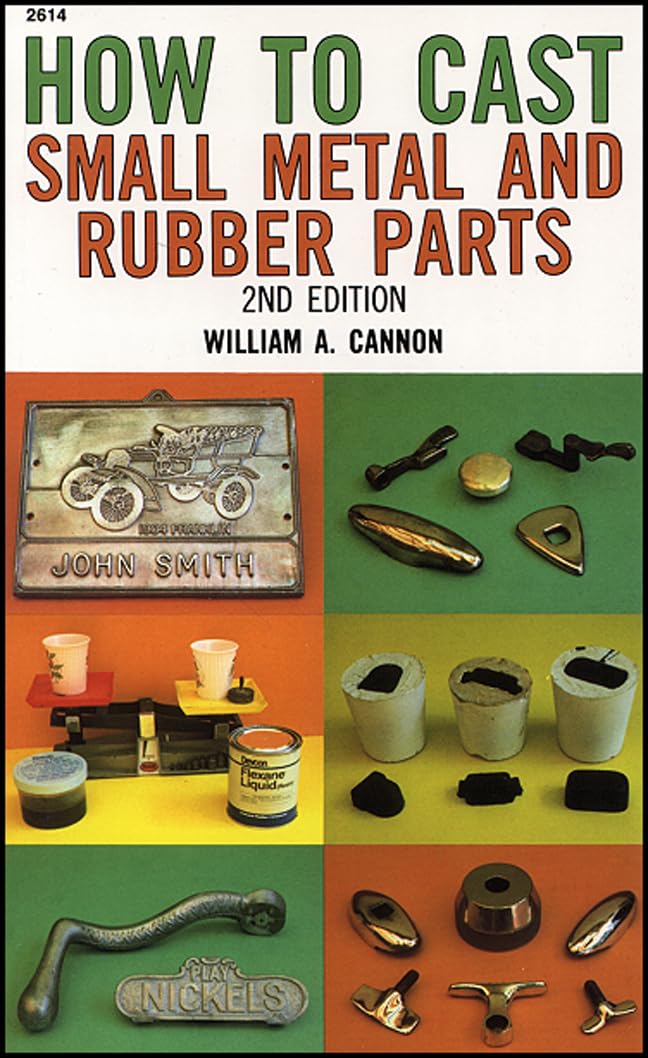
How to Cast Small Metal and Rubber Parts (2nd Edition) is a 168-page paperback guide offering clear, practical instructions for fabricating small metal and rubber components. Ideal for beginners and hobbyists, this updated edition covers mold building, equipment sourcing, and casting techniques, empowering readers to create custom parts and explore profitable DIY fabrication.
| Best Sellers Rank | #2,123,094 in Books ( See Top 100 in Books ) #254 in Metallurgy Materials Engineering #730 in Metal Work (Books) #1,121 in Boating (Books) |
| Customer Reviews | 4.4 out of 5 stars 141 Reviews |
S**Y
This book helps fabricate rubber or low melting point metals for hard to find objects or make money.
It is a good knowledge source for solve the problem of finding the parts I need and make money fabricating and selling small or medium size objects. Thanks.
B**R
How to Cast small metal and rubber parts
Not knowing anything about the subject I picked up this book and found it surprisingly fun to read and very informative. It tells you how to build your molds and some of the equipment needed or where to buy it. For a beginner it is an excellent book. One that will inspire one to try making something while clearly and simply outlining the procedures necessary. You will enjoy this short succinct book and the methods outlined.
D**C
Solid but dated information
I bought the book to learn how to cast small low-temperature (pewter) objects and how to use modern materials such as silicone molds for cold casting. The book contains solid information but it is sadly rather dated (written in 1986). As such it has little to say about the modern mould-making materials or cold casting. It also deals mainly with high-temperature metals (aluminium, brass, bronze) etc. so I failed in my two primary aims. However, many of the techiques (sand casting) are still valid and as such are well explained. The black and white photos are not the greatest but not bad enough to detract from the information presented. All in all the material is well presented but to learn more modern methods one has to seek information elsewhere.
D**N
Gem of a book on metal casting
Good old book on metal casting and some polymer casting. The book does mention low melting point alloys, but it's main focus is on higher melting point alloys like aluminum and copper alloys etc.
D**N
A Basic book, There are better ones
This book isn't very thorough, well illustrated or innovative. it is a mere how-to book, and does a basic job, nothing more. I failed to notice the book is from 1986 - although casting methods haven't changed much for hundreds of years, ways of explaining them must have. this books fails at this point, with ancient photos and outdated terms. it does give the basic explanations, processes and materials, so I wouldn't call it useless, but if you need to understand how to cast things, you are better off with books like "Practical Casting: A Studio Reference" by Tim McCreight or "The Prop Builder's Molding & Casting Handbook" by Thurston James (which is NOT a handbook - it's a comprehensive, detailed and large format book!) - I own both of these books and they are far better than the book I just reviewed. maybe it's good as a historical reference, or for something specific about rubber/auto parts. for all other things related to casting - take my recommendation above.
C**C
Great resource
This book teaches anyone how to create molds and cast their own parts. Making things yourself is very rewarding, and it's a skill that is invaluable.
K**R
Great Resource
How to Cast Small Metal and Rubber Parts is an excellent resource for the hobbiest or restoration pro that needs to recreate parts that can no longer be sourced from the manufacturer or aftermarket. Cannon's writing style is clear and the photos are very helpful. Highly recommended!
D**N
Solid Start
The overview of metal and rubber casting sections are solid and give you an idea of the scope and directions in which things can be done. It only goes into detail on sand-casting for metal objects, though, and I was really hoping for more detail on lost-wax casting, since the book points to it as another possibility for the hobbyist. Also, be aware that it is really written toward the hobbyist who is casting parts for restoring cars. Obviously, the information can be translated to other uses, but the writer will give examples focused around car parts and what metals work best for that, rather than other uses.
Trustpilot
1 month ago
1 week ago