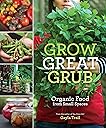
Grow Great Grub: Organic Food from Small Spaces
Product ID: 1487499
Desertcart purchases this item on your behalf and handles shipping, customs, and support to Kyrgyzstan.
Grow Great Grub: Organic Food from Small Spaces [Trail, Gayla] on desertcart.com. *FREE* shipping on qualifying offers. Grow Great Grub: Organic Food from Small Spaces Review: Practical and Beautiful Book loaded with information - Grow Great Grub: Organic Food from Small Spaces is full of gorgeous full-color photographs giving the new or experienced gardener easy and fun reference to practical information. Gaila Trail is the author's name and I wonder if that is her pen name or if her parents named her such so she is destined to happy gardening. Gaila discusses how soil is really your first crop and the plants are your secondary crop and yet that you can grow anywhere and everywhere. I especially appreciate how she covers for each crop their suitability for growing in containers and what the minimum depth to that container would be as well as the varieties most suited for containers and additional tips. I also really like her tip of reclaiming used toilet roll tubes to be used as seed starters which she says works better and are much cheaper than peat pellets and compressed pots. The author covers starting from cuttings and purchasing starts as well as when to move all three outdoors. Close to the end of the book is a very nice Seed Starting and Planting Chart giving growth period and when to set out for various vegetables, herbs, and edible flowers. She recommends cleaning your pots between plants with hydrogen peroxide or vinegar. She covers companion planting of opposites, pest repellents, beneficial pests attractants, trapper plants, feeder plants, sheltering, flavor enhancing, and underplanting. She discusses second sowing, crop rotations, when to plant, location, building a raised bed, composting, how to water, building your own self-watering container, mulching, fertilizing, and pests. The plants she covers are: vegetables: beans (bush, pole, runner, soy), brassicas (broccoli, cabbage, cauliflower, kale), cucumbers, eggplants, lettuce and leafy greens (arugula, lettuce, mache, mustard greens, spinach), alliums (chives, garlic chives, garlic, leeks, onions, shallots, scallions), peas, peppers (hot and sweet) root vegetables (beet, carrot, jerusalem artichoke, potatoes, radish) squash (summer and winter), swiss chard, and tomatoes. fruits: blueberries, citrus, currants and gooseberries, melons, and strawberries. herbs and edible flowers: anise hyssop, basil, bee balm, borage, calendula, chamomile, cilantro, dill, lavender, lemon balm, lemon verbena, mint, nasturtium, oregano, marjoram, parsley, rosemary, sage, shiso, sunflower, and thyme listing each as annual, perennial or biennial. Gaila discusses how and when to harvest and gives a handy harvest chart to help predict the harvest time. She gives recipes as well as short-term and long-term storage including: dish towel storage bags, drying, freezing, canning, vinegars, and pickling. I enjoy reading and referencing this beautiful well-organized book. I feel great about giving it as a gift or recommending it to others. Review: Another Great Book By Gayle Trail - Makes Gardening Easier and More Fun! - I bought "Grow Great Grub" because I got so much out of "You Grow Girl". I really didn't see how the author could come up with that much excellent material again, but she did. You probably should stop reading and just buy the book. The quality is excellent. Photographs are beautiful. The book is easy to read and doesn't waste time. Well done! Pictures of what vegetables are supposed to look like always help. I'm always turning to my neighbor and asking, "Did I plant that or is it a weed?" Usually the neighbor says it's a weed, but I'm never sure. The text covers harvesting, drying, preserving, and storing, only one of which I want to do, harvesting, but the other topics are beautifully covered for those who are ready. I'm pushing my luck just to grow and harvest a plant from seed. Maybe next year I'll preserve and store. She lists plants that grow well in depleted soil, shady or very hot spots and makes coverage interesting on topics of nutrients, fertilizers, containers, pests, building self-watering planter boxes cheaper than buying, a great idea. I learned about heat-loving spinach I was already growing, but had no idea what it needed! Lists of recommended varieties of vegetables and those that work well in containers are especially helpful. Now I know when to harvest vegetables, something that always baffled me, including when to dig up onions, when to stop watering, and hang them to cure, and when my radishes were ready to harvest, unfortunately I didn't learn that in time for the current crop, how radishes can be used as a pest repellent for squash, that carrots are slow to germinate but ready to eat at any size, and when potatoes are ready to harvest. I had been about to pull mine out to check. I'm glad I didn't. I had no idea some gardeners say squash plants produce too much squash! I can't wait to have that problem. She covers spacing and staking squash plants, preferred pot size for these space hogs, when to pluck them for best taste, and how to help pollinate, "to make sure the job gets done." Sections cover special needs of tomatoes, potatoes, blueberries, cucumbers, squash, and radishes, etc. My notes include why not to let water splash up on lower leaves of tomato plants and how to give them certain nutrients while making leaves and stems, when to stop so they will produce fruit, and when and what to give them at that point. There are special planting needs, since they have lots of root growth, and companion plants for best use of space. Then she gave the best definition I've heard of the differences between determinate, indeterminate, semi-determinate (new to me), dwarf hybrid tomatoes, and which one is right for me. There is a section on growing fruit in small pots. Now I think I'll grow some strawberries after all. Blueberries - hedge or containers. I think I'll do both. I learned why nothing grows around my pine tree and why blueberries might, why, what and how to prune out to increase growth and discourage fungal problems, needs of high-bush and low-bush blueberries, which one is right for me, how to get the best crops by promoting cross-pollination, when and when not to pick flowers off so the plant can put its energy into growing healthy roots, why/why not to grow fruit from seed, how to prepare citrus soil for fruit plants, when and when not to water, how much sun and heat they need, and how long it takes for them to grow fruit, I might have given up, and finally, how to plant, elevate, and hand-pollinate. How did she make all this so interesting and easy to read? I don't know, but I'll be referring to this book often. It's a keeper!
| Best Sellers Rank | #2,033,728 in Books ( See Top 100 in Books ) #366 in Urban Gardening (Books) #462 in Container Gardening (Books) #587 in Small Homes & Cottages |
| Customer Reviews | 4.6 4.6 out of 5 stars (161) |
| Dimensions | 7.5 x 0.5 x 9 inches |
| Edition | Original |
| ISBN-10 | 0307452018 |
| ISBN-13 | 978-0307452016 |
| Item Weight | 1.3 pounds |
| Language | English |
| Print length | 208 pages |
| Publication date | February 2, 2010 |
| Publisher | Clarkson Potter |
D**R
Practical and Beautiful Book loaded with information
Grow Great Grub: Organic Food from Small Spaces is full of gorgeous full-color photographs giving the new or experienced gardener easy and fun reference to practical information. Gaila Trail is the author's name and I wonder if that is her pen name or if her parents named her such so she is destined to happy gardening. Gaila discusses how soil is really your first crop and the plants are your secondary crop and yet that you can grow anywhere and everywhere. I especially appreciate how she covers for each crop their suitability for growing in containers and what the minimum depth to that container would be as well as the varieties most suited for containers and additional tips. I also really like her tip of reclaiming used toilet roll tubes to be used as seed starters which she says works better and are much cheaper than peat pellets and compressed pots. The author covers starting from cuttings and purchasing starts as well as when to move all three outdoors. Close to the end of the book is a very nice Seed Starting and Planting Chart giving growth period and when to set out for various vegetables, herbs, and edible flowers. She recommends cleaning your pots between plants with hydrogen peroxide or vinegar. She covers companion planting of opposites, pest repellents, beneficial pests attractants, trapper plants, feeder plants, sheltering, flavor enhancing, and underplanting. She discusses second sowing, crop rotations, when to plant, location, building a raised bed, composting, how to water, building your own self-watering container, mulching, fertilizing, and pests. The plants she covers are: vegetables: beans (bush, pole, runner, soy), brassicas (broccoli, cabbage, cauliflower, kale), cucumbers, eggplants, lettuce and leafy greens (arugula, lettuce, mache, mustard greens, spinach), alliums (chives, garlic chives, garlic, leeks, onions, shallots, scallions), peas, peppers (hot and sweet) root vegetables (beet, carrot, jerusalem artichoke, potatoes, radish) squash (summer and winter), swiss chard, and tomatoes. fruits: blueberries, citrus, currants and gooseberries, melons, and strawberries. herbs and edible flowers: anise hyssop, basil, bee balm, borage, calendula, chamomile, cilantro, dill, lavender, lemon balm, lemon verbena, mint, nasturtium, oregano, marjoram, parsley, rosemary, sage, shiso, sunflower, and thyme listing each as annual, perennial or biennial. Gaila discusses how and when to harvest and gives a handy harvest chart to help predict the harvest time. She gives recipes as well as short-term and long-term storage including: dish towel storage bags, drying, freezing, canning, vinegars, and pickling. I enjoy reading and referencing this beautiful well-organized book. I feel great about giving it as a gift or recommending it to others.
B**R
Another Great Book By Gayle Trail - Makes Gardening Easier and More Fun!
I bought "Grow Great Grub" because I got so much out of "You Grow Girl". I really didn't see how the author could come up with that much excellent material again, but she did. You probably should stop reading and just buy the book. The quality is excellent. Photographs are beautiful. The book is easy to read and doesn't waste time. Well done! Pictures of what vegetables are supposed to look like always help. I'm always turning to my neighbor and asking, "Did I plant that or is it a weed?" Usually the neighbor says it's a weed, but I'm never sure. The text covers harvesting, drying, preserving, and storing, only one of which I want to do, harvesting, but the other topics are beautifully covered for those who are ready. I'm pushing my luck just to grow and harvest a plant from seed. Maybe next year I'll preserve and store. She lists plants that grow well in depleted soil, shady or very hot spots and makes coverage interesting on topics of nutrients, fertilizers, containers, pests, building self-watering planter boxes cheaper than buying, a great idea. I learned about heat-loving spinach I was already growing, but had no idea what it needed! Lists of recommended varieties of vegetables and those that work well in containers are especially helpful. Now I know when to harvest vegetables, something that always baffled me, including when to dig up onions, when to stop watering, and hang them to cure, and when my radishes were ready to harvest, unfortunately I didn't learn that in time for the current crop, how radishes can be used as a pest repellent for squash, that carrots are slow to germinate but ready to eat at any size, and when potatoes are ready to harvest. I had been about to pull mine out to check. I'm glad I didn't. I had no idea some gardeners say squash plants produce too much squash! I can't wait to have that problem. She covers spacing and staking squash plants, preferred pot size for these space hogs, when to pluck them for best taste, and how to help pollinate, "to make sure the job gets done." Sections cover special needs of tomatoes, potatoes, blueberries, cucumbers, squash, and radishes, etc. My notes include why not to let water splash up on lower leaves of tomato plants and how to give them certain nutrients while making leaves and stems, when to stop so they will produce fruit, and when and what to give them at that point. There are special planting needs, since they have lots of root growth, and companion plants for best use of space. Then she gave the best definition I've heard of the differences between determinate, indeterminate, semi-determinate (new to me), dwarf hybrid tomatoes, and which one is right for me. There is a section on growing fruit in small pots. Now I think I'll grow some strawberries after all. Blueberries - hedge or containers. I think I'll do both. I learned why nothing grows around my pine tree and why blueberries might, why, what and how to prune out to increase growth and discourage fungal problems, needs of high-bush and low-bush blueberries, which one is right for me, how to get the best crops by promoting cross-pollination, when and when not to pick flowers off so the plant can put its energy into growing healthy roots, why/why not to grow fruit from seed, how to prepare citrus soil for fruit plants, when and when not to water, how much sun and heat they need, and how long it takes for them to grow fruit, I might have given up, and finally, how to plant, elevate, and hand-pollinate. How did she make all this so interesting and easy to read? I don't know, but I'll be referring to this book often. It's a keeper!
P**E
Seriously awesome
I checked this book out from the library to help figure out my first veggie garden. I read the thing cover to cover, and was really impressed and amazed at the abundance of useful information. I've since purchased the book, as a reference to keep on hand, and I refer to it frequently. There are lots of colorful photos, and it is well organized. Her reasoning is clear as she explains how to choose and improve a location, rotate crops, amend soil, choose companion plants, and deal with pests and disease. She has specific suggestions for varieties of vegetables to try, and explains each vegetable family's pitfalls, with suggestions for how to avoid and deal with them. She addresses the differences between growing veggies and herbs in containers versus in the ground, and has specific suggestions for which things will benefit from being grown in containers. She also shares some great ideas for grouping containers. My favorite part of this book are her suggestions for companion planting to repel pests, attract good bugs, and for a million other good reasons. She explains how to use companion planting not only to maximizes space, but to improve the overall health and appearance of the garden. There are also a few recipes included, some look better than others. I'm particularly looking forward to trying the Opal Basil Jelly, and the Herbed Salts. This book is a really great comprehensive reference for the home organic gardener. I highly recommend it to anyone who wants to understand the interactions occurring in their veggie garden.
E**A
Vera useful book for beginners! Love it!
P**M
This is a good book for ideas on how to grow produce where space is limited. Very informative about what can be grown in pots (including details on what size pots needed etc) as well as other ideas like rubbish-bin potatos, and upside-down tomatoes. Good book, especially if you are just starting out with vegie growing.
J**N
Love, love this book. I'm a new gardener and it has become my gardening bible. I have a small space and I want to garden using organic methods. I first found this at our local library but just had to have it on hand for continuous learning. I highly recommend this book.
B**E
good book with lots of new ideas for plants and potting on both a balcony or terrasse. can be recommended.
A**Y
Great book for beginners, and returning gardeners. It lays out the basics in a well organized way, and has some nice ideas on how to use your harvests too. The photos are inspiring, and the planting charts are really helpful.
Trustpilot
3 weeks ago
2 weeks ago