We remain fully operational. Our teams are working around the clock to ensure your deliveries continue safely.

DOWNLOAD THE APP


Customer Services
Copyright © 2025 Desertcart Holdings Limited
DOWNLOAD THE APP
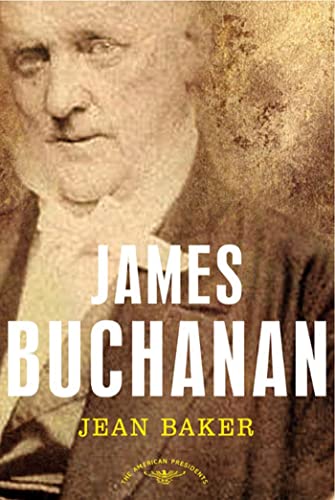
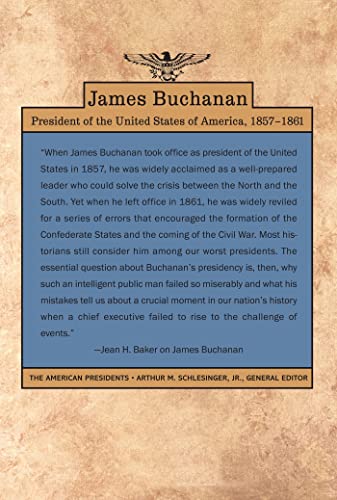
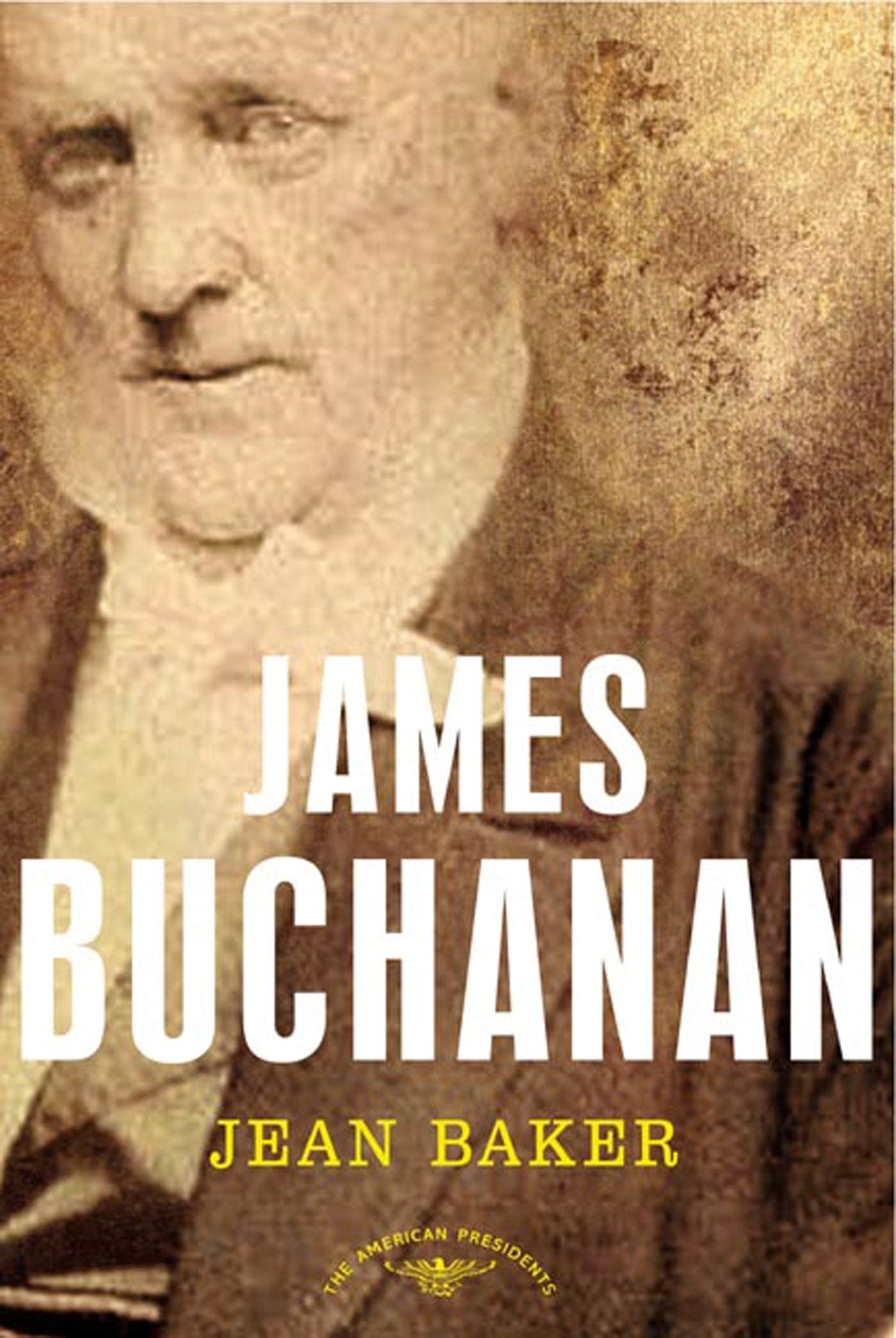
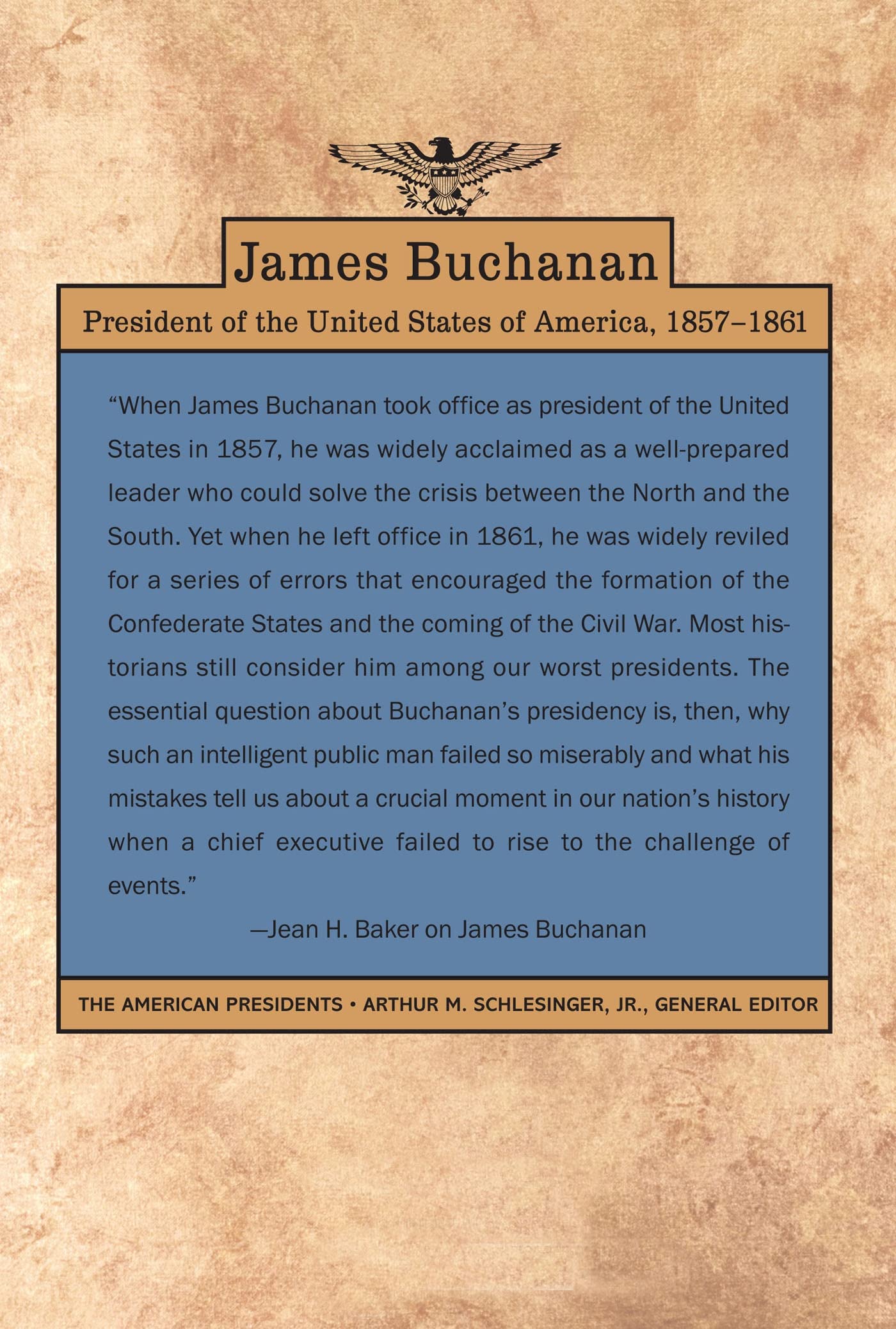
desertcart.com: James Buchanan: The American Presidents Series: The 15th President, 1857-1861: 9780805069464: Baker, Jean H., Schlesinger Jr., Arthur M.: Books Review: "physically & politically, he had only one farsighted eye" - This is the first book of the American Presidents series that I have read. It is, as editor Arthur Schlesinger notes, "compact enough for the busy reader, lucid enough for the student, authoritative enough for the scholar." In this 152-page work, Jean Baker examines the reasons Buchanan, while one of the most politically qualified men to take the office of President, failed to keep the Union strong during the country's most crucial period in its history. Baker describes Buchanan's early life and career. He served in the House of Representative, the U.S. Senate, was Minister of Russia under President Jackson, Secretary of State for James K. Polk, and Minister to Great Britain in President Pierce's administration (she covers the latter position fairly thoroughly), and had even been offered a seat on the Supreme Court (he rejected it). He had better political credentials than most presidents before or since and, on the surface, appeared to be the ideal president to handle the increasingly dangerous situation between the North and the South. He was a Unionist but also a states rights man and he represented the one political institution that still had a following both North and South; the Democratic party. Baker clearly demonstrates the reasons Buchanan was not the right man to save the Union. A few of Buchanan's leadership weaknesses covered include his hostile opinion of abolitionist groups that were fairly powerful even in his home state of Pennsylvania, his cavalier attitude towards the emerging Republican party (he called it a "geographical" and "dangerous" party which; an attitude that, in Bakers opinion, contributed to the growing schism between the North and South), his unrelenting loyalty towards his southern friends, and his arrogance in his own political abilities to save the Union. The author divides Buchanan's Presidency into three parts: the economic panic of 1857, crisis in Utah's Mormon community, and the near-war developing in the Kansas territory. The latter topic receives the most attention. Buchanan's unwavering support of the minority, pro-slavery Lecompton government clearly demonstrates where Buchanan's loyalties lay, alienating northern Democrats and even prompting a House investigation (p. 113). It is important to note that Buchanan had moral objections to slavery but did not believe the peculiar institution was worth endangering the Union. Even more revealing is what Buchanan did, or did not do, during the interim before Lincoln's inauguration. Baker shows that Buchanan was not a do-nothing President as some critics maintain, but a very active executive of the model of Jackson and Polk. He acted, however, for one side. Baker saves her harshest criticism for the end: "Buchanan's failing during the crisis over the Union was not inactivity, but rather his partiality for the South, a favoritism that bordered on disloyalty in an officer pledged to defend all the United States" (141). She implies that a different reaction to the events at Fort Sumter could have saved the Union; a position that is impossible to prove. Not very significant but one statement: "Buchanan was the last Democratic president for twenty-four years, until Grover Cleveland was elected in 1884" is incorrect without the qualification "last `elected' Democratic president" as Andrew Johnson was a Democrat (p. 119) For the most part, the book is clearly written; however, some areas (i.e. the difference between Buchanan's views on slavery versus Stephen A. Douglas' popular sovereignty) could have been better explained. The reader will need some background knowledge to fully understand this book. She does an excellent job, however, using Buchanan's upbringing and social habits to explain his affinity towards the South. She mentions his bachelorhood and alleged homosexuality but does not dwell on them. In my opinion, the author is tough on her subject but also fair. I recommend this book to anyone interested in Buchanan or the political situation on the brink of the Civil War yet does not have the time to read massive volumes. Review: Blamed everyone but himself - It was like the scene in a movie where everything goes incredibly wrong and the main character is the last to know. In this case, the character was the president of the United States, James Buchanan. In December 1860, he realized too late that his good friends and political advisors—all Southerners—were no longer listening to him. They were busy making plans for the immediate secession of the Southern slave states. Unlike the movie character, Buchanan sees no solution and becomes paralyzed with fear. “His hair was askew,” writes the author. “Usually well informed, he forgot orders that he had given and dispatches that he had read. He made his advisors come to the upstairs library, unable some days to lift himself out of bed. He cursed and wept, and his hands trembled.” Ironically, when James Buchanan took office as president in 1857, he was widely acclaimed as a well-prepared leader who could solve the brewing crisis between North and South. How he should come to his bewildering predicament in December 1860, is the subject of this short (152 pages) and insightful book by historian Jean H. Baker. Ms Baker understands leadership, and makes a compelling case that Buchanan’s failure was a failure of leadership. She’s also one heck of a writer and a born story-teller. The biggest failure of Buchanan’s predecessor, Franklin Pierce, was mishandling the Kansas-Nebraska Act, that brought the nation a step closer to civil war. Surely, Buchanan wouldn’t make the same mistake. He was a proven negotiator who had served three presidents—twice as a foreign minister, and once as secretary of state. What the nation didn’t realize was just how far Buchanan’s political views tilted south. He surrounded himself with Southerners whose company he preferred. He made them advisors and Cabinet officers, as the ones he confided in and on whose judgement he relied. Buchanan inherited a number of problems not of his making: (1) the “Bloody Kansas” crisis that still raged, (2) the Supreme Court’s ruling in Dred Scott v. Sanford, which came days after he took office; (3) the Panic of 1857, and (4) a crisis brewing in Utah involving the Mormons. Without a central bank there was little Buchanan could do about the economic recession. He couldn’t reverse the Dred Scott decision either, but he could have joined with 80 percent of Americans outside the South outraged by the decision. Instead, he railed at Northern abolitionists and embraced the decision. Instead of sending federal troops to stop the bloodletting in Kansas, he sent them to Utah where negotiations were underway and a military presence was unneeded. Buchanan had one last chance to redeem himself with a bogus state constitution cooked up by the aggressive and highly vocal proslavery minority in Kansas. Instead of denouncing the constitution as a fraud and travesty of justice, he authorized the bribing of Congressmen in both houses to assure its passage, which would have made Kansas a slave state. It didn’t work. The measure failed and Buchanan’s bribery attempts were exposed. Free elections were held and Kansas entered the Union as a free state, in January 1861. In the critical months between Abraham Lincoln’s election and his inauguration, Buchanan did absolutely nothing as the South fortified itself with illegally confiscated Union arms and prepared for war. Once Buchanan left office, he blamed everyone but himself. Today, historians rank him as our worst president.
| ASIN | 0805069461 |
| Best Sellers Rank | #152,736 in Books ( See Top 100 in Books ) #329 in US Presidents #669 in Political Leader Biographies #1,328 in U.S. State & Local History |
| Customer Reviews | 4.0 4.0 out of 5 stars (457) |
| Dimensions | 5.5 x 0.56 x 8.5 inches |
| Edition | 1st |
| ISBN-10 | 9780805069464 |
| ISBN-13 | 978-0805069464 |
| Item Weight | 5.6 ounces |
| Language | English |
| Part of series | The American Presidents |
| Print length | 192 pages |
| Publication date | June 7, 2004 |
| Publisher | Times Books |
M**W
"physically & politically, he had only one farsighted eye"
This is the first book of the American Presidents series that I have read. It is, as editor Arthur Schlesinger notes, "compact enough for the busy reader, lucid enough for the student, authoritative enough for the scholar." In this 152-page work, Jean Baker examines the reasons Buchanan, while one of the most politically qualified men to take the office of President, failed to keep the Union strong during the country's most crucial period in its history. Baker describes Buchanan's early life and career. He served in the House of Representative, the U.S. Senate, was Minister of Russia under President Jackson, Secretary of State for James K. Polk, and Minister to Great Britain in President Pierce's administration (she covers the latter position fairly thoroughly), and had even been offered a seat on the Supreme Court (he rejected it). He had better political credentials than most presidents before or since and, on the surface, appeared to be the ideal president to handle the increasingly dangerous situation between the North and the South. He was a Unionist but also a states rights man and he represented the one political institution that still had a following both North and South; the Democratic party. Baker clearly demonstrates the reasons Buchanan was not the right man to save the Union. A few of Buchanan's leadership weaknesses covered include his hostile opinion of abolitionist groups that were fairly powerful even in his home state of Pennsylvania, his cavalier attitude towards the emerging Republican party (he called it a "geographical" and "dangerous" party which; an attitude that, in Bakers opinion, contributed to the growing schism between the North and South), his unrelenting loyalty towards his southern friends, and his arrogance in his own political abilities to save the Union. The author divides Buchanan's Presidency into three parts: the economic panic of 1857, crisis in Utah's Mormon community, and the near-war developing in the Kansas territory. The latter topic receives the most attention. Buchanan's unwavering support of the minority, pro-slavery Lecompton government clearly demonstrates where Buchanan's loyalties lay, alienating northern Democrats and even prompting a House investigation (p. 113). It is important to note that Buchanan had moral objections to slavery but did not believe the peculiar institution was worth endangering the Union. Even more revealing is what Buchanan did, or did not do, during the interim before Lincoln's inauguration. Baker shows that Buchanan was not a do-nothing President as some critics maintain, but a very active executive of the model of Jackson and Polk. He acted, however, for one side. Baker saves her harshest criticism for the end: "Buchanan's failing during the crisis over the Union was not inactivity, but rather his partiality for the South, a favoritism that bordered on disloyalty in an officer pledged to defend all the United States" (141). She implies that a different reaction to the events at Fort Sumter could have saved the Union; a position that is impossible to prove. Not very significant but one statement: "Buchanan was the last Democratic president for twenty-four years, until Grover Cleveland was elected in 1884" is incorrect without the qualification "last `elected' Democratic president" as Andrew Johnson was a Democrat (p. 119) For the most part, the book is clearly written; however, some areas (i.e. the difference between Buchanan's views on slavery versus Stephen A. Douglas' popular sovereignty) could have been better explained. The reader will need some background knowledge to fully understand this book. She does an excellent job, however, using Buchanan's upbringing and social habits to explain his affinity towards the South. She mentions his bachelorhood and alleged homosexuality but does not dwell on them. In my opinion, the author is tough on her subject but also fair. I recommend this book to anyone interested in Buchanan or the political situation on the brink of the Civil War yet does not have the time to read massive volumes.
R**O
Blamed everyone but himself
It was like the scene in a movie where everything goes incredibly wrong and the main character is the last to know. In this case, the character was the president of the United States, James Buchanan. In December 1860, he realized too late that his good friends and political advisors—all Southerners—were no longer listening to him. They were busy making plans for the immediate secession of the Southern slave states. Unlike the movie character, Buchanan sees no solution and becomes paralyzed with fear. “His hair was askew,” writes the author. “Usually well informed, he forgot orders that he had given and dispatches that he had read. He made his advisors come to the upstairs library, unable some days to lift himself out of bed. He cursed and wept, and his hands trembled.” Ironically, when James Buchanan took office as president in 1857, he was widely acclaimed as a well-prepared leader who could solve the brewing crisis between North and South. How he should come to his bewildering predicament in December 1860, is the subject of this short (152 pages) and insightful book by historian Jean H. Baker. Ms Baker understands leadership, and makes a compelling case that Buchanan’s failure was a failure of leadership. She’s also one heck of a writer and a born story-teller. The biggest failure of Buchanan’s predecessor, Franklin Pierce, was mishandling the Kansas-Nebraska Act, that brought the nation a step closer to civil war. Surely, Buchanan wouldn’t make the same mistake. He was a proven negotiator who had served three presidents—twice as a foreign minister, and once as secretary of state. What the nation didn’t realize was just how far Buchanan’s political views tilted south. He surrounded himself with Southerners whose company he preferred. He made them advisors and Cabinet officers, as the ones he confided in and on whose judgement he relied. Buchanan inherited a number of problems not of his making: (1) the “Bloody Kansas” crisis that still raged, (2) the Supreme Court’s ruling in Dred Scott v. Sanford, which came days after he took office; (3) the Panic of 1857, and (4) a crisis brewing in Utah involving the Mormons. Without a central bank there was little Buchanan could do about the economic recession. He couldn’t reverse the Dred Scott decision either, but he could have joined with 80 percent of Americans outside the South outraged by the decision. Instead, he railed at Northern abolitionists and embraced the decision. Instead of sending federal troops to stop the bloodletting in Kansas, he sent them to Utah where negotiations were underway and a military presence was unneeded. Buchanan had one last chance to redeem himself with a bogus state constitution cooked up by the aggressive and highly vocal proslavery minority in Kansas. Instead of denouncing the constitution as a fraud and travesty of justice, he authorized the bribing of Congressmen in both houses to assure its passage, which would have made Kansas a slave state. It didn’t work. The measure failed and Buchanan’s bribery attempts were exposed. Free elections were held and Kansas entered the Union as a free state, in January 1861. In the critical months between Abraham Lincoln’s election and his inauguration, Buchanan did absolutely nothing as the South fortified itself with illegally confiscated Union arms and prepared for war. Once Buchanan left office, he blamed everyone but himself. Today, historians rank him as our worst president.
P**8
"Old Buck" stopped there...
Hindsight is always 20/20, and it is always easier to be a Monday Morning Quarterback. Given that President Buchanan immediately proceeded the immortal Abraham Lincoln, and, it seems, it has been almost universally accepted that Buchanan's polcies led us right into the Civil War, it is easy to throw stones at Old Buck. Regardless if you agreed with his policies, or not, it has to be admitted that this was an abysmal presidency. Elected as a strict interpretist of the Constitution, Buchanan was mired in hypocricy throught his presidency. He believed a weak executive limited his ability to "meddle" in domestic affairs. However, even though it does appear that if he could have been a little more forceful, he could have negated the cessation movement with a little force. On the flip side of the coin, he had no qualms using Federal troops to attack the Mormons in Utah for their polygamist practices. I agree with some of the other reviews that state the author had a tremendous bias against Buchanan, and due to that bias, the book is written from a slanted perspective. However, given how poorly his presidency went, I think even an objective review warrants a negative painting. I found it interesting that he was the only bachelor to take the White House, that there were rumors that he had a homosexual relationship, that he did not have to shave, he was cross-eyed, and turned down nominations to the Supreme Court on two occasions. I give this book 3 stars because I think it was well written, and researched, but, I think the bias against Buchanan for his "pro-southern sympathies" was a little too present in the writing.
R**L
Das Buch war sehr interessant.
Trustpilot
1 month ago
1 day ago