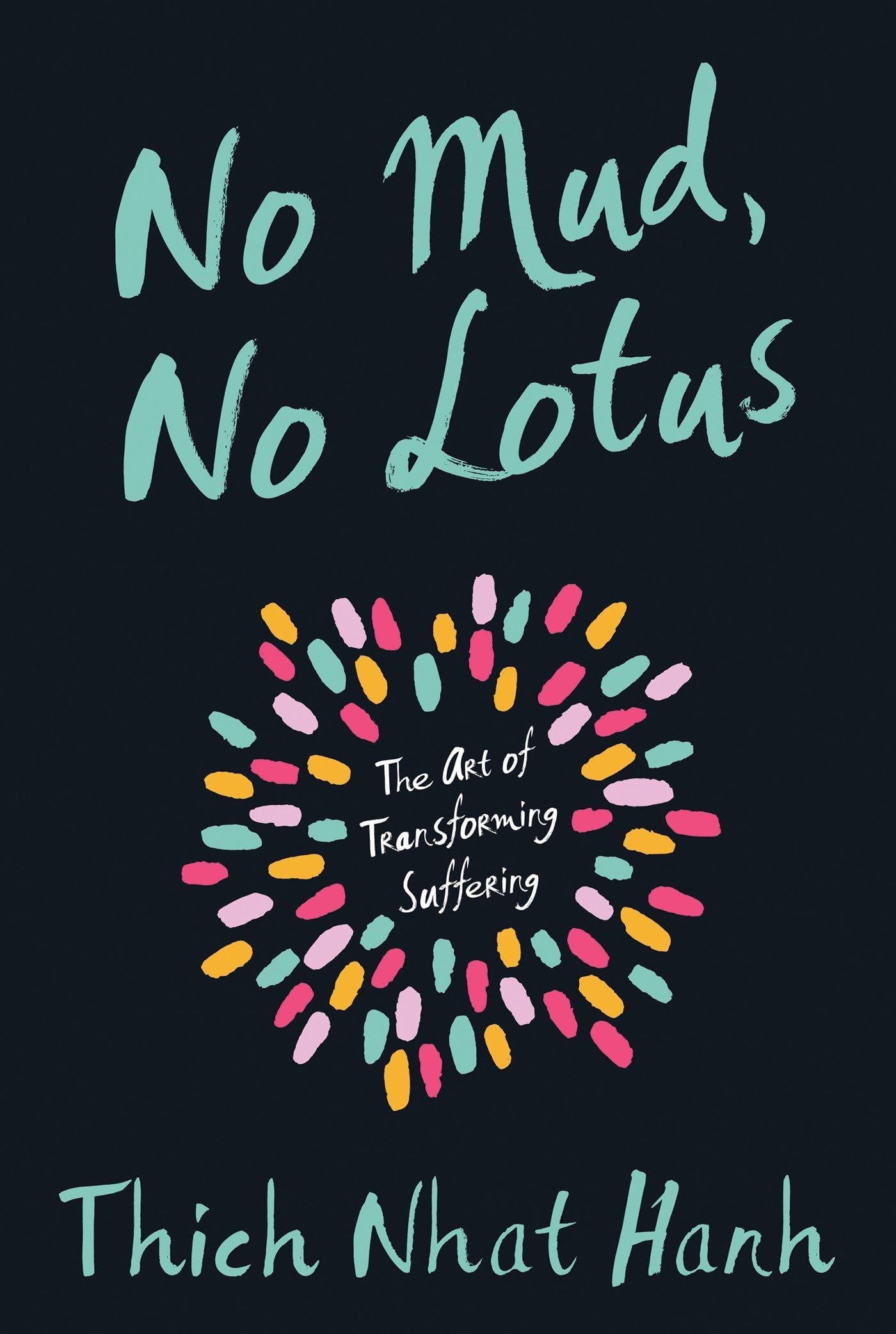
No Mud, No Lotus: The Art of Transforming Suffering
Product ID: 9865538
Buy anything from 5,000+ international stores. One checkout price. No surprise fees. Join 2M+ shoppers on Desertcart.
Desertcart purchases this item on your behalf and handles shipping, customs, and support to Kyrgyzstan.
The secret to happiness is to acknowledge and transform suffering, not to run away from it. Here, Thich Nhat Hanh offers practices and inspiration transforming suffering and finding true joy. Thich Nhat Hanh acknowledges that because suffering can feel so bad, we try to run away from it or cover it up by consuming. We find something to eat or turn on the television. But unless we’re able to face our suffering, we can’t be present and available to life, and happiness will continue to elude us. Nhat Hanh shares how the practices of stopping, mindful breathing, and deep concentration can generate the energy of mindfulness within our daily lives. With that energy, we can embrace pain and calm it down, instantly bringing a measure of freedom and a clearer mind. No Mud, No Lotus introduces ways to be in touch with suffering without being overwhelmed by it. "When we know how to suffer," Nhat Hanh says, "we suffer much, much less." With his signature clarity and sense of joy, Thich Nhat Hanh helps us recognize the wonders inside us and around us that we tend to take for granted and teaches us the art of happiness. Review: Lovely writings by Tich Nat Hahn - Beautiful writings. Very inspirational. Review: Book on Buddhist philosophy - came quickly, just started reading but seems to be a good companion book to Siddhartha
| Best Sellers Rank | #13,496 in Books ( See Top 100 in Books ) #18 in Zen Spirituality #19 in Zen Philosophy (Books) #46 in Meditation (Books) |
| Customer Reviews | 4.8 out of 5 stars 6,313 Reviews |
P**Y
Lovely writings by Tich Nat Hahn
Beautiful writings. Very inspirational.
D**G
Book on Buddhist philosophy
came quickly, just started reading but seems to be a good companion book to Siddhartha
J**H
The bad makes the good possible
Good book. Good message
S**Z
short book but packed with thought-provoking nuggets
Thich Nhat Hanh explains how suffering is an integral part of being human and how it can be transformed into happiness. Running away from it is counterintuitive. Through mindfulness, we can navigate through it without getting overwhelmed. First, we need to accept its existence by taking mindful breaths that bring our minds home to our body. In this way, our mind stops rambling. Then, to make the transformation easier, we understand the root cause of our suffering by examining ourselves first. The pain of our ancestors is ours,too, so if we heal ourselves, we are also healing them. Breathing exercises are the main practices to transform suffering into happiness. These breathing exercises are included in the last part of the book. Thic Nhat Hanh also offers how to handle life's small and big sufferings and how to sustain happiness. I enjoyed reading this book. It is a short book but packed with thought-provoking nuggets on suffering, happiness, and life. The breathing practices are easy to understand and follow. I recommend it to those who are interested in the power of breathing and the art of transforming suffering into happiness.
M**X
Lots of good things to say, especially about balancing negative with positive emotions.
An excellent read by Thich Nath Hanh!!!
M**P
Thich Nhat Hahn Taught Me to Invite the Bell and Wash the Dishes
"Oh my happiness, oh my happiness." - Badhiya My first TNH book I read years ago was "The Miracle of Mindfulness," which I would also recommend. In that book, he emphasized concentration and single-mindedness even when doing such a mundane chore as dishes. The message runs deeper and proves that this simple and mindful tasks of attention while washing the dishes applies to all areas of our lives. You learn to live each minute of life, fully experiencing each moment. Breathing and stepping in the right direction. In the "Lotus in the Mud" we learn how to suffer (you can't avoid it). We can't simply be happy all the time, and sometimes we feel we are failing at happiness. Happiness and suffering are two sides of the proverbial coin and you cannot have spiritual currency without this fact. Poet William Blake said, "Friendship is true opposition." What he meant is life requires opposites to progress. I recall mythologist Joseph Campbell's blunt, simple and sagely advice, "As you proceed through life, following your own path, birds will shit on you. Don't bother to brush it off." Life will throw a lot of mud on you, but the Lotus is always there too. "Release your cows," your fears, your arrows. Let go. TNH illustrates that it is possible to get stuck in the mud of life. It's easy enough to notice mud all over you at all times and you project that onto everything else in the world, thus exaggerating your pain. But you must remember that it is transitory and the mud of life is necessary for the Lotus to blossom. Learn to invite the bell (explained in the book). When we invite the bell, we pause. We listen to the voice of our heart. We return to our center. Note the subtitle of this book: "The Art of Transforming Suffering." You will learn how to transform your suffering into happiness, but like all art you will have to work at it. This book helps with exercises, mantras and daily practices to find peace. Whatever hardship you are going through, I wish you peace.
H**L
The best spiritual writer of our time
One of his very best. I read the section "Ease" every day. It's the perfect instruction with examples on how to stop worrying about little things that will probably never happen, and focus on the here and now. This is a replacement copy, I read my first one so many times that it started falling apart. He is by far the best spiritual writer.
R**G
This book can change your life
I first purchased this book in September of 2020. I don’t even remember how it found me. My first time reading through was so slow. I would read a chapter and set it down. And every time I came back to the next chapter it was exactly the words I needed to hear in that moment. I have read, and reread, and shared this book so many times since then. This is the 10th physical copy I’ve purchased (I also own it on Kindle and Audible), because it’s just so good I keep giving my copy away! The book itself is a short read, I once read the book in its entirety on a 2 hour commute (excluding the practices in the back). But I think it’s really most effective when you read and digest and put the teachings into practice.
C**N
Nice one
Livre inspirant et rassurant . conseil sur le comportement de la vie de tous les jours . a la fin vous vous sentirez comme renaître
S**S
Great book
Loved it, a new way of knowing how to meditate and here yourself and im applying it to my family.
M**B
MargB
“No Mud no Lotus” translates as “the tough times helps us appreciate the good times. Loved this book. ✅
T**R
I can only hope to one day see the world as Thich Nhat Hanh does...
TL;DR - A collection of personal experiences, Buddhist teachings and mindfulness practices to help heal the suffering of the world. RAGDOLL RATING: 4.5/5 BUTTONS Why I read it… This was part of my ongoing practice of reading a Buddhism book before meditation. I chose this book because I was so moved by The Heart of the Buddha’s Teaching (Thich Nhat Hanh) that I felt I had to read more of Thay's writings, and I chose this book specifically because I liked the title. The Book… (Please note: In the interests of my own sanity and time saving, I will refer to the author by the honorific Thầy - teacher/master, instead of his full name) "Most people are afraid of suffering. But suffering is a kind of mud to help the lotus flower of happiness grow. There can be no lotus flower without the mud." ~Thich Nhat Nanh The tagline for this book is "The art of transforming suffering", and that is what this book is, a guidebook for turning suffering into - well, not suffering. The first (and biggest) section of this book is dedicated to discussing suffering, it's effects on us as individuals, and on society itself. Each chapter is split into little sections that are written with the authors usual somewhat eclectic mix of personal stories, scripture and metaphor. In the first chapter, Thầy tells us how suffering and happiness are linked - you cannot have one without the other, and suggesting that the causes of suffering and happiness can be the same thing. Here he uses an example of being cold: "Cold air can be painful if you aren't wearing enough warm clothes. But when you're feeling overheated (...) the bracing sensation of cold air can be a source of feeling joy..." Thich Nhat Hanh (p.11) Thầy also provides useful practices you can try for yourself in times of suffering, to try and provide some relief, either for you or for the people around you. Chapter 5, for example, is dedicated to 5 practices for nurturing happiness, such as letting go of attachment, and simple meditations. The second section of the book is entitled 'Practices for Happiness' and details 8 (relatively) simple things we can all try to do, to help transform our suffering and the suffering of others. What I liked… One thing that really appealed to me in this book was that Thầy always provides multiple forms of explanation and example to any point he makes. Nothing is left to chance. You will often find multiple metaphors, personal examples and stories from the Buddhist canon to help aid understanding of what can be difficult points. Some people might find this annoying and it could be interpreted as unnecessary repetition, but I personally find that it helps me understand each point much better because of it. On a similar note, the combination of traditional Buddhist stories and personal anecdotes is also refreshing. One problem I often find with guides for personal improvement, is that if often the steps seem impossible - if you tried them, you would fail - and once you feel like it's too difficult, you stop paying attention. Having examples of how Thầy puts this guidance into practice - is really refreshing. But this book goes one step further. We also have examples where Thầy talks about times he has found himself confused about teachings (for example the section entitled "Did the Buddha suffer") - which is really reassuring. It's nice to see someone admit that they didn't always understand how these things worked, because often I find hearing guidance from people comes across as if the knowledge was inside them from birth, which as an often-confused person, is really quite disheartening. What I disliked… I'm not sure this is so much a dislike in the traditional sense - it's certainly not the authors fault - but at times this book was hard to read. Not in the usual sense, the language is pretty straightforward, it's written clearly and has lots of examples - it's not an 'advanced text' or anything like that. It's the concepts addressed in the book. There is guidance in this book that seems difficult, if not impossible to follow. For example, there is a place in the book (although I can't find the specific page as my bookmark fell out) where Thầy talks about how to respond to somebody else's anger. He encourages us not to respond in kind, not to become angry ourselves or to shout or defend ourselves. Instead he tells us to listen, apologise for your part in this persons pain and just hear them out. Then later, when things are calmer you can try to transform this persons view should an opportunity present itself. Now, I totally see how this could work. In fact I know it works at times because I've done it - not on anything particularly important mind you, but it can work. Even if I hadn't actually put this into practice, I would be able to see the logic behind it because it is all explained in a clear and simple fashion. BUT, this - and other pieces of guidance - can be really, really daunting. I know on several times during this book, I stopped reading and thought to myself; "How the hell am I supposed to pull that off!?" I suppose the thing is, it is all very well explained and I can see what to do, and why I should do it and all those nice things that should make it seem like a walk in the park, but in the back of my head something is telling me the whole thing is nuts. The teachings in this book can be hard to process and accept - that's just conditioned into us I suppose, and something we all need to unlearn. Just be aware of it. Final thoughts... This book is well thought out, brilliantly written and no doubt it will prove incredibly useful in the future. I have already attempted to put some of the teachings into practice. The book is clear, but some of the concepts are hard to digest. Your mind may try and reject them, even though they are really good stuff. My advice is if you find yourself resisting something in the book, put it down, breath deeply for a minute or two, then start reading again. It will be worth it. This book is now on my re-read pile. I recommend this to everyone.
A**R
Wonderful book.
I bought this book after reading the rave reviews here on Amazon. It's great! Helpful in understanding suffering and how to process it. Thank you!
Trustpilot
2 months ago
3 weeks ago