Desertcart purchases this item on your behalf and handles shipping, customs, and support to Kyrgyzstan.
๐ท Zoom into brilliance, shoot like a pro, and own every moment!
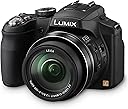
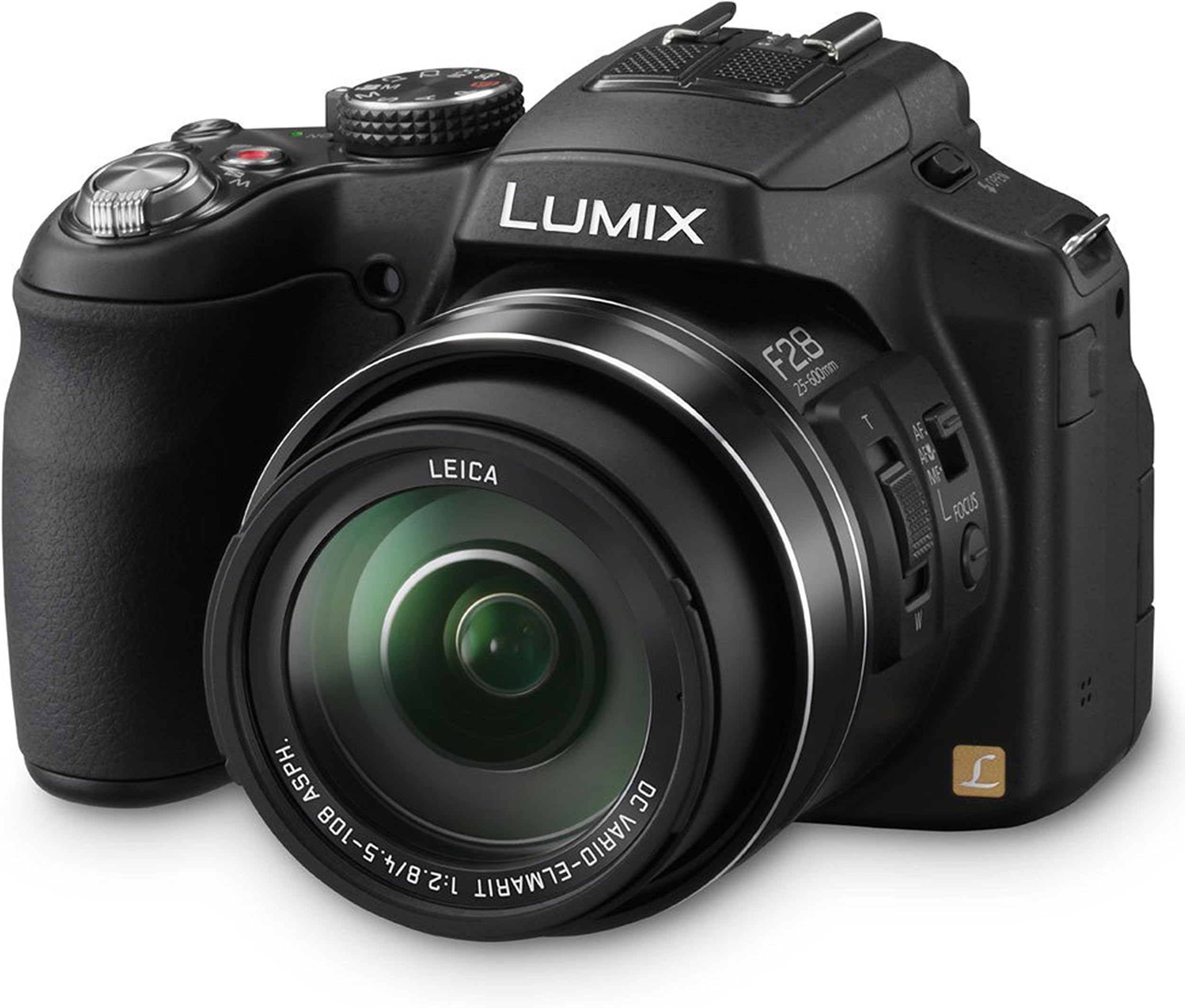
The Panasonic Lumix DMC-FZ200 is a powerhouse bridge camera featuring a 12.1MP 1/2.3-inch CMOS sensor, a constant F2.8 aperture 24x optical zoom lens (25-600mm equivalent), and ultra-fast 12 frames per second continuous shooting. It supports Full HD 1080p video, RAW image capture, and offers a 3-inch articulated LCD alongside a 100% coverage electronic viewfinder, making it the ultimate all-in-one tool for millennial professionals craving creative control and versatility in photography and videography.
| ASIN | B008MB6ZX0 |
| Age Range Description | Adult |
| Aperture modes | F2.8 |
| Aspect Ratio | 3:2 |
| Auto Focus Technology | Center, Continuous, Contrast Detection, Face Detection, Multi-area, Single, Tracking |
| Autofocus Points | 23 |
| Best Sellers Rank | #234,582 in Electronics ( See Top 100 in Electronics ) #2,071 in Digital Point & Shoot Cameras |
| Bit Depth | 36 Bit |
| Brand | Panasonic |
| Built-In Media | Instruction Manual, SD Card |
| Camera Flash | Built-In |
| Camera Lens | 600 Mm |
| Color | Black |
| Compatible Devices | Micro Four Thirds devices |
| Compatible Flash Memory Type | SD, SDHC, SDXC |
| Compatible Mountings | Micro Four Thirds |
| Connectivity Technology | USB |
| Continuous Shooting | 12 |
| Customer Reviews | 4.5 out of 5 stars 772 Reviews |
| Digital Scene Transition | zoom |
| Digital Zoom | 4 |
| Display Fixture Type | Articulating |
| Display Maximum Resolution | 460,000 dots |
| Display Resolution Maximum | 460,000 |
| Display Type | LCD |
| Dots Per Screen | 460,000 |
| Dynamic Stops | 10 stops |
| Effective Still Resolution | 12.1 mp |
| Expanded ISO Minimum | 100 |
| Exposure Control | Aperture Priority, Automatic, Creative Control, Creative Video, Custom, Manual, Program, Scene, Shutter Priority |
| File Format | JPEG (DCF/Exif2.3), RAW, MPO |
| Flash Memory Bus Interface Type | SD |
| Flash Memory Installed Size | 70 |
| Flash Memory Speed Class | V30 or UHS-3 |
| Flash Memory Type | SD/SDHC/SDXC, Internal |
| Flash Memory UHS Speed Class | U1 |
| Flash Memory Video Speed Class | V30 |
| Flash Modes | Automatic |
| Flash Sync Speed | 1/4000 |
| Focal Length Description | Focal length range: 25-600 millimeters |
| Focus Features | Contrast Detection |
| Focus Mode | Continuous-Servo AF (AF-C) |
| Focus Type | Auto Focus |
| Form Factor | SLR-like (bridge) |
| Generation | 1 |
| Global Trade Identification Number | 00885170087804 |
| HDMI Type | Type C Mini HDMI |
| Hardware Interface | AV Port |
| Image Capture Type | Video |
| Image Stabilization | Optical |
| Image stabilization | Optical |
| Item Weight | 1.3 pounds |
| JPEG Quality Level | Normal |
| Lens Construction | 10 |
| Lens Type | Zoom |
| Manufacturer | Panasonic |
| Manufacturer Part Number | DMC-FZ200 |
| Maximum Aperture | 2.8 f_stop |
| Maximum Focal Length | 60 centimeters |
| Maximum Image Size | 12.1 mp |
| Maximum Shutter Speed | 1/4000 seconds |
| Memory Storage Capacity | 70 MB |
| Metering Methods | Multi, Center-weighted, Spot |
| Minimum Focal Length | 25 millimeters |
| Minimum Shutter Speed | 60 seconds |
| Model Name | Panasonic Lumix FZ200 |
| Model Number | DMC-FZ200 |
| Model Series | FZ |
| Number of Items | 1 |
| Optical Zoom | 24 |
| Photo Sensor Resolution | 12.1 mp |
| Photo Sensor Size | 1/2.3-inch |
| Photo Sensor Technology | CMOS |
| Real Angle Of View | 61.7 degrees |
| Screen Size | 3 inches |
| Self Timer | 10 seconds |
| Sensor Type | CMOS |
| Series Number | 200 |
| Shooting Modes | High dynamic rang, Panorama |
| Skill Level | Amateur |
| Special Feature | Live View |
| Specific Uses For Product | Videography, Photography |
| Supported File Format | JPEG (DCF/Exif2.3), RAW, MPO |
| Supported Image Format | RAW |
| Total Still Resolution | 12.1 mp |
| Total USB 2.0 Ports | 1 |
| Total USB Ports | 1 |
| Total Video Out Ports | 1 |
| Touch Screen Type | LCD |
| UPC | 616641724665 885170087804 033586895074 |
| Unit Count | 1 Count |
| Video Output | HDMI |
| Video Resolution | FHD 1080p |
| Viewfinder | Electronic |
| Viewfinder Magnification | 1.0x |
| Warranty Description | 30 Days and Manufacturer |
| White Balance Settings | Auto |
| Wireless Technology | Yes |
| Write Speed | 12 fps |
| Zoom | Optical Zoom |
S**M
Love It!
After playing around with then camera a bit more, I have revised my review. What a nice camera. Now I'm not a pro by any means but I do like taking quick pictures. When the moment is there, I like to snap away. I'm not one for setting things up and taking time to take a shot. I like to just snap away. The camera is larger than my prevous FZ-18 but not so big that it's cumbersome or bulky. Anyone who's had a Lumix model will find the layout relatively similar. I use a 52mm Agfa filter (see my other review) on the lens which just screws straight into the lens - and you can still use the regular lens cap on top! The battery compartment is at the bottom; this is also where the SD card goes. On the right is the micro USB out port and the mini HDMI out port. The panel is a flexible type panel which is a little concerning in terms of longevity. I like the new on/off switch which is to the side of the main dial as oppsoed to a separate slider switch on the FZ-18. The Main dial itself has the usual iA (plus iA Plus), shutter priority, aperture priority, program mode, video mode, two custom modes, and the scene mode. There is a burst mode button to the right of the main dial which I haven't yet used. The wide/tele zoom is the usual (at least for panasonic) lever around the shutter button which I find counter-intuitive - i'm glad they put another zoom lever on the left side of the barrel which I find myself using more than the zoom ring on top. There's also a separate mic input for an external mic and a hot shoe for a dedicated flash. OIS works great even at the longer zoom range but of course this depends on your settings. However, if shooting at a relatively slow shutter speed or full zoom, you may still want to use a tripod. I really like the swivel screen (although it could be easier to open - I have to use my fingernails to do so) - it's size is good and it is very clear - it wasn't washing out in sunlight. it's not a touch screen but that's just fine by me as the 4 way dial to the right is very easy to use. Although the viewfinder has a diopter adjustment dial, for me the viewfinder is so small that trying to frame any picture is harder and I just use the LCD screen. YMMV. There are two function buttons that can be assigned with custom settings. There is also a quick menu button at the bottom on the rear which can be used to make quick adjustments whilst shooting. This is useful for changing things such as metering mode, flash, exposure, image size etc on the fly in any mode. In fact, there are SO MANY settings that the best way to discover what it can do is to play around with it. For example, the iA setting has only a couple of things that can be changed (such as picture size and color mode) but on the iAplus setting, you can change brightness, color, and depth of field using the rear upper dial. I usually take pictures in JPEG but the FZ200 can also shoot in RAW for those who want to. Honestly to date the quality of the pictures I've taken doesn't warrant me shooting in RAW. But then I only either view my pictures on my screen, email them, or print them at small sizes (eg 6 x 4). If you need to print at larger sizes, you may want to shoot in RAW - that's also if you carry out editing afterwards - which I don't as I simply don't have the time. Video (Full HD in MP4 format) is excellent and reinforces my decision not to get a separate camcorder. One cool (but gimicky) feature is the ability to take a snapshot picture when taking video. Simply press the shutter button when recording and the camera takes a picture. I haven't yet mastered all the controls so I could be doing something wrong but the quality of these pictures is very poor. There just so much noise (imagine a picture shot at, say, iso 12000 or so) that these pictures are really only useful for a critical moment. The video itself is great and there are no issues there. I like that I can shoot in MPEG instead of AVCHD. You can zoom whilst recording and the camera auto-focuses whilst doing so. There ia a quick record button on top so that even if you're in photo mode, you can still press the button to start recording instantly. Great feature. Of course you can still choose dedicated recording from the top dial which gives you more setting options. The only thing I wished that Panasonic had added was a zoom gauge on the top of the lend barrel so that I could tell what (35mm equivalent) focal length I'm at. To me, this camera seems as fully featured as a DSLR and I'm sure i'll have fun discovering its capabilites. Although I've only used it a few times so far both inside and out, I haven't noticed any blurring, fringing, or noise (at least at iso 200 - and other than in the record mode as I mentioned above)), or any other things that some may be complaining about. The colors are full and rich, noise (at least at iso 200 to 400) is non-existent, and playing with depth of field can be great (given the f2.8 aperture capabilites of the lens throughout the focal range). For an amateur like me, I can't see myself ever getting (or needing) a DSLR. Having had a little time with this camera, I can say that this is definitely a keeper! ***UPDATE*** Oct 7th 2013 This has been a great camers over the summer. I've really appreciated its portability especially whilst on vacation. Friends were amazed at just how good most of my pcitures wcame out. And these are friends with $2500 DSLRs !!! The reason? - Like every new technology, there is a learning curve. I'm definitely not even an amateur photographer - I'm just an average Joe who likes to take good pictures (rather than crappy cellphone ones!) and keep them for posterity. I've not really found that i've needed a manual since I just like to experiment and I find that's the best way to get to know something. For example, I'll take 10 pictures of something using different settings and see what look good. What my friends don't see are that for ever 1 picture they see, there may have been numerous others that didn't look good. But that's MY fault - not the camera's. Once I find a setting I like, I then use that for all my similar shots. I do make full use of the definable function buttons for such things as flash exposure and bracketing. Video has been a treat and I don't miss not having a camcorder. The only issue I do find is that auo-focus when taking video can be slow especially when zooming in quite fast. I find I have to zoom out again just to get focus. However, if you zoom slowly there's no issue (the zoom button allows you to zoom slow/fast dsepending on how much you press it).
H**W
Insanely good image stabilization - allows hand held telephoto
UPDATE JULY 5 2015 The FZ200 is a great cam but after owning an FZ1000 for several months I must say the FZ1000 is better because of its large and bright viewfinder that makes it easier to see what you are taking and that makes it much much easier to take pictures outdoors. With your eye to the viewfinder and the other eye closed there are no distractions because nothing else is visible except the image and the indicators like F stop and shutter speed and ISO, which are all much clearer than on the flipout monitor. With my eye to the viewfinder I find I can manipulate the knobs much better and in my experience have better access to the menus because I can see them better. So... if you can afford to spend about $300 more, the FZ1000 would IMHO be a better choice, because of its superlative viewfinder. EARLIER TEXT FEBRUARY 2015 [1] One of the things I like most about the FZ200 is its awesomely strong image stabilization, that allows me to take good hand held shots without a tripod under low light and at long telephoto ranges. I have taken photos of Verrazano Bridge from 14 miles away, from Laurence Harbor Beach in New Jersey. Image 1 at the end of this review shows the bridge using a telephoto setting of 960mm and reveals remarkably little camera shake, though the photo is rather hazy because of humidity and shimmer. I have taken the same scene with a tripod ... and noticed very little reduction in blur. Also I have taken indoor pictures at night-time of friends and family under normal living room and dining room artificial light, with no bright lights and no flash, and have gotten super images with good reproduction of colors, at incredibly low shutter speeds like one eighth of a second, because of the profoundly good image stabilization. A discovery that totally surprised me is that when people are seated in a social situation, they tend to remain still, except when speaking or eating, so that low shutter speeds very often give good photos. Image 2 at the end of this review shows a map of South America. The pic was taken indoors at 600mm in fully automatic mode without a tripod. The camera selected an incredibly low shutter speed of 1/15 of a second, and an ISO value of 400. The picture was taken under artificial light provided by a shaded 23 watt CFL light bulb. This is given as another example of the FZ200's enormously powerful image stabilization. The pic also shows excellent color balance and comes very close to reproducing the true colors of the subject. [2.1] A second thing I like about this cam is its performance in fully automatic mode. After taking many many images, I have concluded that 9 out of 10 times, fully automatic mode gives better settings than I can achieve under semi-automatic or manual. It is crucial to realize that in fully automatic mode this is a WYSIWYG camera. What you see on the LCD is almost exactly what the image will look like if you take a picture. For someone who used a 35mm film camera, this is magical. In the old days you took pix at various settings and had to wait many hours or days before seeing the results. With this wee beastie, you actually get to preview the final picture, exactly the way it will look, before you take it. And this means you can keep fooling around and repositioning the camera until you get the best possible (or least bad) image. A camera that takes great photographs in automatic mode is a great camera because it means you can concentrate on the substance of the picture, rather than being distracted by the need to set the camera controls to the right setting, which consumes time, and often means that you miss a lot of good shots, because one is too busy fiddling with the cam. [2.2] I keep running across reviews by people living in the past with a 35mm mindset, like: "One needs a tripod"; "Automatic mode is strictly for amateurs who don't know better"; "One needs flash to fill in shadows." I think this is totally nuts. This is a 21st century electronic camera that amplifies light so it sees better than the human eye, designed by a collaboration of engineers from Leica and Panasonic, and most of the time, when set in automatic mode, will take something very close to the best possible image, that seldom needs a tripod, that almost never benefits from using flash. There are some important exceptions where semi-automatic is better than fully automatic, and it is useful to know the manual controls well enough to deal with such situations. When faced with rapidly moving subjects under low light, I find it necessary to use shutter priority mode in order to select higher shutter speed and higher ISO than the FZ200 will choose in full auto mode. But I am still letting the FZ automatically control the other settings. But in general I get excellent pictures by starting out in automatic mode, and accepting it if the picture looks properly exposed, and only trying manual when I'm not happy with the automatic mode picture. What this camera does - the beautiful thing it does - is let me grab a properly exposed shot of a far away object before it goes away. The bird is on a twig 50 feet away, with its head cocked at an appealing angle, and one wants to get the shot before it flies away, and one zooms in to frame the bird just right, and one clicks, all in a few seconds. And voila, a really good pic. [3] As noted in other reviews, and super important to me, this camera calculates focus and exposure very very rapidly, so there is only a tiny time lag between pointing the camera and shooting the image, much much faster than my beloved Canon pocket camera. Also, it will very rapidly take multiple images. [4] I have not used the competition to this camera, namely the similarly priced superzooms by Nikon and Canon and Sony and Fuji. So I cannot say this is superior to any of those. What I can say is that I find myself taking amazingly good pictures with this camera under low light conditions, and at very long range telephoto. [5] If you buy this camera, I would strenuously recommend that you also buy Graham Houghton's "Panasonic Lumix DMC-FZ200 - User's Manual". I bought the hard copy for $35, but you can download a copy for free if your conscience will allow, or you can do the right thing and pay $5 for the download. Also check out Graham's stuff on U-Tube, and his website at www.grahamhoughton.com (The user manual that comes with the camera contains useful information and is worth reading but is not very user friendly, and Graham's book explains things much better). [6] Some reviewers put huge emphasis on very high resolution and very low "noise" in pictures, and quite rightly point out that the FZ-200 is not the best of the best in these regards. If high res and low noise is very important to you, you might think of looking at cams priced at $800 and higher, such as the Sony RX10 and the Lumix FZ1000. Personally, I find the FZ200's picture quality pretty damn flawless for 5x7 and 8x10 photos, though at higher sizes I would expect to see minor weaknesses. /----------- P.S. I do own a tripod, a great big Star made in Taiwan, that weighs nine pounds and whose maximum elevation is 78 inches. In the old days it was used for image stabilization with my 35mm film cameras. I occasionally find it very useful these days when I have a static object and am willing to spend serious amounts of time pondering the best angle and the best light and where the tripod is very useful in helping me to be more systematic and more thoughtful. But 99 per cent of the time with this camera I have no need for a tripod.
S**X
What a fun camera
I just picked this camera up off amazon for around $460. My first impression when I opened up the box and took out the camera was , wow this feels very cheap. The body on this is plastic and boy it feels cheap. I wish they would have put a little more quality in the body of it. With that said, this camera takes amazing pictures. I read a lot of reviews and comments on this camera about the smaller sensor having noise at low ISO levels. Well, it might but the pictures i took looked fantastic on my pc and even better when i viewed them on my TV. Good enough for me, that's all i need. I also have to say the controls are real easy to use and navigate through and there are a bunch of fun creative stuff you can do with the pictures such as monochrome, toy effect, high dynamic etc.. The viewfinder is digital so it is not smooth when you're panning with the camera, has a jittery effect to it. I changed the picture setting to 16:9 and it was a lot better to view through. If you can get past the cheap feeling body and the viewfinder you will find this camera excellent. I took some pictures outside and utilized the f2.8 aperture and noticed that the pictures were too bright. Lowered it to 5.6 and perfect! I never thought I'd have to worry about getting too much light for the picture. I also zoomed in fully on a bunch of road signs and viewed them on my TV and they were perfect. I'm not gonna sit in front of my laptop and zoom in 100% and complain about noise and purple fringing etc... It does have some when you really look at it up close zoomed in but i'm not gonna point it out to people i show pictures to. I will be doing more testing with this camera but so far 5 stars for execution and quality of pictures. I just can't give this camera 5 stars because of the body feel and the viewfinder. if those two things were better then 5 stars for sure. ** Update 11/20/2012 Been doing a lot of picture taking the last couple days and keeping the tag on the camera in case i need to return it. No need for that because every picture i take has been excellent. It's amazing and such a pleasure to take a picture of something in the distance and get great clarity and color. My advice to anyone reading other reviews and getting discouraged by the image noise at high ISO levels needs to take a deep breath have a beer and stop pixel peeping. I mean every camera will have it at some point. Does this camera have more image noise when magnified then others? sure it does but it's not a high end dslr and for it's class it is one of the best. Thing is you really don't need high ISO levels with this camera because of the f2.8 aperture being wide open at any zoom range. Digital cameras will always have image noise at some point. They are not the quality of what cameras used to be in my opinion but they're flexibility to edit and retake a shot gives the user much more control. I looked at some of my older photos taken with a 35mm camera and they were so much better. Just the nature of digital photos that meakes them inferior. My only gripe is the feel of the camera, it really feels more like a toy because of the plastic body but if it takes good pics then i can deal with it. I think the menu system is easy to use and I am gettig quicker at setting what i want. It really takes some time to get to know the camera because it has so many customized settings. I am still not sure of a few of them but getting there. I think the camera is well worth the money and i'm going to be using it more and more as a go to camera. the pictures that Graham Loughton (that his name?) posted on YouTube were stunning and people download and magnify and still complain. Geez, come on get a grip. Again i'll say if it looks good on my 52" TV at 16:9 crop and on my laptop i am good to go here. Don't over analyze things too much, this camera gets great profesional reviews everywhere i have looked. With so many choices out there it is so confusing on what to buy but with this camera you get a very unique thing with the f2.8 at 600mm zoom which distinguishes it from any other camera. If you have to shoot in a darker area use a flash, that's what they are for but in most cases with this camera you can maintain a low ISO and get a fast shutter with the aperture at 2.8. There is no need to shoot at high ISO level with this camera anyway. Good luck everyone. ** Update 11/23 Ok I'm over the viewfinder and the cheap feel to it. I'm moving this to 5 stars. I took a boatload of pics today at the park because the weather was beautiful and had great results. Camera setting were Aperture Mode 4.0 - 5.6 (bright day) I set the scence mode to Scenery and bumped the saturation up +1 and noise reduction +1. I set the WB to Outdoor and results were fantastic. Only downside to all this was a fre pics taken anywhere from 500mm - 600mm were a bit noisy but otherwise no issues. Getting more comfortable with the camera as I go. ** Update 12/23 Just a quick update on this camera as i have been using it as my go to camera. I also use a Canon 60D and a Lumic G5. I have gotten very used to this camera and I have to say it is the best camera I have ever owned. The quality of the pictures this camera takes is incredible. I haven't been in SilkyPix at all to edit because there is no need to. There have been some negative feedback on the noise level with high ISO's and while they are mainly true that you don't want to go higher then ISO 800 (some say 400) you can limit this setting in the config menu. Now, the camera has some limitations under low lighting but for the majority of your pics you will be ok. It has it's limitation as most cameras in this grouping do. I will leave some links below to my shutterfly account to view pictures if you want. I have taken shots of the moon, sunsets and local parks here in North Carolina. I also want to mention that you can go to YouTube and view many tutorial videos by Graham Houghton to get more details on the camera. they are great and he does a great job. Shutterfly acct: [...] I stronlgy recommend getting this camera on Amazon, buy it if your on the fence and if you don't like it make sure the seller has a return policy so if you don't like it you can return it. I doubt you will. It is well worth the money.
N**A
The Lumix DMC-FZ200 is an all around excellent camera!
I have had this camera for over two months and have hand some opportunities to try it out in some varied conditions. So far, I am very impressed and pleased with it. It's lightweight mid-size, deep grip, easy to handle features makes it a great all around camera. With this camera, I believe 80-95% of the population should never feel the need to upgrade to a full dslr. In fact, I bet many who bought into the dslr category may wish they had gone this route instead. The size, weight and need for additional lenses can take away from its overall enjoyment. In fact, you might find that camera in the closet or left in the car when you wish you had carried it along. In my opinion, keep the quick, light portability camera in your smartphone, and go for a quality bridge camera like this one for the rest of your photography. Don't get mesmerized by how many mega-pixels a camera has. That is only part of the equation. The larger file size of high mega-pixel photos can really bog down and slow down your computer also making the storage of photos another problem. The versatility of the FZ200 is amazing from the tripod mounted, full zoom pictures I got of the lunar eclipse a couple of weeks ago to close-ups of wild flowers and apple blossoms beginning to bud. I have also captured some amazing, brilliant sunsets and silhouette nightscapes. I love it! If you know your way around a digital camera you will have zero difficulty navigating around this camera. Everything is right where it should be. The menus are fast and logical. The viewfinder is sharp and vivid. The fold out tilt/swivel lcd is super handy for overhead, low, ground angle shots. The full range 2.8 lens is amazing. That is really important if you need to maintain high shutter speeds for action shots and like natural light and low light photography. Who likes blurry pictures? Nobody. It is also really important with close-up photography.To enjoy this camera all the more, you should have a good understanding about "depth of field" - controlling what is in focus and out of focus in the frame. If you don't understand the settings, you could end up with some pictures that have the wrong subject in or out of focus. This wonderful feature could actually be discouraging for some people who are just looking for a simple, higher-end, point and shoot. Take the time to learn how the auto focus works and the various modes that are available to you. The only thing I wish this camera had was a manual focus ring and manual zoom. I like those features from my slr background and that of a dslr, but I am willing to sacrifice them for the other outstanding benefits of this camera which obviously includes price/investment considerations. The only bridge camera that I know that has manual zoom capability is the Fujifilm HS50EXR and the Lumix DMC-FZ30. I almost went that direction just for that manual lens capability, but overall, I chose the low light capability and other review qualities of the Lumix DMC-FZ200. I also wish this camera would not retract the lens when it goes into sleep mode. From the wrench menu, you can set the "lens resume" feature to the "on" position so it remembers your previous zoom setting any time the camera shuts off. It only takes about 2 seconds for the camera to resume your previous settings and you are back in action which is super cool. You can also go into "economy" and adjust the sleep mode to "off" or change it to a longer or shorter idle time setting. As for this camera, I have not done much video with it yet, but from other reviews I have read, it rates very well there too. Again, the f/2.8 lens outperforms all the rest in natural light situations. So, in short, no buyers remorse here. I would buy this camera again in a second. I hope this was helpful. Blessings
K**U
Amazing at the price!
The Panasonic Lumix DMC-FZ200 is a consumer-level superzoom point-and-shoot digital camera built to a price point. There are necessarily compromises. This camera is all about the lens; and, what a lens it is! There are superzoom point-and-shoots with greater zoom range and maybe even with faster lens speed at maximum aperture, but there is nothing else out there, anywhere near this price, that has such a fast constant aperture (F2.8) from end-to-end. In my opinion, the ability to shoot at F2.8 from 25mm to 600mm (35mm equivalent) is more valuable in general usage than being able to zoom in to 1200mm, for example. Being able to purchase a camera with this superb Leica-badged lens in this price range is amazing and easily five stars! There are several compromises that need to be considered. The Panasonic Lumix DMC-FZ200, like other cameras in its price range, has a plastic body and the build quality is strictly consumer-level. It is probably more than robust enough for its intended market and expected use. I guess what I am saying is, if you are used to handling pro-sumer and pro-level cameras, the FZ200 feels like a toy. The ergonomics and handling, for its size, are excellent. The sensor used in the Panasonic Lumix DMC-FZ200 is a mixed blessing. Like other cameras at this price and even above, the photo sensor is very small. It is the small size of the sensor that makes possible the lens that is the camera's greatest asset. A larger sensor would necessitate a much larger, heavier and vastly more expensive lens to perform as the 24X Leica F2.8 constant aperture lens on this camera does. The downside is that the small sensor just does not capture enough image data for making enlarged prints of those images. The pictures are excellent viewed on computer monitors, even on large monitors at high resolution. Just do not expect to print large, sharp photos on paper. If you have done any research on the Panasonic Lumix DMC-FZ200, you already know that the documentation provided by Panasonic with the camera leaves a LOT to be desired. Fortunately, there is an ready solution to this serious deficiency at little cost. An Englishman, Graham Houghton, has produced a series of YouTube videos specifically on the FZ200 that are excellent. He also has a photography blog with a section on the camera and, best of all, he has written a manual for the FZ200 that is an example of how a camera user's manual should be written. All of the resources developed are made freely available on the Internet and the author tactfully asks that you make a voluntary contribution for their use so that he can continue his very productive and beneficial efforts. Since the resources he has created will significantly increase your understanding of your camera and how to use it to obtain better photos and videos, a $10 or $25 contribution would help Graham Houghton and make you feel good, too! The digital camera market is extremely competitive and things change quickly, but the FZ200 is the class leader at this time and will still be a very capable camera for a long time.
A**R
This Flagship Sank
I have been a fan of Panasonic since owning an FZ50. In light of my experience with that splendid camera, I had high hopes for the FZ200, which has been billed by reviewers as the โflagshipโ of the FZ line. Initially, the FZ200 did not disappoint. Shots taken in full sunlight displayed vivid, accurate color and were generally crisp across the frame. I loved the long reach of the zoom, which allowed me to get close to subjects that were far away. I also enjoyed playing with the art modes and in-camera panorama. The only complaint early on was noticeable purple fringing in shots of trees where dark limbs were backlit by bright sky. But this seemed a minor complaint in the face of the overall quality of the images and the cameraโs amazing versatility . . .Then I made the mistake of taking the FZ200 on a trip where the shooting requirements turned out to be too much. I was shooting storm clouds late in the day, and here the cameraโs small sensor began to show its wrinkles. Most of the images were quite frankly disappointing, with poor contrast, very soft focus and noticeable grain. Some evening shots of relatively near subjects were completely out of focus. Furthermore, while shooting video through the windshield of the van the poorly implemented manual focus came into relief. Here the camera often insisted on focusing on the dirt on the windshield instead of on the target outside. I did some reading and tried to make sense of the manual focus. However, it seems that by making the โmanualโ focus electronic and loading too many functions on a single wheel Panasonic all but rendered the FZ200โs manual focus all but useless. Perhaps I could have tweaked the settings and improved the results somewhat. But I had been shooting for several months at this point and thought I had a grasp of the cameraโs capabilities. (Where is the brilliant focus ring of the FZ50??) Bottom line: if you plan to use the camera for casual work in full daylight using only automatic focus, I believe that you will be impressed by the results. However, if your photographic requirements stray beyond these parameters you would do well to spend a bit more and purchase a camera with a better sensor and greater manual controls. (I ended up selling the FZ200 and purchasing a mirrorless system from Olympus.)
Z**D
F2.8 lens and a 24X zoom, if you need more... you are just kidding yourself.
I bought the FZ200 after reading lots of reviews. I have owned several Panasonic and other brand pocket size super-zoom cameras. I always liked the Panasonic user interface, but what sold me was the F2.8 aperture that works across the full zoom range. My pocket super-zoom let me get close, but the larger lens let me get shots that stood out with details that my own eyes couldn't see. I bought the FZ200 just before a four thousand mile road trip from Texas to the Grand Canyon and back. I used a SLR years before and knew how much of a hassle they were, and I probably could have used my existing pocket super-zoom for the trip, but I wanted some pictures that would last a life time, not just good enough to post online. Lets just says that I didn't only get a few shots to last a life time, but nearly every shot was good enough to print. This camera does NOT disappoint when it comes to light sensitivity and lens speed. The first test for the camera was a big one. High up in Cloudcroft, NM on a moonless night take photos of the stars. Much harder then you would expect. Over the course of a few hours I got some amazing night photos, and managed to get a photo of the Milky Way without needing a star tracker or editing software. The next test for the camera was less then a hundred miles away: Take photos of the blindingly bright White Sands, NM. The camera managed to catch details in the sand that my own eyes were too blind to see. Over the course of the trip I learned how to use nearly every feature the camera offered. I used the F2.8 lens to capture low-light photos in Carlsbad caverns. The huge zoom to take photos of the moon, wild and zoo animals, and the wide angle portion of the lens to take epic panoramas of the Grand Canyon. The controls on this camera make changing to your favorite settings a breeze. One setting I would use for mixed shadow/light shots, another to focus-track fast moving animals, and then switch instantly to another to catch that high-zoom detail shot. Enough about the experience that photography helps preserve, now onto the actual camera. The camera is much lighter then I expected. In fact I ordered a SLR Gorilla-Pod, which I had to exchange for the Hybrid model as the camera is no where near as heavy as an SLR. Despite the light weight, it feels very solid. There is no creaking in the body (which is mostly metal). The controls are all tight and responsive. The lens itself moves very smoothly and quietly. The battery life on the camera was amazing, I needed to change the battery only after taking hundreds of shots. I didn't feel the need to constantly turn the camera off the save power. I never needed more then two batteries for a whole day of shooting. I found myself using the eye piece more then the LCD when outside. The LCD was visible even in bright light, but at full zoom it is very hard to aim and stabilize the camera using the LCD. The rotating LCD however is a back saver when working with a tripod, no need to crouch down to see the screen. The FZ200 really helped me to enjoy the process of setting up a perfect shot, without taking so long to setup that you miss the magical moment.
M**R
Another excellent camera from Panasonic's FZ series
I have been using cameras of the FZ series for some time including the FZ28, 100, and 150. I still think the FZ150 is probably the best, but the FZ200 misses that top position by only a hair. There isn't a great deal of difference between the FZ150 and FZ200, but the constant f2.8 lens of the 200 and its greatly improved electronic view finder are most notable. The lens is very good to excellent at f2.8 at all degrees of zoom, but does produce a hint of softness in the corners and just a little more chromatic aberration. Never the less, producing a lens that good at such a wide aperture with such an extreme zoom range is a remarkable feat and made even better with the internal processor of the camera. The real telling is in the image quality. It is not DSLR quality because of the small sensor, but for most uses the images are fully capable of excellent 11x14 inch enlargements and quite good even to 16x20 inches. Thus the images are able to handle a fair amount of cropping so long as huge enlargements are not expected. The combination of an FZ150 and an FZ200, is probably about as good as it gets and still have a weight factor that is highly manageable in the field. One can be fitted with macro attachments or a telephoto auxiliary lens and the other left plain. Thus one can avoid the fiddly process of adding those attachments without adding a great deal more weight or bulk. A camera bag with both cameras and attachments may only weigh about 4 pounds which is far, far less than the weight of equivalent DSLR equipment and one gets a 600mm f2.8 capability for ounces that would replace a similar DSLR lens that would be like carrying around a good sized astronomical telescope and might require you to mortgage your house to purchase. The quality of such a DSLR lens would not be all THAT much better than what the little FZ200 produces. And 9 times out of 10 you can use the FZ200 at full zoom without a tripod, something that would be next to impossible with an f2.8 600 mm lens on a DSLR. These small bridge cameras that work like a DSLR are amazing cameras that can fulfill virtually all reasonable photographic opportunities and still produce excellent quality images. I have been doing photography as a hobby and as a semi-pro for a half century and have used cameras from point and shoot film and digital to the 4X5 view camera with sheet and roll film. Medium format digital comes close to 4x5 quality at a price that will give you heart trouble, but for 99% of my uses and probably for most everybody else, the bridge camera can do it all. It does have its limitations, but they are actually slight. The FZ series are clearly the best of the bridge cameras. And as a bonus, you even get good quality video if you are into that. I'm not, but the video the camera produces is very good. Another piece of equipment you don't need to carry or buy, for most purposes.
V**๏ฟฝ
Its the best Bridge camera Available
I have received this product within one day after i have ordered. Excellent delivery. Thanks to amazon for such a wonderful packing and quick delivery and also for the unbelievable promotional discount. Thanks to JJ Mehta too for sending me the warranty card so soon after intimating that it was missing in the order received. I have selected this camera after going through a lot of reviews online. The main attractive feature which would beat any pro zoomer is its bright lens (f/2.8 till 600mm). Used it recently on a trek and am really impressed with the image quality, options available, EVF and LCD quality. The grip provided to hold is also very comfortable. I used Canon SX 30 IS before and i would say Panasonic FZ200 is much more fun to play with. Though i have a little complain about the complexity in the menu, but its a good thing as i am going through the manual and videos to get more accustomed with. Raw mode is very good option and the burst mode is excellent (12fps). It has a 52mm thread on the lens which would help in fitting filters. Lens hood provided is also of good quality. The camera case provided is of panasonic make, but it can only fit the camera,nothing more than that. not even the hood. So i would suggest you to prepared to buy a new camera case. The battery backup is very good. I was able to take around 350 shots with almost half the battery renaming. Some might think 24x zoom is very less compared to Canon SX50's 50x zoom, but they forget that the image quality. This product has very good 2x intelligent and 4x digital zoom too. I would suggest as every one have suggested to keep the ISO not more than 200-400. Pros: 1. f/2.8 till 600mm 2. EVF pixel count 3. Sharp Image quality. 4. Numerous options to play 5. Ergonomics 6. 52mm thread (no need of adapter) 7. Burst mode 8. Video quality 9. LCD 10. Fast autofocus 11. 24x zoom ( more than enough to cover everything) 12. Macro Cons: 1. Noise at higher ISO 2. A little complex menu system 3. Camera case given would be small. 4. A little costly compared to available bridge cameras (but fast lens does come at a price- imagine how much we need to spend for the same type of lens for a dslr) I would recommend this product to anyone who doesn't want to invest more for DSLR and want to have the freedom of exploring the options a DSLR has and very good image quality. The best bridge camera in market. Go grab it now. :D
J**E
A terrific camera
very impressed with this camera and the features available. I would recommend that if you are interested in this camera that you check out the series of tutorials by Graham Houghton on you tube prior to making your decision..you'll be impressed.
M**H
Perfect travel companion
I have bought this Camera just 1 month back and travelled to various places in India covering Beaches of Pondy to Tea gardens of Ooty and Scenic view of Madumalai & Bandipur wildlife. This camera impressed me at every step throughout Pros - Very quick start time which means you will not miss any action Exceptional photo quality for printing and sharing on web Long battery life 24X Leica lens maintains F2.8 maximum aperture from 25 - 600 mm Power OIS image stabilization, with "active" mode for movies 3-inch rotating LCD with 460,000 pixels, good outdoor/low light visibility Super-sharp electronic viewfinder Intelligent Auto mode does it all for you, including scene selection, face detection, blur reduction, shadow brightening, and smart sharpening Loads of special effects and scene modes, including HDR and in-camera panorama stitching Intelligent Resolution feature nicely sharpens your photos Super fast burst mode, with ability to shoot at 5.5 fps with continuous AF and 12 fps with single AF Records movies at 1080/60p with stereo sound, use of optical zoom, and continuous autofocus; manual exposure controls available Support for external flash, external microphone, conversion lenses and filters, and a remote shutter release cable Cons - I only felt limited by 10 sec timer , should have at least one more level of 15 sec Now talking about Amazon's service , it was exceptional too I had opt for 1 day delivery and got it delivered at my doorstep just before I was about to leave for my vacations.
D**A
A jack of all trades
To be honest, like every one who is amazed by the specs, I had high expectations from the constant f2.8 telezoom lens this camera sports. In fact that is the biggest selling point of this model. Had it not been for that fast lens there are lots of other models from competition which offer a lot more for the money. But, yes, f2.8 25-600mm is worth it, period. I will briefly summarize pluses and minus of this model as I experienced: + Constant f2.8 lens from 25mm to 600mm focal length that can let you shoot at lower iso or faster shutter speed than anyother bridge/superzoom camera. + Comfortable and bright viewfinder which is a boon while shooting in sun at full zoom. + Effective image stabilisation which again is helpful especially when shooting indoors/low light. In bright light it is not as much a big deal thanks to f2.8 lens which allows faster shutters speeds. + Superb sun light viewable vari angle display. It is only 460k while many competitive models offer 920k, but that is sufficient enough and actually helps save some battery juice compared to competition. + Generous number of external controls that makes shooting experience enjoyable. 3 customizable fn buttons and a quick access 'Q' menu are quite thoughtful, something even entry level dslrs doesn't have. + Side zoom/focus toggle lever on lens mount. While it doesn't seem much useful for still photos, during videos one can experience full potential of it. + Fluid and customizable menu system. Compared to the likes of Sony/Fuji/Nikon Panasonic menus system is much more fluid and user friendly. Menus are grouped under 3 side tabs, with seamless scrolling in each tab. + Very good video clarity and resolution both at 1080p and 720p settings. + Smooth and clear 120fps(100fps for PAL) 720p video recording. There are only a few cameras (no dslr till date!!) that are capable of this and only FZ200 has 600mm zoom among them! + Full manual control (zoom,focus, shutter speed,aperture and iso) during live video recording. Again very few cameras (including dslrs) are capable of that. + Quick one touch auto focus using focus button in manual focus mode. Extremely helpful in tricky situation to quickly focus and then finetune. This is something that can be understood better after using the camera. Mostly it is other way around in competition, manual focus is used to fine tune after auto focus is achieved. + Excellent battery life among the superzoom and bridge cameras next only to bigger dslrs. (Rated 500+ shots all this with EVF and LCD). Panasonic micro 4/3 cameras using same battery last about 300-350 shots. + Good control of auto ISO, 1/3 fine iso stepping, lowest shutter speed limit, adjustable noise reduction etc. Not many cameras give such options to user. + Easy to use and practical art filters. Best part they are applied after taking the images, so the original RAW image is untouched incase any other post processing is needed. + 2 custom mode dial settings to save user set parameters. + A lighter weight and compact body when compared to other superzooms. But build quality is same high spec as other high end products from Panasonic. Now upto the negatives: - Perceptible image noise even in jpegs right from lowest ISO settings. I do not pixel peep but I could immediately sense this especially coming from clean output of my Canon cameras. And upon viewing 100% crops it is worse that I just couldn't digest the output. For those who never do much cropping of images or blow them 1:1 this is non issue. - 25-600mm lens is soft at telephoto end. Fully zoomed this fails to resolve fine details. I did do some bird shooting, but was disappointed at the softness and lack of detail. - Focus doesn't track moving objects well. Not suitable for fast action sports/kids/flying birds. - No eye sensor on EVF. I didn't miss this but some may. - Perceptible delay while switching to image playback. - Artfilters should be available in every mode through menu rather than being delegated to a separate mode where exposure cannot be manually adjusted. - Slow motion video mode disables zoom, manual focus or exposure. - LCD monitor is kind of hard to pull out while closed. The lock mechanism is bit hard. This is noticeable after using the monitors on other similar cameras. Not a big negative but I find it inconvenient every time I have to open the lcd. - Ideally there should be a setting to let monitor display shooting settings while live view is fed to EVF (like how dslr settings are shown on lcd). This is very useful out doors as we don't need to raise camera every time we need to check settings. - Selection of menu item requires right navigation key stroke and confirming it center button press, which is kind of awkward at first. It rather should be double press of center button to get in and once more to confirm selection. - Lack of leveling indicator (to show if camera is tilted in some direction, Fuji HS50EXR has it, and many others.) - Lack of normal speed video ( 24p or 30p as the case may be. 60p is the slowest available setting) - Lack of RGB histogram in image playback mode (even cheaper cameras show this). - I didn't find any setting to adjust power saving mode (lens retraction, sleep time etc). As such lens retracts too quickly if I spend a little longer time reviewing pictures. No small inconvenience as it takes some time to get back to correct zoom range to take the shot. There is zoom resume setting but still it takes time to react after short sleep. - Not a negative specific to this model, but image quality deteriorates beyond ISO 400. Unusable(except for very small prints) after ISO 800. This is common with small image sensors. - Custom self timer option is not present if you want to choose sometime between 2 and 10 secs. - Since, a leaf shutter is used, f2.8 is limited only upto 1/2000 s shutter speed. To go beyond that one has to lower aperture to f/4. It is common with many fixed lens models. But, there should be an option to use electronic shutter (which is anyway present) to keep using f2.8 at higher shutter speeds. - Extended tele zoom, intelligent resolution etc are all just fancy settings. They work but importantly they also pull down image quality. Best not be used for important snaps. So, why do I like the camera despite all the negatives I listed, especially noisy picture quality. In the first place, I am not comparing this with a dslr or other things that can come at similar price. There is something about that whole package that left good impressions every time I picked it up for shooting. Video quality is amazing, exceeding many entry level dslrs and on par with higher end camcorders. Attached a video clip taken from FZ200 which shows how smoothly one can get cinematic focus pull effect. Except for the inherent drawbacks of the small sensor that lies at its heart, FZ200 has everything that a typical amateur photographer expects in one all-in-one device, certainly it is a jack of all trades.
H**Y
This camera quality amazes me and panasonic means it is broadcast quality
Bought this camera after a long research in Amazon . Pros 1) First it is not an DSLR its called a bridge camera 2) you should have owned a digital camera before buying this one,(Means you should have an idea how digital camera works) 3)I am telling you all ! this is worth the money. 4)Rugged construction 5)Best lens zoom camera not digital ....i bet you you have not seen anything zooms in and out like this one & it is fixed lens 6)you can bring in , on board sound from any source of mic(but you need to buy an adapter because it is 2.5 mm ) 7)LCD 270 degree rotation 8) you have manual options also and auto advanced 9)Best aperture F 2.8 10)Good battery back up 11)if you are beginner to professional photography and this is for you 12)Photography is best but don't expect DSLR QUALITY ! NEVERTHELESS VERY CLOSE , AVCHD video quality ONE OF THE PREMIUM AND INDUSTRY STANDARD Cons Cables not supplied like for TV A/V cables and adapter for 2.5 mm port
Trustpilot
2 weeks ago
1 week ago