

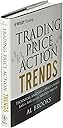


Trading Price Action Trends: Technical Analysis of Price Charts Bar by Bar for the Serious Trader (Wiley Trading)
Product ID: 8638736
Buy anything from 5,000+ international stores. One checkout price. No surprise fees. Join 2M+ shoppers on Desertcart.
Desertcart purchases this item on your behalf and handles shipping, customs, and support to Kyrgyzstan.
desertcart.com: Trading Price Action Trends: Technical Analysis of Price Charts Bar by Bar for the Serious Trader (Wiley Trading): 9781118066515: Brooks, Al: Books Review: A master trader lets you look over his shoulder - Having had so much experience with Al Brooks methods before this new book came out, it is hard for me to discuss Brooks' price action methods and methodologies without sounding like a groupie. My first exposure to Al Brooks work was several years ago when a trading buddy of mine suggested I read a column Brooks had written for a well-known trading magazine. Even though the article was only several pages long, it took me about two hours to work through the column. Why did it take me so long? Because the article was an incredibly detailed bar-by-bar analysis of the price action of several S&P emini charts. The next day when I attmepted to apply the methods Brooks wrote about in the article, to my own surprise, I correctly called several turns of the market in real time with my trading buddy. For the first time I felt like I had a working, practical model of how markets actually work. From that point on, I have had a voracious appetite for studying and using Brooks methods. When his first book came out, I had it overnighted to me. Brooks first book has been incredibly useful to me. Having said that, it was also an incredibly slow and tedious read. I am a member of several local trading groups and I personally know many professional traders who have started reading Brooks first book. Most of these people have never gotten past the first chapter. I joke with my trading buddy that Brooks first book is a good test of how bad some one really wants to learn how to become a professional trader. The reason the first book was so slow to read is that it took the reader through many, many charts and analyzed the price action bar by bar in each chart. Over the last couple of years I have purchased over 20 copies of Al's first book and distributed them as gifts. Only one of the people I gave the book to has finished the book. Not surpriseingly, this person has read it several times and studied it thoroughly and is well on his way to making himself a successful trading career. I was already familar with Brooks methods from his columns and web-based presentaions when I received his first book by overnight delivery form desertcart. My goal was to spend as much of my free time as I could that summer in attempt to make it through the book five times by the end of summer that year(Labor Day). I only made it through three times by the end of summer. I took time off my "real" job that summer and spent at least two full days at least 8 hour per day or more days a week in the library. Most of the weeks that summer I spent much more time than that studying Brooks methods. And when I say you have to "study" Brooks methods and techniques to master them , I do mean "study". To parphrase Mark Douglas from his book, "Becoming a consistently successful trader is one of the most difficult things a person can attempt to do." Studying Al Brooks price action methodolgy will greatly increase your chances of making trading success a reality. The hardest part of learning to trade is trying to figure out who really knows waht they are doing and who is BSing you in order to sell you something. I had unfortunatley wasted a lot of time and money searching for a trading methodolgy that was reproducible, sound and logical. As most people know who have attempted to learn how to trade, there is no easy money in tradiing. I have just finished my second reading of this new book and I must say it is every bit as thorough and valuable as the first book but it flows much more easily. Even with as much as I already knew about Brooks' methodology, this book has many new gold nuggets of market wisdom and extremely valuable trading insights that space considerations did not allow Brooks to put in his first book. The emphasis of Brooks' first book was learning how to be a chart reader and to read price action on a chart. There is a lot more detail about the actual mechanics of trading in this new book than there was in Brook' first book. By spreading his knowledge out over the three books of this series, I think Brooks has made his price action methods much more user friendly. Make sure you don't skip any parts of the book. In a single sentence, buried in any paragraph, could be a very valuable and useful trading insight. Since I thought I was already familar with the basic definitions of Brooks' methods, I was tempted to skip the first section titled "List of Terms used in this Book." Don't skip this section. As is typical with Brooks, even a mere glossary section has several very valuable trading insights and pointers. Everything Brooks does is content dense. I would higly encourage any one is really serious about building a successful trading career to start with this book as well as the next two books which are coming out in this series over the next two months. I have already pre-ordered the next two books and even paid the extra for overnight delivery. Even though the official release date for the second book is not until January third, I am hoping that the second book actually arrives before Christmas so I can get a jump on reading it between Christmas and New Years. Apparently, most of the time desertcart.com usually releases the books a couple of weeks before the official date on the web site. That is what has happened before. Brooks openly credits a lot of what he teaches as coming from the classic work of Edwards & Magee. I have never studied their work, but my impression is also that a lot of Brooks methods also come form many years of hard-earned experience of dealing with the markets. I have been in Brooks chat room since its inception. Most trading chat room hosts are at it for at most a couple of hours a day. Brooks is analyzing the markets almost non-stop from just before the open of the S&P day session to his after market analysis. His incredible, almost machine-like stamina could only come from an incredible passion for trading and markets. What is amazing is his concentration and commentary is almost on a tick by tick basis for the entire day session. You will feel Brooks passion for trading and understaning markets when you read his books. In the book, Brooks briefly discusses how the circumstances of his life have changed in the recent few years and he has felt compelled to come out of his "trading cave" and put his methodology down on paper. By his own description, Brooks is a "trading hermit". I feel very lucky that he has done so. To use a corny methaphor, it is almost like being in the neighborhood when Yoda decides to come out his cave and teach people in the public how to use The Force. If you are intelligent, you will at least give it your best shot to attempt to learn it. And remember, it won't be easy but it will be worth it. Good Luck in your trading and buy Al's new books. And then actually study them. Review: Much better read than the first book - I tried reading the original "Trading bar by bar" book but quit after the first chapter. I then learned that he was going to publish a second book and waited a year for this second edition. The wait has paid off. The book is much easier to read. The big difference between the first and the second edition: in the original book the sentences were paragraph long and very difficult to understand. In the second edition the sentences are much shorter and to the point. I have already read half of the book but it is still a very slow read. I have also been following Al's commentary on his website and find that this new book will speed up my learning process a lot. What I like about this book: 1. the introduction explains how the books are to be read and gives a quick outline of the books 2. the font is big and paper is white and of good quality 3. list of terms is at the beginning of the book 4. the book is split into 4 parts and 26 chapters. That means that each chapter can be read in 1-3 days rather than a week. 5. charts are bigger and clearer. Lots of empty space after each chart so that you can make your own comments. 6. There is "deeper discussion of the chart" that follows simple analysis for those who want deeper analysis of the charts. 7. it is much easier to follow Al's reasoning now and what he is trying to say 8. the content is priceless! What I don't like: 1. I wish there was a summary at the end of each book 2. Would be a good idea is there were exercises or questions at the end of each chapter so that readers could test their knowledge 3. It would be nice if the beginning of each chapter he put the goal, i.e. what he will be writing about in this chapter and why (i.e. the purpose of this chapter is to explain what reversal bars are and how one can spot them") 4. Sometimes I find myself wondering "what have i just read", meaning it is still difficult to grasp the meaning/essence of what Al is trying to say 5. Al introduces terms at the beginning of the book that are to be explained later. I understand that sometimes it is necessary but it slows down my reading tremendously To summarize, it is one of the best books on trading I have read. It is still difficult to read but if you can invest the time required to study the books, I am sure it will pay off. I have been trading using different strategy but have already found myself been able to correctly interpret price action and "predict" what will happen. This alone is worth a lot!!! 12 January: just finished reading the first book. I know I am a slow reader when it comes to technical material. The last part of the book is especially useful. Al Brooks describes in detail different types of trends. He gives quick summary (characteristics of a particular trend) at the beginning of each chapter. These summaries are extremely useful and well analyzed. He explains entries and exits, looks at trades from a perspective of a bull and then a bear and really makes you think about the mechanics of each trade in the trend. Love the book. Will be re-reading it again and again.
| Best Sellers Rank | #127,948 in Books ( See Top 100 in Books ) #9 in Business Investments #12 in Online Trading & Investing #44 in Investment Analysis & Strategy |
| Customer Reviews | 4.3 4.3 out of 5 stars (641) |
| Dimensions | 7.7 x 1.2 x 9.4 inches |
| Edition | 1st |
| ISBN-10 | 1118066510 |
| ISBN-13 | 978-1118066515 |
| Item Weight | 2.31 pounds |
| Language | English |
| Print length | 480 pages |
| Publication date | November 29, 2011 |
| Publisher | Wiley |
N**M
A master trader lets you look over his shoulder
Having had so much experience with Al Brooks methods before this new book came out, it is hard for me to discuss Brooks' price action methods and methodologies without sounding like a groupie. My first exposure to Al Brooks work was several years ago when a trading buddy of mine suggested I read a column Brooks had written for a well-known trading magazine. Even though the article was only several pages long, it took me about two hours to work through the column. Why did it take me so long? Because the article was an incredibly detailed bar-by-bar analysis of the price action of several S&P emini charts. The next day when I attmepted to apply the methods Brooks wrote about in the article, to my own surprise, I correctly called several turns of the market in real time with my trading buddy. For the first time I felt like I had a working, practical model of how markets actually work. From that point on, I have had a voracious appetite for studying and using Brooks methods. When his first book came out, I had it overnighted to me. Brooks first book has been incredibly useful to me. Having said that, it was also an incredibly slow and tedious read. I am a member of several local trading groups and I personally know many professional traders who have started reading Brooks first book. Most of these people have never gotten past the first chapter. I joke with my trading buddy that Brooks first book is a good test of how bad some one really wants to learn how to become a professional trader. The reason the first book was so slow to read is that it took the reader through many, many charts and analyzed the price action bar by bar in each chart. Over the last couple of years I have purchased over 20 copies of Al's first book and distributed them as gifts. Only one of the people I gave the book to has finished the book. Not surpriseingly, this person has read it several times and studied it thoroughly and is well on his way to making himself a successful trading career. I was already familar with Brooks methods from his columns and web-based presentaions when I received his first book by overnight delivery form Amazon. My goal was to spend as much of my free time as I could that summer in attempt to make it through the book five times by the end of summer that year(Labor Day). I only made it through three times by the end of summer. I took time off my "real" job that summer and spent at least two full days at least 8 hour per day or more days a week in the library. Most of the weeks that summer I spent much more time than that studying Brooks methods. And when I say you have to "study" Brooks methods and techniques to master them , I do mean "study". To parphrase Mark Douglas from his book, "Becoming a consistently successful trader is one of the most difficult things a person can attempt to do." Studying Al Brooks price action methodolgy will greatly increase your chances of making trading success a reality. The hardest part of learning to trade is trying to figure out who really knows waht they are doing and who is BSing you in order to sell you something. I had unfortunatley wasted a lot of time and money searching for a trading methodolgy that was reproducible, sound and logical. As most people know who have attempted to learn how to trade, there is no easy money in tradiing. I have just finished my second reading of this new book and I must say it is every bit as thorough and valuable as the first book but it flows much more easily. Even with as much as I already knew about Brooks' methodology, this book has many new gold nuggets of market wisdom and extremely valuable trading insights that space considerations did not allow Brooks to put in his first book. The emphasis of Brooks' first book was learning how to be a chart reader and to read price action on a chart. There is a lot more detail about the actual mechanics of trading in this new book than there was in Brook' first book. By spreading his knowledge out over the three books of this series, I think Brooks has made his price action methods much more user friendly. Make sure you don't skip any parts of the book. In a single sentence, buried in any paragraph, could be a very valuable and useful trading insight. Since I thought I was already familar with the basic definitions of Brooks' methods, I was tempted to skip the first section titled "List of Terms used in this Book." Don't skip this section. As is typical with Brooks, even a mere glossary section has several very valuable trading insights and pointers. Everything Brooks does is content dense. I would higly encourage any one is really serious about building a successful trading career to start with this book as well as the next two books which are coming out in this series over the next two months. I have already pre-ordered the next two books and even paid the extra for overnight delivery. Even though the official release date for the second book is not until January third, I am hoping that the second book actually arrives before Christmas so I can get a jump on reading it between Christmas and New Years. Apparently, most of the time Amazon.com usually releases the books a couple of weeks before the official date on the web site. That is what has happened before. Brooks openly credits a lot of what he teaches as coming from the classic work of Edwards & Magee. I have never studied their work, but my impression is also that a lot of Brooks methods also come form many years of hard-earned experience of dealing with the markets. I have been in Brooks chat room since its inception. Most trading chat room hosts are at it for at most a couple of hours a day. Brooks is analyzing the markets almost non-stop from just before the open of the S&P day session to his after market analysis. His incredible, almost machine-like stamina could only come from an incredible passion for trading and markets. What is amazing is his concentration and commentary is almost on a tick by tick basis for the entire day session. You will feel Brooks passion for trading and understaning markets when you read his books. In the book, Brooks briefly discusses how the circumstances of his life have changed in the recent few years and he has felt compelled to come out of his "trading cave" and put his methodology down on paper. By his own description, Brooks is a "trading hermit". I feel very lucky that he has done so. To use a corny methaphor, it is almost like being in the neighborhood when Yoda decides to come out his cave and teach people in the public how to use The Force. If you are intelligent, you will at least give it your best shot to attempt to learn it. And remember, it won't be easy but it will be worth it. Good Luck in your trading and buy Al's new books. And then actually study them.
A**R
Much better read than the first book
I tried reading the original "Trading bar by bar" book but quit after the first chapter. I then learned that he was going to publish a second book and waited a year for this second edition. The wait has paid off. The book is much easier to read. The big difference between the first and the second edition: in the original book the sentences were paragraph long and very difficult to understand. In the second edition the sentences are much shorter and to the point. I have already read half of the book but it is still a very slow read. I have also been following Al's commentary on his website and find that this new book will speed up my learning process a lot. What I like about this book: 1. the introduction explains how the books are to be read and gives a quick outline of the books 2. the font is big and paper is white and of good quality 3. list of terms is at the beginning of the book 4. the book is split into 4 parts and 26 chapters. That means that each chapter can be read in 1-3 days rather than a week. 5. charts are bigger and clearer. Lots of empty space after each chart so that you can make your own comments. 6. There is "deeper discussion of the chart" that follows simple analysis for those who want deeper analysis of the charts. 7. it is much easier to follow Al's reasoning now and what he is trying to say 8. the content is priceless! What I don't like: 1. I wish there was a summary at the end of each book 2. Would be a good idea is there were exercises or questions at the end of each chapter so that readers could test their knowledge 3. It would be nice if the beginning of each chapter he put the goal, i.e. what he will be writing about in this chapter and why (i.e. the purpose of this chapter is to explain what reversal bars are and how one can spot them") 4. Sometimes I find myself wondering "what have i just read", meaning it is still difficult to grasp the meaning/essence of what Al is trying to say 5. Al introduces terms at the beginning of the book that are to be explained later. I understand that sometimes it is necessary but it slows down my reading tremendously To summarize, it is one of the best books on trading I have read. It is still difficult to read but if you can invest the time required to study the books, I am sure it will pay off. I have been trading using different strategy but have already found myself been able to correctly interpret price action and "predict" what will happen. This alone is worth a lot!!! 12 January: just finished reading the first book. I know I am a slow reader when it comes to technical material. The last part of the book is especially useful. Al Brooks describes in detail different types of trends. He gives quick summary (characteristics of a particular trend) at the beginning of each chapter. These summaries are extremely useful and well analyzed. He explains entries and exits, looks at trades from a perspective of a bull and then a bear and really makes you think about the mechanics of each trade in the trend. Love the book. Will be re-reading it again and again.
K**L
Very deep concept about intraday price action. Takes time to understand the concept but it's very effective and practical on any chart. Serious trader should definitely give a try.
M**A
Al Brooks is definitely the best author on the subject today. In this book, he opens up about his experiences both as a learner and as an experienced trader. This book is not easy to read and it is not meant for absolute newcomers. I suggest you read it slowly and take your time to understand the concepts. Reading this book will be easier if you make your own notes as you proceed, to benefit your understanding of the concepts. It took me 2 months to read, understand and make notes on the concepts discussed in this book from beginning to end. Could be also due to the reason that I was not doing this full-time. Author talks about trends, patterns and the psychology behind every pattern. Why market participants, whether people or computers, act in certain ways? It is purely governed by price action, and nothing else. Very few authors would have gone into such great detail. He ensures that you understand the logic behind his trading style which is completely detached from any emotion. This book, along with book 2 and book 3, will definitely make you a better trader, and you will be able to see charts more clearly, without much clutter. You will trust the author as some sort of well-wisher. He will always tell you the ground reality and never promise that anything will work 100%, which is simply not possible in markets. Pros of this book 1. Extremely detailed explanation of price patterns, charts, trends, and market psychology, which ensures you understand the concepts thoroughly. 2. Setups mentioned in the book have been actually observed by me in the charts of equity, forex, commodities, even cryptocurrencies, again and again! 3. Too much information can be confusing and the author, having gone through those experiences, saves your time by pointing out the shortcomings of non-price action approaches such as certain indicators etc. 4. Author introduces you to the concept of measured move (reward for the risk taken) and shows how it works in the detailed discussion on his charts. 5. You will learn the difference between a trend and trading range. Like how trading ranges act like a magnet for the price and trends are opportunities for some excellent swing trades. 6. Having personally gone through some trainings and observed the setups of some successful traders, I discovered that the author had covered those concepts already. I should have bought this book earlier! 7. Author uses certain moving average in his charts extensively. I use VWAP and have stuck to using that only, even after reading a great deal about his style and price action. 8. Day's opening range, previous day's closing range and the average daily range are interconnected in certain ways which this book describes in great detail. I have observed this repeatedly in my charts. Cons of this book 1. Difficult to read 2. Absolute newcomers may not understand it well 3. Sometimes too much wordy Overall, a great book to have in your library if you are interested in trading.
P**N
This incredible trilogy (Trends, Ranges, Reversals) is a must for any price action trader!! It’s in the podium along with Bob Volmans’ book (more FX oriented). These 3 books are a price action masterpiece. Very specialized in the 5m E-mini chart, which is ideal for a day trader or scalper, but the same principles can be applied on major global markets. For example, NDX100 looks very similar to S&P500. Once you have read the classic basic books which are for free on the internet (candlestick patterns, support, resistance, trendlines, supply-demand zones, etc..), then these 3 books are highly recommended. If you are a beginner, it might be difficult to get all the concepts at once. In my opinion, it shouldn’t be the first book you read in this field. For me the 3 books are perfect. Just one thing is missing from my point of view: more graphical analysis (where to place the entries, SL and exits), as trading is more graphical than literary. The most important aspect of the books is that Al teaches you to understand what’s happening in the market, and then, you decide where you place your stops, exits or entries. As in trading nobody has “The Truth”, the book’s written in a way that it’ll make you understand that every trader is unique, but the market’s the same for all. He teaches you; how two different traders can be winners at the same time, in opposite directions whether you are a bull or a bear. Both understand the market, both see clearly its structure and even taking opposite trades, they can be both winners, depending on their risk management, chart speed, etc. The most important thing to keep in mind is that: HE TEACHES YOU TO UNDERSTAND HOW MARKET MOVES. Besides Volman’s book (FX), I’ve never read something similar. I’m giving 5 stars, even if I was expecting at least 200 charts graphically analyzed rather than explained. If you have persistence and time, these 3 books ARE A MUST!!
J**L
Excelente Livro.
P**R
Purchased the book and couldn't read more than one page at a time. It was a very difficult read. The book literally gathered dust on the shelf. A few years later, trading forex 5 minute charts , the book makes a lot of sense and is quite easy to read. My suggestion - beginners avoid, Experienced traders trading price action - well worth considering.
Trustpilot
1 month ago
3 weeks ago