We remain fully operational. Our teams are working around the clock to ensure your deliveries continue safely.

DOWNLOAD THE APP


Copyright © 2025 Desertcart Holdings Limited
DOWNLOAD THE APP




Buy anything from 5,000+ international stores. One checkout price. No surprise fees. Join 2M+ shoppers on Desertcart.
Desertcart purchases this item on your behalf and handles shipping, customs, and support to Kyrgyzstan.
🎞️ Digitize your past with pro-grade speed and color — don’t let your memories fade away!
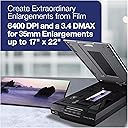
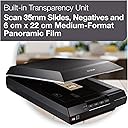
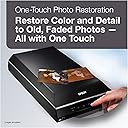
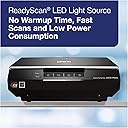
The Epson Perfection V600 is a high-resolution flatbed scanner designed for professional-quality digitization of photos, slides, and negatives. Offering up to 6400 DPI optical resolution, it delivers stunning detail and color accuracy. Its fast scanning speed and advanced software features like automatic color restoration and Digital ICE for dust and scratch removal make it ideal for preserving vintage and faded images. Compatible with both Windows and Mac, this reliable scanner is a top choice for enthusiasts and professionals looking to archive their photo collections with ease and precision.


| ASIN | B002OEBMRU |
| Amazon Bestseller | #275,329 in Computers ( See Top 100 in Computers ) #69 in Flatbed Scanners |
| Brand | Epson |
| Color Depth | 24 bits |
| Connection Type | USB |
| Customer Reviews | 4.3 4.3 out of 5 stars (6,540) |
| Item Weight | 9 Pounds |
| Manufacturer | Epson |
| Media Type | Negatives, Photo |
| Minimum System Requirements | Windows, Mac |
| Paper Size | A4 |
| Resolution | 6400, 9600 |
| Scanner Type | Film, Photo |
| Standard Sheet Capacity | 10 |
| UPC | 010343873568 |
| Wattage | 16.5 W |
C**R
Purpose: I bought this scanner to digitise 1000s of 1970s, 80s pictures of our family. Most of the photos were already faded and lost colour. Progress: I have already completed scanning 2000+ photos and works like charm. Exactly what I expected. Feedback: 1. Works perfectly on my Mac (despite some reviews say it doesn't). I am using latests Mac OS version on MacBook Pro. Was not hard setting it up on my Mac. Just downloaded the latest version software "Epson Scan 2" from the website and it worked. 2. Picture Quality is much better than any other scanners I tried (& bought) before trying this one. Quality is close to what you can see in the picture, is what you will get it on your file. Other scanners, though they claim 48 bit colour, they gave colour banding issues. 3. Faded colours are auto corrected if the feature is enabled during scan. (I still had to do some on Photoshop) 4. Both Colour and Grayscale pictures worked perfect. 5. Best part is, when you scan multiple photos, the photos are cropped into separate files and colour restoration works for each photo separately. Overall: No complaints so far. Bit expensive though.
R**O
Tengo un monto de negativos de 35mm y 120mm que necesitaba digitalizar. Estuve buscando varios escaners y este me parecio bueno para el precio pero tenia mis dudas. La verdad es que no me ha decepcionado. La calidad de las imágenes es bastante buena con el software que viene por defecto. Me tomó varias pruebas para lograr los ajustes (en el software) necesarios para tener los mejores resultados pero ya se pagó solo.
L**H
Fantastic piece of kit. Simple to use and does a fantastic job
A**R
I bought this for our family for Christmas to digitize hundreds of rolls of film negatives mainly taken on our SLR (pre-digital days). There are many great memories we wanted to preserve: our wedding, our young children, vacations, etc. We debated sending them to a digitizing service, but we figured that would still be a lot of work for us in trying to organize all the photos in proper chronological order...obviously, it would be a lot more expensive too. Overall it has been a great experience and the scanner provides outstanding images that rival our modern digital cameras. The most important thing is to get an efficient workflow going to minimize the amount of time it takes for a large job like ours. We had a few rolls taken on our children's cheap cameras or disposable underwater cameras. The scans of these negatives were significantly lower quality than our SLR photos. So the quality of the photos really affects the results you will get. Digital ICE is really amazing at removing dust/dirt from the negatives. It is a huge time saver over having to edit each photo with GIMP/Photoshop to remove flaws. I saw no artifacts from this process. The software's Dust Removal option did not work well, so I would advise using Digital ICE and leave Dust Removal off. However, using the Digital ICE options more than doubles the scan time, but I find this well worth it. Before starting, do some experiments to find the optimal settings for scanning your negatives. For most of our photos we used: 2400 DPI, Unsharp mask set to Low, Digital ICE on, all other check-mark options off. When saving the photos to JPEG files we used a quality setting of 7 (equivalent to 93 in other image tools such as GIMP). We also bought a second negative tray to make things more efficient. We bought the following, which is identical to the one provided with the scanner from Epson: https://www.amazon.com/gp/product/B07WVGFP7H Here is our workflow: 1. Insert negatives into the holder. Initially, we followed the directions and put them face down. But we found quite a few rolls had significant curvature that caused the negatives to touch the bottom glass. This creates newton rings that are impossible or take a lot of work to remove via an image processing program like GIMP. We did a lot of research on this and ultimately decided to put the negatives face up in the holder. We do not see any difference in image quality when doing some careful testing. 2. Give a few puffs of air to both sides of the negatives to remove dust/dirt. We bought a Giottos AA1900 Rocket Blaster from Amazon, which works well. Then insert negatives on scanner glass and close. 3. Hit <preview> on Epson Scan. During this minute, remove the previous negatives that just came out of the scanner and file these away. 4. Hit <all> on the preview scan pane to select all images. To undo the fact we put the negatives in upside down: Hit <mirror> button, then <rotate> button twice. Then hit the Digitial ICE button and Unsharp mask to Low. It is unfortunate that the software does not remember these settings. 5. Double click on the first preview image and adjust the brightness/color as needed (using the 4th icon). Repeat this for each preview photo. We found that most of our negatives needed between -5 and -25 on the brightness. Some needed color tweaking, mainly adding some blue. 6. Hit the thumbnail button to go back to thumbnails. Then hit <Scan>. You need to think how you want to organize the photos if you have thousands of photos you are scanning. We decided on the filename: IMG_YYYY_Rollrr_nnn.jpg where YYYY is the year, rr is the roll number for that year, and nnn is photo on the roll. It is nice the software automatically increments to photo number. We had to edit some filenames later after we found some rolls out of order. 7. During the 20-25 minutes it takes to scan the negatives, prepare the next set of negatives in the second negative holder. This is a big time saver. 8. Now you can go away form the scanner/computer and do something else. Unfortunately, the software does not indicate with a sound when it is finished the scan. We wasted a lot of time when the prior scan was finished and we were away from the computer. So I wrote a little Python program that would look at the Scanning Progress window and play some music when it was no longer on the screen. This was a huge time saver, but unfortunately most users are not going to have the programming skills to be able to do this. So as soon as we hear the music, we return to the computer. This works great. 9. Remove the negatives that have been scanned and go back to step 2. After scanning a few rolls, I then go through each image to see if any have flaws. I found that about 10% need some touch up work with GIMP, mainly to remove dust that Digital ICE could not fix properly. But these were at most 2 or 3 spots per photo. About 5% of photos need some color correction or highlight/shadow optimization in GIMP; it makes sense to try to use the Epson Scan software to get this as good as possible on the previews before scanning to avoid this post-processing work as much as possible. Overall, this is a great scanner and well worth the money and time it takes to revive old memories.
F**.
I was very unhappy with the scanning of my artworks, on which I put a lot of effort in terms of the detail, the technique and the colours, only to have my ordinary scanner-printer-copier downgrade them on all those things. So I investigated scanner for artworks and I came across this one. It definitely scans so much better than the 3-in-1 copier-scanners. In fact, the reproduction of detail is so good that now I have to be careful with little errors that did not appear on the previous scanner images! Besides, it has got several adjustments you can make on colour, definition, contrast and the like. This allows you to tweak the settings gradually until you get the ideal combination of them and then you save them for all subsequent scans. But....yes, only one disadvantage: The scanner is an old model and WiFi was not even available for it. So you have to connect it with the old USB cable and the computer often struggles to make the connection with the scanner, even with the cable. Sometimes I even have to restart the computer and the scanner in the hope that they will see each other. As the quality of scanning is more important than the convenience of wireless communications, for me, I am prepared to live with this small inconveniences.
Trustpilot
2 weeks ago
1 day ago