Buy anything from 5,000+ international stores. One checkout price. No surprise fees. Join 2M+ shoppers on Desertcart.
Desertcart purchases this item on your behalf and handles shipping, customs, and support to Kyrgyzstan.
🚗 Unlock Peak Engine Performance & Fuel Freshness — Don’t Let Your Ride Miss Out!
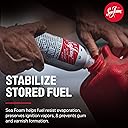
Sea Foam Motor Treatment is a versatile 16 oz fuel and oil additive pack of 4 that cleans the entire fuel system, removes oil sludge, and stabilizes fuel for up to 2 years. Compatible with all gasoline and diesel engines, it enhances power, fuel efficiency, and engine longevity, making it a must-have for proactive vehicle maintenance trusted by mechanics since 1942.


| ASIN | B07DHHSQXP |
| Best Sellers Rank | #1,429 in Automotive ( See Top 100 in Automotive ) #1 in Fuel Cleaning Tools |
| Brand | Sea Foam |
| Customer Reviews | 4.8 4.8 out of 5 stars (30,457) |
| Date First Available | June 4, 2018 |
| Item Weight | 4.09 pounds |
| Item model number | SF-16-4PK |
| Manufacturer | Sea Foam |
| Manufacturer Part Number | SF-16-4PK |
| Package Dimensions | 7.6 x 6.1 x 4.8 inches |
J**.
The Ultimate Multi-Use Motor Treatment – A Must-Have for Any Vehicle!
The Sea Foam SF-16 Motor Treatment is an outstanding product that truly delivers on its promises. After using it in multiple applications for my vehicles, I’m convinced this is a must-have for anyone looking to maintain and enhance engine performance. The 4-pack is an excellent value and ensures I always have some on hand for routine maintenance. Why Sea Foam Stands Out Multi-Use Versatility: This product is a game-changer! I’ve used it as a fuel additive, an oil treatment, and even to clean out stubborn deposits in my carburetor. It works flawlessly across applications, making it an all-in-one solution for keeping engines running smoothly. Improved Performance: After adding Sea Foam to my fuel tank, I noticed a significant improvement in my vehicle’s fuel efficiency and a smoother idle. It’s particularly effective at removing deposits and buildup that can reduce performance over time. Easy to Use: The instructions are straightforward, whether you’re using it for fuel, oil, or cleaning purposes. The precise measuring cap ensures no mess or guesswork, making it simple to get the correct dosage every time. Great for Long-Term Maintenance: Regular use of Sea Foam has made a noticeable difference in prolonging the life of my engine. I’ve also used it to revive an older lawnmower engine, which now runs like new! This product pays for itself by preventing costly repairs. Packaging and Value The 4-pack is perfect for multi-vehicle households or anyone maintaining more than just a car. I’ve used it in my truck, car, and small engines like my generator and lawn equipment, and I still have plenty left. Pro Tips Add Sea Foam to your fuel before a long drive to maximize its cleaning effect. Use it regularly in oil changes to keep sludge buildup at bay. It’s also great for seasonal storage—just add it to your gas tank to stabilize fuel and protect the engine. Final Thoughts Sea Foam SF-16 is the real deal for anyone who values vehicle performance and longevity. Its multi-use functionality, ease of application, and proven results make it a standout product. I’ve already seen noticeable improvements in my vehicles and equipment, and I’ll continue to use it as a staple in my maintenance routine. Highly recommend it to anyone who takes pride in keeping their engines in top shape! Pro Tip: Whether you’re a DIY mechanic or just looking for a reliable maintenance product, Sea Foam is a must-have. It’s one of the simplest and most effective ways to protect your investment and extend the life of your engine. Don’t hesitate—this 4-pack is worth every penny!
M**R
Engines run smoothly and efficiently
I’ve been using Sea Foam SF-16 in both my outboard motor and sailboat, and it has proven to be an invaluable product for maintaining engine performance. This motor treatment is incredibly versatile and effective, making it a staple in my marine maintenance routine. One of the standout benefits of Sea Foam SF-16 is its ability to clean and lubricate the entire fuel system. It effectively removes harmful deposits and residues that can build up over time, ensuring that my engines run smoothly and efficiently. This is particularly important for marine engines, which can be prone to issues due to the harsh operating environment. I also appreciate how Sea Foam stabilizes fuel. This is crucial for my sailboat, which sometimes sits unused for extended periods. By adding Sea Foam to the fuel tank, I can be confident that the fuel remains fresh and free from moisture, preventing potential engine problems when I’m ready to hit the water again. Another great feature is its ease of use. Simply adding the recommended amount to the fuel tank is all it takes to start seeing the benefits. I’ve noticed a significant improvement in engine performance, with smoother idling and better throttle response. It also helps reduce emissions, which is a nice bonus for the environment. Overall, Sea Foam SF-16 is a fantastic product that I highly recommend to anyone with an outboard motor or sailboat. It keeps engines clean, running smoothly, and protected from the elements, making it a must-have for any boat owner.
L**L
WOW-Smoother Performance-Idle Better-Easy To Use-LOVE This Stuff
GREAT product! I own a "mature" car with lower milage. However the low idle was off and slow, additionally learned that a Gas station provider (occasionally use) had been found to have water in their gas. After reading the reviews and learning many auto mechanics swear by Sea Foam, decided to give it a try. As a woman have experienced hype, un-necessary work etc through the years. I used a funnel to add Sea Foam to my gas tank. Wow! even on shorter trip, noticed a smoother performance. With longer driving seems to have helped the idle and running even smoother! Believe that with more use will see even better performance and hopefully better milage! Do Not Hesitate, you and your vehicle are worth it! Thank you!
G**.
Great product does what it says it does.
I somewhat recently bought a 1983 Volkswagen Vanagon With the 2,0 litre aircooled engine. I went to clean the ERG valve recently and found that it was clogged all the way with just greasy sooty gunk from the exhaust so im guessing my car has not had much of a cleanout ever and the erg filter is likely rusted out but nonetheless I knew that i could quickly and easily clean it out whereas a new erg filter costs a hundred dollars or more. I bought two bottles of Seafoam Motor treatment because its an add on item and that way i could get the discounted price without adding anything on. For my purposes I found it easiest to pour the seafoam into the hose that attaches to the auxiliary air valve as this was easy to remove and fed right into the junction past the Mass airflow sensor. The brake booster would have been more troublesome despite many people recommending it. I Believe you should just look at all the air hoses leading into the manifold of your car and choose which both won't change the way the engine runs and is easy to pour into which in many cases is the brake booster hose. I warmed up the engine so the auxiliary air valve would not be needed for engine operation, and then I had to cover the majority of the open and exposed end of the hose so the engine would not be choked by too much air, then Its a matter of putting the right amount of Seafoam in so that you don't choke it that way either. At this point you will begin seeing white smoke come out of the exhaust. This is a sign that the seafoam is burning and working properly so continue until you've used nearly a third of the bottle. I actually had trouble killing the engine at the end when you are supposed to pour enough in to kill it so I just shut off the ignition after dumping a lot in at the end. I waited about 10 minutes for it to all soak in and then restarted the engine. I let it run for a little and then began a slow drive around the neighborhood in a low gear to run the engine quickly but not too fast. This created the most smoke by far which is good because that meant it soaked well. Once the smoke stopped or slowed significantly I shut the engine off and checked in the ERG valve hole on the manifold once the engine cooled. I Could not find any more of the greasy black gunk so It worked! The rest was split between going into the fuel and the oil to clean out injectors and galleys and I plan on an oil change soon as a result. Great product does what it says it does and my engine is running much smoother now likely due to a more even mixture in a no longer impacted manifold. I also recommend watching a youtube video on how to do this, it helps to see the things I'm talking about.
M**T
Poor Quality Control
Seafoam is a great product. My concern is the quality control of cans coming out of the factory. Both my cans arrived with dents and there was absolutely no damage to the package. Will not affect the product inside. Looks like the Seafoam manufacturer needs to review quality control. UPDATE: With succeeding order, can quality was perfect. As for the product itself, yes, I think it is useful in small engines. For example, my power washer (probably 20 - 25 years old) ran rough when I started it for the first time at the beginning of the season. Even if you care for the gasoline properly, after a number of years, residue can form and it doesn't go anywhere. I put a heavy dose of Sea Foam in the tank -- use the washer for the day -- then, it'll sit for days. Next time I start it, after the carb soaks in the SF, there is no doubt I can hear a difference. I also use it once a season with a cleaning dose in my garden tractor, push mower, string trimmer, and leaf blower. I don't use it in vehicles; I use top tier gasoline which has more detergent than the basic required blend. I don't buy non-top tier gasoline if I have a choice. Yes, there is a difference. Don't confuse octane rating with top tier. Do yourself a favor and Google "top tier gasoline." And, I drive 9.5 miles to a station for non-ethanol gasoline for the small engines. Use non-ethanol and you won't have to use a stabilizer except for storage. Most small engine problems are gasoline related. Once the problem develops, you're screwed. Take care of the gasoline and you're taking care of the engine. A local small engine dealer told me they use Star-tron for cleaning almost all engine carburators brought in that won't start. You can keep them clean by using at least some kind of stabilizer instead of paying for repair.
W**Y
Mechanic Recommends Sea Foam -- Best Gas Treatment for All Engines
We have a small-engine mechanic who turned us onto SeaFoam motor treatment -- and against most gasoline preservatives and treatments. He said he'd drained, or seen inside, thousands of gasoline tanks, and the stuff sold as gasoline storage additives was often still there, sitting as gel on the bottom of the tank. Just gunk. He also said most brands of engine treatment weren't worth the money. However, he swore by SeaFoam, which I'd never tried at the time, and my experience since has proved him out. I've had many rough-running engines find their power and performance again, with nothing different, but a shot of SeaFoam in the gas tank (and the crankcase). We own a number of vehicles and equipment with small engines, from a compact backhoe, to a ride'em Husqvarna mower, weedwacker, chainsaw -- and on the larger size, a Honda SUV and Ford F150 pickup. All of them have benefited greatly from the regular use of SeaFoam. However, when we're running the road vehicles a lot, especially in the summer, we go through gas and don't necessarily add SeaFoam with every fill. Recently, the Ford began to run rough. It stalled as I pulled up to corners and lights. In the past, that would have meant a mechanic and an expensive tune-up. All I did was go for a fill-up, and started by adding a full can of SeaFoam. Problem solved, just like that. The Terramite (made in the USA) backhoe is not used a lot -- and as with most motors, that is a problem. It's bad for an engine not to run it -- and especially, in most cases, for it to sit with gas in the tank. The backhoe has a Kohler Command 25-horse gasoline engine that powers the hydraulics that run the wheels, steering, front-loader, and backhoe. I change the spark plugs each season, but it, like my Stihl chainsaw, and 6500 watt backup (gasoline) generator, and for that matter, all the small engines, can be hard to start after a hiatus. And even when they get going, they'll run rough. I used to drain the tanks frequently, then run them dry, then fill again before use, and hope for the best. But SeaFoam has changed all that. Throughout the summer, I can leave treated gas in the tank, and have little problems with starts or rough running. In the smaller equipment, I dose the gasoline with each fill (1 oz per gallon), as SeaFoam cleans both carburetors and full injection systems. It is good for gasoline and diesel engines. Added to your crankcase (1.5 oz per quart of oil), it cleans deposits and quiets noisy lifters. These days, most gasoline is mixed with ethanol and that's a bad thing for small engines. Ethanol goes hand in hand with water -- and as we all know, water in the gas is anathema to motors. Again, my small engine mechanic told me, 90% of the no-start problems he had to deal with were caused by ethanol-caused water in the fuel system. SeaFoam actually controls moisture and prevents this problem. It also de-ices and is anti-gel. In my opinion, when it comes to gasoline and diesel engines, large and small, SeaFoam is THE Silver Bullet. My equipment is often running, while my neighbors are running with theirs to the shop. I've told many about SeaFoam, but some people seem to want to do it the hard way. By the way, I also swear by PRI-G fuel additive for long-term gasoline storage. I keep 100 gallons of gas in tanks for emergency use. We are in a rural, wilderness area. I was introduced to that by survival expert, Steve Harris. He said he's had gasoline that was 10 years old still run equipment, because he'd added PRI-G to it (you can buy here on Amazon). Of course, you have to remember to add more PRI-G each year -- that's the catch. So our rule of thumb is, PRI-G for long term fuel storage -- and SeaFoam for month to month. Also -- this price is right! Of course, when you compare the cost of equipment breakdown, and having to take anything to a mechanic, this is almost free. However, apples to apples, this price is cheaper than Walmart -- and up to $4 cheaper per can than many auto supply and hardware stores. Can't say enough good things about this product! Highly recommended.
R**E
I swear by Seafoam, especially for small engines
I swear by Seafoam. It has really helped out my small engines, especially the 2 strokes and ones that sit around for long periods of time like my leaf blower and roto tiller. After I started adding Seafoam every time I get fuel I have had zero starting issues. They can sit all year and they will still start right up. In my car/trucks with higher miles I've used it to clean out the crankcase with great results. I add a can to the oil right before doing an oil change. I add a can then take a short drive(10 miles) to make sure the oil is up to operating temperature and change the oil once I get home. It does a good job cleaning any sludge out of the pan and the new oil stays looking fresh/clean way longer.
B**N
It's Sea Foam (but not green)
What is there to say? If you're buying Sea Foam, you know what it is and what it does, and you're probably going to continue buying it. It's great stuff.
J**R
Good quality
Excellent work
M**C
hat bei meinem Oldtimer unerwartet gut funktioniert und wohl das Ventile neu Einschleifen erspart
Wirkte Wunder bei meinem 42 Jahre altem Oldtimer Van. Nachdem die Jahre zuvor das Getriebe überholt , der Vergaser, Zündung, Kaltstart, AGR und vieles mehr für tausende Euro erneuert wurde und kaum Besserung brachten - wurde Anfang des Jahres 1,5 Flaschen Seafoam in den viertelvollen Tank gekippt und dann ca. 200 km gefahren. Das Seafoam scheint die Ventile des originalen ungeöffneten 42 Jahre alten 140.000 Meilen Motor so gut gereinigt und abgedichtet zu haben, dass der Van über die gewohnte Strecke über die Alpen nun 20-30km/h schneller ist (30km/h auf gerader Strecke, 20km/h Berg auf) und trotz der höheren Geschwindigkeit (nur) 19-21 Liter (Autogas) verbrauchte von zuvor 21 bis über 23 Liter. Also weniger Verbrauch und mehr Endgeschwindigkeit (ohne zwangsweise runterzuschalten und die Drehzahl ungesund hoch zu erhöhen). Hätte ich es nicht selbst probiert und genau mit App dokumentiert würde ich es nicht glauben. Ich hatte auch vor dem Ölwechsel ca. 200ml Seafoam in das Motoröl gegeben und bin 250km gefahren, konnte da jedoch keine besondere reinigende Wirkung feststellen. Das Motoröl war so sauber wie immer, vllt. weil es seit Jahren schon mit Ceratec Öl-Zusatz läuft (der auch fühlbar gut funktioniert verschiedenen Motoren) und der Motor deshalb sauber war. Bei neueren Autos konnte ich so eine gravierende Wirkung als Benzinzusatz nicht feststellen - aber vermute, dass es auch hier förderlich ist den Motor langfristig sauberer zu halten. Die Moral von der Geschichte: Wenn man ein schlecht laufendes Auto hat, lieber zuerst die 30€ inkl. Versand in Seafoam investieren, und erst wenn das nicht klappt mit dem Schrauben anfangen..... hätte in meinem Fall tausende Euro gespart. Als Ing. spät was dazu gelernt ;-)
M**E
Good
I am from India, this product cost me 2.6k per bottle, which is a bit costly, but the performance of the product is very good, I used it on my Ashoka Leyland 12 wheel truck, I mixed this in engine oil, rough engine sound gone within 100km
D**O
great engine treatment
discovered this stuff years ago for treating outboard motors...was hard to get hold of but now is easy through Amazon great for giving any engine a bit of a clean out without pulling it apart
C**Z
Paquete incompleto
Solo me llegò 1 bote, en la publicaciòn específica que es un paquete con 6 piezas!!
Trustpilot
1 month ago
3 weeks ago