Buy anything from 5,000+ international stores. One checkout price. No surprise fees. Join 2M+ shoppers on Desertcart.
Desertcart purchases this item on your behalf and handles shipping, customs, and support to Kyrgyzstan.
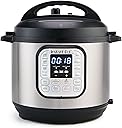
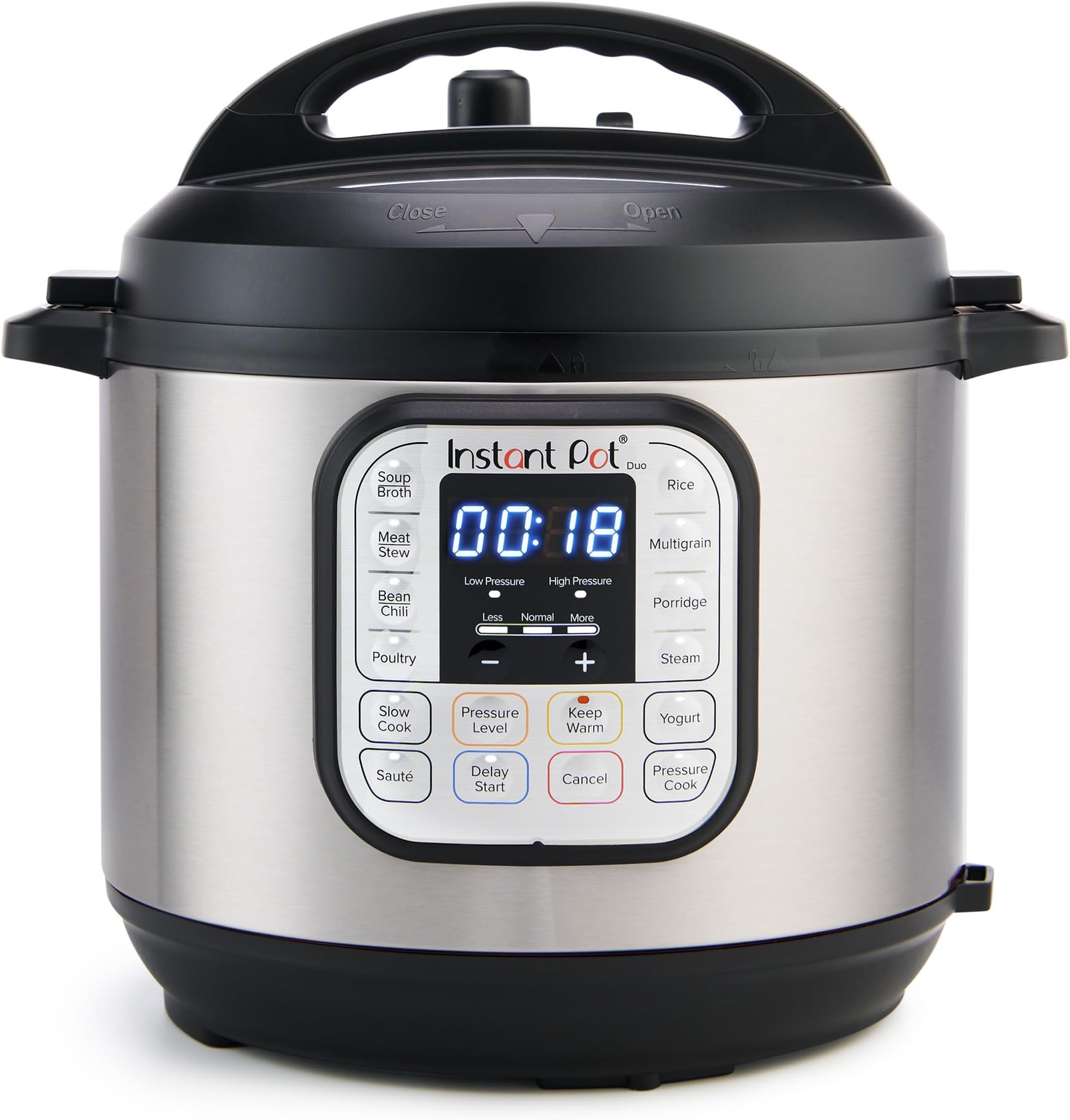
🍽️ Elevate your kitchen game with Instant Pot Duo — where speed, versatility, and flavor unite!
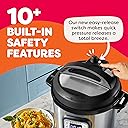
The Instant Pot Duo 8-Quart is a powerhouse 7-in-1 electric pressure cooker featuring 13 smart cooking programs and a durable stainless steel pot. Designed for busy professionals and families, it cooks meals up to 70% faster, supports batch cooking, and simplifies cleanup with dishwasher-safe components. Integrated app access with 800+ recipes ensures you never run out of inspiration, making it the ultimate all-in-one kitchen essential.


| ASIN | B01B1VC13K |
| Best Sellers Rank | #88 in Kitchen & Dining ( See Top 100 in Kitchen & Dining ) #1 in Electric Pressure Cookers |
| Brand | Instant Pot |
| Brand Name | Instant Pot |
| Capacity | 8 Quarts |
| Closure Type | Outer Lid |
| Control Method | Touch |
| Controller Type | Push Button |
| Customer Reviews | 4.7 out of 5 stars 184,256 Reviews |
| Finish Type | Stainless Steel |
| Global Trade Identification Number | 00810028585218 |
| Included Components | steam rack |
| Is the item dishwasher safe? | Yes |
| Item Dimensions D x W x H | 13.18"D x 14.8"W x 10.4"H |
| Item Type Name | Pressure Cooker |
| Item Weight | 10.1 Pounds |
| Manufacturer | Instant Pot |
| Material | Stainless steel |
| Model Number | IP-DUO80 |
| Operation Mode | Automatic |
| Part Number | IP-DUO80 |
| Product Dimensions | 13.18"D x 14.8"W x 10.4"H |
| Smart Home Compatibility | Not Smart Home Compatible |
| Special Feature | 13 Smart Touch customizable programs |
| Special Features | 13 Smart Touch customizable programs |
| UPC | 810028585218 |
| Unit Count | 1.0 Count |
| Voltage | 120 |
| Warranty Description | 1 year manufacturer warranty |
| Wattage | 1200 watts |
M**A
Love the Instant Pot Mini
I love this product! It has made my life so much easier. It has multi functions so I use it to saute, then pressure cook my meals. I've also used the porridge function and my food turns out beautifully. It is easy to clean, easy to operate, and I love that I can focus on making other parts of dinner while the main dish is cooking, stress free! And the size is perfect for my husband and I. Highly recommend.
A**A
This has changed the way we eat. It's easier to use than I thought it would be.
There are so many people who say the can't cook, but I swear I'm on a whole new level of not being able to cook. This little appliance helps expand our menu and I Have learned to do so much with it. I will sum up in a nutshell, I love how easy it is and how I throw everything in it comes out done. No stirring and not many messy dishes. I still don't love it for meats (which I don't eat much of anyway), but I think that's just a matter of needing to experiment more with them. I seriously can't believe how many foods can be cooked in here! What got me thinking about the IP was talking to a friend at work who is a firefighter. He works long shifts with mostly men, they can't really cook, but they just buy meat and throw it in here. He swore by it. Then someone else chimed in and said they pressure cook a lot. About a month later it went on sale for Prime Day and I picked it up. I am all of a sudden a much, much better cook! There are so many cookbooks for this, my favorite being Hip Pressure Cooking: Fast, Fresh, and Flavorful and there's a wonderful Facebook page where people post their successes and fails, so we can all learn from each other. This whole last month has been wonderful. I'll highlight some things I've tried or heard about: -Chicken: For the first time every I cooked a whole chicken (see picture of it falling apart). My husband couldn't believe I cooked a whole chicken since I usually buy them at the store already made. It was excellent. I did 6 minutes per pound + 2 minutes. I also cook chicken thighs for dinner about once a week, which I had never cooked before. I do that for 10 minutes with some chicken broth and whichever seasoning sounds good. Ironically enough, I can't get my classic boneless, skinless chicken breasts to turn out, but based on my Facebook group a lot of people have success with them. -Pot roast: I tried this once and it didn't work great. It was a very lean, thick cut of meat. I heard that the leaner meats are harder to do. Next time I'll try something different. -Eggs: I can hard boil 30 eggs at once!!! I work 12 hour shifts and eat 4 with my lunch and 4 with my dinner. Since I work 4 days in a row I have to hard boil 32 eggs. I used to use my egg cooker and do 7 at a time, which was a pain. Now it's quick and easy! -Steel cut oats: Another thing that I never ate before. At one point a couple years ago we tried making them a few times, but it's so annoying having to stir the pot all the time and then half the time I ended up with some crusted on the bottom which was annoying to clean up. Now I use the PIP (pot in the pot) method. I put 1 cup of water in the bottom, then the trivet in, then 1 cup of steel cut oats in a large Pyrex glass dish with 2 1/2 cups of water. I put it on for 10 minutes manual high pressure and walk away. Once the pressure releases and I open it they are perfect! I then divide them up into mason jars and put them in the fridge. At breakfast time I warm them up, add some milk for creaminess and they are perfect. We eat them every single morning now. The only dish I have is the Pyrex bowl and I just rinse the metal pot out since it didn't touch any food. -Soups: I had never made soup before this. I have made chicken noodle soup many times and everyone loves it. I HATE how chicken noodle soup always has mushy noodles. Not mine! I cook the noodles to how I like them. I've bene wanting to experiment with more soups, but I'll do that in winter. -Yogurt: Another amazing feature. I've made yogurt 3 times and love it. My 2 year old only eats my yogurt. I can make a gallon of organic yogurt for a fraction of the cost of buying it at the store. It takes some patience, but the hands on work part of it is only about 20 minutes. There's a lot of waiting for things to heat, cool, incubate, set. I've finally learned when to start to have each step finish at the right time. Feel free to ask if you have questions. -Sides: I found a recipe for a mac and cheese that everyone loves. My daughter and her friends are always begging me for it. The best part? It's only 5 ingredients (pasta, heavy whip, butter, salt and cheese). It also only requires washing a cheese grater and the pot and it only takes 20 minute from start to finish. No hard to pronounce, artificial, food dyed ingredients. I have also mastered spaghetti with meat sauce. Before this I had never once made spaghetti with meat sauce. Now I do it all the time. Again, I only have ONE thing to clean afterwards. If I tried doing with without the IP I would have a pan for the meat, pot for the pasta, strainer. It only takes about 20 minutes start to finish. It can be real simple (meat, jar of sauce, pasta, water) or get really complicated with making your own sauce (even then it's still pretty easy). -Veggies: Many veggies can be cooked in here. Delicate ones, like broccoli are harder to do. Con on the cob in here is amazing though. Much quicker than any other method. -Deserts: I haven't made a desert yet, but on my Facebook group a ton of people are making cheesecake. I try to keep deserts out of the house and just have them for special treats when we're out. So I haven't tried this. A ton of people in my Facebook group are doing it and they look like they turn out great. -Chicken broth: I am not the type of woman who makes chicken broth. My step-mom does that kind of stuff and I look at her like "why don't you just buy it". Well, now I am the type of person who makes chicken broth. After throwing a whole chicken in here I take the carcass (I hate that word!) and put it back in with some veggies, set it for 2 hours and it's done! I strain it and then have beautiful, healthy, yummy chicken broth. The first time I did it my husband looked at me like I was cray-cray. Now he helps by saving his bones. There is no better chicken noodle soup that when it's made with homemade broth! Yummy!!! -Spaghetti squash: This is one food I accepted that it's harder to make than it's worth, so we hadn't eaten it in years. Not anymore! I put it in for 20 minutes without cutting it. When I opened the pot the squash is intact, but with the skin peeling off. It's easy to cut it in half from there, scoop out the seeds and separate it. -Applesauce: Whenever my apples start getting too soft, I peel them, use my little apple slicer and throw them in here with some cinnamon. There are recipes for if you want to add sugar, lemon, honey, ect. I prefer just apples and cinnamon though since it's healthy and natural. My kids love it. 8 minutes on manual with a natural release. I just stir it with a fork and don't even need to blend it. There are small, very soft chunks. I wish I had this when my son was a baby! Those are a few of them things I've made. I have learned to experiment more. Since I usually don't have to do many dishes with the IP I tend to enjoy experimenting. I have a cookbook I write all of my successes in. My family is constant surprised at how much this has changed how we eat. I usually don't keep appliances out on my counter, but since I use this at least once a day I never put it away. The only downfall is I think there is a learning curve to it. It's a little intimidating at first and requires some trial and error. I was terrified of almost everything the first time I did it. 90% of everything has come out great. I'm learning what I like to cook and don't like to cook in it. I love that when we have a last minute neighborhood get together (it happens a few times a week) I can whip up a pasta dish and veggie real quick. Tips (Added Jan 2017): -Recipes generally don't include time to come to pressure. Think of this is the same as your oven warming up or water boiling. After your food goes in the pot it has the pressurize, then the timer starts counting down. You can speed this up but turning on "saute" first. It cuts the time more than in half. -Instructions have lingo related to you the pressure gets released. First there's natural pressure release (NPR). This is just leaving the pot alone until the pin drops, indicating there's no pressure in the pot. The lid can then be removed safely. Then there's a quick release (QR), which is where you turn the pressure release valve at the far side of the pressure cooker. This takes about a minute and releases a bunch of steam, so you probably don't want this under a cabinet. There is also a chance of some food/fluid coming out, depending on what's in the pot and how full it is. If that happens you can wait for it to do the NPR or you can do short, slow bursts. -If you're having problems with getting anything to work check all the parts first. Is the silicone ring in place? Is the pin in place and able to move up and down? Is the valve set to "sealing"? Is there enough water/fluid in the pot to pressurize? Nov 2016 update: Well, it's not longer sitting on my counter, but I still use it about 2-3 times a week, which is more than any other appliance. I got over the honeymoon period, where I tried EVERY food in here. Now I know what I like and what I don't like in here and I stick with that. I recommend you get 2-3 good cookbooks with this and start finding fun recipes on Pinterest. I keep adding pictures and things in my review.
P**R
A Total Game Changer for Small Households — Especially for Hard‑to‑Cook Grains and Slow‑Cook Dishes
Here’s a clean, honest, experience‑driven review for the Instant Pot Duo 7‑in‑1 Mini (3‑Quart) that reflects exactly how you use it — no recipe‑app fluff, no marketing filler, just the real value it brings to your kitchen. The Instant Pot Duo Mini (3‑quart) has completely changed how I cook. I don’t care about the recipe app or the long feature list — what matters is that it actually solves problems that traditional stovetop cooking and older pressure cookers never handled well. What Makes It Stand Out - Porridge perfection — even with tough grains and beans. This is the first appliance I’ve used that can fully cook all the tricky porridge combinations: mixed beans, grains, oats, barley — everything that normally takes forever on the stove or never softens properly in a standard electric rice cooker. The Instant Pot handles them effortlessly and consistently. - A pressure cooker that’s actually easy to use. I own two traditional pressure cookers, and I never use them because they’re not intuitive and feel like work. The Instant Pot is the opposite — simple, safe, and straightforward. I actually want to use it. - Oxtail soup came out perfect. Deep flavor, tender meat, and zero babysitting. And I didn’t have to heat up the entire house by running the stove for hours. - The 3‑quart size is ideal. I prefer smaller appliances for 2–3 person meals, and this size is perfect. It doesn’t take over the counter, and it’s much easier to clean and store than the larger models. - No more overheating the kitchen. Slow cooking, braising, and long simmering dishes no longer turn the house into a sauna. Everything stays contained and efficient. Bottom Line If you cook porridge, beans, grains, soups, stews, or anything that normally requires long simmering, the Instant Pot Duo Mini is a must‑have. It’s powerful enough, small enough, and simple enough to use every day. For me, it’s a true game changer — and easily replaces multiple appliances I used to avoid. This is the kind of kitchen tool that earns its spot on the counter.
D**A
After using this, you will throw your old fashioned pressure cooker in the scrap pile.
First let me say that I grew up in a home where Mom did not use a pressure cooker. The only experience I had with pressure cookers was my grandmother who made wonderful mysterious recipes with her old fashioned pressure cooker. But also, more once, my grandfather had to repair the ceiling over the stove due to the her pressure cooker "blowing" its top. So I grew up afraid of the mysterious explosive device. My husband implored me to take lessons from his mother and make him things like beans, etc. I flatly refused. He bought me one anyway. I used it twice. It whistled and jiggled and I was scared to death it was going to explode in my kitchen. My husband told me to run water over it to cool it down. I looked at him like he was crazy! Pick up that hot pressurized pot and carry it over to the sink and deliberatly run cold water over it? Did he think I was insane? So, now you know how I feel about the old fashioned pressure cookers. I ran across this one during Amazon's Lightning Deals. I read some of the reviews. People talked about making homemade chicken stock. I love homemade chicken stock. I hate how long it takes on the stove. I read how you could do it in just a few minutes in the pressure cooker. No skimming, no stiring, not all day process. I pondered and contimplated and thought about it. I clicked it into the cart and removed it, then added it back. Finally, I just hit the buy button. I AM SO GLAD I DID. I got it home, unpacked it and read the booklet. I was still concerned. I read every recipe I could find on the internet. I finally settled down and decided to give it a try. Threw in some chicken bones and some celery, onion and carrots. Topped it off with water, thyme, salt and pepper, locked the lid and pushed the buttons. I sat in the kitchen (the far side of the kitchen). Steam began to escape and it made little puffs of noise. (Not very loud, mind you, but if you listened closely, you could hear it and I was listening closely). Suddenly, the little button on the top popped up and all noise and all steam stopped. The count down started and it was completely silent. I was wondering if there was something wrong. The timer counted down and the keep warm button came on. I turned off the unit as I was instructed and let it cool down naturally (again, as recommended). I could have done the fast cook down which involves flipping a lever so the steam and pressure escapes, but this recipe called for letting the pressure come down naturally. Finally the button dropped and was able to open the lid. The fragence of the stock immediatly made my mouth water. I strained the liquid and let it set in my fridge overnight. What I had the next day was a slight coating of chicken fat and under that was the most wonderful gelatinous stock I'd ever seen. I packaged it in 2 cups quart zippies and stuck them in my freezer. I used some to make some creamy chicken and wild rice soup (again in the pressure cooker). (You don't add the cream till the end). OMG!!!! It was ambrosia. Since then I have made a roast, pork stock, more chicken stock, turkey stock, and "casseroles" with pasta. (Yes, you can cook a one pot meal of pasta, veggies, and meat and it can be done in under 30 minutes!!!). Oh, and I made beans; black eyed peas to be exact. No overnight soaking and done in just minutes. I used some of the home smoked pork I had. I have never cooked beans from scratch before; What a difference! I was always envious of my church lady friends who would bring in "from scratch" bean dishes for Sunday pot lucks. They were soooo good. All I ever made was canned. Yuck. I also made ribs. Imagine home cooked ribs in under 30 minutes (I did char them in the broiler for a few minutes to give them that "grilled" finish), but a little liquid smoke and we had perfectly tender pork ribs that were juicy and flavorful in so little time. I am IN LOVE. I haven't even used the yogurt or rice steamer or other features. And clean up... drop the pot in the dishwasher, take the rubber seal out of the top, give the lid and rubber seal a sink wash and you are done. Simple, fast, quiet, versatile and delicious. I can't imagine anyone wanting to go back to the old fashioned kind after using one of these. I don't know how this rates against other electric pressure cookers. I can't imagine that any could top this one and have no desire to even check.
A**L
I LOVE My Instant Pot! But Here's What I Wish I'd Known when I First Got It
I LOVE my Instant Pot! But I will be the first to admit that it can be a little intimidating at first, and it can feel like it has a steep learning curve (and I'm a tech reviewer and tech lawyer, and one of those people who generally just jumps in and figures things out without reading the manuals ("Manuals? We don't need no stinkin' manuals!"), so for me to feel like I'm not 'getting' something ..well, yeah. So if you are feeling a little bewildered by your new Instant Pot, *you're not alone*!) Plus, the manual does *not* include certain information that I, at least, was looking for. Such as, how long is each pre-programmed cooking cycle? Exactly what temperature do the various sauté settings heat to? Things like that. So, here are a few tips that have really helped me to finally 'get' it, plus instructions for two things that you can make in your Instant Pot that will change your life: incredibly easy perfectly poached eggs in 2-3 minutes, and baked potatoes in 12 minutes. First, it is almost impossible to mess up with this thing to a point of being dangerous, so if you're concerned about the exploding pressure cookers of yore, you needn't be (I said "almost", don't go overriding your pot's safety features and then blame me when you poke an eye out). The lid audibly tells you when its sealed (when you turn it clockwise), and the pot won't even build up much pressure if you haven't properly closed the steam release handle by turning it, too, clockwise. The most likely point at which a problem could arise would be if you try to open the lid (by turning it counter-clockwise) before all of the pressure has been released and normalized (so don't do that). The pot visually lets you know when it's safe to open the pot, by the float valve (the little silver post that pops up when the pot is pressurized) dropping back down flush with the lid instead of being popped up. Think of the float valve as the reverse of a turkey pop-up button, in the case of the float valve it's done when the button pops *in*, instead of out. The sauté function has three temperature settings: 'Normal' heats to 320 degrees, 'More' heats to 338 degrees, and 'Less' heats to 221 degrees (all in Fahrenheit) For pressure cooking, you will probably use 'manual' nearly all the time (nearly every Instant Pot cookbook I've read relies on the manual setting almost exclusively). So *don't* feel badly for not using all of those other buttons very much, if at all (I've never used any of the preprogrammed buttons). The preprogrammed settings each have their own timing, and *variable* pressure, which the pot manipulates by manipulating the temperature of the contents (the higher the temperature, the higher the pressure). That is primarily what makes them different from manual, which provides one consistent pressure (either high or low). However they *generally* bring the contents to high pressure, fluctuating the temperature a little so that the pressure fluctuates a little too, for a set period of time (the main exceptions to this are the rice button, and the multigrain button). Personally I just find it easier to use 'manual' and set the time that I want. After you hit 'manual' to start cooking, you then set the amount of time you want it to cook at pressure, after which you will have a 10-second grace period (for example to add more time, etc.), after which the display will switch to displaying the word "on". Then it will be a while before the display switches to the timer countdown. This is *normal*. The amount of time you enter is for how long it will cook *after it reaches full pressure* (either high or low pressure, depending on what you selected), and so the timer will switch on when it reaches full pressure. The cooking time in any recipe is the time *at full pressure*, not in total. So you need to take into account the time it will take to reach full pressure (which depends on many variables, including what is in the contents of the pot, what temperature they started at, and your altitude), *and* how long it will take for the pressure to be released and normalized (i.e. for the float valve to pop in, which of course is really "dropping in", but you get the point). And this brings us to the two different types of pressure release. All Instant Pot recipes will include (or *should* include) either one of these terms: natural pressure release (also known as NPR), or quick pressure release (QPR or QR). What these mean is simply either "let the pressure dissipate on its own" (natural pressure release), or "force the pressure to escape immediately by turning the steam release handle counter-clockwise to the open position (quick release). The reason for using quick release (QR) is not because you are too impatient to wait for natural release, but because your food will be over cooked if you don't get it the heck out of dodge once it's done cooking at pressure. A really good example of a food needing quick release is poached eggs (which come out *perfectly* in the Instant Pot (see how to poach eggs in the Instant Pot below)). On the other hand, lots of (if not most) foods need the natural release - it's part of their cooking process and processing time. Natural pressure release generally takes between 15 and 20 minutes. Quick pressure release takes about a minute, plus the hours spent in the ER if you forget to KEEP YOUR HANDS, FACE, AND ALL OTHER BODY PARTS AWAY FROM THE STEAM VALVE WHEN YOU DO IT!! Many people put a towel over the valve before they turn it, to help suppress the steam, which you may want to do (I don't because then I just end up with a scalding hot towel - but I also rarely need to do QR, and those times that I do, I'm sufficiently respectful of the power and heat of that steam to keep my distance). Finally, in my experience, unless you are doing a "dump everything in at once and turn it on" recipe, you will definitely want to have all of your ingredients ready to go before you start cooking. For example, for any recipe that includes sautéing in the pot first, then adding ingredients and then starting pressure cooking, you definitely want to have everything lined up before you start. Oh, wait, *this* is actually the final note: the stainless steel inner pot can take a real beating, and cleans up just fine..BUT...after the first use or so (it was after my first use) you will see little "stains" (not sure what else to call them) and, if you are anything like me, you will think "Oh no! I have ruined the beauty of this pot! How can I fix it?" It turns out that this is *very* normal (at least the 'staining', not sure about my reaction being normal :-) ). In my case I had made beans, and my pot now still bears the "imprints" of beans, even though it is completely clean..it's sort of like the chalk outlines from a little bean murder scene. ;-) I'm in an Instant Pot forum on Facebook where many IP cookbook authors are members (including JL Fields and Jill Nussinow) and they have all said that this is perfectly normal and just what happens (in fact they said it in response to my "Oh no, I've ruined my beautiful pot" post). Ok, I think that those are about all of the things that I had wished that I had fully understood on my first day with my Instant Pot. Oh, actually there's one more thing. I didn't fully appreciate, until several days in, just how amazing this aspect of the Instant Pot is: you can start something cooking in it, and then *walk away* - even leave the house, and it will finish cooking just like you instructed, and be *perfectly done*, and then it will *keep it warm for up to 10 hours*! Not keep cooking it, just *keep it warm*. For up to 10 hours! You can put something in there in the morning, leave for the day, and come back to a perfectly cooked whatever, just waiting for you! Booyah! (I think this is the thing that pressure cooker purists who try to talk people out of getting an Instant Pot, rather than a stovetop pressure cooker, fail to understand. You can't just walk away from a stovetop pressure cooker after the stuff starts cooking.) Now, here are the *the best* accessories (in my opinion) that you will want for your Instant Pot. You definitely will want this steamer basket for your Instant Pot (the Instant Pot comes with a little steaming trivet, but this steamer basket is *way* more useful - in fact it's how you make both poached eggs and baked potatoes). Actually you will want *a* steamer basket, but trust me, this is the one you want, both because of the big handle, the fact that the handle telescopes, and, most importantly, you can use it with or without the little legs flipped down, and when you flip the little legs down, they give you plenty of space for as much water for steaming as you could ever need without worrying about the water touching the food that's in the basket. Or, instead of, or in addition to, the above steamer, you can get this steamer basket and steaming rack / trivet set . The legs on this trivet are an inch and a half high (the rack that comes with your Instant Pot only gives 3/4 of an inch of clearance). and the flat-bottomed steamer is very versatile. Personally, I have both, as they each serve their own purpose, and the trivet that comes with the set is really useful for pot-in-pot cooking, at which you may also want to try your hand. Pot-in-pot (or "PIP") is where you put a second, smaller vessel inside your Instant Pot's main internal pot. There are different reasons for doing this, ranging from "I only want to cook a small amount of something like oatmeal" to "I want to cook a cheesecake in my Instant Pot" to "I want to cook two different things at the same time in my Instant Pot (like cooking beans, and having a bowl of rice on a trivet (see why you want a good trivet?) above the beans, steam cooking at the same time). For pot-in-pot cooking, I recommend any stainless steel vessel that is no greater in diameter than 7.5 inches, and no taller than 4 or so inches (your internal pot has a diameter of just over 8.5 inches and a height of about 6 inches). Lots of people use glass vessels such as Pyrex or Corningware, but I personally prefer to use stainless steel because if you drop it you'll just have a mess, rather than a mess plus broken glass. If you're really keen on making cheesecakes, steamed puddings, flans, and that sort of thing in your Instant Pot, you may also want to grab this stainless steel pot-in-pot 'dessert insert' pan set , which includes two stacking pans. and a rack to set them on which has handles that close up over the pans to secure them. You will also want this separate glass lid that is sold by the Instant Pot people. This lid fits on your *inner metal pot*, and this way when you are using your Instant Pot for *non-pressurized* cooking, such as when using it as a slow cooker, or with the sauté function, you will be able to see what is going on in there. Basically, in these usages, you can think of your Instant Pot as a counter-top stove burner (albeit one with really cool bells and whistles) - that may help you to understand why you want a (see-through!) lid for that inner pot. Plus, once you are done cooking in any mode, you can use the inner pot to store the leftovers in your fridge, and use this lid to cover it. In terms of Instant Pot cookbooks to get you started, they are a relatively new genre, and a *lot* of them are only available as Kindle or other digital format books. Personally, I like to have a physical book when it comes to cookbooks, and so I like this one...you can't go wrong with America's Test Kitchen cookbooks, and their pressure cooker cookbook is no exception: Pressure Cooker Perfection I also happen to be a strict vegetarian, and for vegetarian and vegan Instant Pot cooking, this book by J.L. Fields is considered the best book out there (it's pretty darned good!): Vegan Pressure Cooking: Delicious Beans, Grains, and One-Pot Meals in Minutes And if you also are vegetarian or vegan, you'll appreciate the recipes in this one: O M Gee Good! Instant Pot Meals, Plant-Based & Oil-free ..and this one: Vegan Under Pressure: Perfect Vegan Meals Made Quick and Easy in Your Pressure Cooker And speaking of recipes - here is how to make those poached eggs, and baked potatoes. Poached Eggs: Lightly grease 1 to 4 (depending on how many poached eggs you want) Pyrex custard cups with butter or oil. Put a cup of water in the bottom of your Instant Pot, put a steamer basket or trivet in the pot (making sure that the water doesn't come over the top), and set your Pyrex cups in the steamer basket or on the trivet. I use my Oxo steamer basket for this, and I love that when they are done I can just grab the handle and pull the whole shebang out (remember the handle will be HOT, be sure to wear an oven mitt). Use Manual setting, low pressure, for 2 to 3 minutes. 2 minutes will probably be enough unless you're at a high altitude. Baked Potatoes: Remember how I said you could make baked potatoes in 12 minutes? And remember how I said that the recipe times are for the time *at pressure*? ;~) Still, even given the time to come to pressure, and to have the pressure come back down, you can have perfectly steam-baked potatoes in under half an hour, and the best part is that you can start them, and then *walk away*! When you are ready for your potatoes, they will be perfectly done and waiting for you, even if you have abandoned them for hours! Just put water in the bottom of your Instant Pot, flip the legs down on your Oxo steamer, put the steamer in the pot and then dump your potatoes in on top of the steamer. Using the Manual setting, set the cooking time for 12 minutes, using high pressure. Then walk away! Now, because these are 'steam baked' (i.e. cooked whole over steam, but not in water), the skins will not be crisp, but these are otherwise exactly like the baked potatoes you know and love - they're great with butter, sour cream, etc.! This works with new potatoes, and regular potatoes! Happy Instant Potting!
M**L
3 Qt is a good size for 1 or 2 people
I'm new to pressure cooking, and it makes me a little nervous! But I read a lot of good things about the instant pot so I decided to take the plunge and buy one. I originally bought the 6 qt size and it was too heavy for me to lift in and out of a cabinet frequently. It might have been ok if it was going to stay on a counter and always be out. This smaller size is easier to move around, and since I'm not feeding a family, it's fine for me. I might get the bigger one if I had the counter space so I could make larger batches of food at once, but for now this one's fine. So far it's worked well. It doesn't always save time. For starters, there's a sear function. I guess some people like the idea of searing and then cooking in the same pot. I think it's faster and easier to sear something in a pan on the stove and then put it in. As a matter of fact, anything that can cook in an hour or less on the stove, will probably be easier and faster on the stove. Because keep in mind, the instant pot takes about 15 to 20 minutes to heat up, then there's the actual cooking time (usually 15 minutes to an hour for most recipes), then depending on what you're cooking, you can do a quick release of pressure, or let the instant pot cool down on its own. When I tried to do a quick release (as one recipe told me to do!) it didn't just release steam, but a geyser of liquid and grease all over my kitchen! So now I let it cool down on its own - which takes another 20 to 30 minutes. So anything I make in the instant pot will take me at least an hour start to finish. Maybe more. And it's more pieces to clean up than one pot on the stove. However, something cooking in an instant pot doesn't have to be watched as carefully for that hour its in use. I can walk away and do other things that I might not be able to do while cooking on a stove for an hour. But in general, for something that would normally take more than an hour on the stove or oven, this can work well. For me, if I can cook it on the stove or oven, start to finish, in an hour or so, I'll usually chose the stove or oven. The instant pot cook time might be 15 minutes, but with the warm up and cool down, it can take an hour there too. Safety issues I have are with the steam release valve. The open and closed position are not clearly marked. They're marked, but in small raised black lettering on a black background that's hard to see. So what's the logical thing to do? Lean in to read it! But you do NOT want to lean in or have any part of your body near the steam valve! I wish that was marked in a way that was easier to see. Another issue with the steam release valve is the same as it would be for any pressure cooker. If you're not used to pressure cooking, it's easy to grab it from the top which will result in major burns if you open it that way! This isn't a problem that's limited to instant pots, but it's a safety feature I wish someone would address with pressure cookers in general. Maybe invent a steam release valve that is not easy to grip from the top, or impossible to grip from the top. Something that can only be opened using a side lever. I worry about older people or distracted people using these or any pressure cookers. If you have children around, make sure they can't get near this. - Much like any item that gets hot during cooking and can burn. There are safety features to keep the pot from being opened if the steam has not been released (quickly or naturally after it cools down on its own) but the quick release steam valve can be really dangerous if it's moved to the open position by a child, a distracted person, or a curious pet who might lean in for a sniff! Another thing to know is that the silicone seal will absorb food odors - as all silicone does. I don't really mind much. I've read that some people buy extra silicone rings and use one for savory cooking and one for sweet so the odor doesn't affect their cooking flavors. I'm not sure that's needed, but extra silicone rings are inexpensive on amazon. (about $5 I think?) Other than the things mentioned above, I'm happy with the instant pot! It works well, cooks well, you can set the pressure and time manually or use a pre-set setting, and it even has a slow cooker setting if I decide to go back to slow cooking instead of pressure cooking. I don't use mine regularly like people who are nuts about these. I use mine once in a while. Maybe about 10 times so far. Overall, it works very well and I'm happy I bought it. I'm especially happy with this size. It's more manageable to lift and move around if you'll be keeping it in a cabinet and not out all the time.
K**.
Outstanding unit, and great for travel! (but mind its weight)
For the price, this kitchen marvel is an unbeatable cooking monster! You can chop cooking times down to a fraction of what traditional cooking requires, and the features of this machine are almost intimidating. As for the rice cooking feature, which was a big part of my motivation behind this purchase, it was refreshing to know that it uses a stainless steel bowl (refreshing after finding out that those $30 rice cookers have coatings that can come off onto your food (that has to be healthy, right?). Also interesting to note is that Zojirushi, a Japanese brand that specializes in super fancy rice cookers that start around $140 and go up to $440, has their top-of-the-line rice cooker as a pressure cooker and many reviewers claiming that pressure cooking is the best way to make the fluffiest rice. So while this unit doesn't have induction cooking, or the magical ability to count how many times or for how many minutes the lid has been open in order to determine how much heat is required to keep the rice at the ideal temperature, this unit is less than a fourth of the price, but still shares the same pressure-cooking feature as their best model. For people like me not sleeping on piles of money, that's not nothing! One reviewer made mention that while you can cook plenty of things in the rice cooker, and make wonderful spicy dishes, doing so means that you will never really get normal perfect rice going on again. My initial thought (agreed upon by a close friend) was, "How about you just clean it better after using spices?" Well, after making some curry in my Instant Pot, I found out where he was coming from. This is a quality cooker, but nothing seals better than plastic, and, you guessed it, the seal around the lid is a plastic ring. Anybody who has worked with plastic before knows that plastic has a nasty habit of letting things penetrate inside. And so while you may give your machine a normal cleaning, that plastic ring can redeposit some of your previous recipes' flavoring into your latest dish. It's not so noticeable when you go from full dish to full dish, but when you transfer to just doing plain light-flavored rice, it can be noticeable. Is it possible to completely clean that rubber seal to prevent that from happening? Of course, but just be aware that it will take noticeably more effort than your average cleaning to get it back to how it was when you started - that or buy a lot of replacement rings. ;-) That being said, it is a relatively minor inconvenience for how wonderful this machine is, and is the reason I decided not to drop a star from the machine. Another minor irritation is the steamer tray thing they give. Why not just provide a steamer tray, instead of a steamer thing that will hold a steamer tray? I didn't bother with it at all since you still have to buy something to hold your vegetables in anyway, you might as well just buy the classic collapsible steamer tray to use in it and never use the thing they give you. I actually tried to steam some edamame on the tray they provided while waiting for my collapsible steamer to arrive from Amazon......I wouldn't recommend that. (On a side note, if you steam your vegetables with any spices on them, use the leftover water to cook your rice in. It not only tastes pretty darn good, but you get to save any of those nutrients that may have leaked out of the vegetables during the steaming process! I like to do that and add a little saffron to the rice before cooking it - outstanding!) Another amazing feature is it's timer function. It doesn't have a clock, so you can't give it a starting time of day (which would be nice), but it does have a delay timer, which basically is the same thing, only this method helps keep your math skills sharp! I used it every day so that I could wake up to Steel Cut Oatmeal ready made for me, and for anyone who doesn't know, Steel Cut Oats can take up to 45 minutes to make on the stove if not prepared ahead of time. I know the manual says that you shouldn't make oatmeal in it, but I made it every morning and never had a problem, so you can decide for yourself if it's worth the risk. I would do it again in a heartbeat. Notice that I said "I used it every day" and not "I use it every day". Sadly it is no longer in my possession because I bought it when I went down to Texas for a military tour, and despite my optimism that all would be fine, I had to leave my machine with the baggage guy because it made my suitcase overweight. Early Christmas for him I guess. If it helps to tell you how much I enjoyed it while I had it, I'm thinking of repurchasing it again because I still haven't found anything better in a similar price category. If you are traveling and staying in a hotel for a while, this is perfect since most hotels don't come with kitchenettes. But even just for your house, this is a wonderful addition!
B**B
Amazing Pot, my favorite appliance ever.
I received my Instant Pot right before the end of the year as I had pre-ordered it. I had done a good amount of research on the previous model and was convinced it could replace my small slow cooker as well as diversify my cooking and reduce my time in the kitchen. The main improvements I liked on this model over the previous model was the holder for the lid on both sides of the handles of the pot, the larger display, and the main improvement I was interested in was the dual pressure setting (mainly comes in handy for veggies for me). At first use it took a little getting used to this new appliance. Some of the features which take some getting used to for me were the pressure release valve, and how to use the electronic controls. When cooking in a pressure cooker using traditional methods it is necessary to set the pressure release valve to closed, this allows pressure to build up in the pot during cooking. During the first few times I had forgotten to twist the pressure release valve to closed. Not doing this will eventually cause a light whistling sound and steam to come out of the release. Twist it back and all is well. I mention this because I read a review giving this pot a 1 star rating, and I could tell they hadn't closed their pressure valve based on the results they said they achieved. Once you have used it a few times you will remember to shut the valve, as I have. Once the valve is closed then the second part I found took some getting used to was the controls, but now I realize they couldn't be easier. This is truly set it and forget style here people. Once you close the valve on the lid and lock the lid in place (you will hear an electronic "chime" letting you know the lid is closed) then it's as easy as hitting the button labeled "manual" and choosing an amount of time with the selector. This will allow you to follow recipes for times if you'd like. You can also hit the "pressure" button to adjust between high and low pressure. There are also a whole bunch of pre programmed recipes, a slow cooker option and a convenient "sauté" function which I have used a number of times. 10 seconds after choosing your options the cooker will beep 3 times and the pot will start to heat up. (make sure again you have the pressure release valve closed here) It takes varying amounts of time for the pot to heat up but usually it's between 5 and 10 minutes for the pot to create enough pressure to where it pushes up a metal lock on the back of the unit, this prevents you from opening the pot until the pot is at a safe pressure. Once the lock sets it's only a few minutes till the timer will count down on the pot letting you know how much time is left. So keep in mind it takes 20 minutes or so from start to finish to cook 10 minutes cook time on the pressure cooker. Sometimes it seems like nothing is happening, but if you listen carefully you will hear boiling in the pot whenever it is in cycle. Once the time is up the pot will stay locked until you release the pressure by twisting the pressure release valve, or by waiting for 10 minutes to an hour for the pressure to release naturally. This will drop the metal lock in the back so you can open up the pot. One feature i love is the keep warm function. After any cooking is completed the system automatically goes to "keep warm." One night i forgot my chili in the pot after cooking it, but woke up late at night on the couch to realize it was kept warm all night! Pressing the off button will toggle the keep warm function on and off. The stainless steel cooking pot is very easy to clean, however 6 of 10 on the unit for ease of clean. I love the stainless steel insert especially, it is very thick and of high quality. I just ordered a second one so i can more easily cook and store a variety of different things without having to constantly be cleaning and moving containers and food. It does take a bit of getting used to this seemingly complex cooker, but after a little reading of the manual (which is great by the way) and some experience you will be able to cook just about anything in the instant pot. I just started cooking in the last year and I'm cooking up some amazing soups, chilies, meats, rices, pastas, and vegetables all in my first couple weeks, and i'm a beginner! After looking into the pressure settings (it runs at around 11.x PSI on high) I am able to better plan my cook times. Note: Many recipes I found for pressure cooking on high are for 15 PSI so I have had to add a few minutes to most recipes. I also live in Denver, CO so I have to add some cook time due to the higher altitude as well. I found some good info using google on how to adjust pressure cooking for altitude. I would highly recommend picking up a food slicer with the instant pot as well. I am dicing onions, celery, carrots, pineapple, potatoes, and more in seconds instead of minutes, then with the help of the instant pot I've got that stuff cooked quick and served hot. The slicer in combination with the instant pot cuts my cook and prep time by a third to a half I would estimate, in some cases more. I got a top rated Borner slicer off Amazon for about $30, and it's worth every penny. Most importantly the food tastes amazing, meats are tender, rice is well cooked, veggies are incredible. I would recommend this Pressure cooker to anyone in the market for a replacement slow cooker, someone looking to cook more quickly, anyone looking to eat healthier, and for any person without access to a stove. I plan on purchasing more as gifts for family in the future. For those of you ordering an Instant Pot: Your only regret will be that you didn't get one sooner!
A**V
Highly recommended
I purchased the Instant Pot Duo 6QT in January, and since then it has been extremely useful in my daily cooking, especially as I mostly prepare South Indian meals — it is very very convenient and saves a lot of time, with super fast rice cooking that comes out perfectly every time, soft and fluffy without any hassle; from morning breakfast to dinner it handles everything smoothly, idli steaming turns out soft and spongy, dosa batter fermentation is consistent, sambar develops a rich, well-cooked flavour in much less time, rasam stays perfectly balanced without over boiling, and even dishes like chicken curry or mutton kulambu come out tender with spices deeply infused as if slow-cooked for hours; the sauté function is excellent for tempering mustard seeds, curry leaves, and hing just like traditional cooking, and it works perfectly for dal, vegetables, and even chickpeas with great texture and taste, while also preserving nutrition; cleaning is simple and the build quality feels solid and reliable, so overall it combines traditional South Indian taste with modern speed and convenience, making it a must-have appliance — VERY VERY GOOD and highly recommended for everyday cooking.
K**D
This is good to own
Very good purchase. Easy to handle and it does the job well.
A**L
Perfecta para hacer frijoles y arroz súper rapido
Es una de las mejores compras que he hecho.
N**T
A truly Canadian innovation - Instant Pot is the best item in my kitchen, hands down
•• Why I Bought The Instant Pot (and why you probably should, too) •• In this review, I'll cover safety mechanisms and info, how to use the instant pot, minimum liquid requirements, along with a whole slew of things I learned over a year and a half of ownership. I waited a long time to write this because I wanted to be sure the Instant Pot wasn't a flash in the pan gimmick. How was the quality of construction? Did it maintain heating standards over the years? How often do parts need replacement? I had so many questions! The technology was too new for definitive answers. Yes, it has thousands of positive reviews, but so many people tend to review the first moment they get a product and never update. I wanted answer, so I took the plunge FOR SCIENCE! (Also delicious food, but mostly science) I love food, and I love cooking. While not amazing, I am a passionate home cook with a wide variety of culinary interests. I make meals for my wife daily, and I refuse to buy cheap, nutritionally absent lunches. As such, I'm almost always in the kitchen plugging away. The truth is... the Instant Pot is brilliant, and the high praise it has received from reviewers is SPOT ON. It has made everything in my culinary life easier and better. I've used it constantly over a year and a half (originally purchased August, 2016), and it looks like it's fresh off the assembly line. I haven't even had to replace the least durable aspect (the silicon seal) due to my lack of acidic recipes. The stainless steel pot looks like it hasn't been subject to any heat, let alone hundreds of pressure-filled uses. Even if your pot did warp, you can buy a replacement through Amazon. Some people I know purchased a second simply so that they could start another meal without having to wash the first. •• How Does It Work & Safety Mechanism Info •• The instant pot creates a pressure filled environment that cooks food super fast without sapping it of the precious liquid necessary to stay tender. Back in the day, people were afraid of pressure cookers because unsealing it without releasing the pressure could mean an explosion! The Instant Pot has multiple safety mechanisms in place to ensure this is no longer possible. Once the pot has come to pressure, a stopper pops to the top and seals in the pressure (shown in my photos below this review). When the stopper seals in the pressure, the lid LOCKS firmly in place. You CANNOT remove the lid until the pressure has dissipated and the stopper has dropped. Safe and happy :) •• Instant Pot In the Media•• Since buying mine, I've seen electric pressure cookers on Master Chef US. I remember one contestant, David, used one to make a Risotto. Gordon Ramsay asked, "Are you shallambalam crazy? How could that possibly work?" Moments later, he ate his words because the second the risotto hit his palette, he said, "It shouldn't work, but it does. It's bloody delicious." I couldn't have summed it up better myself. On top of that, Instant Pot is a CANADIAN innovation. It's rightfully poised to be the number one selling Amazon product on Black Friday. That's for a reason. Again, I couldn't endorse it more thoroughly. Let's take a look at why! •• A Complete Crock Pot Replacement •• When I initially purchased the Instant Pot, I lived in a small basement suite with limited counter space. I wanted the 6qt Pot to replace a HUGE 8qt slow cooker taking up space on my counter. Plus, the Instant Pot performs functions my slow cooker could only dream of. No longer do I have to brown meat in a separate pan and then transfer it to my crock pot. I can set Mr. IP to saute mode, sear my chicken, and swap it over to pressure cook the moment it's adequately browned. This not only saves a ton of work but limits the number of dishes made. In addition, it's a rice cooker and more. Being honest, I barely use the features outside of the "Manual Pressure Cooking" and "Searing." In a year and a half, I still make my rice in a pot because it's always a secondary dish. On the other hand, I've used the "Pressure Cooker" settings to make butternut squash risotto and all kinds of other rice-based dishes. What I'm trying to say is... even though it has 7 features, running it on manual tends to get the job done. My typical usage look like this: 1. Press manual 2. Set the timer 3. Wait a ridiculously short time... and enjoy the fruits of my Instant Pot's loving labour! Truthfully, I don't even use the slow cooker feature. It seems that everything a slow cooker can do, a pressure cooker can do better and faster. Why cook a whole chicken for 4 hours on high or 8 hours on low... when I can finish it in 45 minutes (30 cook time, 15 building pressure)? Using a whole chicken as an example, 30 mins creates the same levels of tenderness as an 8 hour low cook. •• What do I use it for, and how do I use it? •• I'm not much of a one-pot meal kinda guy; although, the Pot is fantastic in that regard. To that end, I've made risottos, taco fillings, one-pot pasta dishes, and the best pulled pork I could imagine... and more! Personally, my favourite use is prepping meat. I can buy a pack of frozen chicken breasts at Costco, leave them FROZEN, and have 4 of them cooked to perfection in 10-20 minutes (depending on thickness). Being able to do this has saved me a ton of money. I firmly believe the Instant Pot has paid for itself a dozen times over in a single year. I used to have to cook ribs low and slow for hours, but with the pressure cooker, I can create a rack of succulent pork ribs in 23 minutes and finish them for 5 under my broiler. They are fall off the bone tender with caramelized BBQ in roughly 35 minutes of work. You just don't get returns like that with conventional cooking methods. Roasts are similar and quite flexible. I tend to cut a 3lbs pork roast into 1lbs chunks and cook them for 30-60 minutes depending on fat content. Got a winter squash that would normally take 35-45 minutes of steaming? I can tenderize a FAT acorn squash in 5 minutes flat, with maybe 3 minutes of pressure building time. It's awesome. Most importantly, using the instant pot frees my stove-top and oven for making sauces and sides that I would've considered being "in the way" before. I know I sound gushy and over the top, but it's utterly amazing to have cultivated that kind of kitchen freedom. •• What can it fit? •• 6qts fits a full rack of ribs. I slice them into three parts and stack them around the edges of the stainless steel pot. In roughly 23 minutes, an average rack is tender and ready for the broiler. The same methodology can be applied to nearly any cut of meat: pork chops, chicken breasts -- anything that needs to stay tender. Cheap, fat pork roasts, I tend to toss in all at once. For large 3kg roasts, it takes roughly 60 minutes, and you have the most tender pulled pork of your life. I cook whole 2kg chickens with plenty of space to spare. In summation, I think the 6qt cooker is the perfect size for 2-4 people. If you're cooking for 4+, you'll likely want to go up in size to 8qts. •• Basic How To & Minimum Liquid Requirements •• As stated earlier, I typically turn on the Instant Pot, press manual, set my time, and walk away. The thing with the extra settings is, they're all using the same method. Press the "Rice" button? All it does is set the timer for 4 minutes (which only works for white rice), so I find that learning manual times is best for every possible use. Here is an average cooking sequence. I turn on the instant pot and press saute. I add a little oil, and drop in my meat to be seared. When it's done searing, I hit cancel to turn off the saute feature. Lastly, I add whatever liquid is needed, screw on the lid, set the cook time, set the cap to 'seal' not 'vent', and walk away. This takes no time at all. Don't forget to add seasoning! Keep in mind, when a recipe calls for 30 minutes cook time, it can sometimes take up to 45 minutes to cook. Depending on the amount of liquid you have in the pot determines the amount of time it takes to come to pressure. The **MINIMUM REQUIRED LIQUID** for any single recipe is 1/2 cups of liquid. This can be water, stock, or even a bottle of BBQ sauce... But your instant pot cannot come to pressure without that minimum. If you're cooking something like zucchini or mushrooms, you could theoretically use a little less because they are going to release so much moisture. However, my rule of thumb is always 1/2 cup minimum at all times. Here's another way to think about cook times. When your pasta cooking instructions state: "Takes 8 minutes to cook," that doesn't mean you put a pot of water on the stove, drop your pasta in, crank it to high, and it's done in 8 minutes! It means it's cooked in 8 minutes once your water is boiling. The instant pot functions the same way. Once it builds pressure, it should take 1-60 minutes to cook almost anything you can imagine. The longest something has taken to come to pressure was a particularly thick soup. It took up approximately 3/4's of my stainless steel pot and took about 15-20 minutes to come to pressure. I stress that in spite of the time it takes to come to pressure, I often finish things HOURS earlier than I could have with any other cooking method. •• Maximum Amount of Liquid •• Opposite the minimum liquid, your instant pot should never be filled more than 3/4's of the stainless steel pot. If it's THAT full, you risk overflowing and having things shoot out of the steam vent. To be clear, my friend has an instant pot and has filled it darn near to the brim with leek and potato soup without incident. This is simply a cautionary statement. According to Instant Pot's manual, don't fill it more than 3/4's full, and you'll always have a good time :) •• Venting Methods •• There are two methods for releasing pressure once the cook is completed: natural release and quick release. Often, pressure cooker cookbooks will tell you to use one or the other at the end of recipes. I'll explain what they are! NATURAL RELEASE: This is what it sounds like. When a recipe is done, the pressure will slowly dissipate over time. As soon as your cook time is finished, a timer starts counting. This lets you know how long it's been sitting after the cook is technically done. The natural release method tends to take no longer than 20 minutes. With less liquid, sometimes the pressure will be gone within 7-10 minutes, at which time the stopper drops, and the pressure unlocks. While the pressure is slowly dissipating, your food continues to cook. Some recipes say, "use the natural release method over 20 minutes." What they mean is that your food needs another 20 minutes under that pressure to finish cooking, so leave it, and enjoy! QUICK RELEASE: The quick release method is useful for two reasons. 1. If your food does not need to continue cooking, use quick release to access it almost immediately. It still takes about 1 minute to vent, depending on the amount of liquid. 2. If you need to stop a cook to add something, use quick release. For example, let's say you're cooking a roast, and you want to add vegetables near the end of the cook cycle. You would do it this way because vegetables cooked for the full 60 minutes would be baby food at best. Cook the roast for 50 minutes instead of 60, quick release, remove the lid, and add your veggies. Then start on manual again. Yes, it has to build pressure, but it should do it quicker the second time because the remaining liquid is pre-heated. How to quick release: Simply turn the vent from 'seal' mode to 'vent' mode. Again, check my pictures below the review. When you do this, steam shoots up into the air. I recommend not placing your instant pot under cabinetry for this reason; otherwise, the bottom of your cupboards will see a lot of condensation. :: IMPORTANT NOTE :: Do NOT quick release when making soups or other highly liquid items. Up to a few cups of liquid is more than fine, but if your stainless steel pot is filled 3/4's with liquid (say, a soup), you may actually quick release soup all over your kitchen. Again, 95% of the time, quick releasing is going to be fine. Just be smart! ••You Will Make Mistakes! I Recommend A Meat Thermometer •• As with any kitchen implement, there is a learning curve. Some recipes will be amazing the first time, and some will not. You WILL overcook things. That's okay. I told a friend to buy a 2kg bird and cook it for 30 minutes. He bought a 1.5kg bird and tried the same time. Surprise! It was overcooked. 5 minutes of pressure is a long time. You'll need to play around with times for some things. To that end, I recommend this meat thermometer: Digital FoodThermometer - Lavatools Thermowand® . I've owned it for over a year, and it's turned out to be one of my most successfully reviewed products. It costs $10-20 more than most, but I personally vouch for its high quality. It's water resistant in the event of splashes (and pressure liquids) and is easy to swap to either Celsius or Farenheit. It's also supremely fast to read and overall easy to use. Here's how I use it with the instant pot. Say I'm cooking two FAT frozen chicken breasts of differing size. I finish cooking them for 10 minutes, quick release, and open the lid. One breast is done at a perfect 165 degrees in the thickest portion. The other still feels frozen in the middle and reads 100 degrees, which is highly raw. No problem. I remove the finished one, put the lid back on, and set it for another 5 minutes. Then I can test the done-ness using the thermometer and repeat. Eventually, you'll know cook times for all of your favourite meats and won't need the thermometer. But MAN is it great for peace of mind! I couldn't recommend one more. •• Notes on the Silicon Seal & General Replacement Parts •• One major criticism of the instant pot is that the silicon seal that keeps moisture from escaping the lid... tends to trap smells. I can confirm that they absolutely do, but those smells DO NOT bleed into your food no matter how smelly the seal. I haven't had to change my seal at all, and it isn't as bad as some people make it out to be. I'm extremely scent sensitive (hate perfume and strong scented products), and it doesn't bother me. Let's just say, you won't be walking by your instant pot and ever smell it. You have to legitimately put it up to your nose. There's one caveat to this. If you cook dry beans to full, they are inherently pungent, and that scent will be STRONG. Some people replace the silicon ring after one cook of beans (which I think is insane). I can't comment on the smell, myself, as I've avoided cooking beans in the instant pot. It's just something to think about. The good news is that... because the Instant Pot is such a huge hit on Amazon, I GUARANTEE you will always be able to find cheap, replacement parts. On Amazon, look up "instant pot silicon seal," and you can find 2-packs for $20 sold direct from Amazon. Similarly, look up "instant pot stainless steel inner cooking pot," and you'll find extras and replacements direct from the manufacturer. I feel the need to stress that in 1 year and a half of use, I haven't had to replace a silicon ring, and I certainly haven't had to consider replacing the stainless steel pot. •• Cleaning •• Cleaning is easy. So far, nothing has been stuck on the pot so badly that I've had to do more than toss it in the sink. It's stainless steel, so it's dishwasher safe, but I prefer to give it a good scrubbing after use. If things are BURNED on, you can fill it with a bunch of water and run a manual cook cycle to loosen it all. Then toss it in the sink and give it a second scrubbing. I can say I haven't had to do that at all, but it's always a cleaning option. The lid and sealing vents are completely cleanable. I toss the whole thing in the sink on occasion - probably ever 3-5 cooks, depending on how messy the ingredients. Trust me, you'll know when it needs cleaning. After particularly chunky meals, I recommend cleaning the vent cap to make sure it's not clogged. You'll see the piece in question in my photos below the review. •• Recommended Cookbooks and Information •• The truth is, there are SO many good pressure cooker books out nowadays. There are entire food blogs dedicated to instant pot cooking. Google is your best friend. You can get started right away. What helped me learn about pressure cooking in general was the book "Hip Pressure Cooking." Not only is the book excellent, but their website is filled with tons of useful info and beginner's resources. •• Conclusion •• I hoped my journey helped you learn something useful. In the end, I can't recommend electric pressure cookers enough: in particular, the Instant Pot. I talked a friend into getting one, and he loves it. I'm currently trying to get my mom to give up her slow cooker for a significant upgrade. In my mind, it's one of the best kitchen innovations of the century alongside handy sous vide machines and electric meat thermometers. Whatever you decide, happy cooking, and best of luck going forward! :) If you have any specific questions, always feel free to leave a comment below the review. 04/04/2018 Additions: Okay, so an update! I now know from first-hand experience that the safety features work like a charm. Sometimes, when you removing and replacing the lid after checking your meal, the seal comes out of place due to heat expansion. On one occasion, I didn't do a great job of checking that the seal was in place. I reset the timer for like 2 minutes, and as the pot reached pressure, I heard a huge WOOOOOSH as all the steam escaped. The Instant Pot didn't explode like those horror stories you hear. All that happened was the steam escaped, all at once, in a downward-facing ring. It barely even made my island wet because I only had about a cup of liquid. In fact, most of the liquid remained in the steel pot. Now that I know that's the worst that can happen, I feel even more secure. I have zero fear of "pressure explosions." The safety mechanisms work extremely well.
C**N
Versátil y programarla te ayuda mucho para hacer otras cosas mientras cocina
Súper buena y versátil. Ahorras tiempo y te sirve para todo
Trustpilot
3 weeks ago
1 month ago