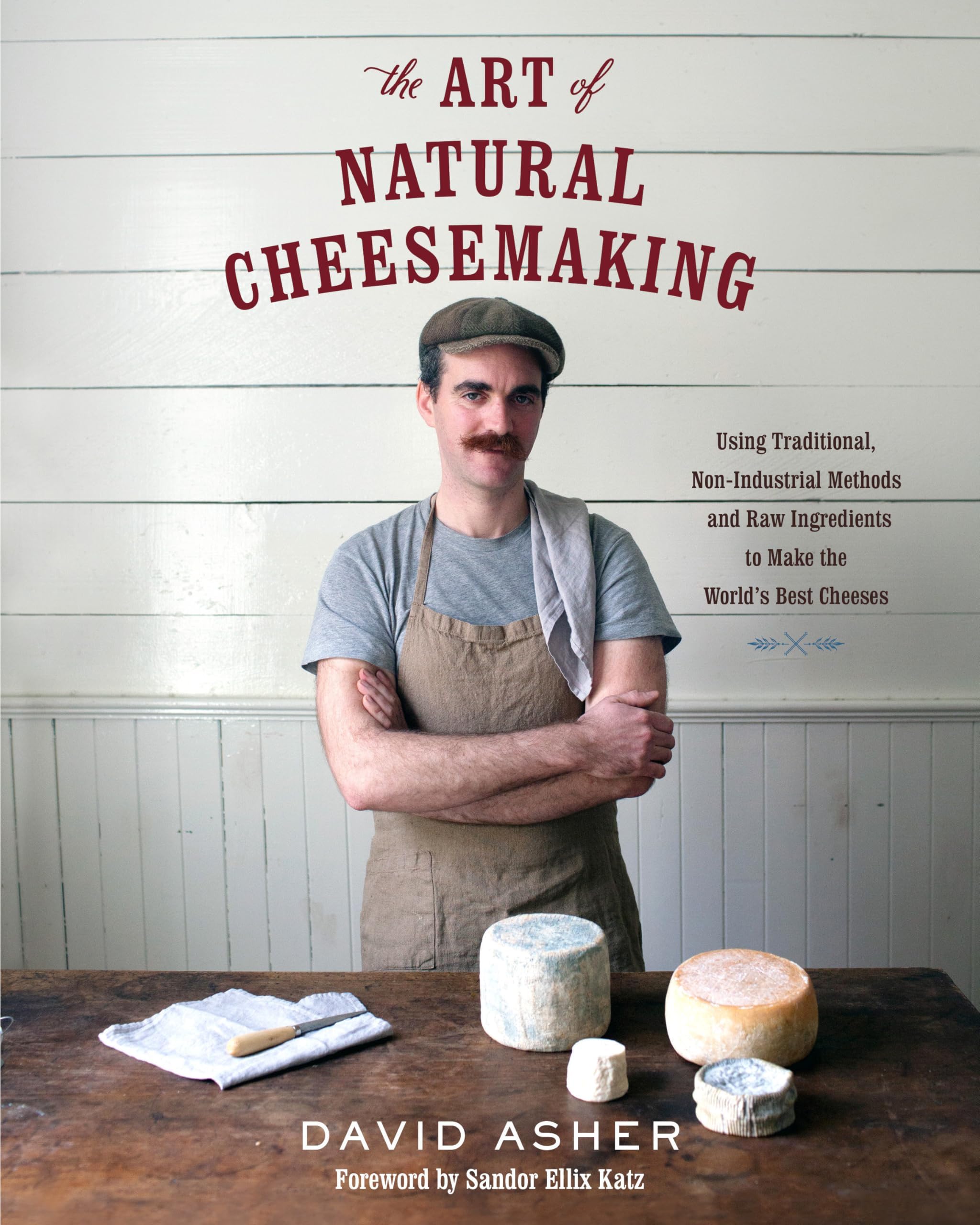
Art of Natural Cheesemaking: Using Traditional, Non-Industrial Methods and Raw Ingredients to Make the World's Best Cheeses
Product ID: 64757941
Desertcart purchases this item on your behalf and handles shipping, customs, and support to Kyrgyzstan.
Including more than 35 step-by-step recipes from the Black Sheep School of Cheesemaking Most DIY cheesemaking books are hard to follow, complicated, and confusing, and call for the use of packaged freeze-dried cultures, chemical additives, and expensive cheesemaking equipment. For though bread baking has its sourdough, brewing its lambic ales, and pickling its wild fermentation, standard Western cheesemaking practice today is decidedly unnatural. In The Art of Natural Cheesemaking, David Asher practices and preaches a traditional, but increasingly countercultural, way of making cheese―one that is natural and intuitive, grounded in ecological principles and biological science. This book encourages home and small-scale commercial cheesemakers to take a different approach by showing them: • How to source good milk, including raw milk; • How to keep their own bacterial starter cultures and fungal ripening cultures; • How make their own rennet―and how to make good cheese without it; • How to avoid the use of plastic equipment and chemical additives; and • How to use appropriate technologies. Introductory chapters explore and explain the basic elements of cheese: milk, cultures, rennet, salt, tools, and the cheese cave. The fourteen chapters that follow each examine a particular class of cheese, from kefir and paneer to washed-rind and alpine styles, offering specific recipes and handling advice. The techniques presented are direct and thorough, fully illustrated with hand-drawn diagrams and triptych photos that show the transformation of cheeses in a comparative and dynamic fashion. The Art of Natural Cheesemaking is the first cheesemaking book to take a political stance against Big Dairy and to criticize both standard industrial and artisanal cheesemaking practices. It promotes the use of ethical animal rennet and protests the use of laboratory-grown freeze-dried cultures. It also explores how GMO technology is creeping into our cheese and the steps we can take to stop it. This book sounds a clarion call to cheesemakers to adopt more natural, sustainable practices. It may well change the way we look at cheese, and how we make it ourselves. Review: excellent book :: must have - excellent book :: must have Review: Excellent read - To understand the fundamentals of Natural Cheese making!!!!
| Best Sellers Rank | #43,512 in Books ( See Top 100 in Books ) #12 in Raw Cooking #16 in Cheese & Dairy Cooking #25 in Restaurant & Food Industry (Books) |
| Customer Reviews | 4.7 out of 5 stars 808 Reviews |
R**N
excellent book :: must have
excellent book :: must have
B**H
Excellent read
To understand the fundamentals of Natural Cheese making!!!!
C**E
Dairy goat owners - get this book!
Truly as advertised, the bible of home cheesemaking. The explanations, clear and concise instructions, and simplicity all advertise the fact that the author has a person living a real life in mind as the intended audience. A standard, almost memorizable formula, easy to maintain temperatures, clear concise instructions, and no need to sterilize - these make cheesemaking something easy to fit into a busy schedule. No more wondering if I have the correct culture or if that packet in the freezer is out of date, and waiting for some day when I can make sure the kitchen is super sanitary and sterilized, and trying to make my way through mind-numbing instructions that seem to have subtly or vastly different times and temperatures. Thank goodness - with spring time, the goat milk comes in faster than I can handle it. I had already figured out that farmers used cheese as a way to preserve all of it, and knew that they surely didn't buy all of their cultures on line, use fancy equipment, and sterilize everything. Now I know how. After religiously putting my excess fresh milk in the freezer because, " You must cool it to 40 degrees," I just put out a quart of milk to clabber a over 24 hours ago in relatively warm weather - and it still tastes like ... fresh milk. I shouldn't have been surprised now that this book has explained the natural biome of raw milk. Although it is a bit sad, I am feeling a little better about capretta - especially now that I can try making my own rennet.
D**S
Super! Sehr anschaulich
Super Buch! Ausführlich, trotzdem leicht verständlich, interessant und anschaulich! Macht sehr Spaß, Käse selber zu machen! Unbedingt zu empfehlen
E**A
Buy this book and succeed!!
I saw this book talked about on Permies(dot)com. it is an amazing book containing all the knowledge you'll need to start making your own natural cheeses. I am now using Milk Kefir as my starter culture which saves me buying separate cultures for each type of chess, plus it's safer (buy the book and find out why!) What I particularly like about this book is that it is not simply a collection of recipes, it's a full course on what why and how. David Asher is passionate about his cheeses and he explains in a very readable way what to do and why to do it so you gain a deeper understanding of how to achieve success. The proof is in the pudding(or the cheese) in the past month I've made clabber, ricotta, basic rennet cheeses and am currently raging some camembert and a 4lb Cheddar. This book demystifies the process, dispels a lot of myths and gives you the confidence to make wholesome, tasty high nutrient no additive cheeses. What more could you want. Oh, and my cheese loving husband thinks I'm wonderful!
K**R
You’ll know it all after this book!
So very informative, even fun to read! I learnt so much about raw milk, yoghurts and cheeses culturally, traditionally and functionally. All recipes are easy to follow and laid out from easiest to more challenging. I don’t tend toward recipe books as most recipes I won’t use but this will be a staple to go to on my shelf.
B**M
The Best Book On Natural Cheesemaking !!!
I consider this to be the best available book on the subject of natural cheesemaking. It is a very good book which covers a surprising amount of detail, it even explains how to make your own rennet from a calf's stomach if you wish to do this. I have learned a lot from this book, and I have been a curd nerd for quite some time. I love cheeses, especially hard cheeses. I now also, thanks to this book have a new understanding of kefir and it's importance to the cheesemaker, as it can be used as a cheese starter instead of a frozen culture. I love this book and am eternally grateful to David for writing it. It is apparent that the secret ingredient in Italian Parmigiano-Reggiano is raw milk and the fact that the starter is whey from the previous day's cheese production and not some frozen culture starter. Any cheese lover can learn a lot from this book.
Trustpilot
2 weeks ago
1 month ago