Buy anything from 5,000+ international stores. One checkout price. No surprise fees. Join 2M+ shoppers on Desertcart.
Desertcart purchases this item on your behalf and handles shipping, customs, and support to Kyrgyzstan.
🛠️ Master your fluid game with precision and ease!
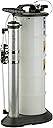
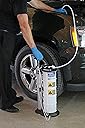
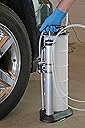
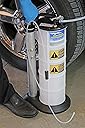
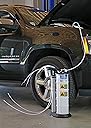
The Mityvac 7201 is a 2.3-gallon manual fluid evacuator and dispenser featuring push-button operation, chemical-resistant polyethylene construction, and automatic overflow prevention. Designed for automotive and industrial use, it offers stable, portable, and mess-free fluid management for professionals and DIYers alike.


| Manufacturer | Mityvac |
| Brand | Mityvac |
| Model | MV7201 |
| Item Weight | 11.65 pounds |
| Product Dimensions | 9.3 x 13.2 x 25.4 inches |
| Item model number | 7201 |
| Is Discontinued By Manufacturer | No |
| Manufacturer Part Number | MV7201 |
| Special Features | Portable |
T**S
Works great! No more crawling under my cars!
I bought this as I was sick and tired of crawling under my cars and getting dirty, and dealing with stuck oil drain pan bolts. I figured I change the oil enough that the convenience that this purchase would bring would be worth the investment. Turns out, I was right. The first oil change with it was two days ago. The oil light came on in our 2015 Dodge Grand Caravan R/T. We drive a LOT currently travelling back and forth for family reasons, so I also took this opportunity to get a FRAM Ultra Synthetic Oil Filter and Mobile One Annual Protection oil, both of which are guaranteed for 20,000 miles, which I highly recommend. It is recommended when changing your oil to start the vehicle first and get it up to temp before changing the oil. This helps the oil to flow, and also any contaminants that may have settled will be freshly suspended in the oil to be removed. I shut the van off, waited 5 minutes, and then inserted the smaller tube (it comes with two adapters) into the oil dipstick pan. The Grand Caravan's is angled such that it didn't bottom out on the pan, but you can use the dipstick itself as a length gauge on roughly how far to insert the tube. I unscrewed the oil filler cap (to allow air in), and flipped the evacuator to vacuum and pumped about 10 times. I could see the oil start coming up and out, and into the evacuator's reservoir. Luckily for me, the Grand Caravan's Oil Filter is also top side, and happens to be near the top of the engine where I can access it, and it's at the high point of the oil loop, which means no drippage when changing. While the pump was doing it's thing, I was able to swap out the oil filter and get the new one in and everything snugged up. Then it was as simple as dumping in my new oil, checking levels, and flipping the evacuator to pump in order to pump out the oil into the newly emptied oil container my new oil came in. Overall, it was an extremely easy process, and I'm very happy with the apparent quality and performance of the evacuator. the only gripe I have, and it's a relatively small one, is the tubes that it comes with. They are rather stiff, like refridgerator ice maker line, and because of that, in the cold, they are rather non-compliant. I'm still able to get it to work just fine, but the tubes, in my opinion, are a little stiffer than they need to be, especially considering they ship coiled inside the box and retain that coiled shape due to their rigidity. Overall though, it's a great tool and I'm very glad I purchased it!
C**E
Indispensible tool for service of German cars
I really enjoy the Mityvac 7201 Fluid Evacuator Plus. I can't say that it makes changing the oil much quicker than using the drain plug or even that much neater but it certainly does make it easier. If you have a car with the oil filter located where you can access it without getting under the car, I would recommend the evacuator without hesitation. If you have to get under the car or truck to change the filter you might as well just drain the oil with the plug. I bought the evacuator about a year ago specifically for use on my 2007 Mercedes E320 Diesel which has the drain plug in a very awkward location. Since then I've used it about a dozen times on both the diesel and my 2002 E46 BMW 330i. I have never had a problem with the performance and my only complaint is that it does not have enough capacity for the Mercedes. This car holds 9 quarts of oil and I have to stop halfway through the evacuation and empty the reservoir. Once the evacuator has been filled, the film of dark oil clinging to the walls prevents seeing the oil level under any lighting conditions. So, I always evacuate about 3 quarts, empty the evacuator, and then evacuate the remainder. This is not a problem with the BMW since the evacuator can empty this car in one step. Before I purchased the evacuator I read some reviews that warned that their evacuator did not come with a gasket between the lid and the side walls. I took mine apart on arrival and it did not have a gasket either. However, the plastic parts fit tightly together and make an air tight seal. It is my theory that some of the people that could not get their evacuators to empty their crankcases have a problem with the length of the suction tube inside the evacuator. For the evacuator to work in pump mode, versus vacuum mode, there is a tube that extends to the bottom of the evacuator, much like drinking a milkshake through a straw, that allows you to pump out the evacuator contents. In my evacuator the tube has very little clearance with the bottom of the unit. I believe in some units the internal tube may actually touch the bottom of the evacuator and prevent or limit the vacuum pulled in the tank from drawing the oil through the suction tube. If you should order an evacuator and then find that it does not work (I suggest testing it in the sink first using water) you should try taking it apart and checking the internal tube length. There of course are many other reasons the units may not work but I thought this tip was worth passing along. Many other reviewers have commented on this as well but I also wanted mention that the unit works much better when the oil is warm. However, I changed my oil once on a 40° day when the oil was at ambient conditions and with a little patience I was able to suck every last drop out. So, it can be done but I would not recommend it. I also wanted to give a couple of tips on tubing. In my cars, the largest tube which will go down the dipsticks is ¼". I buy it in bulk at my local Ace hardware for $0.12 a foot. I only use the ¼" tube one time, discarding it after each use in order to prevent the introduction of dirt into the engine internals and also to avoid the mess of storing an oily piece of tubing. I feed the ¼" tube from the spool it is supplied on into the dipstick until it touches the bottom of the oil pan. I then cut the tubing off the roll, leaving about 6" of tube sticking out of the dipstick tube. I have shortened the length of the factory large diameter tube that is directly connected to the evacuator so that it reaches just from the evacuator when it is sitting within 1' of the fender to the dipstick. The 2 different size pieces of tube are then connected with the included rubber adapter. This gives me the shortest possible run of tubing with the largest diameter tubing possible for each section of the run. I have had very good success with this setup. I do not clean my evacuator after each use but I also don't leave oil in. I immediately switch it into pump mode and pump the oil, using only the large diameter tube, into a container to transport the oil for recycling. Once the evacuator is emptied I will stretch out the large diameter tube to a rag on the ground and allow the oil in the tube to gravity flow out over night. The tube can then be wrapped around the evacuator and it will snap into clips on the side of the unit. I don't like to use the drain plug on the top of the evacuator to empty it. The plug is difficult to get out even when lubed with oil and is it is difficult to pour the oil into other containers. The evacuator should allow you to change the oil with the minimum of mess possible. However no matter how careful I am, I always seem to drip or spray 1 or 2 drops of oil onto myself or the floor. This can be an improvement over the drain plug and pan method though. For example on my Explorer you must carefully control the flow from the drain plug or it comes out with such force that it splashes or sprays the under car components. With the evacuator you also don't have to worry about sloshing oil out of an open pan, oil splashing on the top of one of the closed-top funnel-type pans, or spilling when you transfer oil from a pan into another container. For those car enthusiasts who have a true passion for their cars and this type work, I would recommend having your oil tested periodically by a lab. I recommend Blackstone-labs. Their testing service is very affordable and they can help you determine the true required interval between oil changes for your driving habits and vehicle. For hard to find oils like the Mobil 1 Type M ESP used in all new diesel Mercedes, I would recommend mail ordering your oil from AVlube. This oil is available through the dealership and at Pep Boys but I have found it to be less expensive and more convenient to mail order the oil in bulk. Properly set up, I have found the evacuator to be an indispensible tool for service on my German cars.
S**R
Works slick and quick, wish I had tried this years ago!
Arrived early, bonus points! Sucked the oil out of my classic 2018 Mercedes E350 3L 6cyl Diesel in about 20 minutes, straight out of the box. The 1/4" OD polyethylene tubing (that comes with by the way) fit inside the dipstick tube just fine: no hangs or catches, tapped the bottom of the oil pan. Since the drain plug is about 3/4 inch above the bottom of the pan, this devices does a better job of removing old oil than old fashioned draining. Mercedes Diesels hold 9 quarts, so the suction tank was almost topped off. Just as I was about to break the suction (yes, there is a small valve for this on top) I could hear sucking-gurgling noises, it was done. The oil filter was a bigger problem (I had the wrong wrench adapter). FWIW the proper adapter size in this model is 84.4mm. Sucking out oil beats the heck out of ramps/lifts/catch pans/spills, strain on my back...all that old-school fuss. Highly recommended.
R**N
Workhorse of a product!
This tool has been on the job with me for a year and a half and I use it multiple times a day. My boss uses a second one that we bought and his is maybe a month newer than mine and he uses his daily as well. These two we use for evacuating oil out of the crankcase of all sizes of generators from 8 kilowatt up to 250 kilowatt units. I just ordered another one that I intend to use for putting fresh oil back into the generators after evacuating the old oil so this one will have only fresh oil in it. For evacuating oil we used to use an electric pump and a large 5 gallon tank when I came on board to the company. I used this method for a short time and it was cumbersome and sloppy. Powering the electric pump was sometimes not possible and we resorted to using gravity on those units which is time consuming and you run the risk of the small pan overflowing if not emptied before filling. There had to be a better way so I researched on the web and zeroed in on this product. I have become very proficient on its use and the main reasons for continuing to use it are time saving, jobsite neatness, and ease of use in that order. Generators, unlike automobiles, are a stationary machine and so our customers can't drive them into a repair bay for us to work on them. We have to travel to where they are and once there, we have to carry our tools and equipment to where the generator is located on the customer site which can be a great distance away from the service vehicle, sometimes on the roof of large buildings. This thing is a lot easier to deal with compared with a pump and 5 gallon jug. Pictured in my post is the setup that I made to connect to just about any oil drain port and is currently connected to a Kohler 10KW water cooled generator. The previous time that I serviced this generator I had to pull the hose off from the fitting that I'm currently connected to on the inside of the generator and connect it to a barbed fitting on the end of my hose. The barbed fitting and ball valve are still on the end of the hose but now is connected to the adapter shown. It turns out that Kohler uses this method of oil draining on many of their generators with solid metal housings. When my adapter is not connected, there is a standard automotive drain plug there sealing that port. Nobody at the company used the port. They would loosen the hose clamp on the inside of the case, pull the hose off requiring a considerable amount of effort and then use the hose to drain from. It is so much easier using the port. This 10KW unit pictured is really cramped for space inside the case and you have to be a contortionist to get to and loosen the hose clamp and then get the stubborn hose off of the barbed fitting. What a time sucker that was. I include this description in my review because many people tend to use a product as delivered. The fitting in the picture fits an automobile drain hole. There is a whole series of that fitting for just about any oil drain port in the crankcase pan. Notice also that there is a ball valve on that fitting. It is intended to be placed in the drain port on the oil pan and then left there for future maintenance. This may be helpful information for some users and potential users of this product. Now I turn to the durability of the product. It speaks for itself about how durable it is that my unit has gone through almost two years of daily use multiple times a day. I have had only one issue with it that I consider minor, that I solved myself. I started noticing a steady stream of air bubbles in the evacuation hose while in use, not evacuating oil, but disbursing it into the waste oil tank. It puzzled me for a while but I suspected something inside the tank was leaking the pressurized air above the oil and it was making into the exit tube. When I disassembled the top of the unit, I discovered that the tube that the oil enters and exits through is a loosly fitted pressure fitting that is just inserted into a hole in the container top. I removed the hose, added 4 to 5 layers of teflon tape and then reinserted the tube into the hole and reassembled the top of the unit. No more issues with air bubbles. BTW, this lowers the efficiency of the work that you do to evacuate the tank if some of the pressure is escaping during evacuation of the tank. Should the fitting be air tight from the factory? Absolutely! But you have to deal with what you get and I wasn't about to send it back because of this minor issue. Both of our units did this, and I expect the one that I just purchased to do the same unless the factory finally figured out that the pressure fitting was too loose on the inside of the unit. Finally, I really enjoy my job. I retired from 35 years of teaching in an occupational education program in computer repair and networking. Being outside every day and solving problems are very satisfying aspects of my job. That includes solving issues with my equipment. I can't say enough good things about this pump. It is awesome. If my original one should break, it owes me nothing and will be replaced immediately. If that did happen, my clean oil unit would be immediately switched with my unit for use with dirty oil and then the new unit, once it arrives will be used with clean oil. I try to anticipate problems. That's one of the things that my boss likes about me. When he hired me, he let go of three others. So, get out there and get to work.....using this workhorse!
B**Y
Works, but requires patience and time
TLTR: Pros: -Easy to use -No mess -No need to get under car if oil filter is accessible from top -Easy to dump oil when done Cons: -SSSSSLLLLOOOOOWWWW (took me 60 mins to fully extract oil) -Markings are in liters instead of quarts -Requires more pumping then suggested in the user manual Detail: So far, I've used this once to change the oil in my 2017 Audi Q7. It worked, but took about an hour extract the 7.2 quarts (roughly 6.8 liters) of engine oil in the car. While I did run the engine prior to evacuating the oil from the engine, I didn't let the oil temp get up to the operating temperature as stated in the instructions. I was concerned that if I tried to extract the oil at operating temperature, the tube could melt in the dipstick, and it would be a very bad day. I let the engine get up to temp, and the oil was about 130 F when I started the extraction process. For a non-professional DYI-er with plenty of time to do the job, the Mityvac is fine. Not sure if getting the oil hotter prior to extraction would make the process any quicker. About every 10 minutes, I gave it another 5-7 pumps. It eventually finished in just under 60 minutes. On the plus side, no need to get under the car and the process was spill/mess free. Overall, it worked for my Audi, which is designed to have the oil extracted as opposed to drained from the oil pan. Time will tell if it will work next year when I pull it out again. Lastly, it would be nice if the manufacturer added a graduated fill reading in quarts if they are selling it in the US market. Currently there is only (very faint) markings in liters on the canister. Not a huge deal, but does require some conversion for us in the US.
H**9
Works very well if used properly.
This unit works great, however its not idiot proof. Basically it's an air tight cylinder attached to an air pump. The air pump has a valve that can either draw air out of the cylinder and into the atmosphere or out of the atmosphere and into the cylinder. This either creates a vacuum or pressurizes the cylinder. The air pump is outside of the cylinder and should never come into contact with the fluids. The cylinder has a hose attached that allows the fluids to either be drawn in or pushed out, depending if the cylinder is under a vacuum or pressurized. This hose does not go through the pump. There are 2 vulnerabilities. If any of the hose connectors or lid seals leak even a small amount, the unit will loose vacuum or pressure quickly and will cause the flow rate to fall very quickly. If you have to do a lot of pumping, you probably have a small leak somewhere. The most likely culprits are the cheap rubber hose connectors. You can fix them with clamps. The other fittings are kind of low quality but work ok if you are careful. They can be replaced by better ones from a good hardware store if you have an issue. The second issue is if you get fluids into the pump itself by letting the unit fall over or otherwise contaminating the air pump or valve. This may require cleaning to reduce the likelihood of the fluids degrading the seals. If the seals degrade, air will leak and you are back to the same problem of losing vacuum or pressure. Basically it works very well if you are careful and make sure there are no air leaks. I doubt you really need to clean the cylinder if you don't allow the fluids to get into the works, so its very clean, easy and quick to use under that scenario. If you get fluid in the works and have to clean the unit, you have a time consuming mess to deal with and you have oil, water and detergent mixed together and needing to be disposed of responsibly. So in my opinion it's a good product that will do the job if you take care of it and use some common sense when using it.
M**H
Really top notch extractor, stop wrestling with your lousy old one
This is practically the most expensive extractor you can find- but I can honestly say it’s worth every penny. I’ve had several, including some other pricy ones, but this is quality all the way. If you notice such things, and I do, you’ll be impressed with it right out of the box. The reversing valve is a work of art, and more importantly, feels durable and substantial. The canister is heavily made, and all the connections look great. A very impressive tool overall. The bad? It has the same crappy, stiff tubing that the crappy extractors have, although the junctions are nice. I bought this for my Audis, which have plastic dipstick tubes and no (I know, right???!!) dipstick- so to not stress the plastic, I bought clear vinyl tubing to use instead of the stiff and unwieldy nylon that comes with the unit. It works great and was cheap, so a good all-around solution. When you pump this up for suction, it holds until the entire crankcase is drained- no constant re-pumping as with other brands. It was done with almost five quarts in less than two minutes. This is a high-end and well-executed tool- it may look a lot like the less expensive ones, but after decades of wrestling with crap, it’s really nice to just use it and have it execute with no drama. Literally looks and feels like a great tool during the unboxing, and has not failed to work flawlessly each time. Will never go back!
A**R
Mityvac works great if you're careful...
I just bought this as an investment in not having to get under my cars to do oil changes. Well made. I had a problem getting it to work out of the box: there are many hoses connected with couplings. You need to make sure each hose is bottomed out connected or vacuum will leak. So, I did all that first before using it. My problem was the OTHER major place for a leak: the big rubber stopper on the top with a cam-lock. It was inserted upon receipt and "seemed" seated. Yes, seemed. I didn't realize the cam was not in the locked position and could not for the life of me get the vacuum to work (pool of sweat from continuously pumping it for about 100 times). But, being an engineer, I didn't give up and finally noticed the stopper in the un-locked position and cammed it into the locked position. Then it only took (as advertised) about 10 pumps for the oil to come streaming out into the receptacle. After about 10 pumps the pump will not seem to really add pressure (vacuum) until near the end of the stroke (as you finally overcome the current pressure (vacuum) level - which you should expect. Then about every minute or so I would pump it about 4-5 times to maximize the pressure (vacuum). My car holds > 7 quarts of oil, so it took a while to pump it all out. It is easy to know when done because you can hear it slurp like when you get to the bottom of a glass using a straw. I then used the Mityvac to pump the oil into the now empty containers (this using the "big bore" tube and so it took very little time). Clean up is a challenge: you now have a dipstick tube with residue oil (that will take > 1 hour to slowly drain out) and then the bigger bore tube after pumping out the used oil. The hoses are plastic and relatively stiff, so it is hard to get them to cooperate to hang them over something that can accept the drips. I didn't want to put it back in the box with oil leaking out of the hoses. Finally, same issue with reservoir, itself: pumped out what I could and still residue in bottom. Removed the now famous cammed rubber plug on top (with convenient pour spout lip) and poured it into a container. Again, oil takes quite a while to finally drain out. The instructions say you can then spray with engine de-greaser to do a final cleanup. I haven't done that yet, but might. This unit is BIG, but is made to hold up to 8 liters. You'll need to find a place to store it: I suggest keeping the box it came in.
B**E
instructions to use missing
M**A
Recommended
Do he's job.
P**K
Great oil change tool
Robust build. Easy to use. Great capacity and easy to pour old oil into can. This worked well on my 2017 and then my replacement 2021 Audi A4 TDI. I would say these oil evaluators are great if the oil filter is located on the top of the engine as in the case with my A4. If the oil filter is underneath then the car would need to be raised and plastic guard removed so then you would easily get to the sump nut so why bother with this tool at all ? With my oil filter on top I don't need to lift the car at all, simply suck out the old oil through the dip pipe. It is also great for cleaning out around the removed paper oil filter. The engine and therefore the engine oil needs to be warm & you get a feel as to how far to shove the correct diameter pipe into the dipstick tube until it hits the sump pan. Had approx 5L of old oil out in less than 10 min. Quick, easy oil & oil filter change. Hope it lasts. Have done 3 services now with min fuss. Delighted with it . I leave tubes high to allow to drain back over time. Easy to empty too from spout.
G**R
Must have für KFZ Instandhaltung
Prima Produkt. Prima Qualität. Ein Muss für alle Range Rover V8 5.0 Besitzer, die selber den Öl- und Filterwechsel machen. So easy!
R**A
Mighty easy
Very good easy to use product. Makes fluid evacuation and transfer a breeze. Highly recommend this product.
Trustpilot
1 week ago
1 month ago