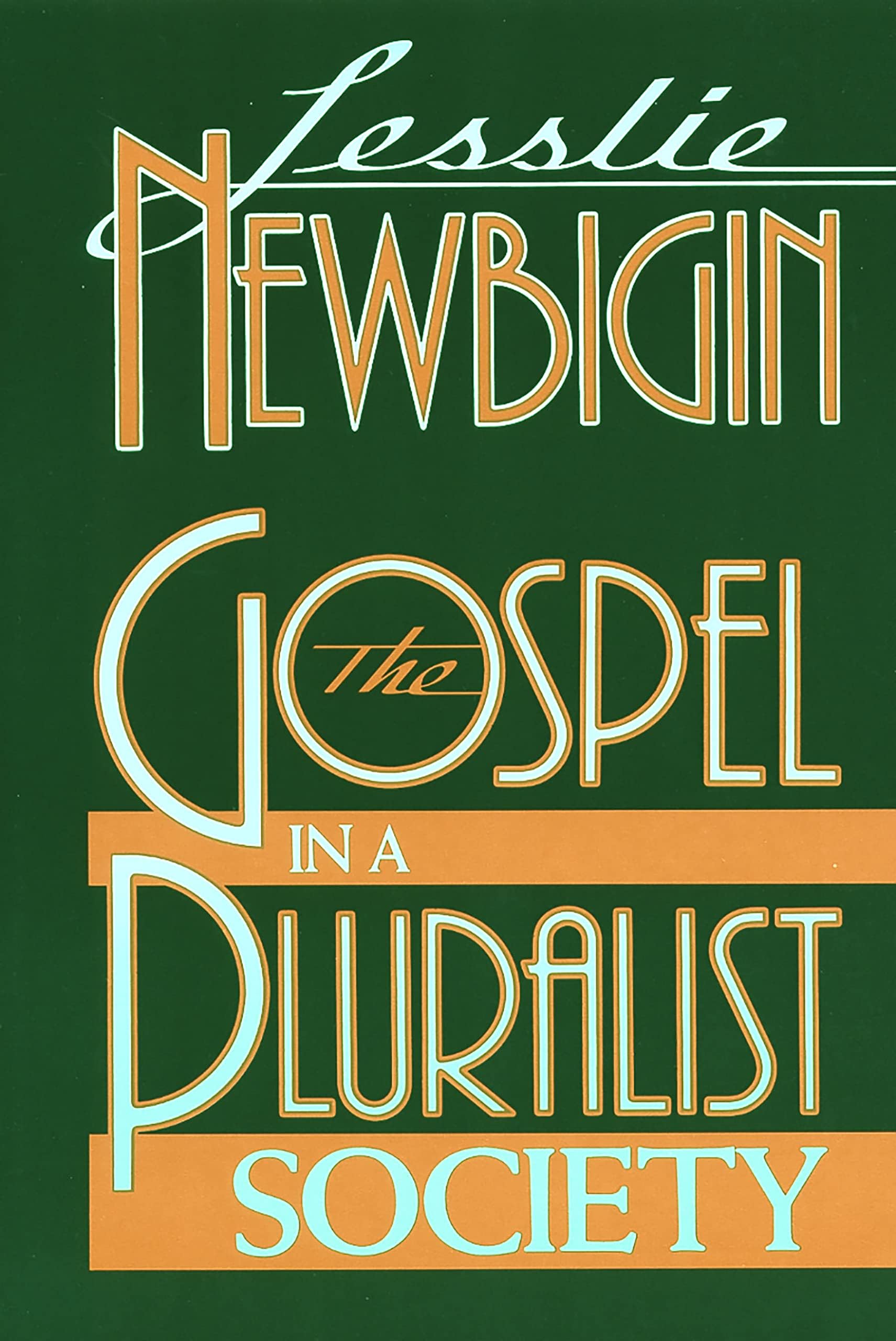
The Gospel in a Pluralist Society
Product ID: 5839930
Buy anything from 5,000+ international stores. One checkout price. No surprise fees. Join 2M+ shoppers on Desertcart.
Desertcart purchases this item on your behalf and handles shipping, customs, and support to Kyrgyzstan.
How does the gospel relate to a pluralist society? What is the Christian message in a society marked by religious pluralism, ethnic diversity, and cultural relativism? Should Christians encountering today's pluralist society concentrate on evangelism or on dialogue? How does the prevailing climate of opinion affect, perhaps infect, Christians' faith? These kinds of questions are addressed in this noteworthy book by Lesslie Newbigin. A highly respected Christian leader and ecumenical figure, Newbigin provides a brilliant analysis of contemporary (secular, humanist, pluralist) culture and suggests how Christians can more confidently affirm their faith in such a context. While drawing from scholars such as Michael Polanyi, Alasdair MacIntyre, Hendrikus Berkhof, Walter Wink, and Robert Wuthnow, The Gospel in a Pluralist Society is suited not only to an academic readership. This heartfelt work by a missionary pastor and preacher also offers to Christian leaders and laypeople some thoughtful, helpful, and provocative reflections. Review: One of the Great Missiological Worldview Books of Our Time - Wow! Where do I begin? Lesslie Newbigin was one the leading missiologists of our time. Newbigin pastored for many years as a Bishop in the Church of South India while serving as a delegate to the World Council of Churches. After retiring from his pastoral/missions work in India, Newbigin assisted in planting an inner-city church in Birmingham, England. With that in mind, the reader should know that the views expressed in this book have not only been conceived mentally, but lived practically. *The Gospel in a Pluralistic Society's* major strength is its thoroughgoing evaluation of post-modern pluralism. Newbigin exposes its weaknesses, inconsistencies, and methodological failures. On the positive side, Newbigin gives an excellent defense of the doctrine of election, the Gospel and its power to change, and the ministry of the church in the world. My favorite quote: "The cross of Jesus is the place where all human beings without exception are exposed as enemies of God, and the place where all human beings without exception are accepted as beloved of God, objects of his forgiving grace" (pg. 86). However, I do have two disagreements with Newbigin: I grow weary of the pitting of God's story/truth as narrative against doctrine/propositional theology (pg. 12). The Apostle Paul did both, he told the story of salvation from Abraham through Israel to Jesus and taught doctrinal truths that should be accepted and believed by every Christian. Second, Newbigin's embrace of Karl Rahner's anonymous Christian idea I found rather curious. To think that a sincerely seeking Hindu is really an anonymous Christian is actually insulting to the Hindu and still does not adequately explain how God judges those who have never heard the Gospel. *The Gospel in a Pluralist Society* was ground breaking when written in 1989 at a time when the West was accepting the presuppositions of the post-modern worldview and the book still maintains its relevance as our society fully embraces the mindset of a supposedly tolerant, pluralistic, non-judging culture. Review: A Profound Book that Challenges its Readers - In his book The Gospel in a Pluralist Society, Lesslie Newbigin provides a healthy challenge to the defenses of the secular humanistic plausibility structure, and he challenges Christians to live such lives that bear witness to the living Savior they profess. I have to agree with Newbigin that it is time for secular humanists and Christians to examine and prove their beliefs. If Christianity is true, we should see it demonstratively portrayed among those who profess it. Newbigin asserts that this is Christians' mission; he also challenges secularists to defend their worldview. Newbigin calls out secularists as practicing hypocrisy by cynically questioning and dismissing Christian dogma while refusing to question or even admit our own secular dogma. He writes, "In our contemporary world...the readiness to question dogma is regarded as one of the marks of intellectual maturity and competence." (Newbigin 5) He cites the sharp distinction among us between what we call "facts" and what we call "values." Secularists, he writes, usually think of their own dogma as "facts" and any religious dogma as "values" that can therefore be dismissed. Newbigin contends that secularism's belief in relative moral and spiritual truths is an avoidance of reality. He writes, "The relativism which is not willing to speak about truth but only about `what is true for me' is an evasion of the serious business of living. It is the mark of a tragic loss of nerve in our contemporary culture. It is a preliminary symptom of death." (Newbigin 22) Newbigin refuses and rejects any type of coercion to Christianity. Instead he turns to Christians and essentially writes that if they expect unbelievers to turn to Jesus Christ then they better start living lives that bear witness to their Lord's presence. Newbigin calls Christians to a "radical kind of conversion...a transformation by the renewing of the mind so as not to be conformed to this world, not to see things as our culture sees them, but...to see things in a radically different way." (Newbigin 38) If Christians begin consistently and generally living lives as Newbigin urges that "prove that faith true in circumstances which seem to call it into question," the world could not help but to take notice. (Newbigin 63) The witness of the church should, according to Newbigin, contradict the most fundamental beliefs of our culture. He writes that God has chosen to save all people through Jesus Christ: "The cross of Jesus is the place where all human beings without exception are exposed as enemies of God, and the place where all human beings without exception are accepted as beloved of God, objects of his forgiving grace." (Newbigin 86) Newbigin is adamant to explain that this "good news" does not translate to universalism--a belief that everyone will gain eternal salvation, but it also does not exclude anyone as being beyond God's saving reach. Newbigin emphasizes the community of believers that ought to exist in the world as a witness to the life, death and resurrection of Jesus Christ. He writes that "the distinguishing mark of this community will be hope." (Newbigin 101) This hope springs from the belief that Jesus Christ who died and was raised to life will come again in glory. This hope contrasts what Newbigin calls the culture's "absence of any sense of worthwhile future." (Newbigin 101) For Newbigin, Christians do not have the luxury of living isolated lives enjoying their personal salvation. He asserts throughout this book that Christians are called to live in fellowship and communion with one another as much as with the Lord. According to Newbigin, the church might be falling short in its duty to overcome the enemy through its Lord. As its mission is to bear witness to Jesus Christ, it faces ongoing conflict with the forces of darkness. Newbigin challenges the church to target its real enemy. He writes, "When it goes the way the Master went, unmasking and challenging the powers of darkness and bearing in its own life the cost of their onslaught, then there are given to the Church signs of the kingdom, powers of healing and blessing which, to eyes of faith, are recognizable as true signs that Jesus reigns." (Newbigin 108) Newbigin exhorts the church to follow its Lord in self-sacrificing prayer and in taking on spiritual powers behind the evil in the world. He claims that it is only when the church engages in such battle that it will be empowered to bring blessing and healing. Newbigin writes that the church in affluent societies keeps its faith and hope to itself. To Newbigin, this privatized faith is anathema to the mission of God in the world. This mission is to present a new reality to the world that prompts inquiries that can then be answered by the gospel. He calls Christians to discipleship, which is a closer relationship with Jesus. He writes, "The minister's leadership of the congregation in its mission to the world will be first and foremost in the area of his or her own discipleship, in that life of prayer and daily consecration...is the place where the essential battles are either won or lost." (Newbigin 240-241) Newbigin is not shy about admitting the church's guilt in allowing its own interests to get ahead of Jesus' interests. Newbigin implies that without the power and presence of the Holy Spirit the church's witness is not going to be effective regardless of what they do. Newbigin advises his readers to accept the reality of pluralism but not the message it espouses. For him, Jesus Christ, the divine man, is the one way to salvation--not one among many. I am thankful that he also reminds Christians that their Lord and the heart of the biblical vision is not imperial power but the Lamb of God who was slain for the sins of the world. Craig Stephans, author of Shakespeare On Spirituality: Life-Changing Wisdom from Shakespeare's Plays
| Best Sellers Rank | #106,825 in Books ( See Top 100 in Books ) #225 in Evangelism #349 in Christian Apologetics (Books) #3,450 in Christian Spiritual Growth (Books) |
| Customer Reviews | 4.7 out of 5 stars 296 Reviews |
G**S
One of the Great Missiological Worldview Books of Our Time
Wow! Where do I begin? Lesslie Newbigin was one the leading missiologists of our time. Newbigin pastored for many years as a Bishop in the Church of South India while serving as a delegate to the World Council of Churches. After retiring from his pastoral/missions work in India, Newbigin assisted in planting an inner-city church in Birmingham, England. With that in mind, the reader should know that the views expressed in this book have not only been conceived mentally, but lived practically. *The Gospel in a Pluralistic Society's* major strength is its thoroughgoing evaluation of post-modern pluralism. Newbigin exposes its weaknesses, inconsistencies, and methodological failures. On the positive side, Newbigin gives an excellent defense of the doctrine of election, the Gospel and its power to change, and the ministry of the church in the world. My favorite quote: "The cross of Jesus is the place where all human beings without exception are exposed as enemies of God, and the place where all human beings without exception are accepted as beloved of God, objects of his forgiving grace" (pg. 86). However, I do have two disagreements with Newbigin: I grow weary of the pitting of God's story/truth as narrative against doctrine/propositional theology (pg. 12). The Apostle Paul did both, he told the story of salvation from Abraham through Israel to Jesus and taught doctrinal truths that should be accepted and believed by every Christian. Second, Newbigin's embrace of Karl Rahner's anonymous Christian idea I found rather curious. To think that a sincerely seeking Hindu is really an anonymous Christian is actually insulting to the Hindu and still does not adequately explain how God judges those who have never heard the Gospel. *The Gospel in a Pluralist Society* was ground breaking when written in 1989 at a time when the West was accepting the presuppositions of the post-modern worldview and the book still maintains its relevance as our society fully embraces the mindset of a supposedly tolerant, pluralistic, non-judging culture.
C**S
A Profound Book that Challenges its Readers
In his book The Gospel in a Pluralist Society, Lesslie Newbigin provides a healthy challenge to the defenses of the secular humanistic plausibility structure, and he challenges Christians to live such lives that bear witness to the living Savior they profess. I have to agree with Newbigin that it is time for secular humanists and Christians to examine and prove their beliefs. If Christianity is true, we should see it demonstratively portrayed among those who profess it. Newbigin asserts that this is Christians' mission; he also challenges secularists to defend their worldview. Newbigin calls out secularists as practicing hypocrisy by cynically questioning and dismissing Christian dogma while refusing to question or even admit our own secular dogma. He writes, "In our contemporary world...the readiness to question dogma is regarded as one of the marks of intellectual maturity and competence." (Newbigin 5) He cites the sharp distinction among us between what we call "facts" and what we call "values." Secularists, he writes, usually think of their own dogma as "facts" and any religious dogma as "values" that can therefore be dismissed. Newbigin contends that secularism's belief in relative moral and spiritual truths is an avoidance of reality. He writes, "The relativism which is not willing to speak about truth but only about `what is true for me' is an evasion of the serious business of living. It is the mark of a tragic loss of nerve in our contemporary culture. It is a preliminary symptom of death." (Newbigin 22) Newbigin refuses and rejects any type of coercion to Christianity. Instead he turns to Christians and essentially writes that if they expect unbelievers to turn to Jesus Christ then they better start living lives that bear witness to their Lord's presence. Newbigin calls Christians to a "radical kind of conversion...a transformation by the renewing of the mind so as not to be conformed to this world, not to see things as our culture sees them, but...to see things in a radically different way." (Newbigin 38) If Christians begin consistently and generally living lives as Newbigin urges that "prove that faith true in circumstances which seem to call it into question," the world could not help but to take notice. (Newbigin 63) The witness of the church should, according to Newbigin, contradict the most fundamental beliefs of our culture. He writes that God has chosen to save all people through Jesus Christ: "The cross of Jesus is the place where all human beings without exception are exposed as enemies of God, and the place where all human beings without exception are accepted as beloved of God, objects of his forgiving grace." (Newbigin 86) Newbigin is adamant to explain that this "good news" does not translate to universalism--a belief that everyone will gain eternal salvation, but it also does not exclude anyone as being beyond God's saving reach. Newbigin emphasizes the community of believers that ought to exist in the world as a witness to the life, death and resurrection of Jesus Christ. He writes that "the distinguishing mark of this community will be hope." (Newbigin 101) This hope springs from the belief that Jesus Christ who died and was raised to life will come again in glory. This hope contrasts what Newbigin calls the culture's "absence of any sense of worthwhile future." (Newbigin 101) For Newbigin, Christians do not have the luxury of living isolated lives enjoying their personal salvation. He asserts throughout this book that Christians are called to live in fellowship and communion with one another as much as with the Lord. According to Newbigin, the church might be falling short in its duty to overcome the enemy through its Lord. As its mission is to bear witness to Jesus Christ, it faces ongoing conflict with the forces of darkness. Newbigin challenges the church to target its real enemy. He writes, "When it goes the way the Master went, unmasking and challenging the powers of darkness and bearing in its own life the cost of their onslaught, then there are given to the Church signs of the kingdom, powers of healing and blessing which, to eyes of faith, are recognizable as true signs that Jesus reigns." (Newbigin 108) Newbigin exhorts the church to follow its Lord in self-sacrificing prayer and in taking on spiritual powers behind the evil in the world. He claims that it is only when the church engages in such battle that it will be empowered to bring blessing and healing. Newbigin writes that the church in affluent societies keeps its faith and hope to itself. To Newbigin, this privatized faith is anathema to the mission of God in the world. This mission is to present a new reality to the world that prompts inquiries that can then be answered by the gospel. He calls Christians to discipleship, which is a closer relationship with Jesus. He writes, "The minister's leadership of the congregation in its mission to the world will be first and foremost in the area of his or her own discipleship, in that life of prayer and daily consecration...is the place where the essential battles are either won or lost." (Newbigin 240-241) Newbigin is not shy about admitting the church's guilt in allowing its own interests to get ahead of Jesus' interests. Newbigin implies that without the power and presence of the Holy Spirit the church's witness is not going to be effective regardless of what they do. Newbigin advises his readers to accept the reality of pluralism but not the message it espouses. For him, Jesus Christ, the divine man, is the one way to salvation--not one among many. I am thankful that he also reminds Christians that their Lord and the heart of the biblical vision is not imperial power but the Lamb of God who was slain for the sins of the world. Craig Stephans, author of Shakespeare On Spirituality: Life-Changing Wisdom from Shakespeare's Plays
M**L
Now re-reading this book; still excellent!
I'm nearly finished reading this book for the second time. It's one of the best books I've ever read on Mission, the Pluralist/Secular society, salvation, Christianity, truth and a host of other issues. Newbigin's arguments sometimes take a bit of thinking through, and I can't say I've managed to do that completely yet, even on a second reading, but he always writes wisely and frames his arguments in a careful, well-thought-out way. My only quibble with the book is that it was written at a time with there was an attempt to remove the generic 'he' or 'man' from writing and subsitute better ways of expressing the fact that what is said applies equally to men and women. Newbigin's approach is to use 'he/him' and 'she/her' indiscriminately, and the effect can sometimes be odd.
J**E
Great book, but...
I thoroughly enjoyed my reading of The Gospel in a Pluralist Society. I was excited to see such radical thinking in many places. He showed himself over and over again willing to step outside of the normal framework of Christian thinking to re-examine a topic. For example, he steps outside of the contextualization discussion to say that there is no Gospel that is not contextualized. He looks at traditional debates such as word vs. deed ministry and reason vs. revelation vs. experience to say that in each case, all sides are right and necessary. He does not limit himself to Christian subjects, either, taking time to attack the doubt claims of science and the possibility of a secular and pluralist society. I thoroughly appreciated his commentary on these subjects, as he always stepped outside the debate to redefine the terms and show how the entire reason for the debate was a misunderstanding of the Gospel. His focus on Christian community and on living it out fully in life is refreshing. I did take exception at one point in the book, however. In chapter 14, Newbigin expresses his views on inclusivist, exclusivist, and pluralist views of the Gospel. He draws a line between all three on pages 182-183 that I find to be both untenable and incorrect based on Scripture. I felt, similarly to what he did in the chapter on election, that he sidestepped many of the major points of the arguments too much, and in the end missed the point. I failed to recognize how he could maintain a seemingly contradictory position, and particularly in chapter 14 felt like I disagreed with him. I found myself writing “Is this true?” and “I disagree here” in the margins, and in the end I may have to be content being an exclusivist as he defines it. This book will be applicable to my ministry. I like the way that he redefines many core concepts, and I will work to incorporate his new definitions into my vocabulary. Additionally, his arguments in various debates will prove useful for future study and teaching.
N**R
Still a great question-driver for thoughtful Christians
People have been recommending Newbigin's book to me for years, but I had only dipped into it before the summer of 2019. I'm glad I've read it cover to cover now. Newbigin isn't trying to break new ground: instead, he's bringing to bear some really solid late-modern philosophy and his own experiences as a Christian missionary in India for the sake of examining some of the late 20th century's (and the early 21st century's) bad habits when we talk about faith. Even if you find yourself disagreeing with Newbigin on points (and I certainly did), you'll be glad that you're asking the questions he teaches you to ask.
A**M
A must read
One of the best books I have read. New begin has the ability to see through the issues and get to the bottom. Learned so much.
B**E
Good read
This was a really solid read that dry Christian will benefit from. Especially in today's world. The temptation now is to retreat or fear. But newbigin lays out that this should not be the case. Though his view of truth at times gets wonky, he nevertheless shows that the church exists for the sake of the world and we are to be a people who works for the reconciliation of all things to Christ.
M**T
Book
The book arrived quickly as described in very good condition. Thank you!
J**E
Worth the read.
This book has been around for awhile, but it is even more relevant now than when it was written.
R**E
Fantastic apologetic towards pluralism
Lesslie Newbigin was a missionary in Madurai and went on to become the Bishop of CSI Madurai and later Madras Diocese. Lesslie after his retirement went back to England and found that England had left its Christian roots and once again had become a mission field. The book was an outcome of his missionary experience in India. Currently the book has global applications as the entire world is pluralistic now. If you are working as a missionary full time or part time this is a great resource. The essence of Lesslie's thesis is that everyone has beliefs no matter what he says about other people's beliefs. The pluralistic person is not really pluralistic. He holds for himself a dear set of beliefs like anyone he criticizes as intolerant because of exclusive beliefs.If you have a theological and missional bent you will thoroughly enjoy the book. I recommend it strongly.
R**N
Dated and yet surprisingly relevant
Unlike most books I have read this one gets better the further you travel into it. Worthy of the perseverance and patience it encourages.
M**N
A distillation of decades of wisdom
Lesslie Newbigin was a Bishop in South India for around 20 years, and continued to lecture and write on Mission for over 20 years after his return to UK in 1974, so this book, published when he was 80, represents many decades of wisdom. The early chapters are not for the faint-hearted, and tackle the philosophical distinctions between knowledge and belief in an attempt to undermine the prevailing “plausibility structure” in which science is taught as a matter of objective fact, and religion is relegated to a matter of subjective opinion, which weakens the impact of “Mission”. Christianity wouldn’t have become the religion of the Roman Empire if evangelists like St Paul had proclaimed “Some people believe Jesus is risen”. Chapters 12 onwards are an easier read, and address practical issues such as whether Christian missionaries should or could have avoided imposing Western culture, or whether they should have refrained from opposing local culture such as the caste system in India or polygamy in Africa. Newbigin is a supporter of what is still referred to as “Missio Dei”, and recognizes the need for “frontier groups” working in various sectors of public life, but for him such Pioneering initiatives need to be rooted in a local worshiping congregation.
A**R
Five Stars
In great conditions!
Trustpilot
2 months ago
1 month ago