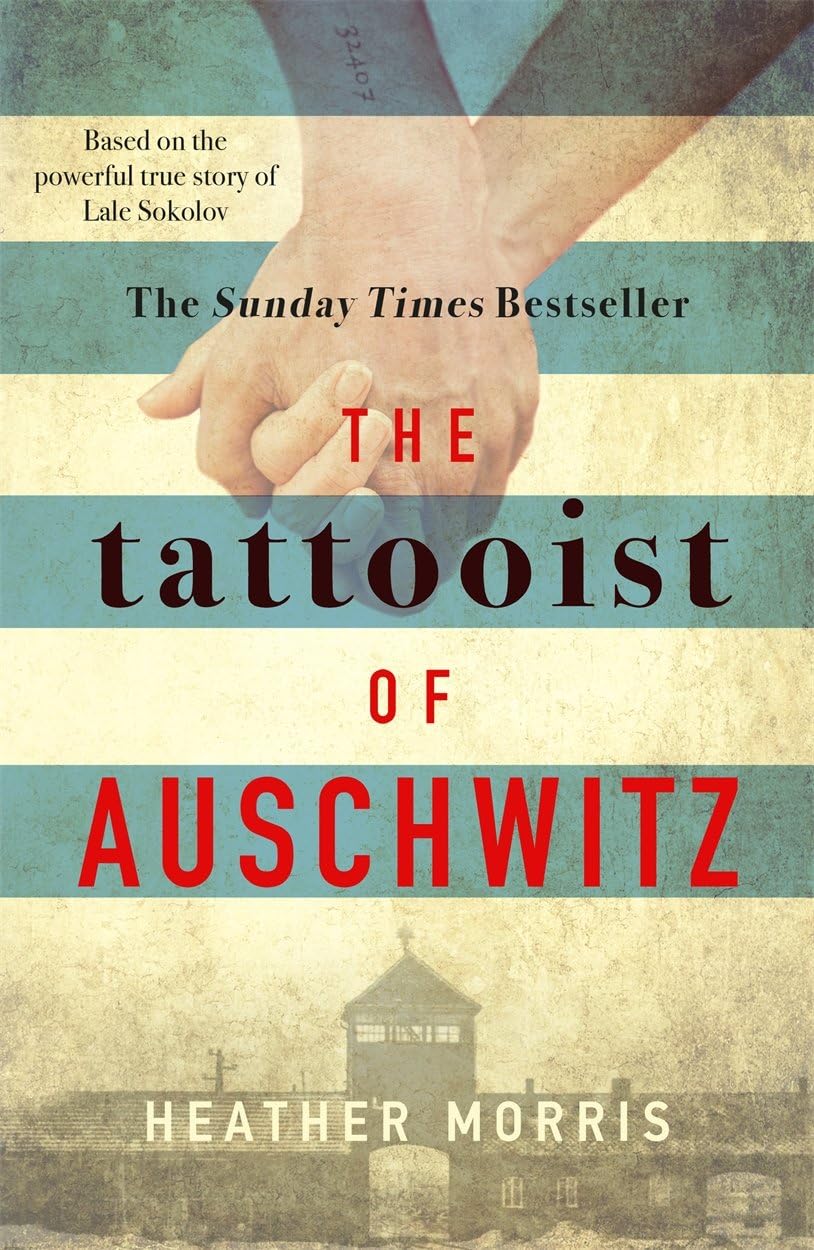
The Tattooist of Auschwitz: Now a major Sky TV series
Product ID: 55316470
Buy anything from 5,000+ international stores. One checkout price. No surprise fees. Join 2M+ shoppers on Desertcart.
Desertcart purchases this item on your behalf and handles shipping, customs, and support to Kyrgyzstan.
The Tattooist of Auschwitz: Now a major Sky TV series : Morris, Heather: desertcart.co.uk: Books Review: This book reaches in and grabs your soul. - Book Review - ‘The Tattooist of Auschwitz’ by Heather Morris ⭐⭐⭐⭐⭐ “So many stories. So many brave people.” This is one of those books that you can’t simply read, it reaches in and grabs your soul and immerses you completely. Holocaust books are never easy reads, and they shouldn’t be, but it is a time in our history we should educate ourselves about and learn from. I find myself fascinated with the question of how people can commit such atrocities against other human beings in the name of faith or any kind of beliefs, but never any closer to figuring out the answer. “I am a survivor.” Lale is just 24 years old when the Germans order each Jewish family in his village to send a member of their family aged 18 or over to work for them. His older brother volunteers, but Lale insists he should be the one to go as, unlike his brother, he has no wife or children. Despite obvious apprehension at where he will go and what will happen, Lale is pleased that his actions will be saving his family from being sent to a prison camp and keeping them safe. When he first arrives at Auschwitz-Birkenau he is put to work building more huts but notices that there are some prisoners with privileges and vows to get one of the positions that will offer him the greatest chance of survival. Shortly after he becomes acquainted with Pepan, the Tätowierer, who offers him a job as his apprentice. His new position offers protection and benefits such as a bed to himself and more food to eat. Showing his generous nature, Lale immediately shares his extra rations with other prisoners. Later he begins to smuggle in food and other items, at huge risk to himself, that he also shares. When reading about these kindnesses I couldn’t help but wonder how many lives he saved. How many people and their parents are alive today because he saved their grandparent in the camp? Lale may have had regrets about the job he was forced to do to survive but it can’t be denied how much good he did that wasn’t obligated to. I myself think taking the job was the right thing. Yes, he could be viewed as conspiring with the enemy, but someone had to do the job and he made sure to use his position to benefit many others. I empathise with the prisoners who took jobs to gain extra rations or a better position in the camp. They were fighting for survival every second of the day and I blame no one who found a way to make that fight a little easier. “I am in shit but won’t drown, my life is too beautiful to die.” Lale’s positive outlook is apparent from the start of the story. He chooses to look for the good and for beauty in any and every circumstance. I am sure that choosing to keep his positivity despite being in such a frightening and dire situation helped him to survive and enabled him to encourage others to do the same. One thing that no doubt helped him see a brighter side to life during his time in the camp was meeting and falling in love with Gita. This story of how these two ordinary people found love and hope in the darkest of places was beautiful and shows us how if a love is true absolutely nothing can stand in its way. The couple share clandestine meetings as much as possible while in the camp and vow to marry and live their lives together once they are free. “If you wake up in the morning, it’s a good day.” I would have liked to hear more about Lale’s life after the war than was included in the book, but we do find out a little about his life after the war, his struggles and triumphs, and what he was like as a parent in a small Afterward from his son. The Authors Notes were a wonderful insight into how she came to tell his story and the man he was. It was interesting to see the pictures of him and some of the historical pictures relevant to his time in the camp. I think they were a great way to end the book and gave the reader a greater connection to Lale. “The Tattooist of Auschwitz is a story of two ordinary people, living in an extraordinary time.” This is a story full of opposing things: humanity and inhumanity, love and hate, and hope and despair. It is a reminder of the horrors people experienced, but also of their ferocious will to survive and how they found happiness, friendship, and sometimes even love, during the most barbaric and odious circumstances. It is important we are reminded of the stories of individuals as hearing the huge numbers makes it impersonal and incomprehensible. When we hear Lale’s story we can picture what he and those he knew suffered we relate to it in a real way that helps us ensure it never happens again. The Tattooist of Auschwitz is a mesmerising, poignant, haunting, powerful, harrowing and beautiful novel. I can’t recommend it highly enough. “To save one, is to save the world.” Review: 5 STARS! - Considering "The Tattooist of Auschwitz" is a harrowing true story, it was truly compelling and utterly unputdownable. It's without a doubt one of only a few books that will stay with me a very long time, it's that unforgettable and one that keeps you thinking about the story well after you've put it down. Lale Sokolov is a well dressed, charming ladies' man - however he is also a Jew. On arrival at Auschwitz in 1942 he immediately stands out to his fellow prisoners who save his life when he takes ill. In the camp he is put to work in the privileged position of the 'Tatowierer' - the tattooist - to mark his fellow prisoners as they arrive in camp. One of them is a girl called Gita who captures his heart immediately. Given a reason to survive Lale uses his position for the greater good even through struggles and extreme suffering, with the hope of one day being with Gita forever, outside of the camp. Although upsetting, saddening and at times quite unimaginable, there is such a beautiful love story at the heart of the tale that you can't help smiling at. I immediately took to all the real life characters, they were excellently portrayed whether good or bad and could imagine the whole true scenario with such clarity. The author Heather Morris took several years to write Lale's story in her book with the input of the main protagonist himself and even becoming a very good friend with him. She has ultimately written a story Lale would be very proud of and which tells of his and Gita's tale of wanting to be together through one of the worst and sickening periods of our history with the utmost care and consideration. Compassionately written with sensitivity, its emotive, thought provoking, awe inspiring and certainly puts your own everyday problems into perspective. This book wasn't as brutal and as hard hitting as some holocaust books I've read although equally saddening, therefore I feel this could be read by slightly younger readers without offending or upsetting. I really can't recommend this stunning book highly enough, it a definite must read for 2018 and it gets a fantastic 5 stars for a heart wrenching unforgettable read.


| Best Sellers Rank | 230,913 in Books ( See Top 100 in Books ) 7 in Jewish Fiction 112 in 20th Century Historical Romance (Books) 215 in Military Romance (Books) |
| Customer Reviews | 4.6 out of 5 stars 178,012 Reviews |
E**S
This book reaches in and grabs your soul.
Book Review - ‘The Tattooist of Auschwitz’ by Heather Morris ⭐⭐⭐⭐⭐ “So many stories. So many brave people.” This is one of those books that you can’t simply read, it reaches in and grabs your soul and immerses you completely. Holocaust books are never easy reads, and they shouldn’t be, but it is a time in our history we should educate ourselves about and learn from. I find myself fascinated with the question of how people can commit such atrocities against other human beings in the name of faith or any kind of beliefs, but never any closer to figuring out the answer. “I am a survivor.” Lale is just 24 years old when the Germans order each Jewish family in his village to send a member of their family aged 18 or over to work for them. His older brother volunteers, but Lale insists he should be the one to go as, unlike his brother, he has no wife or children. Despite obvious apprehension at where he will go and what will happen, Lale is pleased that his actions will be saving his family from being sent to a prison camp and keeping them safe. When he first arrives at Auschwitz-Birkenau he is put to work building more huts but notices that there are some prisoners with privileges and vows to get one of the positions that will offer him the greatest chance of survival. Shortly after he becomes acquainted with Pepan, the Tätowierer, who offers him a job as his apprentice. His new position offers protection and benefits such as a bed to himself and more food to eat. Showing his generous nature, Lale immediately shares his extra rations with other prisoners. Later he begins to smuggle in food and other items, at huge risk to himself, that he also shares. When reading about these kindnesses I couldn’t help but wonder how many lives he saved. How many people and their parents are alive today because he saved their grandparent in the camp? Lale may have had regrets about the job he was forced to do to survive but it can’t be denied how much good he did that wasn’t obligated to. I myself think taking the job was the right thing. Yes, he could be viewed as conspiring with the enemy, but someone had to do the job and he made sure to use his position to benefit many others. I empathise with the prisoners who took jobs to gain extra rations or a better position in the camp. They were fighting for survival every second of the day and I blame no one who found a way to make that fight a little easier. “I am in shit but won’t drown, my life is too beautiful to die.” Lale’s positive outlook is apparent from the start of the story. He chooses to look for the good and for beauty in any and every circumstance. I am sure that choosing to keep his positivity despite being in such a frightening and dire situation helped him to survive and enabled him to encourage others to do the same. One thing that no doubt helped him see a brighter side to life during his time in the camp was meeting and falling in love with Gita. This story of how these two ordinary people found love and hope in the darkest of places was beautiful and shows us how if a love is true absolutely nothing can stand in its way. The couple share clandestine meetings as much as possible while in the camp and vow to marry and live their lives together once they are free. “If you wake up in the morning, it’s a good day.” I would have liked to hear more about Lale’s life after the war than was included in the book, but we do find out a little about his life after the war, his struggles and triumphs, and what he was like as a parent in a small Afterward from his son. The Authors Notes were a wonderful insight into how she came to tell his story and the man he was. It was interesting to see the pictures of him and some of the historical pictures relevant to his time in the camp. I think they were a great way to end the book and gave the reader a greater connection to Lale. “The Tattooist of Auschwitz is a story of two ordinary people, living in an extraordinary time.” This is a story full of opposing things: humanity and inhumanity, love and hate, and hope and despair. It is a reminder of the horrors people experienced, but also of their ferocious will to survive and how they found happiness, friendship, and sometimes even love, during the most barbaric and odious circumstances. It is important we are reminded of the stories of individuals as hearing the huge numbers makes it impersonal and incomprehensible. When we hear Lale’s story we can picture what he and those he knew suffered we relate to it in a real way that helps us ensure it never happens again. The Tattooist of Auschwitz is a mesmerising, poignant, haunting, powerful, harrowing and beautiful novel. I can’t recommend it highly enough. “To save one, is to save the world.”
D**N
5 STARS!
Considering "The Tattooist of Auschwitz" is a harrowing true story, it was truly compelling and utterly unputdownable. It's without a doubt one of only a few books that will stay with me a very long time, it's that unforgettable and one that keeps you thinking about the story well after you've put it down. Lale Sokolov is a well dressed, charming ladies' man - however he is also a Jew. On arrival at Auschwitz in 1942 he immediately stands out to his fellow prisoners who save his life when he takes ill. In the camp he is put to work in the privileged position of the 'Tatowierer' - the tattooist - to mark his fellow prisoners as they arrive in camp. One of them is a girl called Gita who captures his heart immediately. Given a reason to survive Lale uses his position for the greater good even through struggles and extreme suffering, with the hope of one day being with Gita forever, outside of the camp. Although upsetting, saddening and at times quite unimaginable, there is such a beautiful love story at the heart of the tale that you can't help smiling at. I immediately took to all the real life characters, they were excellently portrayed whether good or bad and could imagine the whole true scenario with such clarity. The author Heather Morris took several years to write Lale's story in her book with the input of the main protagonist himself and even becoming a very good friend with him. She has ultimately written a story Lale would be very proud of and which tells of his and Gita's tale of wanting to be together through one of the worst and sickening periods of our history with the utmost care and consideration. Compassionately written with sensitivity, its emotive, thought provoking, awe inspiring and certainly puts your own everyday problems into perspective. This book wasn't as brutal and as hard hitting as some holocaust books I've read although equally saddening, therefore I feel this could be read by slightly younger readers without offending or upsetting. I really can't recommend this stunning book highly enough, it a definite must read for 2018 and it gets a fantastic 5 stars for a heart wrenching unforgettable read.
B**G
Lest we forget.
When a story is true there is no need to exaggerate or to pile up the horrors higher and deeper than they were. Fiction writers tend to forget that. They go for horror upon horror, disgust layered on dismay and they write to shock. Somehow ‘The Tattooist of Auschwitz’ is more impactful because it doesn’t focus on the unrelenting evil of Auschwitz-Birkenau, it hints at things rather than waving them in the readers face and most importantly it looks to record the good in people, the power of love and unlikely friendships, and the joy of beating the system in tiny everyday tiny ways. It’s a story of survival where the reader may well find they remember the good things, the sweet gestures and kind words of people living in conditions most can only imagine more than the horrors. Lale Sokolov was a volunteer. He set off for the work camp in his best suit when all Jewish families in Slovakia were told to send a young adult to do war work. He went in 1942 – perhaps at a time when it wasn’t widely known what was going on in the camps – and during his time in Auschwitz-Birkenau he witnessed first-hand the expansion of the camp and it’s evolution from work-camp to death-camp. If he was busy, it was because new inmates were arriving to be worked to death or killed in the gas chambers. Lale’s talent was for languages and for reading people. As a result of speaking several languages, he landed a job as the assistant (and later the main) tattooist in the camp, meeting and marking the new arrivals, one of whom – Gita - he instantly fell in love with. The book is about people being starved, exploited, manipulated and experimented on. It’s also about unstructured killings by camp guards who shot randomly at passing prisoners to relieve their own boredom. Lale strikes up relationships with fellow prisoners, with local people who are paid to work at the camp, and even with the guards. His privileged position as the tattooist gives him access to the outside world, swapping booty from the sorting rooms where prisoners go through the luggage of new arrivers for food and other supplies. He becomes an honorary member of a gypsy community who briefly form a sort of family for him before the camp controllers send them to die. He witnesses gassing and cremations and his testimony remains calm and unsensationalised. In short he does what he can to survive and to help the woman he loves and those around him. There are other survivor stories from Auschwitz but few inmates survived as long as Lale and Gita and much of that success is down to his ducking and diving, knowing the right people, and doing the right things – even when they’re not what the guards would consider appropriate. It’s a fascinating book and one that’s understandably getting a lot of attention. Is it the best book ever written about the Holocaust? No, of course not, but it adds to the important legacy of those who passed through the camps as well as those who never found their way home again. It’s well worth a read.
�**�
As With Most Trauma, it is not until the event is over and you have had Time to Reflect....
**No Spoilers** Given the subject matter, I am sure that you can understand that this book may not be quite so straightforward to review. With most moments of trauma, it is not until after they are over and you have time to reflect on what has just taken place, that you truly feel it’s full impact. And that is how I am left feeling about this book. It is not until I had read through to the very last page (in about four sittings, for me) and put the book down, that I sat back and was able to view it all, in its entirety. I believe that I will be reflecting on this book over the next few days and I do not feel the usual urge, to immediately start my next read. This book has left me wanting time to digest it fully and give it time to settle. The next book that I have lined up is Cilka’s journey and I think that reading it directly after this book, is a good thing, as the start of her story, is still fresh in my mind. Don’t get me wrong, it is not that I am left traumatised by the level of inhumanity, after 25 years in the Police in London, my thresholds are set at quite a high level. No, the telling of the story and the undeniable trauma are done in such a way, that they are not overly dramatised or sensationalised. They are presented in a measured way, that takes nothing from their barbarity but gives the reader a clearer understanding of the fact that to many witnesses, participants and hapless bystanders, these events were day to day occurrences that you had to find a way to deal with. Even if it meant blocking it out, stifling a response or sweeping it under the emotional carpet. In some way, that makes it all the more chilling. The writing style is excellent, the characters are well formed and believable, the dialogue and pace throughout cannot be faulted. In terms of style, it was a pleasure to read. Very easy to follow, never any need to reread or go back a page to make sure of anything. Again, given the nature of the story, that is a feat in itself. I am left neither dismayed at humanity or uplifted by the survival of the main protagonists. The overall feeling is a general one of numbness and mild melancholy. That is probably me, sweeping it under my emotional carpet. (Not much room left under there, to be fair.) I would certainly recommend this book and I for one, think that the Tattooist picked the right lady for the job of telling his story. I do not receive any payment or free goods for writing these reviews. I am just happy to share my views on my purchases with fellow like minded Amazonians in the hope that you may find it helpful.
S**R
Good
Its hard to say you have enjoyed a book when it is about such a harrowing time in history, If you have read the boy in the stripped pyjamas or watched Schindler's list or anything regarding this subject then you should already know these books are difficult in their subject matter, but read them we must not just for titillation but the fact this awful event took place. I have been to Auschwitz and I have to say up front it changed me, walking through those gates I could feel the pain and anguish, this is not me been fanciful in my words but truth, to stand in the shadows of such a harrowing place made me count my blessings and thank god that I am alive and well. Heather Morris is a new author for me but this book caught my eye one for the subject matter and no I am not ghoulish or glorify in human suffering but at the same time I like reading about the past after all it is what defines us what makes us what molds us into the people we are good or bad. For me Heather and her narrative, horrific account of peoples lives so tragically and horrifically impacted by the events of the dreadful stain on our time the holocaust, she seems to have beautifully written a piece of history put together so us as the reader can truly acknowledge the price and the pain of these poor people paid in such a horrific circumstances. The book is poignant, very sad and extremely moving at times but at the same time you are filled with courage and determination as these people's ferocious and tenacious desire to survive against all odds. This account has sensitivity and has been put together with a lot of great thought and care. It’s a great read! I highly recommend it. Thank You Heather Morris for an astonishing read, one that will stay with me for a long time, I think books like this do tend to stay with you long after you have closed the final page, it makes you question what is important and what is not, when we whinge about how awful our lives are, we should be thanking god for the fact we still have one when so so many were denied it.
A**S
A Compelling Story and a Must Read
Having read quite a few holocaust survivors’ stories, I’ve never before come across the voice and story of a/the Tattooist of the biggest and most notorious death camp Auschwitz Birkenau. It is a truly fascinating and moving story of life, death, love and survival of two ordinary young individuals whose lives and worlds shatter to pieces when the Nazis invade their country. To have survived three years in THE death camp known as “another planet”, in the unbearable physical and mental conditions, is beyond belief and against all odds. Absolutely remarkable how love and human kindness can save souls even in the terrible planet of Auschwitz Birkenau. An amazing fascinating true story – five stars; as for the the reading, it was painful. Poor, stuttered and random story-telling that is occasionally (unintended, I am sure) conveys a distorted depiction that Lale conducted casual normal life in the death camp. The reading was generally frustrating, I had to continually break the flow of reading in order to read specific sentences over and again to try and figure out what the author is referring to. It is such a shame that the story telling is not a match to the powerful plot, this book should have been so much more engaging and persuasive. So, if you can read this book in another language, maybe the translation will do the story justice. But if you cannot, then regardless of the writing style, please read Lale’s story as is. Lale, like many other Nazi concentration camps survivors, wanted us all to know what had happened in Auschwitz Birkenau so it never ever happens again. That’s why we all must read and remember the evils the Nazis inflicted on millions of innocent human beings whose only crime was either their religion, beliefs, mental or physical state.
L**N
An emotional and beautiful read
This book has been sat on my shelf for a while now and I am kicking myself for not getting to it sooner. I love historical fiction but stories based around WW2 are some of my favourites, Knowing that this was based on true events and real people’s stories I had a feeling it was going to be emotional. Lale was someone you couldn’t help but love. How he carried himself and looked out for others was endearing and I was willing him to survive. He saw so much but it was his cleverness that helped him to survive even the most dire of circumstances. His story with Gita was beautifully told and the agony they went through, being separated at different times must of been agony. I can’t begin to imagine how it must of felt not knowing whether that day would be your last and it makes me feel thankful for the simple pleasures in life that so many have been denied. I don’t feel that any words I say can honestly do this book justice. Everything about it was perfectly written, especially the author’s notes and foreword. If you love historical fiction and have not read this one yet then stop what you are doing and get a copy, you won’t regret it.
T**S
We need to know this!
I thought it was so important to point out something as simple as being allowed to keep your own hair and not having it removed was so meaningful to people that when someone was allowed they were in awe of her. They already thought Cilka was a beautiful person for her kindness but to see her with her own long hair showed how beautiful she physically was and how much these women wanted their rights back to decide what to do with something as simple as their own hair. I am aware it is not that long ago that I read The Boy in the Striped Pyjamas by John Boyne, however, thanks to The Twinkl Book Club on Facebook I came across The Tattooist of Auschwitz. So many people were recommending reading this book and I finally saw that Kindle were having a Daily Deal selling The Tattooist of Auschwitz for only 99p. I had to have it. I had every intention of reading it over the summer as I knew I would be able to concentrate more on it and enjoy it more. However, I really wanted to get back into reading my Kindle. I had missed using it and had read a number of paper books since last using it on holiday last summer. So, I found myself starting the book. I actually started it whilst at work. I found a moment to read some whilst on my break and my initial thoughts were that it wasn't going to grip me as much as I had thought. I thought Lale was quite sophisticated and higher educated than the others he was sharing the train with. He was thoughtful, resourceful and knew how to stay alive. Lale makes a vow to himself that no matter what it takes he will survive. This vow is something Lake took very seriously and he keeps reminding himself of his promise. He does not want the Nazis to defeat him. Lale is a Jew living in Slovakia when the Nazis invade. They request for each Jewish family to send a child over 18 to help work for the Germans. "Arbeit Macht Frei" - Work sets you free. Lale volunteers himself and finds himself arriving at Auschwitz. Through a range of different roles and responsibilities, Lale becomes the tattooist and has to give every new arrival their tattooed serial number. No one will be known by their names, only their number. The Nazis did not believe anyone in a concentration camp was worthy of a name, they were not entitled to a name. Lale and the SS Officer, Stefan Baretzki, along with Leon, an assistant, make the 8km walk from Auschwitz II -Birkenau to Auschwitz I every time new people arrived. Lale tries to treat each person gently and with grace, apologising for tattooing them whenever he can. Through this Lale meets a young lady who he never thought he would find. Lale meets the love of his life, Gita. Gita plays a big role in the story as she has such an influence on Lale and wanting what is best for them both. She is a strong character who with Lale has taken on his vow to survive. I felt that Gita would perhaps have given up in Auschwitz earlier had she not met Lale. Through their relationship, they are a constant support for one another. The relationship with Gita is not the only bond Lale forms, due to his position in work and his knowledge of languages he finds himself creating friendships, deals and bargains with a number of other people, Nazi SS soldiers, Jews, outside workers are amongst some. I was so impressed with how strong a person and personality Lale is. This is the first time I have read a personal recount of Auschwitz and having visited such a historical place I could really visualise where Lale is referring too and what he is talking about. For me, The Holocaust is such a key part of history we can never forget or ignore what happened. The atrocities people suffered just because they were the wrong skin colour, religion, sexuality or someone who just stood up for what they believed in, is appalling. I absolutely recommend going to Auschwitz if you ever get the opportunity, it is so thought-provoking that there is no way people can ignore what happened. Physically seeing all of the belongings and possessions of these poor people, the people who Lale and Gita lived with. Gita's role originally was to search the possessions of the new arrivals and to take anything of value. These possessions and things of value are still there! They are still in Auschwitz for people to go and see. Although, I felt Lale and Gita were portrayed as strong, loyal people I did feel that the author, Heather Morris, was very matter of fact about her storytelling. She didn't elaborate on what happened or who too, there was not a great amount of detail about the way she wrote. I feel when talking about The Holocaust you need to talk with a little more dignity for the poor people. As Morris talked about what happened she didn't really speak much about Lale's feelings, I don't know if this is due to the way Lale spoke, perhaps he did not like to talk about how these scenes made him feel or maybe that is Morris' writing style, I don't know. I just felt she was very straight and fact informing. Particularly when talking about the way in which the people were exterminated or discarded. She openly talks about what happened but does not speak about the repercussions or the impact this has on the others seeing these events. This must have had some lasting effect on Lale and Gita, the only reference to emotion is when their son speaks at the end about how he feels about his parents and any reaction they may have shown to events. Overall I would recommend The Tattooist of Auschwitz, but I would not necessarily read it again. I felt the characters were well portrayed but the things which happened to them were not given enough reading time. I feel someone else could possibly have done Lale's story justice. Thank you for sharing your story with us Mr Sokolov, I hope you found happiness and peace in your life and you are now, finally, home. Rating 7/10 10-Word-Review: Thought provoking but doesn't do it the justice it needs.
Trustpilot
3 days ago
2 days ago