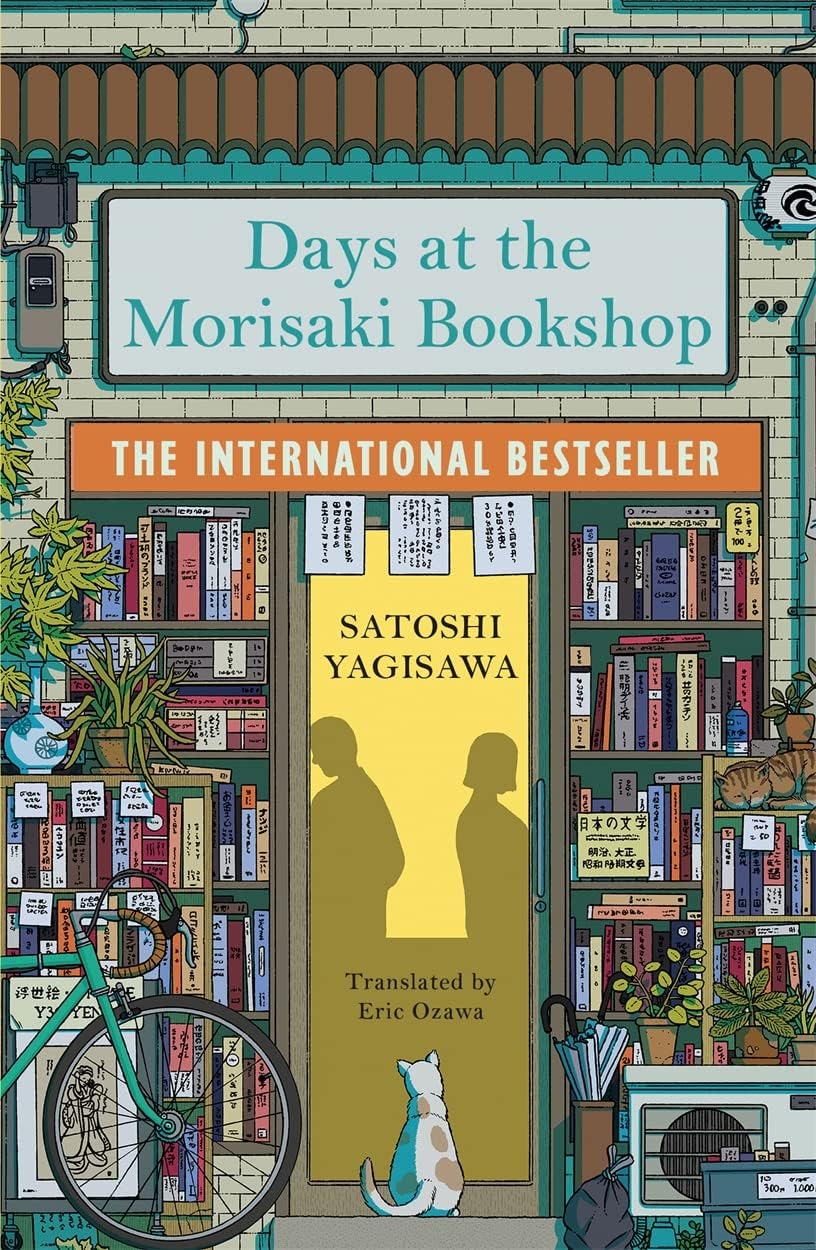
Days at the Morisaki Bookshop: The perfect book to curl up with - for lovers of Japanese translated fiction everywhere
Product ID: 547708330
Buy anything from 5,000+ international stores. One checkout price. No surprise fees. Join 2M+ shoppers on Desertcart.
Desertcart purchases this item on your behalf and handles shipping, customs, and support to Kyrgyzstan.
Hidden in Jimbocho, Tokyo is a booklover's paradise. On a quiet corner in an old wooden building lies a shop filled with hundreds of second-hand books. Twenty-five-year-old Takako has never liked reading, although the Morisaki bookshop has been in her family for three generations. It is the pride and joy of her uncle Satoru, who has devoted his life to the bookshop since his wife Momoko left him five years earlier. When Takako's boyfriend reveals he's marrying someone else, she reluctantly accepts her eccentric uncle's offer to live rent-free in the tiny room above the shop.Hoping to nurse her broken heart in peace, Takako is surprised to encounter new worlds within the stacks of books lining the Morisaki bookshop . As summer fades to autumn, Satoru and Takako discover they have more in common than they first thought. The Morisaki bookshop has something to teach them both about life, love, and the healing pow er of books. Review: The mind soother - I’ve always been a huge fan of anime and Japanese manga, so I finally decided to explore Japanese literature as well. Recently, a book kept popping up on my Instagram feed — Days at the Morisaki Bookshop by Satoshi Yagisawa — and I thought, why not give it a try? This international bestseller turned out to be exactly the kind of book you need when you’re feeling low or lost in life. It carries a quiet, comforting charm that gently reminds you that it’s okay to pause, heal, and rediscover yourself. If someone ever asked me where I’d want to go for my first international trip, my answer would be Japan without a second thought. There’s something deeply admirable about the way people live there — their discipline, respect, and simplicity — and you can feel a glimpse of that culture through this story. Coming to the book, Takako, the main character, goes through a painful breakup when her boyfriend leaves her to marry someone else. Unable to face him and overwhelmed by everything, she quits her job and distances herself from her old life. At her lowest point, her uncle Satoru reaches out and invites her to stay with him and help manage his bookshop — the Morisaki Bookshop. This small, second-hand bookstore is filled with all kinds of literary treasures and carries a beautiful legacy, passed down through generations in his family. When Takako arrives, she slowly begins to find answers to her problems. Surrounded by books and the peaceful atmosphere of the shop, she starts reading and reconnecting with herself. What begins as an escape gradually turns into a journey of healing. The story is simple and gentle, revolving around the everyday life of the bookshop. But that simplicity is what makes it special. It beautifully portrays the growing bond between Satoru and Takako, and how they support each other in moving forward in life. It’s not a dramatic or fast-paced story, but a calm and heartwarming one that reminds us that healing doesn’t always come through big changes — sometimes, it quietly unfolds in small, meaningful moments. Review: Heart warming and engaging read. - With simple writing that's easy to follow, ‘Days at the Morisaki Bookshop’ is a story about the connection we form with stories. Be it the written word or the spoken one, we have an intrinsic human tendency to relate to certain stories and cherish them. It is a coming-of-age story. It is a relatively thin book; it does not feel daunting when held. The cover of the book is like an amalgamation of a warm cup of coffee along with a cosy blanket. It beckons to you with a lilting aura. The story is equally warm. The narrative is simple; it follows our lead, Takako, on a realistic journey that begins with heartbreak but ends with a deeper understanding of human nature thanks to her newfound appreciation of books. She has not grown up with an affection for books as most book lovers have. She doesn't even develop the connection immediately when she is thrust into a situation that surrounds her with books. It is only by chance that she discovers the escapist worlds hidden between pages and once she does, she devours books with a fascination & hunger that only book lovers would relate to. Reading the book will bring back fond memories of how you first fell in love with reading. Although having a name that implies that it’s all about books, ‘Days at the Morisaki Bookshop’ has more to offer. It paints a wonderfully accurate picture of the nuances of Japanese culture that make that way of life so affable to everyone. We can only hope that we emulate the values that Takako learns as she comes out of her shell and experiences life around her. The descriptive passages of the neighbourhood of Jimbocho in which the bookshop is located can make you feel like you’re walking amid the Cherry blossoms, savouring the clean, fresh air around you. The story retains only a few well-written main characters. As we read along, it can sometimes be frustrating to understand their actions and reactions to situations. At these junctions, we need to remember that the Japanese are polite, gentle people who are not often vocal about their emotions. In anger, they would normally internalise emotions rather than throw a tantrum. This tends to slow down the narrative & can at times stunt the story. There is no A-HA moment or a defining climax for readers who are looking for excitement. It is a slow burn that engages your thoughts; which is often how reality works. There are some name drops of famous Japanese literature that I was grateful to add to my reading list. It is a welcome diving board into Japanese fiction. The book has won the Chiyoda Literature Prize in 2023. The English translation by Eric Ozawa is crisp and emotive. Yagisawa’s book is comfort food that reminds us to be grounded in reality while at the same time encouraging us to discover ourselves by getting lost in the abundant words (and worlds) found between pages.





| Best Sellers Rank | #75 in Books ( See Top 100 in Books ) #1 in Library & Information Science #1 in Travel & Tourism (Books) #1 in Antiques & Collectables (Books) |
| Customer Reviews | 4.4 out of 5 stars 12,579 Reviews |
R**S
The mind soother
I’ve always been a huge fan of anime and Japanese manga, so I finally decided to explore Japanese literature as well. Recently, a book kept popping up on my Instagram feed — Days at the Morisaki Bookshop by Satoshi Yagisawa — and I thought, why not give it a try? This international bestseller turned out to be exactly the kind of book you need when you’re feeling low or lost in life. It carries a quiet, comforting charm that gently reminds you that it’s okay to pause, heal, and rediscover yourself. If someone ever asked me where I’d want to go for my first international trip, my answer would be Japan without a second thought. There’s something deeply admirable about the way people live there — their discipline, respect, and simplicity — and you can feel a glimpse of that culture through this story. Coming to the book, Takako, the main character, goes through a painful breakup when her boyfriend leaves her to marry someone else. Unable to face him and overwhelmed by everything, she quits her job and distances herself from her old life. At her lowest point, her uncle Satoru reaches out and invites her to stay with him and help manage his bookshop — the Morisaki Bookshop. This small, second-hand bookstore is filled with all kinds of literary treasures and carries a beautiful legacy, passed down through generations in his family. When Takako arrives, she slowly begins to find answers to her problems. Surrounded by books and the peaceful atmosphere of the shop, she starts reading and reconnecting with herself. What begins as an escape gradually turns into a journey of healing. The story is simple and gentle, revolving around the everyday life of the bookshop. But that simplicity is what makes it special. It beautifully portrays the growing bond between Satoru and Takako, and how they support each other in moving forward in life. It’s not a dramatic or fast-paced story, but a calm and heartwarming one that reminds us that healing doesn’t always come through big changes — sometimes, it quietly unfolds in small, meaningful moments.
V**N
Heart warming and engaging read.
With simple writing that's easy to follow, ‘Days at the Morisaki Bookshop’ is a story about the connection we form with stories. Be it the written word or the spoken one, we have an intrinsic human tendency to relate to certain stories and cherish them. It is a coming-of-age story. It is a relatively thin book; it does not feel daunting when held. The cover of the book is like an amalgamation of a warm cup of coffee along with a cosy blanket. It beckons to you with a lilting aura. The story is equally warm. The narrative is simple; it follows our lead, Takako, on a realistic journey that begins with heartbreak but ends with a deeper understanding of human nature thanks to her newfound appreciation of books. She has not grown up with an affection for books as most book lovers have. She doesn't even develop the connection immediately when she is thrust into a situation that surrounds her with books. It is only by chance that she discovers the escapist worlds hidden between pages and once she does, she devours books with a fascination & hunger that only book lovers would relate to. Reading the book will bring back fond memories of how you first fell in love with reading. Although having a name that implies that it’s all about books, ‘Days at the Morisaki Bookshop’ has more to offer. It paints a wonderfully accurate picture of the nuances of Japanese culture that make that way of life so affable to everyone. We can only hope that we emulate the values that Takako learns as she comes out of her shell and experiences life around her. The descriptive passages of the neighbourhood of Jimbocho in which the bookshop is located can make you feel like you’re walking amid the Cherry blossoms, savouring the clean, fresh air around you. The story retains only a few well-written main characters. As we read along, it can sometimes be frustrating to understand their actions and reactions to situations. At these junctions, we need to remember that the Japanese are polite, gentle people who are not often vocal about their emotions. In anger, they would normally internalise emotions rather than throw a tantrum. This tends to slow down the narrative & can at times stunt the story. There is no A-HA moment or a defining climax for readers who are looking for excitement. It is a slow burn that engages your thoughts; which is often how reality works. There are some name drops of famous Japanese literature that I was grateful to add to my reading list. It is a welcome diving board into Japanese fiction. The book has won the Chiyoda Literature Prize in 2023. The English translation by Eric Ozawa is crisp and emotive. Yagisawa’s book is comfort food that reminds us to be grounded in reality while at the same time encouraging us to discover ourselves by getting lost in the abundant words (and worlds) found between pages.
T**S
A Heartwarming Journey of Love, Loss, and Second Chances
Days at the Morisaki Bookshop is an exquisite novel that truly touched my heart. Set in a quiet, nostalgic bookstore in Tokyo, the story beautifully weaves together the lives of its characters, all of whom find solace in the written word. The bookshop itself becomes a metaphor for the space we all need to heal, reflect, and rediscover ourselves. The protagonist, who is at a crossroads in life, stumbles upon the Morisaki Bookshop after a series of personal losses. What unfolds is a gentle, yet profound exploration of human connections, the power of literature, and the surprising ways in which people find each other and heal. The author’s prose is elegant and evocative, perfectly capturing the quiet rhythms of daily life and the quiet spaces where the most meaningful moments occur. What stood out to me most was the way the novel explores themes of grief, healing, and self-discovery. It’s a beautiful reminder of the power books have to shape our lives, offer comfort, and provide new perspectives. The characters feel real and relatable, and their personal growth over the course of the book left a lasting impact on me. The atmosphere of the bookshop itself is so lovingly described that I could almost smell the pages and feel the warm ambiance of the shelves lined with forgotten treasures. The book is much more than a story about a bookstore; it's about finding new beginnings even in the most unexpected places. If you’re someone who loves books and believes in the transformative power of stories, Days at the Morisaki Bookshop will resonate deeply. It's a beautiful, thoughtful read that will stay with you long after you finish it. Highly recommend!
S**I
loved the book
This books storyline is so sweet and works its magic straight to the heart. The characters are so beautifully portrayed. The bookshop is its own character not just a setting. The way life is at the bookstore is in itself a story. The way books bring joy back to Takoko’s life is so wonderful. The way Uncle Saturo welcomed Takoko into his life and shop was beautiful. Uncle Saturo went above and beyond to make Takoko comfortable, taking her out for coffee. The book brought so much peace and joy.
M**�
Updated as my Comfort Read henceforth 🙌🏻😌
Best Read of 2025 so far!!! 😌🫶🏻 This book didn’t scream its way into my heart... it tiptoed in quietly, handed me a warm cup of tea, and sat with me in the stillness and said, “You're allowed to fall apart. And you’re allowed to rebuild"...gently. It starts with Takako, who’s just been wrecked — dumped, jobless, and emotionally flatlined. She ends up in a cramped little room above her uncle’s dusty secondhand bookshop in Tokyo's Jimbocho. Honestly? It sounds tragic. But somehow, it’s exactly where she’s meant to be. What starts as a temporary retreat slowly becomes a journey of self-discovery, connection, and quiet transformation - all set against dusty pages and the gentle rustle of old books. It's not dramatic. It's not flashy. But it's deeply human. The kind of story that whispers rather than shouts - about grief, growth, and the quiet comfort of stories and solitude. And in those quiet pages, something inside Takako starts to shift. It reminded me that healing isn’t loud — it’s slow, soft, and full of little moments. Sometimes it’s finding comfort in a musty old paperback. Sometimes, it’s standing in the sun for the first time in weeks and realizing you’re still here. And the thing that I loved the most? Not Takako, or her chaotic but adorable relationship with her uncle Satoru... it's the way the bookshop felt like a character itself — old, stubborn, and full of life and the subtle way it says, "it's okay, if you're not okay yet."
N**I
A wonderful book for book lovers
'Days at the Morisaki Bookshop' is a quiet, tender celebration of second chances, the healing power of books, and the gentle magic that exists in ordinary life. Satoshi Yagisawa takes a simple premise - a young woman, Takako, whose life is shattered after a failed relationship, moves into her eccentric uncle’s tiny second-hand bookshop in Tokyo’s famed Jimbocho area - and turns it into a warm, soothing meditation on rediscovery. The charm of this novel lies not in dramatic twists or grand epiphanies, but in its softness. Yagisawa writes with the light touch of someone who understands that personal transformation often happens slowly, through small kindnesses, everyday rituals, and ofcourse, in the company of books. Takako begins the story numb and directionless, but through her uncle’s quirky presence, the rhythm of the bookshop, and her tentative steps back into social connection, she learns to breathe again. The setting is one of the novel’s greatest pleasures. Jimbocho - a neighborhood full of used-book shops and literary cafes - feels like a character in itself. Author's love for books and bookstores seems to permeate the pages, reminding the reader why these spaces feel sacred to many of us: they hold stories, yet they also hold lives, memories, and possibilities. This is a modest novel - short, uncomplicated, and I think, intentionally low on drama. Some of us may find it too gentle or look for deeper psychological excavation, but to approach it with that expectation is to miss its intent. Like a quiet afternoon spent browsing dusty shelves with sunlight pooling by the window, it asks us to slow down, breathe, and notice the small joys we often rush past. A sweet and hopeful read that leaves you believing in new beginnings -sometimes found in the most unexpected corners, between old paper and the 'hum' of a quiet shop.
B**M
Healing power of books and self rediscovery.
The book is very calm and heart warming. The book shows healing power of books and give its readers hope that there's yet joy beyond our sorrows.
M**L
A peaceful reading
A must leisure read book and enjoyed reading about the japanese culture
N**N
Impression de qualité, lecture fluide pour les débutants en anglais
La couverture du livre et l’impression sont de très bonne qualité L’histoire est originale et captivante Je conseille fortement pour une première lecture en anglais pour les débutants
O**.
Warm, Comforting & Beautifully Written
This was such a relaxing and comforting read. Days at the Morisaki Bookshop has a very calm, reflective atmosphere that makes it perfect for quiet evenings or weekends when you just want to slow down and enjoy a thoughtful story. The writing feels gentle and natural, and the setting of the small Tokyo bookshop is incredibly cozy and immersive. Even though the story is simple on the surface, it explores loneliness, healing, relationships, and personal growth in a very genuine way. The characters feel human and easy to connect with, especially through the small everyday moments that make the novel feel authentic. What I especially enjoyed was how the book captures the feeling of finding comfort through literature and routine. Fans of Japanese translated fiction will probably appreciate the subtle emotional style and slower pacing.
C**N
Sencillo de leer
No está mal, si te gustan las historias románticas
G**A
Great if u want to star reading
Came in good conditions, it’s a short book but very entertaining, all good
J**R
DAYS AT THE MORISAKI BOOKSHOP
O livro é simplesmente maravilhoso, super fluido e reflexivo, muito bom e completamente perfeito
Trustpilot
2 weeks ago
1 month ago