We remain fully operational. Our teams are working around the clock to ensure your deliveries continue safely.

DOWNLOAD THE APP


Customer Services
Copyright © 2025 Desertcart Holdings Limited
DOWNLOAD THE APP

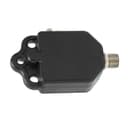
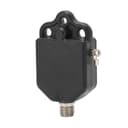
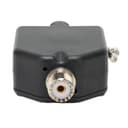
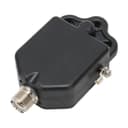
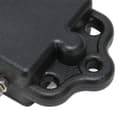
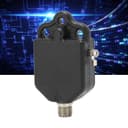
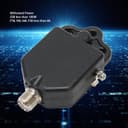
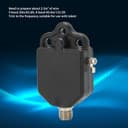
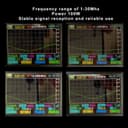
📡 Elevate your signal game — never miss a frequency, never miss a connection!
The HF End Fed Antenna is a compact, durable outdoor antenna designed for amateur radio enthusiasts and professionals. It supports 4 to 8 bands across a broad 1-30 MHz frequency range, handling up to 100W power with a 1:64 balun for easy installation. Made from premium ABS material, it offers reliable performance and long service life, perfect for stable SSB, FT8, FM, and FSK transmissions in diverse outdoor environments.


| ASIN | B0C5X744ZB |
| Best Sellers Rank | 235,475 in Electronics & Photo ( See Top 100 in Electronics & Photo ) 1,110 in Radio Antennas |
| Guaranteed software updates until | unknown |
| Item model number | ciciglowvpd3grmn6x |
| Manufacturer | ciciglow |
| Product Dimensions | 12 x 8 x 3 cm; 191 g |
L**Y
Found a 12/2 100 ft roll of low voltage lighting wire on amazon. This looked like good 12ga wire, and exactly what I needed for a Ham Radio End Fed Longwire. The roll is exactly 100 feet, by splitting into the two separate wires I ended up with 200 ft of 12ga wire. I needed 134ft+- for the antenna. I took the 100ft length and added the extra 34ft by soldering the ends, and sealing with heatshrink tubing. I also bought The 1:64 Balun (Actually it's a UnUn), attached it as shown in the picture, and hoisted it up a 18ft clothesline pole with a nylon rope, and ran the wire over to a tree on the other side of the yard, looped it through a insulator attached to a eyebolt, and ran it across to the other side of the yard to another tree. The wire was too short to reach the tree, so a piece of nylon rope finished the run to the eyehook screwed into the tree. I cut the antenna wire for the low end of 80 meters, and it has a less than 2 SWR upto 3.845 mhz and less than 2 SWR for 7, 14, 21, 28, 29, & 50 mhz for 6 meters. Any spots a little off, my Icom 7300 has a built in tuner that does the job. First contact on 40 meters from Lavel Quebec was a solid 5/9. So, if your looking for wire that will work as an antenna, couple it up with this Balun/UnUn and this may work for you as well. UPDATE: Now that I've had the chance to check out this UnUn/longwire on other bands, I'm Still more than happy with this product, and the antenna I made from it. If I can hear the station, It can hear me. I've broken 20 meter pileups to Czech Republic, Serbia, and Netherlands using 100 watts without any problems what-so-ever, and total cost was under $150.00 for all the pieces needed.
V**R
This is a good a good deal. Well built little unit and very economical. Replaced an MFJ end-fed box that had fallen apart after a few years. I connected 132-ft. of 16 g stranded steel/aluminum (?) coated wire to it, spools of this stuff available cheap from Amazon. Loads up for less than 40 W excursions on 80 mtrs, loads up much better on 40, 30, 20, 17, 15, and 12 meters thru an antenna tuner. I kinda gave up on trying to get it to load on 10 meters, but alas, discovered that my antenna length resonated satisfactorily on the FT4 portion of the band at 28.18 mhz, kinda opening a new world of dx for me on that band. For the ends of coverages, 160 and 6 meters......the antenna absolutely refuses to load up on 160, and will barely load up down at the bottom of the 6 mtr band (by bottom, I mean around 50.025 mhz). The 6 mtr coverage is a function of the wire's length, and it works so well on everything else that it will stay as is until it falls apart, as they all do eventually. I have the box hung from a 16 penny nail on the side of the house, attached with a couple of long zip ties from the box to the nail. The wire goes up into the top of a tree about 60 ft in the air, then takes a 90-degree bend and is tied off in a stand of my friendly, cooperative neighbor's trees. I've been operating this antenna now for about 4 months, and I am very pleased with the box. Buy with confidence. Be mindful your coverage will be a function of the exact length of your wire. Oh, and for a ground point......I have a lightening arrestor installed with a ground rod directly below the antenna. After the coax goes thru this connection, it proceeds another 15 ft or so to the shack. This arrangement works fine for me. Not willing to gamble on how well all this works during a lightening strike, I always disconnect my coax from the antenna tuner after I shut down my station every time.
J**N
Since becoming an amateur radio operator, I’ve aimed to keep my HF setup budget-friendly. My favorite part of the hobby is building and deploying antennas. I’ve experimented with elaborate fan dipoles and simple single-band dipoles. Fan dipoles are tough to tune and often too heavy. Strong cables supported my various fan dipole designs, but their weight was a persistent issue. I heard about the impressive performance of a 64:1 end-fed half-wave (EFHW) antenna and decided to give it a try, tired of wrestling with fan dipoles high in trees. The EFHW’s 64:1 transformer caught my attention, and its positive reviews suggested it lived up to its claims. I deployed the EFHW twice. Initially, I tried a 135-foot setup high between trees, but my tree layout made tuning difficult. Switching to a 65.5-foot length proved ideal. Using my FT-891 and MAT-30 tuner, I achieved resonance on 20, 15, and 10 meters. On 40 meters, the SWR was around 1.5, so I tuned it for optimization, though it wasn’t strictly necessary. The 12-meter band showed an SWR of about 2.1, and 17 meters was around 1.9; I tuned both. Surprisingly, I could also tune SSB channels on 60 meters and even the 75/80-meter band. The SWR on 80 meters exceeded 3 until 3.825 MHz, dipping below 3, and reached 2.5 at 3.999 MHz, allowing me to tune the entire band. Even more impressive, this setup delivered stronger signals on 80 meters than my dedicated 80-meter dipole. Tuning a band is one thing, but transmitting and being heard is another. My existing 20-meter dipole remains unbeatable, so I won’t use the EFHW for that band. On 40 meters, it performs exceptionally well. Despite being only 65 feet long after trimming, this antenna outperforms my half-wave 80-meter dipole on that band. I rarely operate during daytime hours, so I haven’t extensively tested contacts on 10, 12, 15, or 17 meters. Overall, I’m very pleased with this EFHW. It’s installed at about 45 feet on both ends, and I got lucky with tuning, needing only one trim. It’s set up permanently, but I’m considering getting another for POTA and portable activities.
P**L
Parfaite avec un long fil de cuivre de 40m au minimumvous aller meme captre des stations sur le 160m
D**5
It’s okay, especially for the price. It does seem sturdy and I don’t expect it to break easily. The only things I’m seeing as a red flag so far are that it doesn’t have an (easy) way to attach a counterpoise. You’ll just have to solder to the shield on the coax or use the coax as the counterpoise. It doesn't sound like they secured its internals well - it rattles when you shake it. And the threads on the connector seem awfully short when screwing on the coax. I made a EFHW for 10m meters on it tonight and it took a couple of adjustments, but it tuned right up on 10 meters with a 1.1:1 SWR on 28.4MHz. It did also resonate well for 20m with tuned up easily with the built in ATU on my rig. The bands were closed tonight, so I wasn’t making any contacts but I could hear a few stations on 20m. I’m sure this will be a great addition for doing POTA activations. This is a great deal for doing a DIY antenna vs buying a complete antenna. It’s not hard to make an effective antenna!
Trustpilot
2 months ago
2 weeks ago