


Desertcart purchases this item on your behalf and handles shipping, customs, and support to Kyrgyzstan.
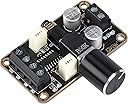
DROK Audio Amplifier Board, 5W+5W Mini Amplifier Board PAM8406 DC 5V Digital Stereo Power Amp 2.0 Dual Channel Class D Amplify Module for Speaker Sound System DIY : desertcart.in: Electronics Review: Nice little amp that works great on battery power - I had an old lithium battery from a wireless keyboard and used it to play two two-way speakers, one 8 ohm (5.5 inch woofer, 1 inch tweeter) and the other 4 ohm (4 inch woofer, 1 inch tweeter), and also power a Bluetooth board for input to this amp. It got plenty loud - enough to warrant a "Turn it down!" from my wife in another room. Before she got home, lt played for over 3 hours and the battery was still over 1/2 full. Sound was clean, and I had little to no distortion with my testing. If this board came with Bluetooth and a charging circuit, it would be one of the best options for a Bluetooth speaker project. Like it is, it's still a great amp and gets surprisingly loud. The only nit I had was the volume knob was overly tight towards the louder play side. So much so I had to hold the board to turn it up. Review: Buena calida de sonido - Todo bien buen sonido dentro de lo que cabe. No es sonido pro pero esta bien
| ASIN | B077MKQJW2 |
| Brand | DROK |
| Brand Name | DROK |
| Customer Reviews | 4.4 out of 5 stars 356 Reviews |
| Item Weight | 0.04 Pounds |
| Maximum Output Power | 5 watts |
| Maximum Supply Voltage | 5 Volts |
| Minimum Supply Voltage | 5 Volts (DC) |
| Model Number | 2001711002 |
| Mounting Type | Surface Mount |
| Number of Channels | 2 |
| Number of Items | 1 |
| Output Power | 5 Watts |
| Part Number | 2001711002 |
| Specification Met | CE, FCC, RoHS, WEEE |
| Voltage | 5 Volts |
W**G
Nice little amp that works great on battery power
I had an old lithium battery from a wireless keyboard and used it to play two two-way speakers, one 8 ohm (5.5 inch woofer, 1 inch tweeter) and the other 4 ohm (4 inch woofer, 1 inch tweeter), and also power a Bluetooth board for input to this amp. It got plenty loud - enough to warrant a "Turn it down!" from my wife in another room. Before she got home, lt played for over 3 hours and the battery was still over 1/2 full. Sound was clean, and I had little to no distortion with my testing. If this board came with Bluetooth and a charging circuit, it would be one of the best options for a Bluetooth speaker project. Like it is, it's still a great amp and gets surprisingly loud. The only nit I had was the volume knob was overly tight towards the louder play side. So much so I had to hold the board to turn it up.
J**Z
Buena calida de sonido
Todo bien buen sonido dentro de lo que cabe. No es sonido pro pero esta bien
A**R
it works
This audio board looked interesting because I wanted a small test speaker system that would be powered by my Raspberry Pi's 5 volt GPIO pins and, receive output through the existing headphone jack. This board looked like I could easily connect it to my Rpi B4 by cantilevering it out one end of the R pi. See photo: Used a few in stock pin connectors for power lines. Purchased some 2 inch speakers and connected them up for bench testing: See photo. Had a 12 inch audio cable in stock and used it for bench testing. I later purchased a 6 in audio cables, pkg of two straight male ends and, a pkg of two: 6 in: each having one straight male and one right angle male. I chose to use the 6 in straight and right angle ends: the other three went into stock. The right angle end of the audio cable went into the R pi and the straight went into the audio board. Note: the R pi audio alsa chip is factory set low volume: you need to enter the terminal to change it : See photos: Open the terminal: enter: sudo alsamixer this brings up the main screen: you will see the word master under the column: use the keyboard up arrow to raise the column to 100: next press f6 and a window will open: use the keyboard down arrow:choose the headphone option a column will appear with the word headphone under it: raise the column to 100 and press exit. Check your screen speaker control slider which can be used to control the output volume to your audio board. Your new board volume control now has output control of what you set on your on your screen speaker slider. If you set your slider at 50% your small board will take that 50% as it’s 100%. Play around with it. I built a wood speaker case: sat my R pi on top: sandwiched with high density black foam
T**E
Good product!
It sounds really nice and hides the frequency generated from the supplied power really will! the output of the speaker is independent of the power source which means that neither audio source nor power source need to be grounded with the same wire. would definitely recommend it!
D**I
Bueno
Lo usé para un proyecto escolar con arduino y funcionó a la perfección
Trustpilot
3 weeks ago
1 month ago