We remain fully operational. Our teams are working around the clock to ensure your deliveries continue safely.

DOWNLOAD THE APP


Copyright © 2025 Desertcart Holdings Limited
DOWNLOAD THE APP


Buy anything from 5,000+ international stores. One checkout price. No surprise fees. Join 2M+ shoppers on Desertcart.
Desertcart purchases this item on your behalf and handles shipping, customs, and support to Kyrgyzstan.
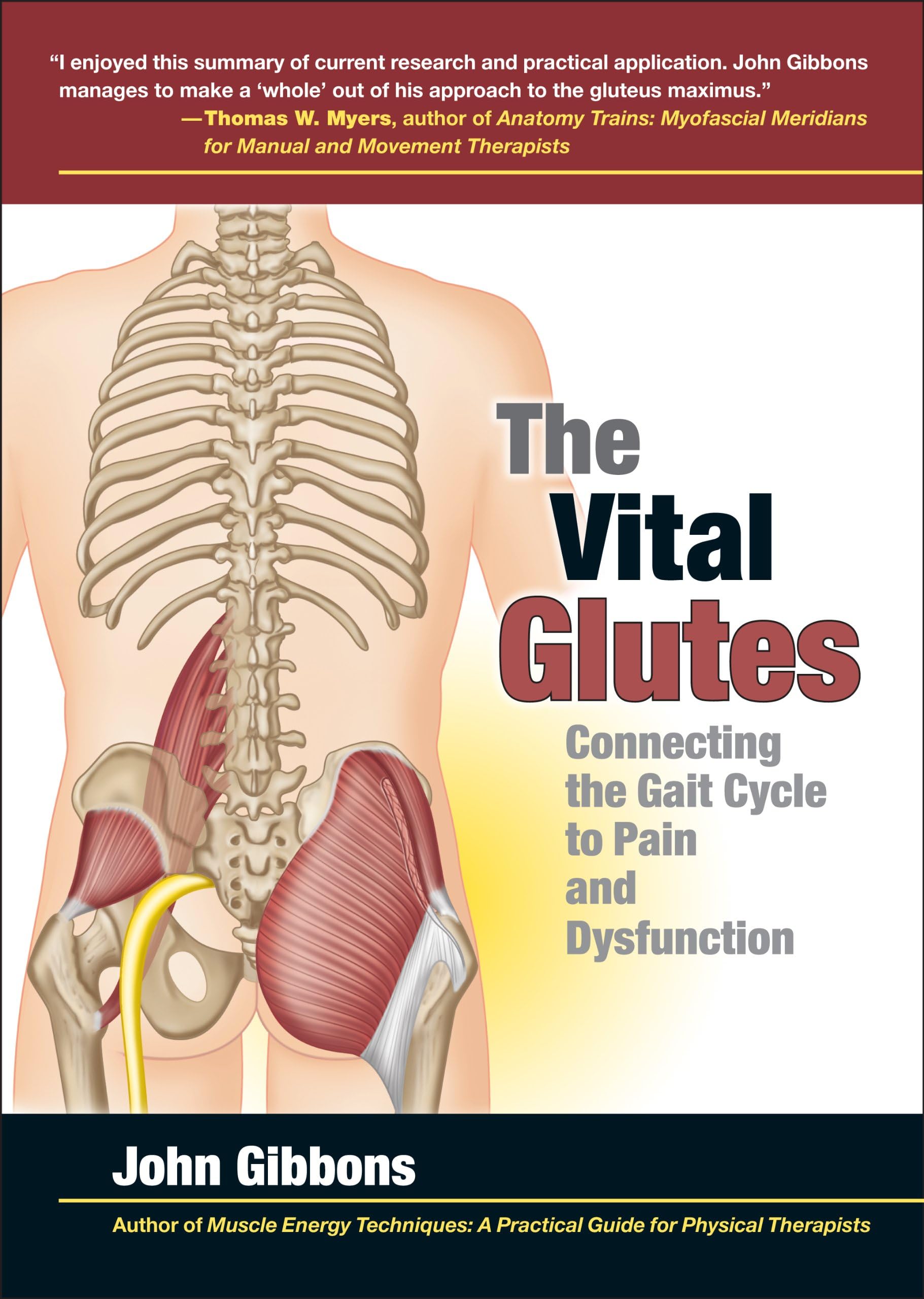
Buy The Vital Glutes: Connecting the Gait Cycle to Pain and Dysfunction by Gibbons, John (ISBN: 9781905367498) from desertcart's Book Store. Everyday low prices and free delivery on eligible orders. Review: A Vital Book for Knowledgeable People - Firstly: This is not a book for beginners in sport or health. One look at the "List of Abbreviations" on page 8 should indicate that this is a serious book for very involved people. If you cannot understand even 30% of the meanings behind the abbreviations, then stay away from the book and do not waste your money. It irritates me when books like this get poor reviews from punters who didn't assess it correctly prior to purchase, Because this book is the real deal and superbly written. Yes, the content is technical and very professional. By that I mean it is written for people who are involved in physiotherapy; therapists who have a half interest in the physical; exercise physiologists and sports' coaches who have an in-depth knowledge of kinesiology, anatomy & physiology. Perhaps even chiropractors could make use of the contents. So the slant is professional Some of the content is intriguing and truly enlightening. In one of his case studies near the beginning of the book, he outlines a patient who is experiencing pain in the left trapezius. He traces this back to the right gluteus maximus and he relates how he does this. He compares it all to being like a jigsaw puzzle. It is a fascinating read and as you slowly progress through the book you realise you are in the hands of a true enthusiast of his profession. Wonderfully written and illustrated. For someone with the knowledge to understand this content and the importance of this vital muscle, then I highly recommend this book. It is superb. Review: Personal Trainer and Sports Masseur Perspective - This is it, for therapists and PTs alike this is the one book that is concise and brings it all together for the lower limbs. It includes how to diagnose, treat with MET and exercise & how everything links together in the body. The theory is very applicable to clients and well explained in a methodical manor, progressing through out the book really sensibly. Expect to find: Myers Myofacial slings, gait cycles, firing sequences of the agonists, antagonist inhibition causing muscle imbalance, nerve testing/myotomes, why the glutes cause pain in distant site of the body and ways to rectify problems caused by GMax, GMed and Gminor. This book may be overwhelming for those without prior knowledge of anatomy and possibly even prior experience in this field. Some books explain the why of injury, some are good at how to test for dysfunction and some are better on the treatment, but only in one aspect, e.g. KTaping or Remedial Massage. This book looks at everything holistically. I enjoyed the case studies to reinforce the theory, the pictures for quick reference and the use of studies to deepen applicable knowledge. For example Boren et al. (2011) study using EMG analysis of the Gmed and GMax during rehab exercises to show which are the most effective exercises for both muscles. The book is well organised, so you could access the chapter on GMax and GMed causing Knee & Ankle pain, or skip straight to various ways of using the Thomas Test to assess muscle length of 4 different muscles. The stabilisation exercises are well photographed and explained at the end with progressions. There is a friendly appendix with simple photographs to note sets and reps for clients. I used this book in conjunction with John’s online course by the same name. Reading the chapter, then watching his video online then testing yourself is a really easy way to digest the huge amount of info here. Buying the book to accompany the course is not essential as you can get all the book pages required for the course to download, however as I wasn’t annotating electronically I thought it cheaper to buy than print and easier for future reference.


| Best Sellers Rank | 235,339 in Books ( See Top 100 in Books ) 77 in Physiotherapy 4,214 in Medicine & Nursing 7,439 in Medical & Healthcare Practitioners |
| Customer reviews | 4.7 4.7 out of 5 stars (395) |
| Dimensions | 17.5 x 1.2 x 24.6 cm |
| ISBN-10 | 190536749X |
| ISBN-13 | 978-1905367498 |
| Item weight | 1.05 kg |
| Language | English |
| Print length | 208 pages |
| Publication date | 30 Aug. 2014 |
| Publisher | Lotus Publishing Limited |
D**S
A Vital Book for Knowledgeable People
Firstly: This is not a book for beginners in sport or health. One look at the "List of Abbreviations" on page 8 should indicate that this is a serious book for very involved people. If you cannot understand even 30% of the meanings behind the abbreviations, then stay away from the book and do not waste your money. It irritates me when books like this get poor reviews from punters who didn't assess it correctly prior to purchase, Because this book is the real deal and superbly written. Yes, the content is technical and very professional. By that I mean it is written for people who are involved in physiotherapy; therapists who have a half interest in the physical; exercise physiologists and sports' coaches who have an in-depth knowledge of kinesiology, anatomy & physiology. Perhaps even chiropractors could make use of the contents. So the slant is professional Some of the content is intriguing and truly enlightening. In one of his case studies near the beginning of the book, he outlines a patient who is experiencing pain in the left trapezius. He traces this back to the right gluteus maximus and he relates how he does this. He compares it all to being like a jigsaw puzzle. It is a fascinating read and as you slowly progress through the book you realise you are in the hands of a true enthusiast of his profession. Wonderfully written and illustrated. For someone with the knowledge to understand this content and the importance of this vital muscle, then I highly recommend this book. It is superb.
A**N
Personal Trainer and Sports Masseur Perspective
This is it, for therapists and PTs alike this is the one book that is concise and brings it all together for the lower limbs. It includes how to diagnose, treat with MET and exercise & how everything links together in the body. The theory is very applicable to clients and well explained in a methodical manor, progressing through out the book really sensibly. Expect to find: Myers Myofacial slings, gait cycles, firing sequences of the agonists, antagonist inhibition causing muscle imbalance, nerve testing/myotomes, why the glutes cause pain in distant site of the body and ways to rectify problems caused by GMax, GMed and Gminor. This book may be overwhelming for those without prior knowledge of anatomy and possibly even prior experience in this field. Some books explain the why of injury, some are good at how to test for dysfunction and some are better on the treatment, but only in one aspect, e.g. KTaping or Remedial Massage. This book looks at everything holistically. I enjoyed the case studies to reinforce the theory, the pictures for quick reference and the use of studies to deepen applicable knowledge. For example Boren et al. (2011) study using EMG analysis of the Gmed and GMax during rehab exercises to show which are the most effective exercises for both muscles. The book is well organised, so you could access the chapter on GMax and GMed causing Knee & Ankle pain, or skip straight to various ways of using the Thomas Test to assess muscle length of 4 different muscles. The stabilisation exercises are well photographed and explained at the end with progressions. There is a friendly appendix with simple photographs to note sets and reps for clients. I used this book in conjunction with John’s online course by the same name. Reading the chapter, then watching his video online then testing yourself is a really easy way to digest the huge amount of info here. Buying the book to accompany the course is not essential as you can get all the book pages required for the course to download, however as I wasn’t annotating electronically I thought it cheaper to buy than print and easier for future reference.
J**M
Practical guide
Fantastic book. Lovely flow and explain clearly what you actually need to know when the patient is standind in front of you to be assessed. It is writen in a simple and plain language. I am definitely much more knowledgeable now. Good work!!
S**R
Great insights carefully explained
I have only used this for reference so far. I cant wait to sit down and have a proper read. The connections made for example between the hip and trapezius help the bodyworker understand the importance of using a more global approach when treating gait and dysfunction problems. Thanks John Gibbons.
B**R
Brilliant Book
This is a Great book, as layman (not in the sport rehab or osteopath field) i found it to be very interesting and well written. Whilst aimed at professionals i was able to take on board what is being said which made me think about my own body and how important the glues actually are. A must read of anyone who trains a lot and has pain or tightness which they cannot attribute to any obvious injury.
A**E
Absolutely brilliant book. John was my Sports Therapy tutor back ...
Absolutely brilliant book. John was my Sports Therapy tutor back in 2000, I've since trained as a Chiropractor and I still learned a lot from this book, especially on the gait cycle. I've since done a few of his more recent courses and they along with his books are top notch. I highly recommend them!
L**0
If you have had problems walking without pain try this book. It will require you to learn about your body as you would a car!
As a lay person trying to work out what to do with sore hips, ankles and cramping shins I came across John Gibbons on YouTube. What he said makes sense and I bought this book. He believes your problem needs to be diagnosed, not just the symptoms treated. I wish I lived near his clinic! This is quite a techy book but I have had years of trying to walk without pain so know a bit about anatomy, muscles and nerves so have persevered and have learnt a lot. The exercise have started to amke a diffrence and I keep reading the book to ram the information into my brain! I think every sports therapist, physio etc would benefit from reading this book. I wish many would take the message to diagnose the real problem not just deal with the presented problem which is usually just a resulting symptom of the true problem.
K**U
I am a Physio and I recommend the book to buy particularly to my young brothers and sisters as this book is very informative and well illustrated with pictures. I request the future purchasers of this book to develop their knowledge from it.
H**B
It's a great book, but I expected more details in the last chapter ( OKC and CKC exercises).
A**9
Good book on explaining the glute muscles! I believe it has exercises in the back part of the book!
T**A
great book for every body who has interest in myofascial pain and gait analysis, very helpful book, price also quite alright
S**L
this could have been condensed in to the sij book. £22 for hlf a book. what a joke how can u possibly think thats ok
Trustpilot
3 weeks ago
1 month ago