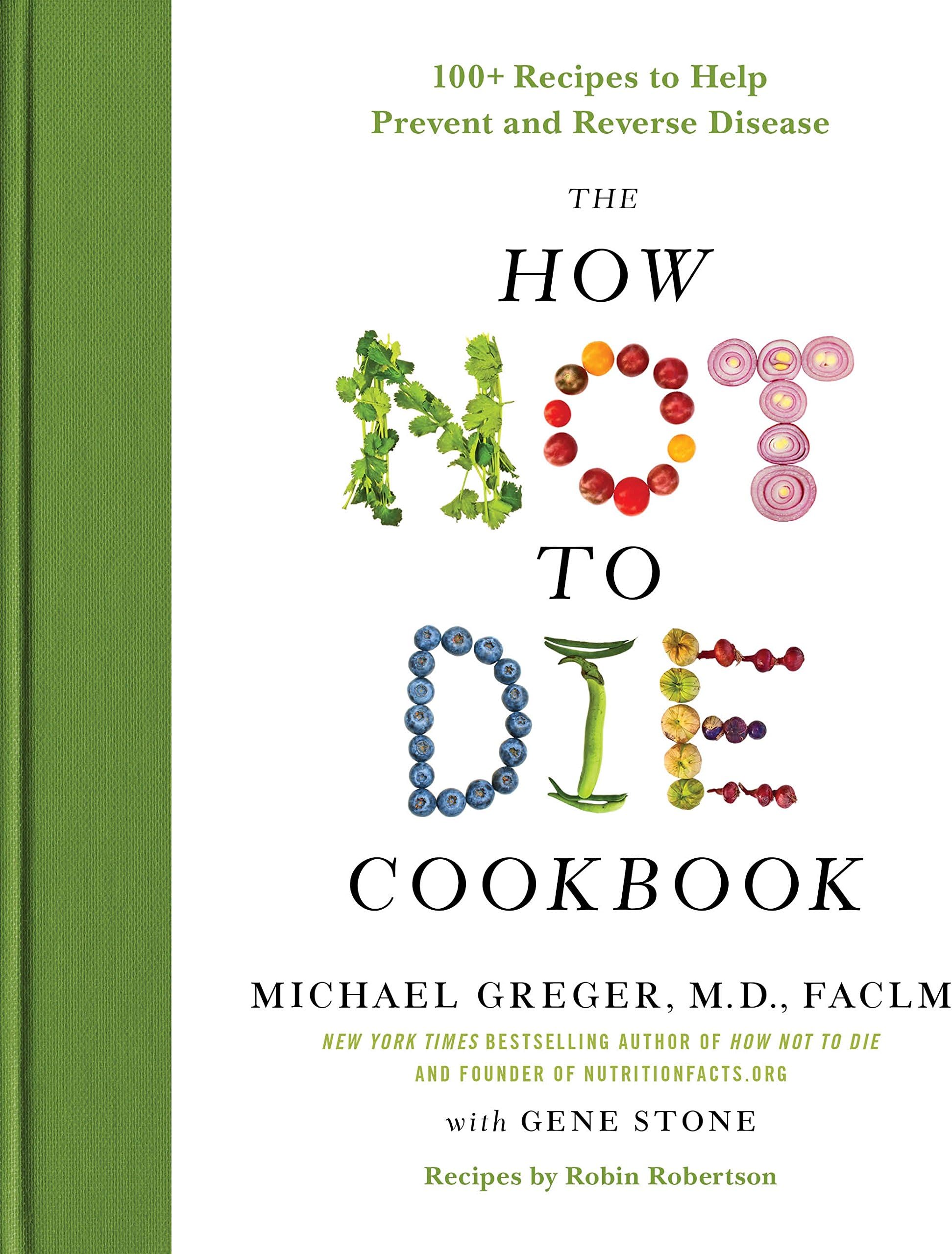
The How Not to Die Cookbook: 100+ Recipes to Help Prevent and Reverse Disease (International Edition)
Product ID: 51636133
Desertcart purchases this item on your behalf and handles shipping, customs, and support to Kyrgyzstan.
From Michael Greger, M.D., FACLM, the physician behind the trusted and wildly popular website Nutritionfacts.org, and author of the New York Times bestselling book How Not to Die, comes a beautifully-designed, comprehensive cookbook complete with more than 120 recipes for delicious, life-saving, plant-based meals, snacks, and beverages that's a perfect gift for healthy conscious eaters. Dr. Michael Greger’s bestselling book, How Not to Die , presented the scientific evidence behind the only diet that can prevent and reverse many of the causes of premature death and disability. Now, The How Not to Die Cookbook puts that science into action. From Superfood Breakfast Bites to Spaghetti Squash Puttanesca to Two-Berry Pie with Pecan-Sunflower Crust, every recipe in The How Not to Die Cookbook offers a delectable, easy-to-prepare, plant-based dish to help anyone eat their way to better health. Rooted in the latest nutrition science, these easy-to-follow, stunningly photographed recipes will appeal to anyone looking to live a longer, healthier life. Featuring Dr. Greger’s Daily Dozen―the best ingredients to add years to your life― The How Not to Die Cookbook is destined to become an essential tool in healthy kitchens everywhere. Review: Great Cookbook for a Very Healthy Lifestyle - I am a big fan of Dr. Gregor's nutritionfacts.org so I was very excited when I heard Dr. Gregor was writing a cookbook. The recipe developer and co-author Robin Robertson is the author of many highly rated vegan cookbooks. For those of you not familar with nutritionfacts.org, it is clearing house of information on food based medicine. Dr. Gregor and his staff combs through peer reviewed articles on various topic such as diabetics, prostate cancer, and heart disease and gives balanced summaries in the forms of videos, transcripts, and citations. The book starts out with Dr. Gregor's approach to helping prevent and even reverse many common degenerative diseases using a whole-food plant based diet. Dr. Gregor introducing his concept of the daily dozen, a simple system for making sure you are eating a heathy diet and exercising. The daily dozen includes at least: three servings of beans, one serving of berries, three servings of other fruits, one serving of cruciferious vegetables (for example, brocolli, cabbage, or kale), two servings of greens, one serving of flaxseeds (for the omega 3 and ligans), one serving of nuts and seeds, one serving of herbs and spices, three services of whole grains, five beverages, and exercise. To make it easy to achieve the goals of the daily dozen, at the bottom of each recipe is a list of what members of the daily dozen that recipe includes. For example, "Vegetable Unfried Rice" on page 144 includes cruciferous vegetables, other vegetables, nuts and seeds, herbs and spices, and whole grains. The book is divided into twelve sections: Simple Preparations–this includes simple sauces and flavor makers used in many of the recipes Breakfast Snacks, Dips, and Spreads Soups and Chilles Salads and Dressings Burgers, Wraps, and More Very Veggie Mains Bean Cuisine Great Grains Sides Sweets Sips The recipes look tasty, orignal, and of course healthy. For example, breakfast range from summertime oats, which is a super health variation of granola, to a warm pear compote. The "very veggie mains" include a beautiful looking "zucchini noodles with avocado-cashew alfredo" and a "roasted vegetable lasagna" that includes a nice blend of cauliflower, zucchini, eggplant, red bell pepper,cannellini beans, and marinia sauce. The cookbook includes healthy deserts such baked apple crumbles and raspberry peach crisp. The "sips" section includes a nice selection of smoothies such as cherry-berry smoothie and a v-12 veggie blast. The cookbook is printed on how quality paper, is nicely bound and has beautiful color photos throughout. The book closes with a sample fourteen day meal plan and kitchen prep. techniques. What I particularly like about the cookbook is that it does not depend heavily on soy or any particular ingredient or flavor. The receipes represent a wide range of flavors and ingredents and appear to have much imagination. They all appear to be oil free with no added salt except for the ocassional use of miso. The recipes look fairly straightforward and do not appear to take too much time to prepare. Thank you Dr. Gregor, Gene Stone, and Robin Robertson for creating a wonderful cookbook for healthy eating and introducing folks to a whole-foods plant based diet in a very accessable way. Review: Recognizable ingredients, vibrant flavors, and plenty of easy dinner ideas - Read this cover to cover the day we got it, and the hardest thing was picking a recipe to try first! The use of miso in many of these recipes to replace salt is brilliant - we had the yellow rice & black beans with broccoli as our main dinner course and the miso added a salty kick that we could feel good about eating. It was shockingly delicious and packed with umami flavor. We also made the stuffed sweet potatoes with balsamic-date glaze, so good! This food doesn't TASTE like you're eating healthy, because it has sweetness or saltiness or spices, but because it's relying on "green light foods" you feel great after eating it. And that's the best part, eating something you feel great about eating because it's good for you, but you enjoy eating as much as something that isn't... maybe even more so because it's not heavy or greasy and you don't feel unwell halfway through that second helping. I love this for people new to plant-based eating, too, because the vast majority of ingredients are common pantry ingredients that are recognizable. Aside from chia pudding, and sure, miso might be new to some fridges, these recipes are filled with plants we've been eating as staples in this country for years. They're combined thoughtfully with each other, herbs, vinegars, citrus and spices to create a meal without all the "red light" foods, and it's amazing. Well worth buying for loved ones, particularly since there's a brief introduction that'll help outline the research behind eating a plant-based diet and its impact on chronic diseases (think How Not To Die super-cliff-notes). Give this book to anyone you care about, and they'll have the tools they need to live a longer, healthier life. And did I mention delicious? That too.
| Best Sellers Rank | #5,954 in Books ( See Top 100 in Books ) #3 in Nutrition for Cancer Prevention #33 in Other Diet Books #33 in Celebrity & TV Show Cookbooks |
| Customer Reviews | 4.6 out of 5 stars 11,840 Reviews |
A**M
Great Cookbook for a Very Healthy Lifestyle
I am a big fan of Dr. Gregor's nutritionfacts.org so I was very excited when I heard Dr. Gregor was writing a cookbook. The recipe developer and co-author Robin Robertson is the author of many highly rated vegan cookbooks. For those of you not familar with nutritionfacts.org, it is clearing house of information on food based medicine. Dr. Gregor and his staff combs through peer reviewed articles on various topic such as diabetics, prostate cancer, and heart disease and gives balanced summaries in the forms of videos, transcripts, and citations. The book starts out with Dr. Gregor's approach to helping prevent and even reverse many common degenerative diseases using a whole-food plant based diet. Dr. Gregor introducing his concept of the daily dozen, a simple system for making sure you are eating a heathy diet and exercising. The daily dozen includes at least: three servings of beans, one serving of berries, three servings of other fruits, one serving of cruciferious vegetables (for example, brocolli, cabbage, or kale), two servings of greens, one serving of flaxseeds (for the omega 3 and ligans), one serving of nuts and seeds, one serving of herbs and spices, three services of whole grains, five beverages, and exercise. To make it easy to achieve the goals of the daily dozen, at the bottom of each recipe is a list of what members of the daily dozen that recipe includes. For example, "Vegetable Unfried Rice" on page 144 includes cruciferous vegetables, other vegetables, nuts and seeds, herbs and spices, and whole grains. The book is divided into twelve sections: Simple Preparations–this includes simple sauces and flavor makers used in many of the recipes Breakfast Snacks, Dips, and Spreads Soups and Chilles Salads and Dressings Burgers, Wraps, and More Very Veggie Mains Bean Cuisine Great Grains Sides Sweets Sips The recipes look tasty, orignal, and of course healthy. For example, breakfast range from summertime oats, which is a super health variation of granola, to a warm pear compote. The "very veggie mains" include a beautiful looking "zucchini noodles with avocado-cashew alfredo" and a "roasted vegetable lasagna" that includes a nice blend of cauliflower, zucchini, eggplant, red bell pepper,cannellini beans, and marinia sauce. The cookbook includes healthy deserts such baked apple crumbles and raspberry peach crisp. The "sips" section includes a nice selection of smoothies such as cherry-berry smoothie and a v-12 veggie blast. The cookbook is printed on how quality paper, is nicely bound and has beautiful color photos throughout. The book closes with a sample fourteen day meal plan and kitchen prep. techniques. What I particularly like about the cookbook is that it does not depend heavily on soy or any particular ingredient or flavor. The receipes represent a wide range of flavors and ingredents and appear to have much imagination. They all appear to be oil free with no added salt except for the ocassional use of miso. The recipes look fairly straightforward and do not appear to take too much time to prepare. Thank you Dr. Gregor, Gene Stone, and Robin Robertson for creating a wonderful cookbook for healthy eating and introducing folks to a whole-foods plant based diet in a very accessable way.
K**Y
Recognizable ingredients, vibrant flavors, and plenty of easy dinner ideas
Read this cover to cover the day we got it, and the hardest thing was picking a recipe to try first! The use of miso in many of these recipes to replace salt is brilliant - we had the yellow rice & black beans with broccoli as our main dinner course and the miso added a salty kick that we could feel good about eating. It was shockingly delicious and packed with umami flavor. We also made the stuffed sweet potatoes with balsamic-date glaze, so good! This food doesn't TASTE like you're eating healthy, because it has sweetness or saltiness or spices, but because it's relying on "green light foods" you feel great after eating it. And that's the best part, eating something you feel great about eating because it's good for you, but you enjoy eating as much as something that isn't... maybe even more so because it's not heavy or greasy and you don't feel unwell halfway through that second helping. I love this for people new to plant-based eating, too, because the vast majority of ingredients are common pantry ingredients that are recognizable. Aside from chia pudding, and sure, miso might be new to some fridges, these recipes are filled with plants we've been eating as staples in this country for years. They're combined thoughtfully with each other, herbs, vinegars, citrus and spices to create a meal without all the "red light" foods, and it's amazing. Well worth buying for loved ones, particularly since there's a brief introduction that'll help outline the research behind eating a plant-based diet and its impact on chronic diseases (think How Not To Die super-cliff-notes). Give this book to anyone you care about, and they'll have the tools they need to live a longer, healthier life. And did I mention delicious? That too.
H**L
Easy, DELICIOUS, nutritious recipes!
I'm a big fan of Dr Greger and am thrilled about this new cookbook! The day it arrived, I read it from beginning to end and could hardly wait to get in the kitchen to try the recipes. You might want to start by preparing a batch of the Savory Spice Blend from page 4, as many recipes call for this. It's easy and tasty. Make extra and give some away with a copy of this book as a beautiful gift! Even non-vegans will enjoy the tasty recipes. Just finished making the Harissa (pg 9), though I left out the nutritional yeast and spice blend just because Harissa is not traditionally cheesy-tasting and, depending on what else you might be serving from this cookbook, you run the risk of similar seasonings, but it would be delicious either way. I love Harissa, and this is so delicious that I could just sit down and eat the whole batch, but I'm restraining myself because it will be served tonight over the Bean Patties, along with the Roasted Caulflower with Lemon Tahini sauce (can hardly wait: the sauce is yummy!). I have also made the Indian-style spinach and tomatoes, though I didn't purée the spinach and I added cannellini beans to make it one-dish meal, and it was quick, easy, and full of flavor. The Golden Quinoa Tabouli was another winner - the avocado adds the perfect amount of moisture and creaminess to this dish. This cookbook does not require anything beyond very basic cooking skills, though a food processor is essential for some of the recipes. A high-speed blender will also come in handy; invest in the best one you can afford, as the finished product will be MUCH better. I always make my own soup stock, and can hardly wait to try the vegetable broth in this cookbook, which wastes none of the vegetable goodness. One of the problems with many vegan cookbooks is that coconut oil is a frequent ingredient, especially in desserts, and sometimes in large amounts; for those of you who don't believe that coconut oil is healthy, you'll be thrilled to find that it isn't used at all in this book. I'm sure that eventually I'll make my way through every recipe in this fabulous cookbook - I hope you love it as much as I do! Just tried the Curried Cauliflower Soup - delicious! Making the vegetable broth is also very easy, and it's faster than making stock the regular way because there is no pressing of the cooked vegetables; just blend it all up. Full of flavor.
E**.
Every Recipe so far is surprisingly delicious
This is a great little cookbook!! I bought the "How Not to Die" kindle book, and realized I really needed this cookbook to help our family jump start to better eating. I can honestly say every recipe I have tried so far (6 in a little over a week) has been surprisingly delicious and flavorful. The zucchini alfredo was a huge surprise. Though it was coming out a little too nutty with all the cashews, I added some plain old Italian Seasoning blend and the flavor came out amazing. And filling! The black bean burgers were a tad dry but I think one needs to go in not expecting it to taste like a beef hamburger...and approach it just as something totally new. And my 6-yo-pickiest-of-all-kids-her-age, loved them!! She did not like the Stuffed portabellas because she hates mushrooms, but loved the stuffing, so simply scraped it off the caps and viola, ate all of it. Liked the zucchini alfredo but the sauce was too rich after a while. My 10-yo loved the stuffed portabellas but not the zucchini alfredo and ate the burgers but only because I bribed him lol. My husband, well, he loved them all but he has eaten everything I have put in front of him, so it would have to be terrible for him not to eat. There is a quite a bit of prep that I need to get used to. I will eventually have to pre-prep over weekends to make this work if my super-packed-and-busy life gets busier with work or more kids' extracurriculars...or if I want a life outside the kitchen in the evenings. Also, be prepared to spend money...ugh. Especially if your closest grocery store is Publix, "where eating healthy is expensive". Lol. The first three recipes I tried were about $85 to feed a family of four without leftovers. That is about $7 a plate. I did not wait for sales, just went and picked all of it up, so at say Walmart I would expect the cost to be more reasonable. Total bill that trip was $165 but I am accounting for about half of the bill being pantry stocking and healthy snacks unassociated with the meals. This is disheartening that in current American economy, one has to financially secure in order to eat healthy. Sigh. But I digress, if you can afford everything or have a way to find the ingredients without a lot of time and effort and keep it in your budget, I HIGHLY recommend it. UPDATE: 3/24/21 I have been cooking almost everyday from this book, about 14 recipes, and used those to inspire my own meals. I need take time once a week to re-stock my supplies of preparations such as vegetable broth, soaked beans, and fresh vegetables. Some nights I will cook two meals, so I can be free from the kitchen one evening. The vegetable broth beats the store-bought broth hands down in flavor. The Savory Blend spice is delicious too. My husband had to run to an Asian supermarket near his work in Orlando to locate the miso paste but other than that, all ingredients are easy to find. Like another reviewer, I purchased a 1lb bag of Nutritional Yeast from Amazon because I use it a lot. The Golden Gravy from the quinoa loaf recipe is delicious and can top just about anything. Th kids really loved the Berry Chocolate Pudding. My only complaint so far is the copious amounts of DISHES! Most recipes take up a lot of measuring cups/spoons, utensils, choppers, cutting boards, pots/pans, blender etc. plus regular dinner dishes. The blender is getting a serious workout and cleaning EVERY night it is getting little irritating (I may have to purchase another one). I clean as I go as much as I can but ugh. I have noticed some of the spices permeate the air a little so if you have an exhaust fan, run it. I personally prefer my house/kitchen NOT to smell like food if nothing is cooking. So I scrub counters, stove, all the walls behind stove, hood, etc. every evening after cooking to ensure no food smells stick to anything. But even with that said, I still highly recommend and see myself cooking this way for life, not just to help keep me healthy, but my family too.
P**Y
most all recipes have photos, nice assortment of recipes, best if have read book first
Loads of beautiful recipes, with most recipes having an accompanying photo. Some just have pictures of the raw ingredients which isnt helpful. I'd rather see the finished dish. But overall there are enough photos to satisfy me. Many of the ingredients will make most sense if you have read the book this is based off of, How Not to Die. In short, it is plant based focused. Healthy foods, real food. Some may be able to focus entirely on this way of eating, many will simply do well to make a point to incorporate as many plant based meals as possible. Read the book, or watch videos, or check out nutritionDOTorg for all the science. As for overall taste of the resulting dishes, that is up to your tastebuds, and whether you add anything else to it. As is, if you arent used to eating this way, then things are going to taste bland or bitter. Nothing wrong with using spices, just that our SAD diets are so full of processed food that we tend to over do it with salt, sugar. Plenty of other spices to choose from. Some recipes use date sugar and such to sweeten up Brussels sprouts and beets, etc.. but I dont need any of that. In fact, simple steaming with nothing else is my preference. So you do you, and just go ahead and gain some inspiration from this recipe book. Again, likely best if purchased after having read the actual book.
L**E
Great SOS-free recipes for experienced and newbie whole-food,plant-based (WFPB) eaters, & great way to fit in your "Daily Dozen"
I eagerly pre-ordered this six months ago, and have been anticipating its arrival since then. It's a beautiful cookbook -- one that is sure to please both those who are new to vegan/plant-based eating and those who are already eating this way. As a bit of background, I've been vegan for almost five years, but only read Dr. Greger's How Not to Die: Discover the Foods Scientifically Proven to Prevent and Reverse Disease earlier this summer. I loved that book and its focus on integrating research studies with practical tips, but had wished for more actual recipes. Enter this new cookbook . . . . The book is divided up into the following sections: * Simple Preparations -- includes ten recipes that are used as the basis for other recipes -- things like spice blends, almond milk, and vegetable broth * Breakfast * Snacks, Dips, and Spreads * Soups and Chilies * Salads and Dressings * Burgers, Wraps, and More * Very Veggie Mains * Bean Cuisine * Great Grains * Sides * Sweets * Sips Also included at the end is a section that includes sample menus for two weeks of eating, as well as some kitchen prep tips. At the beginning of the book, Dr. Greger summarizes some of the more pertinent research from _How Not to Die_. After that, he also provides his list of the "Daily Dozen" -- the twelve foods he suggests we eat every day as a way to prevent heart disease, cancer, and other illnesses. All of the recipes use a whole-foods, plant-based (WFPB) approach to eating, one that is similar to the Forks over Knives, Engine 2, China Study, and Plant Pure Nation lifestyles. Sweetness comes in through the use of things like the dates in the Date Paste recipe and date sugar, and everything is also refined-sugar-free, oil-free, and salt-free, for those following an SOS-free diet. (Miso paste is used in a few recipes for salty flavor.) The only "unusual" ingredient that the recipes use is nutritional yeast, which you can buy here on Amazon. "Nooch," as it's nicknamed, imparts a cheese-like flavor to dishes, and is a great source of Vitamin B12 (if you buy the fortified version of it), which plant-based eaters need to supplement with since plant foods don't contain it. Many of the recipes also contain a side box that provides cooking/preparation tips or other information that is helpful in preparing the recipe. There are beautiful full-color photos -- which is one thing I always look for in cookbooks since they inspire me to cook -- for almost every recipe, except for the smaller things like in the "Simple Preparations" chapter. (See the two photos for samples of what the pages look like.) The directions are also clear and easy to follow, and speak to the expertise of Robin Robertson, who developed the recipes. At the bottom of each page, there are also X's that mark off which of the Daily Dozen foods that recipe incorporates. The book itself is also wonderfully put together, with hardback binding and a lovey green binding that matches the cover of _How Not to Die_. It would have been nice if this had included the prep and cooking times for each recipe, but you can eyeball them and get an idea of how long each will take. Also, the voice/style of the writing is a little off to me; the headnotes to each recipe and the supplemental textboxes make it sound as if Dr. Greger created the recipes, but then credit is given to Robin Robertson. Although I've only had this for a day, I've made the Chocolate Oatmeal, the Black Bean Soup with Quinoa and Kale, and the Pumpkin Pie Smoothie. All three recipes came together quickly and easily, which is important when you're looking for fast, healthy meals. I'm looking forward to using this often, and know it will get a lot of use in my kitchen! Bon appetit! UPDATE ON 12-7-17: I noticed that a few reviewers have given this cookbook a negative review because it doesn't include nutrition information, but the philosophy behind whole-foods, plant-based eating is that if you're eating healthy whole foods, you don't need to worry about calorie counts. I've been following this approach to my eating for a few years, and have been at a stable, healthy weight. While I agree that having this information would be useful, only two of the ten or so WFPB cookbooks that I own have that information, so it's not that unusual that Dr. Greger chose not to include it. UPDATE ON 12-9-17: I've made a few more recipes this weekend, including the Almond-Chocolate Truffles and Black Bean Burgers pictured, and all have been delicious. Also, I've noticed that some reviewers are worried about getting ahold of miso paste and nutritional yeast. If you can't find miso locally (it has to be refrigerated, so is harder to buy online), you can substitute tahini mixed with a bit of salt; the taste won't be quite the same, but it will add the salty flavor. For nutritional yeast, I've been buying Hoosier Hill Farm Nutritional Yeast Flakes, 1 Pound for the last three years here on Amazon, and really like it. It stays fresh for quite awhile in the pantry. Hope that helps! UPDATE ON 12-24-17: I've been using this book non-stop since I got it, and continue to love it! This past week one of the recipes I made from it was the pasta with lentil sauce (see last photo). I used pre-cooked lentils from Trader Joe's, and it came together so quickly and easily. UPDATE ON 5-6-18: I've been cooking a lot from this book, as well as other SOS-free cookbooks, and have lost seven pounds since January. It's been hard for me to lose weight, but really focusing on cooking without oil and eating whole foods has made a huge difference.
K**.
Makes transitioning to eating plant-based foods a snap with easy and tasty recipes!
Dr. Greger is one of my favorite plant-based doctors. I am so happy that he created companion to his original "How Not to Die" book, which explains why a plant-based is the optimum diet. The cookbook explains and illustrates the "how to cook" plant-based, which was sorely needed to execute on the lifestyle. I try to follow his daily dozen recommendations everyday and I do so for the most part. There are so many things that I like about this cookbook: the incorporation of the daily dozen check off list with each recipe, the pictures that accompany each dish illustrate the dish, which I need in a cookbook, and the "How Not to Die" spice mix, the nutty parm mix, and the many other simple preparations really help elevate the taste of the food. I made the onion rings for a plant-based potluck and they were so popular and gone in a flash! The onion rings recipe is one of the more labor intensive dishes, however, most of the recipes are easily put together in a half an hour or less. My husband made the black bean burgers, which were a real treat. Some of the other recipes that I like include: the Black-eyed Peas and Roasted Red Pepper Dip, the Ranch Dressing, Yellow Rice and Black Beans with Broccoli, and the No-Bake Oatmeal Walnut Cookies just to name a few. The dessert recipes are quite delicious. I have quite a few other plant-based cookbooks and some of them have few or no pictures at all (like the "How to Prevent and Reverse Heart Disease" book by Caldwell Esselstyn), which isn't strictly a cookbook, but it has quite a few recipes. Also, Dr. Neal Barnard's "Cookbook for Reversing Diabetes" only has a few pictures in the middle of the book. I'd recommend those who are transitioning into a plant-based lifestyle to read the "Now Not to Die" book first and then buy the "How Not to Die Cookbook."
A**R
Thanks Amazon for shipping it in a BOX I really appreciated that it arrived in PERFECT CONDITION
I probably own 30 cookbooks, but this is the ONLY "cookbook" I have read that had me crying like a baby. Great book
C**N
There are 2 books: one is "international" for the people not using cups and oz
The book is nice and I will enjoy trying the recipes. I bought and read the how not to die book and I enjoyed it very much too. I am just a bit disappointed by the lack of communication about the following: there are 2 books in fact. One is this one, for the US market. I have found a little too late that there is another one for the rest of us. It was released on 27 Dec. from the preview, it seems it is designed for the UK market and has the units also in metric system. For example, one cup is translated into xxx mg or ml, and this depends on ingredients. I am disappointed of having discovered this after having purchased the US version as I have never used cup and oz as units. I am particularly unhappy that I had to discover this by myself. This second book is not at all advertised anywhere (that I could look at) by anyone, including nothing about it in the Nutritionfacts site. So just need some communication here. When I saw this second book (UK version), I though it could be an unofficial copy of some sort...
W**K
Traditional tasty vegan recipes
No "meat substitute" names for food in this book, it gets straight to the point and focuses on beans, nuts, veg and fruits. I bought this book because I'd read the How Not to Die book and wanted some recipes that incorporated that way of eating. I'm not disappointed. For me, it focuses on what I call traditional vegan foods, using beans and lentils etc as a protein base to make easy delicious recipes that also fill you up! I started using the book as soon as it arrived, and my cravings for crisps and chocolate through the day have disappeared. I feel energised, motivated and chilled. I'm actually not vegan but love vegan food. Totally recommend this book if you want to eat healthier (and vegan). Time will tell if the health benefits linked to the foods will keep me out of the GP surgery but I'm loving the recipes anyhow. It has the usual layout of breakfast, snacks, salads, soups, main courses and desserts with lovely photography: weights are in metric as well as Cups/US measurements, and it has a good index.
A**T
El mejor
Las mejores recetas, sencillas y con los ingredientes más beneficiosos para nuestro cuerpo. Un must en todas la casa que quieran, en serio, tener salud.
H**Y
Mit pflanzlicher Vollwertkost gesund und lecker ernähren
Dr. Greger ist bekannt für seine Seite nutrtionfacts.org, wo er mit seinem Team kostenfreie Beiträge und Videos zur gesunden Ernährung bereitstellt. Mit How Not To Die hat er den Stand der Wissenschaft zur pflanzlichen Ernährung als Prävention von chronischen Krankheiten zusammengefasst. Dies ist nun das passende Kochbuch dazu. Die Rezepte sind alle nach dem Prinzip der pflanzlichen Vollwertkost (whole food plant based diet) gestaltet. Das bedeutet: keine Fertigprodukte, kein weißer Zucker, kein Öl. Alle (rein pflanzlichen) Zutaten sollen möglichst schonend zubereitet und unverarbeitet gegessen werden. Außerdem verwendet er in den Rezepten nur Vollkorngetreide und kein Salz. Am Anfang ist es eine kleine Umstellung. Vor allem der Verzicht auf Speisesalz ist erstmal ungewohnt. Dr. Greger ersetzt dies durch selbst gemachte Gewürzmischungen und Saucen. Wenn man sich diese erstellt hat, schmecken die Gerichte auch sehr gut. Und ganz im Ernst: notfalls salzt man halt ein bisschen nach, wenns nicht gleich schmeckt ;) Mir gefällt diese Art zu kochen immer besser und das Kochbuch inspiriert mich sehr zu einer gesünderen Lebensweise.
C**A
Best cookbook
The cookbook offers a variety of recipes that do not use any artificial condiments, salt or oil. The recipe including the herbs are cleverly put together, makes each meal healthy and they have been so popular in our family.
Trustpilot
2 weeks ago
1 month ago