

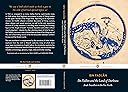
Ibn Fadlan and the Land of Darkness: Arab Travellers in the Far North (Penguin Classics)
Product ID: 51129983
Buy anything from 5,000+ international stores. One checkout price. No surprise fees. Join 2M+ shoppers on Desertcart.
Desertcart purchases this item on your behalf and handles shipping, customs, and support to Kyrgyzstan.
Buy Ibn Fadlan and the Land of Darkness: Arab Travellers in the Far North (Penguin Classics) 1 by Paul Lunde, Caroline E.M.Stone (ISBN: 9780140455076) from desertcart's Book Store. Everyday low prices and free delivery on eligible orders. Review: No Unicorns, Just a Great Read. - It's funny how one thing leads to another. I watched the most enjoyable Viking romp "The 13th Warrior", a feature film that starred Antonio Banderas as an improbable and clean shaven Ibn Fadlan the 10th century Arab traveller. I then discovered the film was based on "Jurassic Park" author Michael Crichton's book "Eaters of the Dead". Turns out that Crichton was so impressed with reading a passage from Ibn Fadlan's travels whilst on an anthropology course that he decided to write his first book. This little book interweaves some of Fadlan's observations with the Beowulf legend, and is a most entertaining read. That Crichton's first book was so successful owes much to Ibn Fadlan. Anyway to get back on track, this of course lead me to read "Ibn Fadlan and the Land of Darkness", and it was a case of leaving the very best till last! Fadlan's book is a priceless piece of work, if only for it's incredible eyewitness account of a Viking ship cremation, involving the ritualistic killing of a slave girl to accompany her dead master into paradise. The killing is carried out by the haunting figure of the "Angel of Death", who resembled the Incan executioners of young children on high Andean mountains. This makes for genuinely shocking reading. One has to be impressed by Fadlan's objectivity. Much of what he saw appalled him, such as the Viking habit of openly copulating with their slave girls in public. He was a devout Muslim, but none the less shrugged aside his own prejudices to give a clear and truthful account of what he saw. Whilst expressing disapproval he always gets straight back to his unblinkered observations. Fadlan is refreshing in comparison to the other Arab travellers accounts in this book, who are more restricted by their strong faith. His account is also remarkably free of the 'mirabilia' so beloved of medieval readers in the tradition of that great father of lies Herodotus. No unicorns or minotaurs in this little book thankfully! Part 2 of the book is the "Travels of Abu Hamid Al-Andalusi Al-Gharnati, 1130-1155. This man who lived to the venerable age of 90 was an incredible traveller, who travelled from Spain to North Africa and thence onto Alexandria, Cairo and Baghdad. It is his journey north from Baghdad that is covered in this book, where he travels to the frozen upper reaches of the Volga via Bukhara. The author gives interesting accounts of such varied subjects as Sturgeon, beaver, the practical use of skis, mammoth ivory and slave girls. Whilst he is not quite as objective or as entertaining as Fadlan, it is still a fascinating read. Part 3 of the book is "Passages From other Geographers, Historians and Travellers". This contains an extract from perhaps the most famous medieval traveller of them all Marco Polo, who talks about dog sleds and life in the far north. This was of course information gleaned from a second party. The rest are all accounts from Arab writers, the pick being perhaps Ibn Hayyan's account of the Viking sacking of Seville in 844 and Mas'udi's account of of a Viking raid in the Caspian in 913. The book has a useful introduction by Paul Lunde and Caroline Stone, and contains six useful maps to give a quick overview of the journeys undertaken with the geographical areas in question. There is a small glossary at the back and a set of notes that I devoured as I read the book. Although not a cheap book by any means you do get a lot for your money. This one is up to the usual very high standards that Penguin classics have been maintaining since 1946. For what it is worth it has my hearty seal of approval! Review: Page turner - Excellent book...meaning to read this for a while. Not disappointed...and Arab traveler to land of the norsemen. Get this book you will not be disappointed .
| Best Sellers Rank | 60,766 in Books ( See Top 100 in Books ) 41 in History of Discovery & Exploration 104 in Religious History of Islam 597 in Travel Writing (Books) |
| Customer reviews | 4.6 4.6 out of 5 stars (686) |
| Dimensions | 19.56 x 12.7 x 2.03 cm |
| Edition | 1st |
| ISBN-10 | 0140455078 |
| ISBN-13 | 978-0140455076 |
| Item weight | 226 g |
| Language | English |
| Print length | 256 pages |
| Publication date | 1 Dec. 2011 |
| Publisher | Penguin Classics |
B**R
No Unicorns, Just a Great Read.
It's funny how one thing leads to another. I watched the most enjoyable Viking romp "The 13th Warrior", a feature film that starred Antonio Banderas as an improbable and clean shaven Ibn Fadlan the 10th century Arab traveller. I then discovered the film was based on "Jurassic Park" author Michael Crichton's book "Eaters of the Dead". Turns out that Crichton was so impressed with reading a passage from Ibn Fadlan's travels whilst on an anthropology course that he decided to write his first book. This little book interweaves some of Fadlan's observations with the Beowulf legend, and is a most entertaining read. That Crichton's first book was so successful owes much to Ibn Fadlan. Anyway to get back on track, this of course lead me to read "Ibn Fadlan and the Land of Darkness", and it was a case of leaving the very best till last! Fadlan's book is a priceless piece of work, if only for it's incredible eyewitness account of a Viking ship cremation, involving the ritualistic killing of a slave girl to accompany her dead master into paradise. The killing is carried out by the haunting figure of the "Angel of Death", who resembled the Incan executioners of young children on high Andean mountains. This makes for genuinely shocking reading. One has to be impressed by Fadlan's objectivity. Much of what he saw appalled him, such as the Viking habit of openly copulating with their slave girls in public. He was a devout Muslim, but none the less shrugged aside his own prejudices to give a clear and truthful account of what he saw. Whilst expressing disapproval he always gets straight back to his unblinkered observations. Fadlan is refreshing in comparison to the other Arab travellers accounts in this book, who are more restricted by their strong faith. His account is also remarkably free of the 'mirabilia' so beloved of medieval readers in the tradition of that great father of lies Herodotus. No unicorns or minotaurs in this little book thankfully! Part 2 of the book is the "Travels of Abu Hamid Al-Andalusi Al-Gharnati, 1130-1155. This man who lived to the venerable age of 90 was an incredible traveller, who travelled from Spain to North Africa and thence onto Alexandria, Cairo and Baghdad. It is his journey north from Baghdad that is covered in this book, where he travels to the frozen upper reaches of the Volga via Bukhara. The author gives interesting accounts of such varied subjects as Sturgeon, beaver, the practical use of skis, mammoth ivory and slave girls. Whilst he is not quite as objective or as entertaining as Fadlan, it is still a fascinating read. Part 3 of the book is "Passages From other Geographers, Historians and Travellers". This contains an extract from perhaps the most famous medieval traveller of them all Marco Polo, who talks about dog sleds and life in the far north. This was of course information gleaned from a second party. The rest are all accounts from Arab writers, the pick being perhaps Ibn Hayyan's account of the Viking sacking of Seville in 844 and Mas'udi's account of of a Viking raid in the Caspian in 913. The book has a useful introduction by Paul Lunde and Caroline Stone, and contains six useful maps to give a quick overview of the journeys undertaken with the geographical areas in question. There is a small glossary at the back and a set of notes that I devoured as I read the book. Although not a cheap book by any means you do get a lot for your money. This one is up to the usual very high standards that Penguin classics have been maintaining since 1946. For what it is worth it has my hearty seal of approval!
F**S
Page turner
Excellent book...meaning to read this for a while. Not disappointed...and Arab traveler to land of the norsemen. Get this book you will not be disappointed .
S**N
Interesting history of different cultures
Good read top
J**D
This was a fascinating book, it gave insight into ...
This was a fascinating book, it gave insight into the world as it appeared to this explorer, and then enabled comparisons to be made with the world as it was found by later adventurers. Also interesting how the legend of the dark north of the apocalypse proved resistant to all empirical evidence to the contrary
L**N
Fantastic
I loved this book because it has that refreshing aspect of early islam no mullah standing behind you telling you what to think. It was a time before Islam adopted a priesthood, which id prohibited in Islam. Ibn Fadlan was an honest traveller and virtually modern - I mean he could have lived any time within the last 100 years.
C**M
Alfred the Great was not the King of England
Had some concerns about historical accuracy when time line showed Alfred the Great as King of England instead of Wessex and no mention of the creation of England roughly a hundred years later.
M**R
Very enjoyable read includes several other short accounts by other authors
very enjoyable account of a Muslim explorer and ambassador's journey to northern Russia in the 10th century. Good observations along the way. This book includes several other similar though shorter accounts by other contemporaneous authors. All very enjoyable and a good buy. If this review was helpful please click the yes button
B**1
Great Book, Good Read.
Great Book, Good Read.
F**D
This is a good book. 3 stars because the cover on the bottom side of the spine was torn. Had to fix it with glue. Feeling too lazy to return it. Micheal Crichton's Eaters Of The Dead (The 13th Warrior starring Antonio Banderas) was a mashup of Ibn Fadlan's manuscript and the Beowulf saga. Ibn Fadlan's account of his journey is only about 60 pages long. Another 150 pages are reports by other Arab travellers, geographers and historians of medieval expeditions to the northlands. This edition has a lot of maps, a good bibliography for furthur reading, appendices and a glossary of Arab, Turkish words. Gog and Magog get the usual traditional treatment and are even represented on the medieval map on the cover. The scientific facts stated by the travellers are not accurate but these accounts give a keen insight into the social and cultural mores of people living in central-northern Europe in those times. Good for research as well as general reading.
C**S
Very good book, easy read.
D**D
As someone who has always had an interest in the middle ages but never read any books on the subject, or done any research on it, this was very enjoyable and readable. I had previously assumed that Vikings and Arabs never ranged anywhere near each other, but in truth both of their trading routes extended throughout Europe at this time. The book even details a few Viking raids on settlements within the Muslim empire. Of especial interest to me was the Arab accounts of the mythical "Alexander's Wall", according to Muslim myth built somewhere in the far north in ancient times to keep Gog and Magog at bay--these being tribes of giants and savages that would one day break through the wall and destroy all civilization, bringing about the apocalypse. I can't help but notice that this myth seems to have inspired George R.R. Martin's Song of Fire and Ice series. Some of the descriptions of northern cultures in this book are so gruesome, however, that they make Martin's Game of Thrones look like a fairytale for children-- I'm referring of course to the eyewitness account of a Viking ship cremation funeral which seems to be one of the main advertising points for this book. The Viking ship cremation is portrayed so often in modern media as a glorification of the Viking culture, but what they conveniently leave out in these depictions is the sexual orgies and subsequent sacrifice of slave girls, and the butchering of horses, chickens, etc., the meat of which is all piled high on top of the deceased noble so that they can serve him in the afterlife. The author goes into great detail about this whole process, objectively reporting it without any emotional input. If you're like me you'll struggle with the Muslim names and terms, but keeping track of all the individuals in the book is not needed in order to enjoy it. Another con is that later in the book some of the accounts become repetitive, talking excessively about some of the more uninteresting aspects of furs and trading, etc., but after wading through a few pages of that you'll surely find something new of interest.
N**A
Una de las fuentes básicas para el estudio de la cultura eslava oriental. Imposible de encontrar en español. Esta edición es muy buen compendio de esas fuentes árabes.
F**O
Great edition for a book that every man in love with history and culture should read and know. Well done and printed, the paperback is strong and the book structure is very reader-friendly. I think the english translation is good (unfortunately the italian version of the manuscript is not complete). Delivered quickly (I'm from Italy).
Trustpilot
2 weeks ago
2 weeks ago