
Desertcart purchases this item on your behalf and handles shipping, customs, and support to Kyrgyzstan.
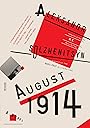
The Russian Nobelist's major work, back in print for the centenary of World War I and the Russian Revolution In his monumental narrative of the outbreak of the First World War and the ill-fated Russian offensive into East Prussia, Aleksandr Solzhenitsyn has written "a dramatically new interpretation of Russian history" (Nina Krushcheva, The Nation ). The assassination of the tsarist prime minister Pyotr Stolypin, a crucial event in the years leading up to the Revolution of 1917, is reconstructed from the alienating viewpoints of historical witnesses. The sole voice of reason among the advisers to Tsar Nikolai II, Stolypin died at the hands of the anarchist Mordko Bogrov, and with him Russia's last hope for reform perished. August 1914 is the first volume of Solzhenitsyn's epic, The Red Wheel ; the second is November 1916 . Each volume concentrates on a critical moment or "knot" in the history of the Russian Revolution. Review: Unbelievable history of Russia at the start of the first world war - Salsa Nixon is an incredible writer and more and incredible mind he talks about Russia and its position and roll at the beginning of time in the middle of 1914 at the beginning of the first world war the scope is incredible covers in normous historical aspects of Russia and Eastern Europe from the late 19th century through the early part of the 20th century the book is extremely optimistic and sees a liberal Russia coming out of the reforms of 1905 1914 but ends on a very pessimistic note as you see the level of corruption in both the government and the army and its inability to replace ineffective leaders extraordinary Brooke lively characters wonderful descriptive war pieces you brings the entire area to life truly one of the world's most magnificent authors novelist and historical writers although this book is not ahistorical work it is based on extensive research and enormous numbers of verified accounts of the. Wonderful book Review: Another crushing indictment ... - I have been a Solzhenitsyn fan since the 1970s. I read his Gulag trilogy and it struck me to my core ("There is no law" -- how prophetic is that?) I idolized his acerbic treatment of the hypocrisy of the inherited Soviet establishment, the Soviet "workers' paradise", and the "new Soviet man", which proved to be total fabrications once the USSR collapsed. I read the original trade release of August 1914, which is a much-stripped down narrative from the larger, more intimidating version I just finished reading. The larger tome expands the original narrative, delves more deeply into aspects of the coming revolution which were not covered in the earlier version, and serves as another crushing indictment of the personalities, institutions and forces which little understood (or cared to understand) what was happening to or around them. Like a foreboding tragedy, this first installment in the Red Wheel cycle sets the "wheel turning" (so to speak), and not in a positive sense. His masterful descriptions and character sketches make for compelling reading and broaden the understanding of the building cataclysm, which unleashed political dynamics we are still dealing with in Putin's attempted Soviet-style revival. Truly worth the time and effort invested.
| Best Sellers Rank | #603,840 in Books ( See Top 100 in Books ) #105 in World War I Historical Fiction (Books) #107 in Historical World War I Fiction (Books) #2,206 in Military Historical Fiction |
| Customer Reviews | 4.6 out of 5 stars 228 Reviews |
K**R
Unbelievable history of Russia at the start of the first world war
Salsa Nixon is an incredible writer and more and incredible mind he talks about Russia and its position and roll at the beginning of time in the middle of 1914 at the beginning of the first world war the scope is incredible covers in normous historical aspects of Russia and Eastern Europe from the late 19th century through the early part of the 20th century the book is extremely optimistic and sees a liberal Russia coming out of the reforms of 1905 1914 but ends on a very pessimistic note as you see the level of corruption in both the government and the army and its inability to replace ineffective leaders extraordinary Brooke lively characters wonderful descriptive war pieces you brings the entire area to life truly one of the world's most magnificent authors novelist and historical writers although this book is not ahistorical work it is based on extensive research and enormous numbers of verified accounts of the. Wonderful book
B**E
Another crushing indictment ...
I have been a Solzhenitsyn fan since the 1970s. I read his Gulag trilogy and it struck me to my core ("There is no law" -- how prophetic is that?) I idolized his acerbic treatment of the hypocrisy of the inherited Soviet establishment, the Soviet "workers' paradise", and the "new Soviet man", which proved to be total fabrications once the USSR collapsed. I read the original trade release of August 1914, which is a much-stripped down narrative from the larger, more intimidating version I just finished reading. The larger tome expands the original narrative, delves more deeply into aspects of the coming revolution which were not covered in the earlier version, and serves as another crushing indictment of the personalities, institutions and forces which little understood (or cared to understand) what was happening to or around them. Like a foreboding tragedy, this first installment in the Red Wheel cycle sets the "wheel turning" (so to speak), and not in a positive sense. His masterful descriptions and character sketches make for compelling reading and broaden the understanding of the building cataclysm, which unleashed political dynamics we are still dealing with in Putin's attempted Soviet-style revival. Truly worth the time and effort invested.
P**A
This is a brilliant - but long - novel that magnificently represents the ...
This is a brilliant - but long - novel that magnificently represents the triumphs and foibles of the German-Russian clash of 1914. The first part was fascinating and almost page-turning and has one shaking one's head in disbelief. I have now gotten to a point where I a bit bogged down in some family reminiscences about an uncle who was an anarchist. I am hoping to plow through this and enjoy more of what the first part was like. Solzhenitsyn is, of course, brilliant, and if you want to get a feel for what the Russian soldier was like in WWI, to check out all the myths, I can hardly think of a better thing to read.
R**N
Fascinating History
Solzhenitsyn gives a fascinating view into the inner workings of the Russian army and the life of its citizenry as WWI begins. This prelude to the revolution and the Stalinist Era is an excellent read for anyone interested in the Genesis of the Russian state.
D**Y
Best Translation of an Epic Work
"August 1914" kicks off the epic "Red Wheel" as Solzhenitsyn tries to capture the coming of the Russian Revolution in a series of novels. Another man's book is on Solzhenitsyn's mind; how can a Russian novelist write an epic on war and not confront Tolstoy and "War and Peace"? Tolstoy even makes a brief appearance at the start of the book. Solzhenitsyn guides the reader through the disastrous Russian invasion of East Prussia in August 1914 and unveils a number of characters-some real and some imaginary. There are haunting portraits of General Samsanov and Tsar Nicholas II. There are also descriptions of the battle and Solzhenitsyn's background from World War Two help him a great deal; these are some of the greatest battle scenes I have ever read. He guides the reader through the staff headquarters and to the front lines. He also offers unforgettable characters drawn from all of Russian society: a well off family at home, young officers connecting with the men, radical students, gentle peasants serving as troops. While his narrative is excellent, Solzhenitsyn is not as strong when he attempts to mimic the "camera eye" used by John Dos Passos in the USA trilogy. Nor does he quite succeed when he lists a number of headlines from the newspapers or offers detailed history in small print. But these are minor flaws that do not take away from the grand epic. If you are reading the work in English, make sure you use the version translated by H.T. Willetts that was released in 1989 and FSG published the paperback in 2000. This is the translation included in the Kindle. This version, unlike the original, contains a scathing look at Lenin as well as a detailed description of the rise and death of Stolypin, the one Russian statesman who may have been able to lead Tsarist Russia through the chaos it would succumb to during the Great War. Be warned. This is an epic undertaking. The book is almost a 1,000 pages and I advise you keep notes on characters, events and places. This is not a book for everyone. But it is a great epic and, if not up to the level of "War and Peace", "August 1914" is still in the same ballpark. How many other recent novels can we make that claim about?
L**G
The 20th Century's "War and Peace".
As critic Daniel Mahoney notes, comparisons between Solzhenitsyn's and Tolstoy's masterpieces are not uncommon. They share a massive historical sweep and delve into historical, moral and religious concerns. Yet, as Mahoney notes, Solzhenitsyn is the anti-Tolstoy. Tolstoy is referenced several times and even makes an appearance in Solzhenitsyn's novel, but is never treated favorably. Solzhenitsyn's concern is with Russia's catastrophic defeat at the Battle of Tannenberg at the beginning of World War I, and with the events that led up to it. Behind all the events of the novel stands the shadow of the Russian Revolution to which these events will give rise. Solzhenitsyn sees Tolstoy as one of the intellectual influences on the Russian intelligentsia that helped produce the milieu from which the Revolution sprang. The war triggered the Revolution, but did no create it. Nor was the Revolution inevitable, but each turn away from it is thwarted The carefully drawn characters and sweeping action illuminate timeless concerns about the role of chance (or Providence) in human history and individual human lives, and about the power of ideas to change the world for both good and evil.
S**N
This is an eye opener.
August 1914 is probably the greatest book I have ever read, but it is not for someone wanting an quick, easy read. It is a marathon to get through. Not only is it a long book, but it is also a very dense book. You're forced to stop after every couple of pages and ponder what you've just read, because this book is simply filled to the brim with edifying content that truly sheds light on our modern age, content that you'll likely miss if you treat it like any other book and try to speed through it. I whole heartedly recomend this book to any and every person, especially those interested in history.
M**D
I bought this one on the strength of the amazing Day In The Life of Ivan Denisovich
I bought this one on the strength of the amazing Day In The Life of Ivan Denisovich. It is not up to the level of that one (but how could it be?) but is still a great ride. It is mainly the story of the 1st month of the Great War, from the point of view of various Russian officers. It takes a sharp turn, both in story and style, back through many years, to bring us up to date with the revolutionary movement back home...this part was 3 stars, and the main story is 5 stars, and I guess that averages 4 stars, hence my rating. This book is 896 pages - whew! That's in War and Peace territory - if you're looking for your first book by the Nobel-winning Solzhenitsyn, I would say go with Ivan Denisovich instead.
M**S
Russia history through his eyes
Again I love Russian history. The author writes about the times before the Bolshevik revolution including many historical facts and persons. So much depth of details just amazing. Reads a little like propaganda in some spots but does not lean either way, just sort of puts it all out there. Would recommend to all history buff’s.
K**Y
Critical insights into the Red Army today
Solzhenitsyn puts you right amidst a major battle as no other writer has done. I never read a book twice, except for this one. It's just that good.
H**K
The quality of the paper is the worst I’ve seen
I love the book and as it’s pretty much out if print elsewhere I’ll put up with the paper quality. But it is awfully thin.
M**O
An extraordinary fresco
After closing this long and dazzling book, it is difficult to find yourself again in 2022. You have the impression of having lived in 1914, of having intensely participated to the beginnings of Word War I( on the Russian side), having been lost among the woods and lakes of Mazuria (then part of Oriental Prussia), of having been in the secrets of this disastrous campaign. Then suddenly you find yourself immersed in the personal life, thoughts, cares, journeys, of the tsar Nicolas II and the probles of Russia during the far from peaceful years before the 1917 Revolution. You are also introduced in the students circles, met some revolutionary youths, and follow the breathtaking story (a real thriller) of a young rich intellectual who decides to shoot the Prime Minister and who follows his plan to the end through the involvment of officials from the police to whom he acts as a fake indicator.. All this is written in a masterly way, giving you a feeling of reality, authenticity and with also (a Russian speciality), a psychological insight in the minds of the (many) characters all looking for a future and a meaning to their lives. This stunning book, based on an enormous documentation is undoubtedly a masterpiece and an extraordinary historical testimony.
Trustpilot
2 weeks ago
4 days ago