
Buy anything from 5,000+ international stores. One checkout price. No surprise fees. Join 2M+ shoppers on Desertcart.
Desertcart purchases this item on your behalf and handles shipping, customs, and support to Kyrgyzstan.
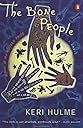
The powerful, visionary, Booker Award–winning novel about the complicated relationships between three outcasts of mixed European and Maori heritage “This book is just amazingly, wondrously great.” —Alice Walker In a tower on the New Zealand sea lives Kerewin Holmes: part Maori, part European, asexual and aromantic, an artist estranged from her art, a woman in exile from her family. One night her solitude is disrupted by a visitor—a speechless, mercurial boy named Simon, who tries to steal from her and then repays her with his most precious possession. As Kerewin succumbs to Simon’s feral charm, she also falls under the spell of his Maori foster father Joe, who rescued the boy from a shipwreck and now treats him with an unsettling mixture of tenderness and brutality. Out of this unorthodox trinity Keri Hulme has created what is at once a mystery, a love story, and an ambitious exploration of the zone where indigenous and European New Zealand meet, clash, and sometimes merge. Winner of both a Booker Prize and Pegasus Prize for Literature, The Bone People is a work of unfettered wordplay and mesmerizing emotional complexity. Review: New Zealand aborigines in brilliant focus - I chose to read this novel because it received international awards when published in 1984, because it rated a 4.06 in goodreads.com--a very high score--and because I'd never read a work of fiction about New Zealand's aboriginal people. The story is narrated in first person by a woman who appears white but has some aboriginal blood, an artist who deeply associates with native traditions, and we first meet her living alone in a tower she designed and built herself with friends in a spiral form sacred to aborigines: the chambered nautilus so fascinating for all of us, and so often repeated throughout nature. She lives alone; something in her has broken, and she finds herself unable to paint or draw at all. She's been disconnected from her family as a deliberate point of will for some time, but the point has proven a psychic hara-kiri from which she suffers daily. One day she sees a boy in her window, a window higher than any boy should be. Gradually she comes to know him, even though she fairly despises children. This boy cannot talk. His complexion is fair and his hair, white blond, falls below his shoulders. He appears to be about seven years old physically but has the bearing or spirit, the indescribable something, of an old man. Eventually, she meets the man this boy knows as father, a full aborigine--so he can't be the boy's natural father. Like many disaffected peoples who suffer diaspora and discrimination, the man is struggling in life, financially and spiritually. He yearns for ancient traditions even while deliberately estranging himself from them. He drinks too much beer. But the artist and the man share a connection through the boy. Over time, they begin to act essentially as a family, although the artist is clear from the beginning they can never have a sexual relationship. She doesn't need or want sex. Catastrophe forces her to face visceral horrors that break them up in every conceivable way. Then reality and science begin to interweave with an alternate, mystic reality. The future and the past begin to coalesce, rising separately then intermingling, like smoke from different, nearby fires. Life progresses from one home to another as the characters and their story grow, leaving one home for the next, and the one after that, as the entire tale begins to form the familiar construct of a chambered nautilus, in which the animal inside accretes section by section as it grows and expands. I loved this story first for its tough, sophisticated, and modern intellectual assessments. I loved it for its grittiness. Then I hated its grittiness but was intrigued by the shift into mysticism. Finally, I was inspired. Where the spoken language is aboriginal, please be sure to refer to the glossary at the back of the book for the translation. I didn't realize there was a page-by-page translation until quite late, and I found it worthwhile to go back and read again with better understanding. Perhaps for this reason there is no Kindle version of the book. This novel is for folks who understand that all who wander are not lost. It is for seasoned readers eager to leap into a willing suspension of disbelief. For well-reasoned people capable of feeling their souls expand when they give up the need to decipher. Review: Provocative and Well Done - If you had problems with Joyce's Ulysses or Finnegan, this book will present a similar challenge, though more readable once you get used to the flow. Hulme is a brilliant, creative writer with a strong sense of narrative and the importance of detail presented with the sensibility and craftsmanship of a poet. Once you catch the drift of each character having an inner and an outer voice, as well as the usual good and bad selves at war within each of us, it becomes easier. Hulme is a spontaneous writer, but mostly careful in her use of punctuation to give you guidance to these voices. It will take reading the whole book to even begin to see the way Keri Hulme gathers, merges, and presents Maori and Celtic spirituality as simply another expression of all human condition. As a reader, I found myself questioning what was real, what was dream, what was afterlife, and how these various states are part of everything we do every day. It was interesting, beautiful, thought and debate provoking, a classic in my sense of the word, which means it is one of the books I intend to reread at least two more times before I depart this world --- if I ever do based on my reading of The Bone People.
| Best Sellers Rank | #88,464 in Books ( See Top 100 in Books ) #600 in Magical Realism #2,690 in Classic Literature & Fiction #5,374 in Literary Fiction (Books) |
| Customer Reviews | 4.3 out of 5 stars 565 Reviews |
K**T
New Zealand aborigines in brilliant focus
I chose to read this novel because it received international awards when published in 1984, because it rated a 4.06 in goodreads.com--a very high score--and because I'd never read a work of fiction about New Zealand's aboriginal people. The story is narrated in first person by a woman who appears white but has some aboriginal blood, an artist who deeply associates with native traditions, and we first meet her living alone in a tower she designed and built herself with friends in a spiral form sacred to aborigines: the chambered nautilus so fascinating for all of us, and so often repeated throughout nature. She lives alone; something in her has broken, and she finds herself unable to paint or draw at all. She's been disconnected from her family as a deliberate point of will for some time, but the point has proven a psychic hara-kiri from which she suffers daily. One day she sees a boy in her window, a window higher than any boy should be. Gradually she comes to know him, even though she fairly despises children. This boy cannot talk. His complexion is fair and his hair, white blond, falls below his shoulders. He appears to be about seven years old physically but has the bearing or spirit, the indescribable something, of an old man. Eventually, she meets the man this boy knows as father, a full aborigine--so he can't be the boy's natural father. Like many disaffected peoples who suffer diaspora and discrimination, the man is struggling in life, financially and spiritually. He yearns for ancient traditions even while deliberately estranging himself from them. He drinks too much beer. But the artist and the man share a connection through the boy. Over time, they begin to act essentially as a family, although the artist is clear from the beginning they can never have a sexual relationship. She doesn't need or want sex. Catastrophe forces her to face visceral horrors that break them up in every conceivable way. Then reality and science begin to interweave with an alternate, mystic reality. The future and the past begin to coalesce, rising separately then intermingling, like smoke from different, nearby fires. Life progresses from one home to another as the characters and their story grow, leaving one home for the next, and the one after that, as the entire tale begins to form the familiar construct of a chambered nautilus, in which the animal inside accretes section by section as it grows and expands. I loved this story first for its tough, sophisticated, and modern intellectual assessments. I loved it for its grittiness. Then I hated its grittiness but was intrigued by the shift into mysticism. Finally, I was inspired. Where the spoken language is aboriginal, please be sure to refer to the glossary at the back of the book for the translation. I didn't realize there was a page-by-page translation until quite late, and I found it worthwhile to go back and read again with better understanding. Perhaps for this reason there is no Kindle version of the book. This novel is for folks who understand that all who wander are not lost. It is for seasoned readers eager to leap into a willing suspension of disbelief. For well-reasoned people capable of feeling their souls expand when they give up the need to decipher.
T**L
Provocative and Well Done
If you had problems with Joyce's Ulysses or Finnegan, this book will present a similar challenge, though more readable once you get used to the flow. Hulme is a brilliant, creative writer with a strong sense of narrative and the importance of detail presented with the sensibility and craftsmanship of a poet. Once you catch the drift of each character having an inner and an outer voice, as well as the usual good and bad selves at war within each of us, it becomes easier. Hulme is a spontaneous writer, but mostly careful in her use of punctuation to give you guidance to these voices. It will take reading the whole book to even begin to see the way Keri Hulme gathers, merges, and presents Maori and Celtic spirituality as simply another expression of all human condition. As a reader, I found myself questioning what was real, what was dream, what was afterlife, and how these various states are part of everything we do every day. It was interesting, beautiful, thought and debate provoking, a classic in my sense of the word, which means it is one of the books I intend to reread at least two more times before I depart this world --- if I ever do based on my reading of The Bone People.
S**N
Didn’t finish reading
Interesting
R**G
Deserving of 10 Stars
This was one of the best books I've ever read, and I've read a lot. Of the books I love, my relationship to those books are intellectual. My experience with The Bone People was purely emotional. From the first page I was hooked and I never looked back. This is a gut-wrenching read and not for everyone. It is not an easy read. It is a book that will never leave you, with characters you will never forget. This is one of the most unique books I have ever read. It is a book that requires a careful read. It is a timeless story. It is a love story, but not at all in the traditional sense. It is a story of three very damamaged people (one is a child) who come together and with all people that love each other, they have the power to heal each other, and destroy each other and over the course of this novel they do all this and more. It's a story of redemption and second chances. It's a harrowing yet fascinating look at the Maori culture. If you're considering reading this book - do so. If you can't get into it right off the bat, stick with it. This book is like no other. It won the Booker back in the 80s. Very highly recommended.
A**E
Poetry of pain and humanity
I wanted to explore outside my comfort zone & discover a new author: and what a discovery this has been! The Bone People is among the most beautifully written, moving books I've read: I would rank it next to Virginia Woolf's The Waves and Faulkner's The Sound and the Fury; experimental to a point, but like Woolf, still clearly narrative and very poetical. Keri Hulme's prose skillfully weaves in Maori expressions, and sometimes I found myself so taken in by the sound of those consonants that I forgot I couldn't understand the language and check the explanatory notes at the end of the book. I won't summarize the story line: suffice it to say that it delves into the question what it means to be human, to be an outsider, to love & live with others, to face death, to face the truth about oneself. The language of the novel reflects the complexity of what it is to be human: it is multi-voiced, richly textured, vibrant, musical... What a treat!
S**E
A MYSTICAL VISION OF CHILD ABUSE
In the preface to her novel, “The Bone People,” author Keri Hulme explains the eccentricities and oddities in her writing that brought about numerous publishers’ rejections. After seeing her quiet rant, I knew the reading would be difficult and I wasn’t sure if my lethargy would get me through it. I reluctantly opened the book, struggled through early pages, and discovered I was doing okay. My diligence outdistanced my indolence and, indeed, I found the book riveting in its complexity and theme, if not terribly entertaining. New Zealander Kerewin Holmes lives in seclusion in a rustic six-story tower she built. When completed it was a skeletal structure of concrete and exposed wood that she adopted as her “glimmering retreat.” Part Maori, she is isolated after a breakup with her family with no desire of having people infringe on her solitude. Along comes a strange young boy, Simon, who refuses to leave her alone and eventually his father, Joe, joins him in disrupting her life. She develops a fondness for the boy, and eventually comes to enjoy the company of the father until the disturbing details of Joe’s physical punishment on his disturbed son comes apparent. Kerewin lays down the law to Joe on beating his son. But, as her relationship with Simon deepens, she too becomes victim to the boy’s irrational behavior and an explosive episode ends in disaster. The scenic beauty of New Zealand is masterfully depicted, as is the complex culture of the Maori. The brutality of the punishment of Simon is hard to take but essential in that the book is a study of human frailty and inability to cope with the behavior of a troubled child. The internal dialogue of the characters is difficult to follow at times but again is essential to the heart of the story. The entire gist of the story as the author has chosen to present it makes for strenuous reading, but I found method in the writer’s madness: It’s a mystical look at the difficulty of life with this type of child. A bit of a warning: This is neither glamorous nor frivolous writing and might be a turn off to some. There is no solid ending, only a sort of disappearing into obscurity. I found that it provided a different insight into a world we know little about and that’s the reason for my reading obsession. I want to experience the diversity I find in books. Schuyler T Wallace Author of TIN LIZARD TALES
P**S
My favorite novel
I recently recommended this book to an old friend, knowing he would love it...and he did. He loved it so much, and hearing him talk about it made me want to read it again...for the 4th time! It takes place in New Zealand and the 3 central characters are people you have never met before: Kerewin, an eccentric, brilliant, curmudgeonly recluse who is half Maori and lives in a stone tower on the beach, Simon,a mute wild child, seemingly of European descent, that shows up in her house one day, and the boy's Maori step father, Joe. The relationship that forms between this unlikely trio is unique, difficult, and poignant. The writing is also unique, brilliant, poetical. I could go on and on. I'll just finish by saying, it became my favorite book when I first discovered it in 1989 and I am happy to discover that it still is.
A**A
A great novel of the damage and healing families inflict
Keri Hulme's The Bone People breaks all the rules for me. I hate books that force me to struggle through the prose. I'm not a great fan of poetry. And I avoid stories of child abuse like the plague. So along comes The Bone People, which has the poetic density of the most abstruse 20th century poets, and it's the story of a child abused by his adopted father. And it is just plain gorgeous. Yes, the first chapter is tough (get through it, then after you've met the three main characters, go back and read it again: it's wonderful when you know what it's talking about). The writing becomes hypnotic; you don't read this book, you live it, you hear these people talking in your head when the book is closed. It makes you see your world differently. It was the best book I read in the decade of the '80s, and one of only a handful of books I have read twice. It's beauty does not fade on second reading. The Bone People is one of my desert island books.
M**N
Hard and Earthy
A hard, but rewarding read; Keri Hulme takes us into the company of three damaged people in a small New Zealand community. Kerewin is disturbed by the sudden presence of Simon, the mute six year old, who has a propensity for trouble. When his polite father arrives to execute his son's intrusion, she recognises him as the mouthy drunk she recently saw in the local pub. There is a terrible violence underpinning the relationship of father and son along with a great affection which is gradually revealed through the interaction of the main characters. The tie that binds them is woven tight and results in Kerewin's consummate work of art that will hold them together forever. Somewhere underneath the tangled emotional web runs a Maori sensibility that surfaces in a mystical revelation when the three are forcibly separated. Subconscious archetypes abound as the story moves to an equable conclusion. The language can be evocatively descriptive, earthily direct, or bilingual. In some ways it mirrors the art that Kerewin is working so hard to create. This is a deeply involving book that takes the reader on an almost spiritual quest. Its happy ending is of its time for with such content it would be unlikely that an author now would allow such a "satisfactory" conclusion; the world and its attitudes have moved on.
D**D
Zuerst verwirrend, dann wunderschön!
Der Schreibstil ist gewöhnungsbedürftig, aber nach einer Weile hat man sich eingelesen und kann kaum noch aufhören weiterzulesen. Die Autorin erzählt die Geschichte einfühlsam und spannend, dennoch bleibt genügend Zeit die Umgebung so ausführlich zu beschreiben, dass man als Leser keine Probleme hat sich das Haus oder die Wälder vor seinem inneren Auge vorzustellen!
I**L
A beautifully written book and compelling story
I had originally read this as a library book. Liked it so much I had to buy it. My favorite author is Tim Winton and Keri Hulme's work is now just behind him. Woe, that she has not written any more. The story is one of aboriginal peoples and their relationship with their invaders and how they have altered the tribal world. The style is fluid but intense and the story is compelling - a boy washes up as the only survivor of a boat wreck on the western shore of New Zealand's South Island. He does not speak. The story is about how that silence produces emotions and actions in those who would care for him.
A**A
Booker Prize winner
Bought as a gift for a friend. First read this decades ago when 1st published. The story stays with you forever. New Zealand's first Booker Prize winner.
J**S
bad quality print
The quality of the book make it seem as if it were a copy from the original.
Trustpilot
1 week ago
4 days ago