We remain fully operational. Our teams are working around the clock to ensure your deliveries continue safely.

DOWNLOAD THE APP


Customer Services
Copyright © 2025 Desertcart Holdings Limited
DOWNLOAD THE APP
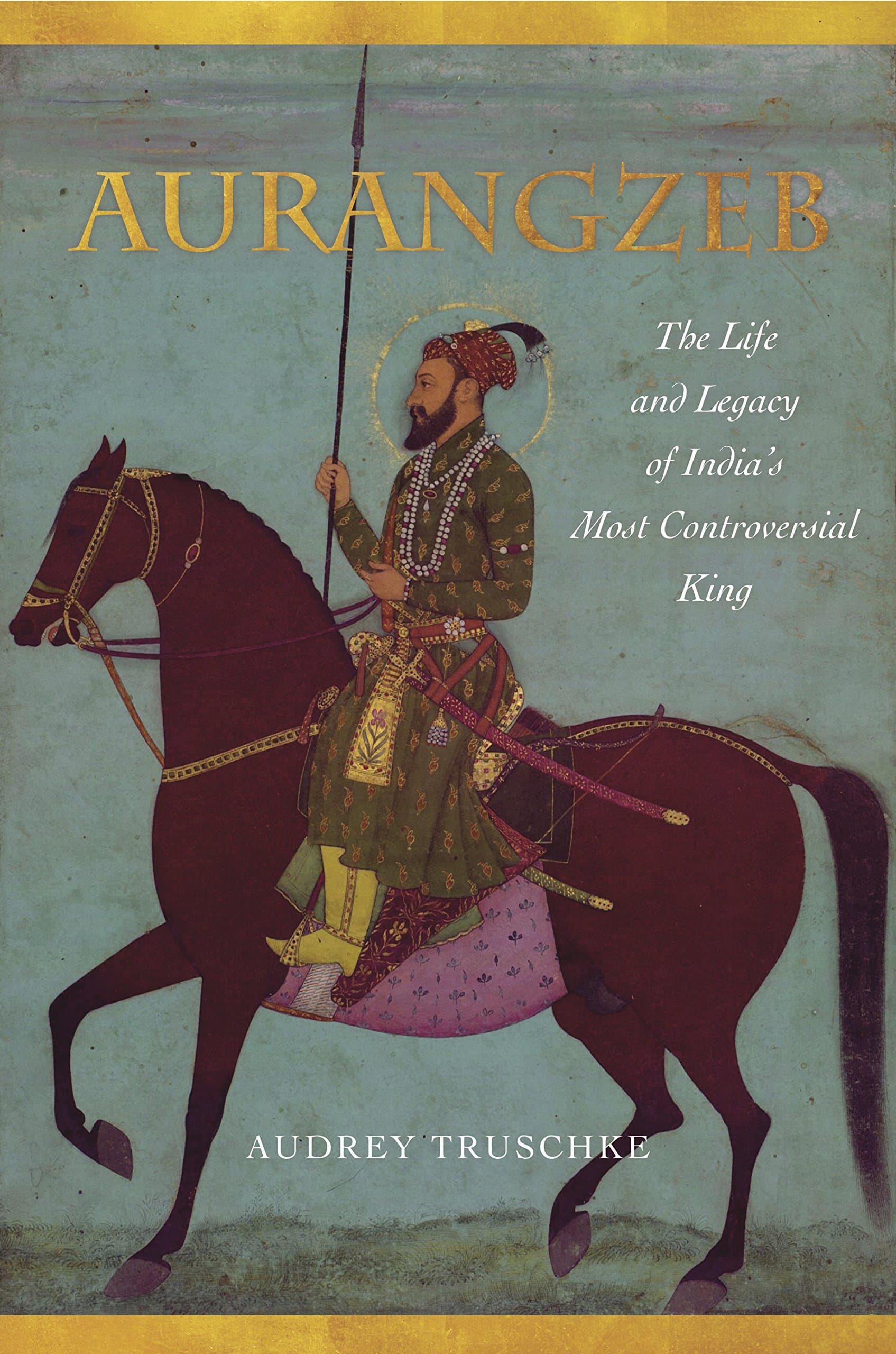
desertcart.com: Aurangzeb: The Life and Legacy of India's Most Controversial King: 9781503602571: Truschke, Audrey: Books Review: Groundbreaking. Spellbinding. Fascinating. - The world always remembers the bravest – those who have the courage to bravely stand up against the despots of each age. When it comes to taking a stand against the pseudo-history being created by India’s ultra right wing Hindutva groups, the names of famous historians such as Romila Thapar, and Richard Eaton immediately come to mind. Now add the name of Audrey Truschke to this esteemed group of scholars. Over the ages, the fertile lands of India have constantly attracted wave after wave of peoples to migrate and settle on its vast lands. From the natives in the Mesolithic and Neolithic ages, followed by the Harappans, then the Aryans, the Achaemenids, the Greeks, the Magadhans, the Scythians, the Parthians, the Huns, and finally the Muslims made India its home and hearth. The two things common to all these groups was that they all made India their permanent home - living and dying here, and secondly, none of these groups transferred wealth out of India. Firaq Gorakhpuri, the great Urdu poet wrote about these successive waves of people that made India into the grand mosaic that it now is, as follows: Sar Zamin-e-Hind par aqwaam-e-alam ke firaq Qafile guzarte gae Hindusthan banta gaya (Translation: On the lands of Hind, caravans from around the world kept arriving; and India kept taking shape) Fast forward to the British colonial period, and we see an abrupt departure from the tradition to settle on this land. The British came not to settle here, but to steal and ship all the wealth out of the country; tombstones of British civil servants who died in India unexpectedly due to disease mention of the sadness in dying in an alien land. The Persian term “Hindu,” is a geographical identifier, under which the colonial British lumped together all non-Muslim residents of India, to serve their nefarious divide-and-rule policy. The British created this myth that people of the sub-continent before the Muslims’ arrival followed a single homogeneous, indigenous religion called Hinduism, which was always at loggerheads with an alien invading religion Islam. In this colonial narrative you had “good Muslims” like Akbar who had given up Islam and adopted “Hindu beliefs” such as daily worship of the Sun; and then you had the “terrible Muslims” like Aurangzeb who dared to follow his Islamic beliefs, although, he was overall a very good and just administrator to all his subjects. The ultra right wing Hindutva groups in India adopted the colonial narrative of history, as it helped them unite the diverse Indian religions into a single entity, based on a perceived common enemy – the Muslims. Audrey Truschke’s book “Aurangzeb: The life and Legacy of India’s most controversial king,” removes the hate-lenses from our eyes, so that we could see Aurangzeb for what he actually was. Using original Persian sources, Dr. Truschke shows us an efficient ruler who cared deeply for all subjects regardless of their religious beliefs. He appointed 50% more Hindu Rajas to his court then did the much touted Akbar. He granted lands and money for the building of Hindu temples. Truschke writes, “In reality Aurangzeb pursued no overarching agenda vis-à-vis Hindus within his state. ‘Hindus’ of the day often did not even label themselves as such and rather prioritized a medley of regional, sectarian, and caste identities (e.g. Rajput, Maratha, Brahmin, Vaishnava). As many scholars have pointed out, the word Hindu is Persian, not Sanskrit, and only became commonly used self-referentially during British colonialism.” Truschke points out that Aurangzeb was fluent in Hindi from childhood, and quotes the Italian traveler Niccoli Manucci about Aurangzeb “He was of a melancholy temperament, always busy at something or another, wishing to execute justice and arrive at appropriate decisions.” She also quotes Ishvaradasa, a Hindu astrologer, who wrote about Aurangzeb in Sanskrit in 1663 calling the king righteous (dharmya) and even noted that the King’s tax policies were lawful (vidhivat). She also quotes the following stanza authored by Chandar Bhan Brahman, a Hindu, Persian-medium poet in Aurangzeb’s employ: O King may the world bow to your command; May lips drip with expressions of thanks and salutations; Since it is your spirit that watches over the people, Wherever you are, may God watch over you! She continues “Hindus fared well in Aurangzeb’s massive bureaucracy, finding employment and advancement opportunities. Since Akbar’s time, Rajputs and other Hindus had served as full members of the Mughal administration. Like their Muslim counterparts, they received formal ranks known as mansabs that marked their status in the imperial hierarchy and fought to expand the empire.” Truschke quotes Aurangzeb’s February 1659 farman “You must see that nobody unlawfully disturbs the Brahmins or other Hindus of that region, so that they might remain in their place and pray for the continuance of the Empire.” Truschke concludes “I have argued that Aurangzeb acted according to his ideals of justice, commitment to political and ethical conduct (adaab and akhlaq), and the necessities of politics. Aurangzeb’s worldview was also shaped by his piety and the Mughal culture he inherited. He was not interested in fomenting Hindu-Muslim conflict – a modern obsession with modern stakes- but he was fixated on dispensing his brand of justice, upholding Mughal traditions, and expanding his grip across the subcontinent.” A spellbinding, fascinating, absolute must read! Review: I really enjoyed reading Prof - I really enjoyed reading Prof. Audrey Truschke's book on Emperor Aurangzeb. I grew up in Lahore and visited/saw Badshahi Masjid every week and always marveled at the site of that majestic religious monument. I did not know a lot about the Mughals, I knew their lineage/ names and the important contributions they made to the world especially in architecture (Taj Mahal, Shalimar Gardens, Lahore Fort to name a few). I was always fascinated by their beautiful buildings and symmetrical gardens that are unmatched by any other race or religion. I did not know that Aurangzeb is a controversial name in India, because in Pakistan he is generally regarded as any other Mughal emperor and held in high esteem. However, after going through the book, it became apparent that a certain political party in India in whipping up religious passions by accusing him of being a monster who could do nothing right. The author has very skillfully navigated through the passions and presented nothing but facts based on extensive research. I was very pleasantly surprised to know that a Professor from Rutgers University knows more about Mughals and Aurangzeb than most people in Pakistan or India. The facts are very clear as put forward by the author, that if Aurangzeb was a religious bigot bent upon killing off all Hindus, there wont be a lot of them left and the same goes for all the temples. Additionally, he employed people from all religions in his administration. Aurangzeb was a expansionist ruler from the 17th century and he should be judged according to that era. He did nothing that the others like him were not doing at that time. He was equal opportunity in his ruthlessness and showed no mercy to his Muslim rivals either. The Mughal empire under him saw the most expansion and was bigger than present day India. Kudos to the author. Looking forward to reading more Mughal stuff from her.
| Best Sellers Rank | #364,617 in Books ( See Top 100 in Books ) #6 in Historical India & South Asia Biographies #21 in India History #181 in History of Islam |
| Customer Reviews | 4.3 4.3 out of 5 stars (250) |
| Dimensions | 5 x 0.38 x 8 inches |
| Edition | 1st |
| ISBN-10 | 1503602575 |
| ISBN-13 | 978-1503602571 |
| Item Weight | 2.31 pounds |
| Language | English |
| Print length | 152 pages |
| Publication date | May 16, 2017 |
| Publisher | Stanford University Press |
M**A
Groundbreaking. Spellbinding. Fascinating.
The world always remembers the bravest – those who have the courage to bravely stand up against the despots of each age. When it comes to taking a stand against the pseudo-history being created by India’s ultra right wing Hindutva groups, the names of famous historians such as Romila Thapar, and Richard Eaton immediately come to mind. Now add the name of Audrey Truschke to this esteemed group of scholars. Over the ages, the fertile lands of India have constantly attracted wave after wave of peoples to migrate and settle on its vast lands. From the natives in the Mesolithic and Neolithic ages, followed by the Harappans, then the Aryans, the Achaemenids, the Greeks, the Magadhans, the Scythians, the Parthians, the Huns, and finally the Muslims made India its home and hearth. The two things common to all these groups was that they all made India their permanent home - living and dying here, and secondly, none of these groups transferred wealth out of India. Firaq Gorakhpuri, the great Urdu poet wrote about these successive waves of people that made India into the grand mosaic that it now is, as follows: Sar Zamin-e-Hind par aqwaam-e-alam ke firaq Qafile guzarte gae Hindusthan banta gaya (Translation: On the lands of Hind, caravans from around the world kept arriving; and India kept taking shape) Fast forward to the British colonial period, and we see an abrupt departure from the tradition to settle on this land. The British came not to settle here, but to steal and ship all the wealth out of the country; tombstones of British civil servants who died in India unexpectedly due to disease mention of the sadness in dying in an alien land. The Persian term “Hindu,” is a geographical identifier, under which the colonial British lumped together all non-Muslim residents of India, to serve their nefarious divide-and-rule policy. The British created this myth that people of the sub-continent before the Muslims’ arrival followed a single homogeneous, indigenous religion called Hinduism, which was always at loggerheads with an alien invading religion Islam. In this colonial narrative you had “good Muslims” like Akbar who had given up Islam and adopted “Hindu beliefs” such as daily worship of the Sun; and then you had the “terrible Muslims” like Aurangzeb who dared to follow his Islamic beliefs, although, he was overall a very good and just administrator to all his subjects. The ultra right wing Hindutva groups in India adopted the colonial narrative of history, as it helped them unite the diverse Indian religions into a single entity, based on a perceived common enemy – the Muslims. Audrey Truschke’s book “Aurangzeb: The life and Legacy of India’s most controversial king,” removes the hate-lenses from our eyes, so that we could see Aurangzeb for what he actually was. Using original Persian sources, Dr. Truschke shows us an efficient ruler who cared deeply for all subjects regardless of their religious beliefs. He appointed 50% more Hindu Rajas to his court then did the much touted Akbar. He granted lands and money for the building of Hindu temples. Truschke writes, “In reality Aurangzeb pursued no overarching agenda vis-à-vis Hindus within his state. ‘Hindus’ of the day often did not even label themselves as such and rather prioritized a medley of regional, sectarian, and caste identities (e.g. Rajput, Maratha, Brahmin, Vaishnava). As many scholars have pointed out, the word Hindu is Persian, not Sanskrit, and only became commonly used self-referentially during British colonialism.” Truschke points out that Aurangzeb was fluent in Hindi from childhood, and quotes the Italian traveler Niccoli Manucci about Aurangzeb “He was of a melancholy temperament, always busy at something or another, wishing to execute justice and arrive at appropriate decisions.” She also quotes Ishvaradasa, a Hindu astrologer, who wrote about Aurangzeb in Sanskrit in 1663 calling the king righteous (dharmya) and even noted that the King’s tax policies were lawful (vidhivat). She also quotes the following stanza authored by Chandar Bhan Brahman, a Hindu, Persian-medium poet in Aurangzeb’s employ: O King may the world bow to your command; May lips drip with expressions of thanks and salutations; Since it is your spirit that watches over the people, Wherever you are, may God watch over you! She continues “Hindus fared well in Aurangzeb’s massive bureaucracy, finding employment and advancement opportunities. Since Akbar’s time, Rajputs and other Hindus had served as full members of the Mughal administration. Like their Muslim counterparts, they received formal ranks known as mansabs that marked their status in the imperial hierarchy and fought to expand the empire.” Truschke quotes Aurangzeb’s February 1659 farman “You must see that nobody unlawfully disturbs the Brahmins or other Hindus of that region, so that they might remain in their place and pray for the continuance of the Empire.” Truschke concludes “I have argued that Aurangzeb acted according to his ideals of justice, commitment to political and ethical conduct (adaab and akhlaq), and the necessities of politics. Aurangzeb’s worldview was also shaped by his piety and the Mughal culture he inherited. He was not interested in fomenting Hindu-Muslim conflict – a modern obsession with modern stakes- but he was fixated on dispensing his brand of justice, upholding Mughal traditions, and expanding his grip across the subcontinent.” A spellbinding, fascinating, absolute must read!
H**N
I really enjoyed reading Prof
I really enjoyed reading Prof. Audrey Truschke's book on Emperor Aurangzeb. I grew up in Lahore and visited/saw Badshahi Masjid every week and always marveled at the site of that majestic religious monument. I did not know a lot about the Mughals, I knew their lineage/ names and the important contributions they made to the world especially in architecture (Taj Mahal, Shalimar Gardens, Lahore Fort to name a few). I was always fascinated by their beautiful buildings and symmetrical gardens that are unmatched by any other race or religion. I did not know that Aurangzeb is a controversial name in India, because in Pakistan he is generally regarded as any other Mughal emperor and held in high esteem. However, after going through the book, it became apparent that a certain political party in India in whipping up religious passions by accusing him of being a monster who could do nothing right. The author has very skillfully navigated through the passions and presented nothing but facts based on extensive research. I was very pleasantly surprised to know that a Professor from Rutgers University knows more about Mughals and Aurangzeb than most people in Pakistan or India. The facts are very clear as put forward by the author, that if Aurangzeb was a religious bigot bent upon killing off all Hindus, there wont be a lot of them left and the same goes for all the temples. Additionally, he employed people from all religions in his administration. Aurangzeb was a expansionist ruler from the 17th century and he should be judged according to that era. He did nothing that the others like him were not doing at that time. He was equal opportunity in his ruthlessness and showed no mercy to his Muslim rivals either. The Mughal empire under him saw the most expansion and was bigger than present day India. Kudos to the author. Looking forward to reading more Mughal stuff from her.
H**)
Concise, short history at its best
Gave you all the highlights of the life of Aurangzeb but its not necessarily a traditional or exhaustive biography, the author seems to examine Aurangzeb's life with the goal of proving her thesis. Quick afternoon read, good supplemental history to a broader study of the Mughals. Read for an episode of my podcast (Hard Fried History).
T**N
This amazingly thorough book about the reign of the Mughal Emperor Aurangzeb brings out both the good and the bad aspects of his long reign. The many bad points of Aurangzeb’s reign revolve around his assumption of power in the first place. He had three brothers, and he was not the firstborn; therefore, the power struggle even to assume the throne meant that he needed to unpleasant completer actions to assume the thrown with none of his brothers trying to assume the thrown themselves. Two of his brothers were killed in this struggle while the third was exiled to Persia. The remaining difficulty was his father, the reigning emperor. Aurangzeb put his father in prison where he remained for the rest of his life. This action more than the killing and exiling of his brothers upset the European monarchs because they believed it was an unseemly method of taking the thrown. Aurangzeb’s assumption of thrown was not the end of the deeds leading to his poor reputation in Indian history; in a predominantly Hindu country, it is perceived that his ransacking of Hindu temples by a Muslim emperor could not be sustained. Unfortunately, his good deeds seem unable to outway these difficulties and his good deeds were many. For example, Aurangzeb expanded the Mughal empire to it’s most significant extent, by absorbing much of central India into his kingdom. This region, the Deccan, had long eluded the previous Mughal emperors and it finally fell to Aurangzeb due to his persistence. Aurangzeb, by remaining on the thrown the longest of any Mughal monarch meant that his positive influence on his reign must not be overlooked.
S**L
Excellent book , a must read if u want to know the history without bias .
A**E
This book is worth reading. Aurangzeb has been misused by many to support their own agendas, be it the colonial British or the present day Hindutva using tactics such as misinformation campaigns against Emperor Aurangzeb. This book really does clarify a lot of misconceptions and myths created by the Hindutva History denialists.
H**N
I am extremely sceptical in taking Muslim history from Western authors due to the misrepresentation of history by Western orientalists. However, this book is a fair reflection/analysis of the life of Aurangzeb. It is well researched and shows that Aurangzeb was not a zealot as most right-wing Hindu extremists and many Westerners who distort history have portrayed him. He was a fair king, under his rule there was no religious suppression and Hindus were more than well represented in administration, more than in Akbar’s time. Aurangzeb only destroyed 12 temples – due to extremists plotting against the government and storing weapons in these places. He restored and replenished temples and gave full religious rights to the citizens of India. He was a pious man and who did not take from the state and earned his own living by knitting and selling caps and writing calligraphy. The author at the start of the books fails to encapsulate the humility of Aurangzeb, when the author quotes “He saw his life as failure.” Every pious Muslim will see their life as failure as a pious Muslim seeks the Mercy of God – Mercy of God is sought through humbleness; all human beings make mistakes and he is asking God to forgive him.
F**N
What a great and concise book this is! amazing work by the author to remove all the hatred and false info that has been circulating around about Aurangzeb
Trustpilot
2 weeks ago
2 months ago