We remain fully operational. Our teams are working around the clock to ensure your deliveries continue safely.

DOWNLOAD THE APP


Copyright © 2025 Desertcart Holdings Limited
DOWNLOAD THE APP
Buy anything from 5,000+ international stores. One checkout price. No surprise fees. Join 2M+ shoppers on Desertcart.
Desertcart purchases this item on your behalf and handles shipping, customs, and support to Kyrgyzstan.
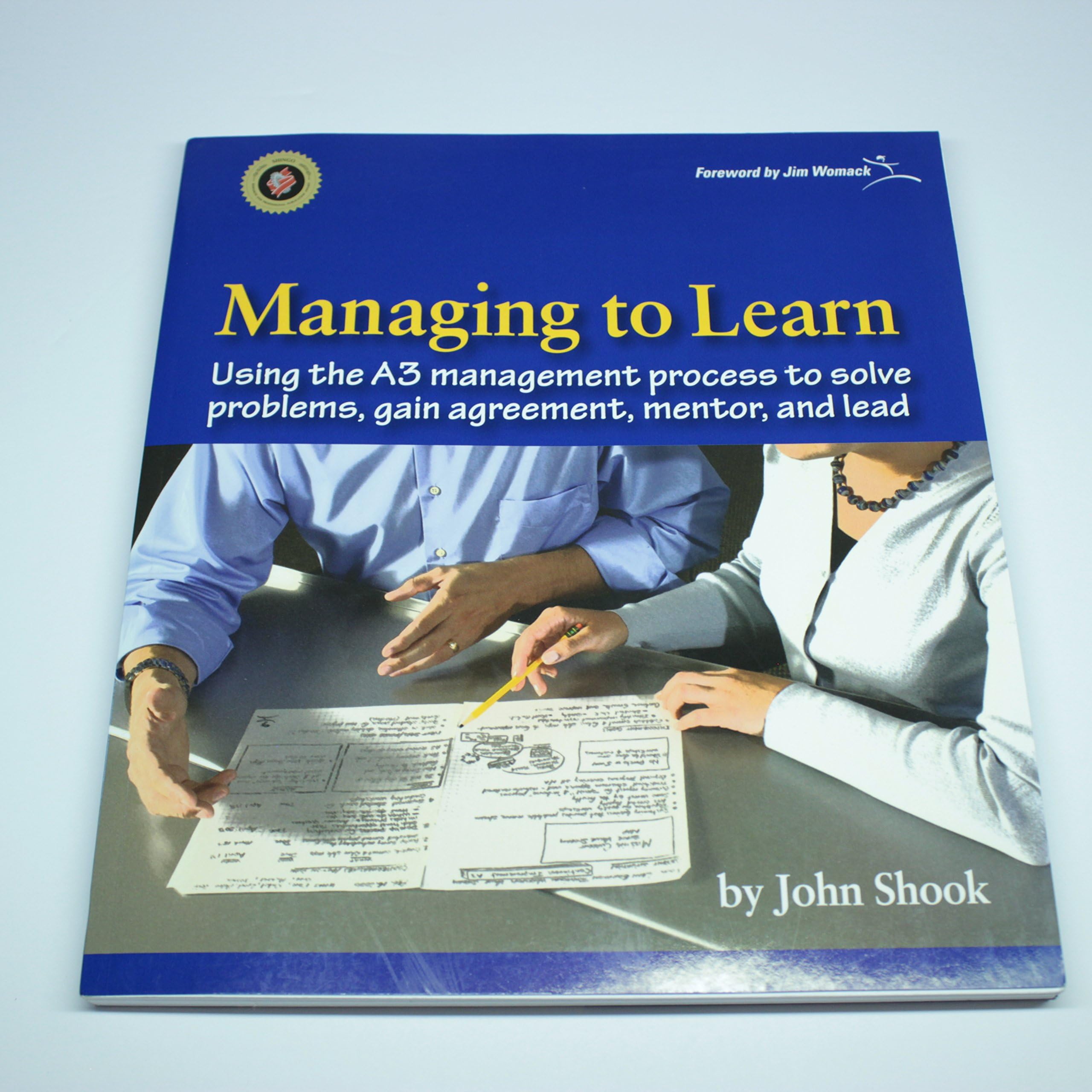
Managing to Learn: Using the A3 Management Process to Solve Problems, Gain Agreement, Mentor and Lead [Shook, John, Womack, Jim] on desertcart.com. *FREE* shipping on qualifying offers. Managing to Learn: Using the A3 Management Process to Solve Problems, Gain Agreement, Mentor and Lead Review: The Essence of A3 Techniques - John Shook has written a solid book that can stand proudly alongside the other books in the Lean Enterprise Institute's lineup. This book is especially useful for those new to lean who want to understand the nuts and bolts of how the A3 management system works. Most people new to lean begin applying the tools without a full appreciation of the management system or the real thinking that goes on behind it. Without these supporting mechanisms, people's efforts at lean deployment generate small results and sustainment is poor. A3s are one of the key tools to successful deployment. As with other books in the LEI lineup, this book is very readable. The illustrations are simple, the examples are straightforward, and the text is well-edited and well-structured. This book takes a fictional company as an example. As one who helps teach others, the narrative style has irritated me because authors frequently use it in a pure storytelling format. Books like these often have little instructional value because they are difficult to study from. Managing to Learn tells a company's example story, but it also explains and discusses the narrative events in a second column of text in the margin. Its almost like your floating above the players with your sensei, hearing the thoughts of the actors and an explanation by your lean leader. Combined with sidebar comments and uncluttered illustrations, the layout and style of this book make it a rich reference and a great study and teaching tool. As the book points out, there are a number of ways A3s can be used, and Managing to Learn shows examples of each. The theme linking all of these together is the systematic problem solving thinking that is at the heart of A3 thinking. I am a consultant and I currently manage a consortium of over 50 companies working together to become lean organizations. For a number of reasons, I have made the preparation of A3s for every kaizen improvement event a MANDATORY requirement for all my clients and consortium members. One of the key results of doing so is that it gets people oriented from day one understanding that lean is more than just using tools - you are solving problems, and going from problem, through analysis, down to root causes, and on to a plan that you implement and check, is the structured thinking that A3s create. I recommend this book highly, and it is now on the short list of required reading I endorse for anyone using lean tools and principles. Review: Best Lean Leadership Reading Yet! - THE FIRST BOOK I RECOMMEND TO EXECUTIVES AND LEADERS ON A LEAN JOURNEY. John Shook, building upon his Japanese language and work experience including 10 years with Toyota has again written a practical book which will accelerate those on a lean journey. Of 250+ continuous improvement books studied over the past 19 years, this 2008 release immediately ranks amoung the top 5 in my library. Helpful for those biased through exposure to Six Sigma and DMAIC, this book is ideal for practitioners, leaders and consultants. The soft side of change is very well addressed. Advocacy, inquiry, gaining buy-in, fear, frustrations and jubilation are presented in a creative and highly effective format (although some may not appreciate nemawashi and hansei at first) . The soft skills are the hardest part of any lean journey and normally receive too little attention. Most pages are divided into a right and a left hand column representing the project leader and the executive who is the coach of the project leader. The use of this unusual format addresses one of the most challenging issues (and opportunities for improvement) when embarking upon a lean journey......engaging leadership in their role of driving organizational learning through coaching. The introduction felt "slow," but do not let the first 7 pages discourage you. The story told is rich with real world emotions, dead ends, and rewritings, including numerous additional A3 case studies. For those without a flexible mind and the ability to think in processes, the document translation process improvement story line throughout the book may not seem applicable to manufacturing processes. A lean journey requires this mental agility in any case, so Shook likely choose this story because if the reader is not flexible enough to relate to the example, they are not ready for lean. Understanding A3 Thinking: A Critical Component of Toyota's PDCA Management System compliments well Managing to Learn with a slightly different view of technical aspects. Mr. Sorbek's work contains a tasty case study which the reader is invited to complete and compare with one excellent example. Looking forward to the next thought leadership from Mr. Shook, perhaps on TWI and standardized work?
| Best Sellers Rank | #62,841 in Books ( See Top 100 in Books ) #3,879 in Business & Money (Books) |
| Customer Reviews | 4.5 4.5 out of 5 stars (460) |
| Dimensions | 8.75 x 0.5 x 9.5 inches |
| Edition | 1st |
| ISBN-10 | 1934109207 |
| ISBN-13 | 978-1934109205 |
| Item Weight | 1 pounds |
| Language | English |
| Print length | 138 pages |
| Publication date | January 1, 2008 |
| Publisher | Lean Enterprises Inst Inc |
J**S
The Essence of A3 Techniques
John Shook has written a solid book that can stand proudly alongside the other books in the Lean Enterprise Institute's lineup. This book is especially useful for those new to lean who want to understand the nuts and bolts of how the A3 management system works. Most people new to lean begin applying the tools without a full appreciation of the management system or the real thinking that goes on behind it. Without these supporting mechanisms, people's efforts at lean deployment generate small results and sustainment is poor. A3s are one of the key tools to successful deployment. As with other books in the LEI lineup, this book is very readable. The illustrations are simple, the examples are straightforward, and the text is well-edited and well-structured. This book takes a fictional company as an example. As one who helps teach others, the narrative style has irritated me because authors frequently use it in a pure storytelling format. Books like these often have little instructional value because they are difficult to study from. Managing to Learn tells a company's example story, but it also explains and discusses the narrative events in a second column of text in the margin. Its almost like your floating above the players with your sensei, hearing the thoughts of the actors and an explanation by your lean leader. Combined with sidebar comments and uncluttered illustrations, the layout and style of this book make it a rich reference and a great study and teaching tool. As the book points out, there are a number of ways A3s can be used, and Managing to Learn shows examples of each. The theme linking all of these together is the systematic problem solving thinking that is at the heart of A3 thinking. I am a consultant and I currently manage a consortium of over 50 companies working together to become lean organizations. For a number of reasons, I have made the preparation of A3s for every kaizen improvement event a MANDATORY requirement for all my clients and consortium members. One of the key results of doing so is that it gets people oriented from day one understanding that lean is more than just using tools - you are solving problems, and going from problem, through analysis, down to root causes, and on to a plan that you implement and check, is the structured thinking that A3s create. I recommend this book highly, and it is now on the short list of required reading I endorse for anyone using lean tools and principles.
W**B
Best Lean Leadership Reading Yet!
THE FIRST BOOK I RECOMMEND TO EXECUTIVES AND LEADERS ON A LEAN JOURNEY. John Shook, building upon his Japanese language and work experience including 10 years with Toyota has again written a practical book which will accelerate those on a lean journey. Of 250+ continuous improvement books studied over the past 19 years, this 2008 release immediately ranks amoung the top 5 in my library. Helpful for those biased through exposure to Six Sigma and DMAIC, this book is ideal for practitioners, leaders and consultants. The soft side of change is very well addressed. Advocacy, inquiry, gaining buy-in, fear, frustrations and jubilation are presented in a creative and highly effective format (although some may not appreciate nemawashi and hansei at first) . The soft skills are the hardest part of any lean journey and normally receive too little attention. Most pages are divided into a right and a left hand column representing the project leader and the executive who is the coach of the project leader. The use of this unusual format addresses one of the most challenging issues (and opportunities for improvement) when embarking upon a lean journey......engaging leadership in their role of driving organizational learning through coaching. The introduction felt "slow," but do not let the first 7 pages discourage you. The story told is rich with real world emotions, dead ends, and rewritings, including numerous additional A3 case studies. For those without a flexible mind and the ability to think in processes, the document translation process improvement story line throughout the book may not seem applicable to manufacturing processes. A lean journey requires this mental agility in any case, so Shook likely choose this story because if the reader is not flexible enough to relate to the example, they are not ready for lean. Understanding A3 Thinking: A Critical Component of Toyota's PDCA Management System compliments well Managing to Learn with a slightly different view of technical aspects. Mr. Sorbek's work contains a tasty case study which the reader is invited to complete and compare with one excellent example. Looking forward to the next thought leadership from Mr. Shook, perhaps on TWI and standardized work?
A**G
New book seems used
Ordered the $60 brand new book and it came damaged and with dirt. Should have gone with "used"
J**S
Strongly recommended. A superb on problem solving and A3 tool.
M**O
Ti fa ben capire il processo di analisi dei problemi
J**K
This book is a must if you want to move forward and change the way problems and tasks are handled. Both in respect to managing and solving problems.
M**R
John Shook geht mit dem Leser an einem konkreten Beispiel das individuelle Lernen + individuelle Coachen beim Lösen eines Problems aus dem Fertigungsalltag von Anfang bis Ende durch. Lernen durch Problemlösen als Grundbaustein für nachhaltige Verbesserungen (KAIZEN, Lean Management) wird dadurch konkret nachvollziehbar dargestellt. Außerdem beschreibt John Shook den Problemlöseprozess aus zwei Perspektiven (aus der Sicht des Lernenden + aus der Sicht des Coachs). Die Klasse dieses Buches besteht darin, dass die typischen Fehler, Schwierigkeiten, Hindernisse beim Lösen von Problemen im Arbeitsalltag herausgearbeitet und deren Bewältigung gezeigt werden. Sehr gut ist ebenso, dass John Shook die Funktionalität des A3-Problemlöse-Blatts betont und die Freiheiten bei der Gestaltung/Form dieses Blattes bewusst macht (auch konkret zeigt, Beilagen). Wer also den Preis nicht scheut, hat eine vollständige Beschreibung/Anleitung für die erfolgreiche Gestaltung von Lernen durch Problemlösen im alltäglichen Leistungsprozess (elementares lean management). Hinweis: Wer mit den 5x Warum-Fragen gute Erfahrungen gemacht hat, erhält mit dem Buch eine ausführliche und detaillierte Beschreibung der Wirksamkeit dieses Vorgehens.
C**R
Have read and used many reference materials to assist in using lean process and this is the best I’ve used so far. Helps beginners to more advanced people with this method and is a great reference to circle back to periodically when stuck a little.
Trustpilot
2 months ago
1 month ago