
Buy anything from 5,000+ international stores. One checkout price. No surprise fees. Join 2M+ shoppers on Desertcart.
Desertcart purchases this item on your behalf and handles shipping, customs, and support to Kyrgyzstan.
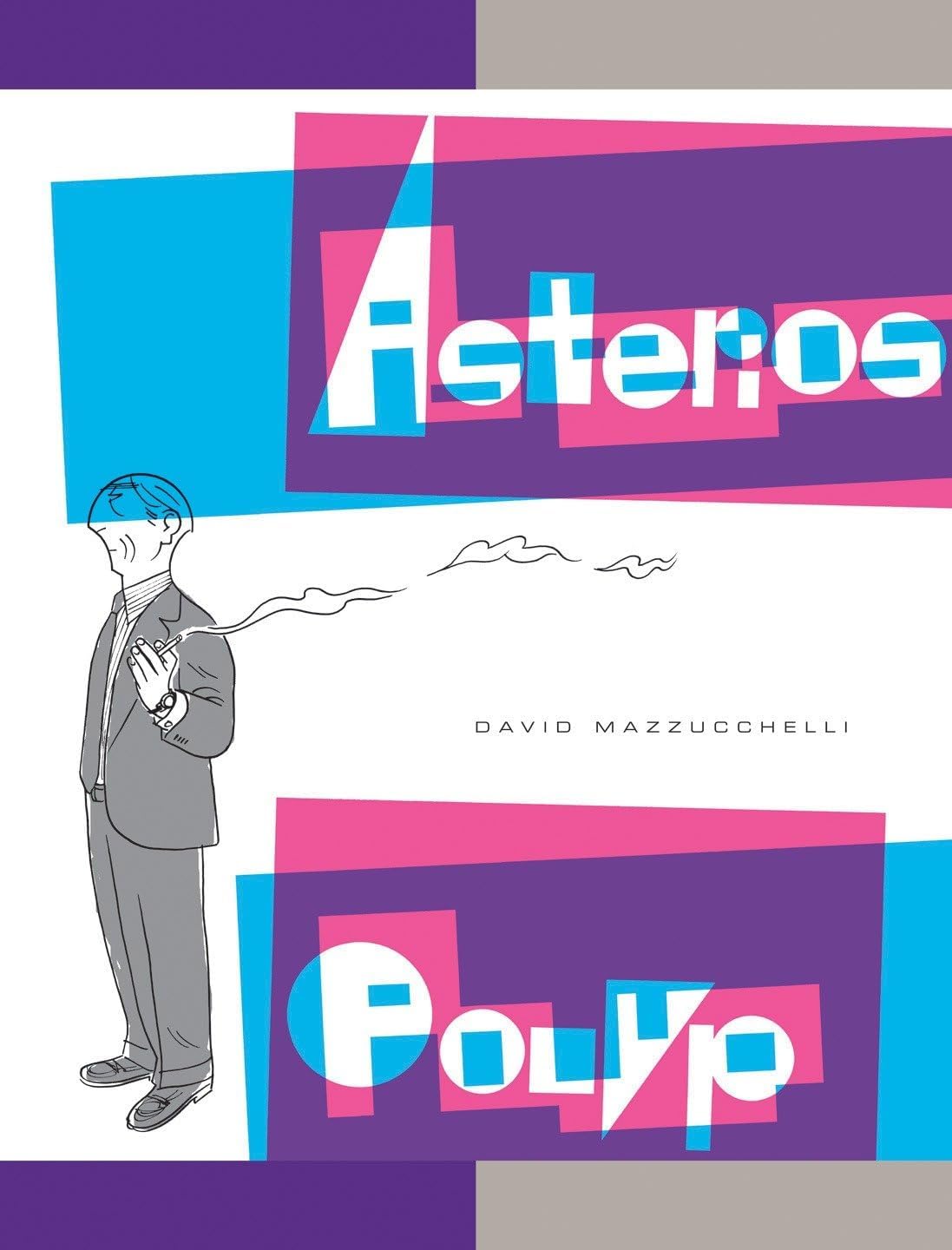
The triumphant return of one of comics’ greatest talents, with an engrossing story of one man’s search for love, meaning, sanity, and perfect architectural proportions. An epic story long awaited, and well worth the wait. Meet Asterios Polyp: middle-aged, meagerly successful architect and teacher, aesthete and womanizer, whose life is wholly upended when his New York City apartment goes up in flames. In a tenacious daze, he leaves the city and relocates to a small town in the American heartland. But what is this “escape” really about? As the story unfolds, moving between the present and the past, we begin to understand this confounding yet fascinating character, and how he’s gotten to where he is. And isn’t. And we meet Hana: a sweet, smart, first-generation Japanese American artist with whom he had made a blissful life. But now she’s gone. Did Asterios do something to drive her away? What has happened to her? Is she even alive? All the questions will be answered, eventually. In the meantime, we are enthralled by Mazzucchelli’s extraordinarily imagined world of brilliantly conceived eccentrics, sharply observed social mores, and deftly depicted asides on everything from design theory to the nature of human perception. Asterios Polyp is David Mazzucchelli’s masterpiece: a great American graphic novel. Review: Finally, a book experimenting with the comic book form - I'll go more into the story below, but, really, this book is about exploring the comics form in a way you too-rarely see. Main character Asterios is rigid in his beliefs and is often drawn as a mannequin made of cylinders and cubes and the like; his ex, who we meet through flashbacks, is raw emotion and is often drawn as fast sketchy lines in red. The idea of sequential panels is often put aside to tell a bigger whole on a page (of two-page spread). Color has meaning. The shape of a panel often tells a whole story. The layout of a page (or panel), often featuring a polyptychs of a sort (not a coincidence per the character's name, I assure you), explains everything a character is thinking or feeling, with the words adding yet another dimension. The MANNER in which the story is told, and in which it unfolds, could NOT be done in any other medium. There are a LOT of comics, especially graphic novels, out there which are simply sequential panels (City of Glass, to which this has been compared, is just that); Asterios Polyp is more than an exploration of a man who has the realization he's not quite the good man he thought he was; it's an exploration of the comic book form, telling a story in a variety of ways through art and page, often using the page as part of the art. Those are rare things and should be embraced. I read the 2-star reviews and it seems the people who wrote those were expecting a completely different comic book. Fine. Then go buy one. One person states she heard this was a "philosophical" book and is upset that it doesn't detail much about the philosophers mentioned in it. Um...that's not the story. Another person states he didn't like the cartoony style -- then why buy the book? The art is viewable right on the cover. Another states everything here is stereotypical. Sure, the life of a brilliant-full-of-himself-tho'-really-a-good-person architect who by fate loses all of his worldly possessions and accidentally happens upon an understanding of his life -- gosh, I've read that a THOUSAND times. Sigh. The journey of this full-of-himself man, Asterios, is begun through an event beyond his control, an act of god. He ends up doing some self-exploration, and we go along with him as he, or the narrator (his dead/unborn twin brother), shows us what kind of man he is/was. He's actually a well-meaning, albeit full-of-himself sort, the kind of which most of us have met. He's smug and happy to stay in his comfort zone so, as such, he is unable to even see where he goes wrong. He's not a bad guy; just no one had ever pointed out his flaws to him. The narrator is a haunting figure who helps Asterios realize he DOES have control over some aspects of his life -- not all of them, but some. Ultimately this book is about a person going through loss, love, loss and trying to control his life, but the ultimate lesson is that there are only certain things we can actually control. I should also add: this is a BEAUTIFUL cloth hardcover book, with an engraving of the main character on the front and back, and a thick, slick dustcover -- the kind of binding and work you RARELY see anymore. That alone makes this book worth owning. Review: Brilliant graphic novel! - Everything about this graphic novel is fantastic. The use of color and line are both sparing and clever, and everything is drawn with great intention, echoing the fact that the two main characters are professors of architecture and sculpture. The story is told with a serious of flashbacks, and even minor visual details come back and recur later. This book really does create a new genre of literature; although the story would make an acceptable (if not slightly boring) plain-text novel about the eccentric life of an academic/intellectual, casting it as a graphic novel elevates it to something much, much more. So many elements of the story are enhanced by the use of drawing... it's hard to describe exactly how it happens, but somehow the fusion of text and art ends up being greater than the sum of the parts. I love the fact that both of the main characters are university professors -- there are plenty of jabs at academia, and as college faculty member myself, I resonated with Asterios's own (overly?) analytical experience with and approach to romance. Asterios's character flaws made me smile sometimes with shared humor, once or twice with schadenfreude, and a few times with grim recognition. Add to this layers of symbolism, double-meanings, karmic coincidences, and lovable side-characters, and overall this is a surprisingly brilliant book. Don't let the large (350) page count deter you -- with such sparse text, it goes very fast. Overall, this is the best "serious" (non-fantasy, non-scifi) fiction I have read in the past year, if not past 5 or 10 years. If you've never read a "serious" graphic novel before, definitely read this one as an example of the best of the genre. I originally read my local library's copy, but I bought myself one of my own just so I can return to it and reread it periodically in the future.


| Best Sellers Rank | #22,419 in Books ( See Top 100 in Books ) #20 in Romance Graphic Novels (Books) #22 in Literary Graphic Novels (Books) #50 in Mystery Graphic Novels |
| Customer Reviews | 4.7 out of 5 stars 479 Reviews |
K**K
Finally, a book experimenting with the comic book form
I'll go more into the story below, but, really, this book is about exploring the comics form in a way you too-rarely see. Main character Asterios is rigid in his beliefs and is often drawn as a mannequin made of cylinders and cubes and the like; his ex, who we meet through flashbacks, is raw emotion and is often drawn as fast sketchy lines in red. The idea of sequential panels is often put aside to tell a bigger whole on a page (of two-page spread). Color has meaning. The shape of a panel often tells a whole story. The layout of a page (or panel), often featuring a polyptychs of a sort (not a coincidence per the character's name, I assure you), explains everything a character is thinking or feeling, with the words adding yet another dimension. The MANNER in which the story is told, and in which it unfolds, could NOT be done in any other medium. There are a LOT of comics, especially graphic novels, out there which are simply sequential panels (City of Glass, to which this has been compared, is just that); Asterios Polyp is more than an exploration of a man who has the realization he's not quite the good man he thought he was; it's an exploration of the comic book form, telling a story in a variety of ways through art and page, often using the page as part of the art. Those are rare things and should be embraced. I read the 2-star reviews and it seems the people who wrote those were expecting a completely different comic book. Fine. Then go buy one. One person states she heard this was a "philosophical" book and is upset that it doesn't detail much about the philosophers mentioned in it. Um...that's not the story. Another person states he didn't like the cartoony style -- then why buy the book? The art is viewable right on the cover. Another states everything here is stereotypical. Sure, the life of a brilliant-full-of-himself-tho'-really-a-good-person architect who by fate loses all of his worldly possessions and accidentally happens upon an understanding of his life -- gosh, I've read that a THOUSAND times. Sigh. The journey of this full-of-himself man, Asterios, is begun through an event beyond his control, an act of god. He ends up doing some self-exploration, and we go along with him as he, or the narrator (his dead/unborn twin brother), shows us what kind of man he is/was. He's actually a well-meaning, albeit full-of-himself sort, the kind of which most of us have met. He's smug and happy to stay in his comfort zone so, as such, he is unable to even see where he goes wrong. He's not a bad guy; just no one had ever pointed out his flaws to him. The narrator is a haunting figure who helps Asterios realize he DOES have control over some aspects of his life -- not all of them, but some. Ultimately this book is about a person going through loss, love, loss and trying to control his life, but the ultimate lesson is that there are only certain things we can actually control. I should also add: this is a BEAUTIFUL cloth hardcover book, with an engraving of the main character on the front and back, and a thick, slick dustcover -- the kind of binding and work you RARELY see anymore. That alone makes this book worth owning.
K**R
Brilliant graphic novel!
Everything about this graphic novel is fantastic. The use of color and line are both sparing and clever, and everything is drawn with great intention, echoing the fact that the two main characters are professors of architecture and sculpture. The story is told with a serious of flashbacks, and even minor visual details come back and recur later. This book really does create a new genre of literature; although the story would make an acceptable (if not slightly boring) plain-text novel about the eccentric life of an academic/intellectual, casting it as a graphic novel elevates it to something much, much more. So many elements of the story are enhanced by the use of drawing... it's hard to describe exactly how it happens, but somehow the fusion of text and art ends up being greater than the sum of the parts. I love the fact that both of the main characters are university professors -- there are plenty of jabs at academia, and as college faculty member myself, I resonated with Asterios's own (overly?) analytical experience with and approach to romance. Asterios's character flaws made me smile sometimes with shared humor, once or twice with schadenfreude, and a few times with grim recognition. Add to this layers of symbolism, double-meanings, karmic coincidences, and lovable side-characters, and overall this is a surprisingly brilliant book. Don't let the large (350) page count deter you -- with such sparse text, it goes very fast. Overall, this is the best "serious" (non-fantasy, non-scifi) fiction I have read in the past year, if not past 5 or 10 years. If you've never read a "serious" graphic novel before, definitely read this one as an example of the best of the genre. I originally read my local library's copy, but I bought myself one of my own just so I can return to it and reread it periodically in the future.
A**O
Greatest Graphic Novel of all time
Having read thousands of comics, I can confidently say none quite compare to this masterful tale. No other comic I've ever encountered has told so poignant and relatable a story using the medium of comics to its fullest extent. I consider this novel a masterpiece of the medium. The artwork is stunning and beautifully helps the narrative, providing even deeper meaning to already meaningful moments. The art and the story are so intertwined, one does not exist without the other. Truly profound, great romance, just a fantastic story.
C**T
Asterios Polyp- An Epic Twisty Pretzel of Emotion and Idea
This book will get your head swimming; not only with the plot, but also with all sorts of ideas from the meaning of success to dualism. The core of the plot is derived almost straight from the standard love story; boy meets girl, they fall in love, there is conflict and the reader hopes for resolution. Asterios Polyp thrives on this classic, yet it becomes much, much more than that. The love felt between the Asterios and his polar opposite of a wife Hana is not complicated in the way Elizabeth Bennet and Mr. Darcy feelings toward each other were. It is a quite simple and apparent love, which is conflicted when Hana's wholesome good heart can no longer bear Asterios's poisonous habits and inclinations. While the plot revolves around this relationship, it also follows its bizarre main character's life from birth on to the gallows of his old age. Although not in chronological order, the major events that have shaped Asterios's life are depicted in splendid shades of magenta, cyan, purple and gold. The graphics show not only the physicality of the character, but also the emotion felt in each scene with its ever changing style and clever symbolism. The instances in which the story diverges and a tangent is explored are the moments in this book that keep you on your toes, One minute think you are reading about the life of a pitiful old man, and the next you are submerged in a story of greek gods or design ideology. In the end, you will be confused, dumbfounded, astonished and feel the urge to read this book over and over again. I recommend you to go ahead and wrap your head around this incredibly intriguing pretzel of a story.
H**R
Extraordinary
An outstanding effort from David Mazzuchelli, artist on such memorable works as Daredevil: Born Again, Batman: Year One, the graphic adaptation of Paul Auster's City of Glass, and his late, lamented series, Rubber Blanket. Telling the compelling and provocative story of architect turned vagabond Asterios Polyp, Mazzuchelli's graphic novel delights and disturbs, as readers are treated to vignettes from Polyp's life, from the death of his twin, to his time as a professor of architecture, to his failed marriage, to his days as an auto mechanic. Mazzuchelli's quirky art (Polyp, for instance, looks like a cross between the Dick Tracy villains The Mole and The Brow), innovative page layouts, and creative inking and coloring enhance the intriguing story he has to tell, a story about how one man ultimately reconciles himself to the life he's lived. It's probably too early in his career to label this his magnum opus, but it certainly provides a daunting standard for future works.
T**S
Surprising, delightful, creative
A delightful book. The artwork is unique and creative - not what I was expecting from Mazzuchelli's work with Daredevil and Batman. I really enjoyed this.
M**Y
An fantastic existential journey through the life of a complex character (great art too!)
I greatly enjoyed this book. In fact I've reread it multiple times and get a new appreciation for some of the details each time. It's an enjoyable existential journey through the life of Asterios Polyp, a complex and very realistically rendered human character. He's not there to be the hero or villain, he is presented, quite realistically, as a typical human with foibles, faults, ego and jealously. Asterios is revisiting the entirety of his life, art and love and how and why he has viewed things is reflected, quite brilliantly in Mazzucchelli's artistic approach. Asterios is an artist/architect that sees things in his personal life very much in the same way as his approach to his work; precisely, mathematically and rigidly. It's only when his carefully catalogued life is subject to an unexpected event that he's forced to start living outside the lines without the safety net of structure that he starts to reflect and evolve. Every time I reread the book I pick up on little details and gain a new appreciation of the subtleties of the story. While some of it is open to interpretation I think what could potentially be considered subjective was actually quite intentionally calculated....that or maybe I'm forcing connections where there aren't any. Regardless, it's a triumph and a wonderful use of the medium.
E**T
Read and read again
Not a fan of graphic novels, comics or manga but came to Asterios Polyp through a review in the NY Times that made it sound interesting enough to send off for immediately. First impression is the book itself: the design and feel of it are so pleasing; I read it quickly - not much more than an hour and was entranced by the art, the characters and characterization; finished it way too quickly. Set it aside; thought about it all day, took it to bed and began a slow and deliberate re-read, planning to savor every page and idea. I did that and have done it again since. It's a book that rewards many returns because there is always something new waiting to be discovered. And quite frankly, the guy is a genius. It's one of the great American novels: true, honest, funny, tragic and so illuminating it's dazzling. Unfortunately I am unable to lend it to even the closest and most trusted of my book friends; I just don't trust them to give it back.
M**T
Wonderful use of the medium and brilliantly executed.
Fantastic. Loads of subtle visual touches and art jokes. I laughed and cried which is pretty rare reading a graphic novel. This is a touching story that could only be done in an illustrated format. Wonderful use of the medium and brilliantly executed.
L**O
obra difícil, mas recompensadora.
A primeira coisa que você deve saber a respeito desse livro é: É uma das obras fundamentais dos quadrinhos. E a segunda coisa é: Não é uma obra fácil de ser digerida. Não sou nem eu que digo isso, Scott McCloud grande teorico dessa mídia, compartilha das mesmas palavras sobre o quadrinho. Numa primeira leitura, você provavelmente não vai pegar todas as referências, porque é provavelmente impossível. Você entenderá a história (ou não) e relendo pela segunda vez, você começará a perceber a metalinguagem utilizada, em como arte e quadrinho se mesclam e uma utiliza da outra para efeito narrativo. Numa terceira leitura, você provavelmente vai casar os dois elementos e fazer uma leitura definitiva, absorvendo tudo o que essa brilhante graphic novel tem a oferecer. Caso não acredite em mim, procure pelo nome do Scott McCloud e desta obra, há um artigo em que ele discorre sobre as diversas camadas presentes nesta obra. A edição é padrão Pantheon, capa dura de material reciclado, (até a sobrecapa possui relação com a estética do livro) tudo combinado e que conversa com a obra. Sensacional, 5 estrelas para a história e 5 para a edição.
D**M
A quality graphic novel that raises the bar.
With clever storytelling, innovative and exciting artwork, intelligent and thought-provoking ideas, AP is one of the best books I've read in a long time. The ending is a real kicker. It's hard to believe that this is Mazzucchelli's first full-length work. Buy it now.
E**R
Increíble, interesante e impactante
Una novela gráfica con alma, divertida de leer, de ver y de pensar. De esas que cuando las terminas, regresas al inicio y vuelves a empezar (y en la cual siempre encuentras algo nuevo). Sin duda después de Maus la obra de literatura gráfica que más me ha impresionado.
M**S
present for myself
not collector but nice to have it!!!
Trustpilot
3 weeks ago
2 days ago