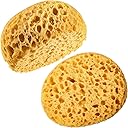
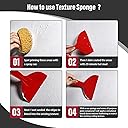
🎨 Elevate your paint game with sponges that work as hard as you do!
The Patelai 2 Count Cellulose Texture Sponge set features two specialty-shaped, ergonomic sponges designed for versatile painting and texturing on walls, ceilings, and wood. Made from durable, reusable cellulose, these sponges expand when wet to provide excellent paint absorption and control, making them perfect for both detailed and broad applications. Lightweight and easy to clean, they are a sustainable choice for professional and DIY painters alike.


| ASIN | B08MQM5M6N |
| Brand | Patelai |
| Colour | White/Light |
| Item Dimensions LxWxH | 12 x 10 x 6 Centimeters |
| Item Package Quantity | 2 |
| Item Weight | 22.7 g |
| Material | Sponge |
| Net Quantity | 2.0 Count |
| Number of Items | 2 |
| Recommended Uses For Product | Applying Textures, Painting |
| Special Feature | Durable,Reusable |
| Surface Recommendation | Walls, Ceilings, Wood |
Q**N
I soaked them in a small bucket of warm water about 15 minutes and they expanded to the fullest. Squeeze water out, let them air dry and they were ready to use. Good product
A**R
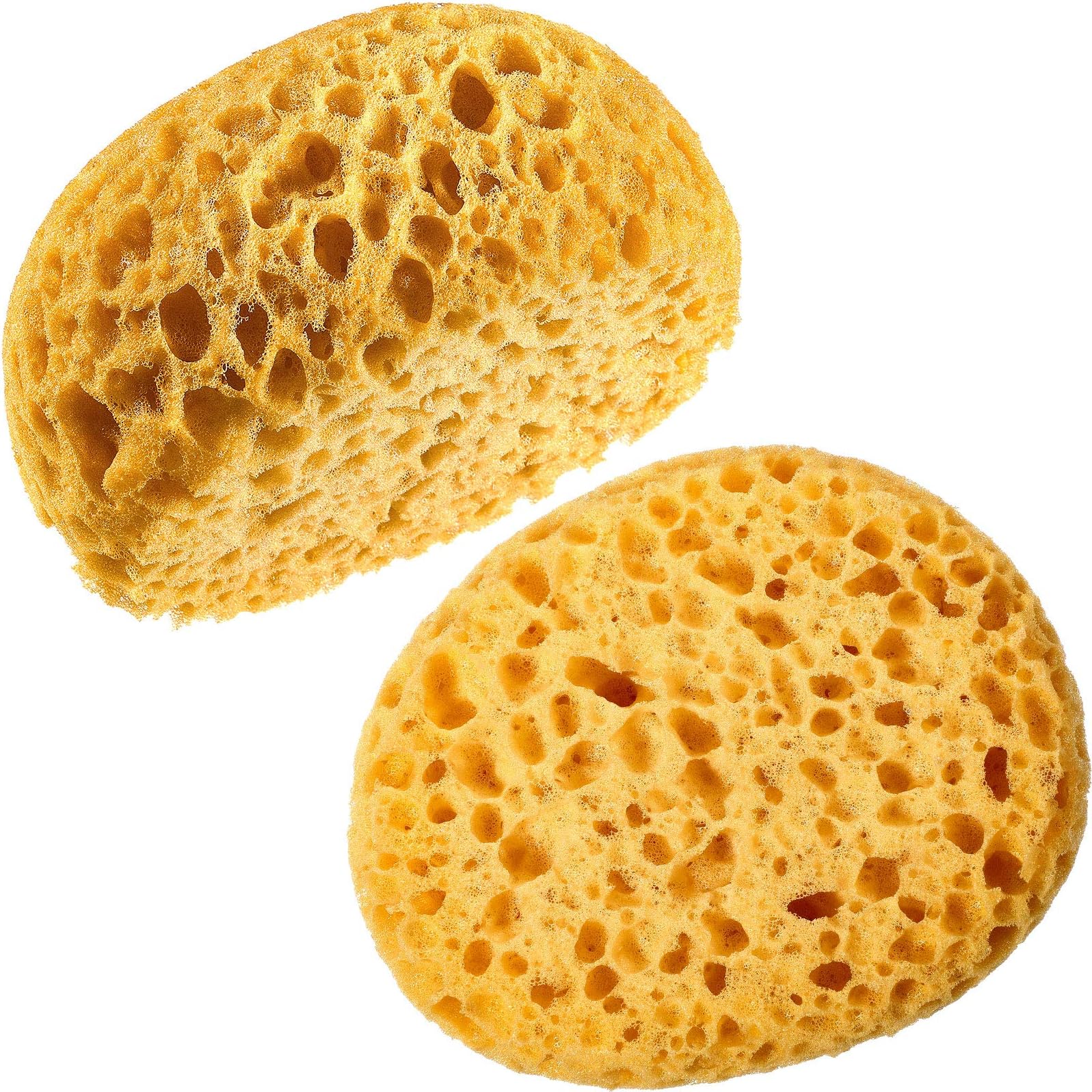
You have to get the sponge wet first and let it dry to expand! When I first opened this, I was very concerned and immediately ran to the one- star reviews. It’s a totally flat weird looking pair of “sponges” that come inside of a tightly vacuum sealed plastic piece. Even after sitting on my shelf open for a week, one of them had maintained complete flatness and the other had perked up only slightly. I planned to return them, but when I looked at the other reviews, I realized some people have pictures of good sponges and other people had pictures that looked like mine. So I decided to take one of the flat weird looking objects and get it wet under warm, running water. It started to fluff up a little, but not much. I then set it on the counter and left it for the day. When I came back later, I was almost laughing because it looked so different. it had fluffed up into an awesome looking sponge. I then added water to the other sponge and it fluffed up within a few minutes. I’m gonna include pictures of before and after, which are both from today. The sponges worked great for adding multiple paint layers to my project. They are able to do both light amounts of color placement and thicker texturing paint, depending on what you are going for.
W**Y
They are good sponges that work ok. You might have to do some further shaping to get the degree of knockdown texture you want, but that's a personal preference. They certainly worked to help me finish a touch-up area.
H**R
Okay, not going to bury the lede, these things did an outstanding job. I had to repair a huge water leak in a bathroom ceiling, I lost half the room's ceiling so I replaced the drywall and had to try to match the existing knockdown texture on the other half of the ceiling. I used these sponges and the result is just seamless, nobody could tell there was ever a repair done. So they're good sponges and they get a five-star review for the results. But you also gotta know a couple of things. First, what you get is not what you think you're getting. You don't get a fluffy squishy sponge, instead you get something that looks like a nasty old McDonald's Happy Meal hamburger that's been vacuum-sealed in a NASA space meal pouch. It's a little tiny flat squished thing that would absolutely not pass any "is this a sponge?" test. Second, you gotta inflate it. They say leave it in a pan of water for a little while. Screw that, I left one in a pan of water and it took like TWO DAYS to fully fluff up. If you don't have two days to wait, submerge it in water and work it, squeeze it, roll it, smush it, etc, until it finally becomes a small half-dome shape. It'll get about as big as your palm, flat on one side and rounded on the other, and probably smaller than you were expecting. Don't sweat it, it's all good; once you get to that point you've got what you need. Then start the texturing job. Thin down some all-purpose joint compound in a drywall pan, and let it "set up" for about 10 minutes or so. Then smush the flat side of the sponge into it, then sqlorch it onto the ceiling, press it in, and then yank the sponge away quickly. You're trying to "draw out" the compound to stick out away from the ceiling, making little stalagtites. Do that for a while, I think I probably did it in about a 3' x 3' area before knocking it down with a rubber-edged knockdown knife. If it looks good and matches up, then go on to the next 3x3 area. If it looks bad, you can just re-sqlorch it and try again until you get it the way you want. It's a long tedious process, but the end result I got is absolutely fantastic. If you want to see a video, I watched Paul Peck's youtube drywall channel on matching knockdown texture and it tells you everything you need to know.
A**E
I was skeptical about these and thus ordered a bunch of texturing options at the same time. Now I think these sponges are a MUST HAVE for not only texturing but for painting in general. [Video taken at point of texture fully dry and starting to scrape, not yet primed nor painted.] I put the sponge in water, slightly wrung it out and dipped into a slurry mixture I made with Homax Wall & Ceiling Texture mix. Sponged overlapping layers onto each other, let dry and repeat. When fully dry, it might/will have almost ‘too’ much texture.. pointy bits that stick up and irregularities. This is good! I point these areas out in the video when the lens focuses. Take whatever size trowel you have, bigger the better; I was using an 8” until I found the 14”. Lightly scrape down the wall to even the texture out. Not too uniform, overlap and go in all different directions. I’m moving really slow in the recording because it’s difficult to film at the same time. :D You’ll see the dust pile up on the floor. Run hand across wall to find areas that are rough and don’t fit in. Scrape those down. When satisfied, I’ll next wipe down with slightly damp rag to pick up the loose dust, vacuum floor, let dry, and then paint primer and finish with wall paint. The texture pattern will lessen with each layer of prime and paint, so no need to scrape TOO much away in previous steps. I used the sponges again during final coats if the areas didn’t look like it had enough texture and was ‘flat’; lightly sanding after dry. Because of this, I think if you just needed to fix a small area, you could use just these sponges and skip the pre-texturing round all together. Love them. Would recommend.
Trustpilot
2 weeks ago
1 month ago