We remain fully operational. Our teams are working around the clock to ensure your deliveries continue safely.

DOWNLOAD THE APP


Copyright © 2025 Desertcart Holdings Limited
DOWNLOAD THE APP
Buy anything from 5,000+ international stores. One checkout price. No surprise fees. Join 2M+ shoppers on Desertcart.
Desertcart purchases this item on your behalf and handles shipping, customs, and support to Kyrgyzstan.
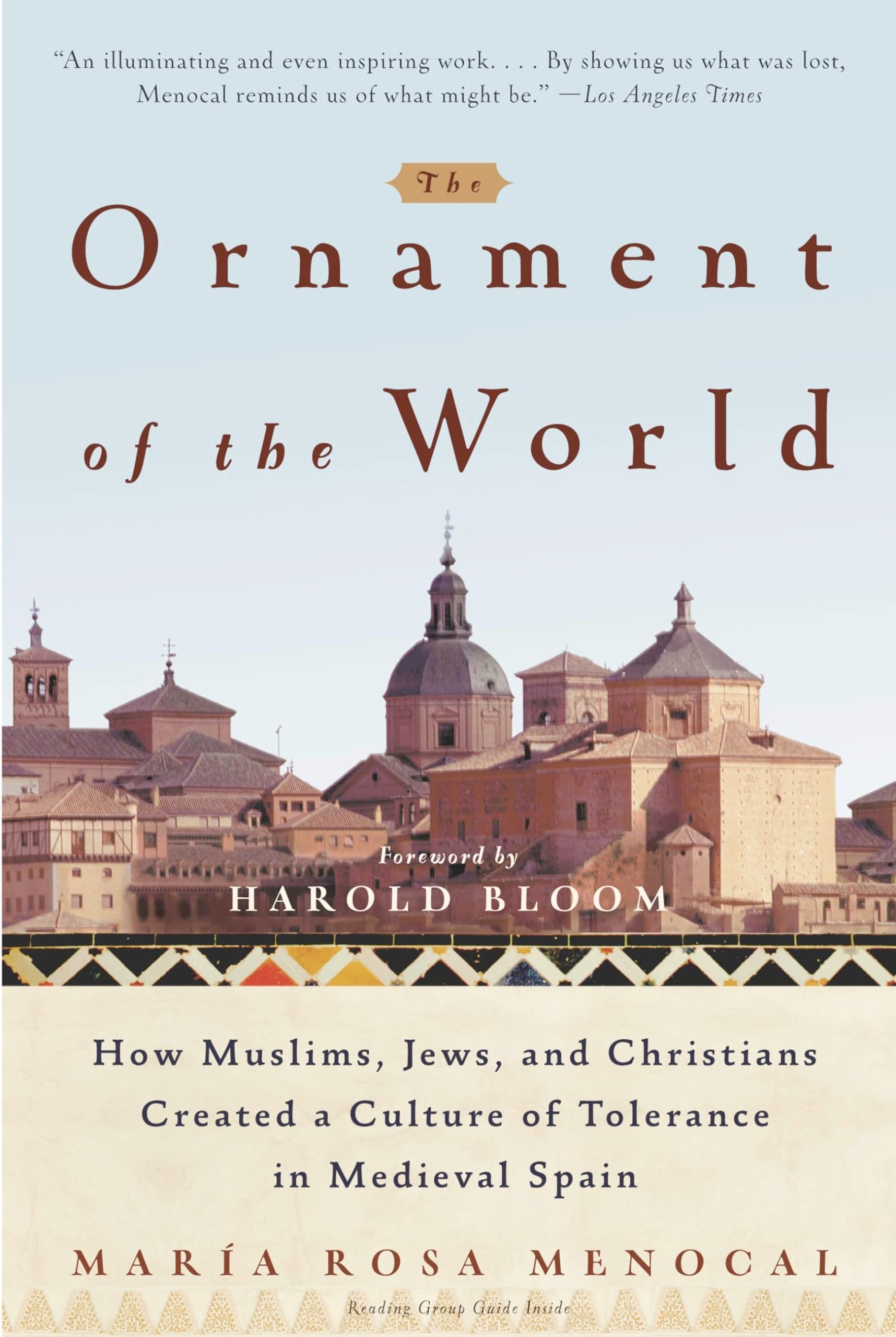
The Ornament of the World: How Muslims, Jews and Christians Created a Culture of Tolerance in Medieval Spain [Menocal, Maria Rosa] on desertcart.com. *FREE* shipping on qualifying offers. The Ornament of the World: How Muslims, Jews and Christians Created a Culture of Tolerance in Medieval Spain Review: Convivencia, or social harmony, a model for world peace - "The Ornament of the World. How Muslims, Jews and Christians Created a Culture Tolerance in Medieval Spain" by Maria Rosa Menocal inspired me to research “Convivencia” at Al-Andalus and the Caliphate of Cordoba, Spain, between the years 756 to 1031. This research is published on Researchgate website entitled "Convivencia: A Model for Peace between Muslim, Christian and Jewish Cultures" Maria Rosa Monecal describes beautifully the period of almost four centuries, when Medieval Spain was ruled by the Moors and the believers in Judaism, Christianity, and Islam lived together in peace and harmony. La Convivencia refers to this coexistence. For over 400 years, knowledge and mysticism thrived in the Spanish towns of Cordoba, Toledo and Granada, as students and teachers in all three disciplines helped one another to learn, translate, and understand ancient teachings. Unprecedented level of scientific, philosophical, and metaphysical discovery, rendering medieval Spain the ornament of the world influencing many in Europe, the Middle East and North Africa for years to come. While reading this book I recall being at my mother's side, who over the years taught me to cherish the values between religions, races and genders and the importance of trying to understand the interdependence between us. Like me, she was born in Andalusia, and I can now understand that many of her Christian values must have also originated from that period in Southern Spain. In my book "Network Africa A Complex System" I describes my experiences living and working in countries with very different social environments influenced by Christian, Muslim, Hindu and Jewish religions. The importance of that interdependence between religions, races and genders was a key factor in living the spirit of Convivencia. I have also read Rabbi Jonathan Sacks' book "Not in God's Name: Confronting Religious Violence". This is also a brilliant and well written book on Abrahamic religions over the ages that gives an in-depth understanding of this complex and important group of cultures and religions that have left their mark on civilization. It adds profound yet clear pointers of how to prevent political power from taking the world into a destructive war scenarios like they are developing in the Middle East, Europe and Africa. Both these books describe the critical importance of addressing the deteriorating conditions that dominate our lives and those in power who are being driven to deal with the aggressive forces through military interventions, when we have an example of how Judaism, Christianity, and Islam lived together in peace and harmony. Review: Outstanding and Engaging - Maria Rosa Menocal, Proefessor of Spanish and Portuguese at Yale University and specialized in medieval culture, gives us a condensed account in some 300 pages of some 700 years of history of medieval Spain between 711 and 1492. Her captivating description of the birth, apogee, and decline of the Arab/Moslem civilization in Al Andalus is enlightening and engaging. She makes a brilliant selection of personalities who were important players on the stage of this astonishing and unusual period of a society of Moslems, Christians, and Jews living together in harmony in a culture of tolerance. Each religious community was contributing in creating and enriching an outstandingly learned center in the South/West of Europe, the rest of which was still in the `dark" ages. She weaves her prose around these key personalities whom she chose among the rulers, military leaders, philosophers, poets, and troubadours from the three religious groups. Each `protagonist' plays an important role in political, military, or cultural events at a given important moment of this period. Menocal focuses in particular, with deep and smart analysis, on the linguistic, scientific, literary, artistic, and architectural influence of the Arab/Moslem civilization and advance on Medieval Europe, coming indirectly from Baghdad - seat of the Abbasids Caliphate - or directly from Al Andalus. She writes in an accurate, elegant, clear, and almost poetic style which really makes her book feel like an epic poem praising Al Andalus, and lamenting the loss of this unusually rich world built by Arabs and Moslems, with the full contribution of Christians and Jews. Finally, Menocal's book is a most significant contribution to the effort of recognizing and restoring the rightful and legitimate place of the influence of Arab/Moslem civilization on the Renaissance of Europe. Furthermore, the book is a canny reminder and an eye-opener showing a different angle of Islam, when its face at the present time is distorted and disfigured by extremism and fanaticism.
| Best Sellers Rank | #53,273 in Books ( See Top 100 in Books ) #31 in History of Religions #41 in History of Judaism #201 in History of Christianity (Books) |
| Customer Reviews | 4.5 4.5 out of 5 stars (667) |
| Dimensions | 5.5 x 0.88 x 8.25 inches |
| Edition | Reprint |
| ISBN-10 | 0316168718 |
| ISBN-13 | 978-0316168717 |
| Item Weight | 11.2 ounces |
| Language | English |
| Print length | 315 pages |
| Publication date | April 2, 2003 |
| Publisher | Back Bay Books |
J**T
Convivencia, or social harmony, a model for world peace
"The Ornament of the World. How Muslims, Jews and Christians Created a Culture Tolerance in Medieval Spain" by Maria Rosa Menocal inspired me to research “Convivencia” at Al-Andalus and the Caliphate of Cordoba, Spain, between the years 756 to 1031. This research is published on Researchgate website entitled "Convivencia: A Model for Peace between Muslim, Christian and Jewish Cultures" Maria Rosa Monecal describes beautifully the period of almost four centuries, when Medieval Spain was ruled by the Moors and the believers in Judaism, Christianity, and Islam lived together in peace and harmony. La Convivencia refers to this coexistence. For over 400 years, knowledge and mysticism thrived in the Spanish towns of Cordoba, Toledo and Granada, as students and teachers in all three disciplines helped one another to learn, translate, and understand ancient teachings. Unprecedented level of scientific, philosophical, and metaphysical discovery, rendering medieval Spain the ornament of the world influencing many in Europe, the Middle East and North Africa for years to come. While reading this book I recall being at my mother's side, who over the years taught me to cherish the values between religions, races and genders and the importance of trying to understand the interdependence between us. Like me, she was born in Andalusia, and I can now understand that many of her Christian values must have also originated from that period in Southern Spain. In my book "Network Africa A Complex System" I describes my experiences living and working in countries with very different social environments influenced by Christian, Muslim, Hindu and Jewish religions. The importance of that interdependence between religions, races and genders was a key factor in living the spirit of Convivencia. I have also read Rabbi Jonathan Sacks' book "Not in God's Name: Confronting Religious Violence". This is also a brilliant and well written book on Abrahamic religions over the ages that gives an in-depth understanding of this complex and important group of cultures and religions that have left their mark on civilization. It adds profound yet clear pointers of how to prevent political power from taking the world into a destructive war scenarios like they are developing in the Middle East, Europe and Africa. Both these books describe the critical importance of addressing the deteriorating conditions that dominate our lives and those in power who are being driven to deal with the aggressive forces through military interventions, when we have an example of how Judaism, Christianity, and Islam lived together in peace and harmony.
S**Y
Outstanding and Engaging
Maria Rosa Menocal, Proefessor of Spanish and Portuguese at Yale University and specialized in medieval culture, gives us a condensed account in some 300 pages of some 700 years of history of medieval Spain between 711 and 1492. Her captivating description of the birth, apogee, and decline of the Arab/Moslem civilization in Al Andalus is enlightening and engaging. She makes a brilliant selection of personalities who were important players on the stage of this astonishing and unusual period of a society of Moslems, Christians, and Jews living together in harmony in a culture of tolerance. Each religious community was contributing in creating and enriching an outstandingly learned center in the South/West of Europe, the rest of which was still in the `dark" ages. She weaves her prose around these key personalities whom she chose among the rulers, military leaders, philosophers, poets, and troubadours from the three religious groups. Each `protagonist' plays an important role in political, military, or cultural events at a given important moment of this period. Menocal focuses in particular, with deep and smart analysis, on the linguistic, scientific, literary, artistic, and architectural influence of the Arab/Moslem civilization and advance on Medieval Europe, coming indirectly from Baghdad - seat of the Abbasids Caliphate - or directly from Al Andalus. She writes in an accurate, elegant, clear, and almost poetic style which really makes her book feel like an epic poem praising Al Andalus, and lamenting the loss of this unusually rich world built by Arabs and Moslems, with the full contribution of Christians and Jews. Finally, Menocal's book is a most significant contribution to the effort of recognizing and restoring the rightful and legitimate place of the influence of Arab/Moslem civilization on the Renaissance of Europe. Furthermore, the book is a canny reminder and an eye-opener showing a different angle of Islam, when its face at the present time is distorted and disfigured by extremism and fanaticism.
F**O
Leitura deliciosa. Muito conhecimento transmitido pela autora, importantes fatos sobre um lugar e uma época de ouro na história da Europa.
A**R
Very well written summarised and balanced
S**R
This is one of the explorations of Medieval Spain everyone should read. Brilliant analysis by Menocal that describes how Moslems, Jews and Christians not only lived together but also shared Arabic as a courtly language.
J**N
If you have any interest at all in the many interactions between Christianity, Islam and Judaism, you owe it to yourself to read this book. I approached it as a relatively uninformed layman with an interest in Islamic art, music of the middle ages and the romance languages, who had found himself more moved than he had expected by visits to Andalusia. I came away from it with a much greater understanding of the history of Al Andalus and the extraordinary ways in which the faiths had interacted during this crucial stage in the development of our world. I won't attempt to summarise it - simply to say that it is beautifully written, by a writer with the deepest insights into her subject, and that is has changed quite significantly how I view a whole range of issues of faith, culture, art, music and language. The only possible criticism, in my view, is a degree of repetition as she views the subject through the prism of different individuals: it's still worth sticking with it to the very last page.
R**L
Spot on writing when I am visiting southern Spain
Trustpilot
2 weeks ago
5 days ago