We remain fully operational. Our teams are working around the clock to ensure your deliveries continue safely.

DOWNLOAD THE APP


Customer Services
Copyright © 2025 Desertcart Holdings Limited
DOWNLOAD THE APP
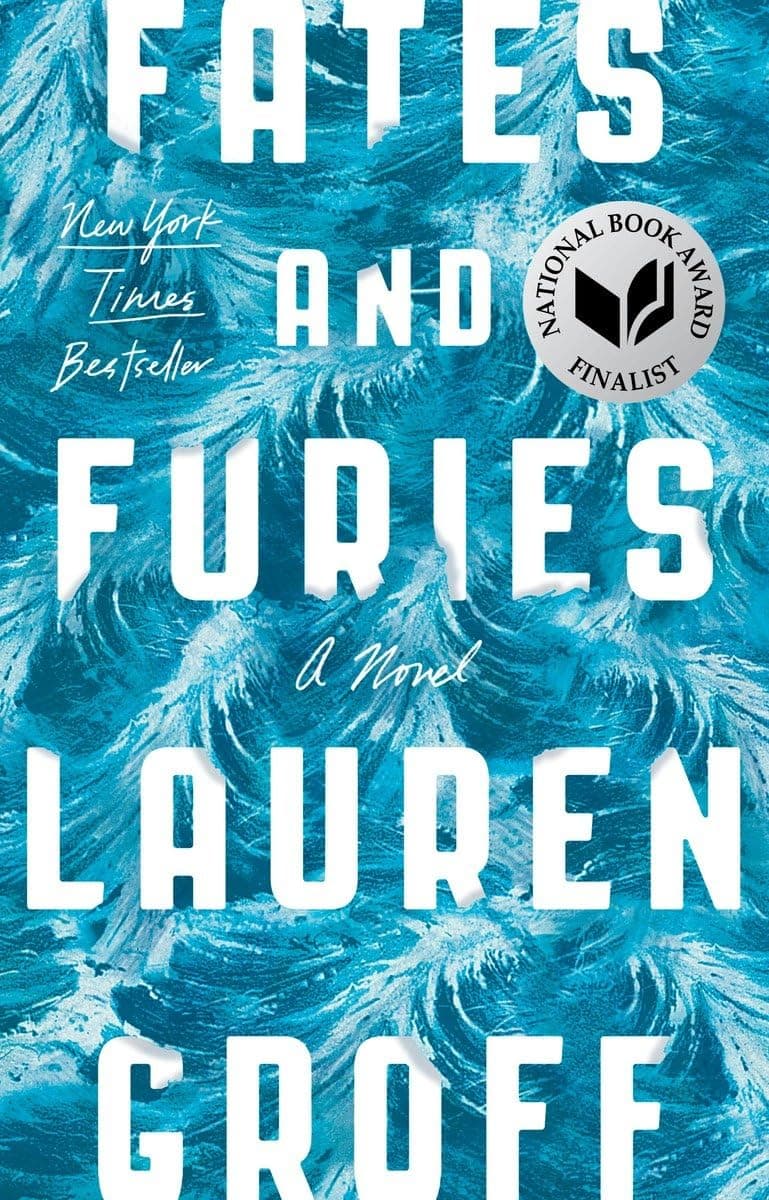

Fates and Furies: A Novel [Groff, Lauren] on desertcart.com. *FREE* shipping on qualifying offers. Fates and Furies: A Novel Review: Fates and Furies by Lauren Groff: A review - Lauren Groff was born in Cooperstown, New York and grew up near the Baseball Hall of Fame. I thought about that as I was considering how I would sum up my thoughts about her latest book. I think she has written the story of a man who was born on third base and thinks he's hit a home run, and his wife, a woman who knows that you have to learn to bunt and run out those bunts, then steal second base, third base, and be prepared to go home when the flustered pitcher makes a wild pitch. This is a remarkable story of a marriage, but the marriage is just a vehicle for getting into the nature of human existence, a way to explore philosophical truths as revealed by mundane events. Baseball is sometimes seen as a metaphor for life; here, marriage is the metaphor for life. The book is divided into two parts, as the title might suggest. The first part, the Fates, is Lancelot (Lotto) Satterwhite's story. Is it coincidental that Lancelot is familiarly known as Lotto, evincing thoughts of lotteries and luck? I think not. Nothing is coincidental about this book. Lotto was born into a family that had made its fortune from bottled water. His father, Gawain, whom Lotto worshiped, had recognized the value of the water on his family land and, almost casually, he made his fortune from bottling and selling it. One could almost say that it was fate. From his birth, Lotto was seen by the three adults in his family - his father, his mother, Antoinette, and his Aunt Sallie - as a golden child meant for greatness. Lotto never questioned that fate or his luck in having been born rich. In fact, he never questions much of anything. He is essentially a narcissist who goes through life simply accepting that all the good things that accrue to him are the way things are meant to be. It is the will of the universe. In his teenage years and early twenties, Lotto is known for being notoriously licentious, casually bedding scores of women and girls. It is because of this behavior that his mother (his beloved father has died by now - the tragedy of young Lotto's life) sends her teenage son away to boarding school in order to get him out of the community. This presages a rift with his mother that is never healed. At the age of 22, at Vassar, Lotto meets Mathilde Yoder at a party and immediately asks her to marry him. She is a tall (6 feet), willowy blonde, the perfect accompaniment to his well over six foot athletic frame. They are fated to be together, he thinks. A couple of weeks after meeting, they do marry and Lotto embarks on his chosen profession of acting. Trouble is, he really isn't very good at it and, through several years of trying, he never manages to break through and truly gain any financial stability. Through all those years, Mathilde is the breadwinner with her work at an art gallery and with an online company. Finally, one night, in despair over his lack of success, Lotto sits down and, in a white hot fever, he writes a play. The next morning when Mathilde gets up, she finds the play on his laptop and proceeds to edit it and clean it up. She molds it into a product that can be presented to backers and eventually the play is performed to great success. Lotto's true profession is found. He becomes a successful playwright and Mathilde continues to work in the background to smooth the way for him and to edit and sharpen his writing. Theirs is a successful marital partnership. They are considered by all who know them as the golden couple. Their partnership lasts until Lotto's death. In the second part of the book, the Furies, we get Mathilde's take on their life together. Lotto's story had, in a sense, been the public view of their marriage, the way things looked from the outside. From Mathilde's perspective, we learn the private view; we see all the hidden gears and pulleys working to create that smooth public image. The first thing that we learn is that Mathilde is not the pure, uncomplicated spirit that Lotto had always imagined her to be. There was an early tragedy in her life, but it was not necessarily or entirely the workings of fate. There was some fury involved, even there. She was born in an idyllic section of France and spent her early years there, but when tragedy struck, her golden childhood ended and she was banished from her family, eventually ending up with an uncle in the United States where she grew up. Through a convoluted series of events, she came to attend college at Vassar where she met Lotto, but we learn that the meeting was not at all fated. It was, in fact, meticulously planned and choreographed by Mathilde. For the rest of their lives together, her planning and choreography will guide their existence and ensure the success of their creative partnership. This is truly a remarkable book by a wonderfully talented writer. I had read Groff's previous book Arcadia in December 2012 and enjoyed it immensely. (Read my review here.) If possible, I liked this one even better. As I read Fates and Furies, It occurred to me that there are parallels with a couple of blockbuster novels of recent years, Gone Girl and The Girl on the Train, in that all three owe something to the mystery genre and have the structure of seeing the story unfold through different perspectives. But this is much the richer blend, combining concepts and ideas from Greek drama, from Shakespeare, from Nabokov - Groff only borrows from the best. A delicious read! Review: About a marriage - This woman can write, there can be no doubt about it. I guess it bugs other people, but for me, her descriptive passages are stunningly accurate and poetic without being overly long or showy. I think it's the characters, or one character in particular, that seemed kind of off-kilter. The book is about a marriage between Lotto, aka Lancelot, and Mathilde, his long-suffering strangely beautiful, brilliant and secretive wife. the first half of the book, the "fates", is told from the perspective of Lotto, and the second half, Mathilde---the "furies". I thought the first half was great reading throughout, maybe because Lotto gets to tell the story from his admittedly naive, enthusiastic, sort of golden-retriever-esque perspective. Lotto's attractiveness and talent, his wild romance with Mathilde, their bohemian life in NYC as poverty stricken artists while Lotto attempts his career as an actor, his subsequent transition to revered and successful playwright, closeted sexual preferences, southern redneck juvenile delinquent past---it's all a fantastic story but totally believable and written in such tactile, alive language that every page is a pleasure. The second half, after a major event changes the stakes, tells Mathilde's story and reveals a raging control freak. Which is acceptable and somewhat expected---behind this type of man, there is often a very ambitious woman pretending to be a nice little wifey. But suddenly, this book turns into a Gillian Flynn book, with a brilliant, vituperative heroine who will stop at nothing for revenge and cares for nothing BUT revenge. The book at this point stretches credibility and abandons the rich language that makes the first half so rewarding. i disliked the character and found the story took a tacky turn that made me distrust the writer and the story. In any case, it's amazing writing and a great story. I'd say it's worth reading despite what I perceive as flaws. This writer has something worth hearing to say, and that's rare enough that I'll make a point of reading her from now on.


| Best Sellers Rank | #27,487 in Books ( See Top 100 in Books ) #284 in Coming of Age Fiction (Books) #833 in Contemporary Women Fiction #1,509 in Literary Fiction (Books) |
| Customer Reviews | 4.0 out of 5 stars 21,527 Reviews |
P**N
Fates and Furies by Lauren Groff: A review
Lauren Groff was born in Cooperstown, New York and grew up near the Baseball Hall of Fame. I thought about that as I was considering how I would sum up my thoughts about her latest book. I think she has written the story of a man who was born on third base and thinks he's hit a home run, and his wife, a woman who knows that you have to learn to bunt and run out those bunts, then steal second base, third base, and be prepared to go home when the flustered pitcher makes a wild pitch. This is a remarkable story of a marriage, but the marriage is just a vehicle for getting into the nature of human existence, a way to explore philosophical truths as revealed by mundane events. Baseball is sometimes seen as a metaphor for life; here, marriage is the metaphor for life. The book is divided into two parts, as the title might suggest. The first part, the Fates, is Lancelot (Lotto) Satterwhite's story. Is it coincidental that Lancelot is familiarly known as Lotto, evincing thoughts of lotteries and luck? I think not. Nothing is coincidental about this book. Lotto was born into a family that had made its fortune from bottled water. His father, Gawain, whom Lotto worshiped, had recognized the value of the water on his family land and, almost casually, he made his fortune from bottling and selling it. One could almost say that it was fate. From his birth, Lotto was seen by the three adults in his family - his father, his mother, Antoinette, and his Aunt Sallie - as a golden child meant for greatness. Lotto never questioned that fate or his luck in having been born rich. In fact, he never questions much of anything. He is essentially a narcissist who goes through life simply accepting that all the good things that accrue to him are the way things are meant to be. It is the will of the universe. In his teenage years and early twenties, Lotto is known for being notoriously licentious, casually bedding scores of women and girls. It is because of this behavior that his mother (his beloved father has died by now - the tragedy of young Lotto's life) sends her teenage son away to boarding school in order to get him out of the community. This presages a rift with his mother that is never healed. At the age of 22, at Vassar, Lotto meets Mathilde Yoder at a party and immediately asks her to marry him. She is a tall (6 feet), willowy blonde, the perfect accompaniment to his well over six foot athletic frame. They are fated to be together, he thinks. A couple of weeks after meeting, they do marry and Lotto embarks on his chosen profession of acting. Trouble is, he really isn't very good at it and, through several years of trying, he never manages to break through and truly gain any financial stability. Through all those years, Mathilde is the breadwinner with her work at an art gallery and with an online company. Finally, one night, in despair over his lack of success, Lotto sits down and, in a white hot fever, he writes a play. The next morning when Mathilde gets up, she finds the play on his laptop and proceeds to edit it and clean it up. She molds it into a product that can be presented to backers and eventually the play is performed to great success. Lotto's true profession is found. He becomes a successful playwright and Mathilde continues to work in the background to smooth the way for him and to edit and sharpen his writing. Theirs is a successful marital partnership. They are considered by all who know them as the golden couple. Their partnership lasts until Lotto's death. In the second part of the book, the Furies, we get Mathilde's take on their life together. Lotto's story had, in a sense, been the public view of their marriage, the way things looked from the outside. From Mathilde's perspective, we learn the private view; we see all the hidden gears and pulleys working to create that smooth public image. The first thing that we learn is that Mathilde is not the pure, uncomplicated spirit that Lotto had always imagined her to be. There was an early tragedy in her life, but it was not necessarily or entirely the workings of fate. There was some fury involved, even there. She was born in an idyllic section of France and spent her early years there, but when tragedy struck, her golden childhood ended and she was banished from her family, eventually ending up with an uncle in the United States where she grew up. Through a convoluted series of events, she came to attend college at Vassar where she met Lotto, but we learn that the meeting was not at all fated. It was, in fact, meticulously planned and choreographed by Mathilde. For the rest of their lives together, her planning and choreography will guide their existence and ensure the success of their creative partnership. This is truly a remarkable book by a wonderfully talented writer. I had read Groff's previous book Arcadia in December 2012 and enjoyed it immensely. (Read my review here.) If possible, I liked this one even better. As I read Fates and Furies, It occurred to me that there are parallels with a couple of blockbuster novels of recent years, Gone Girl and The Girl on the Train, in that all three owe something to the mystery genre and have the structure of seeing the story unfold through different perspectives. But this is much the richer blend, combining concepts and ideas from Greek drama, from Shakespeare, from Nabokov - Groff only borrows from the best. A delicious read!
B**D
About a marriage
This woman can write, there can be no doubt about it. I guess it bugs other people, but for me, her descriptive passages are stunningly accurate and poetic without being overly long or showy. I think it's the characters, or one character in particular, that seemed kind of off-kilter. The book is about a marriage between Lotto, aka Lancelot, and Mathilde, his long-suffering strangely beautiful, brilliant and secretive wife. the first half of the book, the "fates", is told from the perspective of Lotto, and the second half, Mathilde---the "furies". I thought the first half was great reading throughout, maybe because Lotto gets to tell the story from his admittedly naive, enthusiastic, sort of golden-retriever-esque perspective. Lotto's attractiveness and talent, his wild romance with Mathilde, their bohemian life in NYC as poverty stricken artists while Lotto attempts his career as an actor, his subsequent transition to revered and successful playwright, closeted sexual preferences, southern redneck juvenile delinquent past---it's all a fantastic story but totally believable and written in such tactile, alive language that every page is a pleasure. The second half, after a major event changes the stakes, tells Mathilde's story and reveals a raging control freak. Which is acceptable and somewhat expected---behind this type of man, there is often a very ambitious woman pretending to be a nice little wifey. But suddenly, this book turns into a Gillian Flynn book, with a brilliant, vituperative heroine who will stop at nothing for revenge and cares for nothing BUT revenge. The book at this point stretches credibility and abandons the rich language that makes the first half so rewarding. i disliked the character and found the story took a tacky turn that made me distrust the writer and the story. In any case, it's amazing writing and a great story. I'd say it's worth reading despite what I perceive as flaws. This writer has something worth hearing to say, and that's rare enough that I'll make a point of reading her from now on.
M**L
Artifices and Pretensions
Each half of Fates and Furies tells the story of a marriage from the perspective of one of the spouses (and, rather randomly, several other characters, including, briefly and unaccountably, a house cat). This Rashomon trope is an annoyance right off the bat, because you know that the author is holding back truths (or, worse, wants you to know there are none), and that of course when you get to the other spouse’s point of view you’ll find that what you’ve read in the first half is bunk or delusional or fatally mistaken. This tends to undermine our investment in the narrative and, more importantly, in the protagonists, who are, moreover, startlingly unsympathetic: the husband is a reckless narcissist whose overwhelming charm is proclaimed but never convincingly portrayed, and the wife is a beautiful, vengeful schemer whom we’re intended to forgive because she is that supreme figure in women’s fiction, the damaged but indomitable survivor. Nowhere does writerly affectation announce itself more loudly than in the choices of names for a novel’s characters, and Groff’s are comically literary: Lancelot, Antoinette, Ariel, Mathilde, Chollie, Aurelie, Land. None of these names is found in nature, and for all of them to be in one book screams academic artifice. The couple’s dog is named God, for God’s sake. From the title on, Groff seems at pains to display her excellent education. There is the godly perspective, that Greek chorus commentary in brackets, a character so minor she needs no name but is nonetheless named Xanthippe, quotes from Shakespeare, a lengthy play-within-the-novel based on Sophocles’ Antigone (one of many such synopses jarringly dropped into the narrative as signposts, we are to suppose, for Lancelot’s advancing genius but which read like warmed-over notes from Groff’s playwriting class back at Amherst), and so on. The plays come off as advertisements of the author’s own talents (“See what else I could do if I wanted to?”) rather than illustrations of her protagonist’s tortured brilliance. Which is not to say that Fates and Furies isn’t genuinely erudite, clever, for the most part beautifully written, and ultimately (if belatedly) engaging. It is all those things, as well as craftily commercial, despite its constant references to the classics and its other head-fakes toward literary seriousness. At its core, Fates is what the publishing biz calls upmarket women’s fiction: a well-written novel of doomed love, peppered with sex (some of it mildly kinky, but none of it the least bit erotic because it’s described in the same safe, bloodless, arty prose as the rest of the book), limned in reliable clichés (the grasping southern mother, the drunken playwright, the deprived childhood, the kept woman, the dreamy artist-husband who would have come to nothing but for his mercilessly practical wife, the tragic young hipsters in New York City, definitively done thirty years ago in Jay McInerney’s Bright Lights, Big City and in no need of repetition), and drenched in melodrama (abortion, prostitution, suicide, sterilization, private investigators, abandoned children). It’s positively Dickensian. Groff’s protagonists embody such extremes (in looks, achievement, neuroses, backgrounds) that they could exist only in soap opera or, well, women’s genre fiction. It’s to Groff’s credit that she manages to make much of this entertaining and plausible, but no one could mistake it for what we used to call literary fiction; the book’s pleasures are mostly guilty ones. I lost what little credulity I’d clung to when (micro-spoiler here) Lancelot, wildly famous by this point, makes an unintentionally sexist speech at Stanford and, embarrassed, in despair, and having lost his wallet, proceeds (of all possible choices) to walk from Palo Alto back to San Francisco, where the beautiful Mathilde waits in a Nob Hill hotel. Now anyone who has lived in the Bay Area or has even a passing familiarity with it knows that, for reasons having more to do with local infrastructure and topography than distance, walking from Palo Alto to Nob Hill is virtually impossible, let alone in the span of mere hours that our boy Lotto accomplishes it. Was this a sudden lurch into magical realism, however unearned and inconsistent with the rest of the novel, or just a blatant lack of street sense on the author’s part, after all her preening erudition on other topics? Whatever it was, it made me want to throw the book across the room. What’s fascinating about all this is that Groff is, undeniably, a wonderful writer. Her command of language is deep and sure, she can snap out a simile with the best of them, her descriptive powers are considerable, and her dialogue is believable. What seems to be lacking is heart, or courage, or vulnerability, or even humility; a quality that would soften the mechanistic clanking of her showy prose and allow us to believe in and care about her protagonists. It’s too easy to imagine that, in her portrayal of the shallow, self-centered, over-educated coterie of aging hipsters that populate the book, Groff is writing about the life she’s lived, in which extraordinary luck of class and genome assumes the guise of merit, and the rewards of that luck have all the momentum of inevitability. What does the existence and resounding success of this book tell us about the state of the American novel, and publishing in general? Surely that, because what passes for literary fiction has become a bastard child of the entertainment industry, even the most erudite and potentially serious novelist must become a genre slave and serve up the exotic, the sensational, the palpably unreal. Certainly that, because it’s increasingly women who buy books (and who, for that matter, edit, market, publish, and review them), women’s fiction, with its deep roots in melodrama, has become the novel’s dominant ecosystem. Arguably, that the range of successful fiction writers and their life experiences, formerly rooted in the real working world, has narrowed to the bandwidth of an MFA program in writing. And surely that these forces are crowding out the kind of novel that Updike’s and Salter’s and Richard Ford’s and Kent Haruf’s reputations were built on: the novel of the sacred everyday, the divine domestic, the luminously quotidian, what Salter called “the glory of certain moments in life,” illuminated and made extraordinary not, as in F&F, by a quirky, clockwork plot or outlandish characters, but by the author’s deep understanding of and compassion for the prosaic lives that we and his characters live.
M**E
“Fates and Furies” unfolds and reveals itself like a piece of art
“Fates and Furies” unfolds and reveals itself like a piece of art. It is so multi-layered, deeply complex and philosophical that it left me spellbound, awed, & utterly impressed with this author. It is a sexy, brilliant, exquisitely written novel that pivots around the intensely bright love and marriage between two people, who seem so different, but love each other so fiercely. The husband, Lotto, is exuberant and narcissistic, but alternates between extreme highs and lows in his moods: between mania, with extreme passion and love for others and creativity; and depression with suicidal thoughts. The wife, Mathilde, is so loving and devoted to her husband, but also has a cold, calculating, manipulative side that she conceals. There are striking differences between the two: he is always bathed in light and she in darkness. Appearances can be deceptive in his book. Mathilde feels that she is evil to her core, which stems from her childhood memory of being implicated at the age of 4 in the death of her younger brother. Lotto, however, saw kindness at the very core of Mathilde. There are so many twists and turns in this novel, making it an exciting read, one that keeps you thinking, guessing, and questioning what you know about the characters and people in general. It is told in two parts: the first, “the fates”, is from Lotto’s perspective and the second, “the furies” is Mathilde’s perspective. The two halves read very differently complimenting the protagonist whose story it is. Everyone is bathed in warmth and light from Lotto’s perspective and you begin the see the evil hidden side of the characters revealed when reading Mathilde’s story. You also realize how she is the bedrock of his success, his glory, his glamorous life. Lauren Groff’s command of the English language (as well as French) is incredible. The inlaid humor; wordplay: many layers of imagery; stories within stories; parallel characters; and juxtapositions of character traits are fascinating. It was a pure delight to read. I recommend this book to anyone who loves high quality literature. All the pieces come together perfectly like a puzzle, but it is never trite. Please see book-chatter.com for discussion questions.
A**T
Fire and Frost
Lauren Groff's book is a very well written book. Im afraid this sort of thing has been done before (Gone Girl by Gillian Flynn), though I have heard Ms Groff complain that this book was completed before that best seller, and perhaps it was. It is much better, exponentially so, in my mind, than Gone Girl. The character development is strong, particularly in the hero Lotto, and the brittle and wrecked wife Mathilde, seems held together with some narrative integrity. Jane Gardam's back to back books,Old Filth, and The Man with the Wooden Hat, each tell the same sort of marital drama, from opposite sides of a long marriage, that holds secrets, too. Ms. Gardam is given credit for her contribution in Groff's acknowledgments. I have to say I liked Gardam's two works much better than Groff's. It's kind of a shame that her idea has been poached and hijacked, not once by Groff, but twice, by Flynn. Particulalry when Gardam's writing is so superior. Lotto and Mathilde are charming, the book bounces with sexual thronging, and its jammed full of classical and mythological references. It just tries too hard to be sophisticated. It's glib, and ultimately nothing is sacred when the cast is full of narcissists. Unlike a lot of readers, i enjoyed Lotto's section better than Mathilde's. Groff tries to give each a distinct voice, and Lotto's generosity and warmth shine through, whereas Mathilde is cool company. Ms. Groff's writing is quite good. There are moments when we see an astonishing display of virtuosity.I wish authors with this ability were content to let the words, and their poetical usage be elevated over slick sex scenes and intrusive plot devices (Antigone) High points for me: Mathilde's memories of her brother's accident and aftermath, very haunting and sad. Lotto's experience in prep school, as he emerged from his depression and found a place. Lotto hearing the aria from Leo for the first time. Ah! Its only Mathilde who can collaborate with him, understand him. This was great bit of writing. Low points: Mathilde eating sushi off the floor as a precursor to sex. (Badly drawn, big yuck factor) Gratuitous lesbian sex with her P.I., gratuitous sex with Land. More yuck factors.Now that I mention it, there was just way too much gratuitous sex in the whole thing. Lotto's youthful conquests read like a shouts and murmurs parody in the New Yorker. In summary, Id love to see the same sensational wordsmithing with less attempts at being so self consciously sensational.
S**N
Master storytelling. May be my #1 book of the year.
This is a powerful novel wherein the contents are as formidable as the title. Groff takes the elements of a marriage—a domestic drama of sorts, and weaves a compelling tale that is neither soap opera nor comfort food. FATES AND FURIES examines a marriage from two different fields of vision, or versions, but both in the third-person perspective. So it isn’t He said, She said. Often, when a novel is told from the bisecting branches of husband and wife, it is told in the first-person, allowing for contradictions to be anticipated, as we expect a certain amount of room for the unreliable narrator. However, the narrator here is the author, and the two stories don’t contradict each other, or fight to lure the reader into he or she’s said facts. In fact, the genius here is how the author manages to tell one story, with no inherent contradictions between the two parts (Part I is Fates, part II is Furies), but yet with the shock and surprise of Part II so complete that I was pitched through a dark tunnel by the last pages. I don’t think I will ever forget the impact of this tour de force of master storytelling. What I can divulge: It is the early 1990s, and after only six weeks of courtship, two intelligent and literary college graduates are married in a storm of bliss. The book starts out in their post-wedded beautitude on a beach in Maine. Lotto (Lancelot) is privileged and wealthy, a very tall and imposing man. He’s not exactly handsome—he had acne as a teen and has the scars/pits to prove it. He is still a golden boy--a charismatic, Shakespearean stage actor in college, curly and blonde—the Golden Boy with some physical and personal flaws. “Animal magnetism is real; it spreads through bodily convection.” He’s a bit narcissistic, yet committed to Mathilde. And he drinks too much, especially when in the throes of depression. His wife, Mathilde, is tall, blonde, leggy, and unconventionally attractive, also. But, together they see the other as the most beautiful on the planet. They only have eyes for each other now. But, Lotto was quite the Lothario before he fell hard for Mathilde. His father is long dead, and his mother took him to Florida to finish his high school years after a tragedy. Mathilde is an orphan with no family. She fills her role as wife largely through her support of Lotto. For a while, she is the breadwinner, working at an art gallery and later at an Internet start-up. She has feminist leanings that she keeps mostly in check, especially for Lotto. She is devoted to him, more than many wives would be for such a vain husband. The reader is more of a voyeur in Part I, with a pane of glass between the reader and the couple, although all of Lotto’s secrets are on display for us to know. The tone and the narrative construction could be seen as a bit arm’s length--in narration, but not in content. You wonder how much that Mathilde knew about his past; however, it was obvious she gleaned enough to know his interior self, and that he had some wild behaviors before they met. In Part II, we slide into Mathilde as the main character, or as the more exposed one. The tone changes; it is fiercely intimate, as if we are walking in Mathilde’s shoes with her. The drama dials up and the excitement builds tautly with every page. Even if you are restless with Part I—there is a certain wall between the reader and the protagonists—don’t give up. Once you get to Part II, it all makes sense, from why Groff chose to write the first part the way she did, to the ironies and tragedies that inflame the pages. I was shattered by the end of the story. With delicious literary allusions, from Greek tragedy to Shakespeare, you know you are in the hands of an erudite author, but it is created organically, never pretentiously served up. The raw secrets are conveyed like grenades in a landmine, and the story just about explodes. Once you get to Part II, you understand the purpose of Part I, and its architecture. This may be the finest, most emotionally compelling novel that I read this year. I'd give six stars if I could! “…life was conical in shape, the past broadening beyond the sharp point of the lived moment. The more life you had, the more the base expanded, so that the wounds and treasons that were nearly imperceptible when they happened stretched like tiny dots on a balloon slowly blown up.”
F**X
A Book Club Review of Fates and Furies
This was our book club's 50th read. There were eight female members present, from ages 32 to 43, all of varying backgrounds/incomes/educations. We rate books on how well they are liked, how much discussion they prompt, and whether the subject matter is good for games, food, or themes. This book rated rather high, in our top ten percent of liked books, coming out most applauded in the discussion category. The book is dense, layered, and heavy with controversial topics. There is lots to discuss and, for that, it rated higher than most we've read. The book itself tells a tale of a marriage between Lotto and Mathilde, from varying perspectives. They are an exciting, glamorous, romantic couple, deeply in love and destined for a wonderful life... or are they? There is a wonderful mythological backdrop to this story that would offer loads to talk about in a book club setting. The Fates were three sister deities, incarnations of destiny and life; whereas the Furies were three goddesses of vengeance and retribution who punished men for crimes against the natural order. In this novel, Lotto represents the Fates... a man who is seemingly destined, not only for greatness, but also for a charmed existence that he barely works for. His match, Mathilde, is the Furies, a woman who has fought for what she has and must control her existence to manipulate what she needs out of life. Lotto and Mathilde are close but have many secrets. The book club discussion ran the gauntlet, from subjective experiences and beyond. What should be kept secret between husband and wife, if anything? What is love, what is marriage? Do we every really know our partners? "What would you do" was a popular question that night. And, of course, the multitude of references and allegories on mythology, Shakespeare, pop culture media, and much more more made for great discussion and games. Whenever we have nights full of discussion, we are pleased. In that way, this book was a total winner. Individually, however, only a handful of us would rate this book higher than two to three stars. Many of us said we read the book because it was for book club, but we would not have finished it had we read it on our own. I found Lotto to be an insufferable character (his story goes first and you have to get through him to get to Mathilde) and the book has an overall pretentious feel to it like... the author knows lots of tricks and is super clever and she wants you to know it. Sometimes the foreshadowing and allegories were very heavy-handed, almost in-your-face ridiculous. Several of us were just "over it" as the cleverness and tricks just got a bit old. We loved the idea of the "plays within a play" but it just got a bit tiresome toward the end. Sometimes, subtle play on language is more enjoyable than overt conceit (strained metaphor). Additionally, the book is a heavy example of feminism, and that is not for everyone. Some of us loved that, some of us really disliked it. Overall this was a highly rated book for book club, but a lower rated book when read as an individual. If your book club wants something meaty to talk about, you may enjoy this one.
R**B
A Disappointing Read
Like others, I was drawn to this book by its premise and the overwhelmingly positive reviews. Unfortunately, for me, the hype for Fates and Furies did not live up to reality. The story concerns the 23 year marriage of Lotto Satterwaite and Mathilde Yoder as seen from two perspectives – first his, then hers. He is the privileged child of a wealthy southern family accustomed to adoration by those around him. She is a loner with no family and a hazy history. When they meet as undergraduates at Vassar, Lotto is an attractive young man with a passion for acting, drinking and sex. Mathilde is the friendless, icy blond who wins his heart. They elope after a brief courtship. Their early years are filled with typical newlywed struggles – both financial and personal. Lotto's mother has cut him off for marrying Mathilde. This puts a Mathilde in the role of primary wage earner. Lotto longs for a houseful of children, an idea that is appalling to his young wife. Despite their difficulties, they appear to be devoted to one another – at least to the many college friends that they host at gatherings in their NYC basement apartment. After becoming depressed at his acting prospects, Lotto starts drinking heavily. As luck would have it he finds his true talent as a playwright. His success is immediate and is followed by many more theatrical productions. The couple finds their roles reversed: Lotto is now the star that many in his youth predicted; Mathilde slips into the shadows and becomes his manager. It is her role as surrogate mother/helpmate that she finds truly irritating although she does nothing to change her situation. (“Somehow, despite her politics and smarts, she had become a wife, and wives, as we all know, are invisible. The midnight elves of marriage.”) Instead, she continues to infantilize her husband, making him more dependent on her. (“She was the one who always ordered their lives; he never once bought a plane ticket, rented a car.”) One major problem for me was that I found none of the characters particularly believable or compelling. As depicted, Lotto does not come across as a scholar destined to become one of the best dramatists of the time. The long scenes from his plays which appear in the book do not support his supposed brilliance. He is a man/child and displays absolutely no intellectual curiosity – about anything – including his evasive wife. He is constantly described as gentle and kind but more often than not he comes off as insensitive and arrogant. In the later part of the book Mathilde's incredibly harsh back story is revealed. Her attachment to Lotto seems less about love and more about clinging to a life raft who can save her from her horrible childhood. The reader is supposed to believe that this damaged woman can hold in all her resentment and rage, in essence be a different person, throughout her entire marriage. An uncharacteristic act of kindness in later life does not fit in with the vengeful person we have come to know. Secondary characters who pop in and out of their lives are, for the most part, an unlikeable group. A lot of pages are devoted to Lotto's best friend Chollie and Mathilde's former lover Ariel – both equally repulsive. Virtually none of the other characters come off any better. Lotto's trip to an artist colony (so he could collaborate on an opera!) is filled with mere stereotypes. The author does pose some interesting questions. Does tragedy in youth determine your destiny? Can one act of compassion late in life redeem your soul? Can we ever really know the person we marry? The writing in some passages is terrific; at other times pretentious. I found the narrators bracketed comments to be a bit intrusive [as if to say “See how clever I am!”] This was a long read for me. I walked away from this book confused by all the hype surrounding it. I honestly can not recommend this book to others.
Trustpilot
1 month ago
2 weeks ago