We remain fully operational. Our teams are working around the clock to ensure your deliveries continue safely.

DOWNLOAD THE APP


Customer Services
Copyright © 2025 Desertcart Holdings Limited
DOWNLOAD THE APP

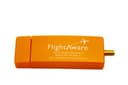

🚀 Elevate Your Flight Tracking Game!
The FlightAware Pro Stick® USB ADS-B Receiver is a cutting-edge device designed for aviation enthusiasts and professionals. With a powerful 20dB integrated amplifier, it significantly boosts your ADS-B range by 20-100%, ensuring you never miss a flight. Compatible with PiAware and featuring advanced R820T2 RTL2832U chips, this USB-powered receiver is lightweight and easy to set up, making it the perfect tool for anyone looking to enhance their flight tracking capabilities.
| ASIN | B01D1ZAP3C |
| Audio Output Mode | Stereo |
| Audio Output Type | 3.5mm Stereo Jack or RCA |
| Brand | FlightAware |
| Color | Orange |
| Compatible Devices | Personal Computer, Single-Board Computer |
| Connectivity Technology | USB |
| Connector Type | USB |
| Control Method | Touch |
| Controller Type | Hand Control |
| Customer Reviews | 4.6 out of 5 stars 431 Reviews |
| Format | WAV, WMA |
| Item Weight | 0.5 Ounces |
| Manufacturer | FlightAware |
| Model Number | FA-PROSTICK-1 |
| Number of Channels | 1 |
| Other Special Features of the Product | 20 dB integrated amplifier |
| Output Power | 75 Watts |
| Output Wattage | 75 Watts |
| Special Feature | 20 dB integrated amplifier |
| Supported Internet Services | Spotify |
| Surround Sound Channel Configuration | 5.1 |
| Total HDMI Ports | 2 |
| Total Number of HDMI Ports | 2 |
| UPC | 613617943365 854848005068 |
| Wattage | 75 watts |
| Wireless Technology | USB |
M**E
Even without considering the low cost, this may well be your best SDR dongle for ADS-B reception!
This is a gem if you want to decode ADSB signals. FlightAware has taken a R820T2 and added a LNA (low noise amplifier) in one slim trim USB package. This unit is capable of working with software such as SDR# and can be used to listen to FM radio stations etc. Since many folks will be using this to feed data to FlightAwares website they are selling these near cost and have designed them to work best as an ADSB receiver. You have many options you can use. FlightAware has its own software that you can install on a SDHC memory stick and be up and running within minutes. You can also choose to feed Flightradar24, PlaneFinder or the ADSB Exchange. There are also similar builds you can download and install and be up and running on your Pi in a few minutes. The best solution is likely to run the software for the ADS-B Receiver Project made by jprochazka. This of course takes a little longer to set up and asks more questions but the install script is really polished and runs well. It also uses a more advanced and tweak able demodulator. The easiest way to get going with the ADS-B Receiver Project is to use a freshly formatted SDHC card. Download NOOBS and install a fresh copy of Debian. Update the build using the sudo apt-get update & sudo apt-get upgrade commands. Once you have this you can go ahead and install the ADS-B Receiver Project. If you make a mistake or it doesn't work you can re install NOOBS and start from scratch with not too much of a hassle. The ADS-B Receiver Project will give you more stats on signal strength, CPU usage, memory usage, max distance, etc. Others have mentioned the lack of a temperature controlled crystal. Since ADS-B is a digital form of modulation that uses 2MHZ bandwidth being a little off in either direction wont affect your signal. If you are someone who likes to tweak you can adjust the PPM center it. Once the device warms up it doesnt seem to vary too much and I have mine in a uninsulated garage attic.
J**E
Better alternative to the RTL-SDR
I have owned the standard RTL-SDR and used it for a Pi-Aware station prior to purchasing this. Without digging into stats for proof, my subjective look at the live data says that they are about the same, although the preamp built into this one might give it a slight edge. I rate the FlightAware Pro Stick a 5 star SDR, because it has an SMA connector, and is about $5 cheaper than the RTL-SDR which makes it a no-brainer purchase. Combine it with a Raspberri Pi, a 1090MHz band-pass filter, and an antenna and you have a ridiculously easy to make ADS-B receiving station. Band Pass Filter: ADS-B 1090MHz Band-pass SMA Filter Antenna: Build one or buy one: 1090MHz ADS-B Antenna - 66cm / 26in Optionally you might consider a lightning arrestor if mounting outdoors, antenna fee line, and a USB extension cable. ----------- Pros: *Cheap *Works Great *SMA port Cons: *None Bottom Line: Buy this unless you want to spring for an Airspy or something in that higher-priced category.
H**Y
Instant improvement.
I received this yesterday and swapped in in place of the un-amped SDR that I had been using. I also changed out the feed line to regular coax in stead of running a long USB like I had been to keep the SDR close to the antenna. Without any other adjustments I turned the server back on, and instantly noticed a difference. Old radio was seeing just 6 ADS-B targets and 8 Mode-S. Keep in mind the antenna is just in the attic for now until I can mount it outside. New radio: 30+ ADS-B, and 20+ Mode-S, and distance increased by almost double for consistent hits. The difference is truly incredible. I did notice installing it that with the feed point being SMA and not having a swivel connection like the older ones there is a lot of weight on the end of the device. I plan to buy a few more for a project and will be buying short USB headers as well to allow flexibility and take the strain off the built-in USB connector. I am impressed with this little device though.
S**Y
Good product. Performs well
Good product. Performs well. If all you want is to decode airplane spots, this device suits that purpose exactly! There is a lot of chatter in the online forums about how to maximize your reception using this dongle, adding an external filter, or maybe swapping out this device for the FlightAware model that has a built in filter. I DO NOT recommend adding an external filter to this device. The price difference between adding an external filter to this device, and picking up the FlightAware model with the filter built in is really trivial ($4 at time of writing). Additionally, adding a filter prevents you from utlizing this device for other things - like experimenting with Software Defined Radio (SDR), or using it as a police or fire scanner, an airplane communications receiver, Amateur (ham) Radio receiver, and the like. If you get this model, it will perform well, and will let you experiment with SDR, which can be just as much fun as airplane tracking. Regardless of whether or not you want to experiment later with this device, it does an excellent job decoding airplane spots. It's good quality, and will perform well. And all the debate on the online forums about needing a filter or not needing a filter won't matter - your need for a filter will largely depend upon the quality of your antenna and feedline, as well as the amount of RF interference in your area. So no one else's experiences with their location will help you with yours. You're just going to have to try it, and find out for yourself. Again, if you're already thinking about buying an external filter for this unit, why not just add 4 bucks and get one of these WITHOUT a filter, and one WITH? Then you'll have the benefits of both worlds!? And have a "leftover" SDR dongle to play with!?
G**E
but this thing is quite amazing. Instantly had an increase in range and in ...
I am not normally one to write reviews, but this thing is quite amazing. Instantly had an increase in range and in number of positions per second. Messages per second nearly doubled, and the range increased anywhere from 10-30% (depending on the direction). Using a third party high gain antenna, the flightaware filter, (which I installed about a month ago, and also provided about a 10-15% boost), and about 50 feet of LMR 400 cable. Very impressed so far, just installed, so these are preliminary results, but the early results are looking promising. Furthest distance seen in the first hour of operation was 240 miles (but not consistently), with the average consistent distance being about 190 miles!
N**X
It’s great, but it blocks all the Pi’s USB ports
Well I ended up getting the blue receiver which has the built in filter because Amazon must have applied the wrong label. I won’t complain about a free upgrade! But to my knowledge, the difference between the two is the filter. It’s very reliable but the only thing is that it feels a little loose in the USB port. If you’re using this with a Raspberry Pi, it blocks EVERY USB port. I have a Logitech keyboard and the dongle wouldn’t fit with the ADSB receiver plugged in which means that in order to manage my Pi, I have to use VNC which is what I’d recommend anyways.
J**N
Much better than generic SDRs
Over the past week, I've been running tests on a Piaware station I built for remote mounting. Power over Ethernet to a Raspberry Pi 3B+, mounted in a water-resistant "cable TV" box attached the the pole with the antenna on top, and only a 1 meter cable to the radios. This station used Nano2 radios, and saw about 40% as much traffic as my "reference" station 20 feet away, which uses an Orange Pro Stick. Today, I swapped out the 1090 MHz Nano for an Orange Pro Stick. The range JUMPED. The test station now hears MORE stations than my reference station, attributable to having a 1 meter feed line instead of 10 meters. The tuned pre-amp in the FA radio makes a HUGE difference. I'm in an area where the filtering of the Blue Pro Stick might make a difference (multiple cell towers within a kilometer of the antenna), so maybe I'll play with adding a filter later. This is working well enough now that the Nano2 has been swapped out that I may just leave it alone.
D**L
Pretty awesome for tracking flights
The technology to track planes and to show them on a map has always been interesting to me. I've been a Flight Radar 24 and Flight Aware fan for many years, and I'm not an electrical engineer so I wasn't sure how to setup a flight receiver. The technology to track planes and to show them on a map has always been interesting to me. I've also wanted to get a Raspberry Pi to play with, but never found that "killer" app to motivate me to buy one. This new FlightAware Pro stick USB receiver, changed all that. This is really incredible!! I went to the FlightAware Piaware website to get the shopping list of items to buy. Went to Amazon and bought the Raspberry Pi, case, SD card, power supply and Pro stick, followed the detailed instructions and was up and running in a couple of hours, sending my data to the FlightAware site. At first I was only picking up very close signals, so I purchased and added on WiFi and an antenna with an extension cable to install on the roof of my back deck about 15 feet above ground. Even though I don't have full line of sight in all directions, I am picking up signals up to 150 miles away. This is a very cost effective way (less than $150 total) to be a part of the FlightAware network. My biggest problem was convincing my wife to let me install the small antenna on the back of the house.
Trustpilot
2 days ago
2 weeks ago