

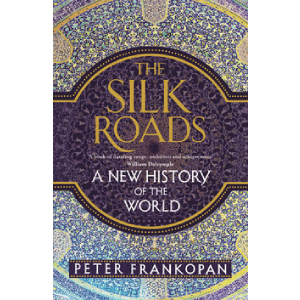
The Silk Roads A New History of the World by Peter Frankopan - Paperback
Product ID: 253514598
Buy anything from 5,000+ international stores. One checkout price. No surprise fees. Join 2M+ shoppers on Desertcart.
Desertcart purchases this item on your behalf and handles shipping, customs, and support to Kyrgyzstan.
The Silk Roads A New History of the World by Peter Frankopan - Paperback : Frankopan, Peter: desertcart.ae: Books Review: Good book and quick delivery - Brilliant book, good read. Review: Entertaining but too biased - The book is a pleasing read, history is correctly explained as a chain of reactions and butterfly effects. But I find astonishing the anti-Spain and anti-Portugal views across the whole book. The incredible developments in all areas done by Spain are just "Columbus' discoveries" and just mentions Magallanes because he was not Spanish (nothing about Elcano). The learnings from decades of unique challenges allowed to understand streams enough to make the first trips from the south Atlantic to Phillipines and back via north Atlantic to California. The Portuguese went to India and south east Asia. But that was just by chance, Columbus and Vasco da Gama's work, while the Dutch 150 yrs later did 10% of that and were "the masters of cartography" executing a perfect "plan". The incredible developments in the Americas, still visible today where natives still live (unlike in the North) and considered equals by law to the Spanish since 1501, are just ignored. No account of the key help given by the oppressed tribes against the violent hegemony of the aztecs. But of course, nothing is said about the massive killings of the Dutch in Java, because that's a good and civilized culture. The way British piracy is shallowly mentioned is funny too.
| ASIN | 1408839997 |
| Best Sellers Rank | #5,030 in Books ( See Top 100 in Books ) #15 in Travel Writing Reference #29 in History of Europe #31 in Specialty Travel |
| Customer reviews | 4.6 4.6 out of 5 stars (3,659) |
| Dimensions | 12.8 x 5 x 19.6 cm |
| Edition | First Edition |
| ISBN-10 | 1408839997 |
| ISBN-13 | 978-1408839997 |
| Item weight | 470 g |
| Language | English |
| Print length | 656 pages |
| Publication date | 1 June 2016 |
| Publisher | Other |
| Reading age | 10 - 13 years |
A**I
Good book and quick delivery
Brilliant book, good read.
F**E
Entertaining but too biased
The book is a pleasing read, history is correctly explained as a chain of reactions and butterfly effects. But I find astonishing the anti-Spain and anti-Portugal views across the whole book. The incredible developments in all areas done by Spain are just "Columbus' discoveries" and just mentions Magallanes because he was not Spanish (nothing about Elcano). The learnings from decades of unique challenges allowed to understand streams enough to make the first trips from the south Atlantic to Phillipines and back via north Atlantic to California. The Portuguese went to India and south east Asia. But that was just by chance, Columbus and Vasco da Gama's work, while the Dutch 150 yrs later did 10% of that and were "the masters of cartography" executing a perfect "plan". The incredible developments in the Americas, still visible today where natives still live (unlike in the North) and considered equals by law to the Spanish since 1501, are just ignored. No account of the key help given by the oppressed tribes against the violent hegemony of the aztecs. But of course, nothing is said about the massive killings of the Dutch in Java, because that's a good and civilized culture. The way British piracy is shallowly mentioned is funny too.
F**N
It is very informative and very well written. I would highly recommend as not only do you get a good history lesson but written in a way you can enjoy.
Y**O
⭐️⭐️⭐️⭐️⭐️ (5/5) „The Silk Roads“ – Weltgeschichte neu erzählt, vom Rand ins Zentrum 📌 Kurzfazit Frankopan rückt nicht Europa, sondern die Handels- und Kulturverbindungen entlang der Seidenstraßen ins Zentrum der Weltgeschichte. Von der Antike über das Mittelalter bis zur Moderne zeigt er, wie Zentralasien, Persien, China und der Nahe Osten entscheidend für Politik, Religion, Wissenschaft und Wirtschaft waren. Damit bricht er mit der klassischen westlichen Erzählung und eröffnet neue Perspektiven. 📚 Inhalt in Kürze Antike Seidenstraßen als Drehscheibe von Waren, Ideen und Religionen. Rolle des Nahen Ostens und Zentralasiens bei der Entwicklung von Weltreligionen und Wissenschaft. Bedeutung des Handels für Machtverschiebungen (von Persien über das Osmanische Reich bis Kolonialismus). Moderne „Silk Roads“: Öl, Geopolitik, neue Handelsnetzwerke (China, Russland, Naher Osten). 🔬 Wissenschaftliche Relevanz Stärken: Umfassend recherchiert, mit riesiger Quellenbasis. Greift aktuelle historiographische Trends auf: Dekolonialisierung der Geschichte, Globalgeschichte. Bietet interdisziplinäre Perspektiven (Politik, Religion, Wirtschaft, Kultur). Schwächen: Kritiker bemängeln, dass Frankopan teils zu stark vereinfacht oder dramatisiert. Einige Kapitel wirken essayistisch und weniger tief als akademische Spezialliteratur. 👉 Fazit Wissenschaft: Ein bedeutendes Werk der Globalgeschichte, das Forschungspfade populär zugänglich macht. 🌍 Kulturelle Relevanz Internationaler Bestseller, in über 30 Sprachen übersetzt. Hat die Seidenstraßen als Metapher für Globalisierung wieder populär gemacht. Politisch-kulturell aktuell, da China mit der „Belt and Road Initiative“ erneut auf die Seidenstraße Bezug nimmt. Stärker in der Öffentlichkeit rezipiert als in rein akademischen Kreisen – ein Brückenbuch zwischen Wissenschaft und Allgemeinheit. 💭 Meine persönliche Meinung 👍 Positiv: Spannend erzählt, horizonterweiternd, macht neugierig auf Regionen, die in klassischen Geschichtsbüchern oft fehlen. 👎 Negativ: An manchen Stellen spürt man die populärwissenschaftliche Zuspitzung; Leser:innen mit historischem Fachwissen wünschen sich mehr Tiefgang. Für mich: ein must-read, wenn man Weltgeschichte neu denken möchte. 🎯 Fazit The Silk Roads ist ein brillantes Werk der Globalgeschichte, das eurozentrische Narrative hinterfragt und die Seidenstraßen ins Zentrum der Menschheitsgeschichte rückt. Wissenschaftlich solide, kulturell relevant und spannend zu lesen. ⭐️⭐️⭐️⭐️⭐️ – 5 von 5 Sternen Weil: wissenschaftlich stark, kulturell hochaktuell, erzählerisch fesselnd.
S**Y
THE SILK ROADS by Peter Frankopan A New History Of The World It's true to say that history is a story told by the winner. It's all very well to get a big head and wield a sword as a now victor; but it's of pivotal importance to remember that forces on the other side or on the periphery would be flexing their muscles, on the alert for a chance to settle scores. Peter Frankopan, a historian based at Oxford University and the author of THE SILK ROADS, has a prodigiously profound insight on historical events and is an extraordinarily hard-working researcher which we know from 100 pages of notes and bibliography accompanying 507 pages of text. This book is something none other than Peter himself couldn't have written. He pulled multiple strands together in this single great work. An epic story indeed! Incredibly informative and compellingly attractive. This ambitious book spans centries, continents and cultures. It shows a historical tapestry woven with his epochal perspective: how cultures, slaves, products, natural resources, religions and ways of life have been traded for over two thousand years; how the center of powers has changed so far and which it's heading into. This book takes the form of a series of what marked milestones in global history chronologically arranged from ancient civilizations of Mesopotamia to the Crusades to the post ww2 era to the recent consideration of Turkey joining the SCO not the EU to the present when half-a-mile-long trains carrying millions of products from China to Germany in just sixteen days and vice versa. It of course includes factual accounts of events with the additional explanations on the causality between some nitty-gritty issues. But what the author is really willing to give is a warning against solving today's problems without worrying tomorrow's. THE SILK ROADS enables us all who read it to see a broad region that had been or is in turmoil. It reveals the dangers of the lack of perspective about global history. Great turning points in human history, I've learned from this book, have been bound together by, against the backdrop of, many big and small talks and decisions which occurred in the barren steppes, in conference rooms, on the phone and sometimes in a prison cell. I owe much to Peter Frankopan. My knowledge of the world history was admittedly sparse. When it comes to history related literature, I, as a person who had no interest in the stuff of global history, have only read several books focusing on a narrow subject matter over shortening timeframesㅡUNBROKEN, ALL THE LIGHT WE CANNOT SEE, DEAD WAKE, just to name a few. Now, after reading this book from beginning to end, highlighting and underlining sentences, making notes in the margins, I feel my heart ten times more fluttering than when I first saw the jacket image of an incredibly beautiful decorative ceiling of a certain madrasah in Uzbekistan. There is a greater quiver of excitement now in my mind than there was just after reading 7-page preface which made me all aflutter in anticipation of the following text. The bottom line: go online with your smart phone to do a search for THE SILK ROADS by Peter Frankopan, add it to cart and proceed to checkout! Some time later you would take a few stride forward to the reality of how the world works.
R**D
Frankopan sets out to explore the ancient trading corridor, the silk road, not as a straight history but more as an analysis of the region's impact on the world. His purpose is to move beyond the standard inevitability of the rise of the west, you know, Greece-Rome-Christian Europe-Renaissance-Enlightenment-Democracy-Industrial Revolution. While the result is uneven, the book focuses in on what was at stake in each period and what it led to in a longitudinal perspective of exceptional value. It is also a riveting read, full of surprising details even for history buffs. The first quarter of the book is about the rise of various monotheisms that came to serve as the ideological underpinnings of several empires, as chosen by shrewd, perhaps cynical, leaders. However sincere the messianic founders must have been, Christianity was adopted by Constantine as a tool sustain his position as emperor; the same was true for Muslims, Zoroastrians, and others. It was a particular political context, at the end of the classical era, when military authoritarianism of vast empires decisively replaced the more chaotic city-states systems that were loosely polytheistic. Soon thereafter, the Islamic Empire was ascendant: open, eclectic, supremely confident, and militarily unstoppable. With the west fragmented and in decline, Russia and Scandinavia became most important as a source of slaves and furs, in particular to the Abassids. While there remained some export of spices and silk to Western Europe, this would grow later to huge proportions. Frankopan takes us through the Crusades, Mongol invasions, and Ottoman Empire, when the balances begin to shift back in favor of Europe. Once the Americas and new routes to the East are discovered, trade action turns away from the ancient silk road, eclipsing the region as the military balance shifts with the new technologies and techniques invested in the west. The region then becomes a place to exploit in the era of colonialism and industrialization. However, once the need for oil is recognized, Frankopan argues that it was only a matter of time before the producing countries begin to take control of their natural resources, though not after a terrible period of exploitation at the hands of the British and then the Americans, creating a legacy of distrust and bitterness that the Soviets attempt to exploit during the Cold War. Unfortunately, the region enters a terrible period of turmoil, ranging from religious ideologies to political ambitions. Nonetheless, with the industrialization of much of East Asia, there is new focus on the silk road connections, which are proliferating into vast new trading networks today. It is at this point that Frankopan makes his case that in spite of the instability and uncertainty, the balance is shifting away from the west and towards Asia. This will result, he asserts, in an entirely different historical narrative, one far away from the panglossian version of reality we indulge in in the west. This is compelling and frightening, if not yet completely convincing. Perhaps the era of western domination is ending, it is impossible to tell. Dense and beautifully written, this is a wonderful historical tour that comes with an original argument. With its unique point of view, I learned a great deal about the reasons for the Middle East upheavals and blood feuds. Recommended with enthusiasm and caution.
S**A
One of the most underrated aspects of World History comes to life through the author's research and analysis. I have ordered the book for a series of lectures in my school but now I faĺl in love with the writer.
Trustpilot
2 weeks ago
1 month ago