
Buy anything from 5,000+ international stores. One checkout price. No surprise fees. Join 2M+ shoppers on Desertcart.
Desertcart purchases this item on your behalf and handles shipping, customs, and support to Kyrgyzstan.
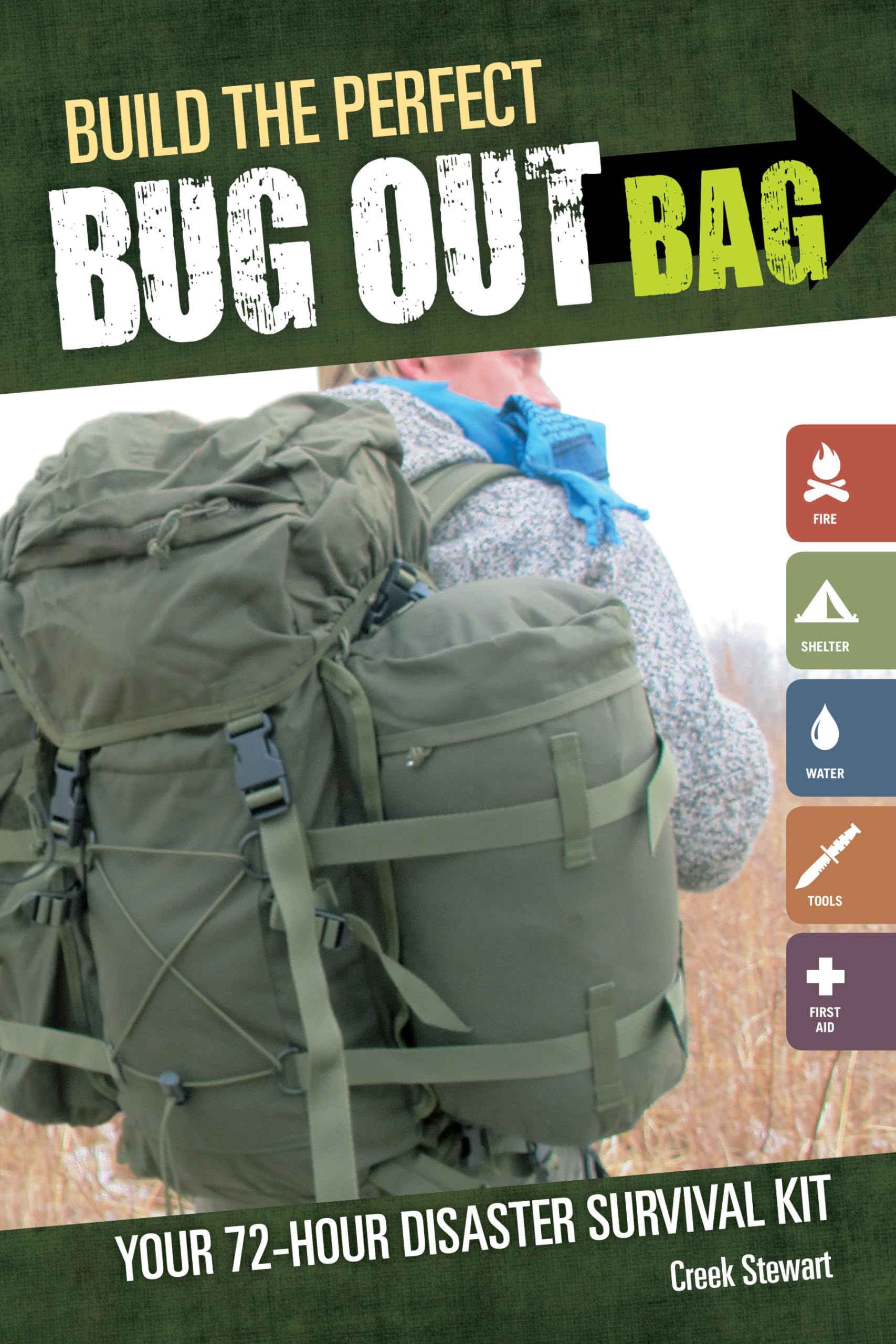
Be Ready When Disaster Strikes If an unexpected emergency or disaster hits, are you prepared to leave your home--fast? You will be if you follow the advice in this book. This book shows you how to create a self-contained disaster preparedness kit to help you survive your journey from ground zero to a safer location. Survival expert Creek Stewart details from start to finish everything you need to gather for 72 hours of independent survival--water, food, protection, shelter, survival tools, and so much more. You'll find: โข A complete Bug Out Bag checklist that tells you exactly what to pack based on your survival skill level โข Photos and explanations of every item you need in your bag โข Resource lists to help you find and purchase gear โข Practice exercises that teach you how to use almost everything in your bag โข Demonstrations for multi-use items that save pack space and weight โข Specific gear recommendations for common disasters The book even includes special considerations for bugging out with children, the elderly, the physically disabled, and even pets. A disaster could strike your home at any moment. Are you prepared to face the devastating aftermath? Protect yourself and your family by building a Bug Out Bag today! Review: Great Emergency Resource - You Can Get Started Now! - This is an outstanding, comprehensive book for preparing for any kind of sudden disaster or event which may require you to leave your home on very short notice. This book is designed to prepare you for the worst case scenario of 72 hours of living with the contents of what you are carrying in a bag if you are forced from your home. People forced to bug out are called "refugees." Google it and count the number of times that word appears each day, even in the US. Do YOU need to prepare for this? Ask yourself the following questions. How you answer them will determine if this book will have any value to you: 1) If forced to evacuate your home, do you think you and your family would be better off on your own, having prepared an escape plan and having gathered supplies for that escape? 2) Or are you content with the possibility of being forced to evacuate with thousands of other people into a place like the Superdome, with scant personal belongings, kept under armed guard, and completely dependent on this government (or worse, another one operating under martial law) to provide for and protect you and your family just like the citizens of New Orleans were after Hurricane Katrina? This same scenario will happen during another natural disaster, a terrorist strike, a chemical spill, a huge fire, or massive civil unrest. Read the papers, these things happen all the time. Creek Stewart does an excellent job itemizing exactly what makes up a practical Bug Out Bag (BOB). Not only does he explain the value of each item, he also mentions where you can get them and often suggests alternatives. The part I liked best about this book was towards the end when Stewart talks about the absolute importance of practicing with your BOB and identifies challenges, item by item, which will give you confidence in what you are doing and identify weaknesses in your preparations. Stewart suggests not only learning how to light a camp stove but also how to start a fire and once you've mastered that, doing it at night and after a rain. These are real situations you may actually face and skills which could mean the difference between life and death. If you do not have much outdoors experience, don't be discouraged. The task of building a Bug Out Bag may appear daunting and expensive but you would probably be amazed at how many resources you have available to you right this very minute in your own home. Read Creek Stewart's book, make a bug out plan, and start gathering up materials readily available to you right now. Spend a day doing this even though you may not right away get the perfect BOB together or have the best quality materials. Collect common things you may have around the house like a day pack, a fire source (a disposable lighter), a light source (a small flashlight or headlamp) a basic shelter and ground cover (plastic sheeting), rope or twine, a small metal pan, your important papers and documents, plastic bottles for water, soup packets, energy bars, a sleeping bag and emergency season-appropriate clothing (remember the mantras: "Wear Layers" and "Cotton Kills"). The immediate goal is to stay hydrated, warm and dry. All these items simply gathered into one spot will give you a great start on building a complete kit and probably put you ahead of more than 95% of the population in emergency preparedness without spending an extra penny. Even being a little bit ready for it gives you an edge on disaster. Stewart does a great job encouraging you to look at your BOB and your evacuation plan as an ongoing process, which can be an enjoyable thing, even a hobby. If you can't afford to buy everything at once (like most of us), at least prepare a want list, get together what you can and upgrade or add pieces every time you go to the store or have a little extra money. Stewart does make a point of identifying "must haves" ahead of "nice to haves." I also liked that Stewart included a section on preparing to bug out pets. This is an area I had not really considered fully. It really struck home to think about the possibility of leaving behind our beloved family members in an emergency because we hadn't prepared for them and we didn't have the resources or ability to take them with us. You are not a crazy wacko if you start preparing like this. All you are required to do is imagine what would happen if the safe and sound veneer of your everyday life is suddenly torn away and you were forced from your home, even for just a few days. Start putting 2 and 2 together. Have you ever been to a garage sale and seen a nice, sturdy wagon selling for a couple of bucks? That wagon gives you the ability to easily move small children, old dogs, and extra supplies many miles, but it is also a plaything for the child and useful around the yard when the world isn't falling apart around you. I would like to add one item which Stewart does not mention and that would be to prepare and pack a basic Kindle or similar e-reader because of their long battery life after charging (unlike a Fire, an I-Pad or similar back-lit tablet). After I finished reading Stewart's book, the first thing I thought was how valuable it would be to actually be able to pack books like this in the BOB. How much better would it be to have a whole series of books which would serve as an entire library of survival reference material, reading material and spiritual support which weighed only a few ounces and, carefully managed, with even a partial charge could easily last for 72 hours, if not several weeks! All you need is a waterproof container. Review: Great advice from a true expert !! - I'm very impressed with this book. This is a must for anyone who is serious about disaster preparedness. I'd especially recommend this if you are just starting to build a kit, or have a basic or pre-packaged kit: you will find it full of great advice and ideas. It's clear that Creek is a real expert who, unlike most of us, actually practices survival skills regularly and makes his living teaching others. First, he goes through each category of supplies that you need to consider, and then walks through the exact supplies he recommends. Creek goes beyond just giving you a list of items, he explains why each item is important and highlights multifunctional items that are simple and effective for many tasks and will save weight in your bag. He also offers advice on selecting bags. But there's much more to this book. While the book is not a survival skill manual, Creek explains some of the most basic skills, such as firestarting. He gives you advice on how to evacuate with children, pets and the elderly. He briefly discusses different types of vehicles and how to keep them prepared for emergency evacuation. There are recommended drills to sharpen your survival and preparedness skills. Creek tells you how to select a location to evacuate to, and how to have a plan ready. There is even a section on how to put together a kit on a budget at a Wal-Mart style store. At the back are checklists to help you assemble that bags you will need. Best of all, there is no doomsday preaching in this book, no politics and no religion. It's just objective, professional advice. The only critical comment I can make is that putting together a backpack with all the suggested contents may be too heavy for some of us to carry. I'm pretty strong and I've got a bag with nearly all of Creek's recommended items, and while I can carry it, I wonder how far I would get with it in an evacuation by foot. Maybe a few miles. If you aren't particularly strong or have a bad back, joints, etc, you might want to invest in a sturdy luggage cart, hand truck, etc with as big wheels as you can find, or an off-road wagon (which is mentioned in the book, more with kids in mind) incase you can't take a vehicle. But I wouldn't buy a rolling suitcase that makes you dependent on the wheels, either. IMO, you do need to have a backpack incase your wheels break or jam. I already had an evacuation bag put together before I read this, but I was amazed at all the gear, facts, ideas and skills I was not familiar with until I read them in this book. I don't think you can go wrong purchasing this. I hope the author will write further books focusing more in depth on topics such as survival skills, preparing your home for an emergency, urban survival, etc.
| Best Sellers Rank | #316,888 in Books ( See Top 100 in Books ) #137 in Natural Disasters (Books) #489 in Hiking & Camping Instructional Guides #30,890 in Self-Help (Books) |
| Customer Reviews | 4.6 out of 5 stars 1,784 Reviews |
D**R
Great Emergency Resource - You Can Get Started Now!
This is an outstanding, comprehensive book for preparing for any kind of sudden disaster or event which may require you to leave your home on very short notice. This book is designed to prepare you for the worst case scenario of 72 hours of living with the contents of what you are carrying in a bag if you are forced from your home. People forced to bug out are called "refugees." Google it and count the number of times that word appears each day, even in the US. Do YOU need to prepare for this? Ask yourself the following questions. How you answer them will determine if this book will have any value to you: 1) If forced to evacuate your home, do you think you and your family would be better off on your own, having prepared an escape plan and having gathered supplies for that escape? 2) Or are you content with the possibility of being forced to evacuate with thousands of other people into a place like the Superdome, with scant personal belongings, kept under armed guard, and completely dependent on this government (or worse, another one operating under martial law) to provide for and protect you and your family just like the citizens of New Orleans were after Hurricane Katrina? This same scenario will happen during another natural disaster, a terrorist strike, a chemical spill, a huge fire, or massive civil unrest. Read the papers, these things happen all the time. Creek Stewart does an excellent job itemizing exactly what makes up a practical Bug Out Bag (BOB). Not only does he explain the value of each item, he also mentions where you can get them and often suggests alternatives. The part I liked best about this book was towards the end when Stewart talks about the absolute importance of practicing with your BOB and identifies challenges, item by item, which will give you confidence in what you are doing and identify weaknesses in your preparations. Stewart suggests not only learning how to light a camp stove but also how to start a fire and once you've mastered that, doing it at night and after a rain. These are real situations you may actually face and skills which could mean the difference between life and death. If you do not have much outdoors experience, don't be discouraged. The task of building a Bug Out Bag may appear daunting and expensive but you would probably be amazed at how many resources you have available to you right this very minute in your own home. Read Creek Stewart's book, make a bug out plan, and start gathering up materials readily available to you right now. Spend a day doing this even though you may not right away get the perfect BOB together or have the best quality materials. Collect common things you may have around the house like a day pack, a fire source (a disposable lighter), a light source (a small flashlight or headlamp) a basic shelter and ground cover (plastic sheeting), rope or twine, a small metal pan, your important papers and documents, plastic bottles for water, soup packets, energy bars, a sleeping bag and emergency season-appropriate clothing (remember the mantras: "Wear Layers" and "Cotton Kills"). The immediate goal is to stay hydrated, warm and dry. All these items simply gathered into one spot will give you a great start on building a complete kit and probably put you ahead of more than 95% of the population in emergency preparedness without spending an extra penny. Even being a little bit ready for it gives you an edge on disaster. Stewart does a great job encouraging you to look at your BOB and your evacuation plan as an ongoing process, which can be an enjoyable thing, even a hobby. If you can't afford to buy everything at once (like most of us), at least prepare a want list, get together what you can and upgrade or add pieces every time you go to the store or have a little extra money. Stewart does make a point of identifying "must haves" ahead of "nice to haves." I also liked that Stewart included a section on preparing to bug out pets. This is an area I had not really considered fully. It really struck home to think about the possibility of leaving behind our beloved family members in an emergency because we hadn't prepared for them and we didn't have the resources or ability to take them with us. You are not a crazy wacko if you start preparing like this. All you are required to do is imagine what would happen if the safe and sound veneer of your everyday life is suddenly torn away and you were forced from your home, even for just a few days. Start putting 2 and 2 together. Have you ever been to a garage sale and seen a nice, sturdy wagon selling for a couple of bucks? That wagon gives you the ability to easily move small children, old dogs, and extra supplies many miles, but it is also a plaything for the child and useful around the yard when the world isn't falling apart around you. I would like to add one item which Stewart does not mention and that would be to prepare and pack a basic Kindle or similar e-reader because of their long battery life after charging (unlike a Fire, an I-Pad or similar back-lit tablet). After I finished reading Stewart's book, the first thing I thought was how valuable it would be to actually be able to pack books like this in the BOB. How much better would it be to have a whole series of books which would serve as an entire library of survival reference material, reading material and spiritual support which weighed only a few ounces and, carefully managed, with even a partial charge could easily last for 72 hours, if not several weeks! All you need is a waterproof container.
S**7
Great advice from a true expert !!
I'm very impressed with this book. This is a must for anyone who is serious about disaster preparedness. I'd especially recommend this if you are just starting to build a kit, or have a basic or pre-packaged kit: you will find it full of great advice and ideas. It's clear that Creek is a real expert who, unlike most of us, actually practices survival skills regularly and makes his living teaching others. First, he goes through each category of supplies that you need to consider, and then walks through the exact supplies he recommends. Creek goes beyond just giving you a list of items, he explains why each item is important and highlights multifunctional items that are simple and effective for many tasks and will save weight in your bag. He also offers advice on selecting bags. But there's much more to this book. While the book is not a survival skill manual, Creek explains some of the most basic skills, such as firestarting. He gives you advice on how to evacuate with children, pets and the elderly. He briefly discusses different types of vehicles and how to keep them prepared for emergency evacuation. There are recommended drills to sharpen your survival and preparedness skills. Creek tells you how to select a location to evacuate to, and how to have a plan ready. There is even a section on how to put together a kit on a budget at a Wal-Mart style store. At the back are checklists to help you assemble that bags you will need. Best of all, there is no doomsday preaching in this book, no politics and no religion. It's just objective, professional advice. The only critical comment I can make is that putting together a backpack with all the suggested contents may be too heavy for some of us to carry. I'm pretty strong and I've got a bag with nearly all of Creek's recommended items, and while I can carry it, I wonder how far I would get with it in an evacuation by foot. Maybe a few miles. If you aren't particularly strong or have a bad back, joints, etc, you might want to invest in a sturdy luggage cart, hand truck, etc with as big wheels as you can find, or an off-road wagon (which is mentioned in the book, more with kids in mind) incase you can't take a vehicle. But I wouldn't buy a rolling suitcase that makes you dependent on the wheels, either. IMO, you do need to have a backpack incase your wheels break or jam. I already had an evacuation bag put together before I read this, but I was amazed at all the gear, facts, ideas and skills I was not familiar with until I read them in this book. I don't think you can go wrong purchasing this. I hope the author will write further books focusing more in depth on topics such as survival skills, preparing your home for an emergency, urban survival, etc.
C**S
good guide
I found this to be a very good book, not only on creating a Bug Out Bag, but on the whole idea of Bug Out planning in general. In planning what you need to take you have to think about the circumstances of bugging out and the conditions you will find. I only found two things where I would take issue: nutrition and wool. I will address wool first. He states that wool is pretty much the only cloth to consider for warmth and weather protection, and he is right, with one major exception - people who are allergic to wool. Unfortunately, he does not give any secondary recommendation for those people (and it is a noteworthy percentage of the population). It would be nice if he could suggest a second choice. The place where I really disagree with him is in nutritional considerations. He states that carbs are the most important since they are the main fuel for the body. This is commonly held, although factually incorrect. Our current "mainstream" belief is that sugar (glucose) is the preferred fuel of the body. While it is true that our S.A.D. (Standard American Diet) seeks to provide calories mainly from carbs, this is not a healthy situation. It is a lengthy discussion, but quite simply, fats are the fuel we were designed to burn. Glucose (carbs essentially) is the fuel reserved for emergency, fight or flight moments. The fact the we live in a constant state of fight or flight due to our diet, is in large part responsible for our lousy health compared to people 120 years ago. Emergency rations with high carb content will drag you down and not allow peak performance in stressful situations. They will keep your blood sugar levels on a constant roller coaster, make you tire more easily, and can seriously impair your thinking. Given that a large portion of the population is either diabetic, pre-diabetic, or in an otherwise compromised state in regards to carbs, I suggest you avoid them as much as possible. The best, most easily digested source of calories are medium chain fats, like coconut oil. They are transported differently in the body than other fats, and more readily used (not stored) in the body. Coconut oil also stimulates the thyroid and metabolism in general, and helps prevent feelings of hunger. This is why it is a primary ingredient in the best foods designed to keep infants and the very ill supplied with energy. Intense research by the Hudson's Bay Company determined that the best all around food for people working long hours trapping in near Arctic conditions was the old Native American standby, pemmican. I am talking the real thing, not the jerky-like product that has usurped the name today. This was a mixture of dried, powdered meat and animal fat, mixed with berries and herbs. Pemmican would be an ideal emergency ration, if you could find a good source of a high quality product, and adjust to the taste. Like most such "paleo" kinds of food, it supports a ketogenic state in the body, which is our natural, "hunter-gatherer" heritage. Coconut oil also has the benefit of high calorie density, which means that the same weight will give you more days of food. Current research indicates that the healthiest diet would be 60-80 percent calories from fats, 20-25 percent maximum from protein, and as little as possible from carbs. We need only about .5-1 gram of protein per pound of body weight per day, and the majority of the rest of our calories should ideally be from fats (which is why all the flavor is in fats - that's where the best nutrients are). I would recommend you research ketogenic diets and work out a good emergency ration plan which avoids carbs and concentrates on medium chain fats like coconut oil. Look for rations which include coconut oil as the main caloric ingredient. Vegetable oils are generally not good for you - they go rancid very easily and our bodies don't really like them. Avoid rations or foods which include them, especially if they are hydrogenated. Other than those 2 quibbles, I liked the book a lot, found it extremely useful, and very much in sync with my own outdoor experiences. Definitely recommended, minus the dietary info. Unfortunately, real pemmican is not easy to come by.
M**T
Staying Alive
Creek Stewart gets you thinking about and planning for life after a sudden, catastrophic and life-altering โ perhaps even threatening - event. After a string of news reports about weather-related crises โ massive snowstorms stranding people in their cars and homes for days, flash urban wildfires that wipe out entire towns within hours and widespread tornado damage in the dead of night - his thoughts on disaster preparedness are worth reading. This is not an academic exercise for Stewart; he brings lived experience to โBuild the Perfect Bug-Out Bagโ peppering his short, easy-format chapters with personal anecdotes, recommendations and lots of helpful photos. What I like best about this book is that you can scale your survival needs and preparedness based on his chapter templates. For instance, although I agree that a bug-out bag should have some water and food, I donโt think Iโm going to be packing a wire saw or a weapon. Iโm packing for a short-term emergency, not the end of the world (and his subtitle is "Your 72-hour Disaster-survival Kit"). He's an easygoing guide, though, preparing you for the worst while expecting โ well, the worst. Your expectations may not align with his, but youโll be reassured by his lively and confident crisis-management writing style. This book can be read as a provocative thought experiment (what will you do in case of an emergency?) or a practical call to action. Start packing!
C**R
Good book with very good ideas.
A well written book with many great ideas to put in your bugout bag. Some of them you might not even think about but are great ideas.
T**N
This writer clearly knows much more than he's telling us, but that's what this book is supposed to be
I'm just an average person living on the ring of fire. I know I'm supposed to have a shelter in and a BOB. Known it for years and had parts and pieces of one for those same years. I would steal out of it for camping trips and one time something I stole saved our lives. You would think that would encourage me, right. Well, yeah, it kind of did, so I researched the kind of books other people liked and this one just kept coming up. Since I'm a longtime hiker, I know the 10 essentials and can probably save my life and hopefully the life of my family. But it all comes back to the BOB and he is making this easy without making me feel like an idiot. I really like this guy's writing style. I'm not saying you must have this book or nothing, but what I am saying is you will get all the information, checklists, etc. all in one place and he doesn't just say get this, get that, go! I'm reading it front to back to start, but soon, I will use the parts I need to fluff my kit and teach the morons I live with (sweet people actually, just ignoring the dangers as so many of us do) how to bug out or shelter in place, though with earthquakes and mudslides being number one on the Northwest danger list, I'd say Bug out is more likely. If you are looking to hole up when the bombs drop or our government goes rogue, this isn't the book for you. If, instead, you are a person who has noticed the uptick in environmental disasters happening in the US and how hard it is to get the government to be effective in those situations, this is the book for you. Anyway, I'm having fun and putting together a disaster kit and fun have never had a passing acquaintance for me, so thank you, Creek Stewart for a fine book.
K**L
A wonderful guide & time saver
Creek's suggestions right off the top will confirm any question you have about whether or not you know what you're doing when it comes to creating your BOB... you probably don't ;). Honestly, I just love how detailed and creative his advice is throughout the entire book. The way he organized the book is top-notch and makes it VERY easy to read. Its not just about knowing what to put in your bag; its about knowing why its going in your bag and the MANY different uses of several items (which he details by the way). One of my favorite things about this book is that he gives you homework assignments to adequately practice using the items he has suggested carrying. He considered visual learners in this book as well, as there are photos of just about everything he discusses. Thus, you can attempt to create your BOB yourself and likely come out semi-succesful OR you can save yourself a TON of time and research and read this AMAZING book. I do hope that he considers publishing an updated version, as some of the suggested links are now inactive, including the link to the checklist of all the items mentioned in the book (which would be EXTREMELY helpful). Worth the read!
T**S
Good but not good enough.
Update to the review I am not going to try to get to a bug out location. I am going to carry two weeks of food for my sister and I in our bug out bags. This is more than long enough for natural disasters, and in a WTSHTF scenario in two weeks the junkies will be better in control of their addiction, Order may be re-instated by then, and the people causing all of the chaos will begin to understand they need people with skills they lack about survival, preserving meat and vegetables for the fall and winter. Then a person who has skill sets such as mine will be worth having around. There is one area that I strongly disagree with the author. He had ONE compass in his bug out bag. You REALLY need redundancy in compasses. If you think your primary compass is giving faulty data check the direction with another compass. I too carry a Boy Scout compass like the author because a map compass; is one great tool to have! You also do not want to get your pack do heavy it is too heavy. I carry a little piece of wood that is a pattern I use to make alcohol stoves. This piece of wood only weighs at most 1/2 an ounce so I bought several 20 mm button compasses like they issue to SAS British soldiers and Air force pilots and glued a backup compass onto the wood, and on top of the cord lock of my four stuff sacks. These little button compasses only weigh about 1/8th ounce each so adding five backup compasses only added 3/4 ounce of weight to my pack. ----- Original review. I agree with most of the material in this book; but there are some issues in this book I have problems with. The book has the premise of surviving for 72 hours until you get to your bug out lication. There is one major problem with this concept. There is no guarantee that the stuff you store in your bug out location will be there when you need it. I would NEVER bug in, or use a bug out location. If I were to have more material than I could carry I would break it up into a series of packs, and take a pack and hike out to a remote location near a land mark such as a tree, rock, mountain peak, etc and bury the pack and hike or drive home then a few days or weeks later go bury another bag. Then WTSHTF I will have multiple packs of food, ammunition, fuel that I could dig up and use to keep me going. Here are other problems I have with the book. 1. The. Author recommends purifying water by boiling or using water purifying tablets. I would not recommend either method. The problem with these methods are. Boiling requires fuel. Burning wood causes smoke. Smoke attracts attention. In a survival situation attracting attention can be dangerous. His other recommendation was using water purification tablets. This is not a good idea either because most water purifying tablets. Use iodine. Iodine can be dangerous for people with compromised thyroid glands. In my bug out bag I carry 3 ozs ofvboth iodine and Clorox to purify water. I have hypothyroidism and iodine is dangerous for me to use. 2. The author recommends MREs. I would deffinately recommend people avoid MREs. Pack what you already eat. In a survival situation with stress that is not the time to eat foods you may or may not like. Myself I am packing a lot of rice but I eat and like rice. Rice is an amazing grain. It will absorb the flavors it is cooked with, and filling some days I will have plain rice others I will add chicken bouillon , Bear Creek Chilli mix, Bear Creek broccoli and cheese soup mix with the rice I can eat rice every day but it never tastes the same way twice. Instant rice cooks in five minutes meaning it needs little fuel to cook. Lastly 40 servings of rice only weighs about 4 pounds the flavoring enhancers for rice only adds another pound to my pack. 3. He recommends burning wood or using a pressurized stove that you use gasoline, Coleman fuel, or kerosene. I would NEVER use those fuels. Wood fire causes smoke. In a survival situation smoke can be seen for miles, and could attract the roving bands you saw after hurricane Katrina in New Orleans, and now the looters in New York and New Jersey after Hurricane Sandra now. A pressurized stove that burns gasoline, Coleman fuel, or Kerosene will weigh at least 3-4 pounds. A gallon of fuel for the stove weighs 8-9 pounds, and a gallon of fuel will only last 3-4 days of cooking. I make alcohol burning cook stoves out of soda and juice cans. In these stoves you burn denatured alcohol, Heet in the yellow bottles. These fuels burn cleanly and there is no smoke to attract attention. With these fuels and effic ient stoves you can cook a meal on 1 fl OZ of fuel. A gallon of alcohol, and two of these stoves can cook food for two months if you cook two meals a day. If you carry a VERY efficient stove like the Elite from MiniBull Design, the V8 stiove by Intense Outdoor Gear, the Rollover stove by Smokeater908, or the Cobalt Blue Soloist by Zellph Stoveworks you can cook a meal on 3/4 fl OZ of fuel so your fuel would last 25% longer. 4. In several places he talks of using mirrors, smoke, and bandanas for signaling. Signalling when you lost is one thing but in a bug out situation attracting attention can be deadly. 5. he recommends three ways to start a fire. I Agee with this 1000%! I have three ways to start a fire in my bug out bag. a. Strike anywhere matches in a 35 mm film canister with a dessicant pack that I recharged in the microwave. Silica gel in desiccant packs absorb any mousture in the canister. b. Bic lighter. c. Fire steels I have three fire steels in my pack. Fire steel good for 3000 strikes in the handle of my Mora survival knife, "scout edition" by Light My Fire Sweedish fire steel good for 3000 strikes in my cook kit, then in my survival kit another fire steel 1/2 inch thick by 5 inch long good for 50,000 strikes, then on my key ring has another 3000 strike fire steel by Wilderness solutions 6. He recommends wet Fire fire starters wet fire are good fire starters but way too expensive to use as a fuel source. 7. PET balls. He recommends cotton balls or dryer lint mixed with petroleum jelly. He recommends making these PET balls in advance. I would make them up there on the spot because some if the fibers need to be left uncovered so they can catch fire more.easily. Another good fire starter is dryer lint, saw dust, and melted candles. 8. Emergency blankets. The author said emergency blankets reflect 90% of the body heat. This is not true. Some emergency blankets reflect 90%. Virtually all of the Mylar emergency blankets only reflect 80% of the body heat so you need to read labels carefully. 9.he recommends carrying the survival knife outside the pack. I would never do that because you do not want to carry expensive tools in plain sight because you do not want the roving bands to kill you for yours tools and food. I will keep everything in my pack and wear old clothes just to stay under the radar. 10. He likes Mora knives from Sweden but he recommends thatbA Mora knife not be the survival knife because it is not full tang and the pommel cannot be used to drive in tent stakes. Mora knives are the best knife you cam carry the Sweedish steel stays sharp a long time. If I need to hammer in a tent stake I will pick up a rock. I do have two backup knives in my survival kit. 11. Foldable shovel. He recommends a shovel in winter. A shovel is vital no matter what season you bug out. You need to dig multiple holes, and the easiest way is a shovel. You need a shovel to dig a latrine, and other holes for solar stills. 12. He recommends the glow sticks where you break the glass vial and two chemicals produce light. I think these are a waste of money and time because they work once for a few hours and you throw them away. I have two.1 a battery operated LED lamp, and a LED light on my keyring. 13. He recommends $500 in cash . In a bug out situation money will be worthless. 14. Cell phones. He recommends keeping a cell phone with a solar or wind up charger. Because in survival situations survivors have been able to let their family know they were safe via text message. I plan to keep my android phone because of the kindle app with my 700 kindle books with classic literature, books on gardening, survival guide, etc. In a survival situation; the more skills you can bring to the table the better chance you have of staying alive. 15. Predators use chaos. This is very true . These predators are the ones that start these roving mobs. While one or two is set up to come through the front door the rest come through the back of the house while the home owner is dealing with the one or two in front. That fact is the one reason why I would never bug in, and those who have underground bunkers are sitting ducks. Throw a plastic bag over the vent, or start a fire around the vent, and wait for the people to come out for air snipers can easily pick them off. 16. He recommends resealable plastic bags to hold water. I f you do this place bags in a safe place in your pack. You do not want them punctured, and do not fold the bags because the plastic becomes stressed at the creases, and could leak when you need it the most.. 17. He recommends carrying water, food and fuel for your bug out, I will carry food and fuel but I will not waste my energy carrying water. I will have enough water for 1 or 2 days . I will purify the water I need an hour or two before I need it. I hope I gave you things to consider. Two Bears
E**N
Buen libro!
Buen papel y pastas.
R**D
Get ready for any possibility
You don't have to be paranoid to worry about what might happen in this world. At the very least, living in Japan brings with it the very significant possiblity that you will have an earthquake that will disrupt your life. This is the best book on putting together what you will need to survive a desperate situation. Although it is written with the United States in mind, reading it will prepare your mind for thinking about what will apply to any situation here in Japan. Highly recommended.
C**H
That's how you write a step by step guide
No boring prosa in this book. From the first pages you get short, spot on descriptions of items and techniques for preparing your b.o.b. What's more, the author is not a typicult shtf nutbag but seems to be an experienced hicker and outdoor expert. So he doesn't bore you with loads of unnecessary information, why you should prepare for the end of the world. In the first chapters he mentions real world disasters in recent history, where having a B.O.B. on hand, could have saved your life. Even if you don't plan on building a B.O.B, every hiker and camper should read this book. Highly recommended.
L**S
Well thought out, informative, sensible.
Although this book is written for the American market, so there are references and products that overseas readers may not get, this seems like a very thorough and sensible. I'm certainly not any kind of expert on the topics covered but to a layperson like me, it seems that Creek has really thought about and tried out the things he describes. I would recommend this book to anyone who wants to plan for a bug out but also for anyone wondering into the wilderness on camping or hiking trips as there are good tips and lots of common sense. I live on a tiny island (Guernsey) so it's unlikely that I would ever have to 'bug-out' and we really don't have any wilderness but I found it fascinating (I've read it twice so far) and it is good to get thinking about different aspects of it, so that you consider your particular needs and plan accordingly. I consider my wilderness / survival type things my 'toys' to use when hiking or camping but have put together a plan & bag in case I wake up in the middle of the night & find my house on fire! A good read, with great advice from a man who seems like he knows, very readable and with humour added for free!
R**W
Fantastic book for emergency preparedness
Creek covers everything you need to keep your family safe and healthy when an emergency strikes. Be it natural or man-made, we hope we never have to encounter these possibilities, but he reminds us that a Bug Out Bag is insurance. "Life insurance is paid when you die. Look at a 'BOB' as a "don't die" policy for you and your family." He covers all the necessary topics in depth, providing tips for specific brands and retailers so that you know what to look for when you're purchasing supplies. He even includes comprehensive checklists at the rear of the book that have 3 levels of needs. The lowest level is highly supplemented by skills, so they can carry the essentials and do just fine. The highest level takes into account having almost no survival or wilderness skills, so that level is supplemented with more fail-safes in place and more overall weight as an account. I've read dozens of internet articles and guide on how to put together a 'BOB' and while some of them were useful, the quality of this book's information blows them out of the water. It's concise, and yet covers so much ground. It's a 'buy' if you have ever thought of building a Bug out Bag; and it becomes a MUST buy if you have never thought of doing it!
Trustpilot
2 months ago
1 month ago