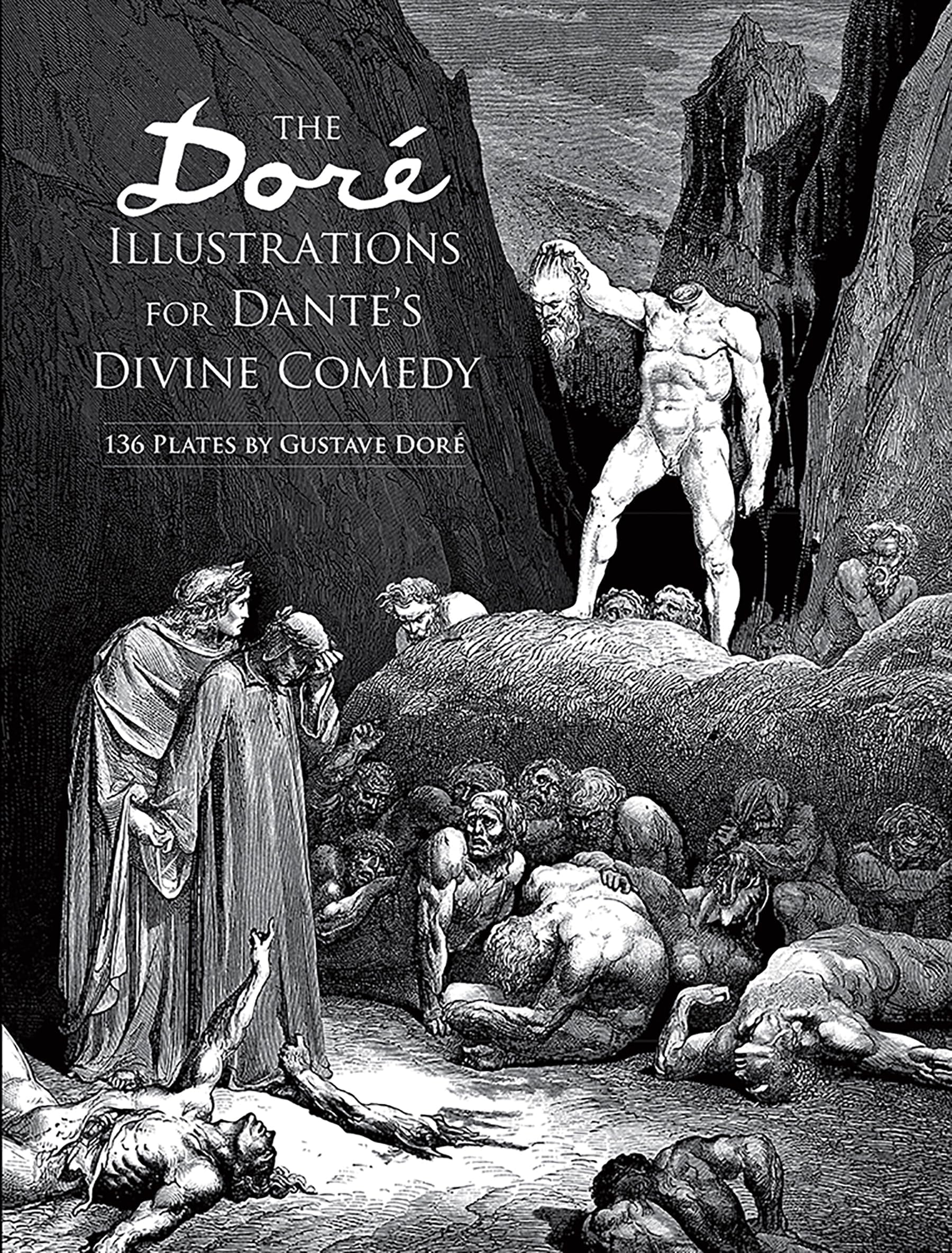

The Dore Illustrations for Dante's Divine Comedy (136 Plates by Gustave Dore)
Product ID: 2310723
Buy anything from 5,000+ international stores. One checkout price. No surprise fees. Join 2M+ shoppers on Desertcart.
Desertcart purchases this item on your behalf and handles shipping, customs, and support to Kyrgyzstan.
The Dore Illustrations for Dante's Divine Comedy (136 Plates by Gustave Dore) [Doré, Gustave] on desertcart.com. *FREE* shipping on qualifying offers. The Dore Illustrations for Dante's Divine Comedy (136 Plates by Gustave Dore) Review: Very premium prints of amazing artwork - Dante Alighieri's Divine Comedy is a masterpiece of world literature, and Gustave Doré's illustrations have helped to bring the epic poem to life for generations of readers. Doré's illustrations are widely considered some of the most iconic and influential depictions of Dante's vision of the afterlife. First published in 1861, Doré's illustrations depict the vivid and often grotesque landscapes and characters that populate Dante's three-part journey through Hell, Purgatory, and Paradise. Doré's highly detailed and intricate drawings capture the imagination and add a layer of depth to the already complex and layered narrative of the Divine Comedy. One of the most striking features of Doré's illustrations is the use of light and shadow. Doré's mastery of chiaroscuro creates an atmosphere of both terror and awe, drawing the viewer deeper into Dante's vision of the afterlife. The intricate detail of the illustrations is also noteworthy, with each image depicting a vast array of characters and landscapes that capture the imagination and bring the story to life in a way that words alone cannot. Doré's illustrations are not without their critics, however. Some argue that the highly romanticized and often exaggerated style of the illustrations can sometimes detract from the overall tone and message of the Divine Comedy. Others argue that the illustrations can be overwhelming and distract from the text itself. Despite these criticisms, it is hard to deny the enduring impact that Doré's illustrations have had on popular culture and the artistic representation of Dante's Divine Comedy. The images have been widely reproduced in countless editions of the poem, as well as in films, television shows, and even video games. The illustrations have also influenced numerous artists and illustrators in the decades since their creation. In conclusion, Gustave Doré's illustrations of Dante's Divine Comedy are a powerful and influential visual interpretation of one of the most significant works in world literature. While they may not be without their flaws, the level of detail and mastery of technique that Doré brought to the illustrations has cemented their place in the canon of great works of art. Whether you are a fan of Dante's work or simply appreciate the power of great illustration, Doré's work is a must-see for anyone interested in the visual representation of literature. This book gives the art the respect it deserves. Review: Nightmare masterpieces illustrating the terrors of the inferno - Gustave Dore, the most successful illustrator of the 19th century, has produced a grim, dark, precise, nightmare masterwork in his illustrations for the Divine Comedy by Dante. For those familiar with the vast poem, The Divine Comedy, it is obvious that Dore knew the work well and in his grisly etchings captures the terror that dwells at the edge of each scene. Dore is a master of strategic composition with his careful, thoughtful arrangements of dark and light so as to direct the eye of the viewer to the center of interest. In misery the souls of the dead get into Charon's boat and are taken across the River Acheron. Dante mixed pagan and Christian images in the underworld and Dore captures both. Dante is lead into Limbo by the pagan Roman poet Virgil where he meets the great poets of antiquity who can never cross into heaven due to their pagan beliefs. Dante is often pictured clinging to Virgil as the souls of the dead reach for him. As Dante and Virgil cross the Styx, the doomed lost souls come out of the water and attempt to cling to the boat. Demons are illustrated in the classical bat wing style, but looking oily due to Dore's illustration skills. It only makes sense that pagan mythological creatures would reside in the inferno as they were pre-Christian. Thus Dante and Virgil encounter a Minotaur and Centaurs. Suicides become gnarly trees, sexual seducers are whipped by demons, while flatterers live in a pond of feces. The journey gets worse as they encounter damned souls that are so grossly disfigured that their dismantled body parts all act independently. Forgers must itch and scratch into eternity. Traitors are frozen for eternity in ice with only their heads above the water and ice line. Of course there are historic and church figures throughout for Dante made commentary about those in public and religious life with whom he disagreed. Purgatory is full of naked people but is far less interesting than the inferno. The images of Paradise are anemic in comparison to those of the Inferno. The book is actually fun to view, packed with full page illustrations, and wonderfully creepy illustrations of the tortures of Hell.


| Best Sellers Rank | #57,082 in Books ( See Top 100 in Books ) #15 in Printmaking (Books) #43 in Arts & Photography Criticism #92 in Religious Poetry (Books) |
| Customer Reviews | 4.8 4.8 out of 5 stars (843) |
| Dimensions | 9 x 0.5 x 12 inches |
| Edition | First Edition |
| ISBN-10 | 048623231X |
| ISBN-13 | 978-0486232317 |
| Item Weight | 2.31 pounds |
| Language | English |
| Part of series | Dover Fine Art, History of Art |
| Print length | 144 pages |
| Publication date | June 1, 1976 |
| Publisher | Dover Publications |
J**R
Very premium prints of amazing artwork
Dante Alighieri's Divine Comedy is a masterpiece of world literature, and Gustave Doré's illustrations have helped to bring the epic poem to life for generations of readers. Doré's illustrations are widely considered some of the most iconic and influential depictions of Dante's vision of the afterlife. First published in 1861, Doré's illustrations depict the vivid and often grotesque landscapes and characters that populate Dante's three-part journey through Hell, Purgatory, and Paradise. Doré's highly detailed and intricate drawings capture the imagination and add a layer of depth to the already complex and layered narrative of the Divine Comedy. One of the most striking features of Doré's illustrations is the use of light and shadow. Doré's mastery of chiaroscuro creates an atmosphere of both terror and awe, drawing the viewer deeper into Dante's vision of the afterlife. The intricate detail of the illustrations is also noteworthy, with each image depicting a vast array of characters and landscapes that capture the imagination and bring the story to life in a way that words alone cannot. Doré's illustrations are not without their critics, however. Some argue that the highly romanticized and often exaggerated style of the illustrations can sometimes detract from the overall tone and message of the Divine Comedy. Others argue that the illustrations can be overwhelming and distract from the text itself. Despite these criticisms, it is hard to deny the enduring impact that Doré's illustrations have had on popular culture and the artistic representation of Dante's Divine Comedy. The images have been widely reproduced in countless editions of the poem, as well as in films, television shows, and even video games. The illustrations have also influenced numerous artists and illustrators in the decades since their creation. In conclusion, Gustave Doré's illustrations of Dante's Divine Comedy are a powerful and influential visual interpretation of one of the most significant works in world literature. While they may not be without their flaws, the level of detail and mastery of technique that Doré brought to the illustrations has cemented their place in the canon of great works of art. Whether you are a fan of Dante's work or simply appreciate the power of great illustration, Doré's work is a must-see for anyone interested in the visual representation of literature. This book gives the art the respect it deserves.
C**S
Nightmare masterpieces illustrating the terrors of the inferno
Gustave Dore, the most successful illustrator of the 19th century, has produced a grim, dark, precise, nightmare masterwork in his illustrations for the Divine Comedy by Dante. For those familiar with the vast poem, The Divine Comedy, it is obvious that Dore knew the work well and in his grisly etchings captures the terror that dwells at the edge of each scene. Dore is a master of strategic composition with his careful, thoughtful arrangements of dark and light so as to direct the eye of the viewer to the center of interest. In misery the souls of the dead get into Charon's boat and are taken across the River Acheron. Dante mixed pagan and Christian images in the underworld and Dore captures both. Dante is lead into Limbo by the pagan Roman poet Virgil where he meets the great poets of antiquity who can never cross into heaven due to their pagan beliefs. Dante is often pictured clinging to Virgil as the souls of the dead reach for him. As Dante and Virgil cross the Styx, the doomed lost souls come out of the water and attempt to cling to the boat. Demons are illustrated in the classical bat wing style, but looking oily due to Dore's illustration skills. It only makes sense that pagan mythological creatures would reside in the inferno as they were pre-Christian. Thus Dante and Virgil encounter a Minotaur and Centaurs. Suicides become gnarly trees, sexual seducers are whipped by demons, while flatterers live in a pond of feces. The journey gets worse as they encounter damned souls that are so grossly disfigured that their dismantled body parts all act independently. Forgers must itch and scratch into eternity. Traitors are frozen for eternity in ice with only their heads above the water and ice line. Of course there are historic and church figures throughout for Dante made commentary about those in public and religious life with whom he disagreed. Purgatory is full of naked people but is far less interesting than the inferno. The images of Paradise are anemic in comparison to those of the Inferno. The book is actually fun to view, packed with full page illustrations, and wonderfully creepy illustrations of the tortures of Hell.
T**S
Vultures and spiders and Hell - o my!
Although just a man, the prolific career of Gustove Dore really has some divine inspiration. Perhaps that's one reason the church needed him so much - perhaps something really did reach out and whisper his name and someone listened. (Personally I hope that thing was Cthulhu and the dreams were bad, but that's just me) As far as this book goes, it is one of the easiest to gain entry into a very exciting world. I like the way the rendering are set to tell the story, too, allowing the reader to walk through some frightening gates and look into some of the terrible things that are described in a language that sometimes does seem heavy (Personal opinion and I don't mean offense by it). When I look at this, it reminds me of the journey that I took as a young adult while learning about all those names and faces that I didn't know. It also reminds me of everything from people with their bodies buried in the ground to one poor soul writhing as a half spider/half woman appeared on the ground. Dore is that kind of influence and I'm glad that someone granted me entry into this world because, if they hadn't, I would have missed out on so much. So, brielf, I have to say that this is well worth the price of admission and it is well worth obtaining so you can look at the detail and marvel at the tools being utilized. also, look into the other books. The bible, the mad; Dore was inspired by everything. And that is inspiring, to say the least.
A**R
Gorgeous Illusions
The illustrations in this book are just stunning and the attention to detail is insane. I am beyond happy that I purchased this book and I would highly recommend it.
A**R
Prints are not clear.
D**S
Me gusto mucho
V**.
Il capolavoro letterario per antonomasia immaginato e reso per immagini da Dore...il resto e' superfluo
V**N
日本でこの画集を売るとしたら値段は倍以上じゃないかな?九鬼の『神曲』には載っていない絵も入っています。つくづく「ドレ」っていうイラストレーターの元祖は凄いなって思います。
L**D
Voici un livre sans prétention apparente, broché, en anglais ce qui n'est pas gênant car il n'y a rien à lire sauf les titres et qui renferme les planches gravées que Gustave Doré a créées pour illustrer la "divine comédie". J'ai lu Dante il y a fort longtemps et de regarder cet ouvrage m'a montré la nécessité, pour moi, de relire son oeuvre, ce que je vais faire dès que possible et ce en me reportant aux planches. Pour moi, ce genre d'ouvrage est très bien car on peut le regarder tranquillement, le poser, l'ouvrir à nouveau, s'y replonger... ce que je trouve mieux qu'une exposition de gravures où les spectateurs sont agglutinés devant chaque planche à essayer de les détailler dans des conditions inconfortables et en empêchant les autres d'approcher. Là, on a tout le temps d'apprécier l'imagination et le talent de G. Doré .
Trustpilot
2 weeks ago
3 weeks ago