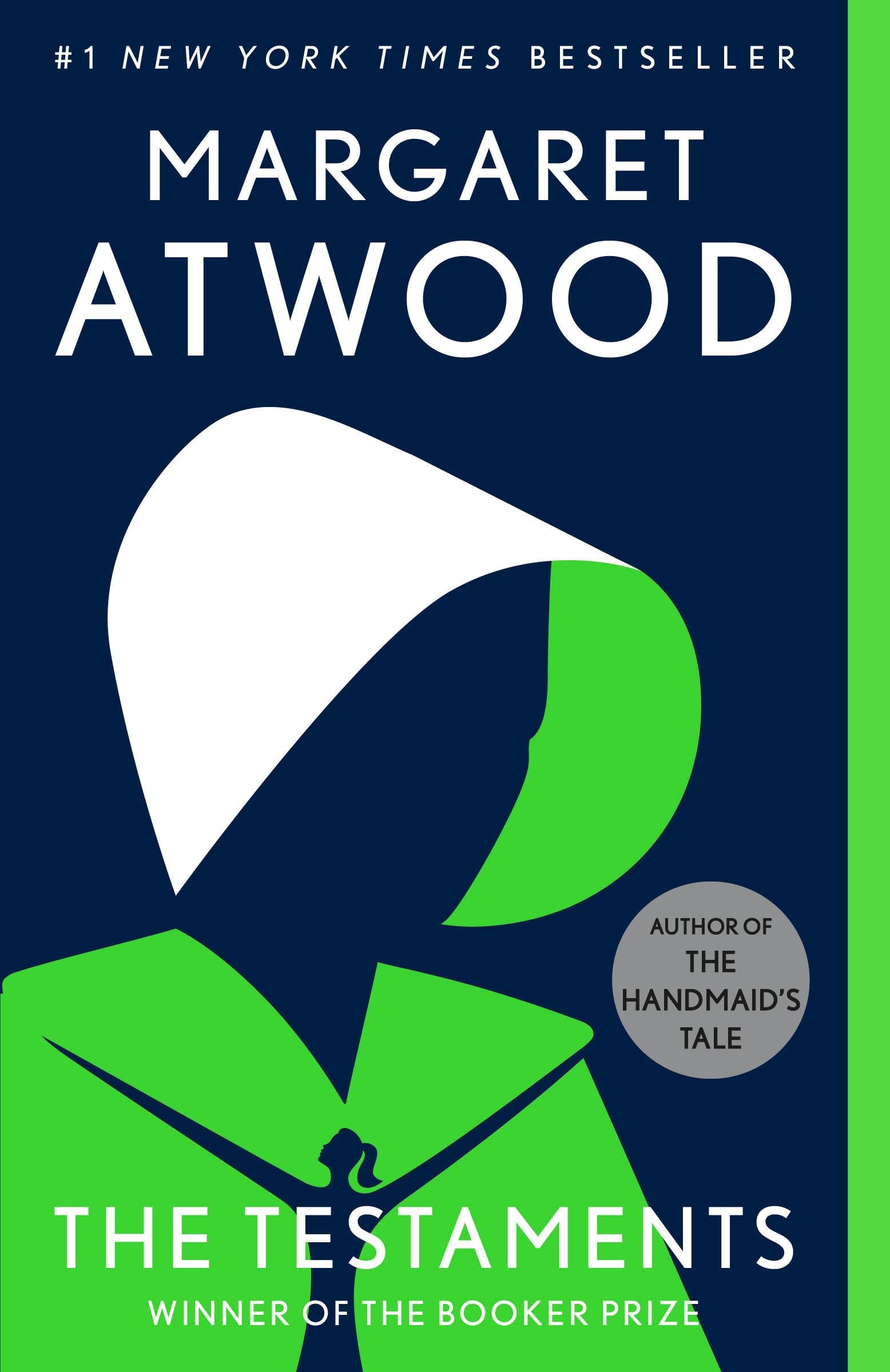
The Testaments: Booker Prize Winner: A Novel (The Handmaid's Tale)
Product ID: 230781734
Buy anything from 5,000+ international stores. One checkout price. No surprise fees. Join 2M+ shoppers on Desertcart.
Desertcart purchases this item on your behalf and handles shipping, customs, and support to Kyrgyzstan.
#1 NEW YORK TIMES BESTSELLER • WINNER OF THE BOOKER PRIZE • A gripping return to Gilead , The Testaments exposes the regime’s inner decay through the intersecting stories of three women whose choices could ignite its downfall. Now a Hulu Original series starring Ann Dowd, reprising her role as Aunt Lydia, Chase Infiniti as Agnes, and Lucy Halliday as Daisy. The Testaments can be read on its own or as a sequel to Margaret Atwood’s classic, The Handmaid’s Tale . More than fifteen years after the events of The Handmaid's Tale , the theocratic regime of the Republic of Gilead maintains its grip on power, but there are signs it is beginning to rot from within. At this crucial moment, the lives of three women converge, with potentially explosive results. Two have grown up as part of the first generation to come of age in the new order. The testimonies of these two young women are joined by that of Aunt Lydia, whose complex past and uncertain future unfold in surprising and pivotal ways. With The Testaments , Margaret Atwood opens up the innermost workings of Gilead, as each woman is forced to come to terms with who she is and how far she will go for what she believes. Review: Perspective and context - It's tricky to mess with a classic. I think it's mostly because once a piece of art attains "classic" status, almost all of those who have experienced it - in the case of a classic book - read it, now feel like they own it. Books and films in particular have a hard to define participatory effect where the reader becomes part of the story and therefore defines the story and characters according to their own interior perspective and thought process. When it comes to either the most revered classics and/or books that achieve their renown via first person, possibly unreliable narrator who exists in a world not fully sketched out and purposely left hazy as a storytelling device, the more the reader will tend to go ahead and sketch that world out with their own assumptions. This means that said classic book becomes something slightly different for every fan, taking on a particular shape and form that becomes almost talismanic for some, quasi-holy for others. It would be hard to find a book published in the last half century more revered than The Handmaid's Tale, so when we all saw the announcement that Margaret Atwood was bringing a sequel, we also all knew there would much hand-wringing and kvetching no matter WHAT the next chapter focused on. For my money, you couldn't ask for a better continuation of the story. I first read The Handmaid's Tale last year. It had nothing to do with the TV show or cultural resurgence of the story and it's oh so prescient themes. It was just on my bookshelf of "VERY IMPORTANT BOOKS YOU SHOULD READ SOMEDAY" and I finally got around to it. As a 49 year old white middle-class male raised in a middle-class Mid-Atlantic USA type of world I really didn't think it would be a home run for me. I was wrong. I fell down the same hole that so many others have found themselves tumbling through into Gilead and the murky, strange world of Offred. I love the entire thing, including the post-script... thought about it for about two weeks, then moved on with my life. I haven't ever been interested in the TV show. When I saw The Testaments up for order, I figured I should at least see what shape the story would take and I hit the buy button. Now I have just finished it and not only was it what I was hoping for but I don't think anyone could hope for anything better than this, in regard to gaining perspective and context on what led up to the previous book as well as the fallout of the events that take place in The Handmaid's Tale. As mentioned, there will always be some that don't WANT perspective and/or context on a classic, timeless allegorical and prophetic novel. For me though, it was fascinating. Seeing motivations peeled back, repercussions revealed and a legacy played out over a new generation added immensely to the previous story and only made it more emotional and tender to me. Sometimes when a story ends you almost don't want to know what happens to a certain protagonist and sometimes you are just itching to know more. I wasn't sure how I felt about Offred and/or the entire cultural landscape in the Handmaid's Tale, but now that I know more, it all just feels deeper and more meaningful to me. I'm trying hard to not put any spoilers in this review, even light ones, so there's a lot I don't want to say. I will put it like this. If The Handmaid's Tale was a close-up on one character, The Testaments is a panning, wide-shot of an entire culture that encompasses three main viewpoints and ties together in a satisfying and logical way. It does take a few chapters to build up some steam, but trust me when I say, once the story gains momentum - it moves along quickly and flows in some unexpected directions. Sequels written decades later can end up really crashing hard sometimes, but in the hands of such a talented author, you get a book like The Testaments. It meshes perfectly with the previous story while still being timeless and speaking to current society at the same time. Since I'm just one person, that's just my opinion and many will find fault with this book, believing it's either too much or not enough, or not necessary or whatever. But I think it's a great gift from an author to her fans. Unwrap it and enjoy. Review: Popcorn and candy bars OR filet mignon? - Popcorn and candy bars, or filet mignon -- which do you prefer? Of course that’s something of a ridiculous question. If you’re like me, you love both, and they both are excellent treats, not meant for daily consumption. However, sometimes popcorn and candy bars make more sense, and junky food like that is what you want, and at other times filet mignon is what’s needed to make your soul complete. I don’t know exactly what I was expecting from this sequel to The Handmaid’s Tale. It was a good read, and I raced through it, but it felt like eating popcorn and candy bars, whereas reading The Handmaid's Tale feels like eating filet mignon. Atwood is undoubtedly in a very different place now (along with the entire world) than when The Handmaid's Tale was written back in the 1980’s, and I have to imagine that has something to do with it, but The Testaments feels very direct and plot-driven, whereas The Handmaid's Tale was more poetic and ambiguous. Some of that may have to do with the story itself -- June’s story in The Handmaid's Tale was created under circumstances that lent themselves to hiding, ambiguity, and even poetry and lyricism, whereas the accounts of the three women in The Testaments are much more direct, having been made either from a place of power, both known and secret (Aunt Lydia) or from a place of relief and retrospectiveness (Agnes and Nicole). Atwood beautifully begins the three stories as independent tales, but slowly begins to intertwine them in sometimes predictable but also surprising ways. Unlike The Handmaid's Tale, there is more of a real conclusion to the story in this book. It’s so definite that I would be tremendously surprised if there was a third book in this series. It also ends with another Gilead research symposium transcript as at the end of The Handmaid's Tale, which serves to flesh out even more of the ending of the story. However, I wonder if Atwood was being a little sneaky here -- did anyone else notice that these Gilead researchers were spending part of their time playing with Gileadean things, such as the Recreational Gilead Period Hymn Sing and the Period Costume Reenactment Day? It struck me as odd, and I have to wonder if this was Atwood’s way of warning us that even seemingly beneficial fascination with, and study of, historical periods can be like playing with fire, risking planting the seeds of repeating history. It just sounded too much like things like Civil War reenactors and all of that worship of the Civil War era, which is still very much with us today. Also, I was glad to see that Aunt Lydia really did have a soul in this book. We have gotten glimpses of that in the TV show, of course, but I always felt that there was more there, and The Testaments gives some pretty satisfying answers to her motivation, although still on the popcorn level and not that of the filet mignon. The passages recounting the way in which Aunt Lydia became one of the founders of Gilead’s version of a convent were some of the most fascinating and satisfying in the whole book. All in all, this book was well worth the read and I enjoyed it immensely.


| Best Sellers Rank | #596 in Books ( See Top 100 in Books ) #8 in Dystopian Fiction (Books) #13 in Science Fiction Crime & Mystery #30 in Literary Fiction (Books) |
| Customer Reviews | 4.6 out of 5 stars 50,509 Reviews |
Z**❗
Perspective and context
It's tricky to mess with a classic. I think it's mostly because once a piece of art attains "classic" status, almost all of those who have experienced it - in the case of a classic book - read it, now feel like they own it. Books and films in particular have a hard to define participatory effect where the reader becomes part of the story and therefore defines the story and characters according to their own interior perspective and thought process. When it comes to either the most revered classics and/or books that achieve their renown via first person, possibly unreliable narrator who exists in a world not fully sketched out and purposely left hazy as a storytelling device, the more the reader will tend to go ahead and sketch that world out with their own assumptions. This means that said classic book becomes something slightly different for every fan, taking on a particular shape and form that becomes almost talismanic for some, quasi-holy for others. It would be hard to find a book published in the last half century more revered than The Handmaid's Tale, so when we all saw the announcement that Margaret Atwood was bringing a sequel, we also all knew there would much hand-wringing and kvetching no matter WHAT the next chapter focused on. For my money, you couldn't ask for a better continuation of the story. I first read The Handmaid's Tale last year. It had nothing to do with the TV show or cultural resurgence of the story and it's oh so prescient themes. It was just on my bookshelf of "VERY IMPORTANT BOOKS YOU SHOULD READ SOMEDAY" and I finally got around to it. As a 49 year old white middle-class male raised in a middle-class Mid-Atlantic USA type of world I really didn't think it would be a home run for me. I was wrong. I fell down the same hole that so many others have found themselves tumbling through into Gilead and the murky, strange world of Offred. I love the entire thing, including the post-script... thought about it for about two weeks, then moved on with my life. I haven't ever been interested in the TV show. When I saw The Testaments up for order, I figured I should at least see what shape the story would take and I hit the buy button. Now I have just finished it and not only was it what I was hoping for but I don't think anyone could hope for anything better than this, in regard to gaining perspective and context on what led up to the previous book as well as the fallout of the events that take place in The Handmaid's Tale. As mentioned, there will always be some that don't WANT perspective and/or context on a classic, timeless allegorical and prophetic novel. For me though, it was fascinating. Seeing motivations peeled back, repercussions revealed and a legacy played out over a new generation added immensely to the previous story and only made it more emotional and tender to me. Sometimes when a story ends you almost don't want to know what happens to a certain protagonist and sometimes you are just itching to know more. I wasn't sure how I felt about Offred and/or the entire cultural landscape in the Handmaid's Tale, but now that I know more, it all just feels deeper and more meaningful to me. I'm trying hard to not put any spoilers in this review, even light ones, so there's a lot I don't want to say. I will put it like this. If The Handmaid's Tale was a close-up on one character, The Testaments is a panning, wide-shot of an entire culture that encompasses three main viewpoints and ties together in a satisfying and logical way. It does take a few chapters to build up some steam, but trust me when I say, once the story gains momentum - it moves along quickly and flows in some unexpected directions. Sequels written decades later can end up really crashing hard sometimes, but in the hands of such a talented author, you get a book like The Testaments. It meshes perfectly with the previous story while still being timeless and speaking to current society at the same time. Since I'm just one person, that's just my opinion and many will find fault with this book, believing it's either too much or not enough, or not necessary or whatever. But I think it's a great gift from an author to her fans. Unwrap it and enjoy.
R**S
Popcorn and candy bars OR filet mignon?
Popcorn and candy bars, or filet mignon -- which do you prefer? Of course that’s something of a ridiculous question. If you’re like me, you love both, and they both are excellent treats, not meant for daily consumption. However, sometimes popcorn and candy bars make more sense, and junky food like that is what you want, and at other times filet mignon is what’s needed to make your soul complete. I don’t know exactly what I was expecting from this sequel to The Handmaid’s Tale. It was a good read, and I raced through it, but it felt like eating popcorn and candy bars, whereas reading The Handmaid's Tale feels like eating filet mignon. Atwood is undoubtedly in a very different place now (along with the entire world) than when The Handmaid's Tale was written back in the 1980’s, and I have to imagine that has something to do with it, but The Testaments feels very direct and plot-driven, whereas The Handmaid's Tale was more poetic and ambiguous. Some of that may have to do with the story itself -- June’s story in The Handmaid's Tale was created under circumstances that lent themselves to hiding, ambiguity, and even poetry and lyricism, whereas the accounts of the three women in The Testaments are much more direct, having been made either from a place of power, both known and secret (Aunt Lydia) or from a place of relief and retrospectiveness (Agnes and Nicole). Atwood beautifully begins the three stories as independent tales, but slowly begins to intertwine them in sometimes predictable but also surprising ways. Unlike The Handmaid's Tale, there is more of a real conclusion to the story in this book. It’s so definite that I would be tremendously surprised if there was a third book in this series. It also ends with another Gilead research symposium transcript as at the end of The Handmaid's Tale, which serves to flesh out even more of the ending of the story. However, I wonder if Atwood was being a little sneaky here -- did anyone else notice that these Gilead researchers were spending part of their time playing with Gileadean things, such as the Recreational Gilead Period Hymn Sing and the Period Costume Reenactment Day? It struck me as odd, and I have to wonder if this was Atwood’s way of warning us that even seemingly beneficial fascination with, and study of, historical periods can be like playing with fire, risking planting the seeds of repeating history. It just sounded too much like things like Civil War reenactors and all of that worship of the Civil War era, which is still very much with us today. Also, I was glad to see that Aunt Lydia really did have a soul in this book. We have gotten glimpses of that in the TV show, of course, but I always felt that there was more there, and The Testaments gives some pretty satisfying answers to her motivation, although still on the popcorn level and not that of the filet mignon. The passages recounting the way in which Aunt Lydia became one of the founders of Gilead’s version of a convent were some of the most fascinating and satisfying in the whole book. All in all, this book was well worth the read and I enjoyed it immensely.
B**E
The power of hope! Not Handmaid's Tale but still a great read.
Overall: An interesting, engaging, fast-paced sequel that fans of Handmaid’s Tale will enjoy. Slightly contrived and predictable but still a very fun read that I could not put down. Hard to live up to the first one, but this one is definitely worth reading and did not disappoint. 7.5/10 Summary: In this sequel, we are following three separate storylines a decade and a half after the conclusion to The Handmaid’s Tale. The main story line in “The Testaments” is a spy-like thriller about a mole living inside Gilead. This individual is working with the Mayday resistance to help bring down the evil empire. The three narrators we follow include: Aunt Lydia (aunt in Gilead), Nicole who is now a young woman of 16 living in Canada under another name, and Agnes Jemima who has grown up in Gilead with foster parents. The Good: I had very high expectations for this book as I would for any sequel of an original book I adored; though this did not live up to all my expectations, it did not disappoint and I really enjoyed it. This is a fast-paced, can’t get out of your head or put it down type of read. I enjoyed the storylines of all three narrators. Several twists I did not see coming so I loved the anticipation and surprise. But overall, my favorite part of this book was the overall resounding theme of hope. In the Handmaid’s Tale, I felt like we were plunged head first into the nightmare that was Gilead whereas in this one, hope or the ability to achieve hope, is the biggest theme throughout all three storylines. The Bad: The main plot line is a bit contrived with a few two many coincidences to be believable. Some clichés and I found several parts to be predictable. Favorite Quotes: “Two roads diverged in a yellow wood, and I took the one most travelled by. It was littered with corpses, as such roads are. But as you will have noticed, my own corpse is not among them.” “You don’t believe the sky is falling until a chunk of it falls on you.” “Once a story you’ve regarded as true has turned false, you begin suspecting all stories.” “All that was necessary was a law degree and a uterus: a lethal combination.” “Still, I wanted to believe; indeed I longed to; and, in the end, how much of belief comes from longing?” “It’s better that way, and I am a great proponent of better. In the absence of best.”
J**D
Great read.
Great book
E**N
Must-Read Story
“You don’t believe the sky is falling until a chunk of it falls on you.” I don't think there is a greater pleasure in reading, than experiencing a Margaret Atwood book narrated by the likes of Ann Dowd, Bryce Dallas Howard and Mae Whitman! I put off diving into this book because 'The Handmaid’s Tale' remains one of the most unforgettable stories I have ever read. This sequel to that book focuses on the horrors of the current Gilead, some years in the future after the events of the first book. There has been a whole generation of girls who have grown up in Gilead, and who know nothing different than violence and persecution. But for them, this is their normal. The Testaments is told through three points of views. One of them is Baby Nicole, who now lives in Canada and is an internationally-known figure. The other is Aunt Lydia, and the final one is Agnes, a young woman who has grown up in Gilead and in an almost neutral voice, describes the everyday horror of Gilead: rape, execution and violence against the citizens, especially women. Aunt Lydia's chapters are the most fascinating: how did a seemingly ordinary and educated woman become such a monster? “And how easily a hand becomes a fist.” Ordinary people became swept up in the totalitarian regime and extreme religious persecution that swept through what was once the United States of America. Margaret Atwood has an uncanny ability to take current events and expand upon them to predict the future. Men rule Gilead with an iron fist and citizens are turned against each other. Women are kept repressed through illiteracy and arcane laws against abortion and clothing. The ability for free thinking and individually is of course forbidden in Gilead. Propaganda rules the day. The contrast between the oppressive regime and free societies is seen though the eyes of narrators from Canada, the place where people escape to from Gilead. One of the most chilling aspects of this story was they way in which women' voices were silenced. In Gilead, four women equal the testimony of one man. It is easy to compare how dangerous religious zealots become when put into positions of power. One cannot hep but compare the events of today with the stories told in 'The Testaments'. Aunt Lydia's narration is the most surprising and the most enlightening. Whether you can sympathize with her or not, her story is both tragic, violent and at times, sharply funny. An educated woman before the overthrow of the United States, she has used her intelligence and wits to survive. She was once a family court judge and now has become a symbol of the violently repressive Gilead regime. She of watched as many of her colleagues were captured, tortured and executed all in the name of the new fanatical regime. “All that was necessary was a law degree and a uterus: a lethal combination.” I can't stop thinking about this story and its main characters. 'The Testaments' is a fast-paced, smartly-written and extremely thrilling tale that is more than thought-provoking. It is a must-read story for our modern times. “As they say, history does not repeat itself, but it rhymes.”
T**M
A unique, essential sequel that tastefully incorporates the current TV series as canon
Not in a very great while have I been able to finish a 400+ page book in 24 hours, which is precisely what happened with "The Testaments". I love reading and am a fairly fast-paced with a good book, but with my day job and my second "professional hobby" as a sound engineer it's very difficult for me to get in 20-30 pages of quality reading in any given day/night. It sadly takes me close to 3-4 weeks each to read fantasy novels like the A Song of Ice and Fire or Wheel of Time series. However...I basically put my life on pause for this book, as soon as I started reading it (and listening to it, more on that in a bit). Having binged "The Handmaid's Tale" series on Hulu earlier this summer and subsequently reading the original 1985 novel, the way this book adds to its previous media (including, very heavily I might add, the TV series) is absolutely delightful. This is an example where the author has the readers'/viewers' interest in mind, and is not just some bombastic continuation of the story just to sell copies. That being said, the book is broken up into 3 sections, all being told retrospectively some years after the last season of "The Handmaid's Tale": 1) Aunt Lydia, from her stance as basically the matriarch of Gilead; 2) Daisy, a teenager in Toronto during the prime days of Gilead; 3) Agnes, who, if you've watched the TV series, you already know who this character is. This book finds itself in a very unique position not common in sequels because of the mixed background of any possible reader. It could stand alone okay, but not nearly as well as serving as the direct follow up to just the novel. But for the ultimate experience - it does fan service to those who have read and watched "The Handmaid's Tale". Because the show still has a little bit to go (who knows how long) the time distance and the plot points set in "The Testaments" surprisingly do not write each other into a corner, but provides even more anticipation for how the entire timeline of Gilead will be explored. It's like the tightening of a fishing line in a pond - you know something's at the end and you're excited to have caught it, but reeling it all in is part of the experience - and that will be the job of the last seasons of the show. There are some great twists and turns in this book as there is in the preceding media, however it is best to leave all detail out. I am going to admit - being the harsh critic that I am - some of the ending does seem a bit forced especially on Aunt Lydia's part and I was able to predict a few things quite far in advance - but I've consumed all the previous media. A few predicable details did not deter me from reading any further, particularly during the beginning it even had a paradoxical effect: enhancing the experience as I turned the pages...or the seconds of the audiobook. In another unique twist of my own accord - I actually started 'The Testaments' with Audible when I was at work (and I typically despise audiobooks unless I'm on a solo road trip) and this is one of those rare exceptions (to me) where the audiobook might be even more compelling than just the text on a page. The main reason: Ann Dowd, the phenomenal actress that plays Aunt Lydia in the TV series, reads her sections in that familiar piously strict voice of hers that we all love to hate from the Show. Bryce Dallas Howard and Mae Whitman also NAIL their respective characters' "voice" and I was sucked into the beginning 10 chapters while crunching numbers at work and I'm so glad I did. It felt more like a radio broadcast than anything else and is part of why I sped through this book. Even if you've read this already, play the audiobook if you have some hours to kill. You won't regret it. If you're a fan of the Gilead alternate universe (let's face it, no one is a fan of Gilead itself...but you know what I mean) then this is essential reading, obviously. If you've only read the novel, I highly suggest watching the entire series (and if you are in the middle of it, you should finish it). The whole is MUCH greater than the sum of its parts, a rare feat for a "mixed media" type of experience.
J**E
Very enjoyable read - just not as good as the original. Am glad I bought it.
I am a huge fan of The Handmaid’s Tale and very much enjoyed this sequel. I don’t think it’s as good as the original book, but I am very glad to have read it. I only give five stars for books I LOVE and can’t put down, but I definitely enjoyed reading it.
J**Y
The perfect ending.
She couldn’t possibly have tied up this series any better. I think the Handmaid’s Tale and TheTestaments will remain a combined cautionary tale for the ages that we should all reread once every few years just to maintain our vigilance against the factors that came into play within stories’ pages.
S**S
Great sequel
Great read, and good sequel to The Handmaid’s Tale!
A**A
Buen final
Diría que es un buen final para la historia, no perfecto en mi opinión, ya que hasta cierto punto es predecible y no cuenta con los twists and turns a los que estamos acostumbrados, sobre todo en libro anterior y la serie. El libro lo leí casi que de una sentada, es interesante el relato sobre todo desde el punto de vista de Aunt Lydia. Me gustaría haber sabido un poco más del reencuentro de Offred con sus hijas. En fin, muy buena lectura y buen cierre
A**S
Ótimo!
Livro ótimo!
L**E
Book was delivered bent.
Book was delivered bent.
E**E
Fantástico
Libro ideal para cualquier persona que haya disfrutado del anterior, the Handmaid’s tale. La estructura es muy distinta aunque está igualmente centrada en Gilead. El libro sigue tres hilos argumentales distintos que están conectados al final, dándole un giro inesperado. Es de lectura ligera y está muy bien escrito.
Trustpilot
2 weeks ago
1 month ago