We remain fully operational. Our teams are working around the clock to ensure your deliveries continue safely.

DOWNLOAD THE APP


Customer Services
Copyright © 2025 Desertcart Holdings Limited
DOWNLOAD THE APP


📖 Unlock the secret to lasting meaning and mental clarity — don’t miss out on the book shaping a generation!
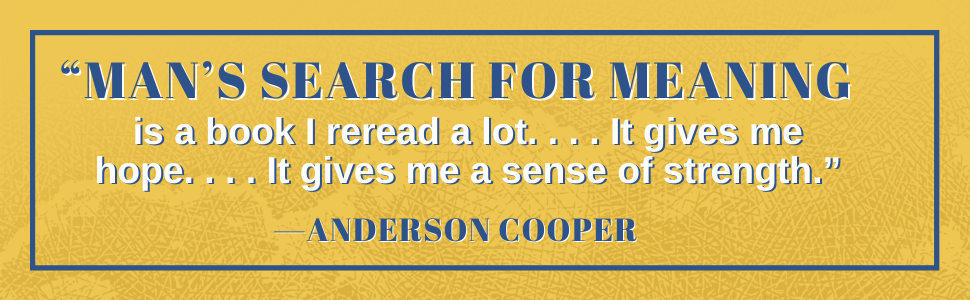
Man’s Search for Meaning by Viktor E. Frankl is a critically acclaimed bestseller ranked #1 in Popular Psychology and Holocaust History categories. With a 4.7-star rating from over 96,000 readers, this seminal work blends psychological insight with real-life resilience, offering a transformative perspective on finding purpose even in the darkest circumstances. Essential reading for professionals seeking depth, clarity, and inspiration.


| ASIN | 0807014273 |
| Best Sellers Rank | #177 in Books ( See Top 100 in Books ) #1 in Popular Psychology Psychotherapy #1 in Jewish Holocaust History #1 in Popular Psychology Psychoanalysis |
| Customer Reviews | 4.7 4.7 out of 5 stars (97,768) |
| Dimensions | 5.51 x 0.55 x 8.46 inches |
| Edition | 1st |
| ISBN-10 | 9780807014271 |
| ISBN-13 | 978-0807014271 |
| Item Weight | 7.4 ounces |
| Language | English |
| Print length | 184 pages |
| Publication date | June 1, 2006 |
| Publisher | Beacon Press |
B**R
excellent book - for many reasons
I recently completed a master's in counseling and guidance and have been reading to find a set of books that will best address some of the disorders in the DSM-IV. Following is a list I have put together from my reading so far, and these are books that I would HIGHLY recommend. I would like to say up front that the DSM-IV is full of very normal behaviors that for some reason have become magnified or exaggerated in an individual to the point of causing a negative impact in their daily lives. Take OCD for example, it is quite normal and even preferable (from a safety perspective) to check and be sure that one has turned off all the burners on the stove after cooking, or to be sure the back door is locked before going to bed. But to continue checking time and again would be problematic and can lead to problems in an individual's life. Something is diagnosed as a disorder when it moves from being a "normal" activity to being something that causes dysfunction in daily living. So, one may read the DSM-IV and see themselves reflected in many of the disorders. The question is always: is this behavior negatively impacting my life? If so then that is when it crosses the line of normal and needs to be treated. Depression; I believe there are two sources for depression: one source is our own minds, we think ourselves into the depression - at least in this case we know where it is coming from and we should be able to step behind our thoughts and help ourselves move in a better direction. The other source seemingly comes from nowhere; one minute we are okay and the next we are thrown into the depths * Book = "Transforming Depression: Healing the Soul Through Creativity"- David H. Rosen" o I would recommend reading this at least through chapter 4, going further than that delves into some deep Jungian psychology which will not likely appeal to everyone. I certainly enjoy Jungian psychology and believe that Jung's work will become more and more important and critical to our understanding as we move forward in this field of psychology. Jung's psychology is really on the borderland between spirit/soul and the science of psychology and it is Jung's work that brought me into this field. However it is quite complex/deep/different and may lose some readers. For a very good intro to Jung's work, I would recommend "The Essential Jung" by Anthony Storr, but this is not light reading as is composed of excerpts from Jung's collected works. * Book = "Man's Search for Meaning" - Viktor Frankl o I would recommend this book for two primary reasons: one is it pushes very strongly the message that meaning is essential in our lives - as shown through Victor Frankl's imprisonment in Nazi concentration camps. Frankl comments on how he observed the individuals who gave up the fight and died, and the individuals who persevered - and most importantly what it was that he believes made the difference. The other reason I recommend this book is that it helps the individuals whose thoughts may have led them to depression to realize that things could be worse. Of course there are devastations we may face that can truly be to us, just as bad as a Nazi concentration camps, but for the most part, we often push ourselves into depression for reasons that are somewhat superficial compared to other realities. Depersonalization Disorder - essentially feeling like you are not really there * Book = "Feeling Unreal: Depersonalization Disorder and the Loss of the Self" - Daphne Simeon and Jeffrey Abugel o Excellent book which will help folks understand this disorder. This is for me a very interesting disorder, I think this is one disorder where the connection between our ego consciousness and perhaps what we are at a much deeper level is challenged. Normally we are locked into full belief in our reality - we believe we are very much a part of it and that we "are" the body in which we reside. This disorder forces us to question if we are the body we think we are. It would appear that whatever piece of our mind is keeping us in full belief is breaking down a bit, leaving us a bit outside of the "normal" feeling of being the body. Folks with this disorder can actually worry that they do not have control of their body and that this body may do something they do not want it to do. Driving a car for example can be quite traumatic if you think your body may be acting without your input. Bipolar disorder - the book I am recommending is focused on Bipolar II disorder - essentially swinging from manic (very happy and carefree) to severe depression. This book was actually required reading during the Masters program * Book = "An Unquiet Mind: A Memoir of Moods and Madness" by Kay Redfield Jamison o Excellent book written by a psychologist who suffers from this disorder. This book helps to understand the importance of medication for this disorder, as well as the path of destruction that can easily be paved during carefree, manic episodes. ADHD (attention deficit disorder) * Book = "Scattered: How Attention Deficit Disorder Originates And What You Can Do About It" - Gabor Mate o This is not just a great book for folks with ADHD, but for everyone - as many of the lessons here translate to all of us. This is an extremely excellent book on ADHD and living in general. OCD (obsessive compulsive disorder) * Book = "Tormenting Thoughts and Secret Rituals: The Hidden Epidemic of Obsessive-Compulsive Disorder" - Ian Osborn o Excellent book on OCD - this book will help individuals with OCD as well as those who know someone with the disorder - to understand what is happening in the mind of a person with this disorder. This book will also help OCD folks realize that they are not alone and that many of the rituals or compulsions are shared by other folks with OCD. That is all for now, but I am still reading
E**H
So many great truths in this book
Recommended reading for everyone. Valuable nuggets on knowing and living one's purpose, not living in a victim mentality, and embracing the reason God put you on this planet.
R**N
Great read but hits a ceiling…
This was a great read. Frankl’s narrative of his years spent in concentration camps was captivating and his outline of logotherapy was rational and inspiring. However, I’ve been confused about my feelings toward its application and/or relevance without the inclusion of faith. After concluding, these are my feelings… I believe this philosophy (logotherapy) to be exceptionally helpful, especially compared to many alternative philosophies and therapies which hold individuals captive to their past and external circumstances. Further, I think this philosophy to be a great supplement to the Christian faith; as unfortunately, even people of faith can lapse into moments or seasons of despair, and Frankl offers practical application to assist a person in overcoming such times. However, I believe Frankl misses the mark in his exclusion of faith. I, of course, understand why. He, himself, was not a Christian (although many of his concepts have Christian roots). Further, the philosophy would have a wider audience if faith were excluded. Also, one does not need faith in order to apply the philosophy and live a relatively “happy” life. However, I believe that without the Christian faith, the philosophy hits a ceiling. Frankl gives us a great motivation on how to walk through life, how to find meaning to live at a given moment… But what about after all the moments are done? Just before your last breath is drawn, and you look back over all the decisions you’ve placed in your “grainery of realities,” what was it all for if there’s nothing after this? I believe this is a question that plagues people throughout life as well, not just at the conclusion of it. As creations of an immanent God who desires to be known and loved by His creation, we were each created with a God sized void within us. While we might walk through this life, trying to fill that void with other created things that this world offers, only God can fill a God sized hole. The Bible tells us that we were created on purpose, with purpose, and for purpose. Ultimately, we were each created to know God, and to make Him known. Where each of us is unique is in our capacity to and how we choose to walk out this purpose. Once an individual realizes that their purpose transcends this limited and finite existence and surpasses themselves, they then begin to exhaust their self focus and, in succession, their internal turmoil and despair (the latter being a concept that Frankl echos). We see evidence throughout generations and generations of individuals who have walked out this particular “search for meaning,” and despite the external trials they faced and/or the manner in which they drew their last breath, they left this life fulfilled, complete. Three pages from the end, William Winslade states in his afterword that Frankl “was fond of saying that the aim of psychiatry was the healing of the soul, leaving to religion the salvation of the soul.” I was left thinking, “why heal the soul if you don’t want to save it?” Faith can do both.
T**H
A Must-Read on Finding Meaning in the Midst of Suffering
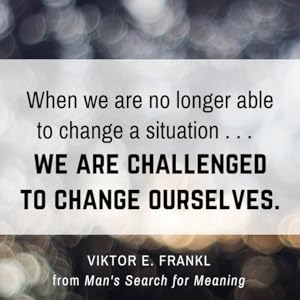
Man’s Search for Meaning is a powerful and deeply moving reflection on what it truly means to live with purpose, even in the face of unimaginable suffering. Drawing from his experiences in Nazi concentration camps, Viktor Frankl shows that while we cannot always control our circumstances, we can always choose our response to them. What makes this book so extraordinary is its reminder that meaning is not found only in comfort or success, but often in endurance, responsibility, and the decision to keep moving forward despite hardship. Frankl’s insights reveal the remarkable strength of the human spirit and the importance of having a reason to live. This is more than a memoir. It is a profound lesson on resilience, purpose, and perspective. It’s the kind of book that can shift how you see life itself. In fact, it should be mandatory reading in high school, because the lessons it offers about meaning, responsibility, and inner strength are ones every young person should encounter early in life. A short book with an incredibly lasting impact.
R**L
What a spectacular gift Frankl has given society in this book. A truly heartbreaking account of time in various SS camps, the journey the author took is just as jaw-dropping as the place he found himself at the end. Man's Search For Meaning is an excellent perspective-checker, an excellent first-hand account of how horrible people can be to each other, a tribute to the human ability to make sense of the suffering and pain one endures, and a poignant insight into the psychology that kept some prisoners alive in Auschwitz while others perished. I was continually struck with the way Frankl beautifully weaves discussion of psychology and the ways in which people respond to shocking circumstances into the description of the realities facing the prisoners in the Nazi death camps. The book is an ongoing push-pull between feeling utterly sick reading the occurrences in the camp and inspired by the positions taken by some prisoners, as well as the beauty that sporadically managed to shine into the camp. Hope is one of the most powerful forces available to humanity, and it energised the prisoners as no bread or water could. The new addition of a discussion of Logotherapy is very helpful for application into one's own life today, and much of Frankl's explanation of it seems logical and with merit. It's a testament to the quality of the writer that both halves of the book are equally enthralling to read and ingest. I feel I may need to put this into a rotation to allow the concepts to sink deeper. I wish more people wrote with grace and beauty like Frankl; He shows beauty in the midst of terror and maintains an objective perspective like nobody else I've read. A story of Frankl speaking to the other prisoners and encouraging them to find hope and see the positives of their imprisonment is one of the finest things I've read.
J**J
This book is a great compact size, and the book itself is inspiring. The cover is eye-catching and elegant.
C**R
Viktor E. Frankl is an incredibly impactful and thought-provoking read. This book delves deep into the human psyche, exploring themes of suffering, purpose, and resilience through the lens of Frankl's harrowing experiences as a Holocaust survivor. Pros: - Inspiring and Thought-Provoking: Frankl's insights into finding meaning in the midst of suffering are deeply moving and encourage readers to reflect on their own lives. - Accessible and Engaging: Despite the heavy subject matter, the book is written in a way that is easy to understand and highly engaging. - Timeless Wisdom: The lessons and philosophies presented are timeless, providing valuable guidance for anyone seeking a deeper understanding of life and their place in it. Cons: - Intense Subject Matter: The descriptions of Frankl’s experiences in concentration camps are harrowing and may be difficult for some readers. - Philosophical Depth: Some sections delve deeply into existential philosophy, which may be challenging for readers not accustomed to such material. Overall: Man's Search For Meaning is a must-read for anyone interested in psychology, philosophy, or personal development. Frankl's profound reflections on the human condition and his testament to the power of finding meaning even in the most tragic circumstances offer invaluable lessons in resilience and hope. Highly recommended for those ready to explore the depths of human purpose and perseverance.
Y**.
Muy buen libro, lo recomiendo
A**I
One of the best books I have read. I had to pause to think and reflect on my own life and experiences several times. It's one of those books you put notes on and check from time to time to reflect on yourself. I have read coountless Holocaust books and I wasn't expecting much from it, but it was the complete opposite of what is usually written about the historical event. It doesn't try to soften or romanticise it. It tells it as it is.
Trustpilot
4 days ago
1 month ago