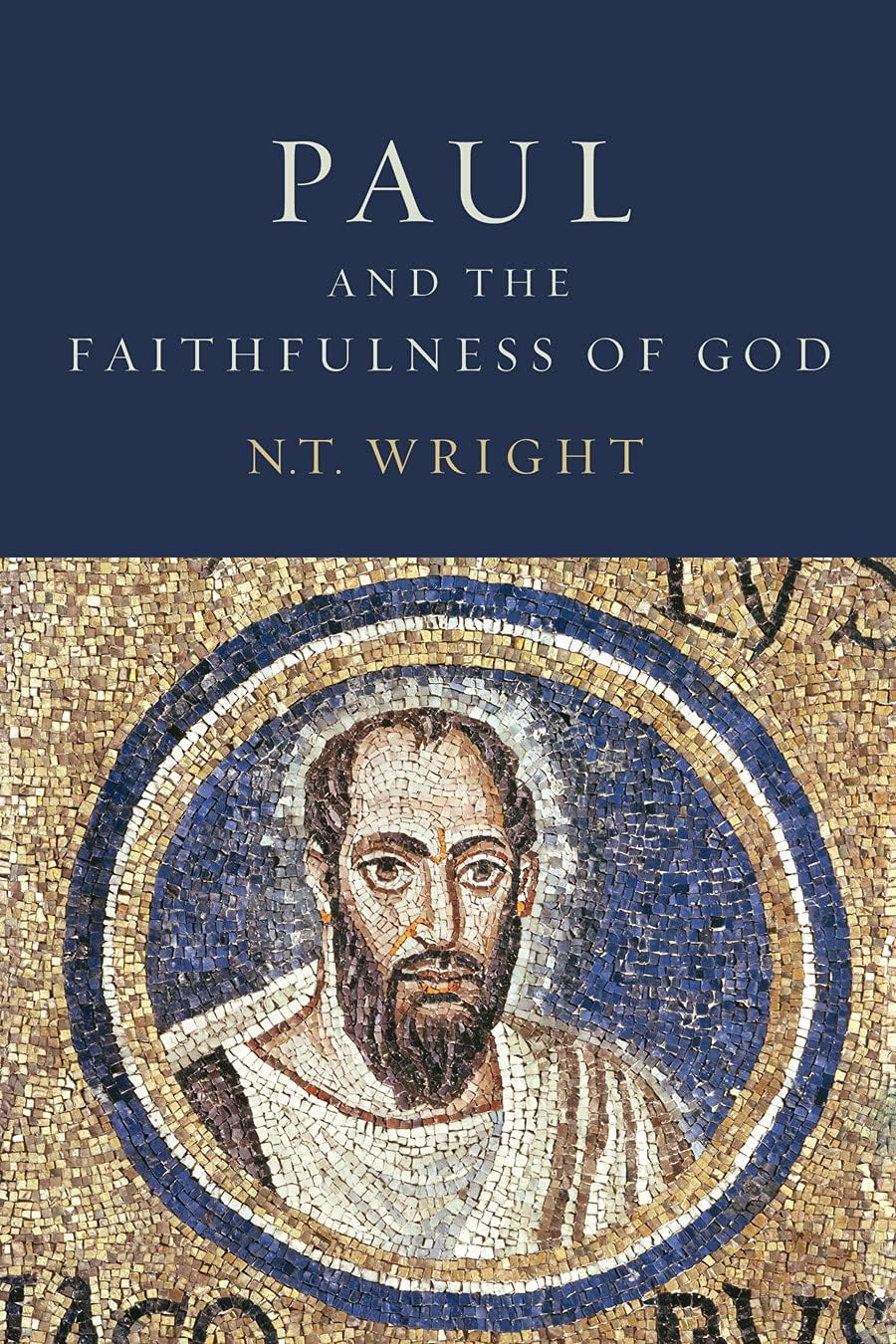
Paul and the Faithfulness of God
Product ID: 2175459
Desertcart purchases this item on your behalf and handles shipping, customs, and support to Kyrgyzstan.
Paul and the Faithfulness of God [N. T. Wright] on desertcart.com. *FREE* shipping on qualifying offers. Paul and the Faithfulness of God Review: The Masterwork on Paul by Perhaps the World's Leading Biblical Scholar Today - This masterwork by Tom Wright completes the series of four volumes which addresses the issue of "Christian Origins and the Question of God), written over the space of 20 years. The other volumes in the series includes "The New Testament and the People of God," "Jesus and the Victory of God," and "The Resurrection of the Son of God." Combined, their pages number a whopping 3,753. Bookshelves can sag under such weight. But it's worth it! Never, to my knowledge, has so much valuable interpretation been assembled in one organized collection. That said, there are similarities and differences between the volumes. All together they each provide one seamless proclamation from the beginning of the Bible to its end. Too often the Old Testament (a.k.a. Hebrew Bible) is treated by Christians as the prelude to the real revelation: the ministry, death and resurrection of Jesus Christ, and the early years of the building of the Christian Church. Nothing could be farther from the truth, Wright time and again reminds us in this volume, as Paul very forcefully says in chapters 9-11 of Romans. The Hebrew Bible, and Jewish faith, are the roots upon which our faith is built (11:18) -- cut that root off and we risk being cut off from YHWH (pronounced Yahweh), the creator God and the source of Jewish and Christian faith. To help us make this seamless transitions between the two testaments, Wright uses several powerful, yet subtle, symbolic words. For instance: 1. He rarely uses the word "Christ" when speaking of Jesus, but instead uses the Jewish term, "the Messiah." Christ comes from the Greek, and Messiah comes from the Hebrew. Both mean the same, "the anointed." 2. When quoting texts from the Hebrew Bible Wright uses the name of God, "YHWH" instead of LORD as it is most often translated. This is important because YHWH means "I am what I am" or "I will be what I will be." both meanings are correct. There is no better definition of God than that! 3. When he uses the generic word "God" he capitalizes the first letter in this volume, whereas he left all in lower case in the previous volumes. He made this change because he assumes his readers understand by now that he is speaking of the one creator God of the universe, and the God of Israel. In the previous volumes he explained that people have so many variations of the god they believe in that he wouldn't be sure what god they had in mind. For me, one of its greatest values, however, is Wright's introducing us to the worldview of Paul, which consisted of the culture and worldview of Ancient Greece, Rome, and Israel. All three were instrumental in shaping Paul's theology and mission. Also his description of Paul's Pharisaic life is the best I've seen. Yes, it's long, far too long for my taste, but it is precise and detailed (sometimes to a fault). Yet I recognize that his massive work is aimed primarily not at the general reading public, but for academics to pour over its pages, and enter them into their debates among themselves. If that is your primary complaint, you haven't read many academic treatises. If you want to catch the other side of Tom Wright, read some of his books which are aimed primarily at the general public: "Paul in Fresh Perspective," "Surprised by Hope," "Simply Jesus," "How God Became King," etc. You might think they were written by some other person! Not so. Just a different style of writing, by a master scholar and storyteller. Yes, I'll skip the parts that are too wordy and look for Wright's conclusions along the way. Some reviewers believe that he does not reflect Reformed/Reformation theology. Must we be stuck with 500 year old dogma, doctrine and interpretation? The world has come a long way since then. We don't burn witches anymore either. We are in the midst of a revolution in biblical studies which may, in the end, prove more important then the Reformation. One reviewer gives the book one star because it doesn't agree with his 17 proof texts and apparently believes those trump the hundreds, nay thousands, of texts cited by Wright. It's sad. If the price of the Kindle edition is so close to the paperback edition, shell out a few bucks more for the print edition -- it'll be easier to read and highlight the great passages (which are many). Review: The Scholar's Paul - Wright's vision of Paul is comprehensive and firmly rooted in the history of the 1st century. His effort to remind the academy of Paul's essential Jewishness is admirable. I am a cradle Catholic that has for many years been involved in Evangelical Protestant fellowships and Wright mostly interacts with the views of the Protestant branch of Christianity. I enjoyed reading him most when he competently points to the many ways contemporary interpretations of Paul have projected Reformation, Enlightenment and modern and post-modern values and categories into Paul's Jewish world context. This is a complex, exhaustive and challenging book that may be the best currently offered. For the chronology of Paul's life and Paul's basic motivations that are grounded in his conversion experience on the road to Damascus, I look to F.F. Bruce's ' Paul, Apostle of the Heart Set Free'. For a systematic reading of Paul's theology, I look to J.D.G. Dunn's 'Theology of Paul the Apostle'. But for a scholarly and intelligent synthesis of these two strains, I look to N.T. Wright. Maybe I just do not understand what all the fuss is over the doctrine of justification but Wright navigates through these troubled hermeneutical waters with great skill and detail. His critique that Reformation and later theologies miss the significance of Paul's foundation in the story of Israel and their covenants by focusing too much on misleading categories like the differences between participationist and judicial or apocalyptic and salvation historical methodologies, is spot on. While I has some struggles getting through the morass of complicated scholarship surrounding some of these issues, I found Wright's necessary repetitions of the problems involved and their solutions ultimately helpful. It was difficult and sometimes tedious plowing through the necessary and careful exegesis of key passages in Paul. May main criticisms of this volume in the series are: 1) That in trying to avoid the stigma associated with Catholicism in academic circles Wright uses the language of community and the unity of the people of God but never come right out and uses very sparingly the word "church"; especially spelled with an upper case 'C'. Perhaps this is due to the contemporary western proclivity for individualism and the baggage of current trends in Church attendance. Nevertheless, Wright's thesis reflects a full flowered EKKLESIA without actually using the word "church". 2) In his chapter on election, Wrights sidesteps the discussion of Calvin's seminal doctrine of predestination. And, 3) similarly, the standard faith versus works argument on soteriology is obfuscated or almost completely absent. Wright is too subtle and sophisticated to come out and state for the record that he is a synergist as opposed to the monergism of the reformed Christians he seems to be attempting to placate because of the controversies about the new perspective on Paul. Or maybe I have misread Wright and just do not entirely grasp all the nuances of modern scholarship. The strengths of this book are its organization and clear movement through the historical context of Paul's narrative and Jewish/Greco-Roman world and robust treatment of faith in Jesus' death and resurrection as the main marker of membership in the Abrahamic family. Wright fits a great deal into the broad headings of God/monotheism, God's people/election and God's future/eschatology; the central and longest chapters. Wright writes well and often uses a controlling metaphor that is helpful in following his argument. He also has a good sense of humor and respectful attitude toward those with whom he disagrees. This book however does assume a working knowledge of Greek, Christian theology and a classical higher education. It is not a lot of contemporary Christian fluff and pop psychology that passes for non-fiction literature these days; and that is what I like most about it. The idea that to understand Paul, his worldview, his teaching and how that is worked out into his praxis can only be done with a deep appreciation for Paul's love of his very Jewish Messiah, Christ's covenant faithfulness and the story of Israel in the Old Testament and Second Temple Judaism; all make Wrights long volume compelling, worth reading and a major contribution. I will leave it up to more erudite critics who are debating the permutations of justification by faith to decide if Wright's overall thesis is an accurate rendering of the historical Paul. And I think I can safely say that while not definitive, Wright's Paul is a force to be reckoned with.










| Best Sellers Rank | #230,240 in Books ( See Top 100 in Books ) #199 in Paul's Letters (Books) #266 in New Testament Criticism & Interpretation |
| Book 4 of 4 | Christian Origins and the Question of God |
| Customer Reviews | 4.8 4.8 out of 5 stars (341) |
| Dimensions | 6.09 x 3.37 x 9.28 inches |
| ISBN-10 | 0800626834 |
| ISBN-13 | 978-0800626839 |
| Item Weight | 5 pounds |
| Language | English |
| Print length | 1696 pages |
| Publication date | November 1, 2013 |
| Publisher | Fortress Press |
G**D
The Masterwork on Paul by Perhaps the World's Leading Biblical Scholar Today
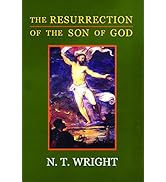
This masterwork by Tom Wright completes the series of four volumes which addresses the issue of "Christian Origins and the Question of God), written over the space of 20 years. The other volumes in the series includes "The New Testament and the People of God," "Jesus and the Victory of God," and "The Resurrection of the Son of God." Combined, their pages number a whopping 3,753. Bookshelves can sag under such weight. But it's worth it! Never, to my knowledge, has so much valuable interpretation been assembled in one organized collection. That said, there are similarities and differences between the volumes. All together they each provide one seamless proclamation from the beginning of the Bible to its end. Too often the Old Testament (a.k.a. Hebrew Bible) is treated by Christians as the prelude to the real revelation: the ministry, death and resurrection of Jesus Christ, and the early years of the building of the Christian Church. Nothing could be farther from the truth, Wright time and again reminds us in this volume, as Paul very forcefully says in chapters 9-11 of Romans. The Hebrew Bible, and Jewish faith, are the roots upon which our faith is built (11:18) -- cut that root off and we risk being cut off from YHWH (pronounced Yahweh), the creator God and the source of Jewish and Christian faith. To help us make this seamless transitions between the two testaments, Wright uses several powerful, yet subtle, symbolic words. For instance: 1. He rarely uses the word "Christ" when speaking of Jesus, but instead uses the Jewish term, "the Messiah." Christ comes from the Greek, and Messiah comes from the Hebrew. Both mean the same, "the anointed." 2. When quoting texts from the Hebrew Bible Wright uses the name of God, "YHWH" instead of LORD as it is most often translated. This is important because YHWH means "I am what I am" or "I will be what I will be." both meanings are correct. There is no better definition of God than that! 3. When he uses the generic word "God" he capitalizes the first letter in this volume, whereas he left all in lower case in the previous volumes. He made this change because he assumes his readers understand by now that he is speaking of the one creator God of the universe, and the God of Israel. In the previous volumes he explained that people have so many variations of the god they believe in that he wouldn't be sure what god they had in mind. For me, one of its greatest values, however, is Wright's introducing us to the worldview of Paul, which consisted of the culture and worldview of Ancient Greece, Rome, and Israel. All three were instrumental in shaping Paul's theology and mission. Also his description of Paul's Pharisaic life is the best I've seen. Yes, it's long, far too long for my taste, but it is precise and detailed (sometimes to a fault). Yet I recognize that his massive work is aimed primarily not at the general reading public, but for academics to pour over its pages, and enter them into their debates among themselves. If that is your primary complaint, you haven't read many academic treatises. If you want to catch the other side of Tom Wright, read some of his books which are aimed primarily at the general public: "Paul in Fresh Perspective," "Surprised by Hope," "Simply Jesus," "How God Became King," etc. You might think they were written by some other person! Not so. Just a different style of writing, by a master scholar and storyteller. Yes, I'll skip the parts that are too wordy and look for Wright's conclusions along the way. Some reviewers believe that he does not reflect Reformed/Reformation theology. Must we be stuck with 500 year old dogma, doctrine and interpretation? The world has come a long way since then. We don't burn witches anymore either. We are in the midst of a revolution in biblical studies which may, in the end, prove more important then the Reformation. One reviewer gives the book one star because it doesn't agree with his 17 proof texts and apparently believes those trump the hundreds, nay thousands, of texts cited by Wright. It's sad. If the price of the Kindle edition is so close to the paperback edition, shell out a few bucks more for the print edition -- it'll be easier to read and highlight the great passages (which are many).
R**N
The Scholar's Paul
Wright's vision of Paul is comprehensive and firmly rooted in the history of the 1st century. His effort to remind the academy of Paul's essential Jewishness is admirable. I am a cradle Catholic that has for many years been involved in Evangelical Protestant fellowships and Wright mostly interacts with the views of the Protestant branch of Christianity. I enjoyed reading him most when he competently points to the many ways contemporary interpretations of Paul have projected Reformation, Enlightenment and modern and post-modern values and categories into Paul's Jewish world context. This is a complex, exhaustive and challenging book that may be the best currently offered. For the chronology of Paul's life and Paul's basic motivations that are grounded in his conversion experience on the road to Damascus, I look to F.F. Bruce's ' Paul, Apostle of the Heart Set Free'. For a systematic reading of Paul's theology, I look to J.D.G. Dunn's 'Theology of Paul the Apostle'. But for a scholarly and intelligent synthesis of these two strains, I look to N.T. Wright. Maybe I just do not understand what all the fuss is over the doctrine of justification but Wright navigates through these troubled hermeneutical waters with great skill and detail. His critique that Reformation and later theologies miss the significance of Paul's foundation in the story of Israel and their covenants by focusing too much on misleading categories like the differences between participationist and judicial or apocalyptic and salvation historical methodologies, is spot on. While I has some struggles getting through the morass of complicated scholarship surrounding some of these issues, I found Wright's necessary repetitions of the problems involved and their solutions ultimately helpful. It was difficult and sometimes tedious plowing through the necessary and careful exegesis of key passages in Paul. May main criticisms of this volume in the series are: 1) That in trying to avoid the stigma associated with Catholicism in academic circles Wright uses the language of community and the unity of the people of God but never come right out and uses very sparingly the word "church"; especially spelled with an upper case 'C'. Perhaps this is due to the contemporary western proclivity for individualism and the baggage of current trends in Church attendance. Nevertheless, Wright's thesis reflects a full flowered EKKLESIA without actually using the word "church". 2) In his chapter on election, Wrights sidesteps the discussion of Calvin's seminal doctrine of predestination. And, 3) similarly, the standard faith versus works argument on soteriology is obfuscated or almost completely absent. Wright is too subtle and sophisticated to come out and state for the record that he is a synergist as opposed to the monergism of the reformed Christians he seems to be attempting to placate because of the controversies about the new perspective on Paul. Or maybe I have misread Wright and just do not entirely grasp all the nuances of modern scholarship. The strengths of this book are its organization and clear movement through the historical context of Paul's narrative and Jewish/Greco-Roman world and robust treatment of faith in Jesus' death and resurrection as the main marker of membership in the Abrahamic family. Wright fits a great deal into the broad headings of God/monotheism, God's people/election and God's future/eschatology; the central and longest chapters. Wright writes well and often uses a controlling metaphor that is helpful in following his argument. He also has a good sense of humor and respectful attitude toward those with whom he disagrees. This book however does assume a working knowledge of Greek, Christian theology and a classical higher education. It is not a lot of contemporary Christian fluff and pop psychology that passes for non-fiction literature these days; and that is what I like most about it. The idea that to understand Paul, his worldview, his teaching and how that is worked out into his praxis can only be done with a deep appreciation for Paul's love of his very Jewish Messiah, Christ's covenant faithfulness and the story of Israel in the Old Testament and Second Temple Judaism; all make Wrights long volume compelling, worth reading and a major contribution. I will leave it up to more erudite critics who are debating the permutations of justification by faith to decide if Wright's overall thesis is an accurate rendering of the historical Paul. And I think I can safely say that while not definitive, Wright's Paul is a force to be reckoned with.
C**N
Essendo libri di studio e conoscendololi bene non c'e molto da dire. Chi è interessato già sa.
M**N
‘Something understood.’ With this seemingly modest phrase quoted from George Herbert’s poem ‘Prayer’, Tom Wright ends his immense, scholarly exploration of Pauline theology. It is not one book, but rather four in one, a symphony in four movements. This is not the book for those who want a succinct overview of the subject (he ably provided that some years ago with his excellent ‘What St Paul really said’). Rather, it aims to give us a highly detailed account of Paul, who is primarily to be understood in the context of the first century Eastern Mediterranean world from which he, a formerly zealous Pharisee emerged as the principal representative to the gentile world of the early Christian movement. What is so impressive is the ‘scientific’ way in which Wright has examined (through precise exegetical analysis, with a panoramic awareness of critics and counter arguments) all the available Pauline phenomena and presented them in an economic, elegant and convincing way, which avoids dogmatism and the anachronistic narrowness of later (especially Reformation) readings. He doesn’t allow Paul to be shoe-horned into any ill-fitting theological schemes, but shows the breadth and beauty of Paul’s understanding of Jesus as Messiah and how that fits with the grand narrative of creation and covenant in the Jewish scriptures. Concepts deemed to be central (e.g. the righteousness of God) are reinterpreted and others (e.g. new creation) emerge with a greater force. We see Paul developing as the greatest Christian theologian, not only as we understand better the results (the letters), but also by being inducted into the process (the thinking and theologizing behind them) of his creative endeavour. Another striking feature of Wright’s book is that something this monumental is never dry or tedious. His recipe includes judicious use of humour and poetry and framing mechanisms which keep the mixture lively and engaging, and exemplifies his aesthetic, as well as his theological appreciation of Paul’s achievement. Unsurprisingly, there is something eminently Pauline (symphonic) in the weaving and exposition of so many thematic elements, and in the cumulative sense of richness, depth and clarity of the resulting work. Newsweek magazine once dubbed Tom Wright the world’s greatest living New Testament scholar and here is the proof. As Paul claims with staggering boldness in 1 Corinthians 2.16 ‘we have the mind of Christ’, so we now have in this book probably the best claim yet to have the mind of Paul.
D**Y
Quel pavé, mais quelle richesses d'informations sur le contexte de Paul. Ce livre fera date dans l'histoire de l'interprétation des écrits pauliniens. On n'en sort pas indemne. Comme toujours, N. T. Wright ouvre de nombreuses pistes de réflexions nouvelles.
D**O
Wright deckt viele Bereiche der Gedanken und der Welt von Paulus, richtig klasse
W**R
With his comprehensive sweep of the first century context this book gives a coherent historical approach to understanding the New Testament which brings the evidence together with consistency. It brings the story of the New Testament to life. Ken Foster, Parry Sound
Trustpilot
1 week ago
1 month ago