Buy anything from 5,000+ international stores. One checkout price. No surprise fees. Join 2M+ shoppers on Desertcart.
Desertcart purchases this item on your behalf and handles shipping, customs, and support to Kyrgyzstan.
๐ฐ๏ธ Navigate the future with pinpoint precision and effortless connectivity!
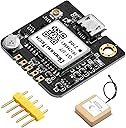
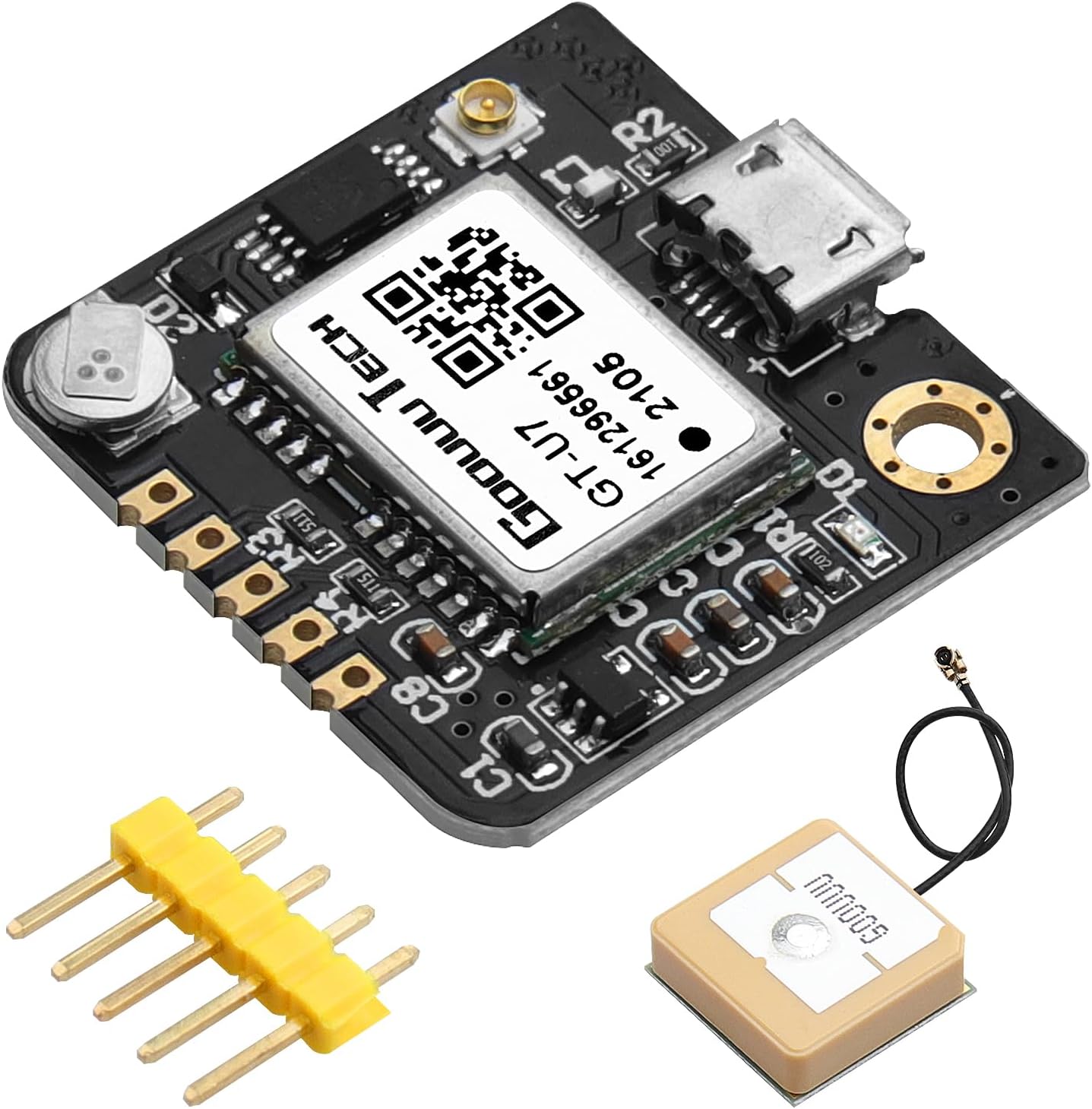
The GPS Module Receiver NEO-6M features a high-sensitivity UBLOX 7th generation chip, USB direct connectivity, and an active antenna with IPEX interface. Compatible with Arduino, STM32, and other microcontrollers, it delivers fast 3D satellite fixes in under 2 minutes, indoors or outdoors, making it ideal for drones, navigation, and time synchronization projects.


| ASIN | B084MK8BS2 |
| Additional Features | High sensitivity |
| Are Batteries Included | Yes |
| Brand | Beffkkip |
| Compatible Devices | Smartphone |
| Compatible with Vehicle Type | Car |
| Connectivity Technology | USB |
| Control Method | App, Push Button |
| Customer Reviews | 4.4 out of 5 stars 247 Reviews |
| Display Type | LCD or LED |
| Human-Interface Input | Buttons |
| Manufacturer | Deegoo-FPV |
| Map Type | Satellite |
| Map Types | Satellite |
| Mfr Part Number | 001gps |
| Mounting Type | Dashboard Mount, found in image |
| Special Feature | High sensitivity |
| Supported Satellite Navigation System | GPS |
| UPC | 608603912524 |
| Vehicle Service Type | Car |
R**G
Very impressed!
This one worked right out of the box. Plugged it into a 3.3v source and within an hour it came to life and the PPS light started blinking. I ran a free windows program (U-center 22.05) on a laptop to verify that the GPS was working. It took some fiddling but eventually the program showed all the data I expected to see. This GPS requires a "serial to USB" adapter since the GPS output is not compatible with USB protocol of my laptop. No instructions came with the unit. Update after 1 month of use: The module runs on 5V and has a 3.3V regulator onboard. Acquires a 3D fix in less than 2 minutes after being powered-up. Antenna is indoors. I use this GPS to routinely update a QRP-Labs radio transceiver with time, location and frequency information. No "serial to USB" adapter needed in this application. Output logic level is 0 to 3.1 volts. Works flawlessly.
S**A
Works well with my Heltec LoRa32 board
Got this to provide GPS position data for Meshtastic running on my Heltec LoRa32 board. It works perfectly. The antenna and receiver are so good that they can get 4 to 8 satellites inside my brick-walled house even when it's about 3 feet from a window.
A**D
It works well but documentation is not provided
The product itself works well. The problem I had was that there was zero documentation. When I buy this kind of product I expect some kind of data sheet, and when it produces a stream of data, I expect a definition of that data stream. I don't need a book, I just need a link to where I can find the information. For this product there is absolutely nothing. Luckily the vendor responded to my enquiry very rapidly and I sonn had everything I needed. So 4 stars for a very good product one star withheld because of the lack of supporting documentation.
D**O
Based on ublok 6 packet spec
I found tinygps in arduino did not fit my needs, I wrote my own. It is possible to suppress nmea "sentences" and make this into a master/slave where you make PUBX requests and process the response, otherwise this thing does not shut up and overruns the processor and buffer, leaving no cycles for anything other than serving a flood of packets. My code for GPS synced epoch time is on github. Dave in SD Here is a headstart if interested: onstart //RMCx5 slows RMC to every 5 cycles... //time info may be ephemeral (warm start) time may be from a 2d fix, check GSA sprintf(pubx40,"$PUBX,40,RMC,0,5,0,0,0,0"); //page 82 if (SetCheckSum(pubx40, sizeof(pubx40))) { String sPubx=pubx40; Serial.print(sPubx); gpsSerial.print(sPubx); } //noGSV turns off GSV a useless sentence, just because a satellite is in view does not make for fixed sprintf(pubx40,"$PUBX,40,GSV,0,0,0,0,0,0"); if (SetCheckSum(pubx40, sizeof(pubx40))) { String sPubx=pubx40; Serial.print(sPubx); gpsSerial.print(sPubx); } bool SetCheckSum(unsigned char *pPacket, int bufferSize){ bool bResult=false; //packet sent with five extra spaces -and- without an asterick 0x26 CR_A CR_B 0x0d 0x0a int iSize=strlen(pPacket); if ((iSize+5)<=bufferSize){ //do not include $ int iChecksum = 0; for (int x=1;x<iSize;x++){ iChecksum = iChecksum ^ (byte)pPacket[x]; //xor } char Calc[3]; sprintf(Calc,"%02X",iChecksum); pPacket[iSize]='*'; pPacket[iSize+1]=Calc[0]; pPacket[iSize+2]=Calc[1]; pPacket[iSize+3]=0x0D; pPacket[iSize+4]=0x0A; bResult=true; } return bResult; } bool CheckSum(String sPacket){ bool bResult=false; int iSize=sPacket.length(); if (iSize>10){ int iAstericks=sPacket.indexOf('*'); if (iAstericks>0){ String sCS=sPacket.substring(iAstericks+1,iAstericks+3); //xor bytes between $ and * sPacket=sPacket.substring(1,iAstericks); iSize=sPacket.length(); int iChecksum = 0; for (int x=0;x<iSize;x++){ iChecksum = iChecksum ^ (byte)sPacket[x]; //xor } //yeah, this could be better... think i got the false negatives; case and < 0x10 char Calc[3]; sprintf(Calc,"%02X",iChecksum); bResult=sCS==Calc; } } return bResult; } in your loop maintain a global buffer building sentences from chipset a complete packet starts with $ and ends with 0x0d 0x0a, check the sentence checksum then process based on sentence type https://content.u-blox.com/sites/default/files/products/documents/u-blox6_ReceiverDescrProtSpec_%28GPS.G6-SW-10018%29_Public.pdf
J**F
Works but very spotty and unreliable.
Overall this is a decent module for gps readings, however I would consider it for initial development and testing, for the only reason that some times it would take 10-30+ minutes to connect to a satellite to get the gps readings. In addition, it would not get a reading in my basement, or when it was cloudy outside. However, for the price, you can't really beat it and it's small in size. I would not say don't use it, just be aware that it's not the best quality out there. I ended up purchasing another one that uses the uBlox m8n chip, which was more expensive and larger but connects in my basement, outside, in the dark, clouds or no clouds, etc...
J**Y
Great little module, even better price
I picked this up to free up the GPS puck I was using in my Raspberry Pi for setting the location of my ADS-B receiver. I ultimately plan to wire it using the serial I/O, but it works just fine with USB. I had GPS lock within a few minutes, seeing 12 satellites. I have no clue if the antenna is any good, I didnโt use it, I had also purchased an adapter and external GPS antenna since I wanted the receiver close to the RPi. This little receiver is exactly what I was looking for and for $10 was super easy on the pocketbook.
M**E
Used for Timekeeping Application
I purchased this GPS receiver module to use as a time reference in a digital clock. It gets a satelite fix just fine while inside my house. I did not need to change any settings on the GPS module itself. I hooked it up to a NodeMCU esp8266 controller and it worked as expected with the GPS NTP server from Tasmota firmware. Tasmota doesn't take advantage of the PPS, (Pulse Per Second), signal available from this module, so this configuration is not a high accuracy NTP server. But that's not the fault of the GPS module. It's a result of the way Tasmota interfaces with the GPS module. I hooked it up to a Raspberry Pi 3B+ and Zero W. It worked with both and got nanosecond range accuracy once the PPS signal was used. The Pi 3B+ was more accurate. I believe that is because it has a quad core CPU and can dedicate a single CPU entirely to monitoring the PPS signal. I only tested the accuracy on the Pi's themselves. I didn't test what kind of accuracy NTP clients connecting to the Pi's NTP server would be able to get. I used GPSd and Chrony under linux to interface with the GPS module. Chrony is an NTP server and can access the GPS modules PPS line directly through the /dev/pps0 device provided by the Linux kernel. This only provides a pulse marking the beginning of a second, but does not indicate the time of day. You need a secondary time source to get the calender date and time. The GPSd daemon provides the calender date and time from the GPS modules serial interface to the Chrony NTP software. You can configure GPSd to access the /dev/pps0 device, but I never found an advantage to this because Chrony can access it directly. Adding another software layer between the pps and chrony just seems like a bad idea. The Linux utilities I found useful for getting the GPS module to talk with Chrony and GPSd are: ppswatch - make sure the /dev/pps0 device is providing PPS pulse information gpsmon - shows information provided by the GPS serial interface cgps - shows information provided by the GPS serial interface ntpshmmon - shows which SHM areas are being provided by GPSd. This info used in Chrony setup.
A**Y
Works, even inside
Built a very simple GPS altimeter/speedometer. Simple to set up, and once it has connection it holds it even in the basement of a 3 floor house. Outside I get 10-12 satellites, in the basement itโs only 5-6, but none of my other GPSโs can remain connected at all in the basement for more than a few minutes- I tested this one overnight without a single loss of connection. It did claim I was moving several MPH, but thatโs to be expected with very weak signal. Outside when not moving it registers under 0.3mph. All in all, EPIC for $10.
E**9
Excelent
The product is great
C**O
Easy to use. Works very good. I use it in my SDR Project
Works perfectly. I chabge cable to a ipx to sma . Connected the external antenna and works perfectly
J**N
Great for Projects
Works absolutely perfect. I set up an NTP server on an old Pi and this gave me zero issues. Has the PPS output pin and includes the breakout pins as well. Antenna functions very well.
O**N
Easy to configure with Windows utility.
Performs well with included antenna inside boat, acquires satellites quickly. Needed to convert output from ttl to RS232 4800 baud for my marine application. Once the power was connected just needed TXD and ground to get the signal over to the radio.
P**T
good, could be better
This gps is fairly good but i feel like for the price it could be better, it takes around 15 minutes to lock when it hasnt locked before and it also needs relatively high rssi, and theres no option to lock over the internet but i do like that it comes with an antenna that feels like its decently high quality
Trustpilot
1 week ago
1 month ago