
Buy anything from 5,000+ international stores. One checkout price. No surprise fees. Join 2M+ shoppers on Desertcart.
Desertcart purchases this item on your behalf and handles shipping, customs, and support to Kyrgyzstan.
🧠 Unlock the mystery of consciousness beyond the physical!
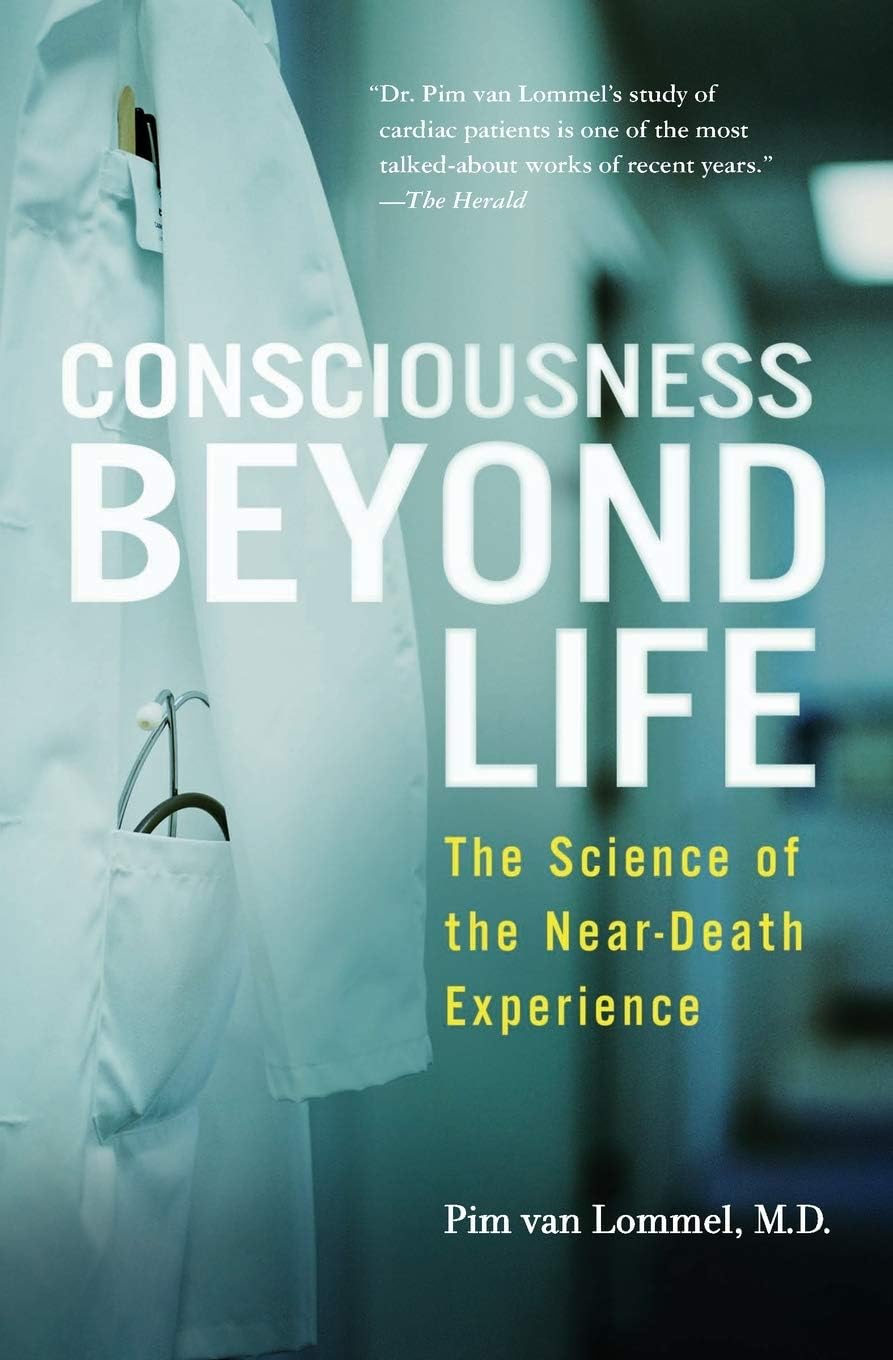
Consciousness Beyond Life by Pim van Lommel is a bestselling, scientifically grounded exploration of near-death experiences, blending medical research with philosophical insights to reveal compelling evidence for the continuity of consciousness beyond bodily death.
| Best Sellers Rank | #274,783 in Books ( See Top 100 in Books ) #133 in Reincarnation (Books) #1,026 in Occult & Paranormal #1,597 in Biology Books |
| Customer Reviews | 4.5 out of 5 stars 754 Reviews |
R**L
Insightful Exploration of Near-Death Experiences 🔬
Consciousness Beyond Life offers a clear, scientific, and deeply engaging perspective on near-death experiences. The author beautifully blends medical insight with philosophical curiosity, making complex ideas about consciousness and death easy to grasp. A thoughtful and well-researched read for anyone interested in the science behind life and beyond.
D**L
Excellent book.
Very very interesting book regarding NDE and continuation of consciousness after death of body. Very convincing book about infinite continuity of mind. Worth a read.
C**K
A worthy read !
Highly recommended.
A**R
Must read
Go for it
A**A
Is there an end?
A meticulously documented study into consciousness after official death as determined by modern medical science. Much more than the typical NDE (near death experience) book.
J**P
conciencia ahora y por siempre
Los druidas ya decían que el alma precede al cuerpo y sigue existiendo a su manera después de la muerte. La novedad de este libro fue que un científico, el cardiólogo Dr. van Lommel confirmó la evidencia de esta realidad espiritual en términos de física cuántica ( no-localidad, entrelazamiento, ... ). Del estudio que él dirigió ( publicado el 2001 ) resultó que el 18% de pacientes entrevistados que estuvieron clínicamente muertos y luego revivieron, contó una "experiencia cercana a la muerte". La conclusión más llamativa que sacó el Dr. van Lommel al considerar estas percepciones especiales de la mente, fue que la conciencia es no-local, no se puede localizar en un tiempo o espacio particulares; es ilimitada y no depende de si el cerebro está en "on" o en "off". Entonces, los fenómenos de los cuales somos conscientes no pertenecerían a un tiempo o espacio determinados; propiamente están en la conciencia no-local ( la fuente no-dual de tanto los aspectos ordinarios de la conciencia como de los extraordinarios ). La mayoría de las "experiencias cercanas a la muerte" son luminosas, perfectas, felices ( ¿celestiales? ), pero en una pequeña proporción son oscuras, inquietantes ( ¿infernales? ). La muerte sin más no significa una liberación, puede resultar un fiasco si alguien muere con el peso de muchas emociones mal procesadas. Es un objetivo del libro dar a conocer la conciencia en su formal no-local y expandida. Este es un libro de ciencia, pionero y formidable de leer, sin embargo tiene su limitación; como el mismo autor dice, es imposible conocer el origen de la conciencia.
D**E
An excellent book by a leading cardiologist and emergency room physician
This is an excellent and fascinating book written by a leading cardiologist who is also an emergency room physician. He has drawn on much personal experience, and many verified accounts from experienced colleagues. This is one of the best books I have read on this subject, and carries a real message of hope for all those who have suffered the loss of a loved one
P**N
Van Lommel's uses quantum mechanics to conceptualize consciousness & are clear and challenging.
This is an important book for anyone who is interested to consider the survival of consciousness after death. Dr. Lommel is a credible source, due to his many years experience in a clinical setting. Also, the book is comprehensive and clearly written. It is thoroughly footnoted and exhaustively researched, but the chief attribute of the book is it's accessible writing style and fascinating readability. Pim van Lommel has impeccable credentials in his field and he is also a first-rate storyteller. This is a book that is literally hard to put down. People who experience a near death experience (NDE) often feel alone and may encounter negative feedback from their family and friends. This excellent book was written by a cardiologist who has not had an NDE but rather kept hearing about the experiences from patients. He then conducted several studies, well-designed, that convinced him NDEs are absolutely real. If you have questions about what happens when we die, read this book. If you are skeptical about "near death experienced", read this book. Some parts are a bit scientific in language, but the book is very approachable for all people. The book mainly focuses on the scientific evaluation of a seemingly unscientific phenomena - the near death experiences. Still, it covers a variety of modern researches and theories concerning life and consciousness through NDEs, which makes it at least an interesting, revealing, and thought-provoking reading experience. The writing itself was accessible and thoughtful. Just prepare to be very open-minded. And now I am extremely curious about what science would take us in the future for sure! I enjoy research so having all his references presented means a layman like me can check it out for myself. I didn't notice any religious babble...just facts and theories. My take on the book is...the mind is not the body so nobody dies. Now what? I love the way how the author explains how quantum physics begins to throw light on these things. It can't really be fully explained to our mind limited as it is by time and space and bodily identification but... Also we so much appreciate the good work and research of so many including David Bohm. And for myself, I love how much of the ancient wisdom texts (Advaita Vedanta) concord with NDEs and quantum physics. If you want to really know if this book is for you, go to your local library. If they don't have a copy there is always the option of the Inter-Library Loan procedure (books usually take about 3 weeks to arrive). I almost always preview books from the library before purchasing ... it has saved a lot of disappointment.
C**C
A Scientific Ground-Breaking Book on Human Consciousness
I couldn’t let go of the first portion of this book: its many near-death-experience (NDE) accounts are fascinating and impressive. Quite interesting is how the author parallels near-death-experience reports with the beliefs of the five main world religions: Hinduism, Buddhism, Judaism, Christianity, and Islam: tying them in with ancient Greek philosophy as well. He also gives a few ancient NDE reports: a fifth-century-BCE account, an eighth-century-CE account, and three nineteenth-century-CE accounts. The author deals with the subject of consciousness holistically: that is, scientifically, subjectively, medically, and metaphysically. What I found very satisfying in this book is the fact that the author looks at both sides of the arguments for and against his views, even when his opponents are obnoxious toward him personally: most of the time, he gives satisfactory arguments. However, when the author tries to explain these subjective phenomena through ‘quantum mechanics,’ I found it hard work—somewhat boring and unconvincing—despite my bachelor’s degree in physics. Although the book is extremely well researched, the author graciously admits that “the questions continue to outnumber the answers.” (p. 259) I also found the book’s glossary extremely helpful for revisiting (while reading) medical and technical terms that I wasn’t too familiar with. Near Death Experiences: Surprisingly, the author informs us, “Fairly recent studies in the United States [in 1982] and Germany [in 1999] suggest that approximately 4.2 percent of the population has reported an NDE.” (p. 9) That’s excluding under-reporting because of self-embarrassment; not to mention that frightful NDEs are more often than not (understandably) unreported. In fact, people who had a near-death experience stop telling it to others because the latter usually think they were hallucinating. In other words, NDEs are not that uncommon as one might think. NDEs, the author explains, “are reported not just by people on the brink of death … they are most frequently reported after a period in which brain function is seriously impaired, such as in a cardiac arrest. Other comparable clinical circumstances include brain damage and coma after a serious traffic accident or brain hemorrhage, unconsciousness through shock (low blood pressure) caused by severe blood loss during or after a delivery, or following complications during surgery. Near-drowning is a well-known trigger in children. Other causes include asphyxiation and serious but not immediately life-threatening illness with high fever. These experiences are also reported during isolation, depression, or without any clear medical indication during walks in the countryside or during meditation.” (p. 8) The author then aptly argues, “The [most] frequently cited argument that an NDE is caused by oxygen deficiency in the brain obviously does not apply to people who experience one during depression or isolation.” (p. 9) Likewise, throughout the book, the author debunks most (if not all) of the scientists’ objections to NDEs—one by one. The most common elements in an NDE account are : (1) indescribability, (2) peace, no pain, (3) death awareness, (4) out-of-body experience (local & remote), (5) dark space (often frightening), pinpoint of light, fast tunnel travel, (6) beautiful unearthly environment, (7) deceased relatives, speechless communication, (8) being of light, unconditional love, deep knowledge, (9) life review, no time or distance, (10) future preview, (11) limiting border, (12) return to body. (pp. 11–12) Only some of these are experienced in any NDE. An ‘out-of-body experience’ (OBE) is basically a separation of mind and body. The author concludes, “The experience of a very lucid consciousness at a moment when all brain function has ceased raises important questions about the relationship between consciousness and the brain.” (p. 9) Somewhat unconvincing, to me, is a few near-death-experiencers’ claim of an ability to foretell the future. According to the author, “People feel like they can see part of the life that is yet to come. … The reports of the verifiable future events inevitably raise questions about free will and the extent to which people can determine their own future.” (p. 38) However, in his book ‘The Universe in a Nutshell,’ (p. 107) theoretical physicist and cosmologist Stephen Hawking writes the following regarding Heisenberg’s ‘uncertainty principle’: “We cannot even suppose that [a] particle has a position and velocity that are known to God but are hidden to us. … Even God is bound by the uncertainty principle and cannot know [both] the position and velocity [simultaneously]; He can only know the wave function [probability].” It is this uncertainty principle which is the basis of our free will: otherwise everything would be predetermined. God so constructed our world that we can exercise free will. So I contend that he does not really know the future, especially where we are concerned—let alone people knowing the future, then. Moreover, personally, I find it hard to believe that following an NDE some possess healing powers and paranormal qualities. (pp. 60–61) I could be wrong, of course, but I think these portions of the book, unfortunately, undermine its credibility, somewhat. Consciousness: The author seems to think that our consciousness is located somewhere in ‘nonlocal space’ remote from us, somewhat like the airwaves from radio and television stations, to which every person possesses the ‘tuning frequency.’ In the book’s introduction, he writes, “Our brain may be compared both to a television set, receiving information from electromagnetic fields and decoding this into sound and vision, and to a television camera, converting or encoding sound and vision into electromagnetic waves. … The function of the brain can be compared to a transceiver [i.e., transmitter-receiver].” (p. xvii) I think this is the most revealing concept of the entire book. The author never mentions God (who is possibly the ‘transmitting station’), of course, because the subtitle of his book is ‘The Science of Near-Death Experience.’ Most scientists bend over backwards to separate God from science; yet, according to self-declared atheist Richard Dawkins, whether God exists or not is a scientific question. In his book ‘The God Delusion’ (p. 82), Dawkins writes, “The presence or absence of a creative super-intelligence is unequivocally a scientific question, even if it is not in practice—or not yet—a decided one.” And I happen to agree with Dawkins in this concept. My take is that God has access to our consciousness, instantaneously, through the scientifically proven physical process of ‘entanglement’ (see p. 218). In this respect, I think the book is somewhat disappointing: the author should have been bolder rather than resort to ‘nonlocal space’ and its associated ‘quantum mechanics.’ The author also opines, “The origins of consciousness are and will probably remain a mystery forever.” (p. 290) I think this is somewhat of a defeatist attitude. There were scientists in the past who believed we could never learn anything about the stars because they are too far away from us; yet we learnt quite a bit about them in the last few decades. Somewhat surprisingly, the author also writes, “Consciousness predates our birth and our body and will survive death independently of our body in a nonlocal space where time and distance play no role. There is no beginning, and there will never be an end to our consciousness.” (p. 307) I can relate to there being no end to our consciousness, but I simply cannot see why it would have no beginning: unless he wants to accommodate those religions that believe in reincarnation. I think it’s logical to assume that consciousness starts at the moment of conception, at best—not earlier. Moreover, apart from the ‘First Cause’ (i.e., God or matter), everything has a beginning, even the universe according to the ‘big bang’ theory. Much More: The book deals with many more observed and/or reported phenomena, which I don’t have space to discuss in this short review: “fear-death experiences, identical experiences triggered by despair, depression, isolation, meditation (religious and mystical experiences), and total relaxation (experiences of enlightenment or unity), as well as experiences prompted by regression therapy and the use of mind-expanding substances such as LSD or DMT, deathbed visions, perimortem and postmortem experiences, enhanced intuitive sensitivity or nonlocal information exchange, nonlocal perception, and the influence of mind on matter (nonlocal perturbation [and neuroplasticity]).” (p. 328) I’ll leave all that for the reader to discover and savor. Medical Ethics: The author finally raises a current ethical concern; he writes, “With the technical expertise to transplant organs … came the problem of obtaining suitable organs.” (p. 321) So, the medical profession felt it must relax the then-current definition of ‘death.’ The author continues, “Long term irreversible coma [was] called death [‘brain death’], thus creating the possibility to obtain transplant organs from [so called] ‘dead’ patients.” (p. 321) With the introduction of coronary care units and subsequent improvements in resuscitation techniques, the reporting of near-death experiences increasing exponentially became an eye-opener: “what to make of the many reports of consciousness during a period of coma with demonstrable loss of brain function?” (p. 321) The author states, “Life and death can never overlap …. It is scientifically impossible to determine exactly when all life has left the body. The process of dying lasts between hours and days, takes a different course for everybody, and takes places at organ level down to cellular and subcellular level, with different processes and rates of disintegration for each system. Besides, when brain death is diagnosed, nearly 100 percent [96%, p. 322] of the body is still alive.” (p. 323) Under coma, some patients “can last for years in exceptional cases” (p. 321). The author aptly observes, “The fact that ‘dead’ patients can bear living children also calls for reflection.” (p. 324) Indeed, Plato’s fifth-century-BCE account of the soldier Er in ‘The Republic’ states he was thought dead for twelve days before ‘returning’ to life. (p. 97) Conclusion: In his introduction to the book, the author rightly laments, “Most scientists are still trying to reconcile theory and facts within the routinely accepted (materialist) paradigm … essentially a collection of articles of faith shared by scientists. … Results that cannot be accounted for by the prevailing worldview are labelled ‘anomalies’ because they threaten the existing paradigm. … Such anomalies are initially overlooked, ignored, rejected as aberrations, or even ridiculed. Near-death experiences are such anomalies.” (p. xiv) Notice especially the phrase “articles of faith.” “The history of science,” the author points out, “tells us a similar story.” (p. 312) Despite what scientists might currently think, in my opinion, this book is a scientific ground-breaking book on our consciousness. In the epilogue, the author opines that it’s “no more than a springboard for further study.” (p. 327) Perhaps! But I compare it to Darwin’s ‘On the Origin of Species’ in its originality. The future will tell whether I’m right.
Trustpilot
3 weeks ago
1 month ago