
🔥 Decode the rise of extremism before it’s too late!
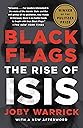
Black Flags: The Rise of ISIS is a critically acclaimed, deeply researched book by Pulitzer Prize winner Joby Warrick that traces the complex geopolitical and social factors behind ISIS’s emergence. Ranked #61 in Middle Eastern History and boasting over 4,300 five-star reviews, it offers indispensable insights into the failures and decisions that shaped modern Middle Eastern turmoil.


| Best Sellers Rank | #771,447 in Books ( See Top 100 in Books ) #61 in Middle Eastern History (Books) #118 in Political Freedom & Security (Books) |
| Customer Reviews | 4.6 out of 5 stars 4,354 Reviews |
M**H
Must Read
One of those books which you can read without taking any break. Some eye opening decisions by leaders of few countries which led to the rise of ISIS and created miseries in the Middle East. This is a must read book if one wants to understand what went wrong in Iraq & Syria.
H**T
Fascinating account of birth of ISIS
An important book to read and get deep insights in the origins of ISIS. Joby Warrick has done a great work in capturing the smallest details which led to the creation of ISIS. This terrorist organisation became most dreaded and hated, even more than its parent organization Al-Qaeda for the brutal beheadings and killings they carried out in the areas they captured in Iraq & Syria. It was interesting to know that the roots of this problem lies not in Iraq or Syria but in Afghanistan. The Anti-soviet jihad that began in Afghanistan was joined by many from all over the Muslim world. Many of these veterans of jihad, after the war went to their respective countries with the idea to start the same jihad in their country. The fertile ground was provided to these jihadist by American invasion of Iraq first and then subsequent sectarian violence between Shias and Sunnis. Further things got complicated when Syria plunged into civil war during Arab spring of 2011. Had Western power especially US acted on the intelligence they received by CIA and Jordans secret service, the rise of ISIS could have been stopped. The debacle by US in middle East especially in Iraq once again reaffirmed there lack of understanding of complex and intricate social and power structure of middle eastern countries. These kind of group will keep on emerging as long as we don't contain the spread of violent and extremist ideology. The main roles in this must be played by Muslim nation who should ensure that people who preach and propagate such violent and radical ideas must be stopped at all cost. Otherwise this fire of extremism will burn everything it touches and it will not have any regards for borders.
S**R
A great read.......
This is a breathtakingly detailed book on Middle East politics of the last 18 years, with Iraq as the centerpiece. The first 100 pages are a bit dull, but just takes off after that, all through the rest of 330 pages. It gives a very meticulously detailed biography of Abu Musab al-Zarqawi and takes us on a tour through all the bombings from 2001 through 2014. For people who listened to world news and wondered at terms like Arab Spring, al-Nusra Front, Shia/Sunni, al-Baghdadi, Zawahiri, car bombs, truck bombs, this is the book you need to read. If you have seen the Oscar wining movie "Hurt Locker" and liked it, this book will give you goosebumps for sure. It is very easy to read and has won the Pulitzer Prize for 2016. Worth more than the 400 bucks it is available for at Amazon.
H**R
Product review
Nice book
D**V
Mustvread for anyone and everyone who is genuinely curious about ISIS
A brilliant book that very clearly explains the genesis of ISIS much before iraq war and how iraq war proved a catalyst to bring forth the terrorism and fundamentalism. After reading this book i am so much more aware of the region's then political and religious situation that led to rise of ISIS that has impacted many million innocent lives. Superb writing by the author and hats off to Jordan security and intelligence establsihment on ensuring that Jordan remains one of the peaceful nations not drawn into the ISIS blood bath...
A**N
A great read
As somebody who is interested in Islamic terrorism as a non state actor in international relations this was a feast.The text is extremely readable and the happenings are so interesting that I sometimes felt like I am reading some dystopian thriller or something.Everything said here are facts and that makes me real sad.The writer is very good at his job and he gives an exact idea about how ISIS was created.Highly recommended for any body who loves non fiction.
J**B
No bookmark
The book is good but the seller did not provide a bookmark with the book and this has happened multiple times by now. I would have been more delighted to get a bookmark and expect to get one on my next purchase.
K**N
Riveting
Warrick’s riveting account of the rise of one of the most successful terrorist organizations in the world, the Islamic State, pans out like a thriller. His diction is crisp and descriptive, and his narrative includes many characters, from CIA officials to ISIS truck drivers. The events take place in the middle east: Jordan, Iraq and Syria with some of it at the CIA headquarters and the White House. Most of this book deals with the events before the formation of ISIS. Warrick lays a solid background and builds a strong foundation so that the formation of ISIS is in proper context. In laying out the basics, he focuses on one main person: Abu Musab Al Zarqawi. Without Zarqawi, ISIS would never have the groundwork upon which to build the Islamic State. Warrick starts off with a detailed analysis of the man’s life and work. From his disturbed childhood as a petty criminal in the streets of Jordan to his sudden immersion into religious piety and his hatred for the Americans, Warrick describes how each event would shape the man to become one of the most ruthless Jihadists the world has ever seen, only to be succeeded by his successor, the current leader of ISIS. Zarqawi would meet most of his future comrades at Al-Jafr, a Jordanian prison for extremists. Here, he was under the leadership of an extremist Islamic Scholar, Al-Maqdisi. Maqdisi served as the ideological leader of the detainees while Zarqawi would do all the dirty work. Though he was known to the Mukhabarat, the Jordanian equivalent of the CIA, to be a dangerous person, Zarqawi would reveal another side to his prisoner comrades. He was overly protective of them, at times serving those who were ill and taking care of their health. Though he was a cold blooded murderer, he had a sort of excessive love for his mother and sister and would frequently write poems for them, with the margins decorated with flowery drawings. During his time at the prison, Zarqawi would learn to read the Koran, under the guidance of Maqdisi and spend hours on end with the book. His career took an abrupt turn from a criminal to an overly pious follower of Islam sort of jarringly. And even then he would exhibit opposing behaviours when he came out of prison. “Though Zarqawi talked like a religious radical, the agency’s intensive surveillance showed that his behavior was filled with contradictions and carried echoes of his prereligious past. He would disappear for hours to the home of a Zarqa woman who was not his wife, and then he would head directly to an Islamist gathering or to the local mosque for evening prayers.” This sort of a schizophrenic mindset would feed into his later terrorism. The next change in Zarqawi’s character would come after the September 11 2001 attacks on the twin towers, when America bombed Bin Laden’s headquarters: “Zarqawi’s rough character had been thrice remolded: by war, by prison and by the responsibilities of command at the helm of his own Afghan training camp. He had come to regard himself both as a leader and as a man with a destiny. And now, in al-Adel’s view, his energy and thinking had been altered again, honed this time by “hatred and enmity against the Americans.” Though he was known in Jordan well for his attempts at terrorism, he wouldn’t have become a terrorist superstar if it wasn’t for the USA. In an attempt to justify their invasion of Iraq, the United states claimed a link between a previously unknown terrorist, Zarqawi, and Saddam Hussein. When Colin Powell made his speech at the UN Security Council rationalizing their decision to invade Iraq, this was one of the points he presented. And this catapulted Zarqawi to terrorist superstardom because surely, if the US mentions him at a high profile summit, he must be important. The US administration did this despite the fact that all the top CIA officials were against it. There was absolutely no evidence for such a link at all, but the Bush administration went ahead and used it anyway. “To those who knew the subject matter best, the speech was an extraordinary performance, an artful rendering of a selective set of facts that favored invasion. Powell later described the presentation as one of the biggest blunders of his career, a mistake he would attribute to sloppy intelligence and wishful thinking at senior levels of the Bush administration.” This would result in Zarqawi gaining massive support from supporters of the extremist Islamic cult and would pave the way for his future atrocities. Zarqawi’s brand of radical Islam was even more brutal and potent than Al-Qaeda’s. Though Al Qaeda gave support to him initially, it soon had to withdraw because Zarqawi was too violent even for their taste. He killed and massacred muslims and non muslims alike, even with the wide condemnation of his acts by muslim scholars worldwide. Al-Zawahiri, the deputy in chief of Osama Bin Laden even wrote elaborate letters asking Zarqawi to tone down the violence, since he was bringing a bad name to all Jihadists “Though some would cast his movement as an al-Qaeda offshoot, Zarqawi was no one’s acolyte. His brand of jihadism was utterly, brutally original. Osama bin Laden had sought to liberate Muslim nations gradually from corrupting Western influences so they could someday unify as a single Islamic theocracy, or caliphate. Zarqawi, by contrast, insisted that he would create his caliphate immediately—right now. He would seek to usher in God’s kingdom on Earth through acts of unthinkable savagery, believing, correctly, that theatrical displays of extreme violence would attract the most hardened jihadists to his cause and frighten everyone else into submission.” When the US invaded Iraq, even under strong advice of Abdullah II the King of Jordan not to do so ( where he said that doing so “would open pandora’s box”), Iraq’s weakened army and the chaos that ensued proved to be the perfect breeding ground for terrorists like Zarqawi. They soon infiltrated the country and went about stoking the sectarian tensions between the Shiites and Sunnis. After volley after volley of car bombs and suicide bombings, Zarqawi would blow up a Shiite shrine, enraging them and setting off a sectarian war between the two factions that would sweep through Iraq and even into its neighboring countries like Jordan, ending with the massacre of thousands of people. It is in this zeitgeist that Zarqawi would realize that he infact was carrying out the command of God himself. “The fertile soil was Iraq after de-Baathification,” Richer said. “The rain and sunshine were the ineptitude of the provisional authority and U.S. misunderstanding of Iraqis and their culture. “All of that,” he said, “allowed Zarqawi to blossom and grow.” Eventually though, under the leadership of general Stanley McChrystal, the Americans would kill Zarqawi in 2006, ending his years of atrocities. Quickly after that, his group would soon diffuse out. In 2011, during the Arab Springs when the people of Syria were engaged in nationwide protests calling for reforms, Bashar Al Assad, the president of Syria would prove to be an incompetent little prick. Though he was well educated in Britain and seemed to be a good person to lead the country who would empathize with the West, he proved to be exactly the opposite. Not knowing how to control his people and instead of listening to their grievances, he asked his army to attack them. They open fired on unarmed protesters and even used snipers and lethal Sarin gas to subdue the uprising. But this only encouraged the rebellion. Soon, after many months of attacking his own people, Assad realized he was running out of money. He would turn to his Allies, Iraq and Russia. Vladimir Putin had his only naval base at Syria and Iraq had important trade routes that went through Syria , and so they would supply Assad with money and weapons. By then, the people organized themselves into different rebel groups. They had weapons of their own and were fighting the Syrian army. But Assad had one more card up his sleeve: “No longer were the protesters mere “vandals” and “criminals.” Now the Syrian leader spoke of a struggle against “takfiris”—radical Islamists. “This kind of ideology lurks in dark corners in order to emerge when an opportunity presents itself,” Assad had said in a televised speech to the nation. “It kills in the name of religion, destroys in the name of reform and spreads chaos in the name of freedom.” Though nothing like that existed, Assad would insist that the presence of radical Islamists was the real reason he was attacking his people. And as said, the disbanded members of the Zarqawi clan would find a new incubator for their terrorism. This time, they renamed themselves as the “Islamic State”, headed by Abu Bakr Al Baghdadi. Al Baghdadi would not seem like an ideal candidate to head a terrorist organization. He had a PhD in Islamic Studies and Theology and if not for what had preceded him, he would most likely have been a college professor. As Warrick succinctly notes: “Had it not been for the U.S. invasion of Iraq, the Islamic State’s greatest butcher would likely have lived out his years as a college professor.” He was a faithful follower of Zarqawi’s methods and would take it to new heights. After taking over much of Syria, the Islamic State would claim Iraq as well. Under ISIS rule, strict regulations had to be observed. Women had to wear loose fitting burqas and couldn’t travel without a male relative. Cigarettes and alcohol, remnants of the “Western” tradition were banned. And some restrictions were comical: “Shopkeepers who tried to stay open found themselves subjected to arbitrary and occasionally bizarre regulations. In some neighborhoods, grocers were threatened with punishment if they displayed cucumbers and tomatoes in the same stall. The jihadists maintained that the vegetables resembled male and female body parts and should not be permitted to mingle.” But some were disturbing as well: “Schools were kept shuttered for months after ISIS seized power, and when they finally reopened, everything had changed. The old textbooks and curricula—the “books of the infidels,” ISIS called them—had been tossed out, replaced by religious training. Meanwhile, the city’s hundreds of orphaned children and teens were moved to military camps to learn to shoot rifles and drive suicide trucks.” Al Baghdadi gladly followed the footsteps of his predecessor, Zarqawi, with using the internet to spread terror. The tradition of beheadings being videotaped and circulated on the internet was started by Zarqawi, when he beheaded Nicols Berg. But Al Baghdadi would raise it to grotesque extremes. It was when he burned alive a captured Jordanian jet fighter pilot that the Arab world suddenly woke up to his savagery. Though beheadings were permitted in the Koran, burning people was only allowed to be done by God himself. “The beheading of prisoners, brutal though it was, was specifically countenanced by the Koran and regularly practiced by the Saudi government as an official means of execution. But with the burning of a human being—and, in this case, a practicing Sunni Muslim—the Islamic State had broken an ancient taboo.” Baghdadi took great care for his first public appearance. He was convinced that he indeed was the modern day Muhammed, come to save the Islamic world from the vices of the ‘Crusaders’ and non-believers, what he called “infidels”. This can be seen when he proceeded to make his first televised speech: “Baghdadi wore a black robe and turban, evoking the dress of Allah’s last prophet on the day of his final sermon. He climbed the steps of the minbar slowly, pausing at each one to emulate another of Muhammad’s habits. At the top, as he waited to begin his sermon, he pulled from his pocket a miswak, a carved wooden stick used for oral hygiene, and began cleaning his teeth. Again the act deliberately invited comparison to Muhammad, who, according to an ancient Hadith saying, advised followers to “make a regular practice of miswak, for verily it is the purification for the mouth and a means of the pleasure of the Lord.” The video can be found here: https://www.youtube.com/watch?v=SYzPOHcyfPY These megalomaniacal delusions of grandeur feeds into Baghdadi even today as he continues to spread his virulent strain of Islamism across the middle east. Now, even Jordan, which was for a long time very weary of involving in any direct combat with Syria, has joined the fight against ISIS. Renowned scholars of Islam in the Arab world have also strongly condemned the flavour of Islam ISIS tries to spread, citing that “Islam has nothing to do with them”. As we have seen, ISIS’s horizon doesn’t end in the Middle East. They want to establish a Caliphate, one that rules over not only the Middle East but also brings justice to the Westerners, the infidels, the Crusaders, and carriers of The Cross. But let us hope that with the combined efforts of all the other countries in the world, this virus is neutralized.
Trustpilot
1 month ago
1 day ago