
Buy anything from 5,000+ international stores. One checkout price. No surprise fees. Join 2M+ shoppers on Desertcart.
Desertcart purchases this item on your behalf and handles shipping, customs, and support to Kyrgyzstan.
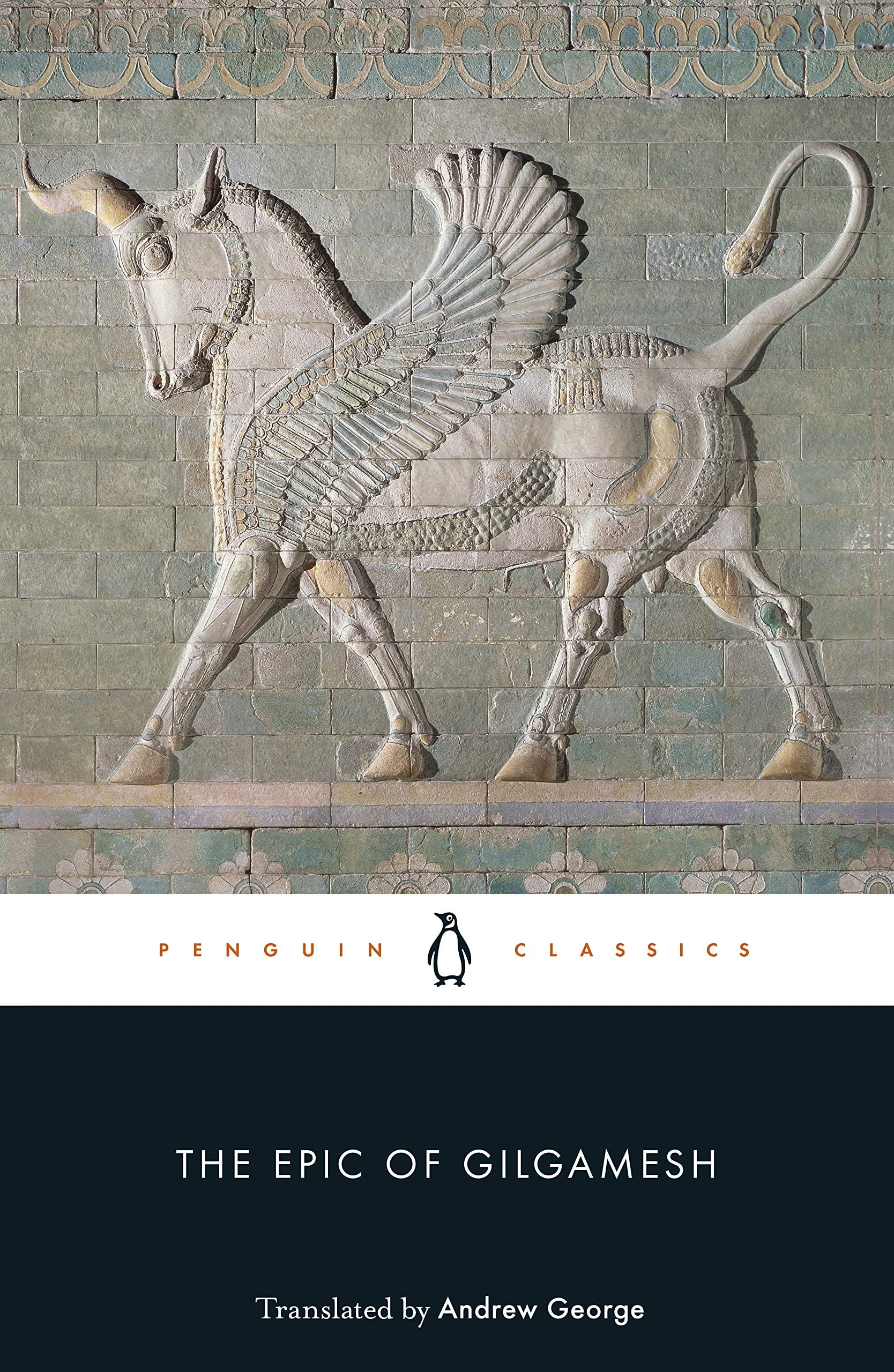
Andrew George's "masterly new translation" ( The Times ) of the world's first truly great work of literature A Penguin Classic Miraculously preserved on clay tablets dating back as much as four thousand years, the poem of Gilgamesh, king of Uruk, is the world's oldest epic, predating Homer by many centuries. The story tells of Gilgamesh's adventures with the wild man Enkidu, and of his arduous journey to the ends of the earth in quest of the Babylonian Noah and the secret of immortality. Alongside its themes of family, friendship and the duties of kings, the Epic of Gilgamesh is, above all, about mankind's eternal struggle with the fear of death. The Babylonian version has been known for over a century, but linguists are still deciphering new fragments in Akkadian and Sumerian. Andrew George's award-winning translation has been revised to include many new discoveries of text, and reissued in 2019. It brilliantly combines these into a fluent narrative and will long rank as the definitive English Gilgamesh. For more than seventy years, Penguin has been the leading publisher of classic literature in the English-speaking world. With more than 1,700 titles, Penguin Classics represents a global bookshelf of the best works throughout history and across genres and disciplines. Readers trust the series to provide authoritative texts enhanced by introductions and notes by distinguished scholars and contemporary authors, as well as up-to-date translations by award-winning translators. Review: Andrew George or Stephen Mitchell? - If you haven't read The Epic of Gilgamesh, you're missing out on some of the most vivid imagery in all of literature. In my opinion, this Epic isn't famous for the reasons that it should be famous. You've probably heard about the flood episode, but have you read about Humbaba and the Great Cedar Forest? Do you know where the sun goes at night? Have you plunged into the depths of the waters at the center of the world to find the flower that, when eaten, returns a man to his youth? Could you pass (my personal favorite) the test of the seven loaves of bread? And did I mention the serpent? There's a serpent. What's remarkable about The Epic of Gilgamesh is how complex its characters are, how broad and deep their geography and world is, and yet, how everything in it is delivered in such short, striking and memorable prose. You could read the entire story is an hour or two, or savor a piece of it for a day. On translations: I came across the Epic of Gilgamesh after searching on Google with the question, "What's the earliest piece of literature that we have?" I've listened through the Stephen Mitchell translation on Audible several times, and then moved onto reading the Andrew George translation. (Sadly, there is no audio version of the AG translation that I've been able to find.) My understanding of Gilgamesh is that the English translations are made from a series of cuneiform tablets, many of which have gaps in the text. Stephen Mitchell did a great job translating the text and "filling in the gaps" where there were gaps. The result is a single, cohesive story that flows well and leaves the reader with as close an approximation to the arch of the Gilgamesh story as is currently possible. I highly recommend the Stephen Mitchell version as a great primer for anyone interested in or unfamiliar with the Gilgamesh Epic. What I love about Andrew George's translation (which Stephen Mitchell references as a source for his translation) is that it doesn't fill in those gaps. Andrew George only translates the exact text from the tablets, and his translation feels more like a deep dive into the text itself. The biggest notable difference here is that this Penguin Classics edition of the Andrew George translation comes with the following: 1. the Standard Version of the Babylonian Epic 2. the Sumerian Poems of Gilgamesh 3. Fragments of the Old Version of the Babylonian Epic 4. Misc. Babylonian Fragments All of these together really helped me develop a better understanding for how the people in the Sumerian culture made sense of the world around them. There is also a great intro on the history of the text, as well as several illustrations of the original tablets and early depictions of the characters in Gilgamesh. This is really a fantastic book, and it can be read for enjoyment or for study. Buy this book, along with the Stephen Mitchell version, and enjoy the journey. Review: Excellent reading - Firstly, I have never read a Book of this sort. I have heard things about it, and now I know. The great King Gilgamesh is any other man looking for answers. Has fears just the same and weeps for his losses. It's definitely worth the read


| Customer Reviews | 4.6 out of 5 stars 1,770 Reviews |
N**M
Andrew George or Stephen Mitchell?
If you haven't read The Epic of Gilgamesh, you're missing out on some of the most vivid imagery in all of literature. In my opinion, this Epic isn't famous for the reasons that it should be famous. You've probably heard about the flood episode, but have you read about Humbaba and the Great Cedar Forest? Do you know where the sun goes at night? Have you plunged into the depths of the waters at the center of the world to find the flower that, when eaten, returns a man to his youth? Could you pass (my personal favorite) the test of the seven loaves of bread? And did I mention the serpent? There's a serpent. What's remarkable about The Epic of Gilgamesh is how complex its characters are, how broad and deep their geography and world is, and yet, how everything in it is delivered in such short, striking and memorable prose. You could read the entire story is an hour or two, or savor a piece of it for a day. On translations: I came across the Epic of Gilgamesh after searching on Google with the question, "What's the earliest piece of literature that we have?" I've listened through the Stephen Mitchell translation on Audible several times, and then moved onto reading the Andrew George translation. (Sadly, there is no audio version of the AG translation that I've been able to find.) My understanding of Gilgamesh is that the English translations are made from a series of cuneiform tablets, many of which have gaps in the text. Stephen Mitchell did a great job translating the text and "filling in the gaps" where there were gaps. The result is a single, cohesive story that flows well and leaves the reader with as close an approximation to the arch of the Gilgamesh story as is currently possible. I highly recommend the Stephen Mitchell version as a great primer for anyone interested in or unfamiliar with the Gilgamesh Epic. What I love about Andrew George's translation (which Stephen Mitchell references as a source for his translation) is that it doesn't fill in those gaps. Andrew George only translates the exact text from the tablets, and his translation feels more like a deep dive into the text itself. The biggest notable difference here is that this Penguin Classics edition of the Andrew George translation comes with the following: 1. the Standard Version of the Babylonian Epic 2. the Sumerian Poems of Gilgamesh 3. Fragments of the Old Version of the Babylonian Epic 4. Misc. Babylonian Fragments All of these together really helped me develop a better understanding for how the people in the Sumerian culture made sense of the world around them. There is also a great intro on the history of the text, as well as several illustrations of the original tablets and early depictions of the characters in Gilgamesh. This is really a fantastic book, and it can be read for enjoyment or for study. Buy this book, along with the Stephen Mitchell version, and enjoy the journey.
M**I
Excellent reading
Firstly, I have never read a Book of this sort. I have heard things about it, and now I know. The great King Gilgamesh is any other man looking for answers. Has fears just the same and weeps for his losses. It's definitely worth the read
I**R
Translations, and aspects of translating
This, in my opinion, is probably the first recorded story. It was present in ancient Sumer, then in Akkad, and told on clay tablets with cuneiform writing. There appear to be a variety of versions, and the author shows a lot of them and also tells of the problems in bringing the story to the present. Leaving aside the fact it is a poem and poems generally do not translate well there is another major problem: most clay tablets are broken. Fortunately, the story has been recorded very many times so often the breaks are in different places, and also there is a tendency in the poem for repetition, so lost spaces can be estimated given the bits we can see. There is no point in discussing the story as it was written up to 5000- years ago, and in my opinion, it is even older, back to the filling of the Black Sea. The book gives several versions, but oddly enough I have seen one version that is not included, although much is the same but merely with some minor twists. I have no idea whether these came from yet more tablets, or whether the translator either added something or saw something different in the text and translated it differently. Either way, this is an excellent presentation of the epic, and it also gives some other interesting information of the times.
D**.
Good Book for One Interested in the Various Sources of the Epic
The author has done a great job providing the history of the writers of the Gilgamesh story and where the tablets the story was written on were found. The various copies of the story, whether complete or not are also provided along with a section on how the author went about his translation of the story. The book is worth a read for those interested in more than just the story.
A**R
This is the second edition
This is the second edition, 2020, fully revised. It is not the 2003 edition as listed. I have written to Amazon to change this, but they did not.
M**Z
Great read
I have to get this book for English class. I thoroughly enjoyed reading it. "The Epic of Gilgamesh" is one of the oldest known literary works, originating from ancient Mesopotamia. This epic poem tells the story of Gilgamesh, the king of Uruk, and his journey from tyranny to wisdom. Gilgamesh's transformation begins with his friendship with Enkidu, a wild man created by the gods to challenge him. Their bond and adventures, including battles with mythical creatures, highlight themes of friendship, bravery, and the search for glory. The narrative takes a profound turn when Enkidu dies, prompting Gilgamesh to confront his mortality. His quest for immortality leads him to Utnapishtim, who survived a great flood and was granted eternal life by the gods. Through these encounters, Gilgamesh learns about the inevitability of death and the value of human life. The epic's timeless themes and vivid storytelling continue to resonate, offering insights into human nature and the pursuit of meaning. "The Epic of Gilgamesh" remains a foundational piece of world literature, celebrated for its depth and enduring relevance.
S**G
Gilgamesh, an Epic of Epic Quality
An amazing epic entailing the life of Gilgamesh, a king by birthright who is two-thirds divine, as he encounters his only equal. Together with the wild man, Enkidu, Gilgamesh wrestles with the bull of heaven and takes on the guardian of a divine forest. This tale depicts an all-but-immortal man as he fights against the control of his gods and struggles with the inevitability of his eventual demise. This edition of the Epic of Gilgamesh contains multiple translations of the story, each based upon the various tablets that have been uncovered. The author gives their input on the story as you read, as well as any relevant background information, to aid you in understanding each tablet. This book was fantastic and I highly recommend it to history nerds, epic fans, and anyone who appreciates a good story.
S**N
Worth Taking the Time
This is a revisit of this novel from when i was in College. As a piece of fiction it is not great. It's repetitive, bland, and quite outlandish. However, a good read is not why anyone should read this book, it's historical significance to human history is. The thematic parallels are endure to this day. A fear of death, the meaning of life, and friendship are simply human. So, who should read this book? Everyone should. It's not exactly a fun read, but there is something comforting knowing the people of a few thousand years ago struggled with the same notions of identity that we do today. It certainly puts a perspective on things. I am not going to pretend it's a well written story, but I am also not going to ignore its historical significance. Thus three stars.
L**B
Exactly what I needed
Great translation with really useful maps, explanations and introduction.
F**F
Great book for a great Epic !
Very readable and enjoyable. Simplicity which conveys depth. For me the best definition of literature.
D**N
The Meaning of Life
An extraordinary revelation of life, death, and the meaning of fame. These compressed verses open up an encyclopaedic vision that makes Gilgamesh our contemporary
P**I
Good edition
This is the oldest story ever written down and preserved in human history. You may read this book and feel strange after. The story is ancient and the themes are both relevant and inspiring after several millennia.
J**A
Muy interesante
Una historia muy interesante, para acercarte más a la mitología de esa época
Trustpilot
4 days ago
5 days ago